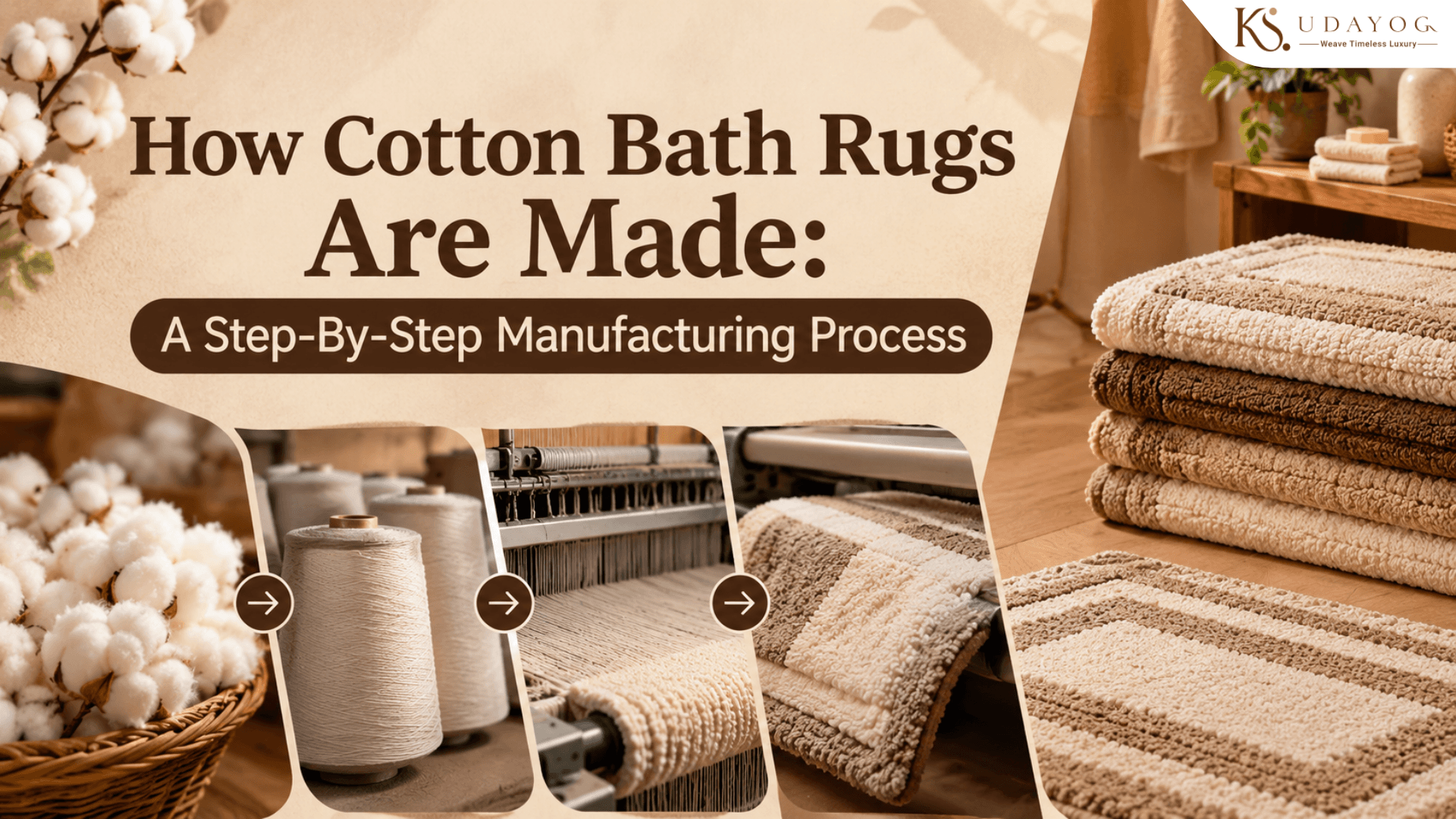
What makes one cotton bath rug softer, more absorbent, and longer-lasting than another? Much of the difference comes from how the bath rug is manufactured, beginning with the cotton fibres and continuing through yarn production, fabric construction, and finishing.
Bath rug manufacturing techniques help determine the rug’s texture, thickness, shape, and overall quality. Careful inspection also helps manufacturers identify loose threads, uneven edges, and other defects before the product reaches retailers or customers.
This guide explores the complete cotton bath rug manufacturing process, helping you understand the materials, machinery, and production stages involved in creating the finished rug.
What Are Cotton Bath Rugs Made Of?
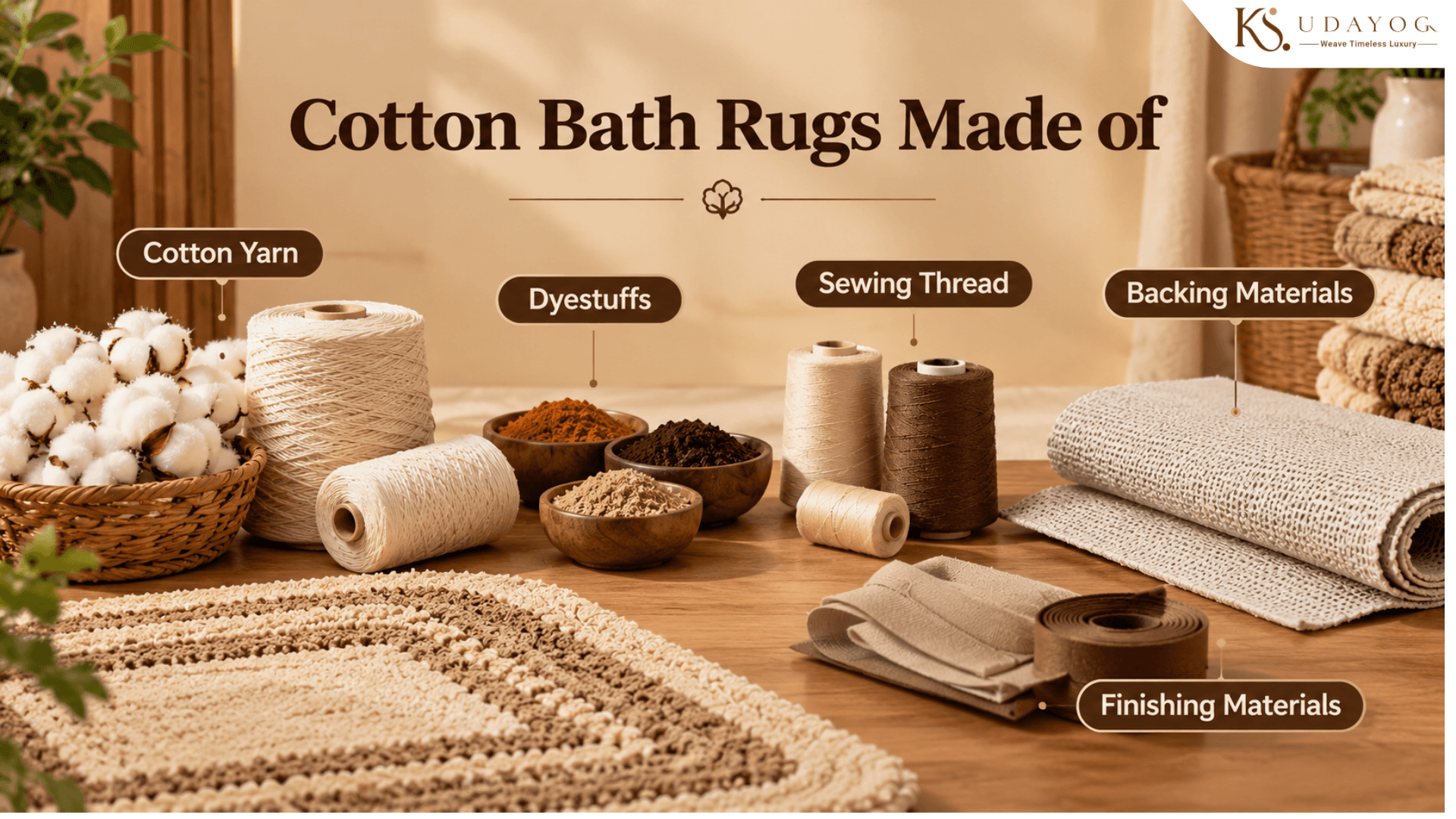
Cotton bath rugs are primarily made from cotton yarn, a natural textile material valued for its softness, moisture absorption, and everyday comfort. The yarn may be used in different thicknesses and constructions, depending on the rug’s intended purpose.
The main materials and components include:
- Cotton yarn: The primary material that forms the rug’s surface and structure.
- Dyestuffs: Colouring materials used to create solid shades, stripes, or patterned designs.
- Sewing thread: Thread used for edge stitching, binding, or other finishing work.
- Backing materials: Optional components used in selected designs for added grip or structural support.
- Finishing materials: Approved processing agents that may be used to achieve the required fabric properties.
A cotton bath rug does not automatically have a non-slip surface. Rugs with a backing or grip layer require separate material and performance checks, and the backing may affect washing instructions.
Step-By-Step Cotton Bath Rug Manufacturing Process
The cotton bath rug manufacturing process varies according to the weaving technique, product design, dyeing method, and factory equipment. The following steps describe a typical production sequence, although some operations may occur in a different order.
Step 1: Selecting Cotton Yarn
Cotton yarn selection is the foundation of bath rug manufacturing. The yarn quality influences the finished rug’s softness, strength, appearance, and ability to absorb moisture.
Manufacturers assess factors such as fibre quality, yarn thickness, strength, cleanliness, and suitability for the intended construction. The required yarn count and twist also depend on whether the design calls for a flat surface, a looped texture, or a thicker pile.

Longer cotton fibres can support smoother, stronger yarns when processed appropriately. However, fibre length alone does not determine finished rug quality; yarn construction, weaving density, and finishing also matter.
Key quality checks:
- Yarn strength and uniformity.
- Visible contamination or fibre defects.
- Suitability for the required weave and texture.
- Colour requirements for the selected design.
A well-defined yarn specification helps manufacturers maintain the intended construction across production batches.
Step 2: Preparing the Yarn for Bath Rug Production
The selected cotton yarn undergoes preparation before weaving begins. This stage ensures that the yarn can move through the production equipment with fewer interruptions and that the required construction can be achieved.
Depending on the yarn and process, preparation may include winding yarn onto cones or suitable packages, checking for faults, and arranging yarns for the loom. Warp yarns, which run lengthwise through woven fabric, may also require warping and sizing where the weaving setup calls for these operations.

Sizing applies a temporary protective coating to suitable warp yarns to reduce friction and breakage during weaving. The requirement depends on the yarn characteristics and the loom being used.
Accurate preparation supports smoother weaving and reduces the risk of irregularities in the finished cotton bath rug.
Step 3: Choosing the Weaving Method
Weaving creates the rug’s basic structure by interlacing lengthwise warp yarns with crosswise weft yarns. The selected construction determines much of the product’s texture, thickness, surface appearance, and feel underfoot.
Several manufacturing approaches are possible:

- Flat weaving: This method produces a relatively flat surface with little or no raised pile. Flat-woven cotton bath rugs can suit minimalist designs and spaces where a lower profile is preferred.
- Looped Construction: Looped yarns create a textured surface. The resulting appearance and feel depend on loop size, yarn thickness, and construction density.
- Pile Weaving: This approach creates a raised surface using pile yarns. The pile height and density influence softness, appearance, and how the rug performs during everyday use.
- Terry-style Construction: Some cotton bath mats use loops similar to those found in terry towels. These loops increase surface area and can support moisture absorption, although actual absorbency depends on the complete fabric construction and finishing.
Not every cotton bath rug uses the same method. The choice depends on the target price, design, production capacity, and intended use.
Step 4: Developing the Cotton Bath Rug Design
The design stage translates the product brief into manufacturing specifications. Dimensions, colours, patterns, texture, edge details, and surface construction are defined before or during production planning.
A plain cotton bath rug may require only a specified yarn colour and size. A striped or patterned design may need different coloured yarns, a planned weaving sequence, or a suitable dyeing process.

The design specification generally covers:
- Finished length and width.
- Required surface texture and pile height.
- Colour shades and pattern placement.
- Border and edge-finishing details.
- Target weight and construction density.
- Branding, labels, and packaging requirements.
A production sample or approved reference helps the manufacturer compare the finished batch with the intended design. For bulk orders, clear specifications also reduce misunderstandings between manufacturers, retailers, and buyers.
Step 5: Weaving the Cotton Bath Rug
The prepared yarn moves to the loom or relevant textile production equipment, where the main rug structure is formed. During weaving, warp and weft yarns interlace according to the chosen construction.
The loom settings, yarn tension, density, and weaving pattern influence the rug’s appearance and structural integrity. Looped and pile designs require construction methods capable of forming and securing the intended surface.

Operators monitor the fabric for broken yarns, uneven patterns, missing loops, and other visible defects. Adjustments may be necessary when yarn tension or machine settings produce irregular results.
Some production setups create individual rugs directly, while others produce a wider length of textile that is later cut into separate pieces. The manufacturing route depends on the equipment and product design.
Key quality checks:
- Uniform weaving and surface texture.
- Correct pattern alignment.
- Minimal gaps or loose yarns.
- Suitable construction density.
- Compliance with the approved dimensions or cutting plan.
Careful monitoring at this stage helps prevent defects from carrying into finishing and packaging.
Step 6: Dyeing and Colour Treatment
Dyeing gives the cotton bath rug its required colour. The timing and method depend on the design, yarn preparation, and production setup.

- Yarn dyeing involves colouring the yarn before weaving. This method can support stripes, checks, and other designs formed by combining differently coloured yarns.
- Piece dyeing involves colouring a textile after weaving. This approach can suit solid-colour rugs and selected designs that require the completed textile to receive a dye treatment.
Some products may use printed patterns or other colour application methods. Not every rug requires a separate dyeing stage, particularly when the required colour is already present in the yarn.
Dyeing operations may include preparation, dye application, rinsing, and drying, depending on the process. Cotton’s natural absorbency makes it suitable for many dyeing methods, but the final colour result also depends on dye selection, processing conditions, and quality control.
Important quality checks:
- Shade matching against the approved sample.
- Colour uniformity across the product.
- Resistance to colour transfer during rubbing.
- Colour retention during washing.
- Appropriate removal of residual processing chemicals.
Colour-fastness testing is especially important for rugs expected to undergo frequent laundering. The Bureau of Indian Standards lists textile test methods for colour fastness to washing and rubbing, which manufacturers may consult when defining suitable quality checks.
Step 7: Washing, Drying, and Finishing of Cotton Bath Rug
After weaving and any required colour treatment, the rug may undergo finishing operations to prepare it for use. The exact sequence depends on the construction and the processes already completed.
Washing or rinsing can remove residual dye and processing agents where required. Controlled drying reduces excess moisture and prepares the textile for subsequent handling. Heat and drying conditions need careful control because excessive treatment can affect cotton dimensions, texture, or colour.

Further finishing may include:
- Surface trimming: Removal of loose fibres or uneven yarn ends.
- Pile levelling: Adjustment of the pile surface where the design requires it.
- Edge binding: Application of a finished edge to help prevent fraying.
- Stitching: Securing seams, hems, or borders where necessary.
- Softening: Application of a suitable finishing treatment when specified.
- Backing application: Addition of a backing or grip layer for designs that require one.
Not every product requires all these operations. A flat-woven rug, for example, may need different finishing from a thick pile rug. Similarly, backing materials must be compatible with the intended cleaning method and use conditions.
Step 8: Cutting and Shaping Cotton Rug
The cutting stage gives each cotton rug its required final dimensions when the production method involves manufacturing a wider textile length. Cutting may take place before or after selected finishing operations, depending on the factory’s workflow.
Accurate cutting helps maintain uniform dimensions across the batch. The cut edges must also suit the planned finishing method so that the rug remains secure during use and laundering.
Individual-piece production may follow a different sequence, with dimensions controlled during weaving or another forming process.

Key quality checks:
- Correct length and width.
- Square or appropriately shaped corners.
- Straight edges and even borders.
- Minimal fraying or damaged yarns.
- Consistency with the approved product specification.
Dimensional control is particularly important for retailers selling standardised sizes or fulfilling bulk orders for hotels, guest houses, and other commercial facilities.
Step 9: Inspecting Quality and Performance
Quality inspection confirms whether the finished cotton bath rug meets the product specification. A visual check alone may not identify every issue, so manufacturers can combine physical inspection with suitable performance tests.
The inspection plan should reflect the rug’s intended use, construction, and buyer requirements.

Absorbency deserves particular attention because a bathroom rug is expected to handle moisture. Cotton fibre properties can support water absorption, but weave structure, yarn characteristics, surface finishes, and backing materials can change the finished product’s performance.
Dimensional stability also matters. Cotton textiles may change size during washing, so suitable testing can help identify products that require revised processing or clearer care instructions. The Bureau of Indian Standards publishes a method for determining dimensional changes in textiles after soaking in water.
Testing requirements should be agreed with the buyer and based on relevant product specifications. No single inspection list guarantees quality unless the test methods, acceptance limits, and sampling plan are clearly defined.
Step 10: Labelling, Packaging, and Dispatch
The final stage prepares approved cotton bath rugs for storage, transport, and sale. Each rug is checked for loose threads, visible marks, packaging damage, and other defects that could affect presentation.

The products are folded or packed according to their shape and packaging requirements. Labels may include the product name, dimensions, fibre composition, care instructions, brand details, and other information required for the intended market.
Bulk orders may also require carton labels, quantity checks, batch identification, and shipment documentation. Suitable packaging protects the rugs from dust, moisture, and handling damage during transit.
A final quantity and specification check helps ensure that the dispatched order matches the purchase requirements.
Factors Affecting the Quality of Cotton Bath Rugs
The quality of a finished bath rug depends on the combined effect of materials, construction, finishing, and inspection. Cotton content alone does not establish how well a rug will perform.

- Cotton Yarn Quality: Suitable yarn strength and uniformity support a well-formed textile structure and an attractive surface.
- Weaving Density: Construction density influences the rug’s weight, texture, stability, and overall feel. The appropriate density depends on the intended design.
- Surface Construction: Flat, looped, and pile constructions provide different textures and practical characteristics. Buyers should select a construction suited to the intended bathroom environment.
- Dyeing and Finishing: Properly controlled treatments support colour appearance, handle, and cleanliness. Poorly controlled processes may contribute to uneven shades or unwanted changes in texture.
- Edge Construction: Secure binding and stitching help protect the rug’s edges from fraying and premature damage.
- Quality Testing: Checks for absorbency, colour fastness, dimensions, and laundering performance provide more meaningful evidence of suitability than appearance alone.
- Care Compatibility: The rug’s construction, dyes, and backing determine the appropriate washing and drying instructions. Clear care guidance helps buyers understand how to maintain the product.
Final Thoughts
Cotton bath rug manufacturing involves several connected stages, from yarn selection and preparation to weaving, colour treatment, finishing, inspection, and packaging. Each stage contributes to the finished rug’s appearance, comfort, absorbency, and durability.
For manufacturers and sourcing teams, clear product specifications and appropriate quality checks are essential to meeting buyer expectations. For retailers, an understanding of the production process makes it easier to assess construction, compare suppliers, and select suitable products.
Looking to source or develop cotton bath rugs? Connect with a suitable textile manufacturer to discuss material specifications, construction options, custom designs, and quality requirements for your next order.
Frequently Asked Questions (FAQs)
How Long Does It Take To Manufacture Cotton Bath Rugs?
The production time depends on the order quantity, yarn availability, design complexity, dyeing requirements, finishing method, and factory capacity. Standard designs may follow an established production schedule, while custom colours and patterns can require additional sampling and approval.
Are All Cotton Bath Rugs Woven?
No, cotton bath rugs can be made using different textile construction methods. Woven rugs use interlaced warp and weft yarns, while other products may use knitted, tufted, or alternative constructions. The manufacturing method determines the structure and surface characteristics.
Why Are Cotton Bath Rugs Absorbent?
Cotton fibres can absorb moisture, making them suitable for many bath rug designs. However, actual absorbency also depends on yarn construction, fabric density, finishing treatments, and any backing applied to the product.
Do Cotton Bath Rugs Shrink After Washing?
Cotton bath rugs can shrink or change dimensions during washing, depending on the yarn, construction, finishing, and care conditions. Suitable dimensional-stability checks and clear washing instructions help manufacturers and buyers assess this risk.
How Can Buyers Check Cotton Bath Rug Quality?
Buyers can review fibre composition, construction, dimensions, stitching, surface appearance, absorbency, colour fastness, and dimensional stability. An approved sample and documented inspection criteria provide a clearer basis for evaluating bulk production.
Are Cotton Bath Rugs Suitable For Commercial Use?
Cotton bath rugs can suit selected hospitality and commercial environments when their construction, absorbency, durability, laundering requirements, and replacement needs match the application. Buyers should evaluate product performance against the demands of their specific setting.