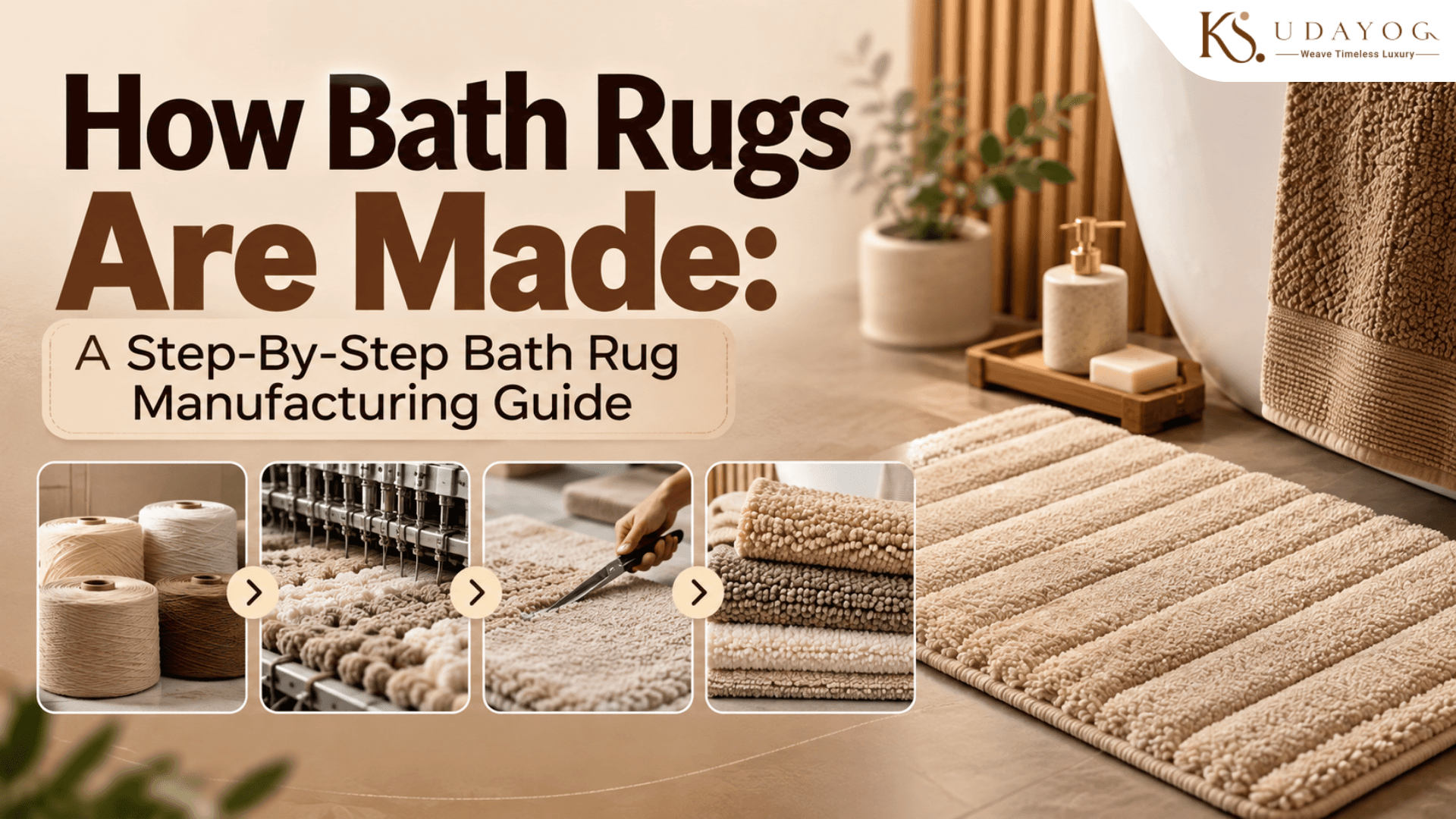
Imagine receiving a bulk shipment of bath rugs and finding that some pieces feel softer, some have uneven edges, and others differ slightly in size. Those problems rarely begin during packing. They usually trace back to decisions and controls made much earlier in manufacturing.
That is why the production method matters to B2B buyers as much as the product specification. Understanding how materials are prepared, the bathroom rug is manufactured, backing and finishing are handled, and quality is checked can help buyers set realistic expectations before production begins.
The manufacturing journey has several points where product quality and consistency are established. This step-by-step bath rug manufacturing guide shows what happens at each point and what buyers should understand before placing a bulk order.
What Materials Are Used To Make Bath Rugs?
The materials selected to make a premium bath rug depend on its intended use, desired texture, absorbency, appearance, and price range. Manufacturers may use natural fibers, synthetic fibers, or blends to achieve different performance characteristics.
Microfiber
Microfiber is made from very fine synthetic fibers that create a soft, lightweight, and smooth surface. Microfiber bath rugs can absorb moisture effectively and may dry relatively quickly when properly maintained. This material is often used for plush bath mats because its fine fibers can create a dense and comfortable texture.
Polyester
Polyester is a synthetic material valued for its durability, color variety, and design flexibility. Polyester bath rugs can be produced in many colors, patterns, and textures, making them suitable for decorative bathroom collections. The material is also commonly selected when easy maintenance and regular-use performance are important.
Chenille
Chenille is a soft yarn with a fuzzy, raised surface that gives bath rugs a plush and comfortable feel. Chenille bath rugs are often chosen when extra softness and thickness are desired. The textured surface can also add visual interest and create a more luxurious appearance in the bathroom.
Jute
Jute is a natural plant-based fiber with a coarse and textured appearance. It is generally selected for its decorative, earthy look rather than for maximum moisture absorption. Jute or jute-blend bath rugs may work well in bathrooms with natural, rustic, or woven design themes, although they may require more careful placement and maintenance.
Foam
Foam may be included in some bath rug designs to provide cushioning and additional comfort underfoot. A foam layer can make the rug feel thicker and softer, especially when standing near a sink or shower. However, the suitability of foam depends on the product’s construction, moisture resistance, and drying requirements.
Rubber
Rubber is commonly used as a backing material instead of the main surface material. A rubber backing can help improve grip and keep the bath rug more stable on the floor. When selecting a rubber-backed bath rug, it is important to consider the quality of the backing and whether it is suitable for the type of flooring in the bathroom.
PVC
PVC may also be used for bath rug backing because it is flexible and can provide support and stability. Manufacturers may use PVC in coated or structured backing designs. As with rubber backing, the rug should be used and maintained according to the manufacturer’s instructions to help protect the floor and extend product life.
The final bath rug may be made from one material or a combination of materials. For example, a rug may have a cotton, microfiber, polyester, or chenille surface with a rubber or PVC backing. This type of construction combines a soft or absorbent upper layer with a backing designed to improve stability.
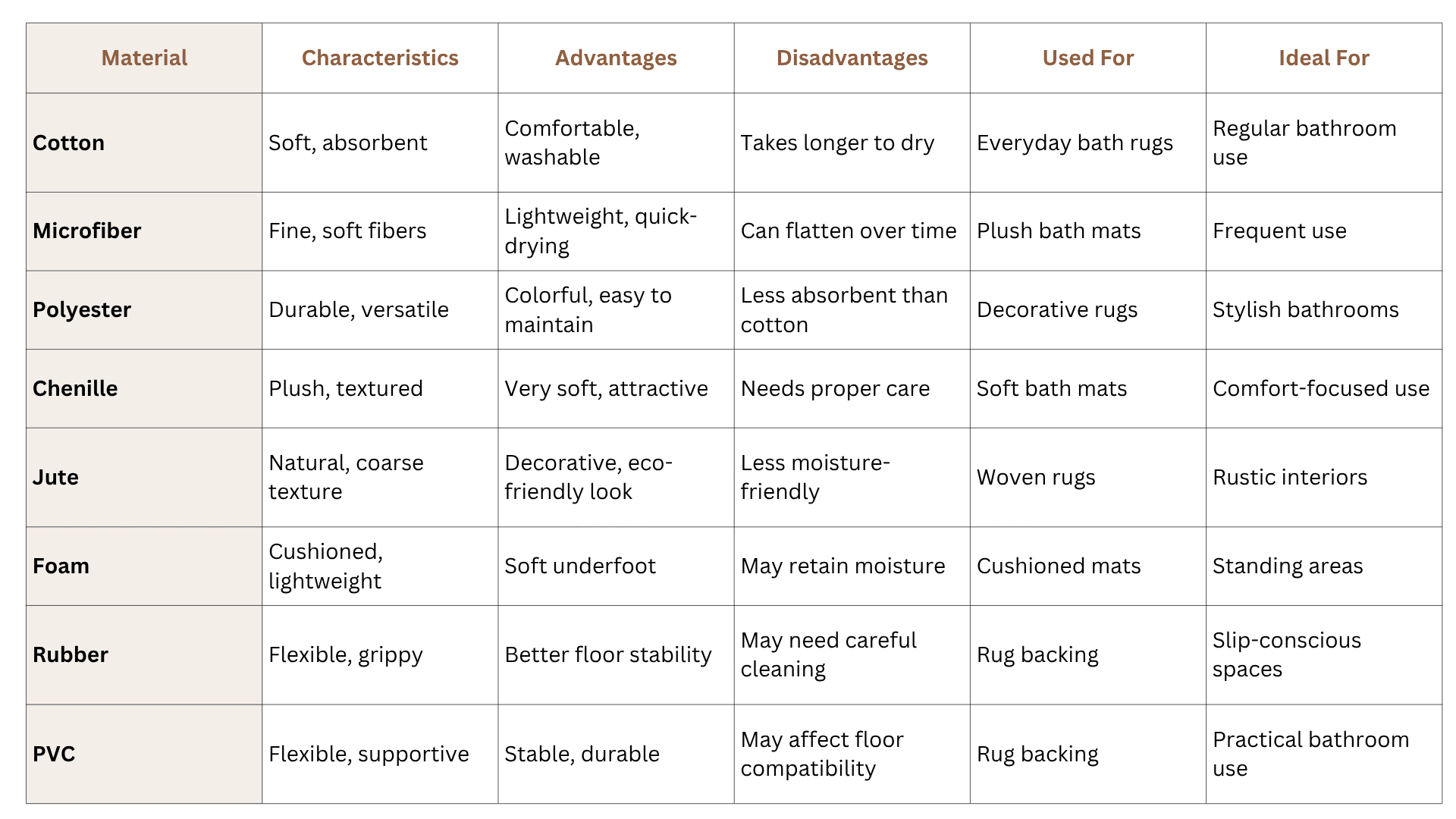
The material combination can vary depending on whether the product is designed primarily for absorbency, comfort, decoration, or frequent commercial use.
How Does The Bath Rug Manufacturing Process Work?
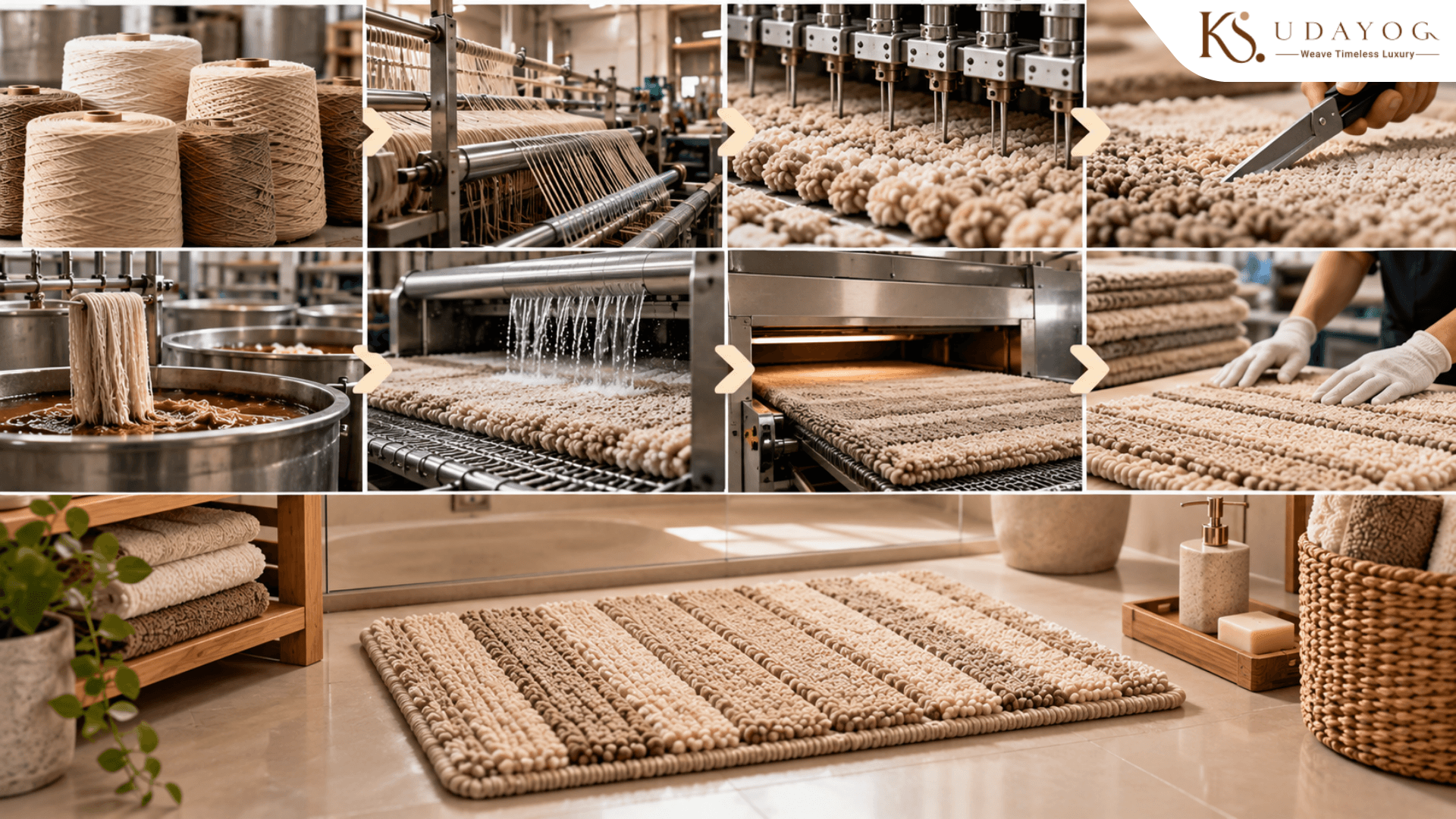
The bath rug manufacturing process can vary according to the construction method and product specifications. However, most production follows a sequence that begins with material preparation and ends with inspection and packaging.
Here are the main stages involved.
1. Design And Specification Development
Production begins with the bath rug's design and specifications.
The manufacturer establishes the required dimensions, shape, colors, pattern, surface texture, material, backing, and finishing details. For custom orders, buyers may provide their own designs or specifications.
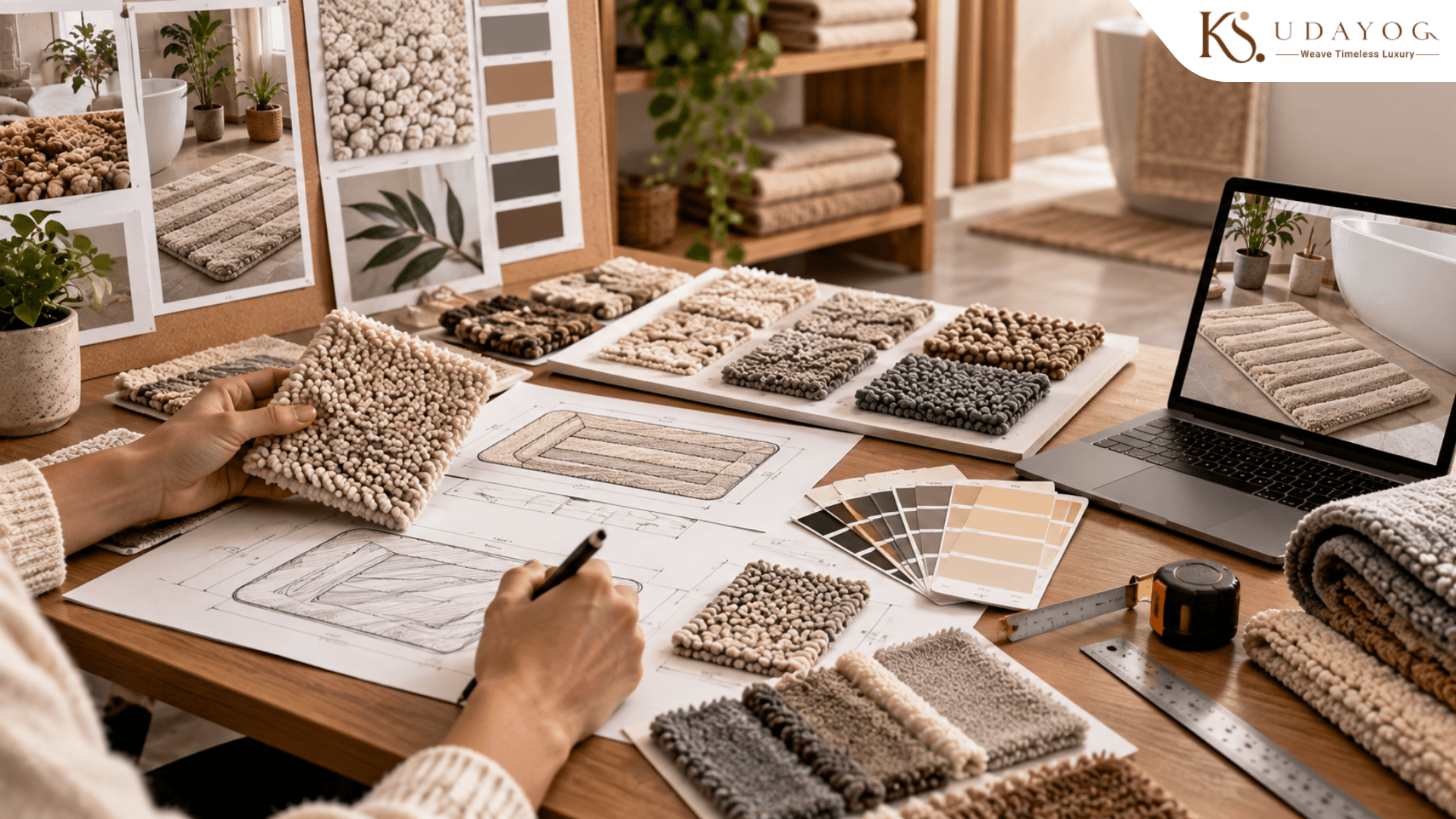
The manufacturer also determines the appropriate construction method based on the desired appearance and performance.
Having clear specifications at the beginning helps prevent confusion during later production stages.
2. Material Selection
The manufacturer selects the fibers, yarns, backing materials, thread, and other components required for production.
Material selection depends on the product's intended use. For example, a soft cotton bath rug may be selected for comfort and absorbency, while a synthetic fiber construction may be chosen for a particular appearance, durability, or maintenance requirement.
For bulk production, material availability is especially important because sufficient quantities must be secured before manufacturing begins.
3. Yarn Or Fiber Preparation
Before the rug is constructed, the selected fibers or yarns may require preparation.
Depending on the material, this can involve cleaning, blending, spinning, dyeing, winding, or other preparation processes. The yarn needs to be suitable for the chosen construction method and capable of producing the required surface texture.
If multiple colors are used, the manufacturer also prepares the yarns according to the approved color specifications.
4. Dyeing And Color Preparation
When colored yarn or fabric is required, the material is dyed according to the selected shade.
Manufacturers need to control the color carefully so the finished bath rug matches the approved design or sample. Multiple colors may require separate dyeing or color preparation processes.

For recurring or large orders, keeping an approved color reference can help the manufacturer reproduce the required shades in future production runs.
5. Choose The Construction Method
This is one of the most important stages of bath rug production.
Depending on the product, manufacturers may use weaving, tufting, or other construction techniques to create the rug's surface.
- Weaving: Yarns are interlaced to create the rug structure, producing a stable and structured surface.
- Tufting: Yarns are inserted into a base fabric to create loops or cut-pile surfaces with different levels of softness and thickness.
- Braided Construction: Strips of fabric or yarn are intertwined to create a textured surface, often used for decorative bath rugs.
- Needle-Punched Construction: Fibers are mechanically punched into a backing material, creating a compact and durable surface.
- Loop Pile: Yarn loops remain intact on the surface, creating a textured finish that can provide a firm feel underfoot.
- Cut Pile: Yarn loops are cut to create a softer, plush surface with a different visual and tactile appearance.

Other construction methods may be selected for specific textures, patterns, or product requirements.
The construction method has a direct effect on the rug's texture, appearance, thickness, and overall feel.
6. Creating The Required Shape
After the main rug structure is produced, it may be cut or shaped according to the required dimensions.
Standard rectangular bath rugs can follow straightforward cutting patterns, while round, oval, contoured, or specially shaped products require more precise cutting.
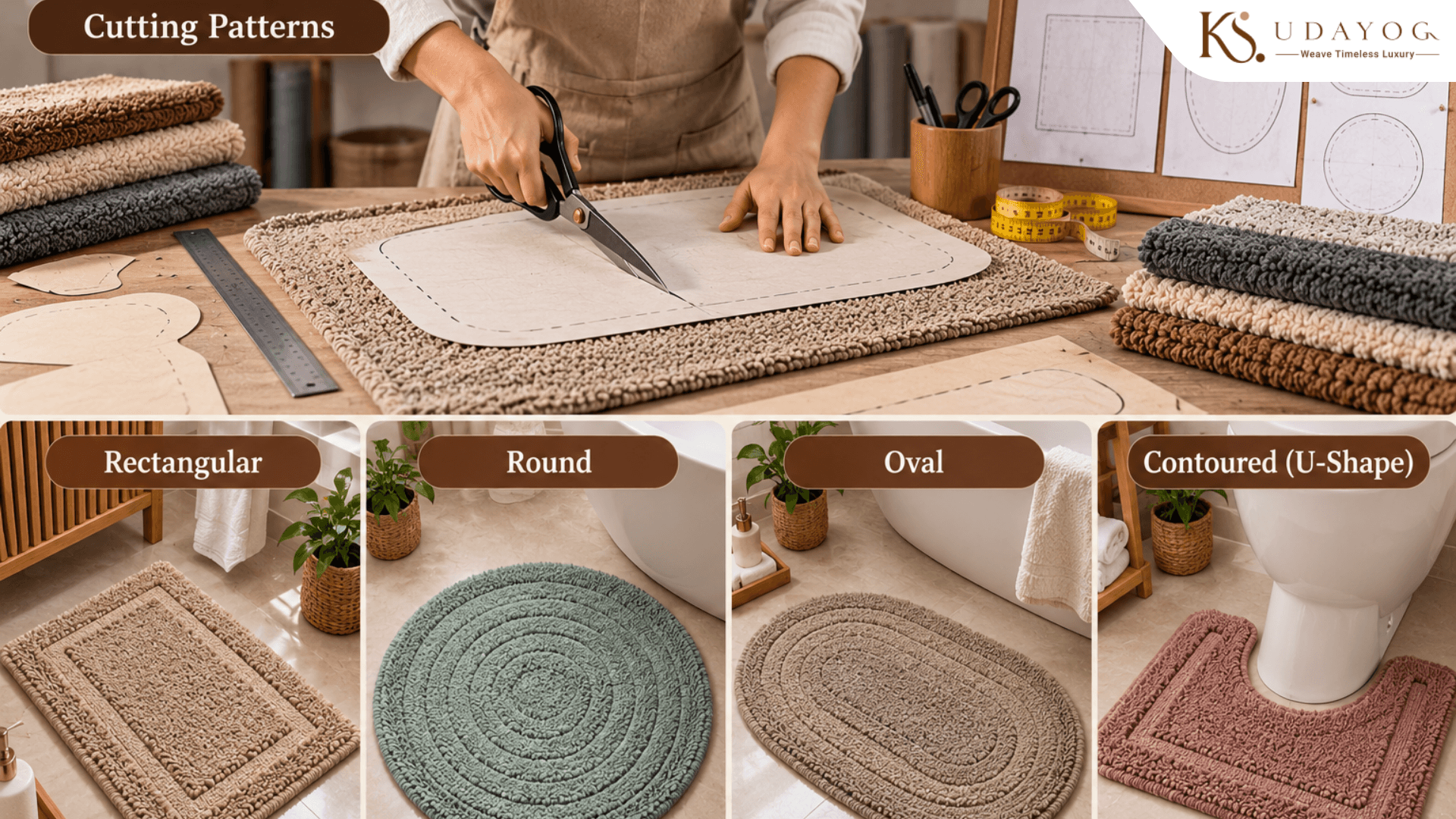
For example, a bath mat designed to fit around a toilet base may require a specific curved or U-shaped profile.
Accurate shaping is important because the finished rug must match the dimensions and design approved by the buyer.
7. Adding The Backing
Depending on the product design, manufacturers may add a backing to the underside of the bath rug.
Backing can provide additional structure, help the rug maintain its shape, and improve stability on the floor. Different backing materials can be selected to create non-slip bath rugs depending on the intended product characteristics.
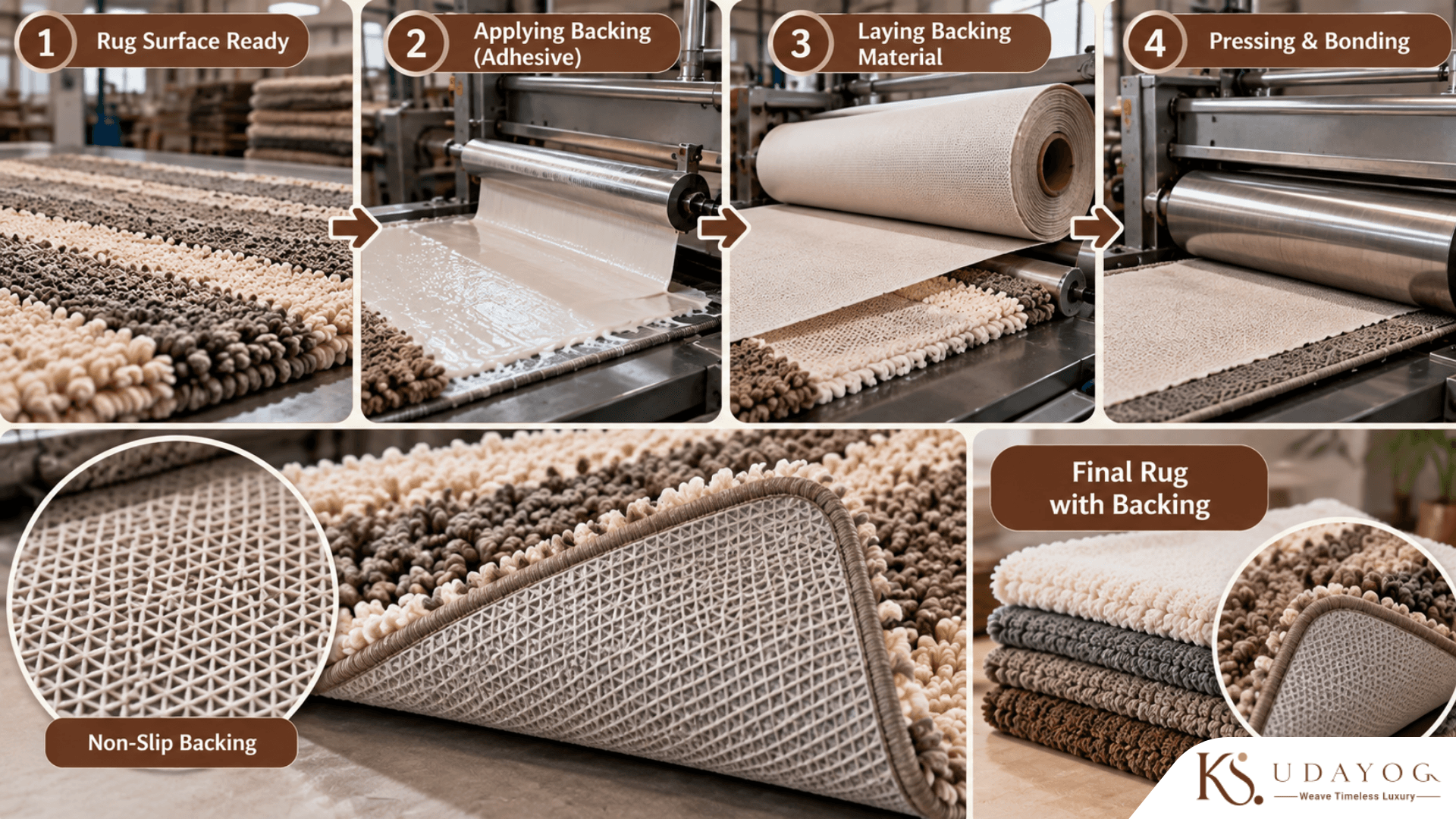
The backing should be properly attached and evenly applied so that it does not create unwanted lumps, separation, or deformation.
8. Edge Finishing
The edges are finished to improve the appearance and help protect the rug's construction.
Manufacturers may use overlocking, binding, stitching, or other edge-finishing methods depending on the design.
Poorly finished edges can lead to loose fibers, fraying, or an untidy appearance. Therefore, edge finishing is an important part of both manufacturing and quality control.
9. Surface Finishing
After construction and edge treatment, the bath rug may undergo additional finishing.
Loose fibers can be trimmed, the surface can be brushed or groomed, and the rug can be shaped to achieve its intended appearance.
For plush or textured bath rugs, this stage helps create a more even surface and improves the presentation of the finished product.
10. Washing Or Treatment
Some bath rugs may undergo washing, drying, softening, or other treatments before final inspection.
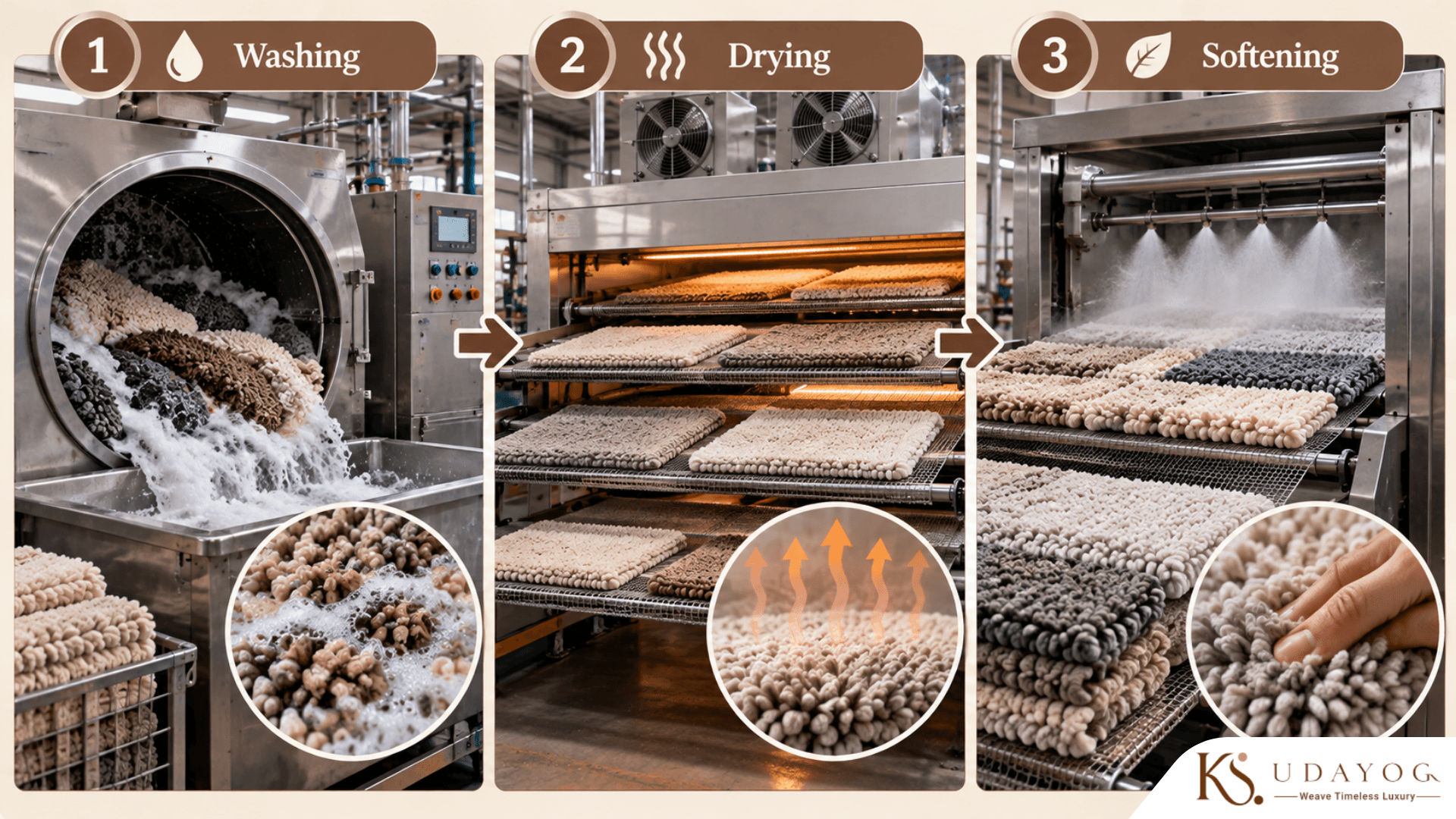
The exact treatment depends on the material and product requirements.
This stage can help prepare the rug for its intended use and ensure the final product meets the agreed specifications for texture and appearance.
11. Quality Inspection
Every finished bath rug should undergo quality inspection before packaging.
Manufacturers may check:
- Dimensions
- Color
- Pattern
- Surface texture
- Fiber or yarn quality
- Construction
- Edge finishing
- Backing
- Shape
- Stitching
- Loose fibers
- Stains or marks
- Overall appearance
For bulk orders, manufacturers may also inspect products across different portions of the production batch to identify variations.
12. Folding And Packaging
After passing inspection, the bath rugs are prepared for packaging.
Packaging depends on the buyer's requirements and distribution method. Individual packaging may be used for retail products, while bulk orders may use larger protective packaging.
Labels, product information, size details, barcodes, and other buyer-specific requirements can also be added at this stage.
Proper packaging protects the rugs from dust, moisture, stains, and handling damage during transportation and storage.
What Happens During Custom Bathroom Rug Bulk Production?
Bulk production requires manufacturers to manage materials, production schedules, quality checks, and packaging across a larger quantity.
A typical workflow looks like this:

- Material Planning: Calculate and secure the required quantity of fibers, yarns, backing, thread, and packaging materials.
- Sample Approval: Confirm the design, dimensions, colors, construction, and finishing through a physical sample or approved reference.
- Production Planning: Schedule manufacturing according to the order quantity and required delivery timeline.
- Batch Manufacturing: Produce the rugs according to the approved specifications.
- Quality Checks: Inspect products during production and after completion to identify problems early.
- Final Inspection: Review finished products before they are packed.
- Packaging And Dispatch: Pack the approved products according to the agreed requirements.
For retailers and wholesalers, this structured approach helps maintain the expected product standard across a larger order.
How Does A Bath Rug Manufacturer Maintain Quality?
A reliable bath rug manufacturer should have clear quality-control procedures throughout production rather than relying only on a final inspection.
Material inspection can identify unsuitable fibers or yarns before manufacturing begins. Production checks can identify problems with dimensions, construction, colors, or surface quality while the order is still being produced.
Final inspection then provides another opportunity to identify defects before packaging.
For customized or bulk orders, the manufacturer should also compare finished products against the approved sample and specifications.
Quality Problems You May Face During Bath Rug Production
Several issues can occur if production is not properly controlled.
- Uneven Surface
Variations in pile, loops, or yarn distribution can create an uneven appearance or texture.
- Incorrect Dimensions
Poor cutting or shaping can result in rugs that do not match the required measurements.
- Color Variation
Differences in dyeing or material batches can create noticeable shade variations.
- Loose Edges
Insufficient edge finishing can cause fraying or loose fibers during use.
- Backing Separation
Poor attachment can cause the backing to separate from the rug surface.
- Uneven Filling Or Thickness
Some bath rug designs may develop areas with different thickness or surface density, affecting their overall feel.
- Excessive Loose Fibers
Incomplete finishing can leave loose fibers on the surface, reducing the product's visual quality.
How To Check Bath Rugs Before Accepting A Bulk Order?
Before accepting a shipment, buyers should compare the finished products with the approved sample and specifications.
Start by checking the dimensions and overall shape. Then examine the surface, color, pattern, construction, edges, and backing. Look for stains, loose fibers, damaged areas, or other visible defects.
For a larger order, inspect products from different cartons or sections of the shipment rather than checking only a single piece. This gives you a better indication of whether the quality is maintained throughout the batch.
Also review packaging and labeling before the shipment is accepted.
Handmade Vs Machine-Made Bath Rugs: Which Is Better?
The main difference between handmade and machine-made bath rugs is the production method, level of craftsmanship, and degree of uniformity. Handmade bath rugs involve more manual work and can offer distinctive textures or design details, while machine-made rugs use automated equipment for faster production and more consistent sizing and construction.
For bulk buyers, the better choice depends on the order requirements rather than one method being universally better. Handmade rugs can suit premium, artisanal, or customized collections, while machine-made bath rugs are often practical for larger quantities where uniformity, repeat production, and predictable specifications are important.
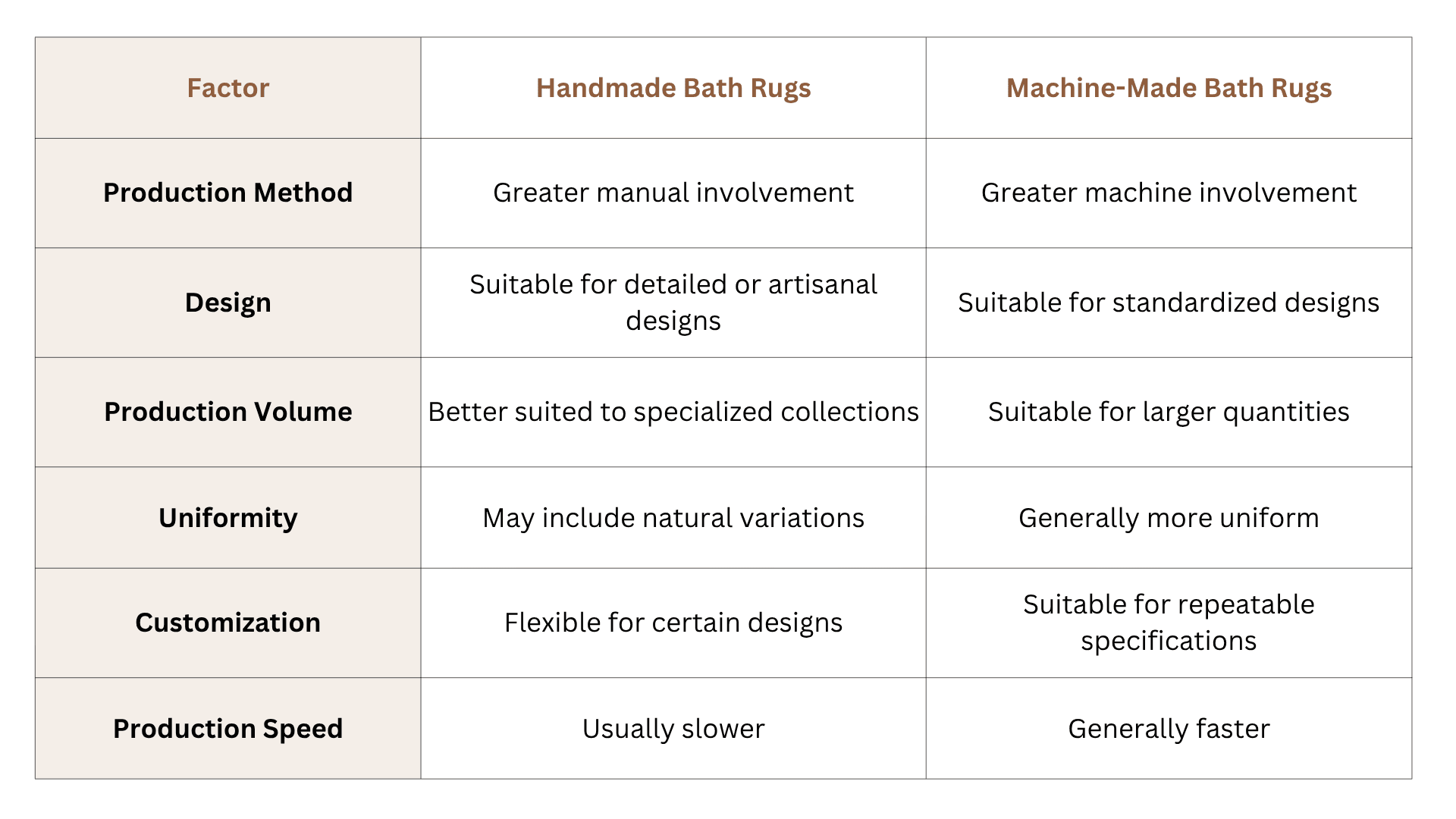
Neither method is automatically better. The right choice depends on the desired design, quantity, price range, and quality expectations.
How To Choose A Bath Mat Manufacturer For Bulk Production?
Selecting the right manufacturer is an important part of successful bath rug production.
Start by reviewing the manufacturer's experience with the type of bath rugs you want to purchase. Check whether they can work with your preferred materials, sizes, colors, construction methods, and backing options.
Next, ask about minimum order quantities and production capacity. A manufacturer may offer the right product but still be unsuitable if its MOQ or production capacity does not fit your requirements.
Request samples before placing a major order. Examine the actual product for material quality, construction, dimensions, finishing, and overall appearance.
You should also discuss customization, quality-control procedures, lead times, packaging, and repeat-order capabilities before finalizing the supplier.
Questions Buyers Must Ask Before Starting Bulk Bath Rug Production
Before confirming an order, discuss the following points with the manufacturer:
- Which fibers and backing materials are available?
- What sizes and shapes can be produced?
- Which weaving, tufting, or other methods are available?
- Can colors, patterns, sizes, and finishes be customized?
- What is the minimum quantity per design or color?
- Can a physical sample be approved before production?
- What inspection procedures are followed?
- Can the required quantity be produced within the timeline?
- How will the finished products be packed?
- Can the approved product be reproduced for future orders?
Getting these details confirmed before production reduces misunderstandings and helps both parties work from the same specifications.
Common Mistakes To Avoid In Bath Rug Production And Sourcing
1. Choosing Materials Based Only On Price
The cheapest material may not provide the desired texture, absorbency, appearance, or durability.
2. Skipping Sample Approval
Starting bulk production without approving a physical sample can create problems if the finished product differs from expectations.
3. Ignoring The Backing
The underside of the rug can influence stability and overall construction, so it should not be overlooked.
4. Not Defining Quality Standards
Terms such as “premium” or “high quality” can mean different things to different buyers. Specific requirements are easier to evaluate.
5. Ordering Without Checking Production Capacity
A manufacturer may accept a large order without having a realistic production schedule unless capacity is discussed in advance.
6. Comparing Prices Without Comparing Specifications
Two quotations are not directly comparable if the materials, dimensions, construction, filling, backing, packaging, or finishing differ.
Why Understanding Bath Rug Manufacturing Matters For B2B Buyers
Understanding how bath rugs are produced gives buyers a clearer idea of what they are actually paying for.
Instead of evaluating a finished rug only by appearance, buyers can assess the materials, construction method, finishing, backing, quality-control process, and production capabilities behind the product.
This knowledge is especially useful when comparing manufacturers or planning bulk production, because it helps buyers ask more specific questions and identify differences between apparently similar products.
How KS Udayog Is Right Partner For Bulk Bath Rug Manufacturing
KS Udayog can be considered by buyers looking for a manufacturing partner for bulk bath rug requirements, particularly when product specifications, quantities, materials, and finishing standards need to be clearly defined before production.
A structured approach to material selection, product development, production, quality inspection, and packaging can help buyers plan larger orders with greater clarity.
For retailers, wholesalers, hospitality buyers, and other bulk purchasers, the focus should be on matching the required bath rug design with the appropriate materials, dimensions, construction, and finishing.
Discussing your quantity, customization requirements, packaging preferences, and delivery expectations in advance can help establish a smoother bulk bath rug manufacturing process with KS Udayog.
Final Thoughts
The bath rug manufacturing process involves much more than simply creating a soft surface for the bathroom. Material selection, yarn preparation, construction, shaping, backing, edge finishing, surface treatment, inspection, and packaging all contribute to the finished product.
For buyers sourcing bath rugs in larger quantities, understanding these stages makes it easier to evaluate a bath mat manufacturer, compare product specifications, approve samples, and establish suitable quality standards.
Whether you are developing a new collection or purchasing established designs, a clear understanding of bath rug production can help you make better sourcing decisions and avoid preventable quality issues before a bulk order reaches your inventory.
Frequently Asked Questions (FAQs)
How Are Bath Rugs Manufactured?
Bath rugs are manufactured through stages such as material selection, fiber or yarn preparation, weaving or tufting, shaping, backing, edge finishing, quality inspection, and packaging.
What Materials Are Commonly Used To Make Bath Rugs?
Cotton, microfiber, polyester, chenille, blended fibers, and various backing materials are commonly used, depending on the desired product characteristics.
What Is The Difference Between A Bath Rug And A Bath Mat?
The terms are often used interchangeably, although product construction, size, thickness, absorbency, and intended use can vary between different designs.
How Long Does Bath Rug Production Take?
Production time depends on order quantity, materials, design complexity, customization, production capacity, and the manufacturer's schedule.
Can Bath Rugs Be Customized For Bulk Orders?
Yes. Depending on the manufacturer, buyers may customize dimensions, colors, patterns, materials, backing, finishing, labels, and packaging.
What Should I Check In A Bath Rug Sample?
Check its dimensions, material, surface texture, absorbency requirements, construction, backing, edges, color, pattern, stitching, and overall finishing.
How Can I Choose A Reliable Bath Mat Manufacturer?
Review the manufacturer's capabilities, product samples, material options, customization facilities, MOQ, production capacity, quality-control procedures, lead times, and packaging standards.
Why is sample approval important before bulk production?A sample allows buyers to evaluate the actual product and confirm specifications before committing to a larger quantity.
Can handmade bath rugs be produced in bulk?Yes, handmade products can be produced in larger quantities, although production capacity and timelines may differ from machine-based manufacturing.