A clean-looking bath rug is not always a well-maintained one. Moisture can settle deep into the fibres, while soap residue, dust, and daily foot traffic gradually affect its texture and freshness. Indian households may face an added challenge during humid weather and monsoon months.
A quick wash may seem enough, but the details matter. The wrong water temperature, detergent, washing cycle, or drying method can cause fading, shrinking, fibre damage, or backing problems. A premium bath rug’s material and care label offer important clues about what it can safely handle.
Better bath rug maintenance starts with small habits rather than expensive cleaning products. Regular washing, proper drying, quick stain treatment, and sensible storage can extend the useful life of the rug. This guide covers practical tips to clean and maintain bath rugs for longer-lasting performance.

Why Does Bath Rug Care Matter?
Bath rugs deal with something ordinary rugs rarely face: repeated moisture. Water from showers, wet feet, steam, soap residue, and bathroom humidity can remain trapped in the pile or underneath the rug.
That makes drying just as important as washing. A rug that stays damp on the floor for long periods can develop unpleasant odours and encourage mildew, while repeated exposure to unsuitable heat can damage certain backings.
Care also affects performance. Excessive washing, harsh detergents, high heat, aggressive spinning, and fabric softeners can gradually change the way fibres absorb water or affect the integrity of the backing.
How Often Should You Wash a Bath Rug?
There is no single schedule for every household. A bath rug used by several people needs more frequent washing than one placed in a guest bathroom.
A practical starting point is:
- Busy family bathroom: Wash about once a week.
- Single-user bathroom: Every one to two weeks may be suitable.
- Guest bathroom: Less frequent washing may be sufficient when it is rarely used.
- High-humidity bathroom: Increase cleaning frequency and focus on thorough drying.
- Visible stains or unpleasant odour: Clean it sooner rather than waiting for the normal schedule.
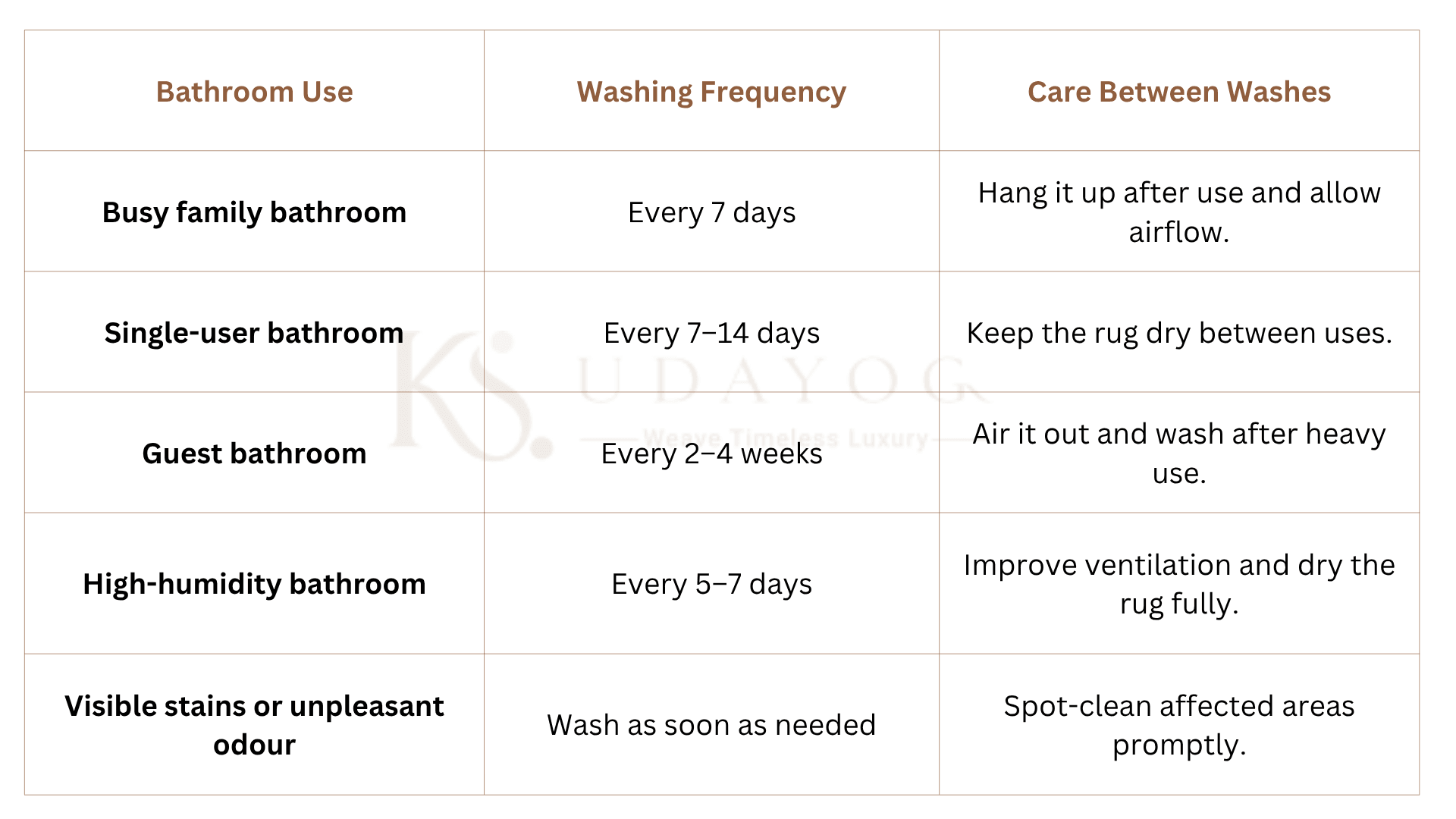
Between washes, lift the rug from the floor and allow both surfaces to dry. This simple habit can reduce prolonged moisture exposure and keep the rug fresher. Current cleaning guidance similarly recommends more frequent washing for heavily used or humid bathrooms.
Check the Bath Rug Before Washing
Before putting a bath rug into the washing machine, look at three things: the care label, the fibre, and the backing.
The care label should tell you whether the rug can be machine washed, which temperature to use, and whether tumble drying is permitted. Do not assume that two rugs with similar surfaces can follow the same routine.
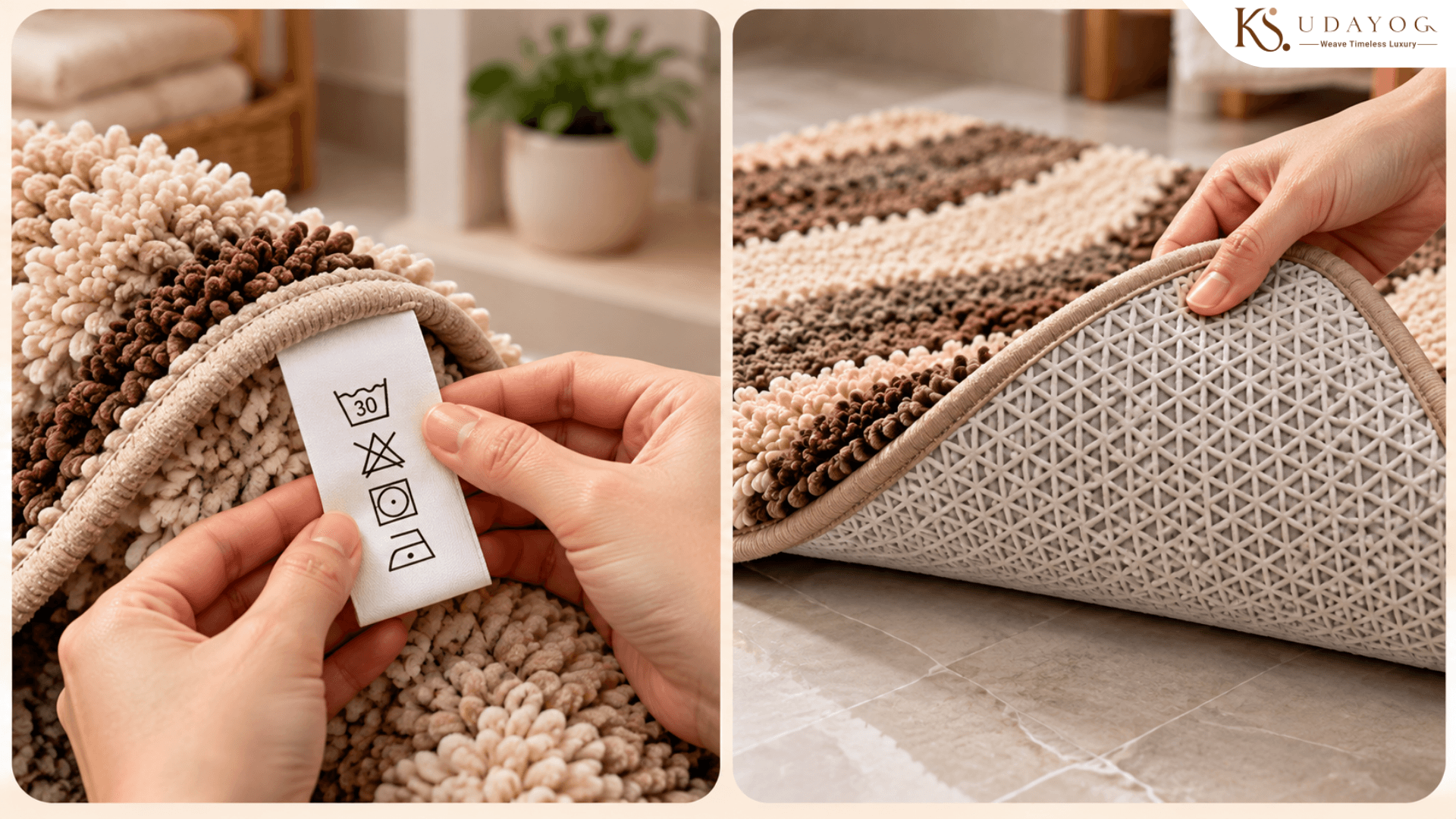
Then inspect the underside. If a rubber or latex backing is already cracking, peeling, becoming brittle, or shedding particles, machine washing can accelerate the damage. A damaged backing can also reduce the rug's grip on the floor.
How to Wash Bath Rugs in a Washing Machine
For a machine-washable bath rug, use this general process:
1. Remove Loose Dirt From Bath Rug
Shake the rug outdoors or over an easy-to-clean surface before washing. Vacuuming can also remove loose hair, dust, and debris from thicker surfaces.
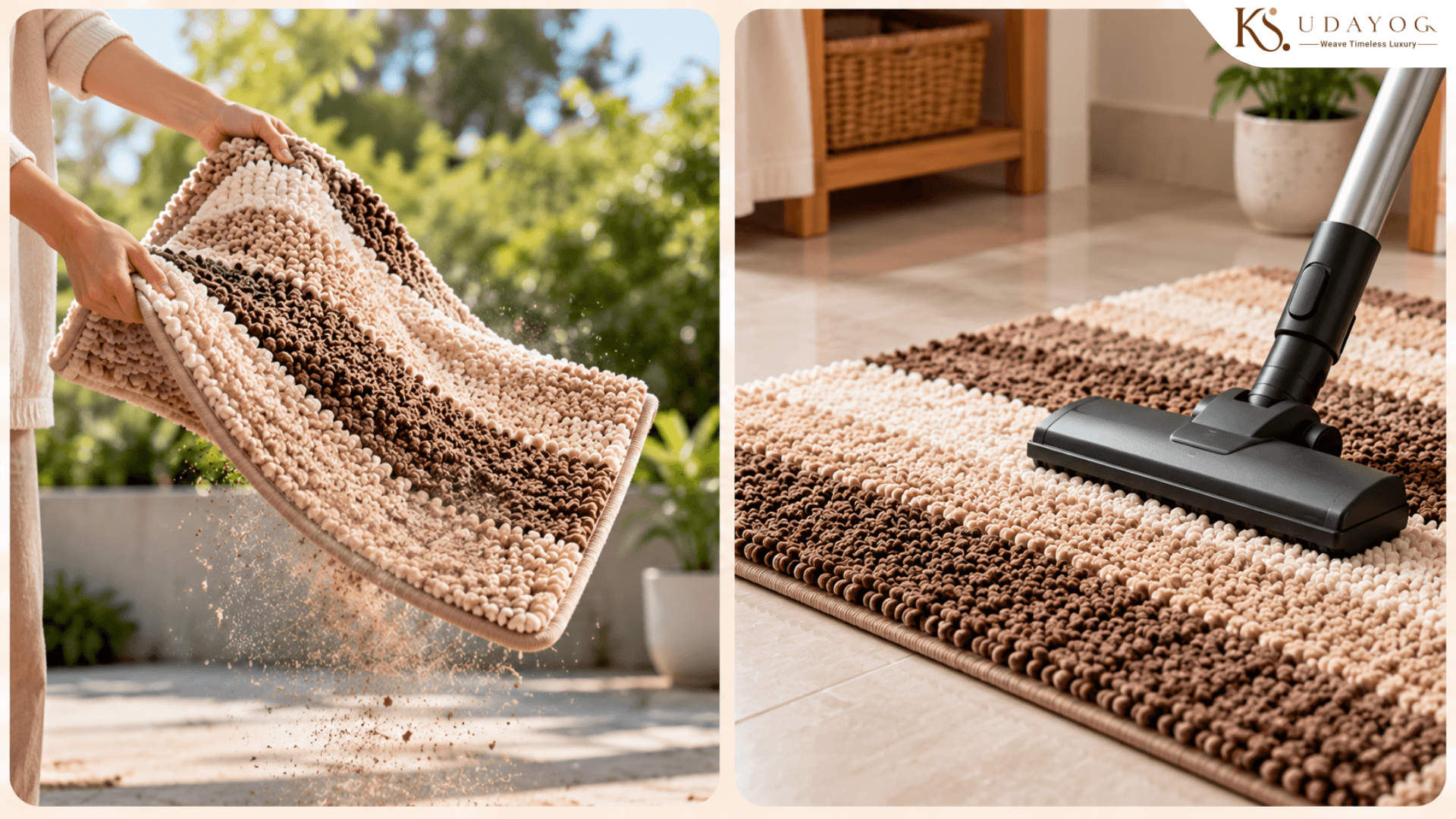
This prevents unnecessary soil from entering the washing machine and gives the detergent a better chance to work on embedded dirt.
2. Check for Stains
Treat visible stains before the main wash rather than relying entirely on the washing cycle. Use a cleaning product that is compatible with the rug's fibre and colour.
Avoid aggressive stain treatment simply because the rug is heavily soiled. Strong chemicals can affect dyes, fibres, foam, or backing materials.
3. Use the Correct Water Temperature
Follow the care label first. When no specific instruction is available, cooler washing is generally the safer approach for many bath rugs, particularly those with rubber or latex backing.
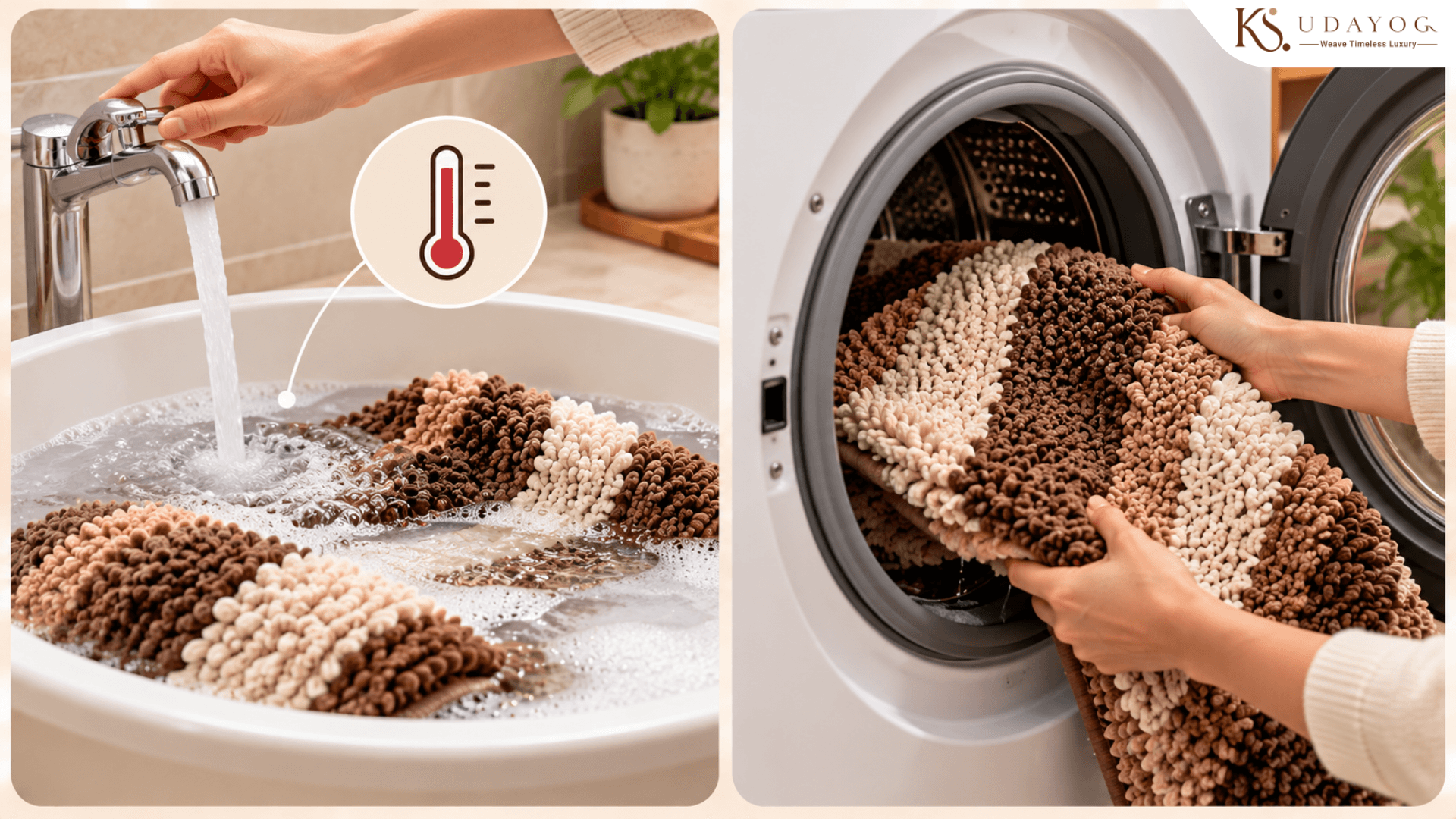
Heat is a major concern for non-slip backing because repeated exposure can cause it to crack, peel, or deteriorate.
4. Choose a Suitable Cycle For Bath Rug Washing
Use the cycle recommended on the care label. A gentler cycle can be preferable for rugs with delicate surfaces or vulnerable backing.
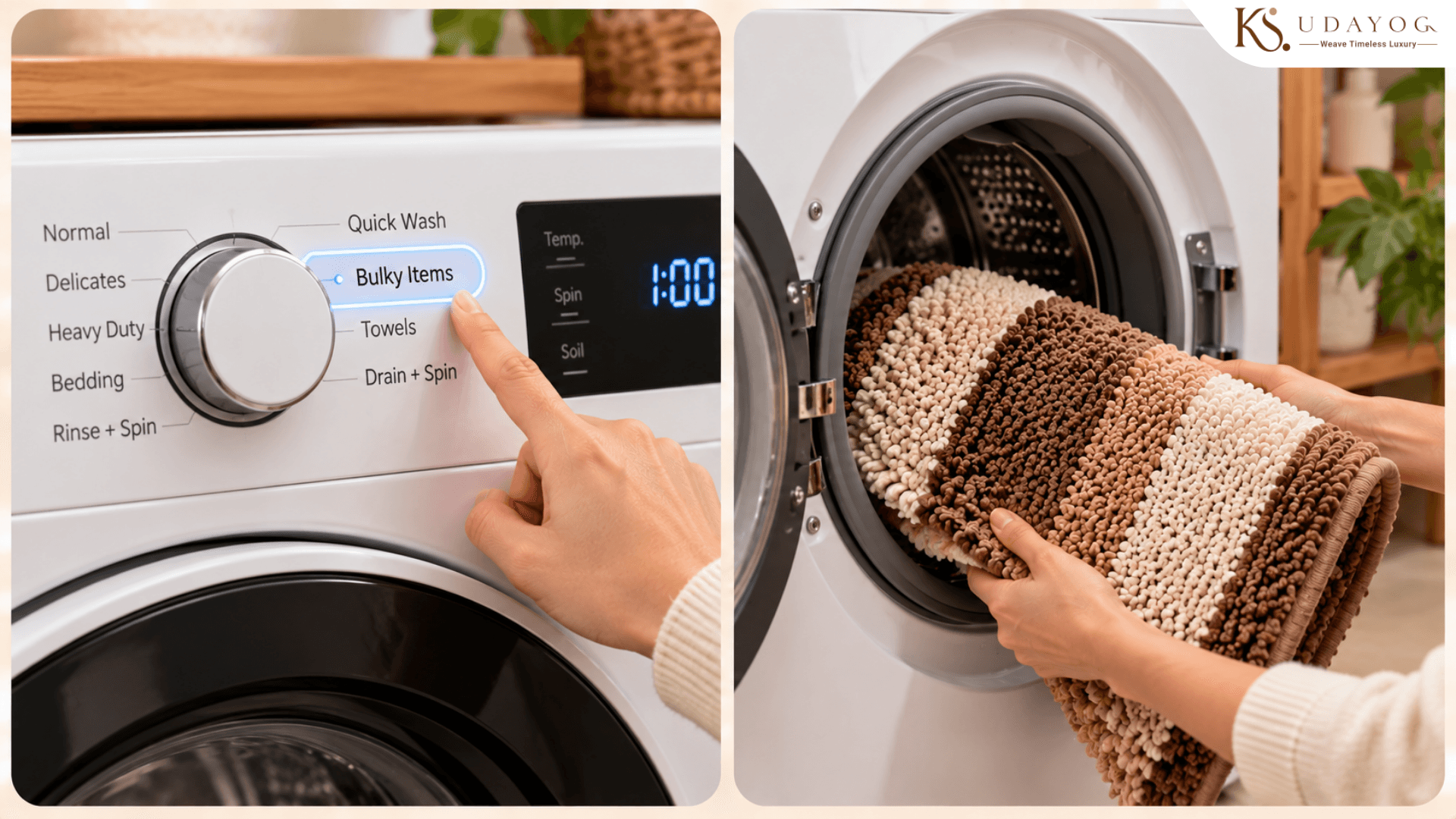
Do not overload the machine. Bath rugs can become considerably heavier when saturated, and a bulky load can affect washing and spinning performance. Whirlpool also recommends balancing a rug load appropriately rather than washing it as an unbalanced heavy item.
5. Use the Right Amount of Detergent
More detergent does not mean a cleaner rug. Excess residue can remain in the fibres, particularly when the rug is thick or highly absorbent.
A mild laundry detergent, used according to the product instructions and care label, is generally a better starting point than a strong chemical treatment.
6. Skip Fabric Softener
Fabric softener can coat textile fibres and reduce their ability to absorb water. That is particularly unhelpful for a bath rug whose main job is to manage moisture around the bathroom floor.
How to Wash Bath Rugs Without a Washing Machine
For bath rugs that are delicate, heavily backed, or not machine-safe, hand washing can be a gentler option. Follow these steps:
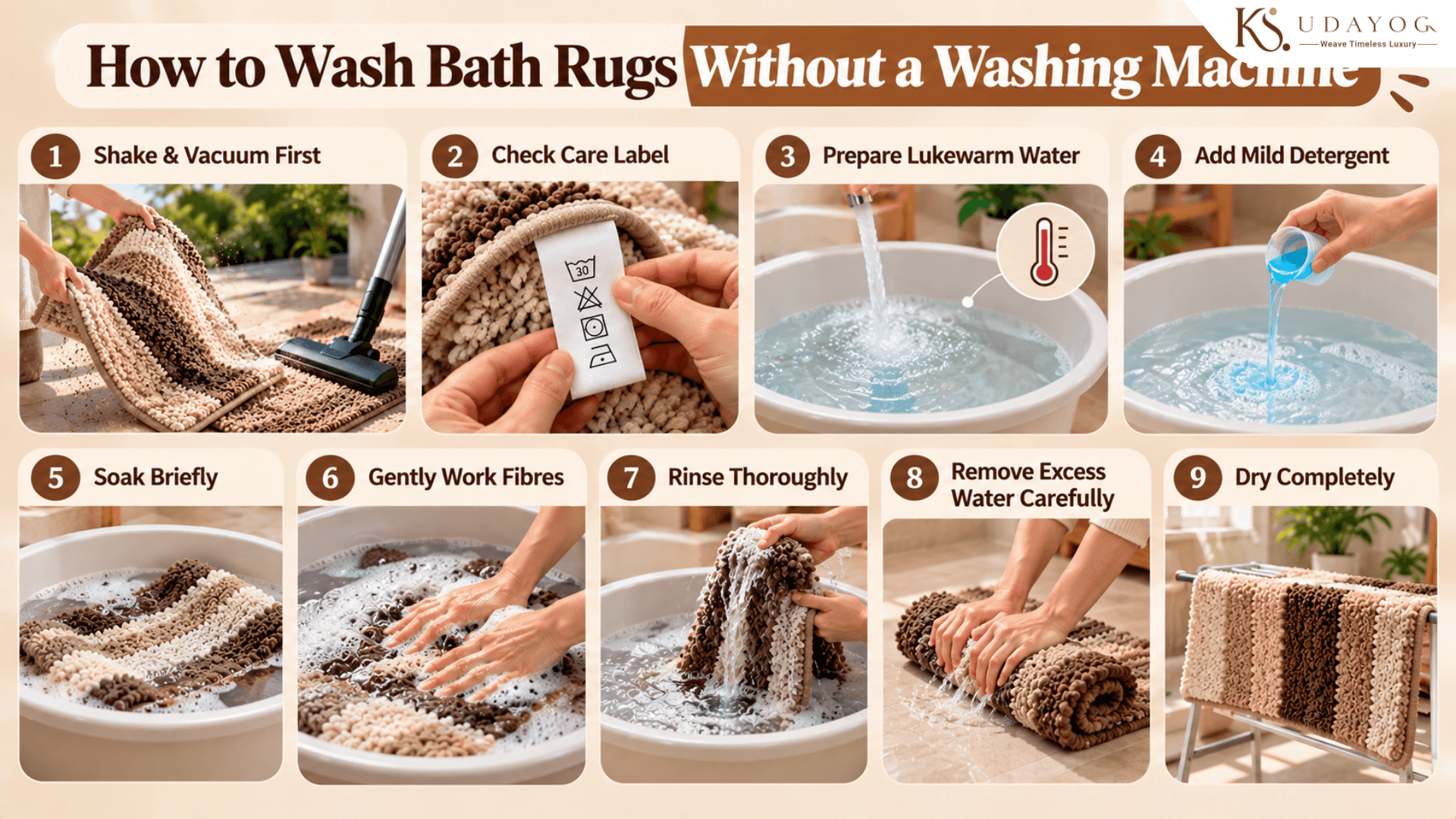
- Shake & Vacuum First: Remove loose hair, dust, and surface debris before adding water.
- Check Care Label: Confirm whether the rug can be soaked and whether any specific detergent or temperature is recommended.
- Prepare Lukewarm Water: Fill a bucket, tub, or clean basin with enough water to fully wet the rug.
- Add Mild Detergent: Use a small amount of gentle laundry detergent. Avoid excessive detergent, as residue can remain in the fibres.
- Soak Briefly: Let the rug sit for around 10–15 minutes, unless the care label recommends otherwise.
- Gently Work Fibres: Rub stained areas with your hands or a soft brush. Avoid aggressive scrubbing that can damage the pile or backing.
- Rinse Thoroughly: Drain the soapy water and rinse several times until the water runs clear and no detergent remains.
- Remove Excess Water Carefully: Press the rug gently rather than twisting or wringing it, especially if it has foam or rubber backing.
- Dry Completely: Hang or lay the rug flat in a well-ventilated area according to its care instructions. Make sure both sides dry before placing it back in the bathroom.
Important: Do not soak rubber-backed, memory-foam, or specialty bath rugs unless their care label specifically allows it. Their backing can deteriorate when exposed to prolonged water, heat, or aggressive handling.
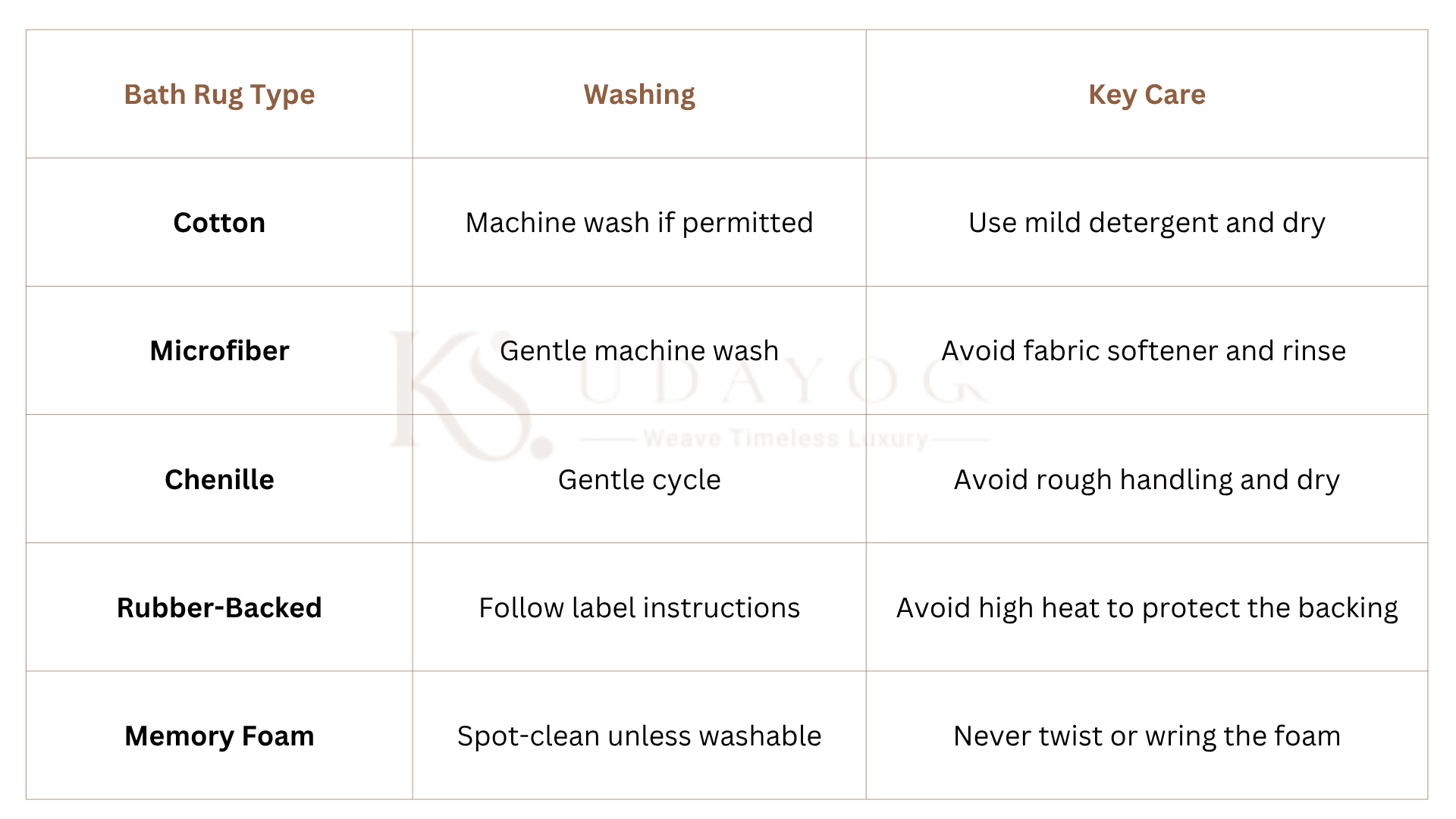
How to Wash Different Types of Bath Rugs
The safest washing method changes with construction. Treating every bath rug as a standard cotton mat can cause unnecessary damage.
- Cotton Bath Rugs
Cotton rugs are often washable and can handle regular cleaning when their care label permits machine washing. Their absorbent structure makes thorough drying especially important.
Avoid excessive detergent and follow the recommended temperature to minimise shrinkage, colour changes, and fibre wear.
- Microfiber Bath Rugs
Microfiber provides a soft, dense surface and is commonly used for quick moisture absorption. Wash according to the label and avoid products that leave a coating over the fibres.
A thorough rinse is useful when detergent residue is a concern.
- Chenille Bath Rugs
Chenille has a raised, textured surface that can lose its appearance if handled too aggressively. Use the recommended cycle and avoid rough items that could pull or snag the surface.
Pay particular attention to drying because the deeper texture can retain moisture.
- Rubber-Backed Bath Rugs
The fabric may look perfectly washable while the backing is the vulnerable component. Use the temperature and drying method specified by the manufacturer, and avoid high heat unless the label explicitly permits it.
If the backing is already cracking or flaking, reconsider machine washing. Heat and mechanical action can accelerate deterioration.
- Memory-Foam Bath Rugs
Memory-foam rugs need special attention because the foam core does not behave like ordinary textile fibres. Do not assume that a removable cover and the complete rug have the same care requirements.
If the care label does not permit machine washing, spot-clean the surface or follow the manufacturer's recommended method. Wringing or twisting foam can also permanently distort its structure.
How Should You Dry a Bath Rug?
Drying is one of the most overlooked parts of bath rug care.
After washing, remove excess water without aggressively twisting the rug. Then follow the care label for tumble drying or air drying.
For rubber- or latex-backed rugs, air drying is generally the safer option unless the manufacturer specifies otherwise. High dryer temperatures can damage the backing even when the textile surface still looks fine.
Whatever method you use, the rug should be completely dry before returning it to the bathroom floor. Putting a damp rug straight back onto a poorly ventilated floor simply recreates the moisture problem that washing was supposed to solve.
What Should You Avoid When Washing Bath Rugs?
Some common cleaning habits can shorten the life of a bath rug surprisingly quickly.
- Avoid High Heat
Hot washing and high dryer temperatures can affect rubber, latex, foam, dyes, and some synthetic constructions. Always follow the manufacturer's temperature limits.
- Avoid Fabric Softener
It can leave a coating on absorbent fibres and reduce moisture uptake over time.
- Avoid Excessive Bleach
Chlorine bleach can damage certain fibres, colours, foam, and backing materials. Do not use it unless the care instructions specifically allow it.
- Avoid Washing Damaged Backing
If the underside is already peeling or crumbling, washing can cause pieces of the backing to break away. Inspect the rug before every machine wash.
- Avoid Leaving the Rug Wet
A wet rug bunched on the bathroom floor takes longer to dry and can develop odours or mildew. Hang or spread it out so air can reach the surface.
How to Remove Common Bath Rug Problems
Musty Smell
A musty smell often signals that moisture has remained trapped for too long. Wash the rug according to its care label, rinse thoroughly, and make sure it dries completely before reuse.
If the smell keeps returning despite proper washing and drying, inspect the underside and surrounding bathroom for persistent moisture.
Soap or Product Residue
Use the appropriate wash cycle and detergent quantity, followed by a thorough rinse where the care instructions permit it. Heavy detergent use can leave residue rather than improving cleanliness.
Small Stains
Treat stains promptly with a fibre-compatible cleaner. Waiting until a stain has dried repeatedly can make removal more difficult.
Peeling Backing
Peeling or crumbling backing is not simply a cosmetic issue. It can reduce grip and leave particles behind. If deterioration is extensive, replacement may be safer than repeatedly washing the rug.
How to Maintain Bath Rugs Between Washes
Long-term performance depends on what happens between laundry days too.
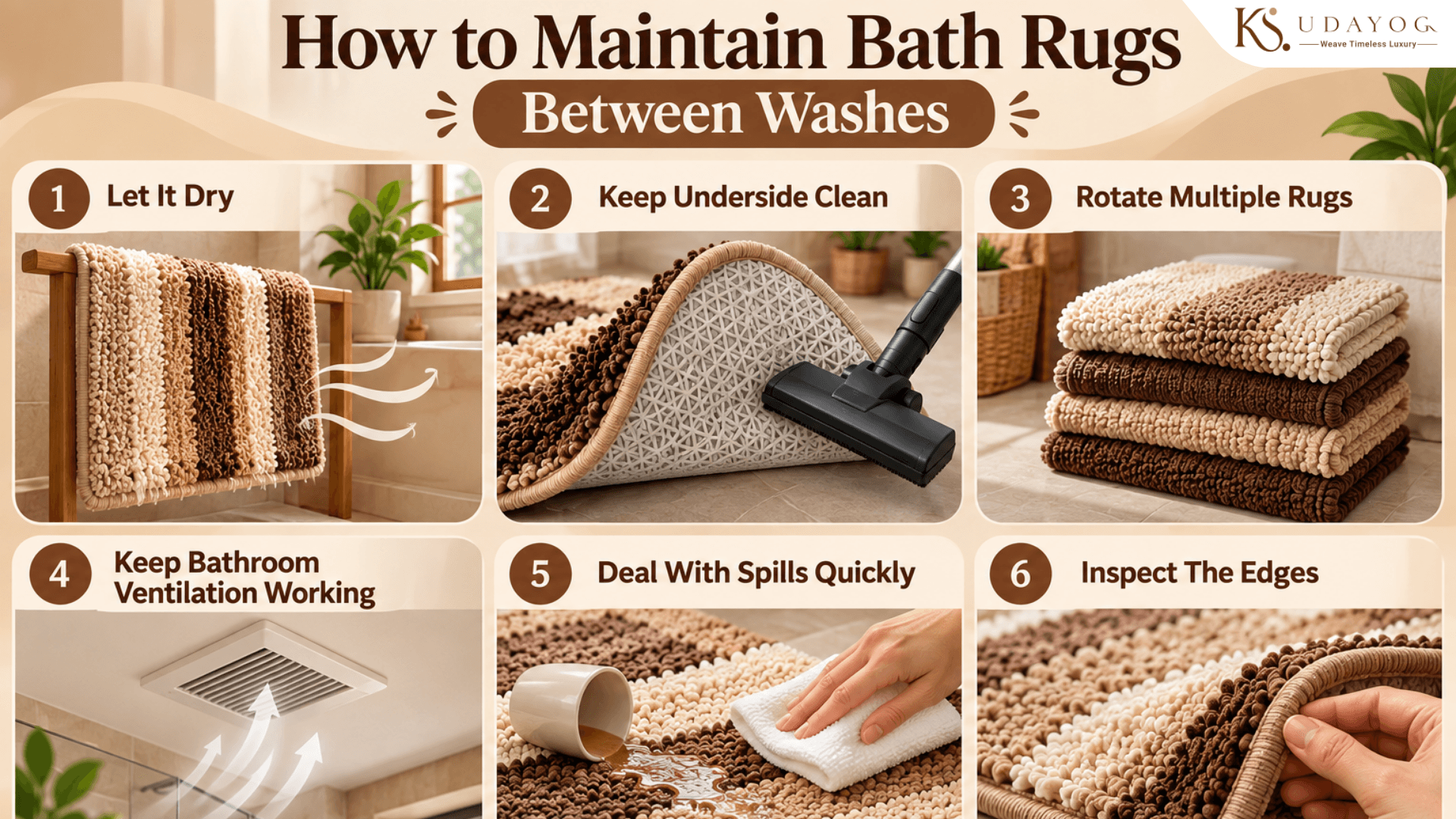
- Let It Dry: Hang the rug or expose it to airflow after bathing rather than leaving it flat while wet.
- Keep Underside Clean: Occasionally inspect and clean the floor underneath the rug because trapped moisture and residue can accumulate there.
- Rotate Multiple Rugs: Using two or more rugs in rotation gives each one more time to dry completely.
- Keep Bathroom Ventilation Working: Better airflow helps reduce the amount of moisture retained by the room and the rug.
- Deal With Spills Quickly: Do not wait for a full wash when a small area has become heavily soiled.
- Inspect The Edges: Loose threads, curling corners, and damaged backing are early signs that the rug needs attention.
What Makes a Bath Rug Easier to Maintain?
Care begins before the first wash. If you are buying a bath rug, look at more than colour and softness.
Check the fibre composition, pile height, backing material, washing instructions, drying requirements, absorbency, colourfastness, and construction quality.
For manufacturers and retailers, these details also influence product positioning. A highly absorbent cotton construction may suit an everyday collection, while a quick-drying synthetic option may be more practical for high-turnover bathrooms. A plush construction may offer a premium feel but require more attention to drying.
The best bath rug is therefore not simply the one that feels softest in the showroom. It is the one whose construction matches the expected use and whose care requirements are realistic for the customer.
Final Thoughts
Good bath rug care comes down to controlling moisture, heat, detergent, and mechanical stress. Washing the rug at the right temperature is only one part of the process; drying it properly, protecting the backing, and responding early to wear can make a much bigger difference to long-term performance.
For retailers and home-textile brands, care instructions should also be treated as part of product quality. A well-designed bath rug should not only look and feel good when new but also have a construction and care routine that customers can realistically maintain.
If you want to expand your washable bath rug collection, contact a reliable bath rug manufacturer in India.
Frequently Asked Questions (FAQs)
Can Bath Rugs Go In The Washing Machine?
Many textile bath rugs can be machine washed, but the care label should always be checked first. Rubber-backed, memory-foam, and delicate constructions may require different treatment.
How Often Should You Wash A Bath Rug?
A heavily used bathroom may require weekly washing, while a lightly used rug may need cleaning every one to two weeks. Humidity, household size, and drying conditions also affect the schedule.
Can You Put A Rubber-Backed Bath Rug In The Dryer?
Do not assume that it is dryer-safe. Many rubber- or latex-backed rugs should be air-dried because high heat can damage the backing. Always follow the product's care instructions.
Why Is My Bath Rug Losing Absorbency?
Excess detergent, fabric softener, product buildup, and fibre wear can reduce absorbency. Fabric softener is particularly problematic because it can coat absorbent fibres.
How Do You Keep A Bath Rug From Smelling?
Wash it at an appropriate frequency, avoid leaving it wet or bunched up, and allow it to dry completely between uses. Persistent odour may indicate trapped moisture, mildew, or a deteriorating backing.
Can I Wash A Memory-Foam Bath Rug In A Washing Machine?
Not necessarily. Memory foam requires different care from ordinary textile rugs, and some products should not be machine washed. Check the manufacturer's instructions before putting the complete rug into a washer.