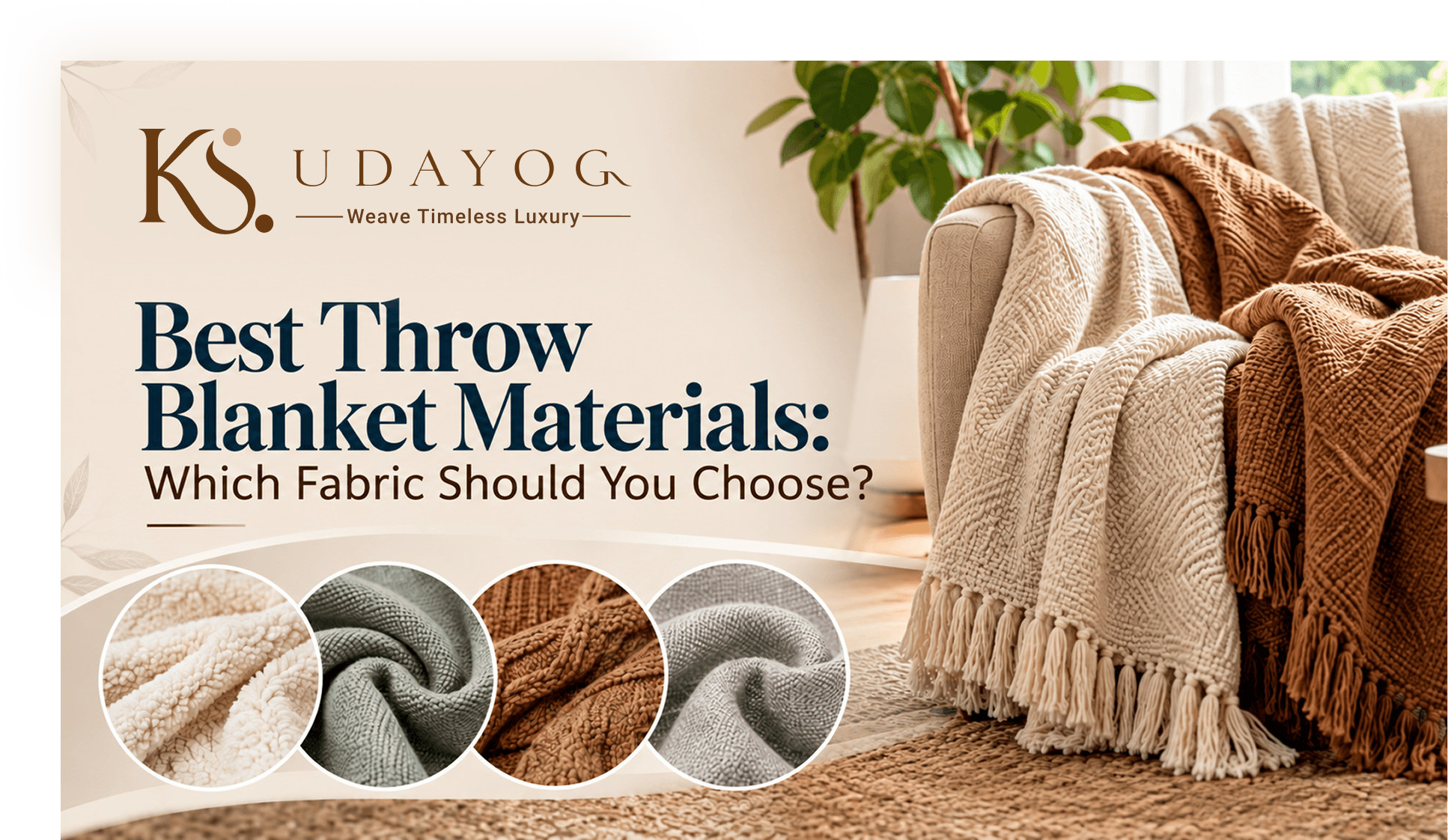
Ever picked up a soft-looking throw in a store and wondered whether it would actually stay comfortable after repeated washing and regular use? The fabric behind that softness matters, especially in Indian homes where a throw may be used differently across cold winters, mild evenings, and air-conditioned rooms.
The category is also expanding as consumers look for more choices in comfort, texture, appearance, and home décor. The global throw blankets market is expected to grow from $4.32 billion in 2026 to $6.767 billion by 2035, at a 5.4% CAGR, reflecting the wider demand for different throw blanket options.
That variety can make buying a throw confusing because every material comes with its own strengths and limitations. The guide compares wool, cotton, viscose, fleece, and other popular fabrics to help you decide which throw blanket material fits your needs best.
How To Choose the Best Throw Blanket Material
Before choosing a perfect throw blanket, look beyond softness or appearance. The right throw material should match the room, season, frequency of use, and care routine.
Consider these factors:
- Warmth: Wool and fleece generally provide more insulation, while cotton and linen suit warmer conditions.
- Breathability: Cotton, linen, wool, and some regenerated cellulosic fibres allow better moisture and air management.
- Softness: Cashmere, alpaca, fine Merino, viscose, and microfiber offer noticeably different forms of softness.
- Weight: Lightweight materials work well for layering, travel, and warmer rooms.
- Maintenance: Cotton and many synthetic throws are easier to wash than delicate wool, cashmere, or silk.
- Durability: Fibre quality, yarn construction, weave, knitting, and finishing can matter as much as the fibre itself.
- Budget: Acrylic, polyester, and microfiber generally offer accessible price points, while cashmere, alpaca, and fine wool occupy premium categories.
- Sourcing: For buyers concerned about environmental or ethical considerations, look at the fibre origin, processing method, certifications, and supply chain rather than relying only on material names.
What’s the Perfect Throw Blanket Material? Expert Throw Buying Tips
The best throw blanket material depends on where you use it, how warm you want it, and how much care you prefer. Cotton, wool, viscose, fleece, and premium fibres each offer different benefits. The tips given below compare them to help you choose confidently.
1. Cotton Throws: Breathable and Versatile
A cotton throw is one of the easiest choices for everyday home use. Cotton feels soft, allows airflow, absorbs moisture, and works across a wide range of interiors and seasons.
Different cotton qualities and constructions can produce very different results. Long-staple cotton can offer a smoother hand feel, while waffle, thermal, knitted, or woven constructions change texture and warmth.
For Indian homes, lightweight cotton throws can work particularly well in warmer weather, air-conditioned rooms, guest spaces, and living rooms where easy washing matters.
However, cotton is absorbent rather than inherently moisture-wicking, and its environmental footprint depends on cultivation, water use, farming practices, and processing.
Best suited for: Everyday use, warm weather, family homes, guest rooms, and easy-care collections.
2. Wool Throws: Explore Different Wool Types
Wool is not one single experience. Fibre fineness, animal source, processing, and construction can change how a wool throw feels, weighs, and performs.
Common wool options include:
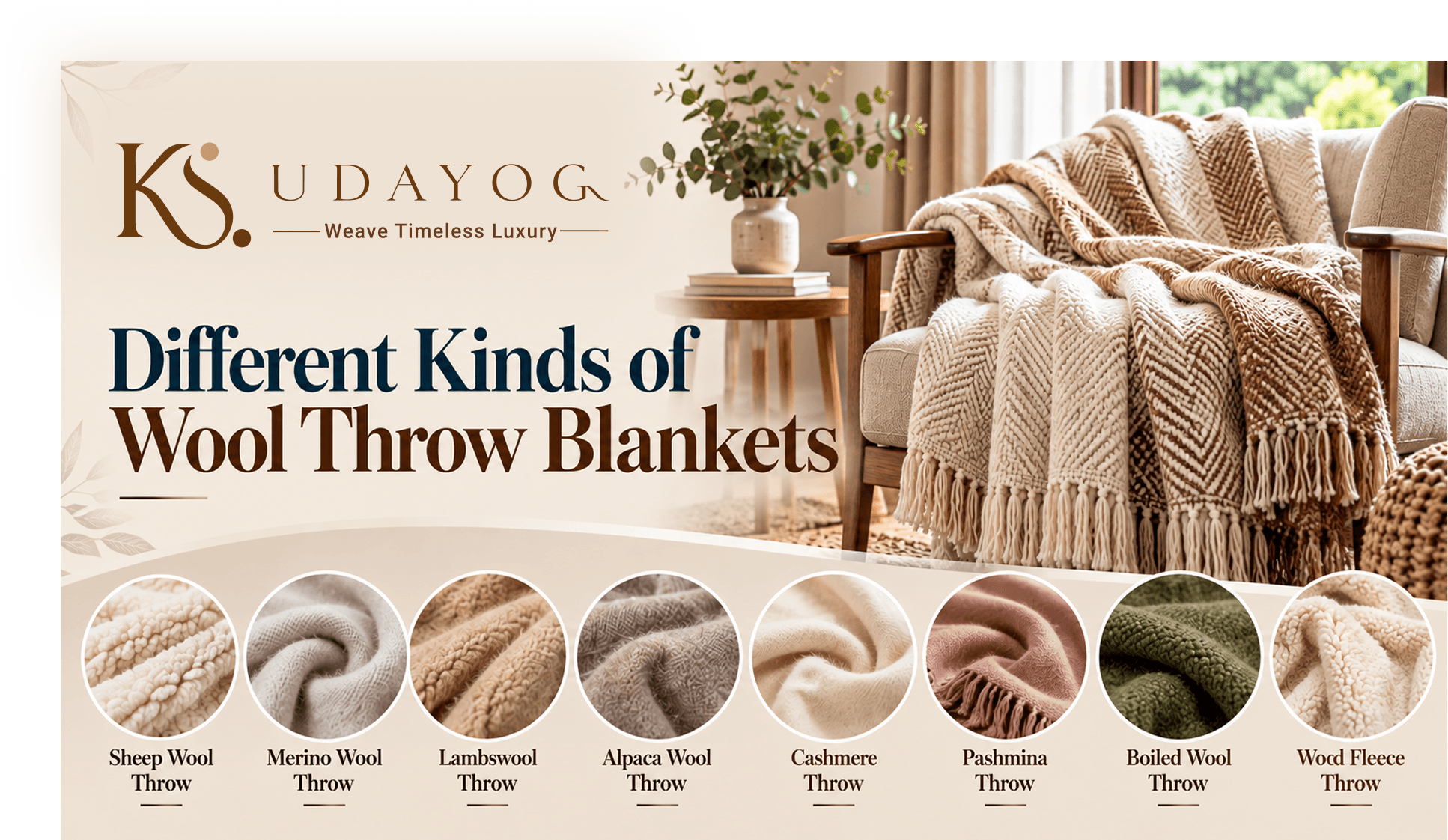
- Sheep Wool: Warm, insulating, durable, and suitable for colder conditions.
- Merino Wool: Finer and softer than many traditional wool varieties, with good temperature and moisture management.
- Lambswool: Obtained from the first shearing of a young sheep and valued for softness, warmth, and insulation.
- Alpaca Wool: Lightweight, soft, warm, and breathable, with a smooth luxury feel.
- Cashmere: Exceptionally soft and lightweight, with high warmth relative to its weight.
- Pashmina: A fine cashmere-type fibre traditionally associated with exceptionally soft, lightweight textiles.
- Boiled Wool: Densely felted wool with a compact structure, suited to warmer, more substantial throws.
- Wool Fleece: A softer, loftier wool construction that can provide warmth without the dense feel of boiled wool.
For regular use, Merino can offer a useful balance between softness and performance. Lambswool works well when softness and warmth are priorities, while alpaca and cashmere generally occupy more premium positions.
Best suited for: Winter throws, premium collections, colder rooms, luxury interiors, and customers seeking natural insulation.
3. Silk Throws: Lightweight and Refined
Silk brings a smooth surface, lightweight feel, and refined drape to throw blankets. It can suit decorative applications and people looking for a more delicate, luxurious textile.
Its main limitation is care. Silk can be more sensitive to abrasion, washing, sunlight, and everyday wear than cotton or many synthetic alternatives.
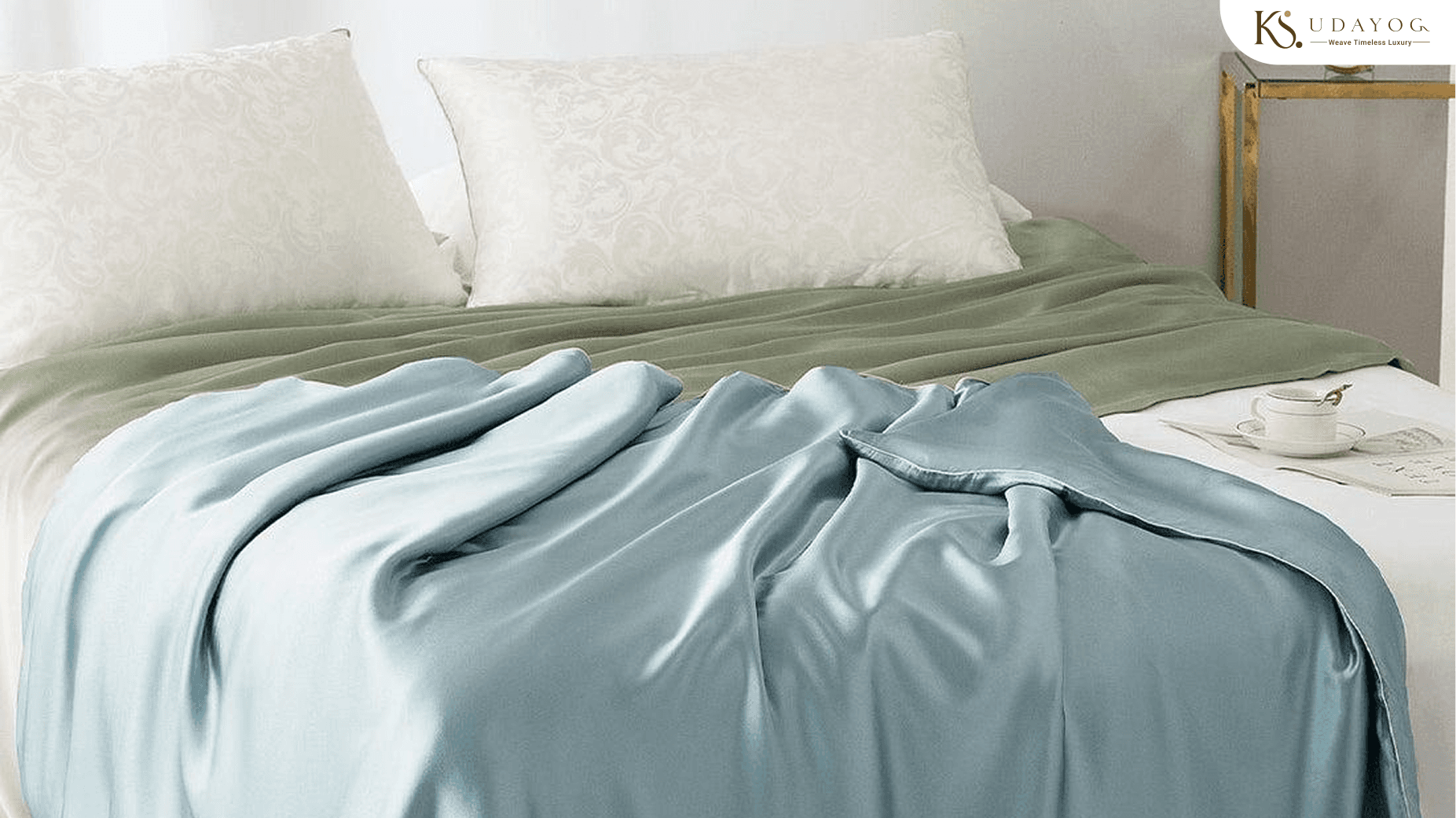
For a throw that is mainly decorative or used occasionally, silk can create a sophisticated finish. For a high-traffic family room, a more durable construction may be practical.
Best suited for: Luxury interiors, decorative throws, premium gifting, and occasional use.
3. Linen and Hemp Throws: Natural Options for Lighter Use
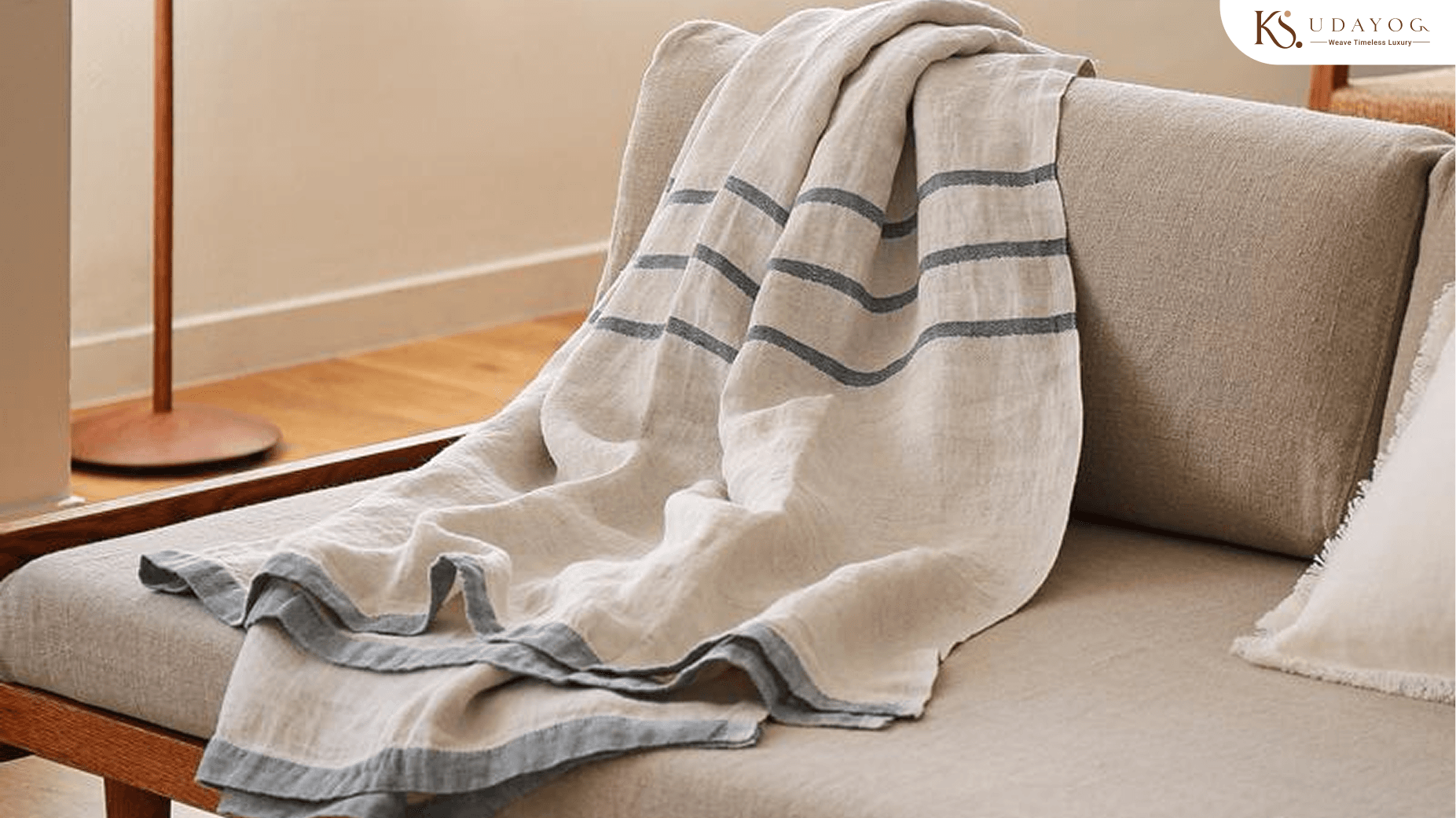
Linen comes from flax and is valued for its crisp texture, breathability, and ability to suit warmer conditions. It generally provides a cooler hand feel than heavy wool and can become softer through use and washing.
Hemp is another plant-derived textile option. It is known for a durable fibre structure and a natural, slightly textured appearance, making it interesting for brands focused on relaxed or rustic home aesthetics.
Neither should automatically be labelled “sustainable” simply because the fibre comes from a plant. Farming methods, processing, dyeing, finishing, and supply-chain practices still influence the overall environmental impact.
Best suited for: Summer collections, relaxed interiors, natural-texture ranges, and lightweight layering.
4. Bamboo, Viscose and Lyocell Throws: Smooth and Drapable
Viscose throws are popular because they can feel exceptionally smooth, soft, and fluid. Viscose is a regenerated cellulosic fibre, meaning cellulose is processed into a usable textile fibre.
Bamboo-derived textiles require a little more attention. A product marketed as “bamboo” may actually be a regenerated fibre such as bamboo viscose or bamboo lyocell. The processing method therefore matters when assessing its environmental credentials.
Bamboo-based viscose can provide a soft, breathable hand feel, while lyocell is another regenerated-cellulosic route with different processing characteristics. Always check the actual fibre composition and relevant certifications instead of relying only on the word “bamboo.”
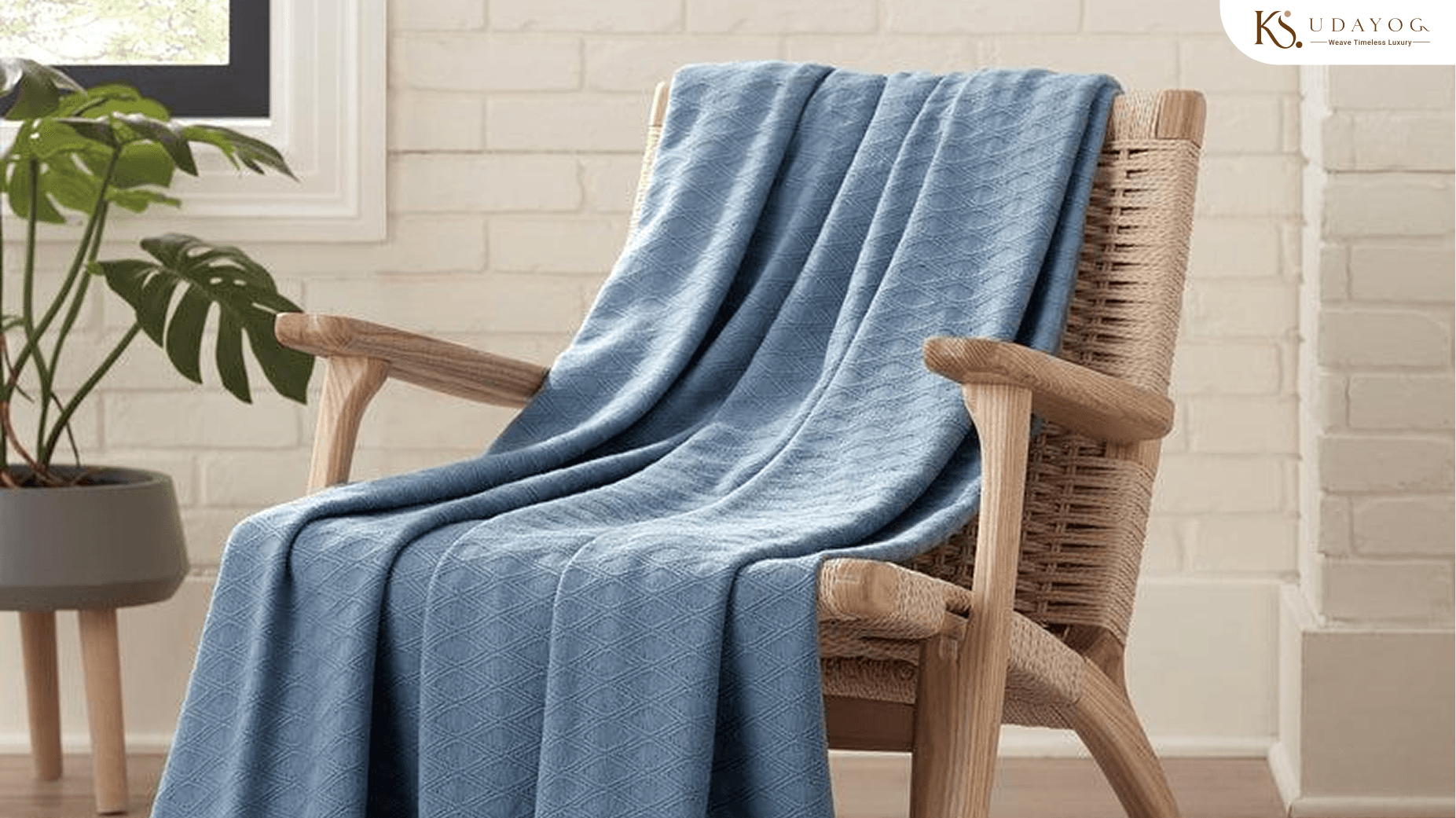
Best suited for: Soft throws, warmer rooms, smooth drape, premium-feel collections, and lightweight layering.
5. Fleece, Polyester and Sherpa Throws: Warm and Easy to Maintain
Fleece is generally made from synthetic fibres, most commonly polyester. Its brushed surface creates a soft hand feel while keeping the throw lightweight and warm.
Polyester throws are popular in commercial and mass-market collections because they can offer durability, colour versatility, easy care, and accessible pricing. Sherpa takes the concept further with a fluffy, wool-like surface designed for plush comfort.
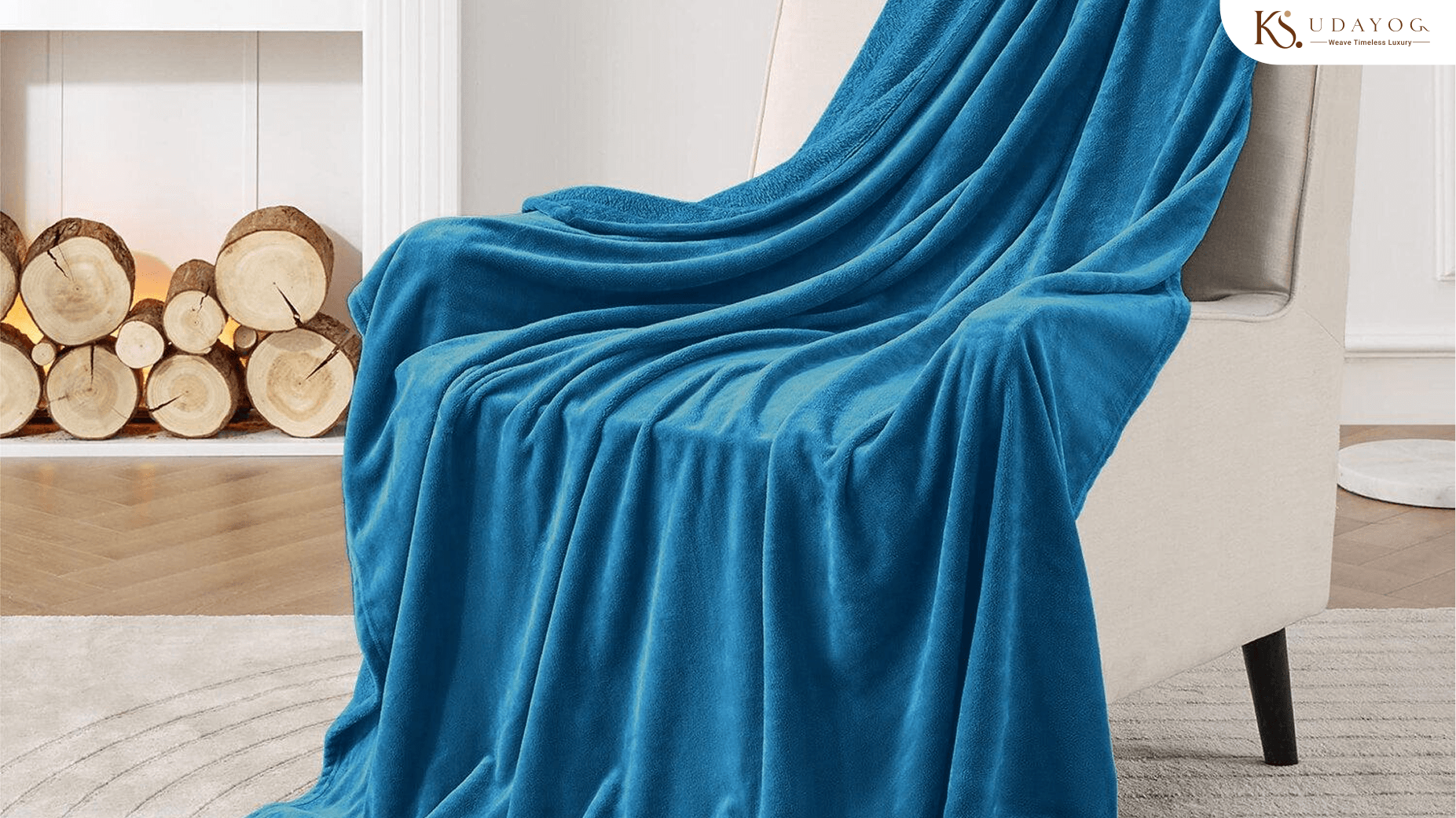
The trade-off is breathability. Some thick synthetic constructions can retain heat, while synthetic fibres also come with environmental considerations related to fossil-based production and fibre shedding.
Best suited for: Winter throws, family use, budget collections, promotional products, and easy-care ranges.
6. Acrylic Throws: Affordable and Decorative
Acrylic is commonly used as a wool alternative because it can provide warmth, softness, and strong colour options at a lower price.
It is particularly useful for decorative throws where colour, pattern, and affordability are important. However, lower-quality acrylic can develop pilling or static with use, so yarn quality and construction deserve attention.
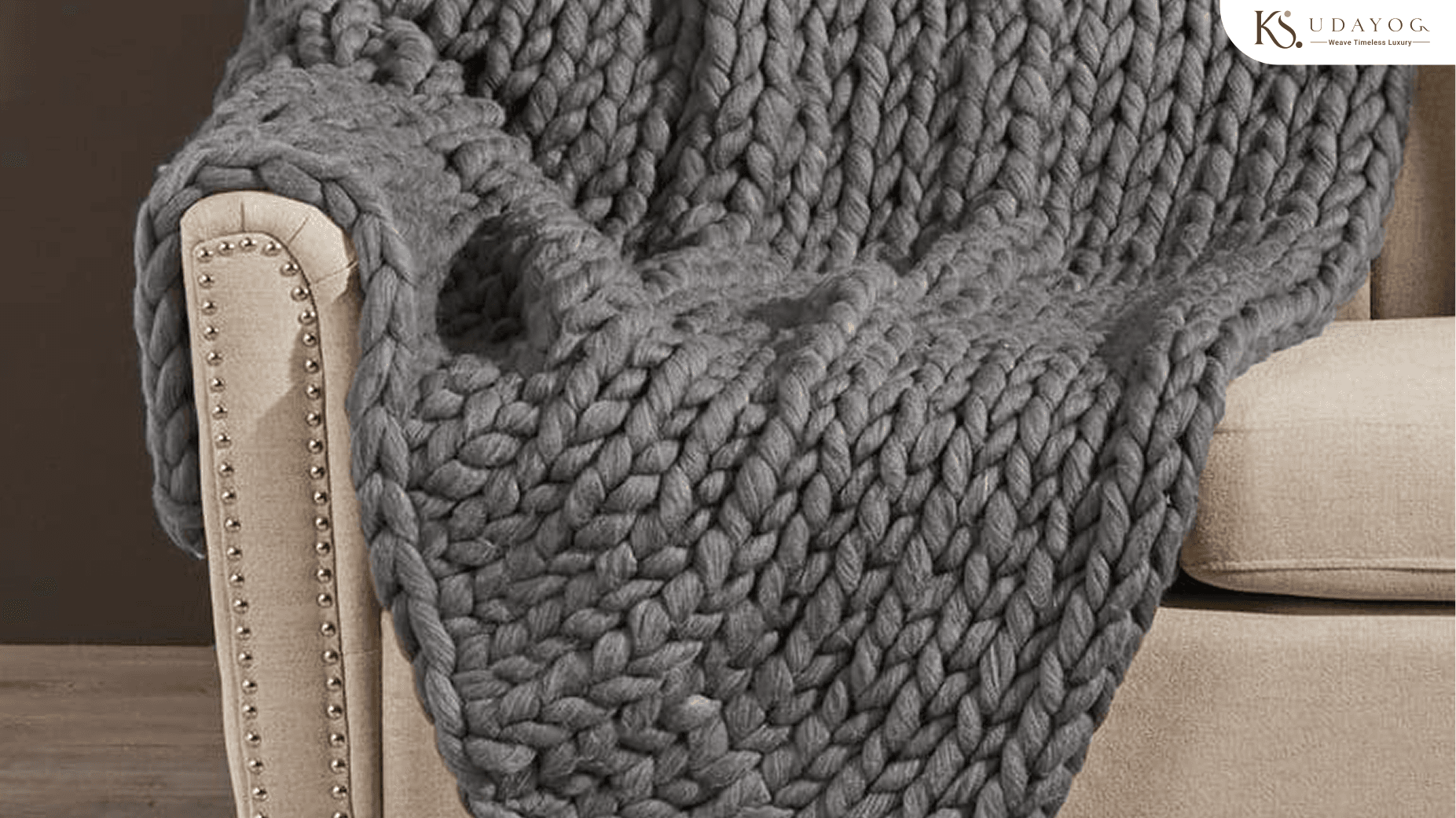
Acrylic can also be blended with other fibres to alter softness, durability, appearance, or price.
Best suited for: Decorative throws, colourful collections, budget-conscious buyers, and seasonal products.
7. Microfiber and Plush Throws: Soft Everyday Comfort
Microfiber uses extremely fine synthetic fibres to create a smooth, soft surface. It is lightweight, generally quick to dry, and commonly available at accessible prices.
Plush and Sherpa constructions can create an even softer, deeper surface, making them popular for winter throws and cosy sofa collections.
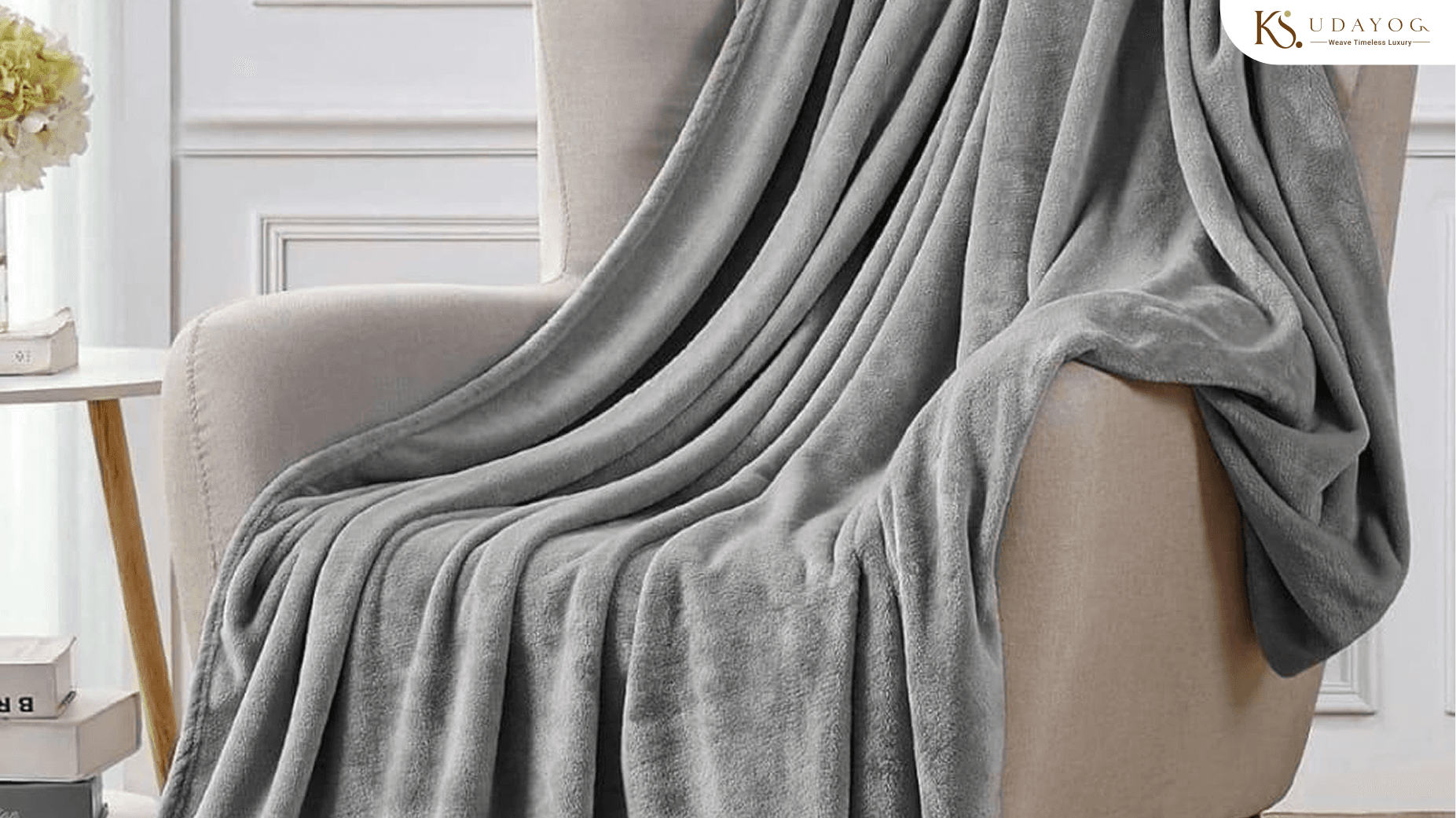
The main consideration is heat retention. A thick microfiber or plush throw may feel too warm in already-hot conditions, particularly when used for long periods.
Best suited for: Sofa throws, winter comfort, children’s collections, travel, and easy-care products.
8. Chenille Throws: Rich Texture for Interiors
Chenille is particularly appealing when the throw needs to function as both a comfort layer and a decorative element.
Its distinctive fuzzy yarn structure creates a velvety surface with visual depth. Depending on the fibre used to make the chenille yarn, its performance can vary considerably.
Chenille works especially well with textured interiors, statement cushions, accent chairs, and layered sofa styling. Because raised surfaces can be more vulnerable to snagging or abrasion, construction and care instructions matter.
Best suited for: Decorative throws, textured interiors, premium-looking living rooms, and accent pieces.
9. Polyamide Throw Blankets: Durable and Practical
Polyamide is a synthetic fibre valued for strength, durability, versatility, and quick drying. It can be useful when a throw needs to withstand repeated handling while maintaining a relatively lightweight feel.
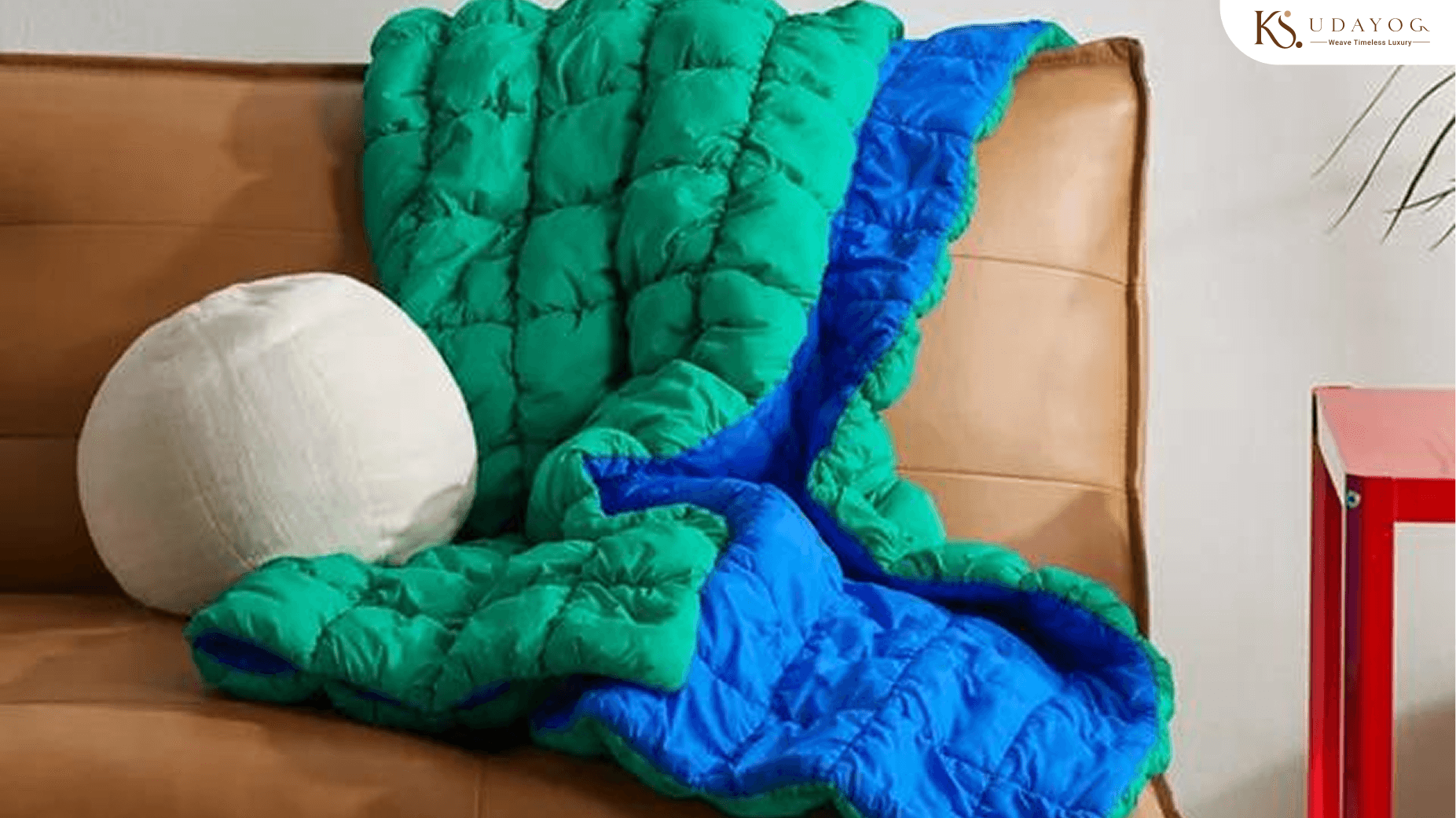
Its sustainability profile is more complicated than its performance characteristics. Polyamide production can depend on fossil-based resources, while recycling and responsible sourcing can influence its overall impact.
Best suited for: Durable collections, practical home textiles, lightweight throws, and products requiring quick drying.
10. Recycled Polyester Throw Blankets: A Different Synthetic Option
Recycled polyester is produced by processing existing polyester waste, including post-consumer PET materials, into new polyester fibre.
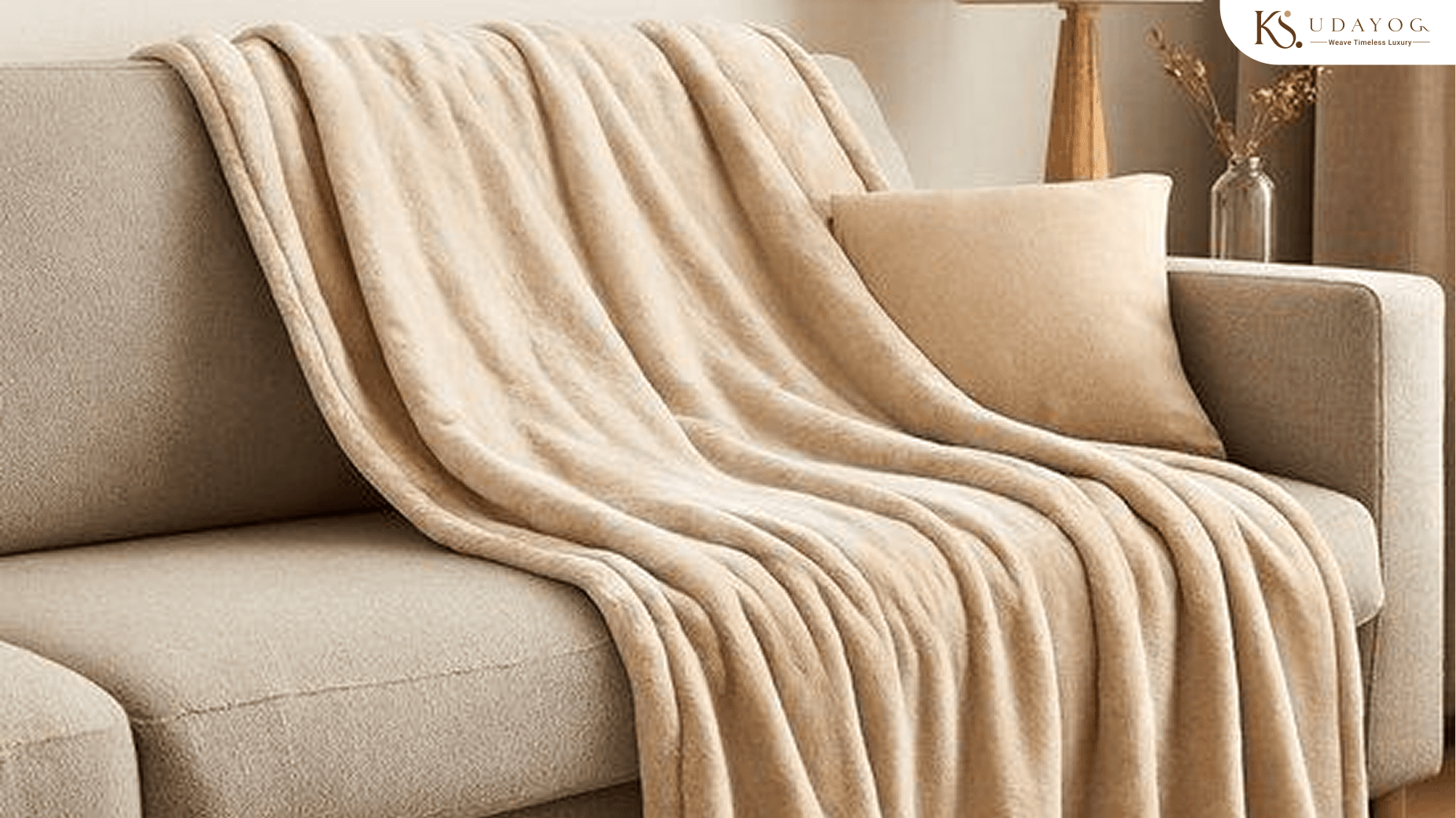
For manufacturers and brands, it can provide the familiar durability and versatility of polyester while reducing dependence on virgin polyester feedstock. However, recycled does not mean impact-free. Microfibre release, chemical processing, recycling infrastructure, and end-of-life management still matter.
Best suited for: Recycled-textile collections, promotional ranges, everyday throws, and brands seeking recycled-content options.
11. Down Throw Blankets: Lightweight Warmth for Cold Conditions
Down provides a high warmth-to-weight ratio because its structure creates substantial loft. It is more relevant to cold-weather bedding and premium insulating products than lightweight decorative throws.
Its performance can decline in wet or humid conditions, and sourcing standards matter when animal-derived down is used.

For Indian retail collections, down is generally more relevant to colder regions or premium winter ranges than everyday all-season throws.
Blended Throw Blanket Materials: Combining Different Benefits
Blended fabrics can combine characteristics that are difficult to achieve with one fibre alone.
Common examples include:
- Cotton-Polyester: Cotton comfort with improved easy-care characteristics.
- Cotton-Bamboo: Softness and breathability with a smoother drape.
- Wool-Acrylic: Wool warmth with some of acrylic's affordability and colour flexibility.
- Wool-Synthetic Blends: Useful when brands want warmth with easier maintenance.
- Bamboo-Cotton: A popular option for softer, lightweight home textiles.
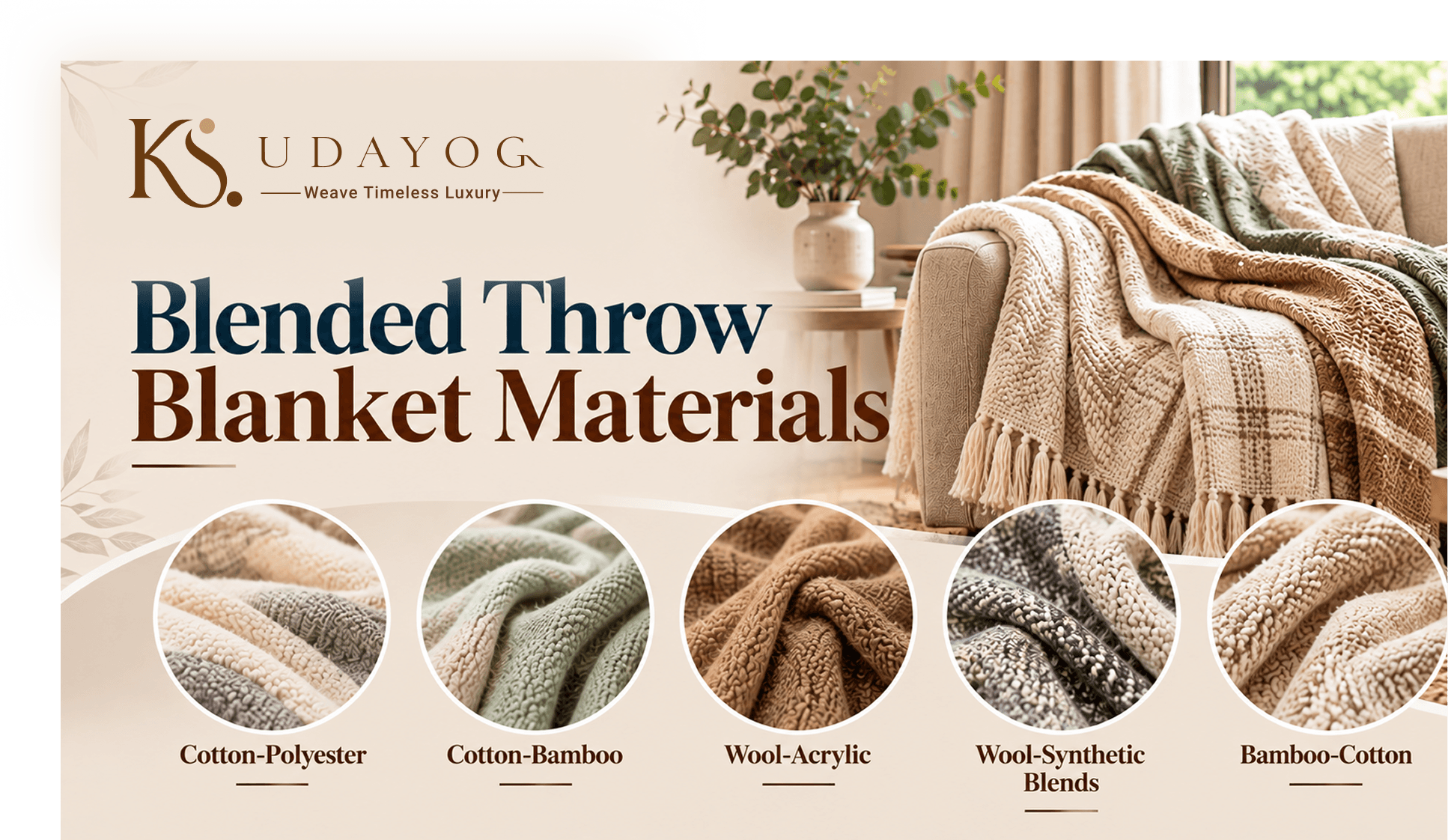
The exact percentage matters. A throw labelled simply as a “cotton blend” does not tell a buyer enough about performance, so fibre composition should always be checked.
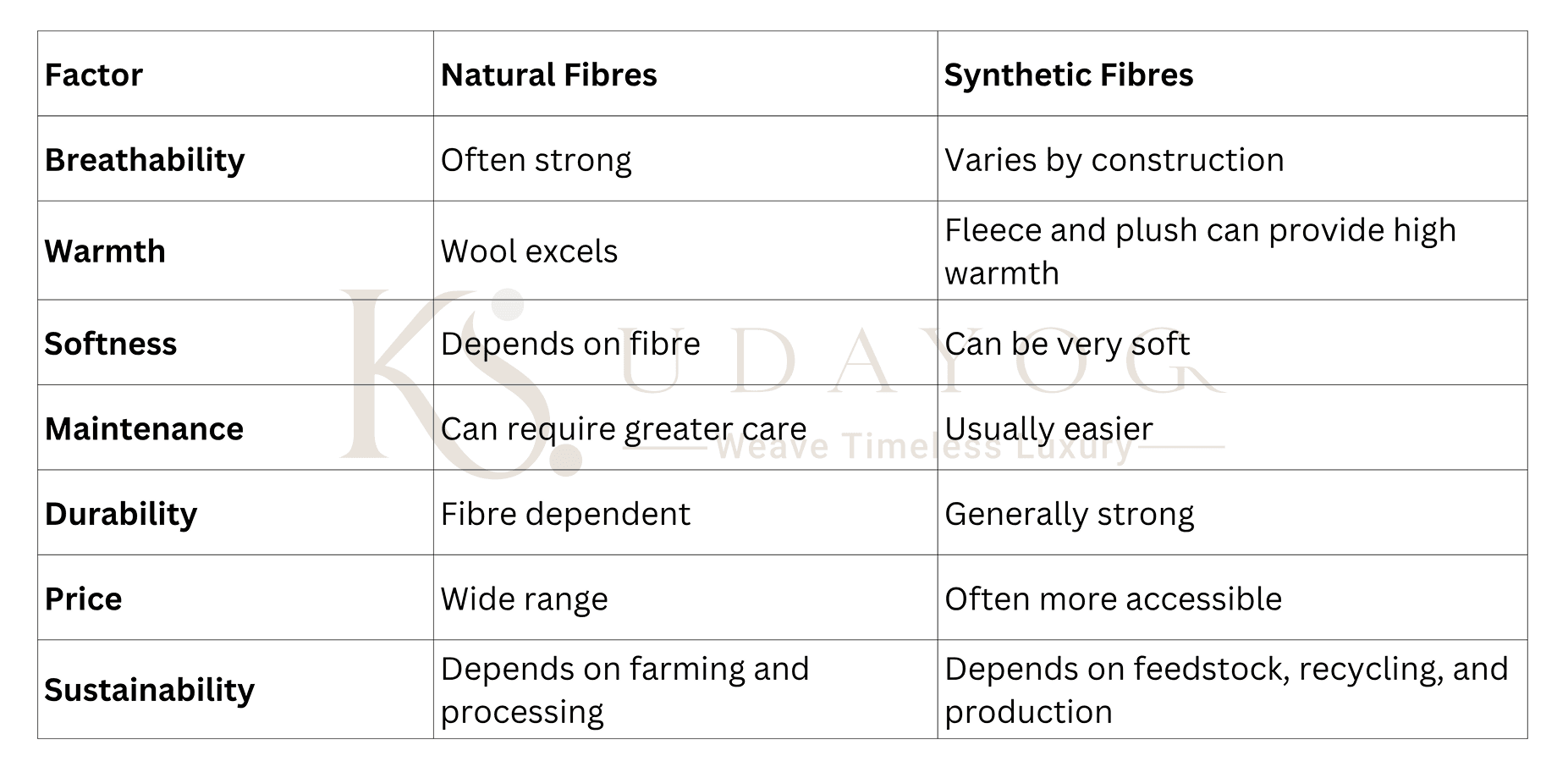
Natural vs Synthetic Throw Blanket Materials: Which To Choose
There is no universal winner between natural and synthetic fibres. The practical difference comes down to the specific fibre, construction, intended use, and quality.
Which Throw Blanket Material Is Best for Different Needs?
Different rooms call for different throw qualities. A sofa throw used throughout the day needs to handle frequent handling and washing, while a bedroom throw can focus more on warmth and softness. For decorative use, texture and drape become more important, whereas a family throw needs a practical balance between comfort and durability.
Your local climate also changes the decision. In warmer areas, a heavy, heat-retaining throw may spend more time folded than used, while colder homes can benefit from greater insulation. For mixed weather, choosing a medium-weight throw or a layered construction gives you more flexibility throughout the year.
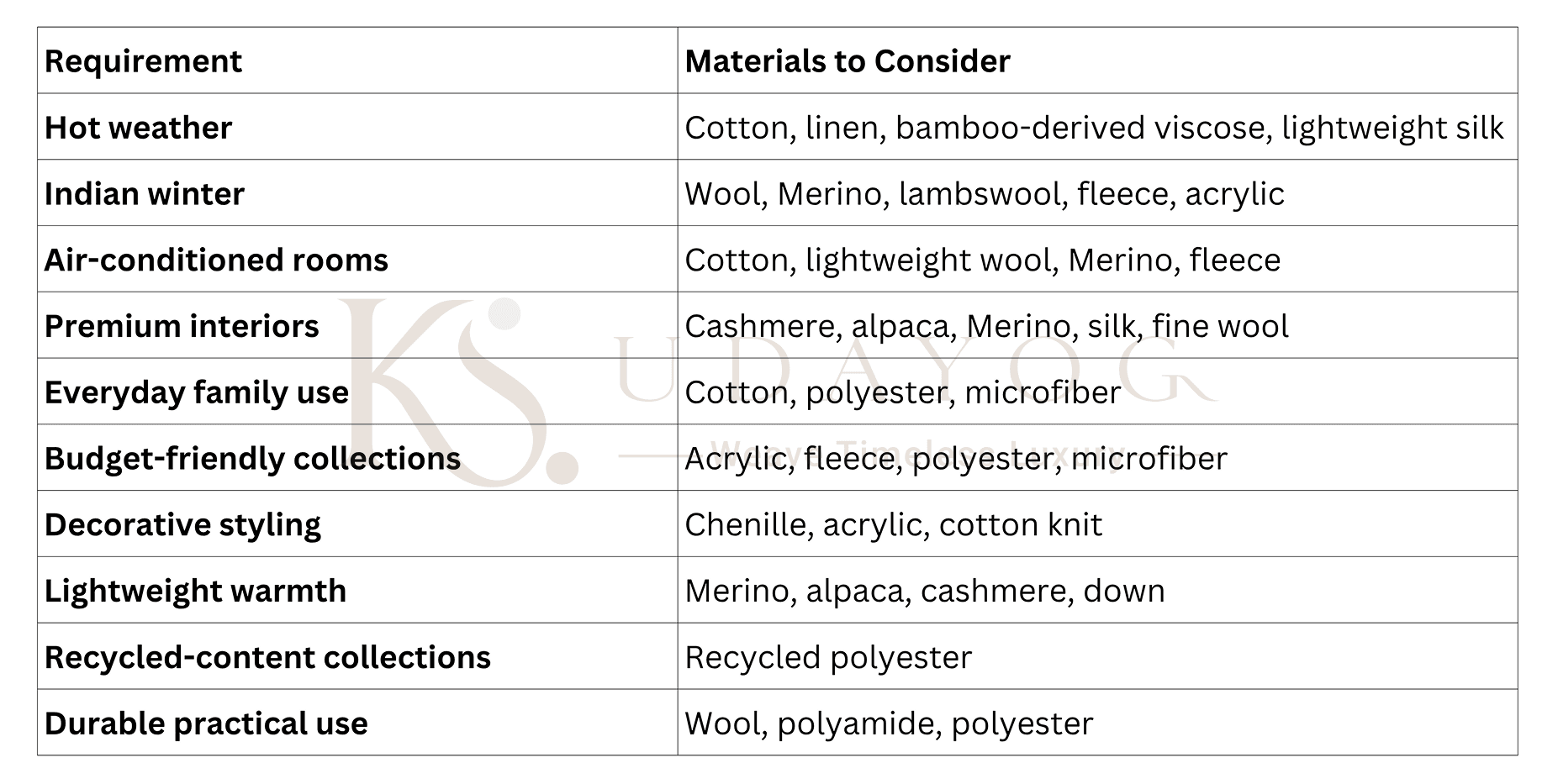
These are starting points rather than fixed rules. A lightweight wool throw, for example, can behave very differently from a dense wool construction.
Which Throw Blanket Material Works Best for Indian Weather?
India does not have one uniform blanket requirement. A customer in a hot and humid coastal city may want a very different throw from someone experiencing cold northern winters.
For warmer regions, cotton, linen, and lightweight bamboo-derived fabrics can provide a more comfortable option. In air-conditioned rooms, medium-weight cotton, Merino, or lightweight fleece can provide additional warmth without requiring a heavy winter throw.
For colder northern winters, wool, lambswool, alpaca, fleece, and heavier constructions become more relevant.
This is why manufacturers and retailers should develop collections by climate, GSM, construction, and intended use, rather than simply labelling every throw as an all-season product.
What GSM Should You Look for in a Throw Blanket?
GSM means grams per square metre and indicates the fabric's weight. It is useful for comparing products, but GSM alone does not determine how warm a throw will feel.
A high-GSM cotton throw can feel substantially different from a high-GSM fleece or wool throw because fibre structure, loft, weave, knitting, and finishing all influence insulation.
For retailers, GSM should therefore be evaluated alongside fibre composition, construction, dimensions, hand feel, and intended season.
What Should Retailers Check When Sourcing Throw Blankets in India?
Material selection is only the first step when buying throws in bulk. Retailers, hospitality businesses, and private-label brands should check:
- Fibre composition and blend percentage
- GSM and finished dimensions
- Yarn quality and construction
- Pilling resistance
- Colourfastness
- Shrinkage after washing
- Surface softness and hand feel
- Finishing quality
- Care requirements
- Certifications, where applicable
- MOQ and production capacity
- Custom colours, patterns, and sizes
- Private-label packaging and branding options
A material name alone does not guarantee product quality. Two throws made from the same fibre can perform very differently because of yarn quality, construction, finishing, and manufacturing standards.
Final Remarks
The best throw blanket material depends on the job the throw needs to perform. Cotton suits breathable everyday comfort, wool offers natural insulation, cashmere and alpaca serve premium collections, viscose provides smooth drape, while fleece, acrylic, microfiber, polyester, and polyamide offer practical synthetic alternatives.
For sustainable sourcing, avoid judging a material only by its natural or recycled label. Consider the complete picture, including fibre origin, processing, durability, care requirements, certifications, and end-of-life considerations.
For retailers and home-textile brands, the most useful approach is to match the fibre and construction with the customer, climate, price point, and intended use. If you need custom throws for your collection, partner with a trusted throw manufacturer in India for quality materials, custom designs, and bulk production.
Frequently Asked Questions (FAQs)
What Is The Softest Material For A Throw Blanket?
Cashmere, fine alpaca, and high-quality Merino can provide exceptionally soft natural options. Viscose and microfiber can also deliver a smooth, plush feel at different price points.
What Is The Safest Material For A Throw Blanket?
Cotton is a practical choice for many people because it is breathable, soft, and widely available. However, safety also depends on dyes, finishes, construction, and proper care.
What Is The Healthiest Blanket To Sleep With?
There is no single healthiest blanket for everyone. Breathable materials such as cotton and lightweight wool can provide comfortable temperature management, while personal sensitivities and climate should guide the choice.
How Much Material Is Needed For A Throw Blanket?
The fabric quantity depends on the finished dimensions, fabric width, construction, and required seam allowance. A standard throw generally requires more fabric than its finished size because of hemming, shrinkage, and cutting requirements.
What Is A Good Size For A Throw Blanket?
A common throw size is around 50 × 60 inches, although sizes vary by brand and purpose. Larger throws work better for full-body coverage, while smaller ones suit sofas and decorative styling.
Is Cotton Or Wool Better For A Throw Blanket?
Cotton generally suits warmer conditions and frequent washing, while wool provides greater insulation. The better option depends on climate, warmth requirements, and care preferences.
What Is The Difference Between Lambswool And Merino Wool?
Lambswool refers to wool from a young sheep's first shearing, while Merino refers to wool from Merino sheep. Both can be soft, but fibre fineness varies by grade.
Is Recycled Polyester Completely Sustainable?
No material should automatically be considered completely sustainable. Recycled polyester can reduce reliance on virgin polyester, but production, microfibre release, recycling systems, and end-of-life management remain relevant considerations.