AI Summary
India has earned global recognition for producing handcrafted carpets through skilled craftsmanship, modern manufacturing, and dependable export capabilities. This guide explores industry strengths, manufacturing expertise, sourcing advantages, and practical considerations that help international buyers choose Indian carpet manufacturers and exporters for long-term business partnerships and growth.
Quick Overview
- Indian carpet manufacturers combine craftsmanship with modern production for exceptional export-quality flooring solutions.
- Premium raw materials contribute to durable, attractive, and commercially successful carpet collections worldwide.
- Custom manufacturing allows businesses to develop exclusive carpet designs matching diverse customer preferences.
- Carpet exporters support international buyers through transparent communication and timely production processes.
- Sustainable manufacturing practices strengthen India's position within the rapidly growing global carpet export market.
Walk into a luxury hotel, corporate office, or designer home anywhere in the world, and there's a good chance the carpet beneath your feet was made in India. For decades, Indian manufacturers have earned global recognition by combining skilled craftsmanship, large-scale production, and the ability to meet diverse international market requirements.
India's position as one of the world's leading carpet exporters is built on much more than tradition. Strong manufacturing capabilities, a wide variety of handmade and machine-made carpets, competitive pricing, quality standards, and reliable export networks have helped the country become a preferred sourcing destination for buyers across the globe.
This guide explores why India continues to lead the global carpet export industry, the factors driving its success, key export markets, major product categories, and what international buyers should know when sourcing carpets from India in 2026.
India's Carpet Industry At A Glance: Growth, Exports, And Opportunities
A beautiful carpet often becomes the first detail people notice when they enter a room. Behind every design, however, lies a much larger story of craftsmanship, manufacturing expertise, and global trade. India has earned that trust over decades, becoming one of the world's leading carpet manufacturing and exporting destinations.
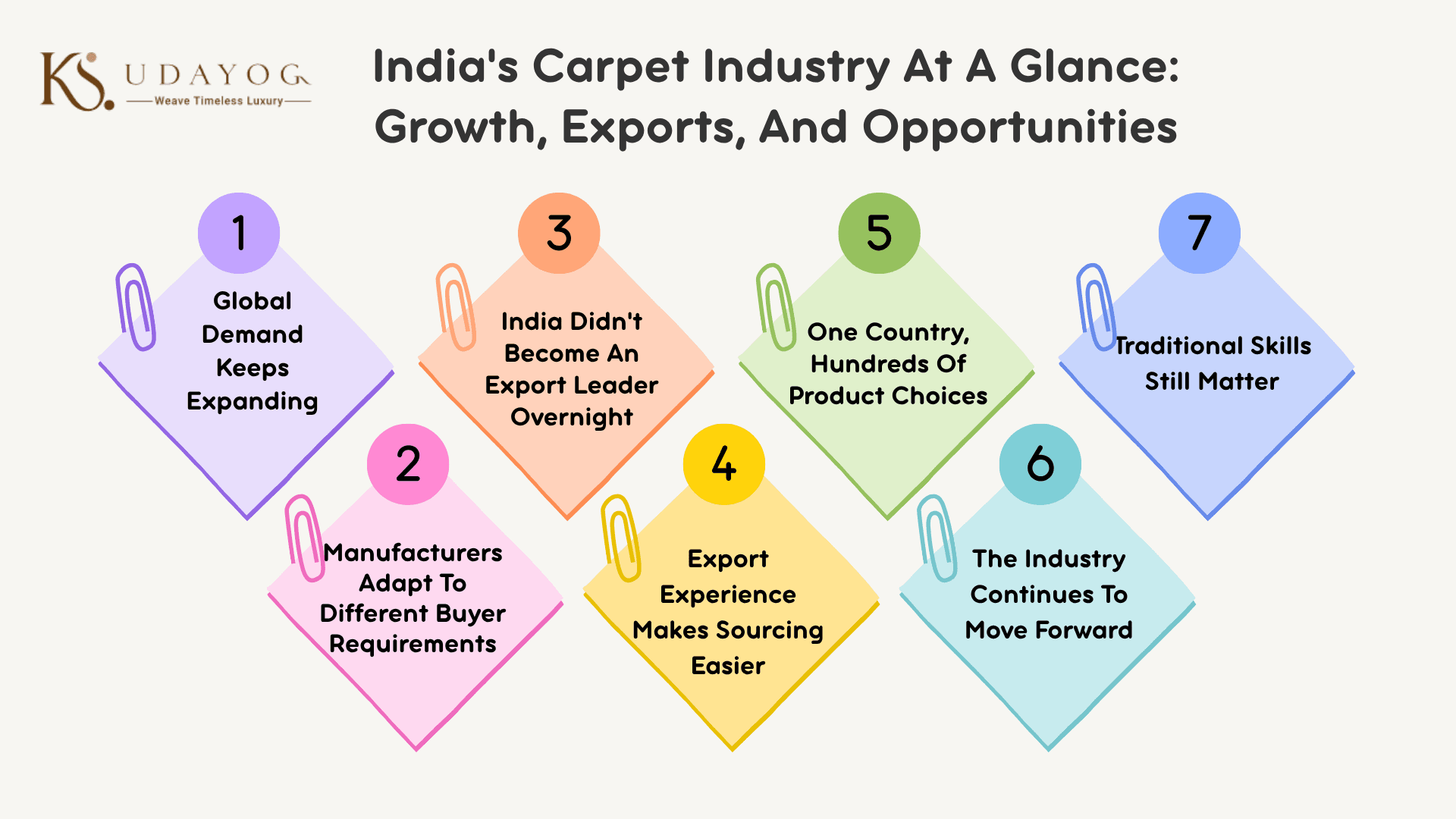
- Global Demand Keeps Expanding
Carpets are no longer purchased only for homes. Hotels, offices, retail spaces, luxury apartments, and large commercial projects continue to create demand across international markets. As buyers source for different environments, they look for products that offer consistent quality, practical durability, and designs suited to local preferences rather than a one-size-fits-all collection.
- India Didn't Become an Export Leader Overnight
India's position in the global carpet market is the result of decades of manufacturing experience. Regions known for carpet weaving have continued passing skills from one generation to the next, while manufacturers have expanded production capabilities to meet international demand. This combination of craftsmanship and industrial growth has helped Indian exporters build long-term relationships with buyers across the world.
- One Country, Hundreds of Product Choices
Ask ten international buyers what kind of carpet they need, and you'll probably hear ten different answers. Some import handmade rugs for premium stores, while others source durable carpets for hotels, offices, or large retail chains. Indian manufacturers serve all of these markets by producing a wide range of carpet styles, materials, construction methods, and custom collections under one manufacturing ecosystem.
- Traditional Skills Still Matter
Modern machinery has improved production speed, but it hasn't replaced craftsmanship. Many premium carpet collections still depend on skilled artisans who bring years of weaving experience to every piece. At the same time, manufacturers use advanced equipment where consistency, larger production volumes, and faster turnaround times are essential, giving buyers the best of both approaches.
- Manufacturers Adapt to Different Buyer Requirements
No two export orders are exactly alike. One buyer may require private-label collections, while another needs custom dimensions, exclusive patterns, or carpets designed for a specific market segment. Indian manufacturers have become known for adapting their production around these requirements instead of expecting buyers to choose only from standard catalogs.
- Export Experience Makes Sourcing Easier
Manufacturing is only one part of a successful export order. Buyers also depend on suppliers to manage production schedules, documentation, quality inspections, packaging, and international shipping without unnecessary delays. Years of exporting to different countries have helped Indian manufacturers develop processes that make international sourcing smoother and more predictable.
- The Industry Continues to Move Forward
The global carpet market is changing as buyers place greater importance on sustainability, customization, and product innovation. Indian manufacturers are responding by introducing new materials, expanding design capabilities, improving manufacturing processes, and investing in modern production facilities. This ability to evolve alongside changing market expectations is one of the reasons India continues to strengthen its position as a leading carpet exporter.
Why Indian Carpet Manufacturers Earn Global Trust?
Indian carpet manufacturers have earned the confidence of global buyers by meeting international expectations while adapting to changing market needs. The key factors behind this trust are explained below.
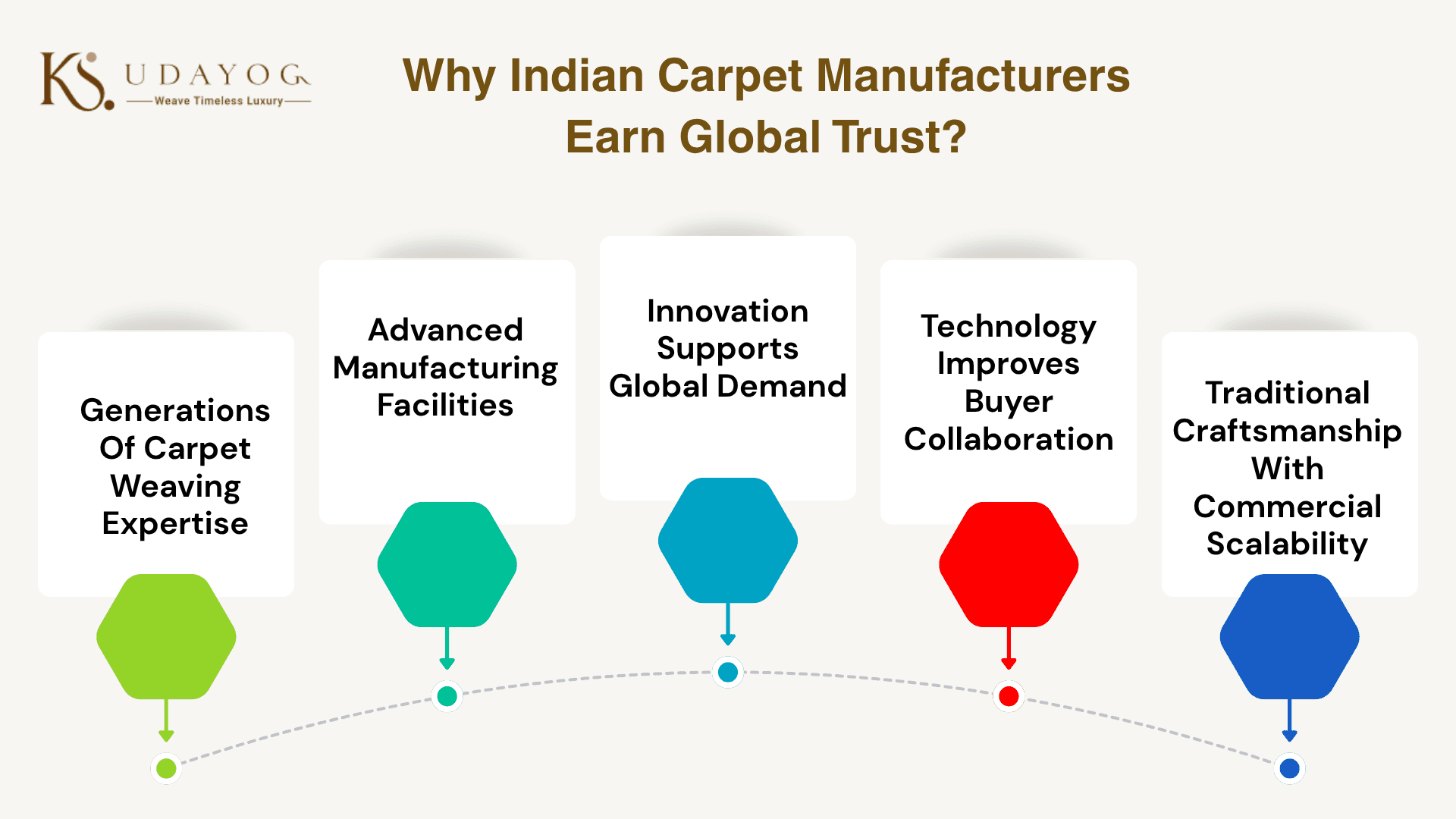
- Generations of Carpet Weaving Expertise
India's carpet industry has evolved through generations of skilled artisans who continue to preserve traditional weaving techniques. Their craftsmanship gives Indian carpets distinctive character while maintaining high-quality production standards.
- Advanced Manufacturing Facilities
Modern machinery complements traditional craftsmanship by improving production precision, consistency, and scalability. This combination allows manufacturers to satisfy both premium handcrafted orders and large wholesale requirements.
- Innovation Supports Global Demand
International buyers expect more than attractive designs. Indian manufacturers continue introducing new textures, sustainable materials, contemporary patterns, and innovative production methods that align with changing market preferences.
- Technology Improves Buyer Collaboration
Digital design approvals, production updates, virtual sampling, and streamlined communication make international sourcing more transparent. Buyers can stay informed throughout manufacturing without geographical limitations.
- Traditional Craftsmanship With Commercial Scalability
Many Indian manufacturers successfully balance handcrafted artistry with modern production planning. This approach enables businesses to receive unique products while maintaining consistent quality across larger commercial orders.
Versatile Carpet Styles For Homes And Commercial Markets Worldwide
A carpet does much more than cover a floor. In a home, it can add warmth, comfort, and personality to a space. In a hotel, office, or retail environment, it needs to create the right impression while handling everyday use. This is why global buyers look for carpet suppliers who can offer different styles, materials, and designs for different applications. Popular carpet categories include:
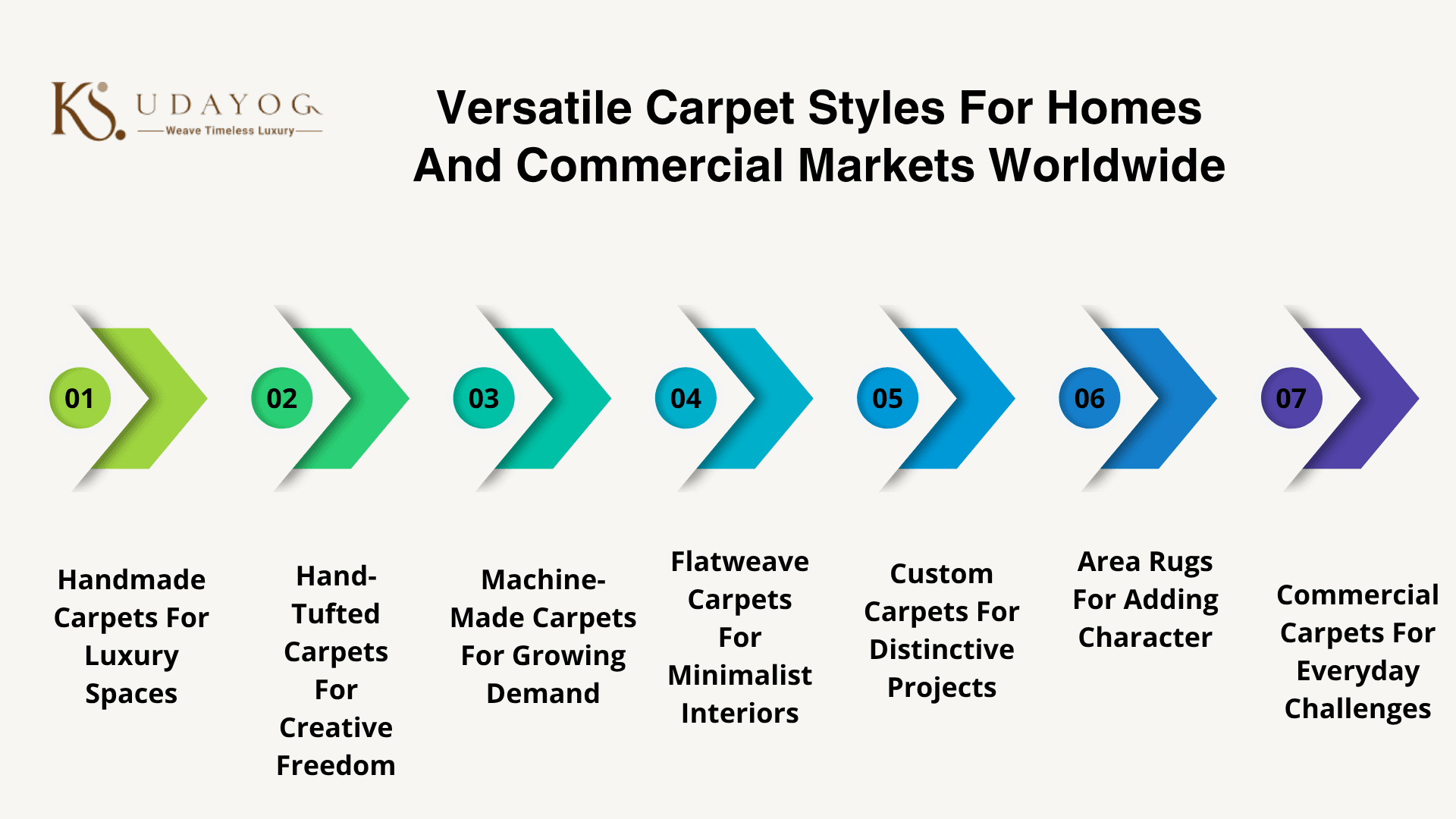
- Handmade Carpets For Luxury Spaces
Some carpets are purchased for more than their practical use. Handmade carpets fall into this category, where craftsmanship, heritage, and design become the main attraction. Created by skilled artisans, these pieces often become the highlight of luxury residences, boutique hotels, and premium interior projects where every detail matters.
- Detailed craftsmanship with intricate designs
- Long-lasting durability
- Premium handmade appearance
- High artistic value
- Suitable for luxury interiors
Ideal Buyers For Hand-Knotted Carpets: These carpets are often preferred by:
- Luxury home décor brands
- Premium furniture retailers
- Interior designers
- Boutique hotels
- High-end residential projects
For buyers targeting customers who appreciate craftsmanship and exclusivity, hand-knotted carpets provide a strong premium offering.
- Hand-Tufted Carpets For Creative Freedom
When designers need more flexibility with patterns, colors, or custom concepts, hand-tufted carpets often become the preferred option. This category allows businesses to experiment with unique designs while maintaining a balance between handcrafted appeal and manageable production timelines for different projects.
- Faster production compared with hand-knotted techniques
- Wide range of design possibilities
- Suitable for custom projects
- Available in different textures and finishes
- Cost-effective option for premium designs
Hand-tufted carpets are widely used in:
- Residential interiors
- Hotels
- Restaurants
- Corporate spaces
- Designer projects
Their combination of appearance, flexibility, and commercial practicality makes them a preferred choice for many global buyers.
- Machine-Made Carpets For Growing Demand
Large commercial projects come with different expectations. Buyers need reliable production, consistent quality, and the ability to fulfill bigger orders within planned timelines. Machine-made carpets support these requirements, making them a practical choice for offices, retail chains, hospitality projects, and high-traffic spaces.
Advantages of Machine-Made Carpets
- Consistent production quality
- Large-quantity manufacturing capability
- Faster availability
- Competitive pricing options
- Suitable for commercial applications
Retail chains, property developers, and hospitality companies often consider machine-made carpets when planning larger installations or repeated orders.
- Flatweave Carpets For Minimalist Interiors
Modern interiors often follow a cleaner and simpler design approach, and flatweave carpets fit naturally into these spaces. Their lightweight structure, neat patterns, and easy maintenance make them suitable for contemporary homes, workspaces, cafes, and hospitality environments.
Why Buyers Choose Flatweave Carpets?
- Lightweight construction
- Easy maintenance
- Contemporary visual appeal
- Suitable for different spaces
- Flexible design options
Flatweave carpets are commonly selected by lifestyle brands, home décor retailers, and businesses offering modern interior collections.
- Custom Carpets For Distinctive Projects
A standard carpet design does not always match a brand's vision. Many hotels, designers, and commercial developers prefer custom carpets that reflect their identity through specific colors, patterns, dimensions, or materials. This approach helps create spaces that feel more personalized and memorable.
Custom carpets provide businesses with greater control over their product offerings and help them create differentiated collections in competitive markets.
- Area Rugs For Adding Character
A room can completely change with the right rug placed in the right position. Area rugs give homeowners, designers, and hospitality businesses an easy way to introduce warmth, texture, and personality without redesigning the entire floor space.
- Enhance Interiors With Warm Textural Appeal
- Create Defined Spaces Through Stylish Placement
- Offer Versatile Designs For Residential Spaces
- Improve Comfort With Decorative Floor Accents
- Support Customized Designs For Unique Interiors
- Commercial Carpets For Everyday Challenges
Busy environments demand carpets that can handle constant activity while maintaining a professional appearance. Commercial carpets are developed for spaces where durability, safety, and easy upkeep matter, helping offices, hotels, retail stores, and public areas maintain functional and attractive interiors.
How Indian Carpet Suppliers Ensure Quality With Material Expertise
A carpet may look perfect in a catalog, but the material behind it decides how it performs after years of use. A hotel buyer may prioritize durability, a luxury homeowner may focus on softness and appearance, while a retailer may need the right balance between cost and quality. This is why choosing the right fiber becomes an important part of the sourcing decision.
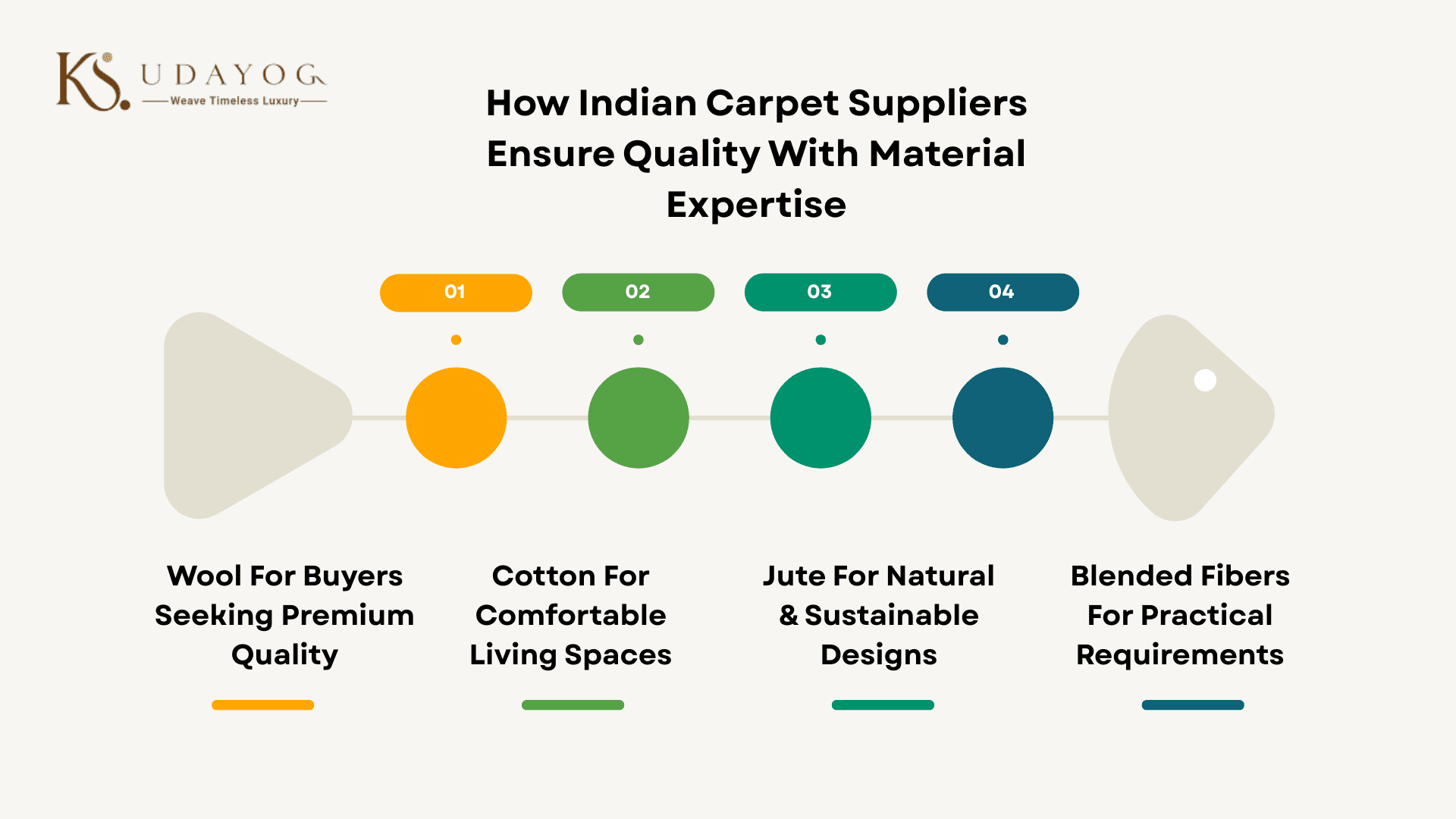
- Wool For Buyers Seeking Premium Quality
There is a reason wool carpets continue to attract luxury buyers around the world. The natural softness, rich texture, and ability to maintain their appearance over time make wool a preferred choice for premium residences, luxury hotels, and exclusive interior projects where quality cannot be compromised.
- Cotton For Comfortable Living Spaces
Cotton carpets bring a lighter and more casual feel to interiors. They work well for buyers who want comfortable designs for everyday spaces without choosing heavier materials. Their versatility makes them a common choice for residential collections, seasonal décor ranges, and lifestyle-focused markets.
- Jute For Natural And Sustainable Designs
The growing interest in natural interiors has increased demand for jute carpets. Their earthy look and textured finish create a warm, organic feel that works especially well in modern, rustic, and eco-conscious interior concepts.
- Blended Fibers For Practical Requirements
Many projects require carpets that can handle daily use while maintaining an attractive appearance. Blended fibers help manufacturers combine the strengths of different materials, creating options that suit commercial spaces, hospitality projects, and buyers looking for practical long-term performance.
Customization Helps Businesses Build Unique Collections
Modern buyers increasingly prefer customized products because unique collections help brands create stronger market positions. Indian carpet exporters understand this requirement and provide flexible manufacturing options for different business models.
Customization may include:
- Specific carpet dimensions
- Exclusive patterns
- Brand-specific color palettes
- Material preferences
- Private label production
- Custom packaging requirements
For USA retailers and interior brands, this flexibility creates opportunities to develop collections that match local customer preferences rather than depending only on standard designs.
A manufacturer capable of managing customized projects can become a valuable extension of a buyer’s product development team.
Final Thoughts
India’s position as one of the world’s leading carpet exporters comes from a powerful combination of craftsmanship, manufacturing expertise, diverse materials, customization capabilities, and strong export experience. Global buyers benefit from partnering with Indian manufacturers who understand evolving market needs and deliver carpets for residential, commercial, and hospitality applications. A reliable sourcing partner can simplify the buying process while helping businesses build attractive product collections for their customers. With the right carpet manufacturer, buyers can access quality carpets, flexible solutions, and long-term value that supports sustainable business growth in competitive markets.
Frequently Asked Questions
What Makes India A Preferred Destination For Carpet Sourcing?
India offers skilled craftsmanship, diverse materials, customization options, and experienced exporters. These advantages help global buyers access quality carpets suitable for different markets, applications, and customer preferences.
Which Types Of Carpets Can Buyers Source From Indian Manufacturers?
Indian manufacturers produce hand-knotted, hand-tufted, flatweave, wool, cotton, jute, and custom carpets. Buyers can select products based on design requirements, budgets, and intended usage.
How Do Buyers Evaluate A Reliable Carpet Exporter In India?
Buyers should review manufacturing experience, product quality, export capabilities, customization support, and communication standards. These factors help identify suppliers capable of meeting international business expectations.
Are Indian Carpet Manufacturers Able To Handle Custom Orders?
Many Indian manufacturers provide customized solutions, including sizes, colors, patterns, materials, and private labeling. Custom production allows businesses to create unique collections matching their brand identity.
Why Are Quality Checks Important Before Importing Carpets?
Quality inspections help verify materials, construction, colors, finishing, dimensions, and packaging standards. These checks reduce sourcing risks and ensure products meet customer expectations after delivery.
Do Indian Carpet Exporters Supply Products For Commercial Projects?
Indian exporters provide carpets for hotels, offices, retail spaces, and hospitality projects. Commercial buyers can access durable designs created for high-traffic environments and professional interiors.