The festive season is about welcoming loved ones, preparing your home, and creating a warm, inviting space. Along with fairy lights, cushions, and festive decorations, a well-chosen carpet can give your living room or bedroom a fresh look just in time for Diwali.
However, buying a carpet simply because its colour or pattern catches your eye can leave your room looking unbalanced. The right dimensions and placement help your carpet complement your furniture, keep the space organised and create a comfortable setting for everyday family moments.
Planning a festive home makeover doesn’t have to be complicated. Here’s a practical carpet size guide with measurements, placement suggestions, and interior design tips to help you prepare your home for the celebrations.
Why Does Carpet Size Matter In Interior Design?
A carpet can make a room feel warm, comfortable, and well put together, but the wrong size can spoil the overall look. A small carpet under a large sofa set may look disconnected, while an oversized carpet can cover too much of the floor and make the room feel crowded.
The right carpet size visually ties furniture together and helps define different areas within a room. In a living room, it can tie the sofa and coffee table together. In a bedroom, it can provide a soft surface around the bed. In a hotel lobby, a well-sized carpet can help define the seating area without blocking the main walkway.
Room dimensions are only one part of the decision. Furniture size, door clearance, walking space, and the look you want also matter.
Standard Carpet Sizes And Dimensions
Carpets and area rugs come in several standard sizes, although exact availability varies by manufacturer and design. The following measurements are useful starting points when buying a carpet.
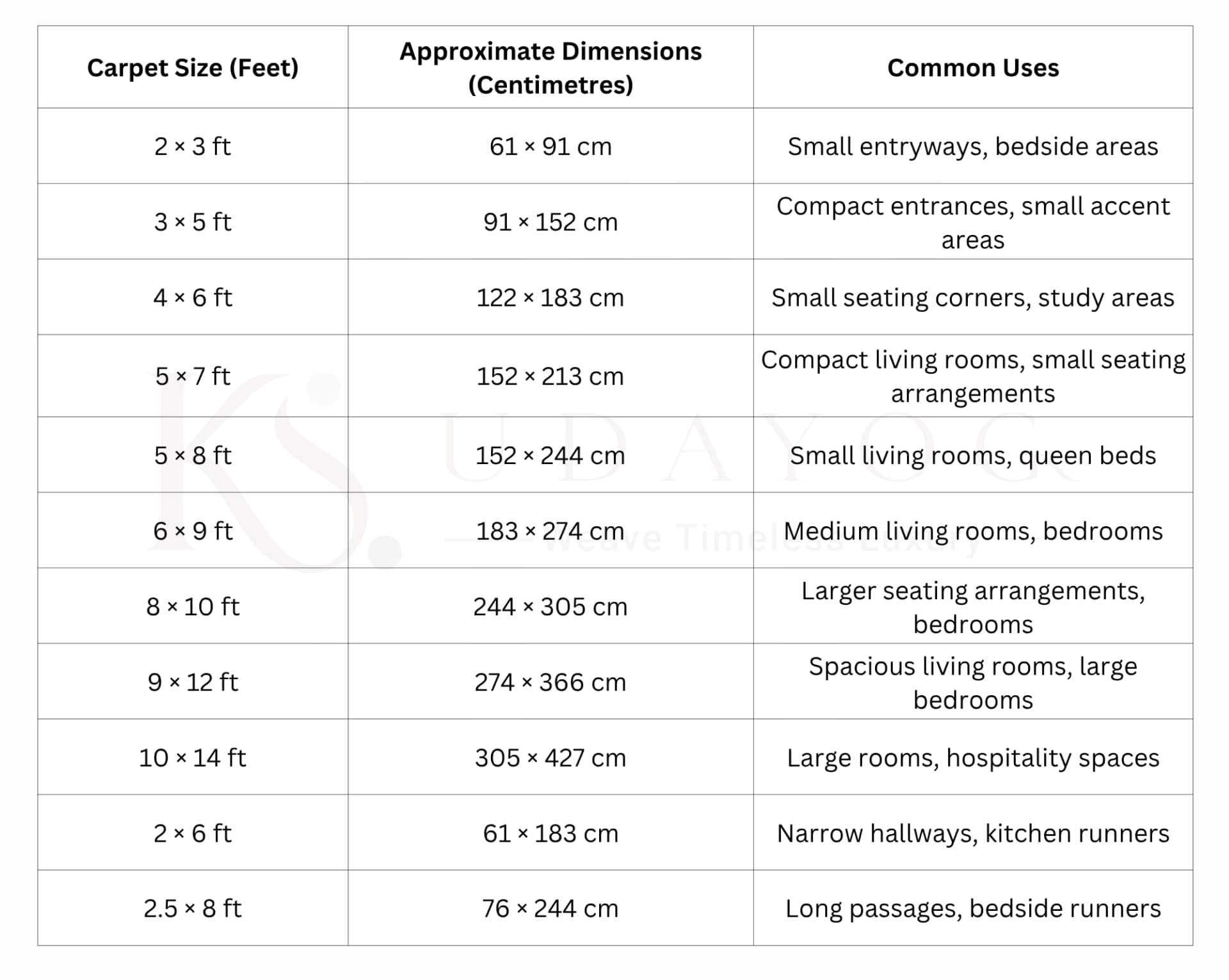
Note: Measurements in centimetres are approximate conversions. Actual product dimensions may vary slightly.
A 5 × 8 ft carpet, for example, measures 5 feet across one side and 8 feet along the other. Its overall footprint is 40 square feet. A 9 × 12 ft carpet covers 108 square feet, making it suitable for larger furniture arrangements when the room has enough space.
Explore More: How To Buy Carpet Directly From Wholesale Manufacturers: Carpet Sourcing Guide
How To Choose The Right Carpet Size For Your Living Room
The living room is one of the most common places for a carpet, but the best size depends on your sofa arrangement and available floor space.
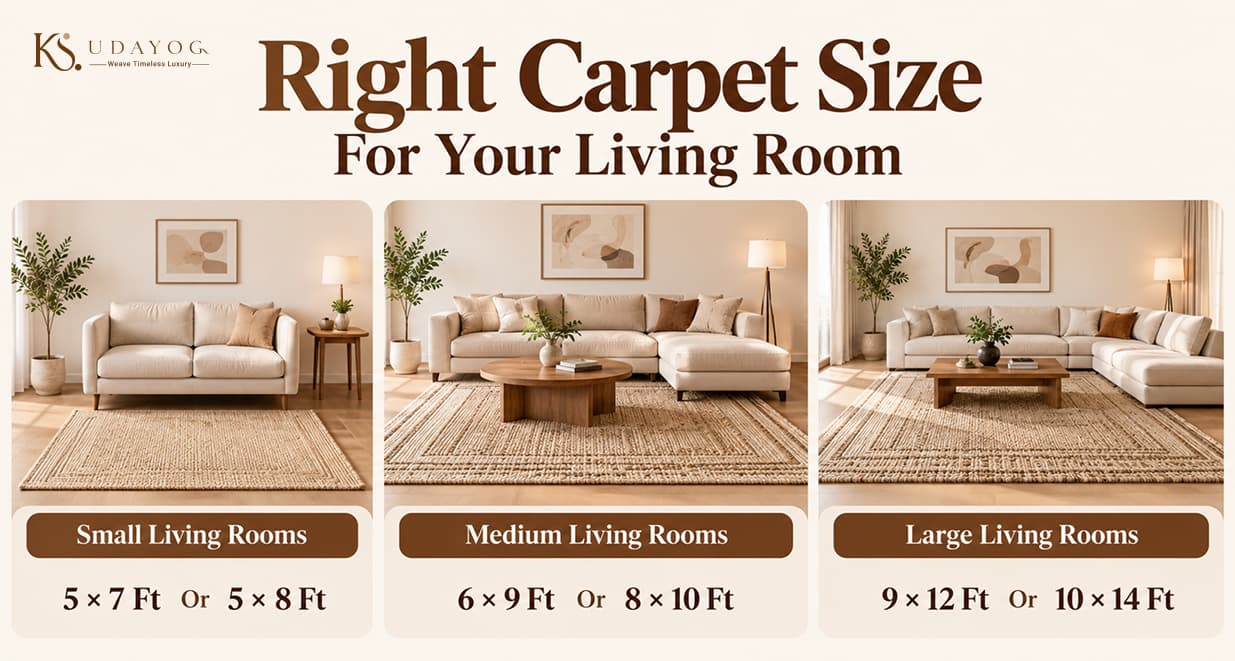
1. Small Living Rooms: 5 × 7 Ft Or 5 × 8 Ft
A 5 × 7 ft or 5 × 8 ft carpet works well in a compact living room, especially in smaller apartments where a large carpet would cover too much floor space.
Example: A living room measuring 10 × 12 ft with a two-seater sofa and a compact coffee table could suit a 5 × 7 ft carpet. The carpet can sit under the coffee table, with the sofa's front legs resting on it if the furniture arrangement allows.
A 5 × 8 ft carpet may be a better choice when the sofa is wider, or the seating area needs more coverage.
2. Medium Living Rooms: 6 × 9 Ft Or 8 × 10 Ft
Medium-sized living rooms often benefit from a carpet that extends beyond the coffee table and connects the main seating pieces.
Example: In a 12 × 15 ft living room with a three-seater sofa and two chairs, a 6 × 9 ft carpet can work when the front legs of the furniture rest on it. An 8 × 10 ft carpet may suit a wider seating arrangement where more of the furniture needs to sit on the carpet.
The space between the carpet and the walls should also look balanced. A visible strip of flooring around the carpet helps the room feel less crowded.
3. Large Living Rooms: 9 × 12 Ft Or Larger
A spacious living room with a large sofa, accent chairs, and a coffee table may need a 9 × 12 ft carpet or a larger size.
Example: A 15 × 20 ft living room with an L-shaped sofa and two occasional chairs could suit a 9 × 12 ft carpet. The size may allow the front legs of the furniture to rest on the carpet, or even the entire seating arrangement, depending on the furniture dimensions.
For particularly large rooms, a 10 × 14 ft carpet may provide better coverage. A larger carpet is not automatically the best choice, though; the furniture layout and visible floor space should guide the decision.
Common Living Room Carpet Placement Styles

Front Legs On The Carpet: The front legs of the sofa and chairs rest on the carpet, while the back legs remain on the floor. This arrangement connects the seating pieces without requiring a very large carpet.
All Furniture Legs On The Carpet: The sofa, chairs, and coffee table sit completely on the carpet. This style suits spacious living rooms and larger carpets.
Coffee Table Only: The carpet sits beneath the coffee table, with the sofa and chairs remaining off it. This option can work in compact rooms, provided the carpet is large enough to look proportional to the table and seating.
Read Too: Handmade Vs Machine-Made Carpets: Which Is Better For You?
Selecting The Right Carpet Size For Your Bedroom
A bedroom carpet should add comfort without making it difficult to open doors, access wardrobes, or move around the bed. The bed's dimensions and how much carpet you want visible around it will determine the best size.

1. Single Beds: 3 × 5 Ft Or 4 × 6 Ft
A small carpet beside a single bed can create a comfortable place to step onto in the morning.
Example: A 3 × 5 ft carpet placed beside a single bed works well when floor space is limited. A 4 × 6 ft carpet may suit a larger bedroom where you want more coverage beside the bed.
2. Queen Beds: 5 × 8 Ft Or 8 × 10 Ft
A 5 × 8 ft carpet can work beneath part of a queen bed, depending on the placement. An 8 × 10 ft carpet provides more coverage around the bed and may extend beneath the bedside tables.
Example: In a bedroom measuring 12 × 14 ft with a queen bed, an 8 × 10 ft carpet can extend beyond the sides and foot of the bed. A 5 × 8 ft carpet may be more practical if you prefer less carpet and more visible flooring.
3. King Beds: 8 × 10 Ft Or 9 × 12 Ft
King beds generally need more carpet coverage because of their wider footprint.
Example: In a 14 × 16 ft bedroom, a 9 × 12 ft carpet may provide a generous border around a king bed. An 8 × 10 ft carpet works when it sits beneath the lower portion of the bed, leaving the bedside tables on the floor.
Bedroom Carpet Placement Tips

- Under The Bed: A larger carpet beneath the bed can extend beyond the sides and foot, creating a balanced look.
- Beside The Bed: Smaller carpets or runners can provide a soft surface on one or both sides.
- At The Foot Of The Bed: A small accent carpet can work in a bedroom with limited space.
- Around Wardrobes: The carpet should not obstruct sliding doors, wardrobe drawers, or frequently used storage areas.
Read Too: Carpet Care Guide: Simple Tips To Make Your Carpet Last Longer
Carpet Size That Works Best For A Dining Room
A dining carpet needs more careful sizing than a decorative carpet under a coffee table. The chairs should remain on the carpet even when people pull them back to sit down or stand up.
A useful starting point is to allow around 24 inches (61 cm) of extra carpet beyond each side of the dining table. This gives the chairs room to move without catching on the carpet edge.

These are approximate examples that allow extra space around the table. The final size depends on the chair dimensions, the table's actual measurements, and the room layout. If the suggested size isn't available, a nearby standard size may work after you check chair clearance.
Example: A dining table measuring 3 × 6 ft is 36 inches wide and 72 inches long. Adding roughly 24 inches on each side gives a target carpet footprint of about 7 × 10 ft. This extra space lets chairs move back while staying on the carpet.
Read More: Latest Carpet Design Trends For Retailers And Buyers In 2027
Choosing Carpet Sizes For Hallways And Entrances
Hallways and entrances usually need narrow carpets or runners rather than large rectangular designs. The right dimensions allow people to walk comfortably while keeping doors and furniture clear.

1. Small Entrances: 2 × 3 Ft Or 3 × 5 Ft
A 2 × 3 ft carpet can suit a compact entryway where the main goal is to create a small decorative spot. A 3 × 5 ft carpet provides more coverage in a wider foyer.
Example: An apartment entrance with limited space near the main door may suit a 2 × 3 ft mat or rug. A larger foyer with a console table may accommodate a 3 × 5 ft carpet.
For entrances exposed to outdoor dirt and moisture, a dedicated door mat may be more practical than a decorative carpet.
2. Narrow Hallways: 2 × 6 Ft Or 2.5 × 8 Ft
A runner can make a long passage feel more connected and comfortable. Its length should suit the hallway without reaching so close to the walls that the space feels cramped.
Example: A hallway measuring 3 × 10 ft could suit a 2 × 6 ft runner, leaving visible flooring at both ends. A longer 2.5 × 8 ft runner may work if the passage is clear and the doors do not catch its edges.
3. Wide Hallways: 3 × 10 Ft Or Larger
A wider hallway may accommodate a larger runner, depending on the room's dimensions and traffic.
Example: A long hotel corridor may need a purpose-designed carpet runner or fitted carpet rather than a small household rug. The choice should account for door clearances, cleaning needs, and the amount of foot traffic.
Carpet Sizes For Offices, Hotels, And Commercial Spaces
Commercial spaces often need carpets that can handle regular foot traffic while complementing the interior design. A small carpet under a reception desk may be enough for a compact office, while a hotel lobby may need a much larger carpet to define the seating area.

These dimensions are starting points, not fixed commercial standards. For example, a hotel lobby measuring 30 × 40 ft may need a much larger carpet or several separate carpets to define its seating zones.
For commercial projects, carpet construction, maintenance needs, and expected traffic matter alongside dimensions. Entrance carpets also need suitable backing and placement to avoid movement or raised edges.
Explore More: Hotel Carpet Buying Guide: What To Look For When Buying For Resorts
How To Measure Your Room Before Buying A Carpet
A few measurements before buying can prevent the frustration of receiving a carpet that looks much smaller or larger than expected.

Step 1: Measure The Available Floor Space
Measure the length and width of the area where the carpet will sit. A room measuring 12 × 15 ft has 180 square feet of floor space, but the carpet doesn't need to cover the entire area.
Step 2: Measure Your Furniture
Record the width and depth of the sofa, bed, dining table, or seating group. For living rooms, the furniture arrangement is often a better guide than the room's total dimensions.
Step 3: Mark The Carpet Outline
Masking tape or newspaper can help you test a carpet's footprint before buying. For example, a 6 × 9 ft carpet needs a marked rectangle measuring 6 feet by 9 feet.
Step 4: Check Door And Furniture Clearance
A carpet should not block doors or interfere with wardrobe drawers, dining chairs, or frequently used walkways. The carpet's thickness can matter just as much as its length and width.
Step 5: Compare The Measurements With Available Sizes
Standard sizes are convenient, but not every room matches them perfectly. A 6 × 9 ft carpet may suit your layout better than a 5 × 8 ft design, even if both are commonly available.
Interior Design Tips For Choosing The Right Carpet Size
The right dimensions make a carpet easier to style and help the room feel more balanced. A few practical checks can simplify the decision.
1. Leave Some Floor Visible
A visible border of flooring around a carpet can help define the space. In many rooms, leaving roughly 8–18 inches (20–46 cm) around the edges is a good starting point, though narrow rooms and specific layouts may need a different approach.
2. Match The Carpet To The Furniture
A carpet should look connected to the furniture, not like a small island in the middle of the room. A 5 × 8 ft carpet may suit a compact sofa arrangement, while a larger seating group may need a 6 × 9 ft or 8 × 10 ft design.
3. Consider The Room's Shape
Rectangular carpets often work well in long living rooms and bedrooms. Square carpets can suit balanced seating areas, while round carpets can soften a compact reading corner or a circular dining arrangement.
4. Think About Patterns And Colours
Large patterned carpets can become a focal point in spacious rooms, while simpler designs may suit compact interiors with plenty of furniture. The carpet's dimensions should be settled before choosing a pattern, so the design fits the intended space.
5. Check The Carpet's Thickness
A thick carpet can catch against doors or create an uneven transition between rooms. Low-pile designs may be more practical for busy entrances, dining areas, and spaces where chairs need to slide easily.
6. Use Separate Carpets To Define Open Spaces
In an open-plan living and dining room, two appropriately sized carpets can help separate the seating and dining zones. For example, an 8 × 10 ft carpet may anchor the living room, while a separate carpet sized for the dining table keeps the eating area visually distinct.
Explore Carpet Options With KS Udayog
KS Udayog manufactures and supplies home textiles, including rugs and carpets for residential and commercial interiors. Its website highlights products for living rooms, bedrooms, offices, and dining areas, along with options for businesses seeking carpet and rug manufacturing.
For retailers, wholesalers, hospitality businesses, and interior projects, carpet sizing should be considered alongside the intended use, design, material, and maintenance needs. A guest bedroom, hotel lobby, and office reception may all require different dimensions and construction.
You can explore KS Udayog’s rugs and carpets collection to review its product range. For bulk orders or project-specific requirements, confirm the available dimensions, materials, customization options, and order quantities directly with the company.
Final Thoughts
The right carpet size can make a living room feel more connected, a bedroom more comfortable, and a dining area easier to use. Sizes such as 5 × 8 ft, 6 × 9 ft, 8 × 10 ft, and 9 × 12 ft offer useful starting points, but the best choice depends on your room measurements, furniture arrangement, and available walking space. A measuring tape and a simple floor outline can help you check the fit before buying. You can reach out to a trusted carpet manufacturer in india with a premium carpet collection to find options for your home, hospitality space, or commercial interior.
Frequently Asked Questions (FAQs)
What Is The Most Common Carpet Size For A Living Room?
Common living room sizes include 5 × 8 ft, 6 × 9 ft, and 8 × 10 ft. The best size depends on the sofa arrangement, coffee table, and available floor space.
What Carpet Size Is Best For A 12 × 15 Ft Living Room?
A 6 × 9 ft or 8 × 10 ft carpet may work well in a 12 × 15 ft living room. Furniture dimensions and your preferred placement style will help you choose the best fit.
How Much Bigger Should A Dining Carpet Be Than The Table?A dining carpet should generally extend around 24 inches beyond each side of the table. This extra space keeps chairs on the carpet when pulled out.
Is A 5 × 8 Ft Carpet Big Enough For A Living Room?
A 5 × 8 ft carpet can work for a compact living room, especially if you place it under the coffee table with the sofa's front legs on it. A larger seating arrangement may need a 6 × 9 ft or 8 × 10 ft carpet.
Should All Sofa Legs Sit On The Carpet?
Not necessarily. It's common to place the front legs of the sofa and chairs on the carpet. Larger carpets can accommodate all furniture legs when the room has enough space.
Can A Carpet Be Too Large For A Room?
Yes. A carpet that covers nearly the entire floor may make the room feel crowded or interfere with doors and furniture. Measure the space and leave a visible border of flooring to help you choose a balanced size.