The right throw blanket can make a sofa or bed feel warmer, more comfortable, and visually complete. But choosing one is not just about picking a color you like; size, material, weight, texture, warmth, and intended use all matter.
A throw can serve different purposes depending on where you use it. A lightweight sofa throw may be ideal for relaxing during cooler evenings, while a larger bed throw can provide extra warmth and create a layered look. The best choice depends on your space, season, comfort preferences, and how you plan to use it.
This throw blanket buying guide covers the key factors to consider before you buy a throw blanket, including recommended sizes, materials, textures, colors, maintenance, and styling.
What Is A Throw Blanket?
A throw blanket is a smaller decorative or functional blanket designed to be placed over a sofa, chair, bed, or other furniture. Unlike a standard bed blanket, a throw is generally easier to move around and can be used for both comfort and decoration.
Throws are available in different fabrics, sizes, weights, textures, colors, and patterns. Some are designed primarily for warmth, while others are chosen to add texture or a finishing layer to an interior.
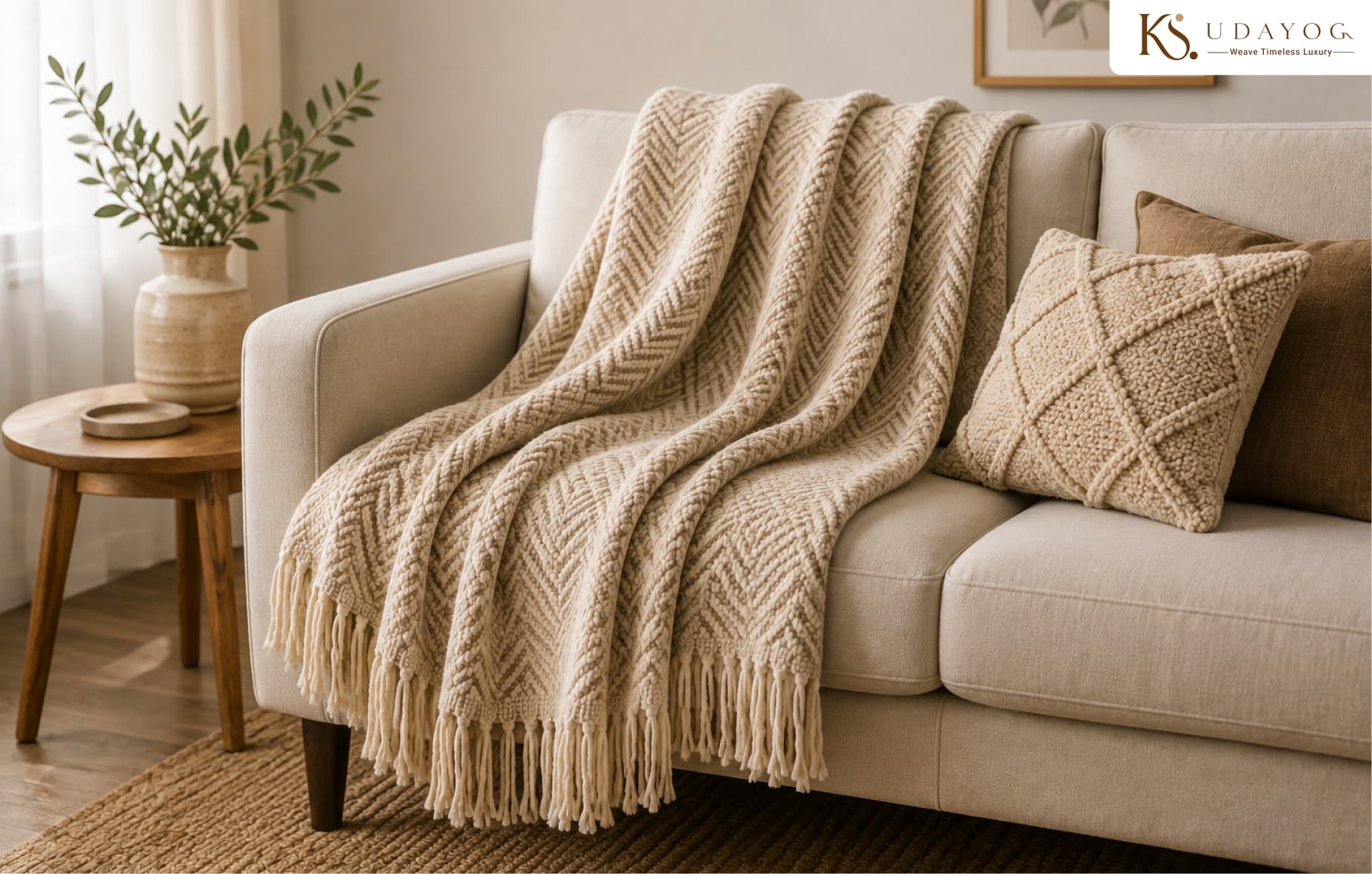
The right throw should balance comfort, practicality, size, and appearance based on where you plan to use it.
Tips To Select & Buy An Ideal Throw Blanket For Your Sofa & Bed
A throw that looks perfect online may feel too small, too warm, or completely wrong for your sofa. A few simple checks around dimensions, material, texture, color, and intended use can save you from making the same mistake. These throw blanket purchasing tips will help you find a throw blanket that fits both your furniture and everyday comfort.
# Tip 1: Choose The Throw Based On Its Purpose
Before choosing a throw blanket, decide whether it is primarily for your sofa, bed, accent chair, or another area.
A sofa throw is often used for casual comfort and decoration. It should be easy to grab, fold, and move without overwhelming the furniture.
A bed throw can be used at the foot of the bed to add another decorative layer or provide extra warmth when needed.
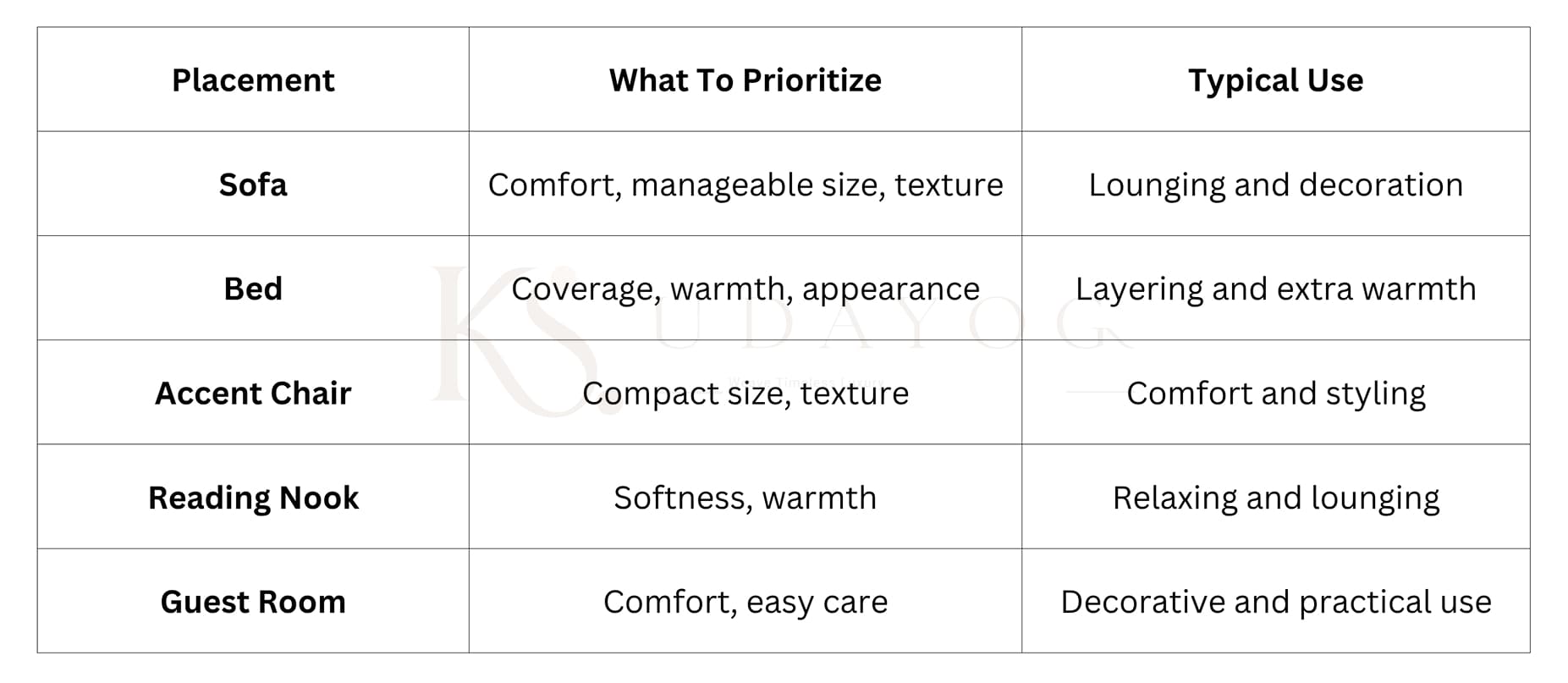
Knowing the primary location makes the rest of your buying decisions much easier.
# Tip 2: Choose The Right Throw Blanket Size
Size is one of the easiest things to overlook when buying a throw blanket. A throw should provide enough coverage for its intended use without becoming difficult to handle or looking disproportionate.
There is no single universal throw size, but these ranges can help:
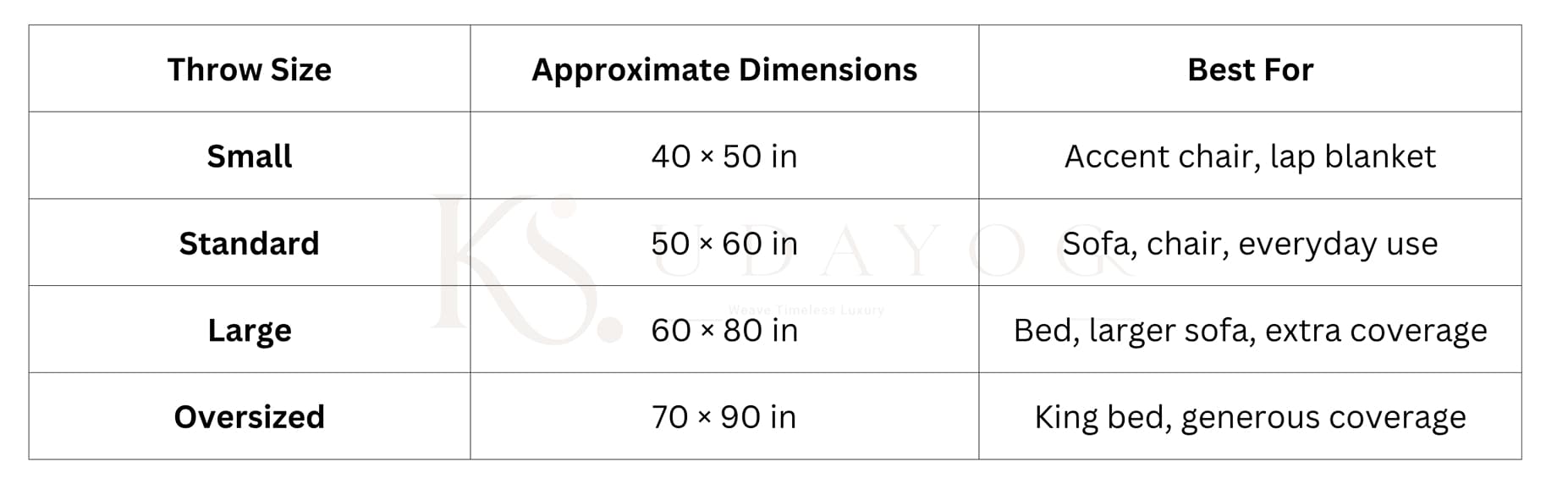
For a typical sofa, a 50 × 60-inch throw is a versatile choice for draping over an armrest, folding across the back, or keeping within reach.
For a bed, a 60 × 80-inch or larger throw can provide more coverage and work well when placed across the foot of the bed.
Always check the manufacturer's actual dimensions because throw sizes can vary between brands and products.
# Tip 3: Select The Right Throw Blanket Material
The material affects softness, warmth, appearance, breathability, weight, and maintenance.
1) Cotton Throws
Cotton is lightweight, breathable, and comfortable, making it a versatile option for year-round use. Cotton throws can work particularly well when you want a throw that feels natural rather than heavily insulated.
👉 Why Select Cotton Throw Blanket?
Choose it for breathable comfort, easy styling, and year-round versatility.
Best For: Summer evenings, layered bedding, sofas, and everyday use.
Advantages: Breathable, lightweight, comfortable, easy to maintain, and versatile.
Disadvantages: Provides less warmth than wool or fleece options.
2) Wool Throws
Wool provides natural warmth and can be a good choice for colder weather. A wool throw blanket also adds a rich texture that works well in cozy and traditional interiors.
👉 Why Select Wool Throw Blanket?
Buy wool throws for natural warmth, insulation, and a cozy textured appearance.
Best For: Cold weather, winter bedrooms, cozy seating areas, and layered interiors.
Advantages: Warm, insulating, durable, naturally breathable, and temperature-regulating.
Disadvantages: Can feel heavier, require careful washing, and cost more.
3) Fleece Throws
Fleece is soft, lightweight, and warm. The fleece throw blanket can be a practical option for casual sofa use, bedrooms, and colder seasons.
👉 Why Select Fleece Throw Blanket?
Choose it for soft warmth without adding much weight.
Best For: Sofas, bedrooms, movie nights, and chilly evenings.
Advantages: Soft, lightweight, warm, affordable, and easy to care for.
Disadvantages: Can generate static and may feel less breathable than cotton.
4) Acrylic Throws
Acrylic can provide a soft feel while offering a practical alternative to some natural fibers. Acrylic throw blankets are commonly available in a wide range of colors and textures.
👉 Why Select Acrylic Throw Blanket?
Choose it for affordable softness, attractive designs, and easy everyday styling.
Best For: Decorative layering, sofas, bedrooms, and budget-friendly home styling.
Advantages: Lightweight, affordable, colorful, soft, and generally easy to maintain.
Disadvantages: Can develop pilling and may retain more heat than cotton.
5) Polyester Throws
Polyester throws can be durable, easy to maintain, and available in many designs. They can suit buyers looking for practical everyday options.
👉 Why Select Polyester Throw Blanket?
Choose polyester throws for durability, easy maintenance, and versatile everyday performance.
Best For: High-use sofas, family rooms, bedrooms, and everyday household use.
Advantages: Durable, affordable, wrinkle-resistant, easy to wash, and widely available.
Disadvantages: Can feel less breathable and less natural than cotton.
6) Chenille Throws
Chenille throws offer a plush, velvety feel with a textured look that adds warmth and visual interest. A chenille throw blanket is a great choice when you want both everyday comfort and a stylish decorative layer.
👉 Why Select Chenille Throw Blanket?
Choose it for plush softness, visual texture, and elevated decorative appeal.
Best For: Accent sofas, bedrooms, cozy interiors, and decorative layering.
Advantages: Plush, soft, textured, attractive, and comfortable for relaxing.
Disadvantages: Can require gentler care and may be prone to snagging.
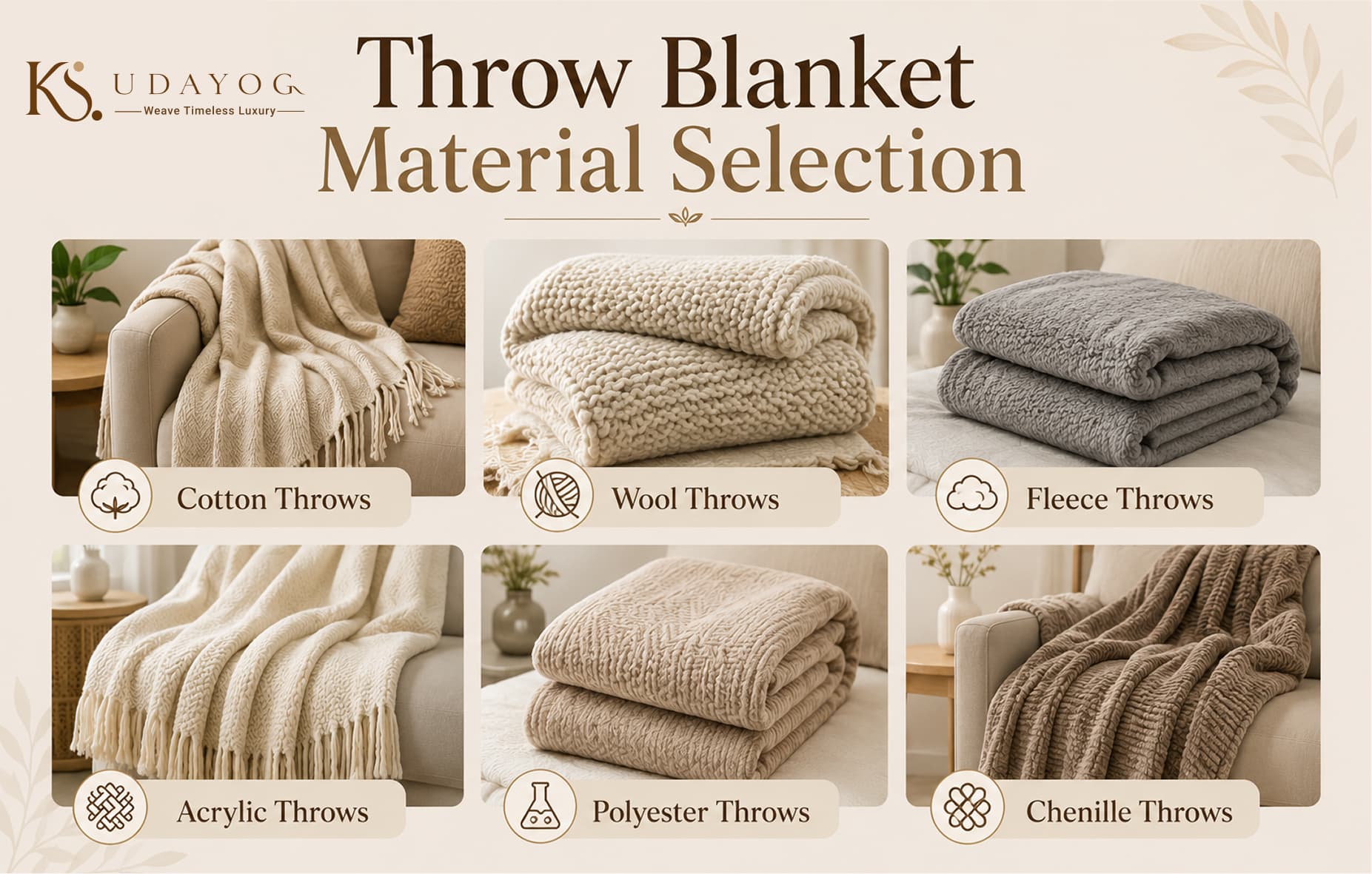
The best material for a throw blanket depends on whether you prioritize warmth, breathability, softness, durability, appearance, or easy care.
# Tip 4: Consider How Warm You Want The Throw To Be
Not every throw needs to be heavy.
If you live in a warmer climate or want something for occasional use, a lightweight cotton or breathable fabric may be more comfortable. For colder weather, wool, fleece, and thicker constructions can provide greater warmth.
Consider the season and room temperature before buying.
A useful approach is to keep different weights available:
- Lightweight: Warm-weather use and decorative layering
- Medium-weight: Everyday sofa and bedroom use
- Heavyweight: Cold weather and extra warmth
The material alone does not determine warmth. Thickness, weave, construction, and overall weight also influence how warm a throw feels.
# Tip 5: Check The Texture And Feel of Throw
Texture can change how a throw looks and feels.
A smooth cotton throw can create a clean, casual appearance, while chunky knits, chenille, or textured weaves can make a sofa or bed feel more layered and inviting.
Before you buy a throw blanket, think about how it will interact with the existing fabrics in your room.
If your sofa already has textured cushions, a simpler throw can provide balance. If the furniture is relatively plain, a textured throw can add visual interest.
# Tip 6: Choose A Color That Works With Your Interior
Color is one of the easiest ways to use a throw blanket to refresh a room.
You can either coordinate the throw with your existing décor or use it as an accent.
- Neutral Colors
Beige, cream, gray, taupe, and similar shades are easy to coordinate with different interiors. They are useful when you want a throw that can remain part of your décor for several seasons.
- Accent Colors
Blue, green, rust, mustard, burgundy, or other stronger shades can add contrast and personality.
- Patterns
Stripes, checks, geometric patterns, florals, and other prints can create a stronger decorative element.
If you are unsure, look at your sofa, bedding, curtains, rugs, and cushions before selecting the throw. The goal is not necessarily to match everything exactly; complementary colors can create a more balanced appearance.
# Tip 7: Think About The Sofa Size Before Buying A Sofa Throw
A throw should look proportionate to your furniture.
For a compact sofa or accent chair, a 40 × 50-inch or 50 × 60-inch throw may be sufficient. A larger sectional can accommodate a 60 × 80-inch throw if you want greater coverage.
Think about how you want to display it:
- Folded over an armrest
- Draped across the back
- Placed across the seat
- Loosely arranged in a corner
If the throw is mainly decorative, you may prefer a size that is easy to fold and arrange. If it is primarily for warmth, greater coverage may be more useful.
# Tip 8: Choose The Right Bed Throw Size
A bed throw is usually placed across the bottom portion of the bed rather than replacing the main blanket or comforter.
Consider the mattress size and how much coverage you want.
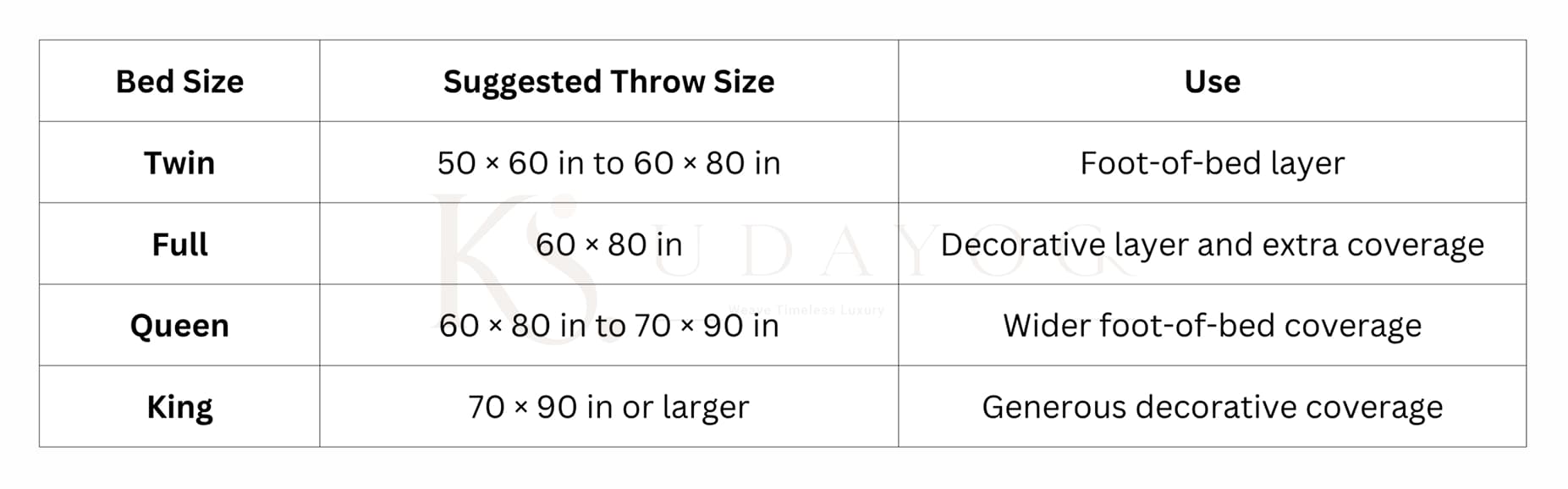
These measurements are general guidelines, not fixed rules. If you prefer more fabric draping over the sides, go for a wider throw.
# Tip 9: Match The Throw To Your Existing Décor
A new throw does not need to match every item in the room. Instead, consider three elements:
- Color: Select a throw color that complements your sofa, bedding, curtains, or overall décor.
- Texture: Add contrast without making the room feel visually crowded.
- Pattern: Use prints when the rest of the room is relatively simple, or choose solids when the space already contains several patterns.
This approach allows a throw blanket to refresh the appearance of a room without requiring major changes to the furniture or bedding.
# Tip 10: Check Weight And Drape
Two throws with similar dimensions can feel completely different depending on their weight and construction.
A lightweight throw may drape naturally over a sofa, while a heavier throw may create a fuller, more structured appearance.
Think about how you want the blanket to sit:
- Light and flowing for casual styling
- Medium and flexible for everyday use
- Heavy and substantial for colder weather and layered interiors
For online purchases, check the product's listed weight whenever it is provided, rather than judging thickness from photographs alone.
# Tip 11: Consider Ease of Care
A throw blanket that looks beautiful but requires difficult maintenance may not be practical for everyday use.
Before buying, check the care label or product description for washing and drying instructions.
Consider whether the throw is:
- Machine washable
- Suitable for tumble drying
- Hand-wash only
- Dry-clean recommended
- Likely to shed
- Prone to shrinking
- Suitable for frequent washing
For homes with children or pets, easy-care materials can be particularly convenient.
# Tip 12: Think About Who Will Use The Throw
Your intended user can influence the best choice.
For everyday family use, durability and easy cleaning may matter more than delicate detailing. For a guest bedroom, appearance and softness may take priority. For a decorative living room, texture and color may be more important than maximum warmth.
If you are buying throws for a hospitality or retail setting, consider how frequently they will be handled and cleaned.
# Tip 13: Check The Finish And Construction
Before purchasing, inspect the details that can affect how the throw looks and performs over time.
Look at:
- Edge finishing
- Stitching
- Weave consistency
- Fabric density
- Loose threads
- Surface texture
- Color consistency
- Overall dimensions
If buying online, product photographs can help, but specifications and customer reviews can provide additional information about the actual product.
For bulk or wholesale orders, requesting a physical sample is particularly useful.
Should You Choose A Sofa Throw Or Bed Throw?
The main difference is not always the product itself but how you intend to use and display it.
A sofa throw is usually chosen for easy handling, casual comfort, and decorative styling. A bed throw often needs greater coverage and is commonly selected as part of a layered bedroom look.
If you want one versatile throw for multiple locations, a 50 × 60-inch or 60 × 80-inch size can provide greater flexibility depending on your furniture and desired coverage.
Throw Blanket Buying Checklist For Sofa And Bed Styling
Before you buy a throw blanket, review these factors:
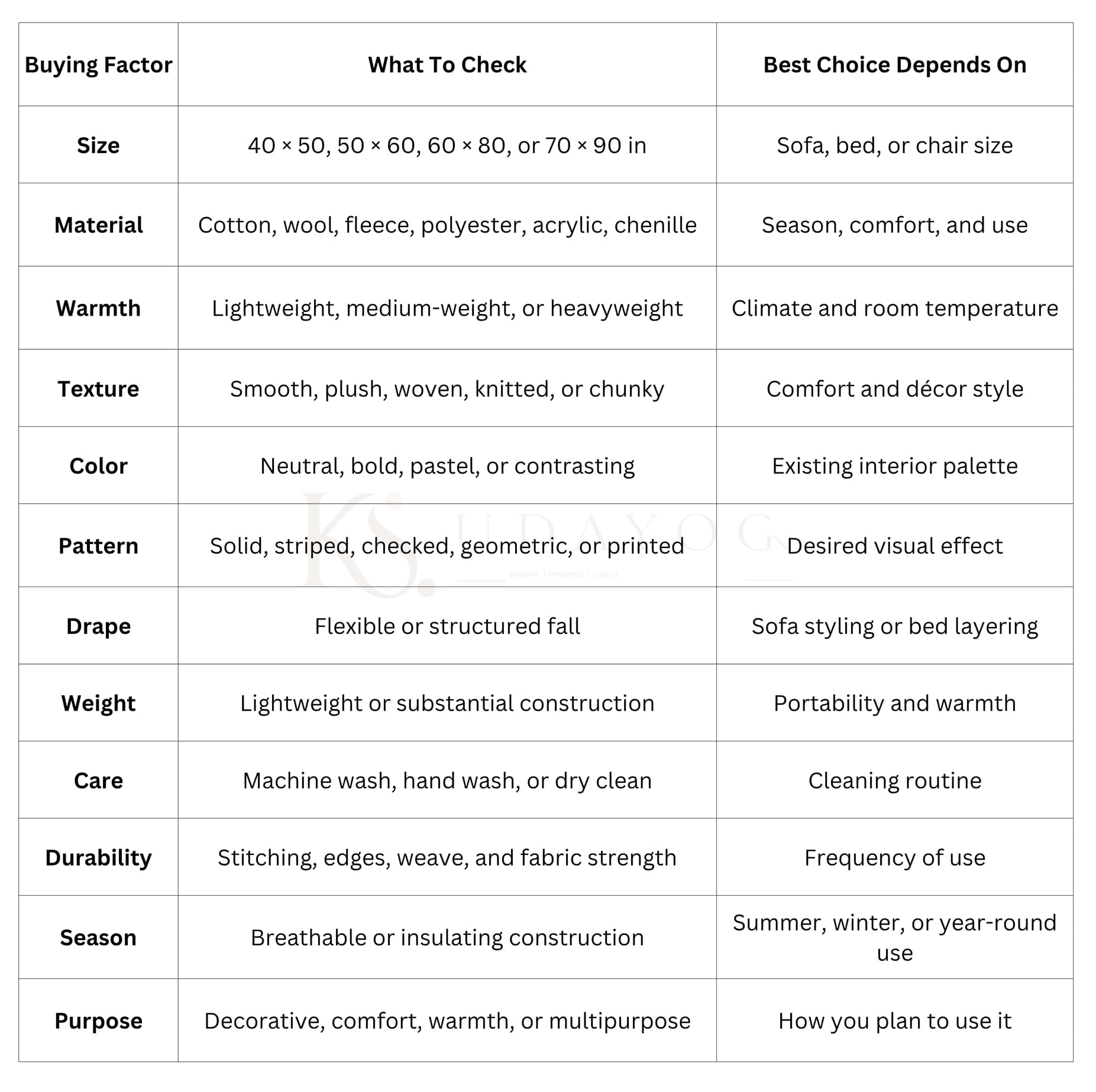
How To Buy A Throw Blanket That Fits Your Room’s Needs?
Start by deciding whether you need the throw mainly for warmth, decoration, or both. Then narrow your choices by size, material, texture, weight, color, and care requirements.
For a sofa, prioritize a manageable size that can be easily folded or draped. For a bed, consider a larger throw if you want more coverage across the foot of the mattress.
If you are buying multiple throws for a retail collection, hotel, interior project, or other bulk requirement, also compare material consistency, available sizes, color options, minimum order quantities, customization, packaging, and supplier capabilities.
Where To Source Throw Blankets For Your Collection
The leading throw manufacturers in India, like KS Udayog, support retailers, hospitality businesses, interior projects, and other bulk buyers looking for throw blankets in different materials, sizes, colors, textures, and designs. Buyers can discuss their specific requirements and explore options suited to their target market and product range.
For businesses planning a new collection, custom requirements can also be discussed based on available manufacturing capabilities, order quantities, preferred specifications, and packaging needs. This can make it easier to develop a throw blanket range that fits the intended market and selling environment.
Final Thoughts
The perfect throw blanket should work with both your space and your lifestyle. Consider where you will use it, how much coverage you need, which material feels right, how warm it should be, and how easily it can be maintained.
For a versatile sofa option, a 50 × 60-inch throw is a practical starting point, while a 60 × 80-inch or larger throw can provide better coverage for many beds and larger sofas.
Take time to compare the actual dimensions, fabric, weight, texture, care instructions, and finish before you buy. The right combination can turn a simple throw into a useful comfort layer and an attractive part of your interior décor.
If you are planning a new throw collection for your store, connect with a reliable throw manufacturer to explore suitable materials, designs, sizes, and bulk-order options.
Frequently Asked Questions (FAQs)
Can I Use The Same Throw Blanket On A Sofa And Bed?
Yes. A versatile 50 × 60-inch or 60 × 80-inch throw can be used in different locations, although the ideal size depends on the furniture and desired coverage.
How Do I Choose A Throw Blanket For Winter?
Look for a heavier construction and warmer materials such as wool or fleece. Weight and thickness should also be considered because they affect overall warmth.
What Throw Blanket Is Best For Summer?
A lightweight, breathable option such as cotton can be more comfortable during warmer months and can also work as a decorative layer.
How Should A Throw Blanket Look On A Sofa?
You can fold it over an armrest, drape it across the back, or place it casually over one corner. The best arrangement depends on the sofa design and your preferred interior style.
How Do I Choose A Throw Color?
Choose a color that complements your sofa, bedding, rug, cushions, and other décor. Neutral shades provide versatility, while accent colors can add contrast.
What Should I Check Before Buying A Throw Blanket Online?
Check the exact dimensions, material, weight, texture description, care instructions, color representation, construction details, and customer reviews before purchasing.