Ever wiped your floor in the morning, only to find muddy footprints back by lunchtime? Between dusty summers, monsoon rain, wet slippers, and daily foot traffic, the humble door mat has a bigger job than simply saying “Welcome.” A poor choice can slide on marble, stay damp for hours, or fail to catch the dirt coming in from outside.
Indian homes deal with everything from summer dust and roadside dirt to monsoon mud and wet footwear, while marble and tile floors can make a loose mat even more troublesome. The right choice needs to suit the entrance size, amount of foot traffic, moisture exposure, cleaning routine, and type of flooring.
A stylish mat may catch your eye, but practical details decide whether it will remain useful after weeks of everyday use. This door mat buying guide explains how to choose the right option for different home entrances, weather conditions, and everyday requirements.
Why Does Choosing The Right Door Mat Matter?
Your entrance handles more than just visitors coming into the house. Shoes can carry dust, soil, moisture, and everyday debris from outside. A suitable mat creates a practical transition between the outside and inside areas. The right choice can help you:
- Reduce dirt entering the home
- Manage moisture around entrances
- Create a more welcoming doorway
- Improve comfort underfoot
- Complement your entrance décor
- Handle regular foot traffic
- Make routine cleaning easier
However, there is no single door mat that is ideal for every home.

The best door mat is the one that matches the conditions in which it will actually be used.
Tips To Select A Long-Lasting Doormat For Your Home
Ever bought a doormat that looked perfect in the shop but started looking worn out after a few months? Daily dust, moisture, frequent cleaning, and constant foot traffic can test even a good-quality mat. The tips below explain what to check before choosing a doormat designed for long-term use.
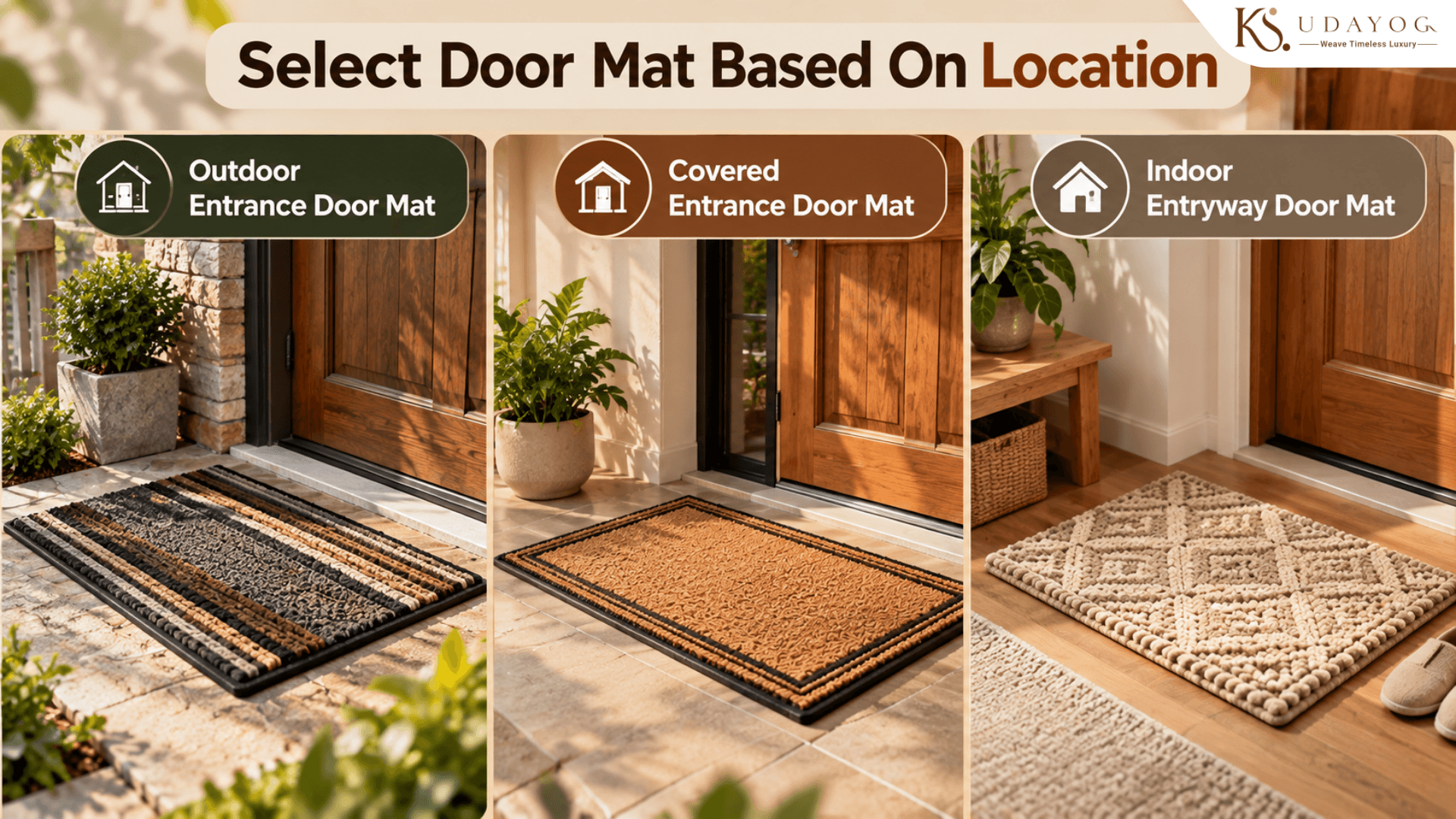
1. Start With Your Door Mat Location
Before comparing materials or designs, identify where the mat will sit.
- Outdoor Entrance: An outdoor mat needs to deal with dust, footwear, and potentially rain or changing weather conditions. Durability and water resistance become important considerations.
- Covered Entrance: A covered porch or apartment corridor gives you more flexibility. You can consider materials based on the amount of traffic, cleaning requirements, and appearance you prefer.
- Indoor Entryway: An indoor entryway mat can focus more on softness, absorbency, comfort, and décor.
If your entrance has enough space, using an outdoor scraping mat followed by a softer indoor mat can provide two different functions.
2. Choose The Right Door Mat Material
Material has a direct impact on how a mat feels, performs, looks, and should be maintained. Here are some commonly used options.
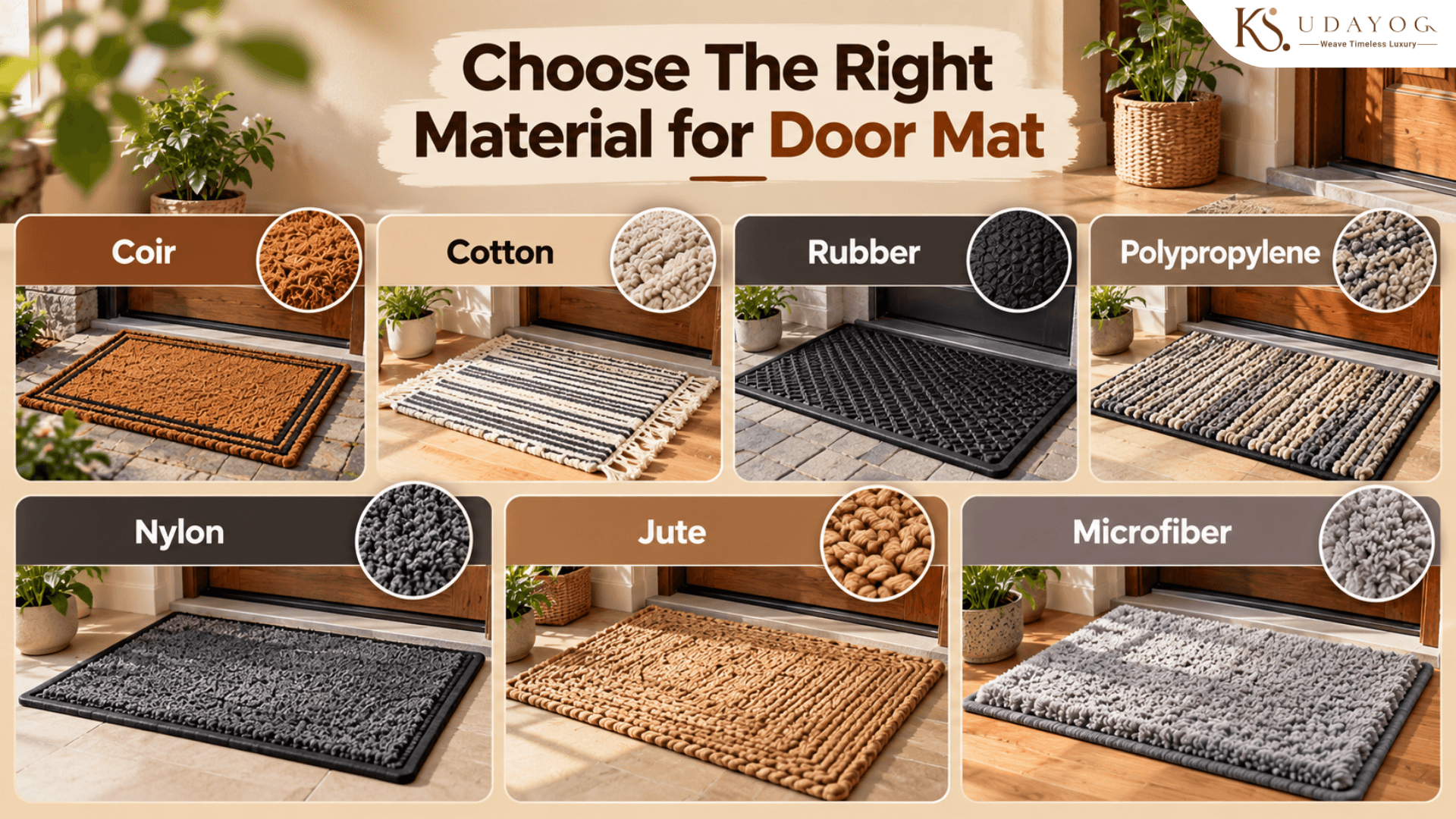
- Coir Door Mats
Coir is made from coconut husk fibres and is known for its coarse, natural texture. Choose coir when you want a traditional-looking mat with a firm texture and practical dirt-removing function.
- Cotton Door Mats
Cotton offers a softer feel and can be useful for indoor entrances. Its absorbent nature can make it suitable for areas where managing light moisture is important. Cotton mats also work well with home interiors because they are available in many colours, patterns, and textures.
- Rubber Door Mats
Rubber is valued for stability, durability, and grip. It can be useful for entrances that experience frequent movement, especially where keeping the mat relatively stable is important. Always check that the backing is suitable for your specific flooring.
- Polypropylene Door Mats
Polypropylene is a synthetic material commonly used for household and commercial mats because of its versatility. It can support different colours, patterns, and surface textures, making it useful when you want to combine everyday functionality with decorative appeal.
- Nylon Door Mats
Nylon is known for strength and resilience. It can be considered for entrances that receive regular foot traffic and need a material capable of maintaining its appearance through repeated use.
- Jute Door Mats
Jute offers a naturally textured appearance and works particularly well with earthy, understated interiors. If visual appeal is an important part of your entrance design, jute can provide a more organic look.
- Microfiber Door Mats
Microfiber has a soft texture and can absorb moisture effectively. It can be a practical choice for indoor spaces where comfort and moisture management are important.
3. Select The Right Door Mat Size
A mat that is too small can look out of proportion and may not provide enough coverage. Before purchasing, measure the available entrance area. Consider:
- Door width: The mat should provide suitable coverage across the doorway.
- Available floor space: Leave enough room for the door to open without catching the mat.
- Door clearance: A thick mat may interfere with doors that swing inward.
- Walking path: The mat should cover the area where people naturally step.
For a single doorway, a rectangular mat is often practical. Wider entrances may benefit from larger mats or multiple coordinated pieces.
Do not select a size only because it looks good online. Measure the actual space first.
4. Check The Mat's Thickness
Thickness affects both comfort and practicality.
A thicker mat can feel more substantial underfoot, but excessive thickness can create problems if there is limited clearance beneath the door.
Before choosing a plush or heavily textured mat, check the gap between the floor and the bottom of the door.
For an inward-opening main door, this small measurement can prevent an otherwise attractive mat from becoming inconvenient.
5. Look At The Backing And Grip
The underside of a door mat is just as important as its visible surface.
A mat that moves every time someone steps on it can become inconvenient and may create a safety concern. Look for a suitable backing based on your flooring and intended use.
Possible backing materials include rubber, PVC, latex-based backing, and other anti-slip constructions.
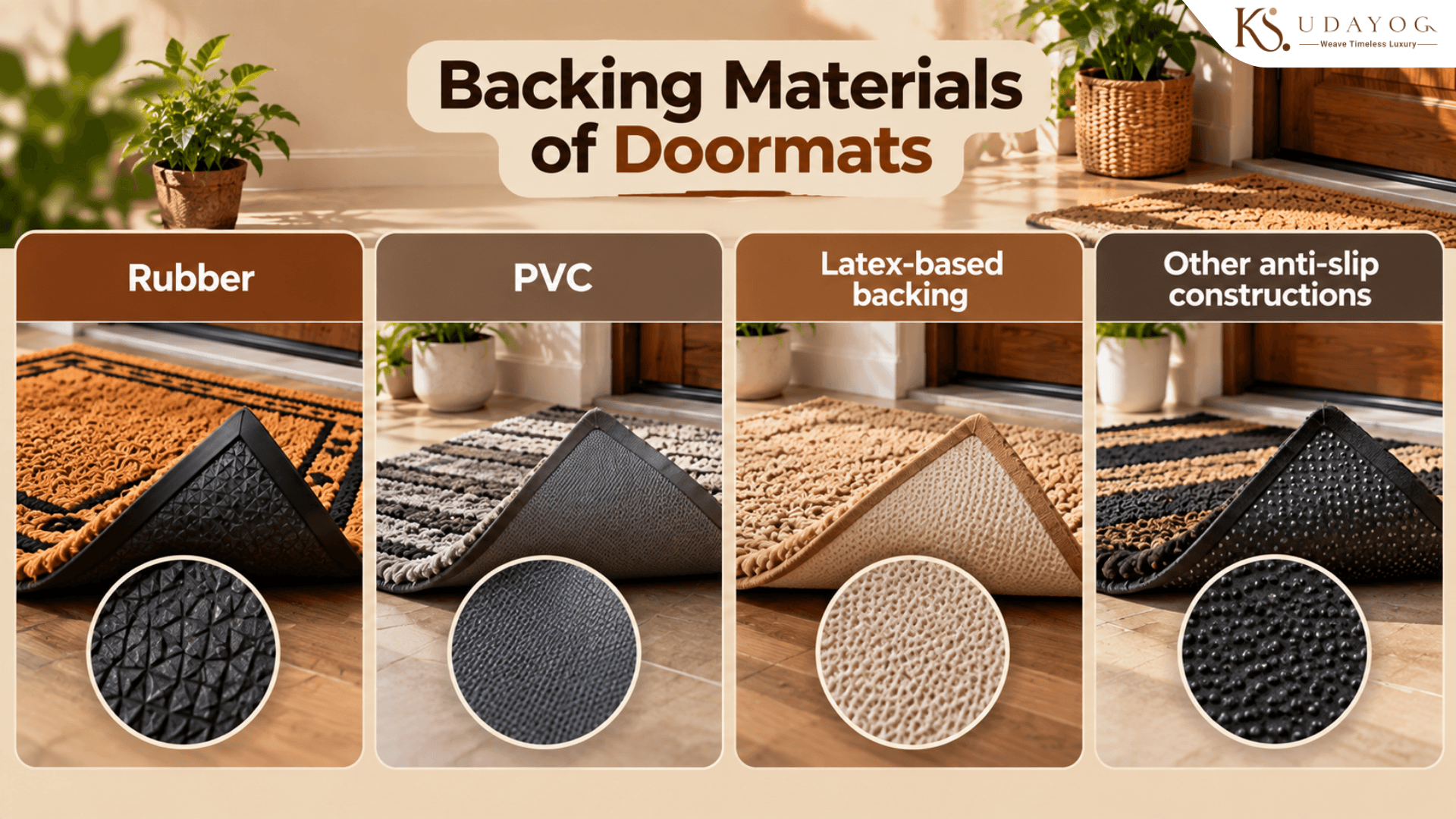
The important point is compatibility. For example, the backing required for a smooth indoor tile floor may differ from what works best on a rough outdoor surface.
Also check whether the manufacturer provides specific care instructions for the backing.
6. Consider Your Home's Foot Traffic
Not every entrance receives the same amount of use. A main entrance used by several family members every day needs a different level of durability than a secondary doorway.
Think about the number of household members, visitors, children, pets, daily footwear changes, frequency of outdoor activity, and location of the entrance.
For high-traffic entrances, prioritise durable construction and materials that are straightforward to maintain.
For a less frequently used decorative entrance, appearance may carry greater importance.
7. Consider India's Weather And Entrance Conditions
Indian homes can experience very different entrance conditions depending on the region and season.
Some homes deal with heavy monsoon moisture, while others experience dry dust and sand. Coastal areas can have higher humidity, while northern regions may see considerable dust during dry periods.
Therefore, your local conditions should influence your choice.
- During Monsoon: Moisture management becomes more important. Consider materials that can handle wet footwear and choose a location where the mat can dry properly.
- During Dry And Dusty Conditions: A textured surface can be useful for helping remove dust and debris from footwear before people enter the home.
- In Humid Conditions: Consider ventilation and drying requirements. A mat that stays damp for long periods can become difficult to maintain.
The best option is therefore not determined by material alone. Your local entrance conditions matter just as much.
8. Choose A Doormat Design That Fits Your Entrance
A door mat is functional, but it is also one of the first decorative elements people see when entering your home.
You can select solid colours, geometric patterns, floral designs, traditional motifs, minimalist patterns, printed designs, natural textures, and personalised designs.

For busy entrances, darker or patterned surfaces may make everyday dust less visually obvious.
For minimalist homes, neutral colours and simple patterns can blend naturally with the surrounding décor.
The design should complement the doorway rather than compete with it.
9. Think About Cleaning And Maintenance
Before buying a mat, understand how it needs to be cleaned.
Different materials require different maintenance methods.
Ask:
- Can it be vacuumed?
- Can it be shaken outdoors?
- Can it be washed?
- Does it require spot cleaning?
- How quickly does it dry?
- Can the backing be exposed to water?
- Does the manufacturer provide specific care instructions?
A beautiful mat that is difficult to clean may not be practical for a busy household. Choose maintenance requirements that fit your routine.
10. Consider Pets And Children
Homes with children or pets may have additional entrance requirements. Pets can bring more dirt indoors, while children may move around the entrance frequently.
In such homes, consider:
- Secure backing
- Durable construction
- Easy cleaning
- Suitable surface texture
- Moisture handling
- Rounded or finished edges
If your pet frequently uses the entrance, also check whether the mat's material is likely to trap hair or be difficult to clean.
11. Compare Indoor And Outdoor Door Mats
One of the easiest ways to choose correctly is to separate indoor and outdoor requirements.
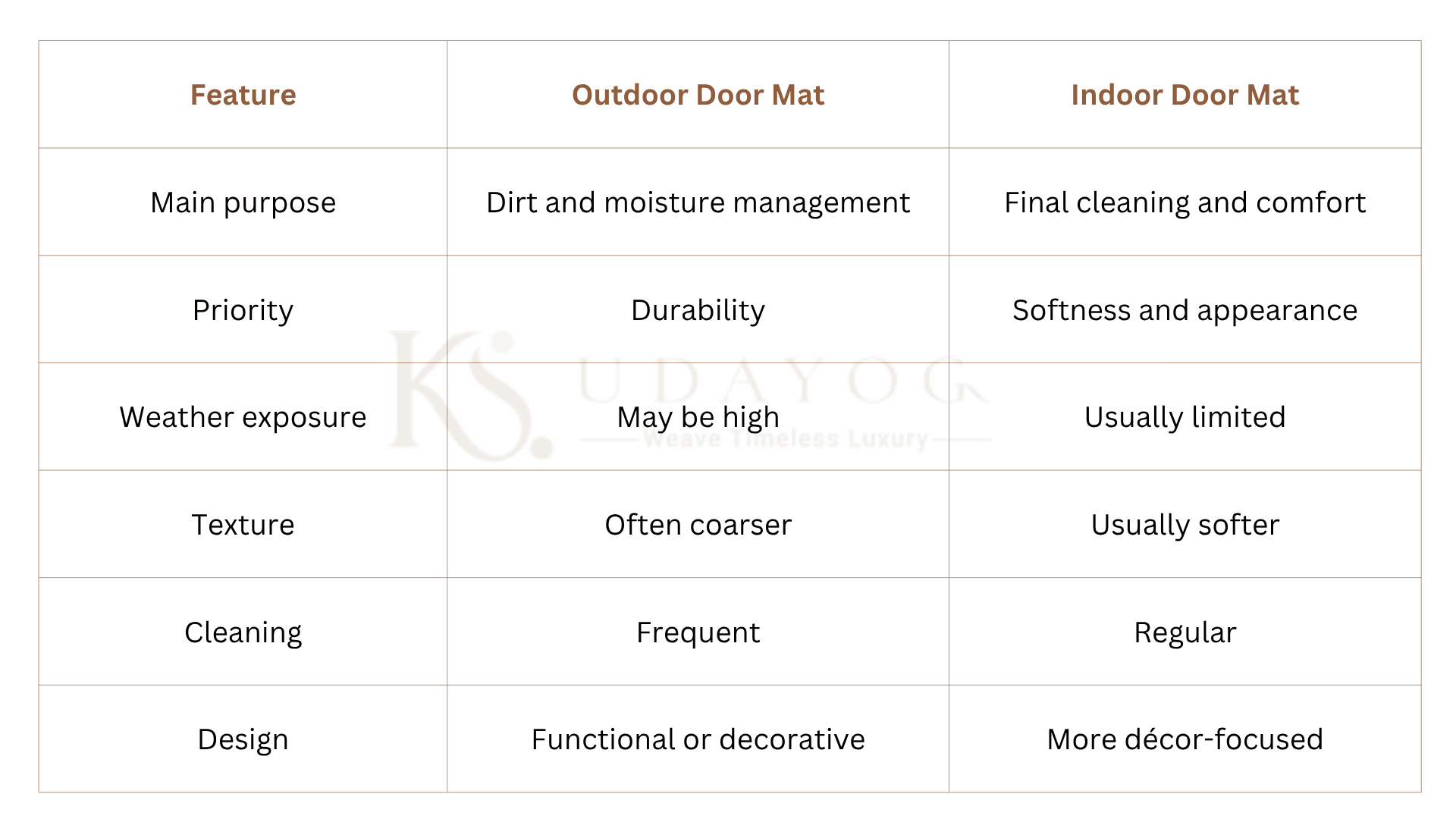
You do not necessarily need to choose one type for the entire entrance.
A two-mat arrangement can provide different functions: one mat outside for scraping footwear and another inside for absorbing remaining moisture and fine dirt.
12. Choose The Right Shape of Doormat
Rectangular door mats are the most common choice because they suit standard doorways.
However, other shapes can work depending on your entrance.
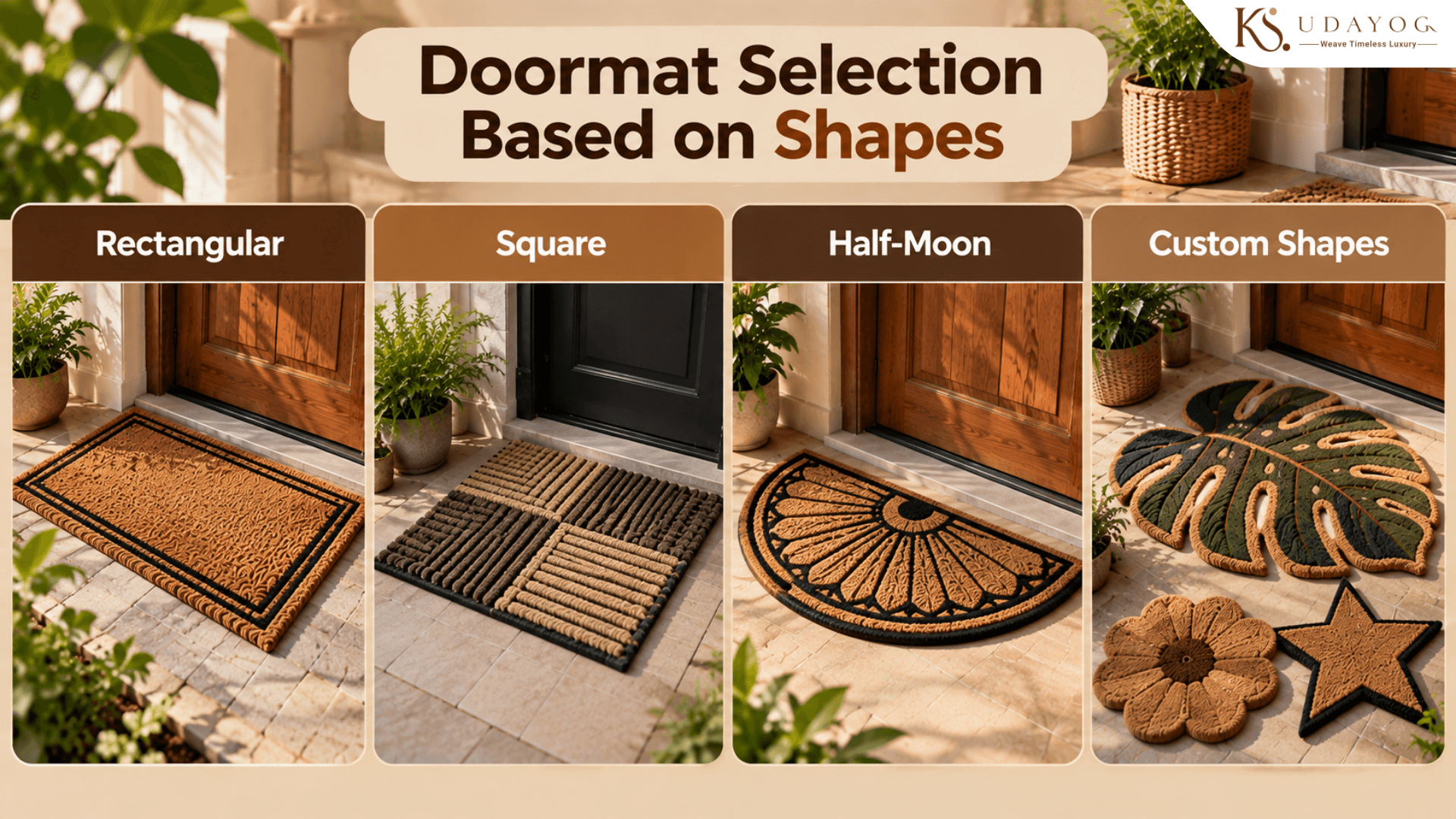
- Rectangular: Practical for most doors and easy to position.
- Square: Suitable for wider or visually balanced entry areas.
- Half-Moon: Useful where you want a curved edge or have limited space in front of the doorway.
- Custom Shapes: Useful for distinctive entrances, commercial branding, or specific interior requirements.
Measure your available floor area before selecting a non-standard shape.
13. Check The Edges And Finishing
The surface may attract your attention first, but finishing affects how the mat looks after repeated use.
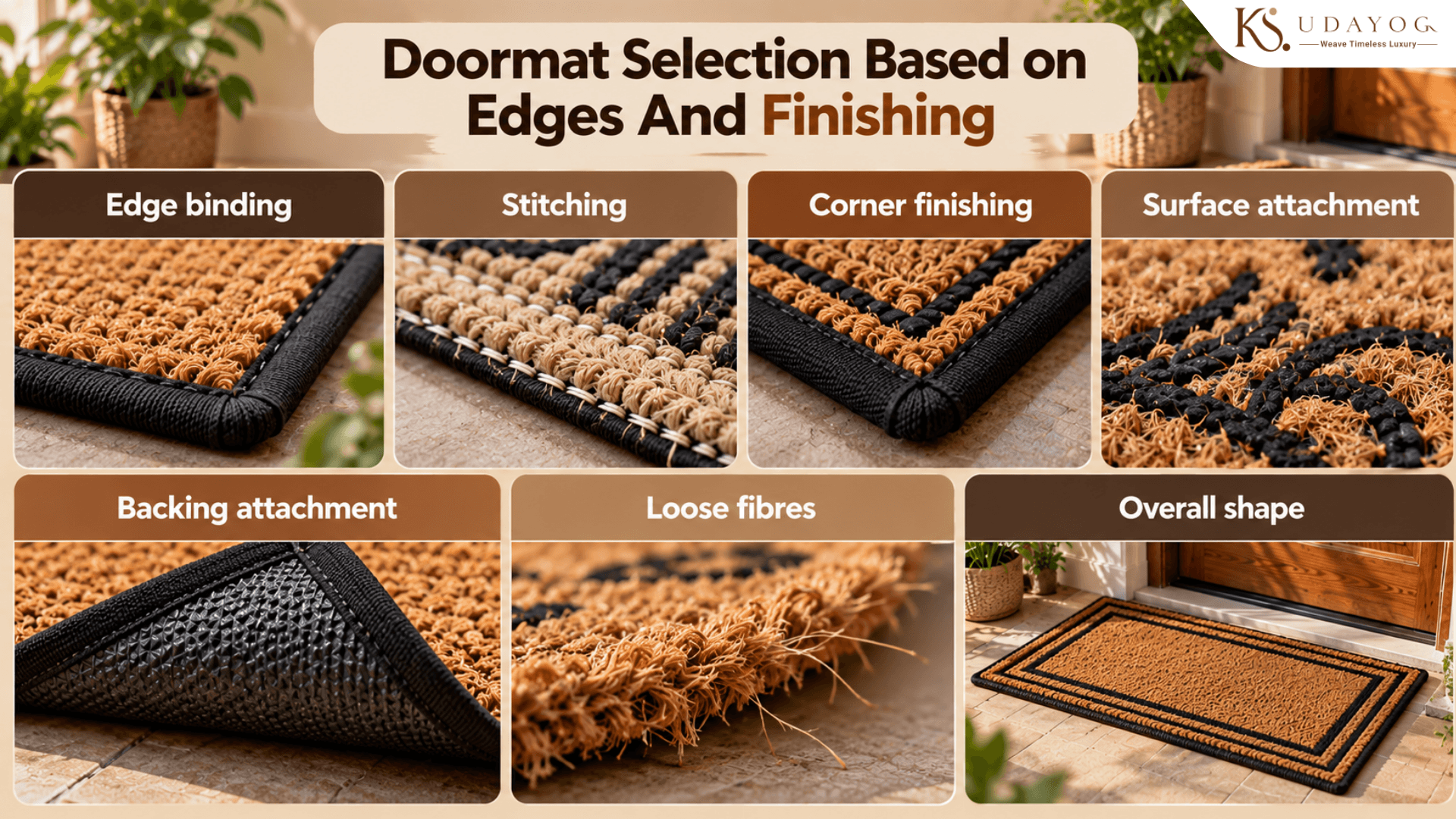
Inspect edge binding, stitching, corner finishing, surface attachment, backing attachment, loose fibres, and overall shape.
A properly finished mat should sit neatly on the floor without obvious construction defects.
If you are buying multiple mats for different rooms, compare samples to ensure the construction and finishing meet the same standard.
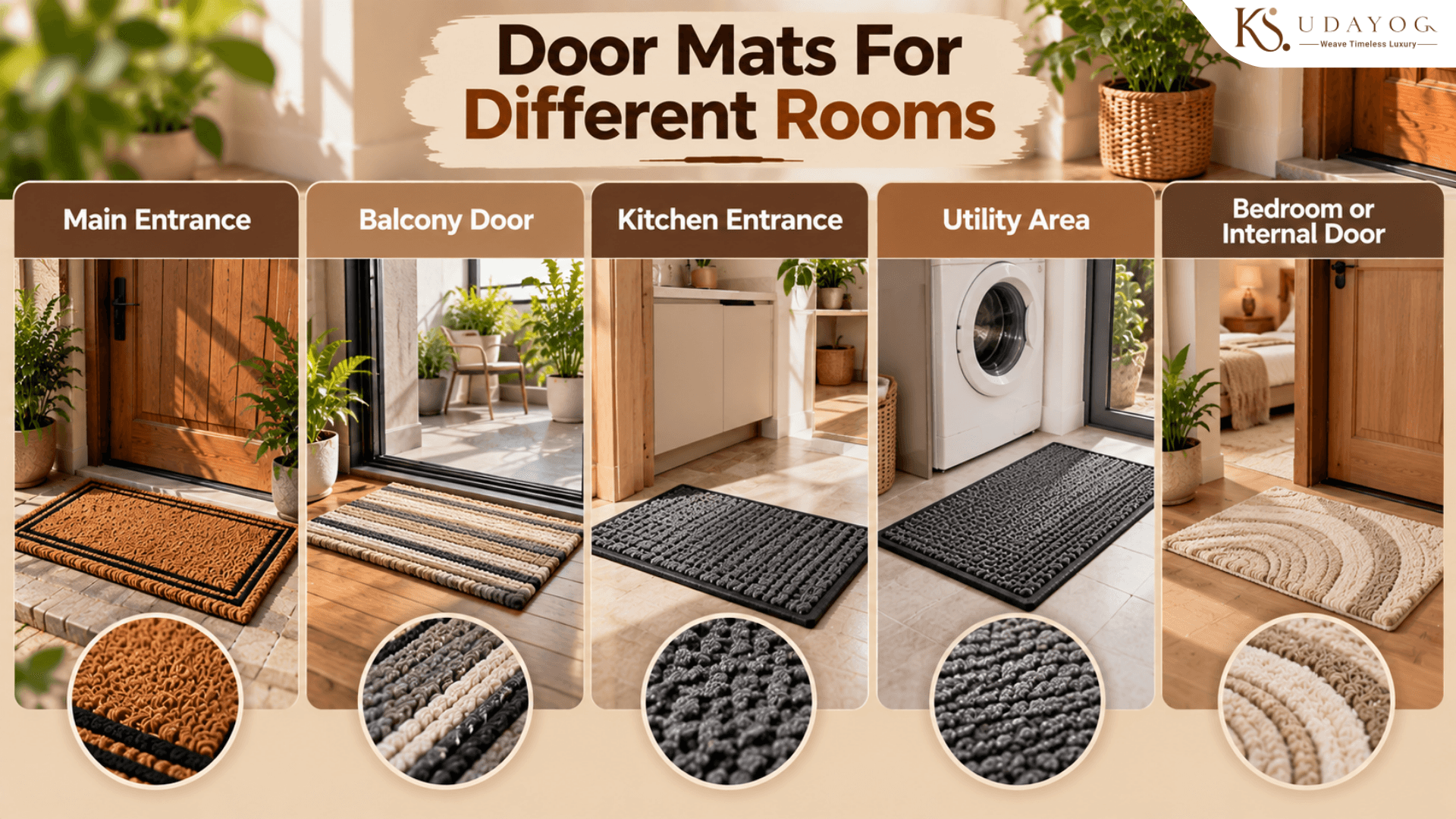
How To Choose A Door Mat For Different Rooms
Different entrances can have different requirements.
- Main Entrance: Prioritise durability, dirt removal, suitable size, and visual appeal.
- Balcony Door: Choose according to outdoor exposure, dust, and available floor space.
- Kitchen Entrance: Easy maintenance and moisture management may be important.
- Utility Area: Prioritise practicality, durability, and easy cleaning.
- Bedroom or Internal Door: A softer, decorative mat may be more suitable where outdoor dirt is not the primary concern.
When Should You Choose A Custom Door Mat?
A standard mat works well when you need a readily available size and design. Customisation becomes useful when you need something specific. Consider a custom door mat if you require:
- Unusual dimensions
- Specific colours
- Custom patterns
- Brand logos
- Special shapes
- Coordinated interior collections
- Commercial requirements
Custom door mats can be particularly useful for businesses, hotels, offices, retailers, and interior projects where standard designs may not match the required space.
What Makes A Door Mat A Good Buy?
Instead of asking only whether a door mat looks attractive, evaluate it against these practical criteria:
- Suitable material: Matches the entrance and expected usage.
- Correct size: Provides enough coverage without interfering with doors.
- Appropriate texture: Supports the intended dirt or moisture management.
- Secure backing: Helps the mat remain appropriately positioned.
- Durable construction: Handles the expected foot traffic.
- Easy maintenance: Fits your regular cleaning routine.
- Suitable design: Complements your home and entrance.
- Appropriate thickness: Works with your door clearance.
- Good finishing: Edges, corners, stitching, and backing are properly constructed.
A mat that performs well across these factors is more likely to remain useful beyond its first impression.
How KS Udayog Approaches Door Mat Manufacturing
KS Udayog manufactures door mats as part of its broader home-textile portfolio, alongside rugs, carpets, cushions, bath rugs, and throws. Its published manufacturing information describes an in-house production facility, material selection, cutting, tufting, stitching, finishing, inspection, and packaging stages.
The company's door mat collection includes material options such as coir, cotton, rubber, polypropylene, nylon, jute, and microfiber, with options covering different entrance requirements and design preferences.
For custom requirements, KS Udayog states that businesses can discuss specifications such as sizes, colours, patterns, and branding. Its website also highlights custom manufacturing and bulk production for retailers, distributors, and brands.
Its published project portfolio also includes a custom entrance-mat project using natural coir and rubber for residential villas, demonstrating how material selection can be matched to a specific entrance application.
For homeowners, retailers, interior professionals, and businesses, this type of manufacturing capability can be useful when a standard door mat does not meet the required dimensions, design, material, or application.
Final Thoughts
The best door mat is not necessarily the thickest, most expensive, or most attractive option. It is the one that fits your entrance, handles the expected traffic, suits your local conditions, remains practical to maintain, and complements your home.
Start by measuring your space and identifying where the mat will be used. Then compare materials, thickness, backing, texture, cleaning requirements, durability, and design before making your choice.
If you need a standard mat for everyday household use, focus on practical performance. If your entrance has unusual dimensions or you want a coordinated design, explore custom options from a manufacturer that can work around your requirements.
For custom door mats, rugs, and other home-textile requirements, you can contact a trusted Indian doormat manufacturer and share your requirements with the team.
Frequently Asked Questions (FAQs)
Which Material Is Suitable For A Door Mat In An Indian Home?
The suitable material depends on the entrance conditions. Coir can work well for dirt removal, while cotton and microfiber can suit indoor areas where softness and moisture absorption matter.
Should A Door Mat Be Inside Or Outside The Main Door?
Either position can work depending on the entrance. Using an outdoor mat for heavier dirt and an indoor mat for finer debris or moisture can provide complementary functions.
How Often Should A Door Mat Be Cleaned?
Cleaning frequency depends on foot traffic, weather, pets, and visible dirt. High-use entrances generally need more frequent cleaning than secondary doorways.
What Size Door Mat Should I Buy?
Measure the doorway and available floor area before buying. The mat should provide useful coverage without preventing the door from opening or creating an obstruction.
Can Door Mats Damage Flooring?
Some backing materials may not suit every floor finish, particularly if moisture becomes trapped underneath. Check the manufacturer's recommendations and keep the underside clean and dry.
Are Thicker Door Mats Always Better?
Not necessarily. Thickness should match the available door clearance and intended use, while the material, construction, backing, and maintenance requirements also affect suitability.
What Type Of Door Mat Is Suitable For Rainy Weather?
Look for materials and constructions appropriate for moisture exposure, along with adequate drying conditions. The right choice also depends on whether the entrance is covered or fully exposed.
Can I Use The Same Door Mat Throughout My Home?
You can, but different entrances may have different requirements. Main, kitchen, balcony, utility, and internal entrances can benefit from materials selected for their specific conditions.