Planning a bulk cushion order sounds straightforward until samples arrive with different fabric quality, uneven filling, or finishing that does not match what you expected. For Indian businesses, these small differences can become bigger issues when products reach customers, retailers, hotels, or furniture projects.
A reliable cushion manufacturer should offer more than an attractive price. Material options, customization, stitching quality, production capacity, order quantities, quality checks, packaging, and delivery commitments all deserve attention before you place a large order. Your supplier should also have enough capacity to support the business as demand grows.
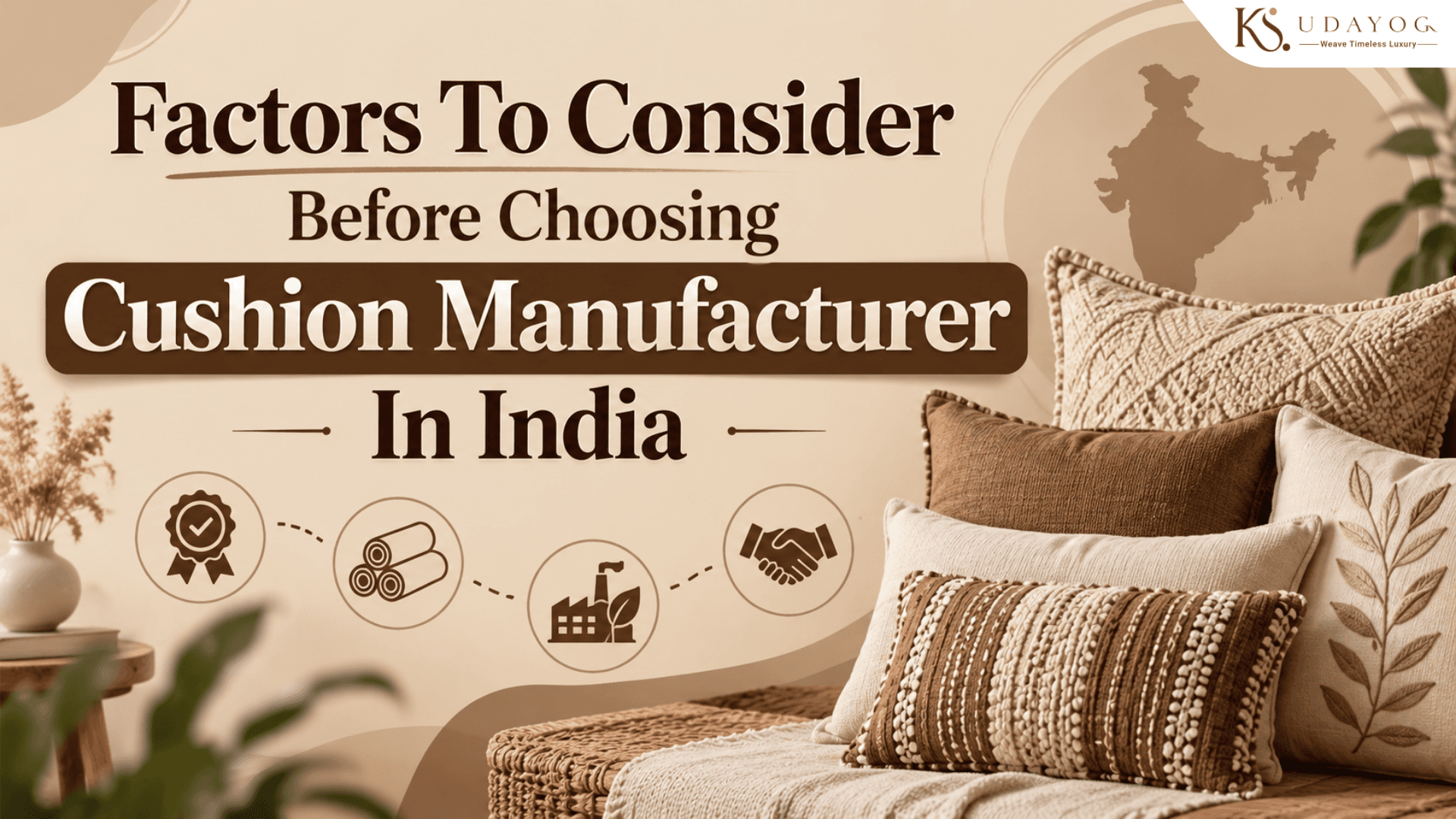
The right questions can save you from costly supplier changes later. This guide explains the key factors to consider when evaluating cushion manufacturers in India for quality, pricing, customization, reliability, and long-term business needs.
12 Factors B2B Buyers Should Consider When Choosing A Cushion Manufacturer
1. Check Whether They Are Actually A Manufacturer
The word “supplier” can refer to several types of businesses.
A wholesale manufacturer for cushions may control production directly, while a trading company may purchase finished products from different factories. Neither model is automatically right or wrong, but you should understand who will actually produce your cushions.
Ask:
- Where are the cushions manufactured?
- Which processes are handled in-house?
- Which processes are outsourced?
- Can you visit or virtually inspect the facility?
- Who controls quality during production?
- Can the same production setup handle repeat orders?
For wholesale cushion sourcing, knowing the actual manufacturing arrangement helps you assess production control and accountability.
2. Evaluate Fabric And Material Quality Your Cushion Supplier Uses
The fabric influences the cushion's appearance, handfeel, durability, and suitability for its intended market. Depending on your collection, you may source cotton, linen, velvet, polyester, jute, wool, blends, or other specialty fabrics.
Do not evaluate fabric only from photographs. Request physical samples and check the actual texture, weight, construction, colour, and finishing.

If you are developing cushions for frequent-use environments, ask whether the selected fabric is appropriate for the expected handling and cleaning conditions. For decorative collections, surface texture, embroidery, weaving, printing, and other design details may carry greater importance.
3. Assess Filling And Cushion Construction
A cushion is more than its outer cover. If you are purchasing complete cushions, examine the relationship between the cover, insert, and filling.
The filling affects firmness, loft, comfort, recovery, and overall shape. Ask the manufacturer what filling options are available and whether the fill weight or firmness can be customized.

Also check whether the insert dimensions correspond correctly with the finished cover dimensions. A poorly matched insert can make an otherwise good cushion look flat, overfilled, or uneven.
4. Review Available Customization And Design For Cushion Making
Customization becomes particularly important for private-label brands, retailers, hospitality projects, and businesses developing their own collections.
A capable manufacturer may offer customization across dimensions, fabrics, colours, prints, embroidery, tufting, piping, tassels, fringes, closures, labels, and packaging. OEM cushion production can also allow buyers to specify construction and finishing details rather than selecting only catalogue products.

Before selecting a supplier, match its customization capabilities with your actual product requirements. There is little value in choosing a manufacturer with an extensive catalogue if your business needs a highly specific design.
5. Examine Sampling And Product Development
A proper sample is one of the most useful tools in wholesale cushion sourcing.
Do not approve bulk production from catalogue photographs alone.
A good sampling process should allow you to evaluate fabric, colour, dimensions, filling, stitching, closure, piping, embroidery, printing, and overall finish.
For complex products, you may need a development sample followed by a final approval sample.
Keep the approved sample or a clearly documented specification as the reference for bulk production.
6. Understand Minimum Order Quantity Requirements
MOQ can determine whether a manufacturer is practical for your business.
Do not ask only, “What is your MOQ?” Clarify whether the minimum applies to the total order, individual design, colour, fabric, size, or customization technique. Custom products may have different requirements from standard catalogue cushions.
For example, a supplier may accept a particular total quantity but require separate minimum quantities for each colour or design.
Understanding the MOQ structure early helps you plan your collection and prevents unexpected quantity requirements during ordering.
7. Compare Production Capacity And Scalability
A manufacturer capable of producing a few hundred cushions may not necessarily be prepared for a large retail or hospitality programme.
Consider the supplier's machinery, workforce, production lines, material availability, and ability to handle peak-season demand. If you expect your order volume to grow, discuss scalability before starting the relationship.
Production capacity is especially important for businesses that need multiple SKUs, seasonal collections, or repeat orders within fixed retail timelines.
8. Verify Quality Control And Standards
Quality control should not begin after production is finished. Ask how the manufacturer checks products at different stages.

A practical quality process can include:
- Raw Material Check: Fabric, filling, trims, threads, and accessories are checked before production.
- In-Process Check: Stitching, dimensions, construction, embroidery, printing, and other production details are monitored.
- Final Inspection: Finished cushions are checked for appearance, measurements, workmanship, packaging, and quantity before dispatch.
The exact inspection process should match the product and buyer requirements.
9. Compare Pricing And Quotation Details
Price comparison is useful only when manufacturers are quoting against comparable specifications.
A cushion quotation can change according to fabric, fabric weight, dimensions, filling, construction, decoration, trims, packaging, branding, quantity, and delivery requirements. Custom OEM pricing, in particular, depends on the complete product specification rather than a design image alone.
When comparing quotations, check exactly what is included. A lower price may simply reflect a different fabric, filling, closure, packaging specification, or level of customization.
For wholesale cushion sourcing, compare the same product specification, not just the final quoted amount.
10. Confirm Lead Times And Delivery
A manufacturer's production timeline should fit your purchasing or launch schedule.
Separate the overall timeline into sampling, approvals, material procurement, bulk production, finishing, packaging, and dispatch. Customized cushions may require additional development time before manufacturing can begin.
Do not rely only on a verbal delivery promise. Confirm the expected timeline in writing and clarify what happens if raw-material availability, design changes, or production delays affect the original schedule.
For seasonal retail collections, delivery reliability can be just as important as the quoted unit price.
11. Check Private-Label And Packaging Support
If you sell cushions under your own brand, check whether the manufacturer can support your branding requirements.
Depending on the supplier, private-label production can include woven or printed labels, care labels, hangtags, barcode stickers, branded packaging, product inserts, and carton markings.
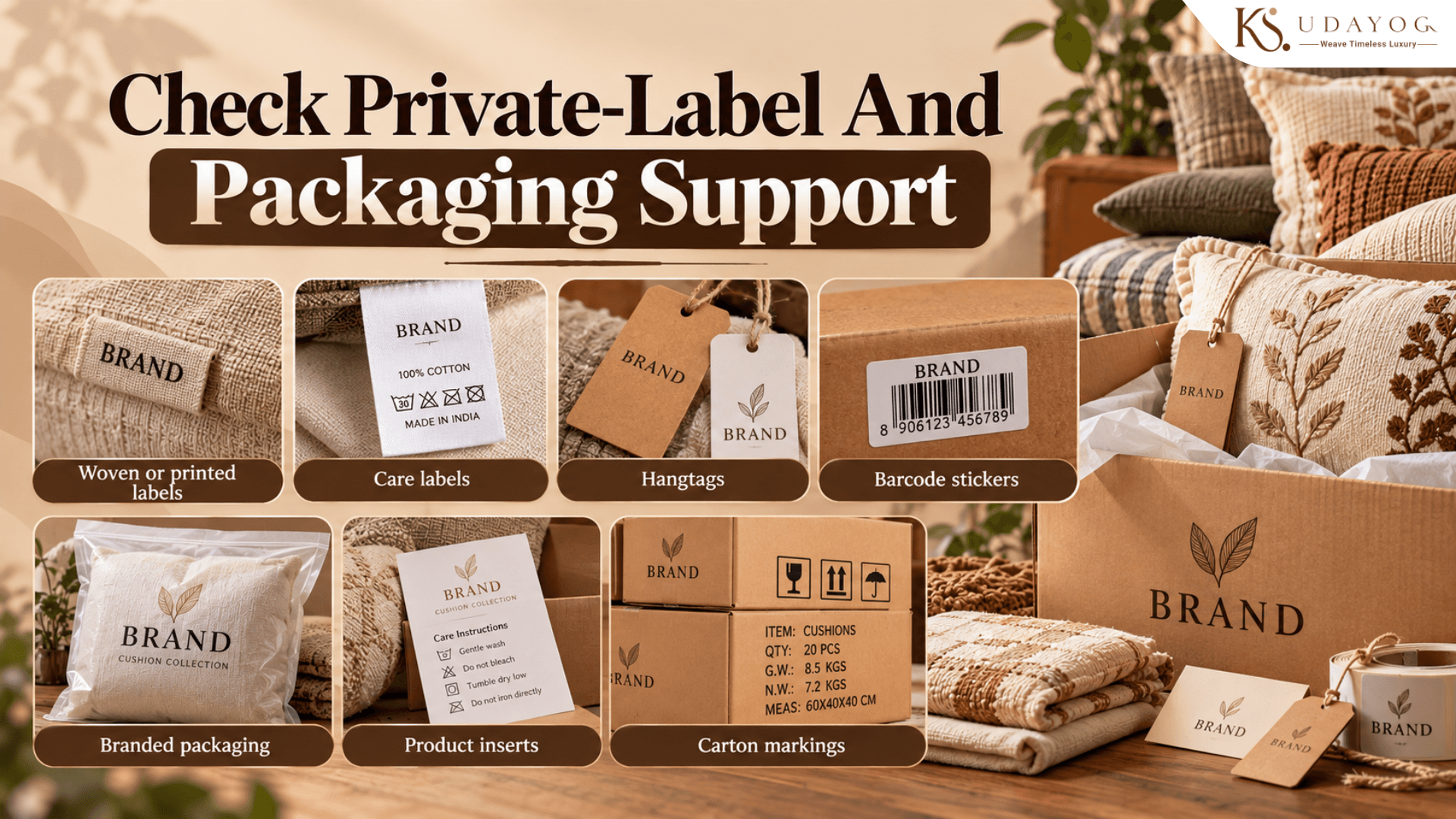
Discuss these requirements before production begins. Providing packaging specifications late in the process can create additional costs or delay dispatch.
A manufacturer that can coordinate the finished product and branding requirements under one production programme can simplify wholesale sourcing.
12. Assess Long-Term Supply Capability
The first order is only one part of supplier selection. Your manufacturer should also be capable of supporting future orders with comparable quality and specifications.
Ask whether the supplier can reproduce the same fabric, colour, dimensions, filling, construction, and finishing for repeat production. For growing brands, also consider whether the manufacturer can introduce new designs and increase production volumes when demand rises.
A strong long-term supplier relationship depends on more than a successful first shipment. Clear specifications, reliable communication, repeatable quality, realistic lead times, and scalable production all contribute to dependable sourcing.
13. Examine Zipper And Closure Quality
Zippers are a small component, but they can significantly affect the usability and perceived quality of a cushion.

Depending on the design, you may encounter:
- Concealed zippers
- Standard zippers
- Envelope closures
- Button closures
- Ties
- Other custom closures
Check whether the zipper operates smoothly and sits correctly without puckering the fabric.
For private-label cushions, specify the closure type, placement, colour, and finish before production begins.
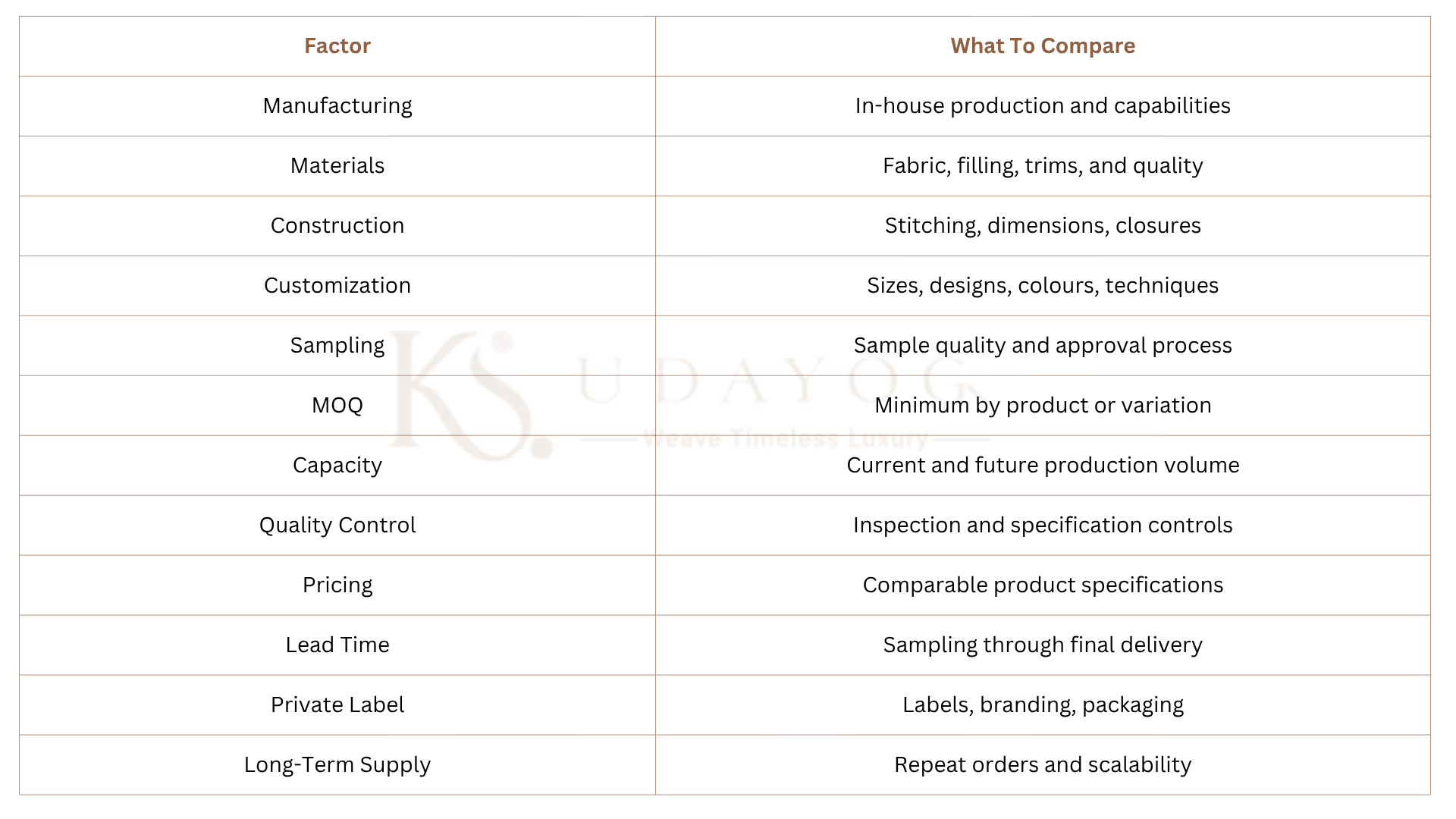
Cushion Manufacturer Comparison: A Quick Checklist
How To Choose The Right Cushion Manufacturer In India
Once you have shortlisted manufacturers, send each one the same product brief. Include your required dimensions, fabric, filling, design, quantity, customization, packaging, target delivery date, and any quality requirements.
Then compare their samples and quotations against those specifications.
A useful evaluation should answer three questions: Can they make the product? Can they make it to the required quality? Can they supply the required quantity within your commercial and delivery expectations?
This approach makes wholesale cushion sourcing more objective and reduces the risk of choosing a supplier simply because its catalogue or initial quotation looks attractive.
Final Thoughts
A cushion manufacturer in India requires a broader evaluation than fabric, design, or price alone. Manufacturing capability, material quality, construction, customization, MOQ, sampling, production capacity, quality control, pricing, lead time, branding support, and long-term supply all influence the success of a wholesale order.
A clear product specification and physical sample should form the foundation of your sourcing decision. Once manufacturers are compared against the same requirements, it becomes easier to identify a supplier that fits both your immediate order and future business needs.
Looking for buying wholesale cushions in India? Contact a trusted cushion manufacturer in India that matches your product specifications, quality expectations, quantities, customization needs, and delivery requirements.
Frequently Asked Questions (FAQs)
What Should I Check Before Choosing A Cushion Manufacturer In India?
Check manufacturing capability, material quality, construction, customization, sampling, MOQ, production capacity, quality control, pricing, lead time, private-label support, and repeat-order capability.
How Do I Know Whether A Cushion Supplier Is A Manufacturer?
Ask where the cushions are produced and which processes are handled in-house. You can also request information about manufacturing facilities, production capabilities, and quality-control procedures.
Why Is Sampling Important When Sourcing Cushions Wholesale?
A physical sample lets you evaluate fabric, colour, dimensions, filling, stitching, closure, and finishing before committing to bulk production.
Can Cushion Manufacturers In India Make Custom Sizes?
Yes, manufacturers may offer custom dimensions depending on their production capabilities, materials, construction methods, and minimum order requirements.
Can I Get Private-Label Cushions From An Indian Manufacturer?
Many manufacturers offer private-label services, including custom labels, hangtags, packaging, and other branding elements. Confirm the available options before placing the order.
What Makes A Good Cushion Supplier For Repeat Orders?
Reliable quality, clear specifications, production capacity, communication, realistic lead times, and the ability to reproduce approved products are important for long-term sourcing.