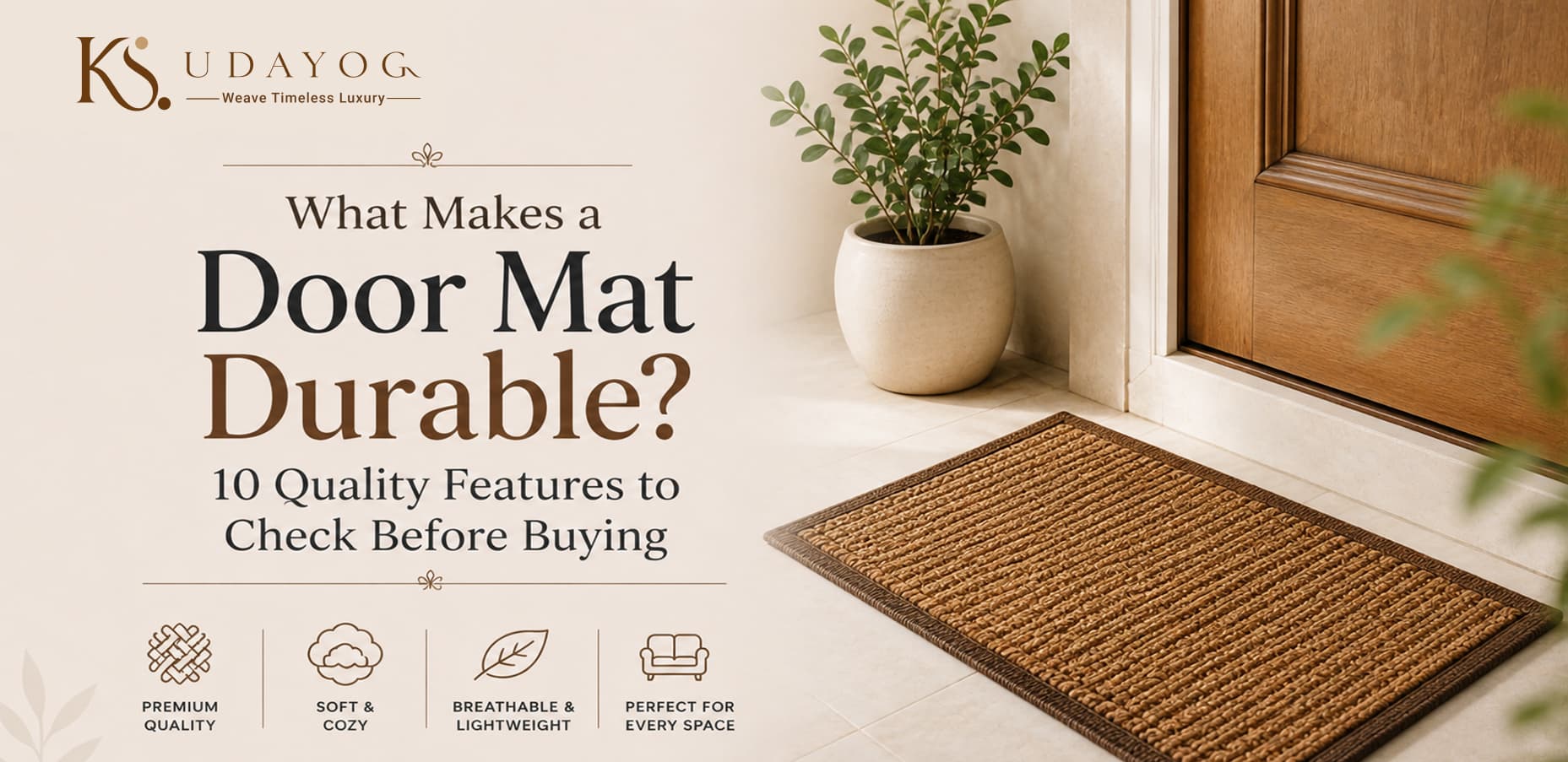
The first few weeks can make almost any door mat look like a good purchase. The real test comes months later, when the mat has absorbed muddy shoes, handled repeated foot traffic, been cleaned several times, and still needs to perform at the entrance.
A durable door mat should do more than trap dirt. It needs to stay in place, handle moisture, resist wear, remain practical to clean, and continue looking presentable under the conditions where it will actually be used.
Whether you are buying a door mat for a home, workplace, hospitality property, retail entrance, or other busy space, knowing which features to check can prevent a disappointing purchase. Here are 10 quality features worth examining before you choose a durable door mat.
1. Check The Door Mat Material
Material is one of the first things to consider because it influences durability, moisture handling, texture, appearance, and maintenance.
Common door mat materials include:
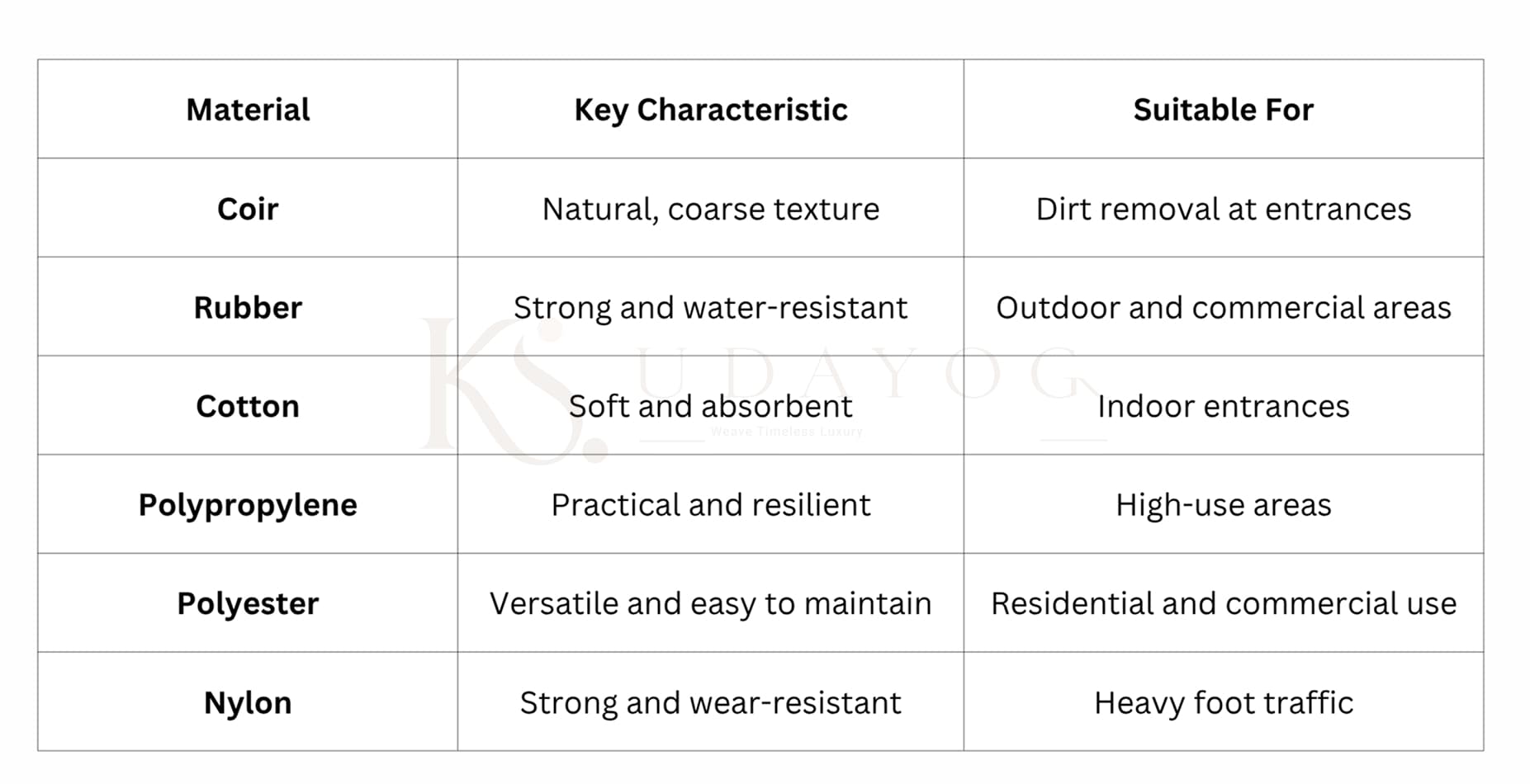
There is no single material that works best everywhere. Consider whether the mat will be exposed to rain, mud, moisture, dust, or heavy foot traffic before choosing.
2. Look For Strong Construction
A door mat can use good-quality material and still wear out quickly if its construction is weak. The way the mat is assembled determines how well it handles repeated footsteps, friction, moisture, dirt, and regular cleaning.
Look closely at how firmly the surface is made and whether the fibers, backing, edges, and seams are securely held together. A dense, stable construction generally provides better support under frequent foot traffic, while loose fibers or poorly finished edges can become noticeable signs of wear over time.
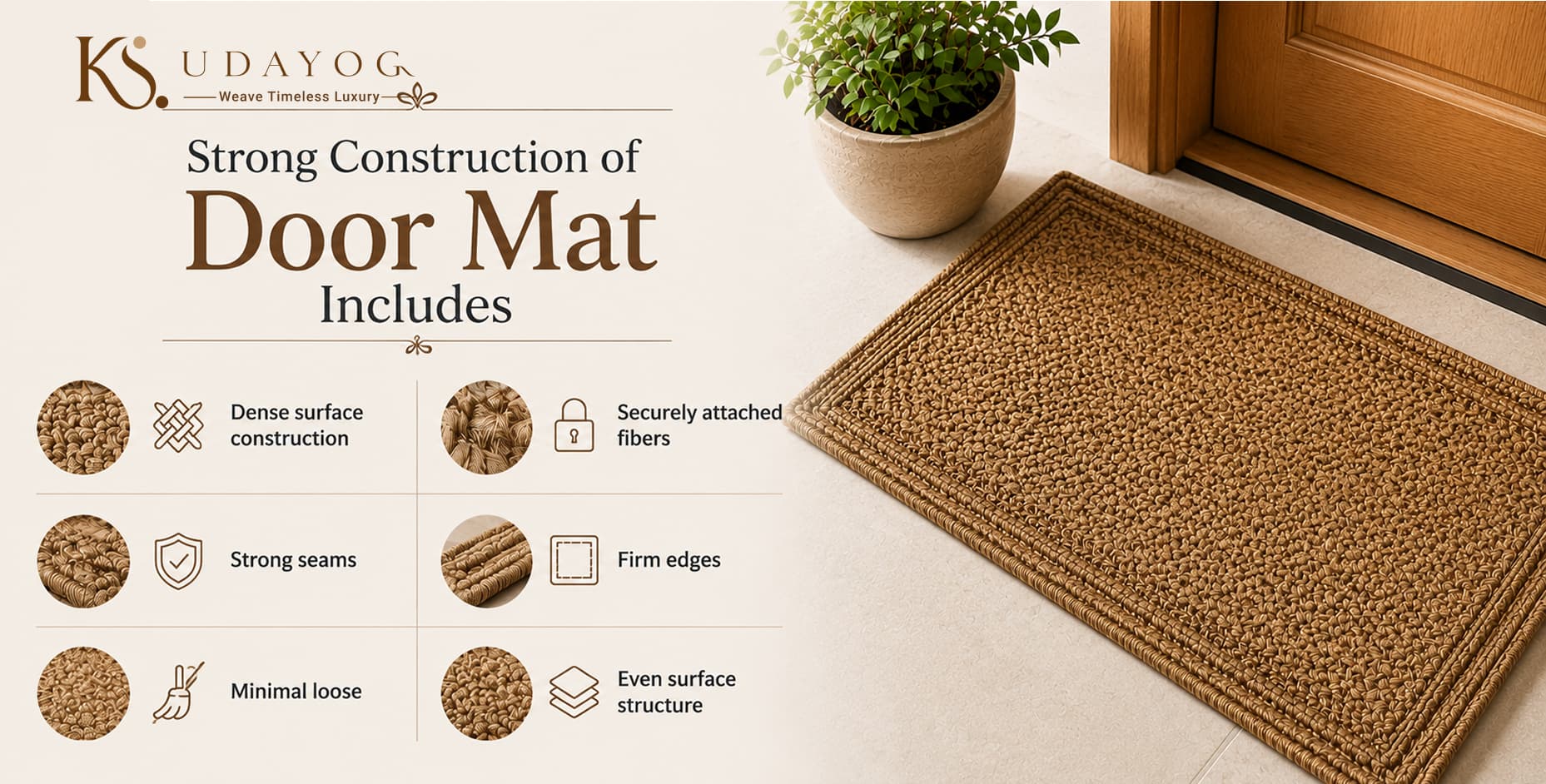
For entrances that receive regular or heavy use, check for:
- Dense surface construction that can handle repeated footsteps without flattening too quickly
- Securely attached fibers that do not pull out easily during use or cleaning
- Strong seams that remain intact around high-stress areas and joining points
- Firm edges that are less likely to curl, fray, or separate with regular use
- Minimal loose material to reduce shedding and maintain a cleaner appearance
- Even surface structure for consistent coverage, stability, and everyday performance
Also pay attention to the backing and overall shape. A mat that stays properly supported and retains its form is generally easier to position and maintain at busy entrances.
For commercial spaces, apartment entrances, offices, hotels, or other high-traffic areas, construction becomes especially important because the mat may experience thousands of footsteps over its service life. A well-constructed door mat should maintain its appearance, structure, and functionality for longer rather than relying on material quality alone.
3. Choose The Right Backing
The backing helps the mat remain stable and can also protect the floor from moisture reaching underneath, depending on the construction.
For smooth surfaces such as tile, marble, or polished flooring, a suitable non-slip door mat backing can help limit unwanted movement.
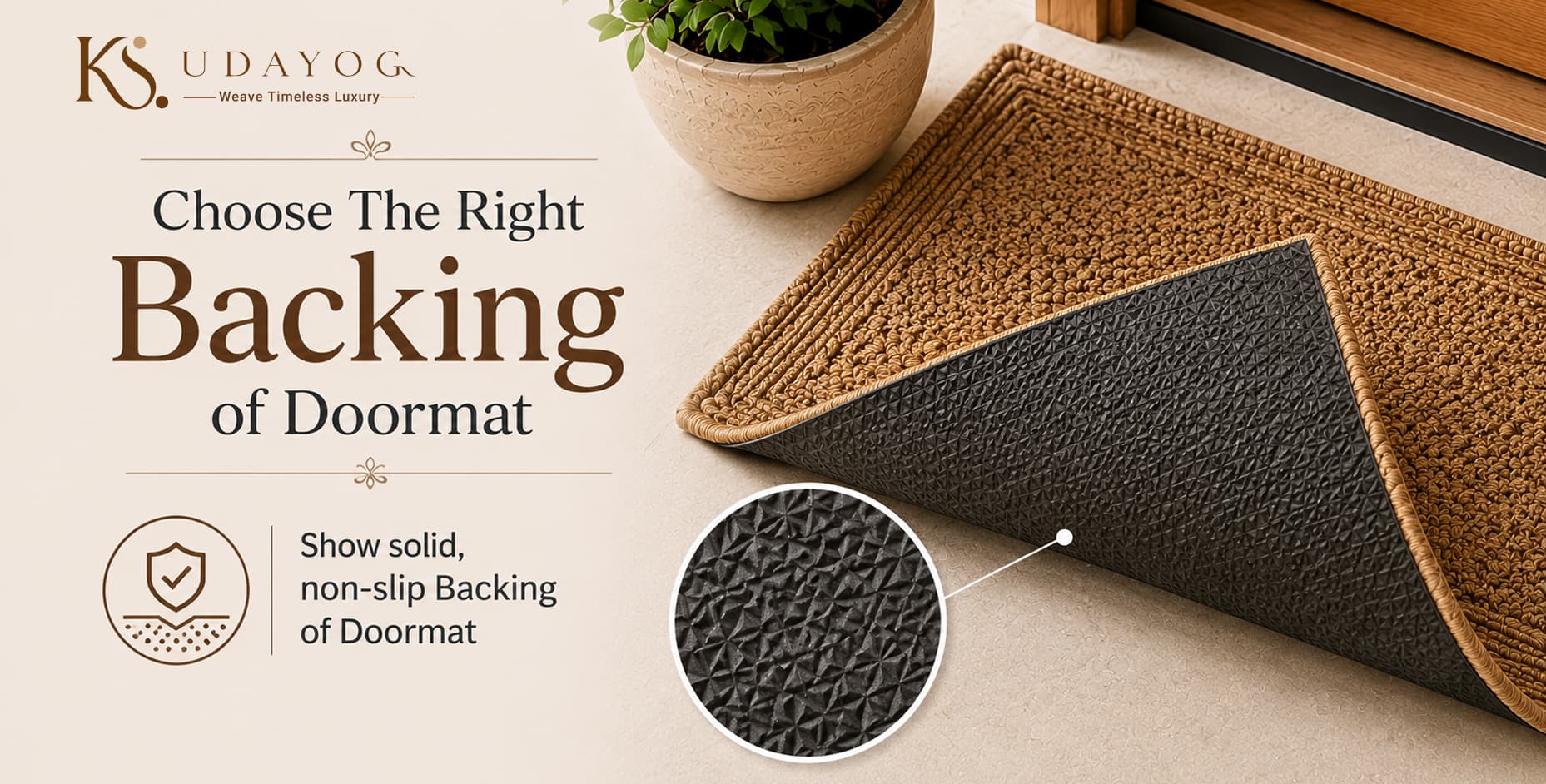
Check whether the backing:
- Sits flat against the floor
- Is securely attached
- Is appropriate for the intended surface
- Remains stable during normal use
- Does not show premature separation
For commercial environments, also ask how the backing is expected to perform after repeated cleaning.
4. Check Dirt-Trapping Ability
One of the primary purposes of an entrance mat is to help reduce the amount of dirt carried indoors.
A suitable surface should provide enough texture to capture dust, soil, and other particles from footwear.
Coarser surfaces can be useful for scraping dirt from shoe soles, while textured or dense fiber constructions can help trap particles within the mat.
For busy entrances, consider how much dirt the mat is expected to encounter rather than choosing purely based on appearance.
5. Consider Moisture Absorption
If the mat will be used near an exterior entrance, moisture management becomes especially important.
Rain, wet footwear, and damp conditions can transfer water indoors. A suitable absorbent surface can help collect moisture before it spreads across the floor.
For areas that frequently encounter water, check:
- Absorbent Material: Choose materials that can collect moisture from wet footwear before it reaches indoor flooring.
- Surface Density: A denser surface can hold more moisture while providing effective coverage underfoot.
- Drying Characteristics: Faster drying helps prevent prolonged dampness, unpleasant odours, and moisture buildup between uses.
- Backing Suitability: Select suitable backing that supports stability while helping prevent moisture from reaching flooring.
- Ease of Cleaning: Choose mats that can be cleaned easily after collecting water, dirt, and debris.
An outdoor mat may need stronger weather resistance, while an indoor entrance mat can place greater emphasis on absorption.
6. Select The Correct Thickness
Thickness affects more than how a mat feels underfoot; it also determines whether the mat fits comfortably beneath the door and remains practical for everyday use. A mat that is too thick can interfere with door movement, while an overly thin design may not provide the comfort or surface depth you need.
Before buying a durable doormat, measure the available space and check the clearance between the door and floor. Also consider where the mat will be placed, since an indoor mat may have different clearance requirements from one positioned outside the entrance.
For example, if a door has only limited clearance above the floor, a low-profile mat may be more practical than a thick, plush design. Where sufficient clearance is available, a thicker mat can offer greater cushioning and a more substantial feel underfoot.
Also check whether the mat is likely to curl, bunch, or develop raised edges during regular use, as these can create clearance problems even when the original thickness seems suitable.
The right thickness should balance door clearance, comfort, appearance, and everyday practicality for the intended entrance.
7. Get The Right Size
The right mat size determines how much of the entrance it can actually cover and how many footsteps pass over its surface. A mat that is too small may leave high-traffic areas exposed, reducing its ability to capture dirt and moisture before they reach the floor.
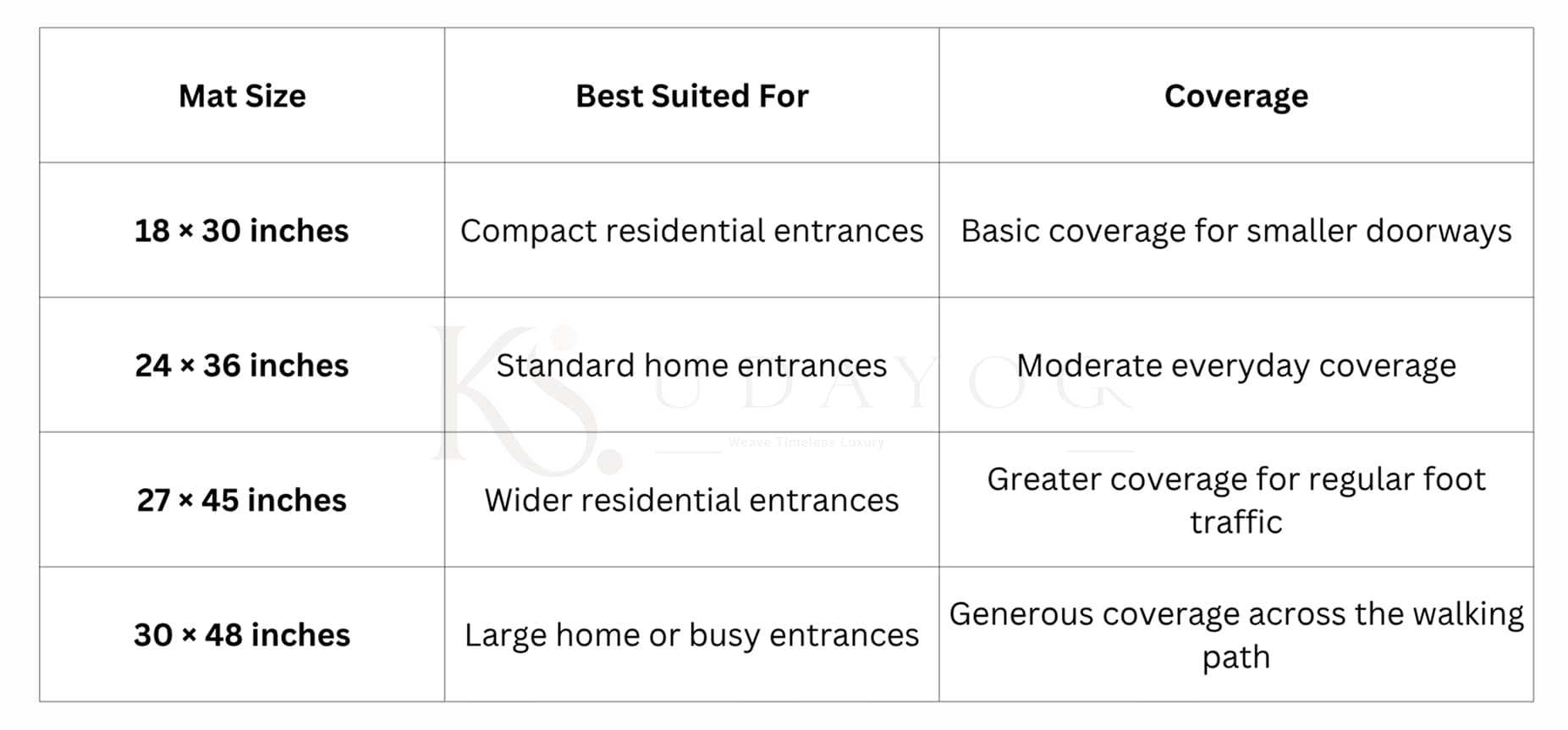
For residential entrances, commonly available sizes include:
- 18 × 30 inches: Suitable for compact doorways and smaller entry areas.
- 24 × 36 inches: A practical choice for many standard residential entrances.
- 27 × 45 inches: Provides wider coverage for entrances with more foot traffic.
- 30 × 48 inches: Offers generous coverage where additional floor protection is needed.
For example, a narrow doorway with limited floor space may work well with an 18 × 30-inch mat, while a wider entrance used by several people may benefit from a larger 30 × 48-inch option.
For commercial spaces, offices, hotels, retail stores, and other busy entrances, wider mats or multiple mats placed together may provide better coverage. In such settings, consider how people naturally approach the entrance and whether they take several steps before reaching the interior floor.
Before choosing a size, measure the doorway width, available floor area, traffic direction, and typical number of footsteps across the mat. Also account for furniture, walls, door swings, and other obstacles that may limit the usable area.
A properly sized mat should cover the main walking path rather than simply fit within the doorway, giving dirt and moisture more opportunity to be captured.
8. Examine Edge Finishing of Doormat
Edges receive considerable contact during regular use, particularly when people step on or walk across the mat from different directions.
Look for edges that are:
- Securely finished
- Evenly constructed
- Free from loose threads
- Properly bound
- Resistant to fraying
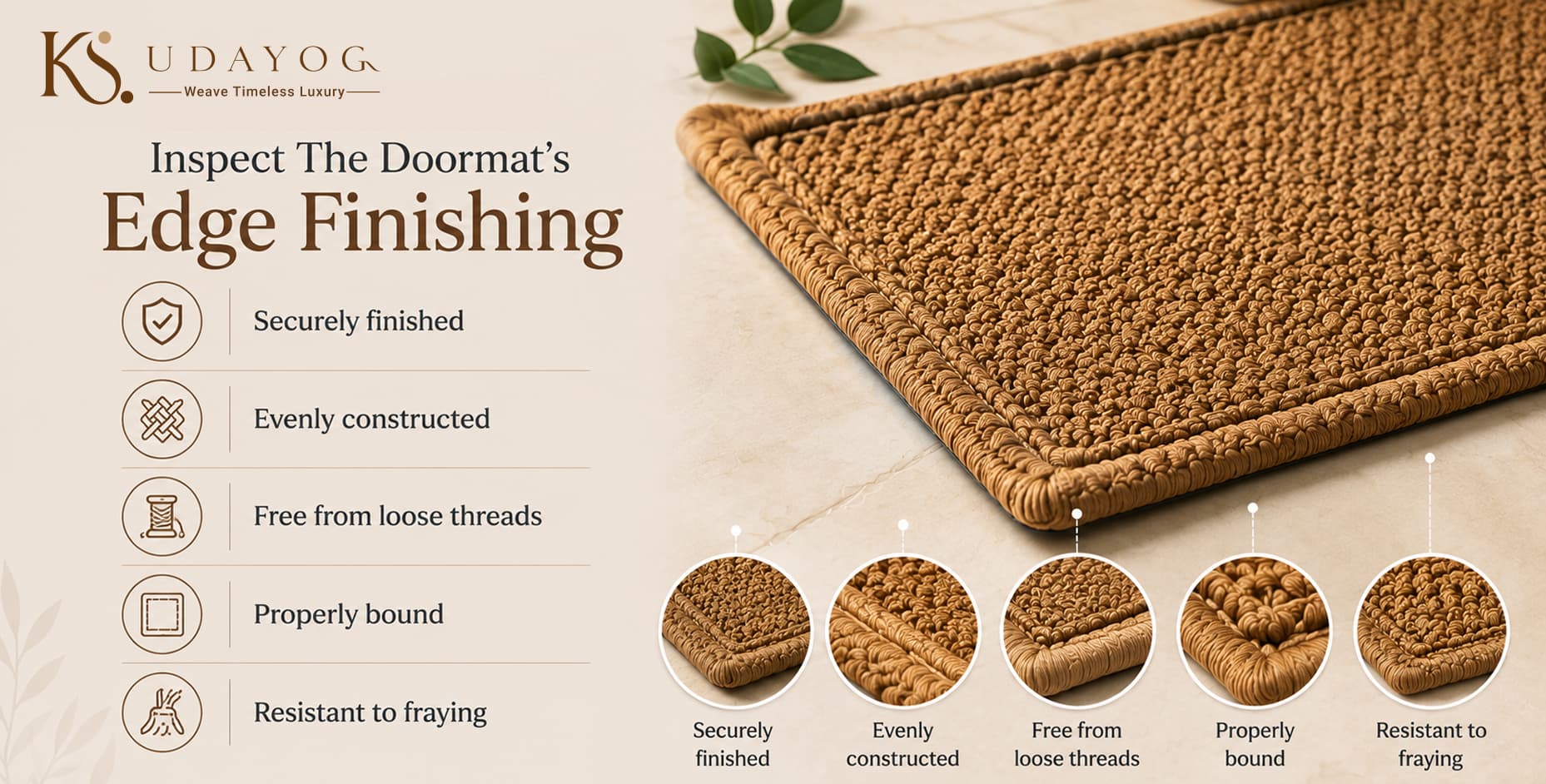
Good edge finishing can contribute to the mat's overall appearance and help it retain its shape during repeated use.
9. Consider Ease of Cleaning
A durable door mat still needs regular cleaning to maintain its appearance and performance.
The appropriate cleaning method depends on the material and construction. Some mats can be vacuumed or shaken out regularly, while others may require washing or deeper cleaning.
Before buying, check:
- Recommended cleaning method
- Washing instructions
- Drying requirements
- Stain resistance, if specified
- Whether frequent cleaning is suitable
For businesses, cleaning requirements can be particularly important because entrance mats may collect considerably more dirt than household mats.
10. Match The Door Mat To Foot Traffic
Think about how many people will walk across the mat each day.
A low-use residential entrance and a busy commercial entrance should not necessarily use the same product.
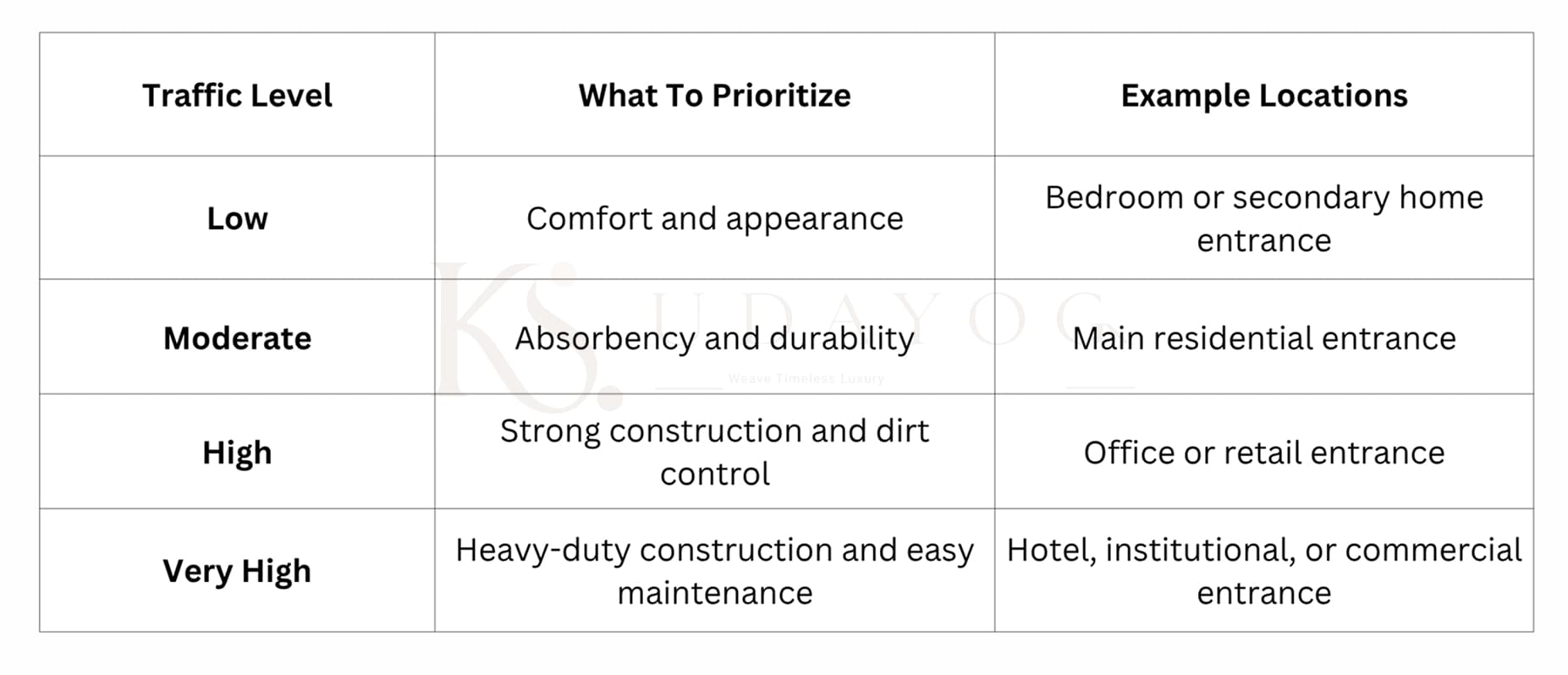
Higher foot traffic generally requires greater attention to material strength, construction, backing, cleaning, and wear resistance.
What Makes A Door Mat Durable?
Durability comes from the combination of several features rather than one specification.
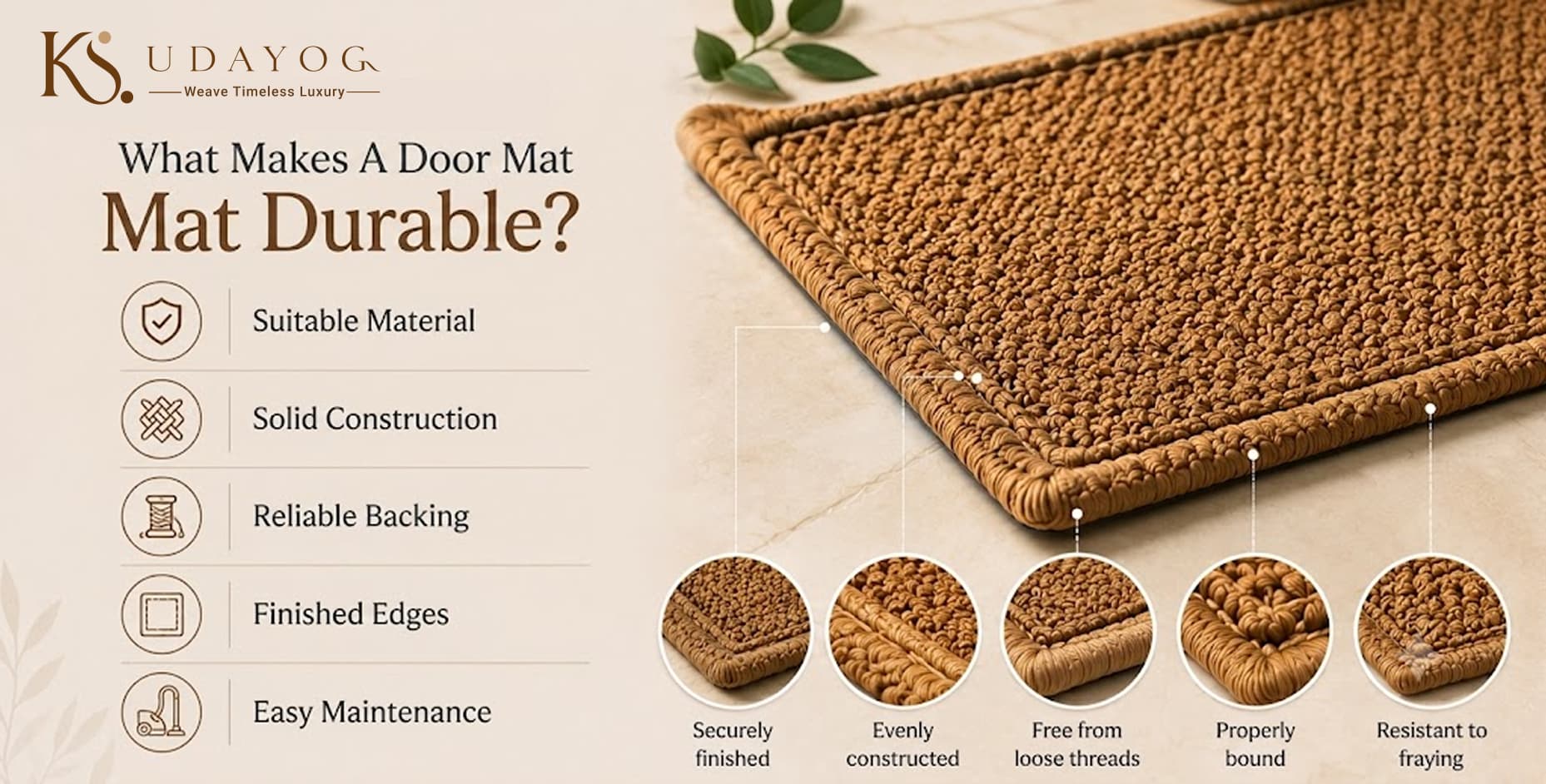
A strong door mat typically has:
- Suitable Material: The fiber or material should match the expected environment and traffic.
- Solid Construction: Fibers, seams, and components should be securely assembled.
- Reliable Backing: The underside should remain stable and appropriate for the floor.
- Proper Thickness: The mat should offer suitable performance without creating door-clearance problems.
- Finished Edges: Edges should resist fraying and maintain the mat's shape.
- Easy Maintenance: Regular cleaning should be practical for the intended environment.
The most durable option is therefore the one whose complete construction matches the conditions in which it will be used.
Indoor Vs Outdoor Door Mats: What Should You Choose?
Placement makes a significant difference.
An outdoor door mat may need greater resistance to weather, dirt, and moisture. Coir and rubber are examples of materials often considered for exterior entrances.
An indoor door mat may place greater emphasis on absorbency, softness, appearance, and floor protection.
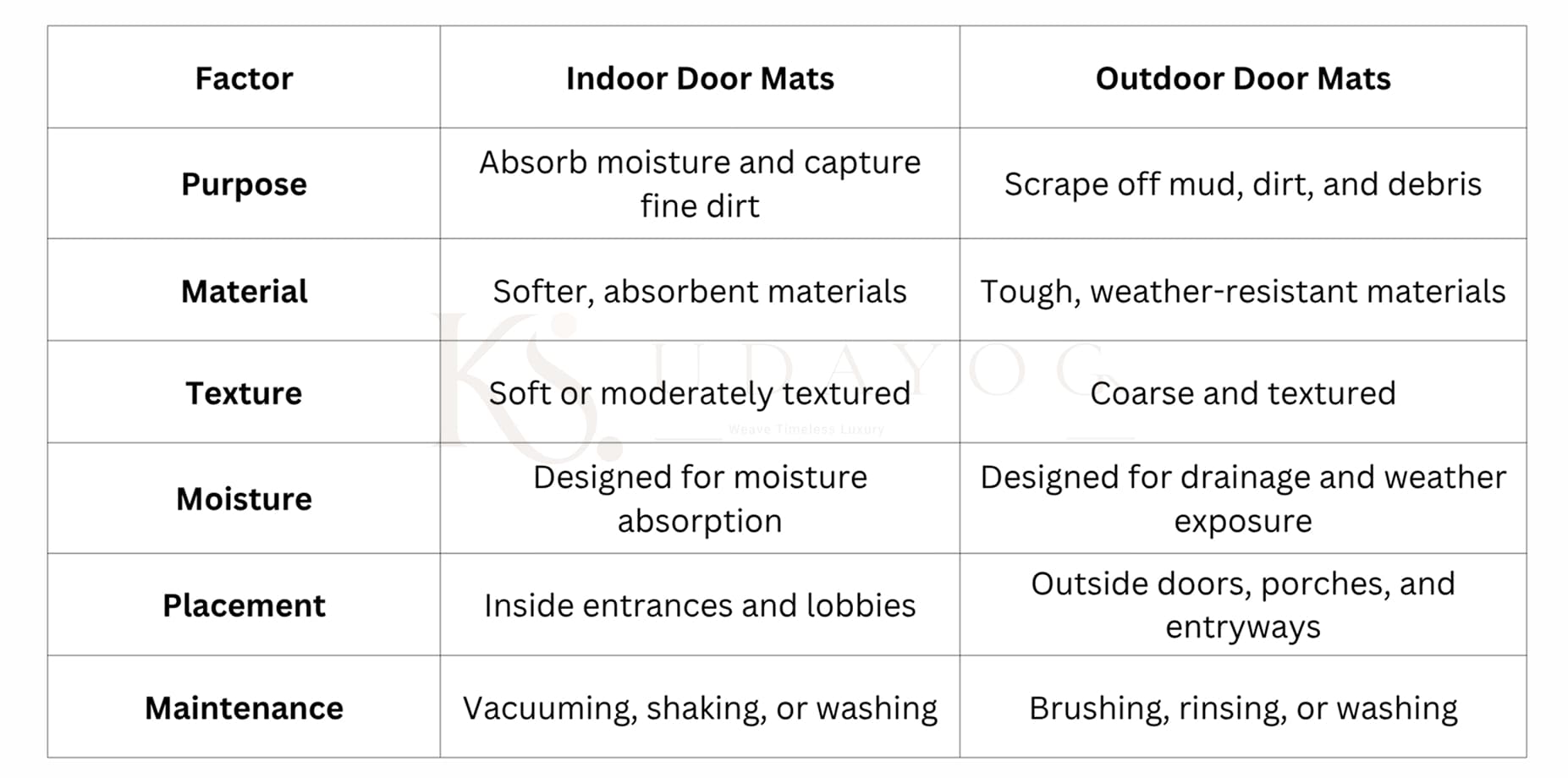
Some entrances benefit from using both. An exterior mat can help remove coarse dirt, while an interior mat can focus on absorbing remaining moisture and fine particles.
A Practical Checklist For Buying Door Mat
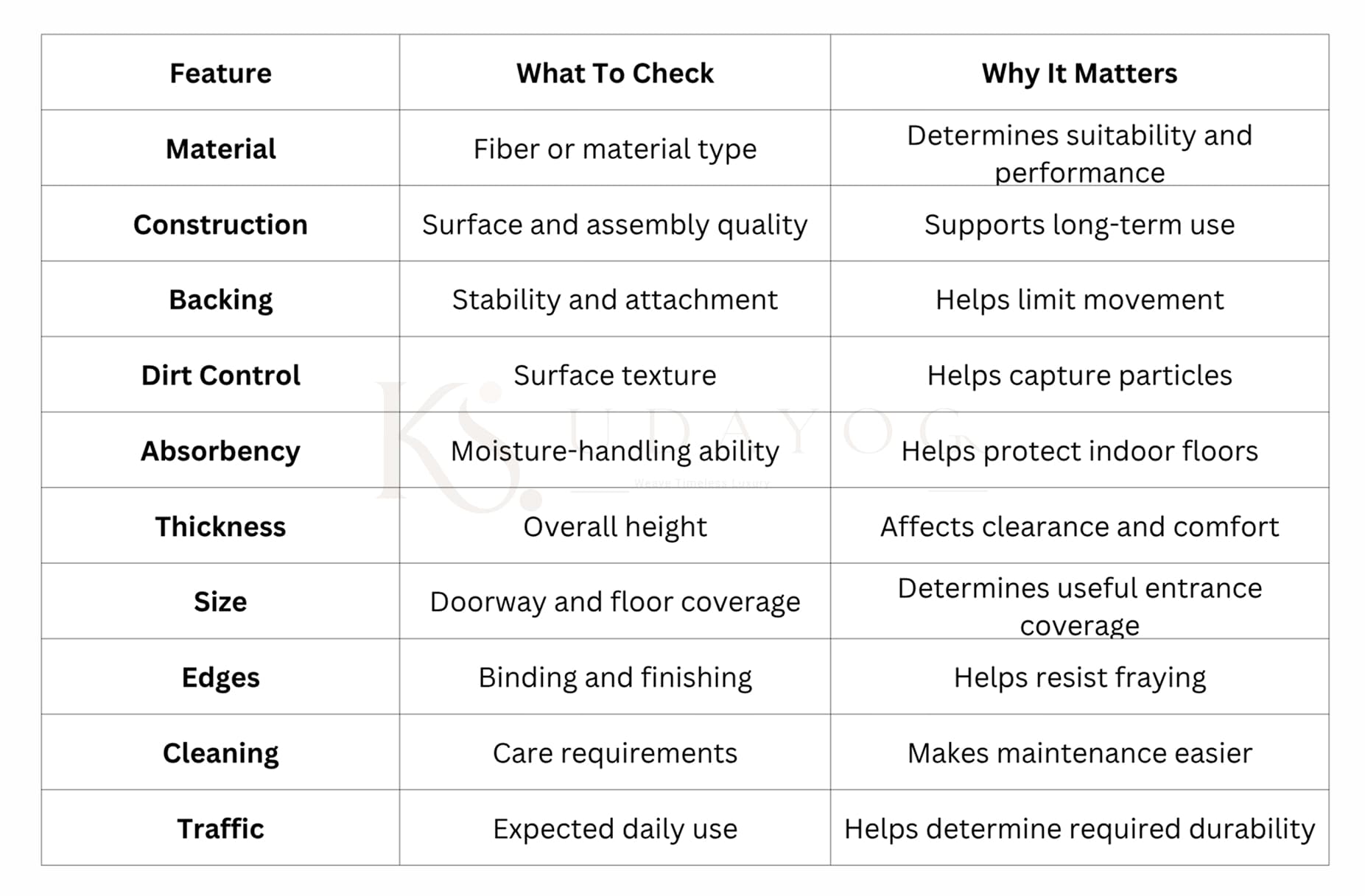
Before making your purchase, use this quick checklist to compare the features that matter most for your entrance. Check the mat's material, size, thickness, backing, absorbency, and construction based on how and where it will be used.
For busy or commercial entrances, also consider foot traffic, cleaning frequency, durability, and replacement requirements. If you are buying in bulk, review samples, MOQ, quality standards, customization, packaging, and delivery timelines before placing the final order.
How To Choose A Durable Door Mat For Business Use
Businesses should evaluate door mats according to their actual entrance conditions rather than choosing purely by appearance.
An office with moderate traffic may need a different mat from a hotel lobby, shopping store, school, or commercial building entrance.
Consider:
- Daily visitor volume
- Indoor or outdoor placement
- Exposure to rain and moisture
- Dirt levels
- Floor type
- Cleaning frequency
- Available floor space
- Door clearance
- Required quantity
- Replacement frequency
For multiple locations, consistency is also important. Buyers may want the same size, material, color, and construction across different entrances.
What Should You Check Before Buying Door Mats In Bulk?
Bulk buyers should evaluate both the product and the supplier.
Before placing a large order, confirm the material, dimensions, construction, backing, colors, customization options, MOQ, sample availability, quality-control process, production capacity, packaging, and lead time.
Requesting a sample can also help you verify the actual texture, size, thickness, color, edge finishing, and backing before committing to the full quantity.
For customized or private-label requirements, make sure the approved sample and specifications are clearly documented before production begins.
Final Thoughts
A durable door mat is the result of several features working together. Material, construction, backing, dirt-trapping ability, absorbency, thickness, size, edge finishing, maintenance, and traffic suitability should all be considered before you buy.
Start with the entrance itself: measure the available space, check door clearance, assess foot traffic, and determine whether the mat will face dirt, moisture, or outdoor conditions. Then compare products based on their construction and maintenance requirements rather than choosing only by color or appearance.
For bulk purchases, take the same approach with the supplier. Review samples, specifications, MOQ, quality procedures, production capacity, and delivery requirements before finalizing the order.
Planning a new door mat collection for your store or project? Explore suitable requirements such as materials, sizes, and designs based on your customers' needs and expected usage.
Frequently Asked Questions (FAQs)
What Is The Best Material For A Durable Door Mat?
The best material depends on placement and usage. Rubber, nylon, polypropylene, coir, cotton, and polyester can each suit different indoor, outdoor, residential, and commercial applications.
Should A Door Mat Have Non-Slip Backing?
Yes, a suitable non-slip backing can be useful on smooth flooring because it can help limit unwanted movement during regular use.
How Thick Should A Door Mat Be?
The thickness should provide the desired performance while allowing sufficient clearance beneath the door. Always measure the available space before selecting a thick mat.
Are Indoor And Outdoor Door Mats Different?
Yes, they are. Outdoor mats may need stronger resistance to weather, dirt, and moisture, while indoor mats may prioritize absorbency, appearance, and floor protection.
How Often Should A Door Mat Be Cleaned?
Cleaning frequency depends on foot traffic, weather, dirt levels, and material. Busy entrances generally require more frequent cleaning than low-use residential areas.
What Should Businesses Look For In A Door Mat?
Businesses should consider traffic levels, material, durability, dirt and moisture control, backing, size, cleaning requirements, floor type, and replacement needs.
Can I Buy Durable Door Mats In Bulk?
Yes. Bulk buyers can source door mats in different materials, sizes, colors, and constructions. For larger orders, confirm samples, MOQ, quality standards, customization, packaging, and production timelines before ordering.