A bathroom makeover doesn't always need expensive fittings or major changes. Sometimes, a simple bath rug can make all the difference. It adds warmth underfoot, absorbs water after a shower, and makes your bathroom look more organised and inviting.
However, picking one just because its colour matches your bathroom isn't enough. The material, absorbency, anti-slip backing, thickness, and ease of washing all matter when choosing a rug for everyday use, especially in busy Indian households.
Before you bring home a new bath rug, it's worth knowing what makes one comfortable, practical, and a good fit for your space. Let's explore the different materials, essential safety features, and buying tips you should consider.
Why Does Your Bathroom Need Bath Rugs?
A bath rug makes stepping out of the shower more comfortable, helps catch water from wet feet, and adds a finished look to your bathroom. It may seem like a small accessory, but it does a practical job every day.
Think about stepping out of a hot shower onto a cold, wet tile floor. A soft bath mat gives your feet a more comfortable landing and absorbs water dripping from your body. In a family bathroom, it helps manage everyday splashes, while a guest bathroom feels more welcoming with a clean, well-placed rug.
Bathroom rugs come in different materials, sizes, textures, and designs. Some are designed to absorb water, while others focus more on comfort and appearance. The right choice depends on how your bathroom is used, how often the rug gets wet, and how much time you can spend cleaning it.
Different Types of Bath Rug Materials That Offer Comfort And Lasting Performance
Material is one of the first things to check when buying bathroom rugs. It affects how the rug feels underfoot, how much water it absorbs, how quickly it dries, and how easy it is to clean.
Here are some common and best materials for bath rugs, and where each works best.
1. Cotton Bath Rugs
Cotton is a popular choice for bath mats because it feels soft, absorbs water, and is generally easy to wash. Its natural texture also makes it comfortable for everyday use.
Best For: Family bathrooms, guest bathrooms, and homes where regular washing is part of the cleaning routine.

Example: A cotton bath rug outside the shower absorbs water from wet feet and provides a soft surface when you step out.
Things To Consider: Thick cotton rugs can hold more water and may take longer to dry. Proper drying between uses is important, especially in bathrooms with limited ventilation.
2. Microfiber Bath Rugs
Microfiber bath rugs are made using fine synthetic fibers. They often feel soft and lightweight, and many designs dry relatively quickly compared with thick, water-heavy mats.
Best For: Family bathrooms used frequently, compact bathrooms, and spaces where quick drying is a priority.

Example: A microfiber mat near a washbasin can catch everyday splashes while providing a soft surface for your feet.
Things To Consider: Absorbency and drying speed vary with the fabric construction. Check the product details rather than assuming every microfiber rug performs the same way.
3. Chenille Bath Rugs
Chenille bath rugs have a soft, textured surface made from raised yarns. Their plush feel makes them a comfortable choice for people who enjoy stepping onto a cushioned surface after a shower.
Best For: Master bathrooms, guest bathrooms, and spaces where comfort and appearance are important.

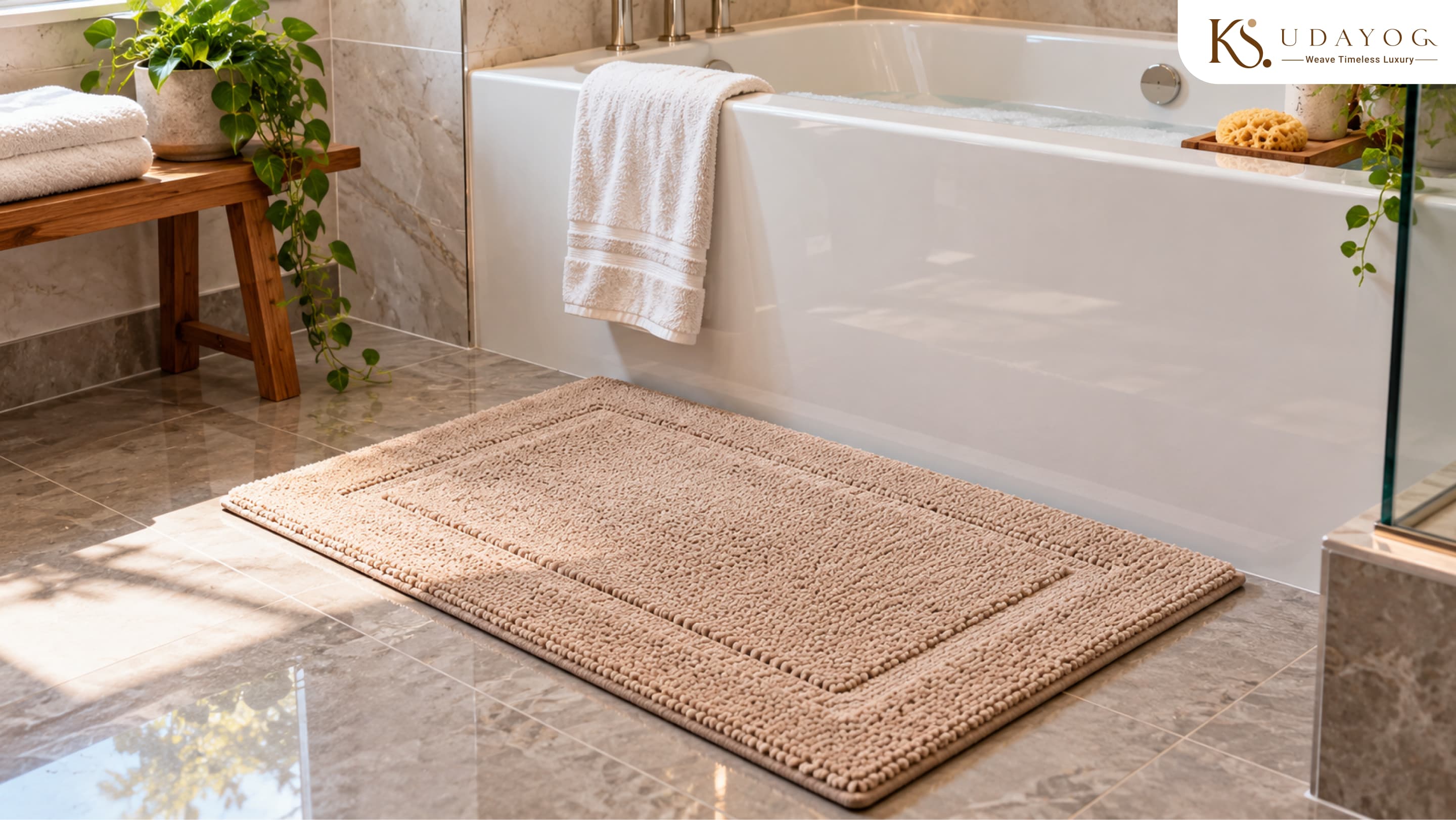
Example: A chenille rug in front of a bathtub can create a soft landing area while adding texture to the bathroom.
Things To Consider: Deep or dense chenille surfaces can hold moisture and need proper drying. Regular cleaning also helps prevent dirt and soap residue from collecting between the fibers.
4. Memory Foam Bath Rugs
Memory foam bath rugs have a cushioned inner layer that feels soft underfoot. They are particularly comfortable near washbasins, where people may stand for a while during their morning or evening routine.
Best For: Personal bathrooms and vanity areas where extra cushioning is preferred.
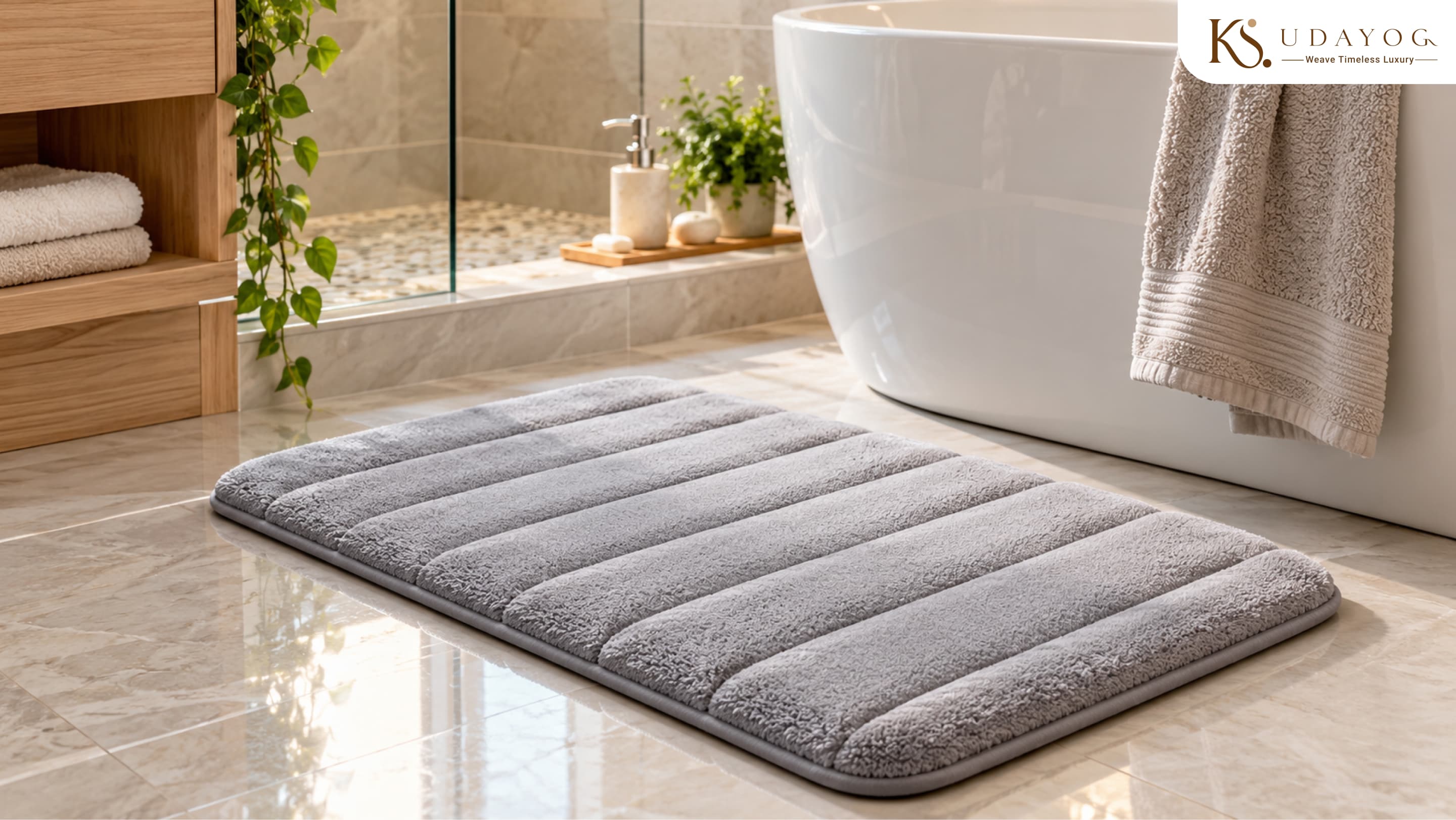
Example: A memory foam rug in front of a bathroom mirror can provide a cushioned surface while you brush your teeth or get ready.
Things to Consider: The foam core and outer fabric need to dry properly. Some designs take longer to dry than lightweight cotton or microfiber options, so check the washing and drying instructions before buying.
5. Bamboo Bath Mats
Bamboo bath mats feel different from fabric mats. Their firm, slatted construction allows water to pass through rather than being absorbed as it would be by cotton.
Best For: Bathrooms with a minimalist or spa-inspired look, especially where users prefer a firm surface.
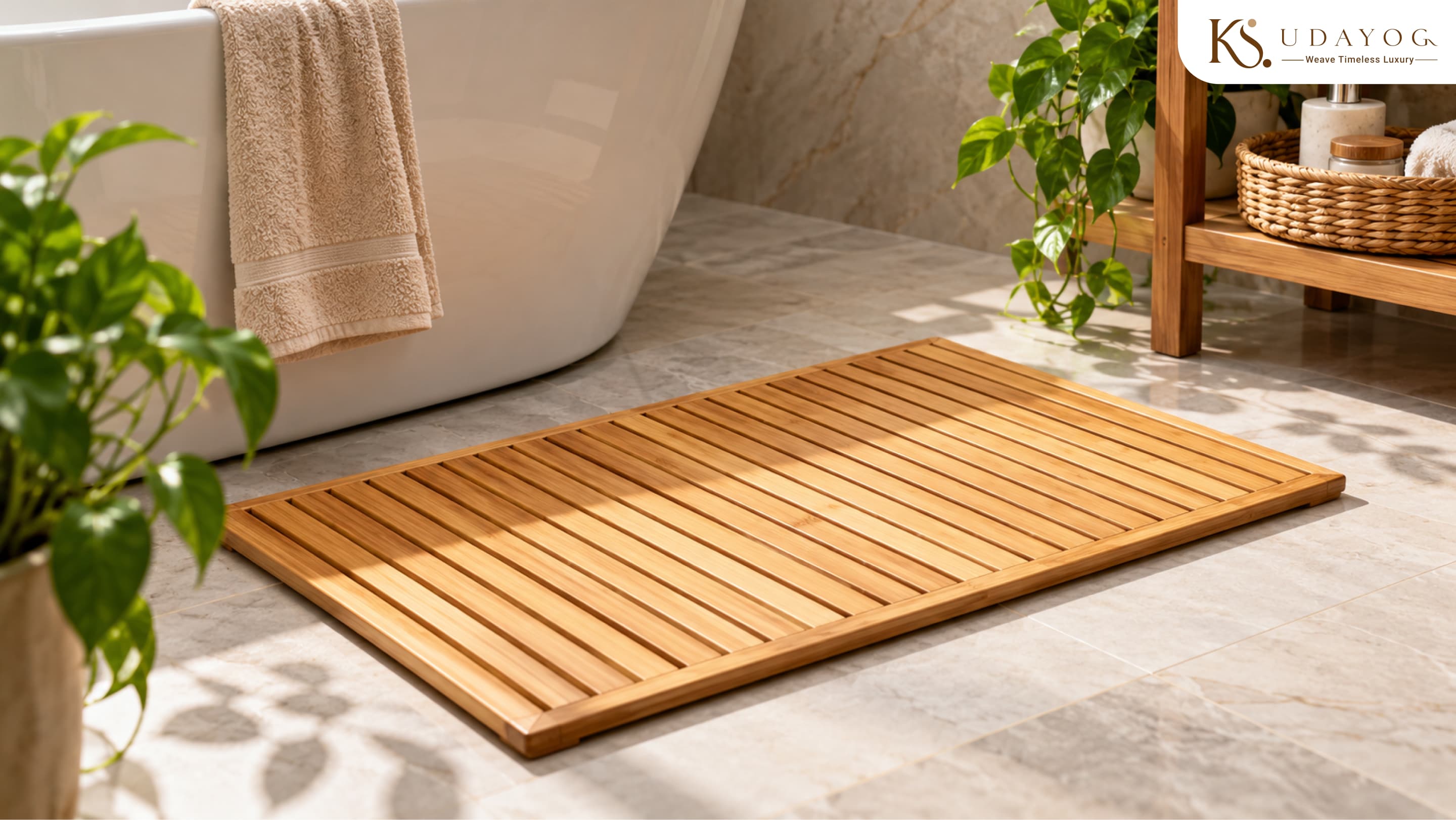
Example: A bamboo mat outside a shower can create a neat, natural-looking stepping area.
Things To Consider: Bamboo mats need regular cleaning and drying underneath. A stable design with suitable non-slip feet is important, particularly on smooth bathroom tiles.
6. Rubber Bath Mats
Rubber bath mats are commonly used inside bathtubs or shower areas to provide additional grip underfoot. They serve a different purpose than a soft fabric rug placed outside the shower.
Best For: Bathtubs and shower floors where a suitable water-resistant grip surface is required.

Example: A properly fitted rubber mat with suction cups can provide a more secure surface inside a bathtub when installed and maintained according to its instructions.
Things to Consider: Soap residue can collect on rubber surfaces, so rinse and clean regularly. Suction cups should be checked before every use, and the mat should be lifted to dry the surface underneath.
Bath Rugs Vs. Bath Mats: What's The Difference?
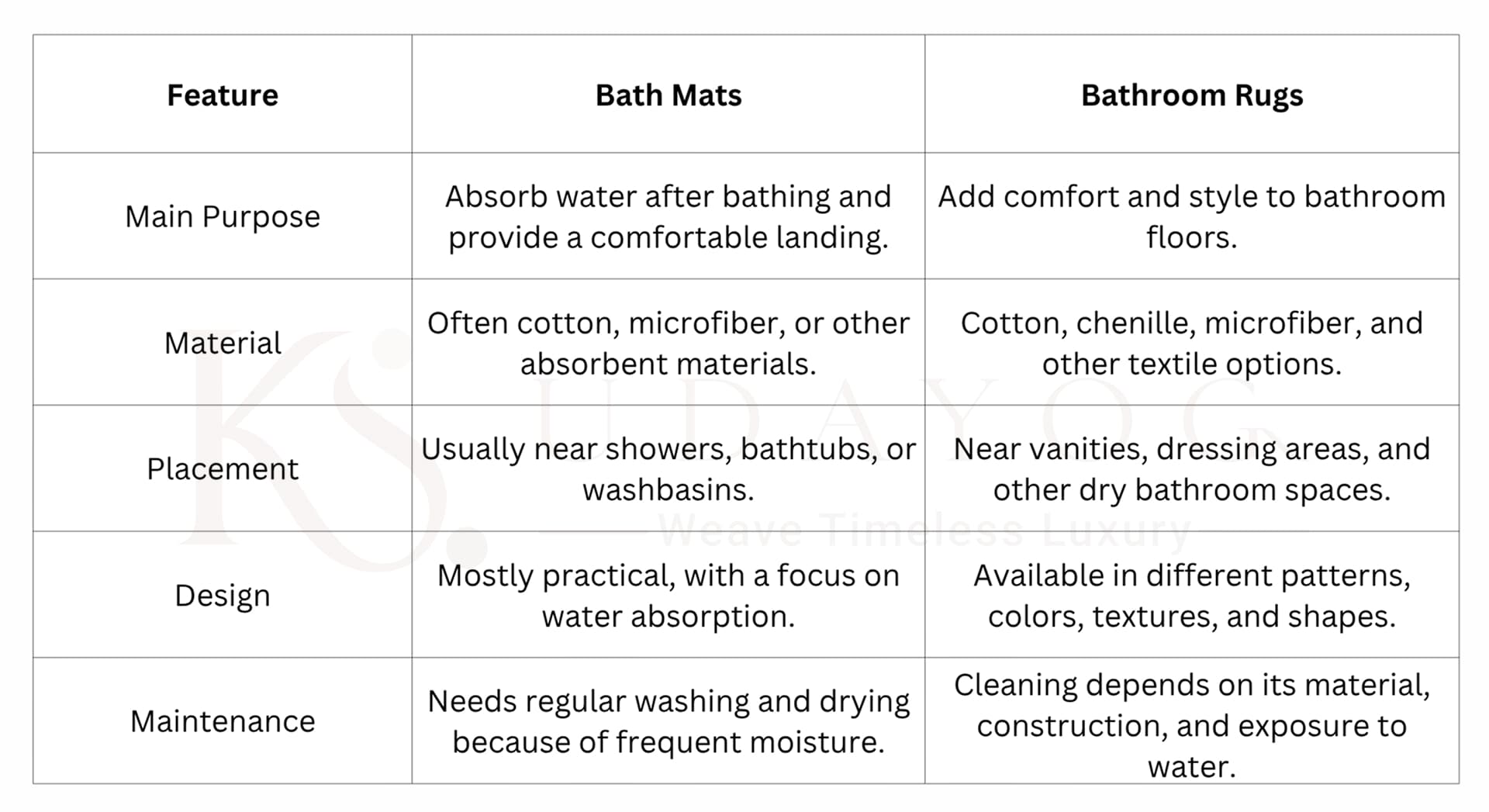
The terms bathroom rugs and bath mats are often used interchangeably, but there can be a difference in their purpose and construction. The difference between bath rugs and bath mats mainly lies in their purpose, material, and placement. Bath mats are primarily designed to absorb water and provide a non-slip surface near showers and bathtubs. Bath rugs, however, focus more on adding softness, warmth, and decorative appeal to larger bathroom spaces.
How To Choose The Right Bath Rug For Your Bathroom
A beautiful and premium bath rug is not necessarily the right one for your bathroom. The best option should suit your available space, daily routine, flooring, and cleaning preferences.
1. Check Water Absorption
Prioritize water absorption for a mat placed outside a shower or bathtub. Wet feet can leave puddles on the floor, particularly when several family members use the same bathroom.

Cotton and many microfiber designs are useful options for absorbing everyday moisture. Performance depends on the thickness, weave, and construction.
Buying Tip: Check the product description for absorbency details and consider how frequently the mat will be used.
2. Look For A Suitable Non-Slip Backing Bath Rug
Bathroom floors can become slippery when wet. A bath rug that moves when someone steps on it can create an additional hazard.

A suitable non-slip backing can help keep the rug in place on compatible flooring. Some products use rubber, latex, or other grip materials, while others require a separate rug grip.
Buying Tip: While selecting the right non-slip bath rug, make sure the backing suits your floor type. A non-slip label alone does not guarantee safety on every wet surface. Always keep the floor underneath clean and dry.
3. Choose A Comfortable Texture
A bath rug should feel pleasant under bare feet. Some people prefer a flat cotton weave, while others enjoy the plush feel of chenille or microfiber.

Buying Tip: Consider who will use the bathroom. A soft, cushioned rug may suit a personal bathroom, while a washable, easy-to-maintain option may be more practical for a shared family bathroom.
4. Consider How Quickly It Dries
A bathroom rug that remains damp for long periods can develop unpleasant smells and may encourage mold or mildew growth.
A lightweight microfiber rug may dry quickly, while a thick cotton or memory foam design may take longer. Bathroom ventilation, humidity, and how often the rug is used also make a difference.
Buying Tip: Choose a material that suits your bathroom's ventilation and daily usage. A hanging loop or easy-to-lift design makes drying easier.
5. Check Washing Requirements
Bathroom rugs need regular cleaning because they come into contact with wet feet, dust, hair, and everyday bathroom residue.
Some cotton and microfiber rugs are machine washable, while certain memory foam, bamboo, and backed designs need more careful maintenance.
Buying Tip: Check the care label before you buy. A rug that can be cleaned easily is often a better choice for a busy household.
6. Match The Rug With Your Bathroom Size
A rug should fit comfortably without blocking the bathroom door, shower entrance, or cabinet drawers.
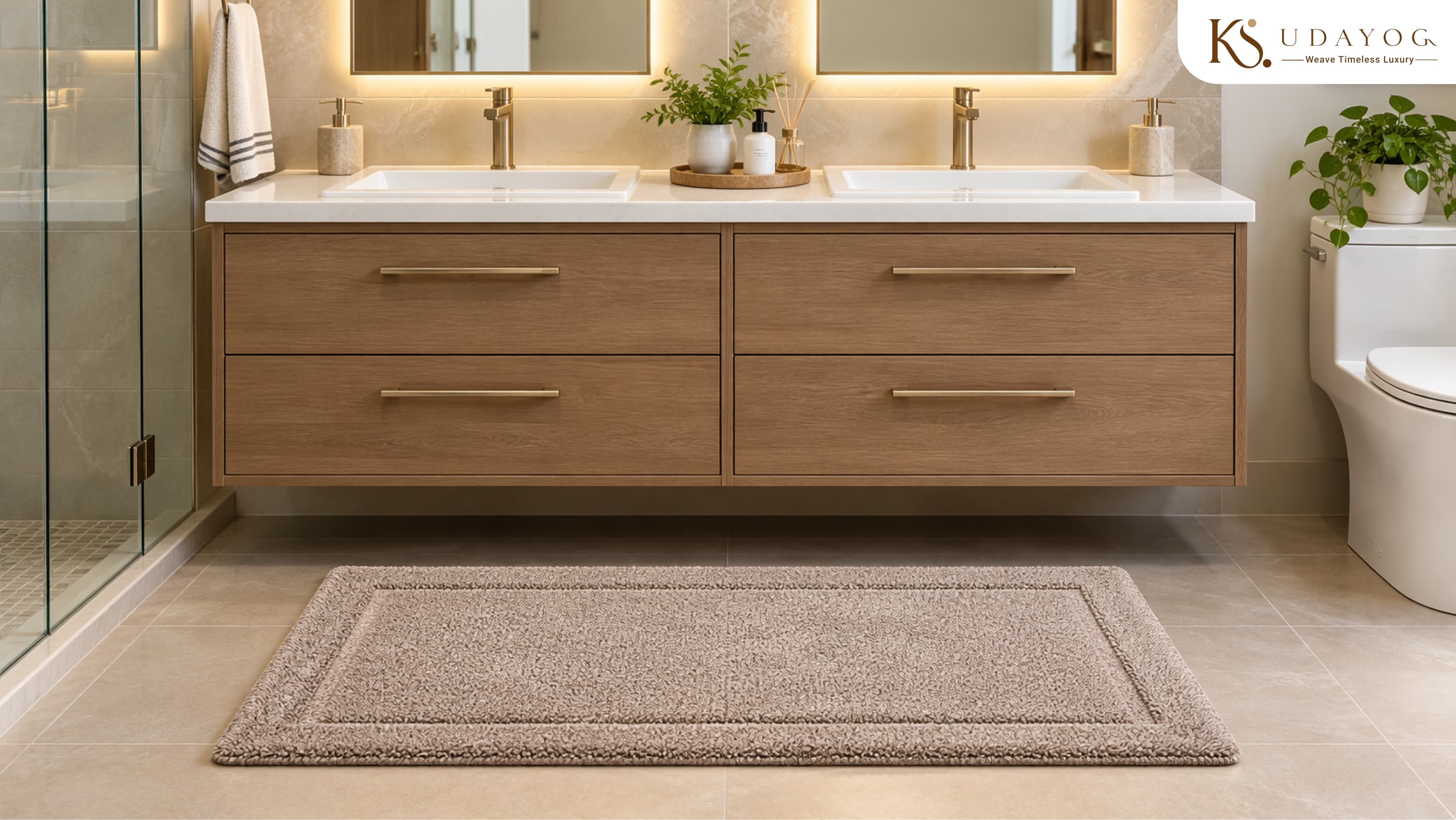
Buying Tip: Measure the available floor space before ordering. A smaller mat near the basin may be enough for a compact bathroom, while a longer rug may suit a double vanity.
7. Pick A Color of Bath Rug That Suits Your Bathroom
The right color can make the bathroom look more coordinated. Neutral shades such as beige, white, and grey suit simple interiors, while blue, green, and pastel shades can add a little color.

Buying Tip: Choose a shade that works with your tiles, towels, shower curtains, and bathroom accessories. Darker colors may hide some visible marks, but they still need regular cleaning.
Bath Rug Sizes: Which One Should You Buy?
The right bath rug size depends on where you want to place it. A small mat may be enough outside a shower, while a larger rug can cover the space in front of a double washbasin.
Here are some common size examples to help you plan.

These are common size examples, not fixed industry standards. Actual dimensions and availability vary by manufacturer.
1. Small Bathrooms
A 17 × 24 in or 20 × 30 in bath mat can work well in a compact bathroom. The smaller footprint leaves enough room to move around the toilet, shower, and washbasin.
Example: A bathroom measuring 5 × 7 ft may have limited floor space between the shower and washbasin. A 20 × 30 in mat outside the shower can provide a comfortable stepping area without covering too much of the floor.
2. Medium-Sized Bathrooms
A 20 × 32 in or 24 × 36 in rug may suit a medium-sized bathroom with more open floor space.
Example: A 7 × 9 ft bathroom with a separate shower and vanity may accommodate a 24 × 36 in rug near the washbasin, leaving enough room for the door and drawers to open.
3. Large Bathrooms
Larger bathrooms can accommodate wider rugs or runners, depending on the layout.
Example: A bathroom measuring 10 × 12 ft with a double vanity may suit a 20 × 60 in runner in front of the washbasin. A separate bath mat outside the shower can handle the wet-foot area.
Where Should You Place Bathroom Rugs?
The placement of bathroom rugs affects both their usefulness and the overall look of the space.
1. Outside The Shower
This is one of the most practical locations for a bath mat. Water dripping from your body and feet can collect on the mat instead of spreading across the floor.

A cotton or microfiber mat may work well here, depending on its absorbency and drying needs.
2. Outside The Bathtub
A bath mat near the bathtub provides a comfortable place to step after bathing. A non-slip backing is especially important on smooth bathroom floors.
3. In Front of The Washbasin
A small rug in front of the washbasin can catch water splashes and make standing more comfortable while brushing your teeth or washing your face.

4. In Front of A Double Vanity
A longer bathroom runner can cover the space in front of two washbasins. A 20 × 60 in rug, for example, may work in a bathroom with enough open floor space.
5. Near The Dressing Area
A soft bathroom rug near a dressing area can provide a comfortable surface while getting ready. This location is usually less exposed to direct water, so appearance and comfort may become bigger priorities.

Bathroom Rug Safety Tips Every Buyer Should Know
A bath rug should make your bathroom more comfortable, not create another hazard. Wet feet and smooth tiles need a little extra attention, particularly in family bathrooms and shared spaces.
- Check The Backing: A suitable non-slip backing or separate rug grip can help prevent the rug from sliding.
- Keep The Floor Dry: Water trapped beneath a rug can affect grip and may damage certain floor finishes.
- Avoid Curled Edges: Raised corners and folded edges can catch your feet, especially when walking barefoot.
- Choose The Right Size: A rug that blocks the bathroom door or sticks into a narrow walkway can create problems.
- Clean Soap Residue: Soap and shampoo can make both the floor and rug slippery.
- Lift And Dry Regularly: A rug left damp on the floor for long periods may develop an unpleasant smell or mold.
- Check The Condition: Worn backing, damaged fibers, and loose edges are signs that a rug may need replacing.
For children, older adults, and anyone who has difficulty maintaining balance, extra care is important. A bath rug should not be treated as a substitute for properly installed bathroom safety features or a secure shower grab bar where one is needed.
How To Clean And Maintain Bath Mats
Bathroom rugs need more attention than regular decorative rugs because they are exposed to water almost every day. A simple cleaning routine can help keep them fresh and in good condition. Here we define different tips to wash and maintain bath rugs for long-term performance.
1. Shake Out Loose Dirt And Hair
Dust, hair, and small particles can collect on the rug surface. Regularly shake outdoors or gently vacuum, where suitable, to remove loose debris before washing.
2. Wash According To The Care Label
Cotton and some microfiber rugs can be machine washed, but not all bath rugs are suitable for the same cycle. Backed designs and memory foam products may need gentler cleaning.
3. Use A Mild Detergent
A suitable mild detergent can help remove everyday dirt without being unnecessarily harsh on the fibers. Bleach and strong cleaning products should only be used when the care instructions allow them.
4. Dry The Rug Completely
A damp rug should not be placed back on the bathroom floor. Hanging it in a well-ventilated area or drying it according to the manufacturer's instructions helps prevent musty smells.
5. Clean The Floor Underneath
The underside of the rug and the floor beneath it can collect moisture, dust, and soap residue. Lifting the rug during cleaning helps keep both surfaces fresh.
6. Replace Damaged Rugs
Loose stitching, thinning fabric, damaged backing, and persistent odors are signs that a bath rug may need replacing. A rug that no longer stays in place should not continue to be used in a wet area.
Choosing Bathroom Rugs For Homes, Hotels, And Businesses
Not every bathroom has the same requirements. A small family washroom, a hotel guest bathroom, and a commercial changing area may need different types of bath rugs.

For hotels and businesses, the buying decision should also include the number of bathrooms, washing facilities, replacement requirements, and expected daily use. A product that looks attractive in a showroom may not be the most practical choice for a property that handles frequent guest turnover.
Explore Non-Slip Bath Rugs With KS Udayog: India’s Leading Rug Manufacturer
KS Udayog manufactures and supplies home textile products, including bath rugs and mats. Product selection for homes, hotels, retailers, and businesses can depend on material, dimensions, texture, design, and intended use.
A hotel may need bath rugs that can handle regular washing, while a home buyer may prioritize softness, absorbency, and bathroom décor. Retailers and bulk buyers may also need to consider available designs, order quantities, and product specifications.
You can explore the bath rugs collection to review its available products. For bulk orders or specific requirements, contact the company directly to confirm current materials, sizes, customization options, and order details.
Wrap Up
The right bath rug makes everyday bathroom use more comfortable while helping manage water around showers, bathtubs, and washbasins. Cotton, microfiber, chenille, memory foam, bamboo, and rubber options each serve different purposes, so consider material, absorbency, drying time, backing, and cleaning requirements before buying. A well-sized bathroom rug that stays in place and dries properly is a more practical choice for both homes and hospitality spaces. Explore bath rugs and mats from KS Udayog to find options that suit your bathroom, hotel, or business.
Frequently Asked Questions (FAQs)
Do Bathroom Rugs Need Non-Slip Backing?
A suitable non-slip backing can help prevent a rug from moving across smooth bathroom floors. The backing should match the flooring, and the rug should be checked regularly for wear.
How Often Should I Wash My Bath Mat?
Cleaning frequency depends on how often the bathroom is used and how quickly the mat dries. A frequently used family bath mat may need weekly washing or more frequent attention if it becomes dirty or stays damp.
Can Bathroom Rugs Be Machine Washed?
Many cotton and microfiber bathroom rugs are machine washable, but some backed, memory foam, or specialty designs need gentler care. Always follow the manufacturer's washing instructions.
How Do I Stop My Bath Rug From Smelling?
Regular washing, proper drying, and cleaning the floor underneath can help prevent unpleasant smells. Lift a damp rug and dry it instead of leaving it on the bathroom floor.
Are Cotton Or Microfiber Bath Mats Better?
Cotton is a good choice for softness and absorbency, while microfiber can be useful when lightweight construction and quicker drying are priorities. Your bathroom's ventilation and how often you use it should guide the decision.
Can I Use A Regular Carpet As A Bathroom Rug?
A regular carpet is not always suitable for bathroom use because it may not handle repeated moisture or frequent washing. A purpose-made bathroom rug is generally more practical.