AI Summary
A complete guide covering home textiles, rug sourcing, materials, customization, and export considerations helps USA buyers make informed decisions before partnering with KS Udyog. The article explains essential factors behind premium rugs, supplier evaluation, production insights, and practical buying strategies for retailers, designers, and wholesalers.
Quick Overview
- Reliable rug sourcing requires evaluation of materials, craftsmanship, capacity, quality, and communication
- USA buyers benefit from understanding home textile categories before selecting manufacturing partners
- KS Udyog provides export-ready rugs with customization options for global business requirements
- Quality control practices create confidence among retailers importing products from Indian manufacturers
- Successful sourcing depends on strong partnerships, transparency, and clear buyer expectations
A rug may appear like a simple home décor product, but behind every well-designed piece lies a detailed process involving materials, craftsmanship, production planning, and quality decisions.
For USA retailers, interior designers, and wholesale buyers, selecting the right rug supplier is not only about finding attractive designs. The right rug manufacturing partner can influence product quality, customer satisfaction, brand reputation, and long-term business growth.
Many buyers begin their search with a simple question: where can they find reliable rugs that match their market expectations? The challenge becomes more complex when sourcing internationally because businesses need to evaluate manufacturing capabilities, material quality, customization options, communication standards, and export experience before placing orders.
India has become a preferred destination for home textile sourcing because of its skilled artisans, diverse textile traditions, and strong manufacturing capabilities. KS Udyog works with businesses seeking high-quality rugs and home textile solutions designed for international markets.
This guide explains the essential factors buyers should understand before sourcing rugs from KS Udyog, including home textile categories, material selection, manufacturing considerations, quality evaluation, customization opportunities, and important factors that influence successful international sourcing.
Understanding Home Textiles Before Rug Sourcing
Home textiles represent a wide range of products designed to improve comfort, functionality, and visual appeal within residential and commercial spaces. Rugs are one important category, but buyers often source multiple complementary products to create complete décor collections.
The home textile segment includes:
- Rugs and carpets
- Cushion covers
- Decorative cushions
- Throws
- Bath rugs
- Floor mats
- Textile accessories
For USA retailers and interior brands, a strong product collection often includes different textile categories that match customer preferences. A supplier with multiple manufacturing capabilities can provide better opportunities for creating coordinated collections.
A clear understanding of product categories helps buyers communicate their requirements effectively. Factors such as usage location, customer demographics, design preferences, and price positioning influence the right product selection.
Why Las Vegas, USA Buyers Export Rugs From India?
India has a long history of textile production, with generations of artisans developing expertise in weaving, dyeing, and finishing techniques. This experience has made Indian manufacturers valuable partners for international buyers. Several reasons make India an attractive sourcing destination:
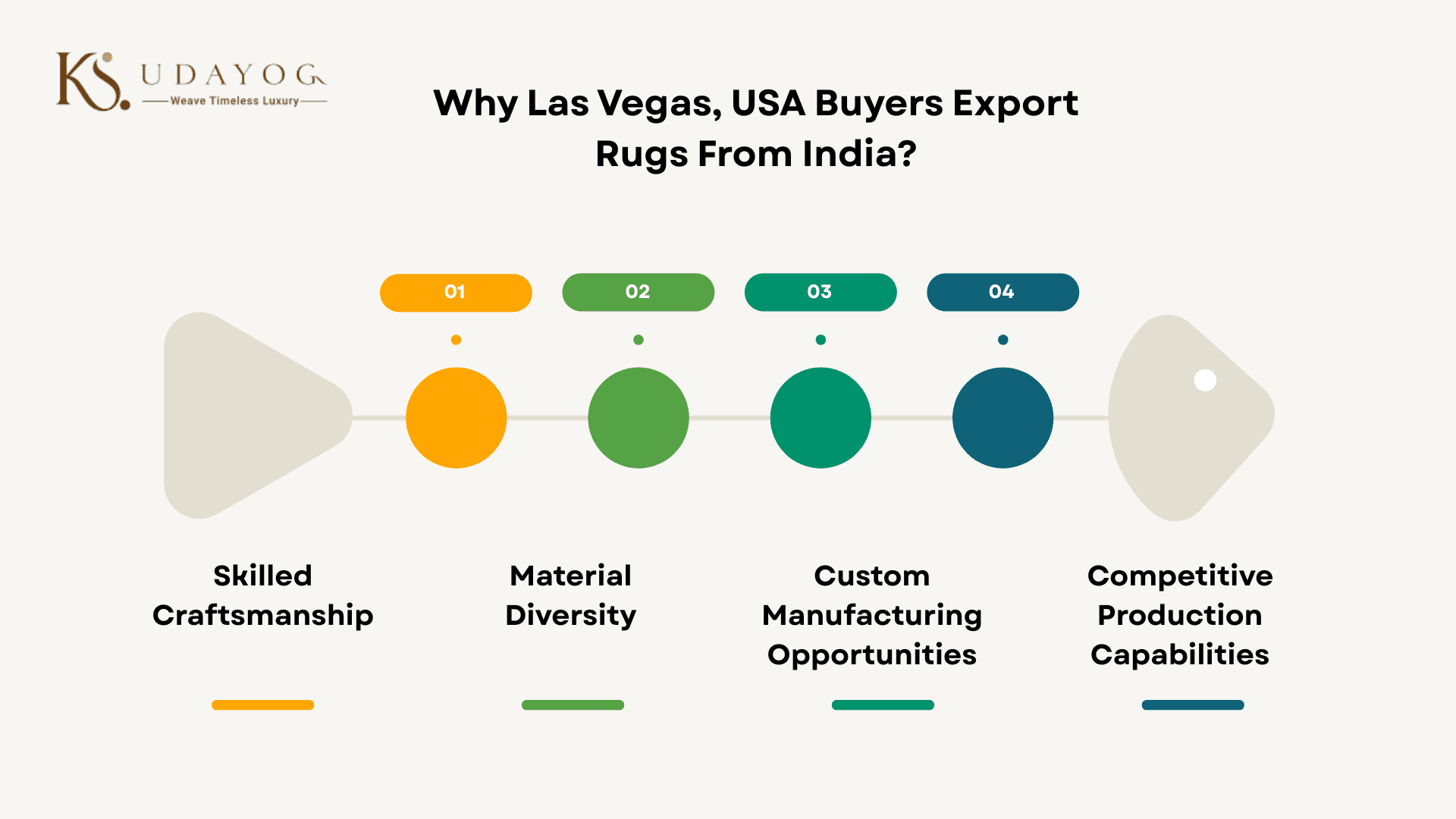
- Skilled Craftsmanship
Traditional techniques combined with modern manufacturing methods allow Indian producers to create diverse rug designs. Buyers can access handmade, handcrafted, and customized options suitable for different market segments.
- Material Diversity
Indian manufacturers work with various fibers, including cotton, wool, jute, polyester, and blended materials. Each material provides different characteristics related to texture, durability, maintenance, and appearance.
- Custom Manufacturing Opportunities
Many USA brands require unique designs rather than standard products. Indian suppliers often provide customization options related to size, color, patterns, materials, and finishing details.
- Competitive Production Capabilities
Manufacturing expertise, skilled labor, and established textile infrastructure allow Indian suppliers to support different order requirements, from boutique collections to larger wholesale programs.
How To Choose The Right Rug Manufacturer For Your Business?
The supplier selection process requires more than comparing product images or prices. A reliable manufacturing partner should match your business goals and provide confidence throughout the sourcing journey. Several factors deserve attention before making a decision.
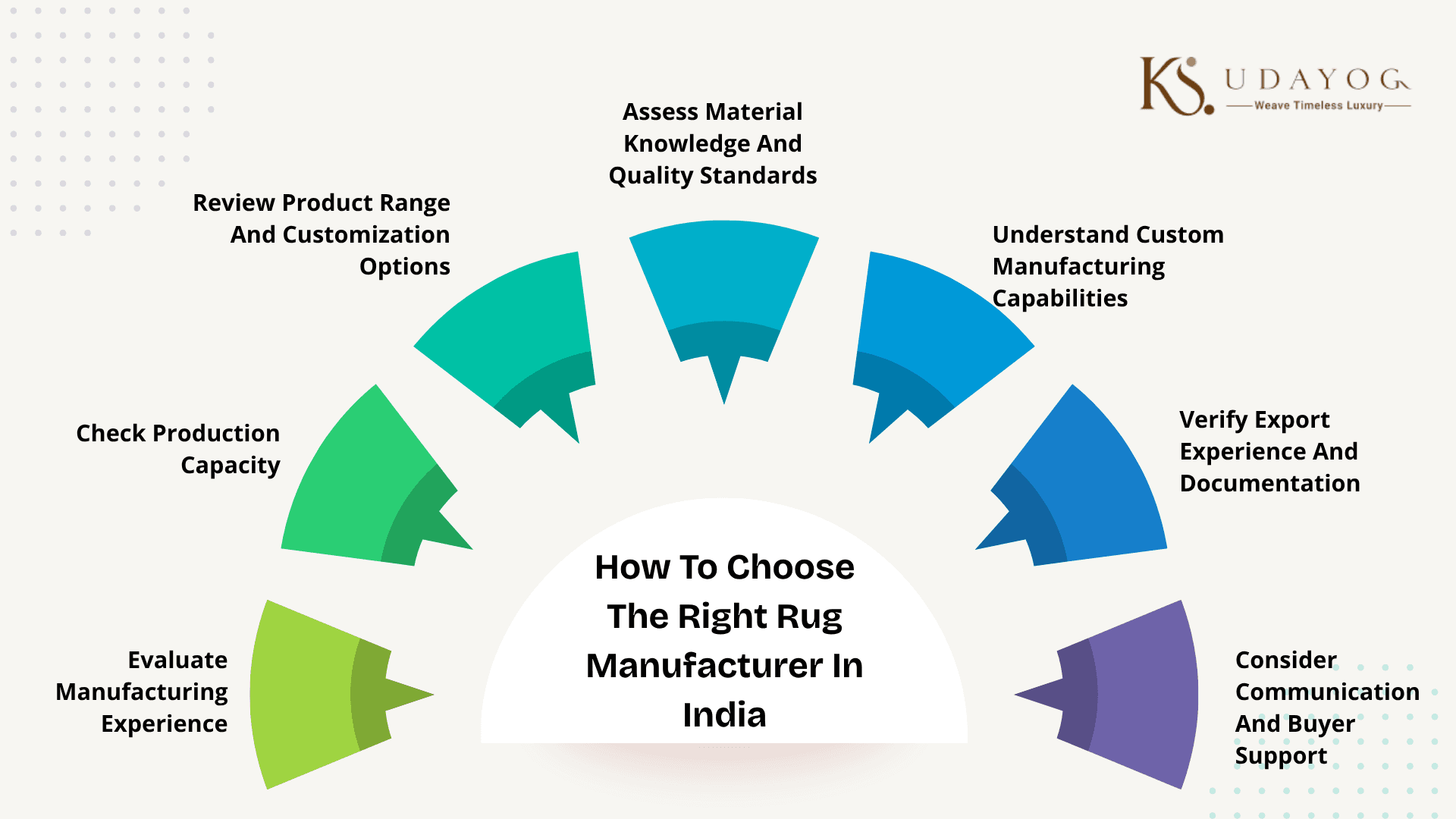
1. Evaluate Manufacturing Experience
A manufacturer’s industry experience reflects its ability to handle different production requirements, understand buyer expectations, and manage international orders. Experienced suppliers can provide valuable guidance on material selection, design feasibility, production timelines, and market-specific preferences.
2. Check Production Capacity
A reliable rug manufacturer should have the capability to manage your expected order volumes without affecting product quality. Production facilities, skilled workforce, machinery, and workflow management play an important role in meeting wholesale and export requirements.
3. Review Product Range And Customization Options
A diverse product portfolio allows businesses to create complete home textile collections from a single sourcing partner. Manufacturers offering rugs, carpets, cushions, bath rugs, and customized designs provide greater flexibility for retailers, wholesalers, and interior brands.
4. Assess Material Knowledge And Quality Standards
A trusted manufacturer should have strong knowledge of different rug materials, including wool, cotton, jute, synthetic fibers, and blended fabrics. Proper material selection, craftsmanship, finishing quality, and inspection processes influence product durability and customer satisfaction.
5. Understand Custom Manufacturing Capabilities
Many businesses require exclusive designs to differentiate their collections in competitive markets. A capable rug manufacturer should support custom sizes, patterns, colors, textures, branding requirements, and private-label production according to buyer specifications.
6. Verify Export Experience And Documentation
International sourcing requires familiarity with export procedures, packaging standards, shipping coordination, and documentation requirements. Manufacturers experienced in global shipments can help buyers manage international orders with better planning and fewer complications.
7. Consider Communication And Buyer Support
Clear communication is essential when working with overseas suppliers. Product specifications, sample approvals, production updates, timelines, and shipment details require proper coordination. A responsive manufacturing partner helps create a smoother sourcing experience and builds stronger long-term business relationships.
Rug Material Options Every Retailer Should Know
Material selection plays an important role in determining a rug’s performance, appearance, and customer appeal. Different markets have different preferences based on lifestyle, climate, and usage requirements.
- Wool Rugs
Wool rugs are valued for their softness, durability, and premium appearance. They are often selected for luxury residential spaces, hotels, and high-end interior projects.
- Cotton Rugs
Cotton rugs provide lightweight comfort and versatile design options. They are suitable for casual home settings and for buyers seeking affordable décor solutions.
- Jute Rugs
Jute rugs offer a natural texture and appeal to customers interested in sustainable and earthy interior styles. Their organic appearance makes them popular in modern décor collections.
- Synthetic And Blended Rugs
Synthetic and blended materials provide practical benefits, including easy maintenance and design flexibility. These options are often preferred for high-traffic areas and commercial applications.
Why Rug Quality Evaluation Matters Before Every Business Purchase?
Quality assessment is one of the most important steps in international sourcing. Buyers need confidence that products will meet customer expectations after reaching the market. Important quality factors include:
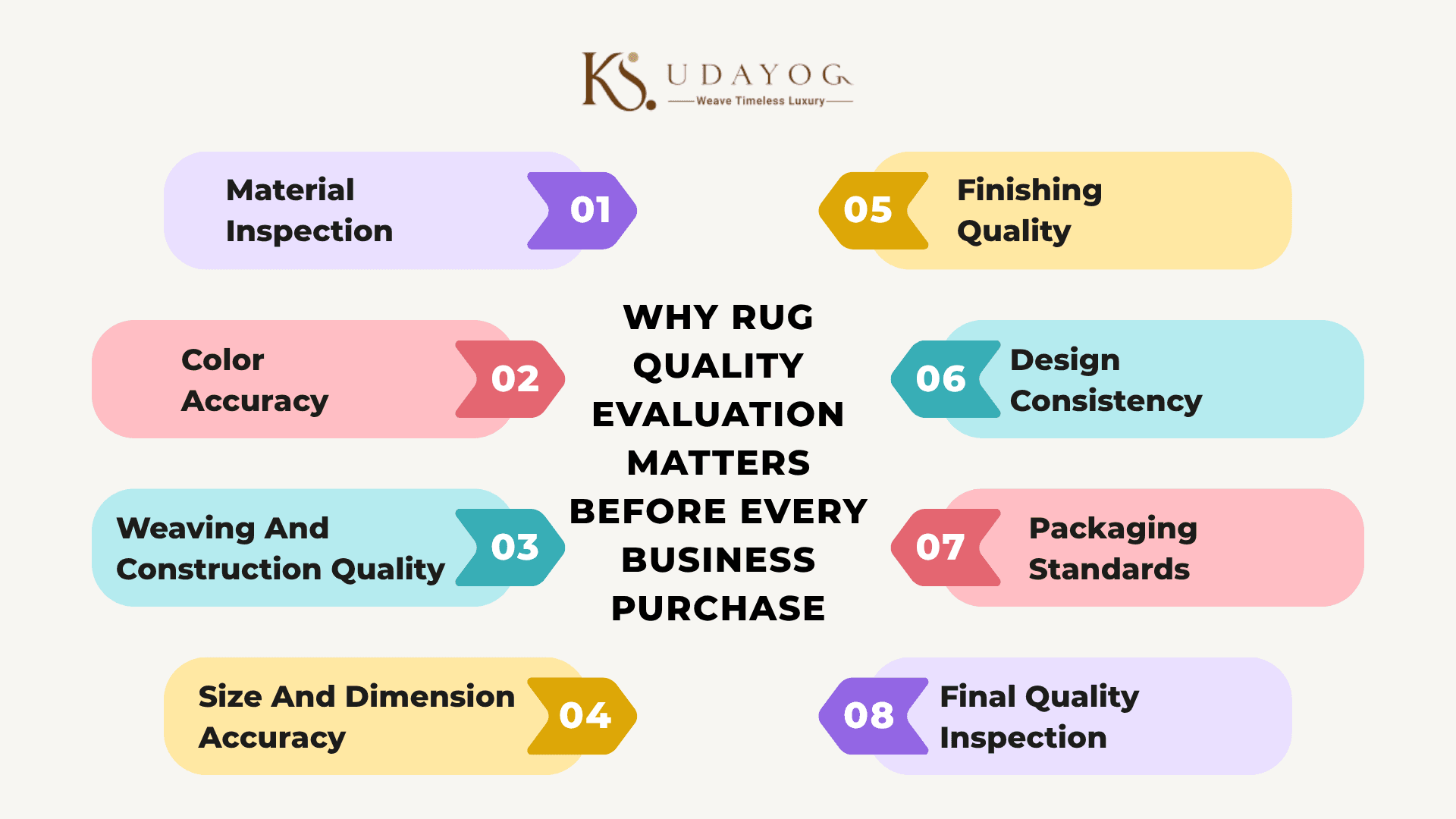
1. Material Inspection
The quality of fibers influences a rug's softness, durability, texture, and long-term performance. Premium raw materials contribute to better appearance, improved resilience, and greater customer satisfaction. Buyers should confirm that the materials match the product specifications and intended market positioning.
2. Color Accuracy
Consistent coloring and precise pattern execution are essential for retailers offering coordinated home décor collections. Uniform dye application helps maintain the same visual appeal across every production batch, creating a professional and dependable product line.
3. Weaving And Construction Quality
The weaving technique determines the rug's structural strength and overall craftsmanship. A well-constructed rug features uniform weaving, balanced knot density where applicable, and a stable foundation that supports long-term use without compromising its appearance.
4. Size And Dimension Accuracy
Accurate dimensions are particularly important for retailers, hospitality projects, and interior designers who rely on standard sizing. Every rug should match the approved measurements to avoid installation issues, inventory inconsistencies, and customer complaints.
5. Finishing Quality
Edges, backing, stitching, trimming, and surface finishing significantly influence a rug's final appearance and durability. Clean finishing details demonstrate careful craftsmanship and help distinguish premium products from lower-quality alternatives.
6. Design Consistency
Every rug within the same collection should maintain consistent patterns, motifs, texture, and overall appearance. Uniform production standards allow businesses to deliver a cohesive product range that meets customer expectations across multiple orders.
7. Packaging Standards
Proper packaging protects rugs from moisture, dust, compression, and physical damage during international transportation. Durable packaging also helps preserve product quality throughout shipping, warehousing, and retail distribution.
8. Final Quality Inspection
A comprehensive final inspection confirms that each rug meets the approved specifications before shipment. Product appearance, dimensions, workmanship, labeling, and packaging should undergo careful verification, giving buyers greater confidence in every international order.
Custom Rug Manufacturing For USA Brands
Many USA businesses prefer customized products because unique collections help them differentiate their brands. Custom rug manufacturing allows buyers to develop products based on specific customer requirements. Customization possibilities include:
- Custom sizes
- Exclusive patterns
- Brand-specific designs
- Selected materials
- Color combinations
- Private label requirements
A manufacturing partner with customization experience can help businesses transform design concepts into finished products suitable for their target customers.
Smart Export Practices For International Rug Buyers
International sourcing involves several practical considerations beyond product selection. Buyers need awareness of logistics, documentation, and shipment planning. Important areas include:
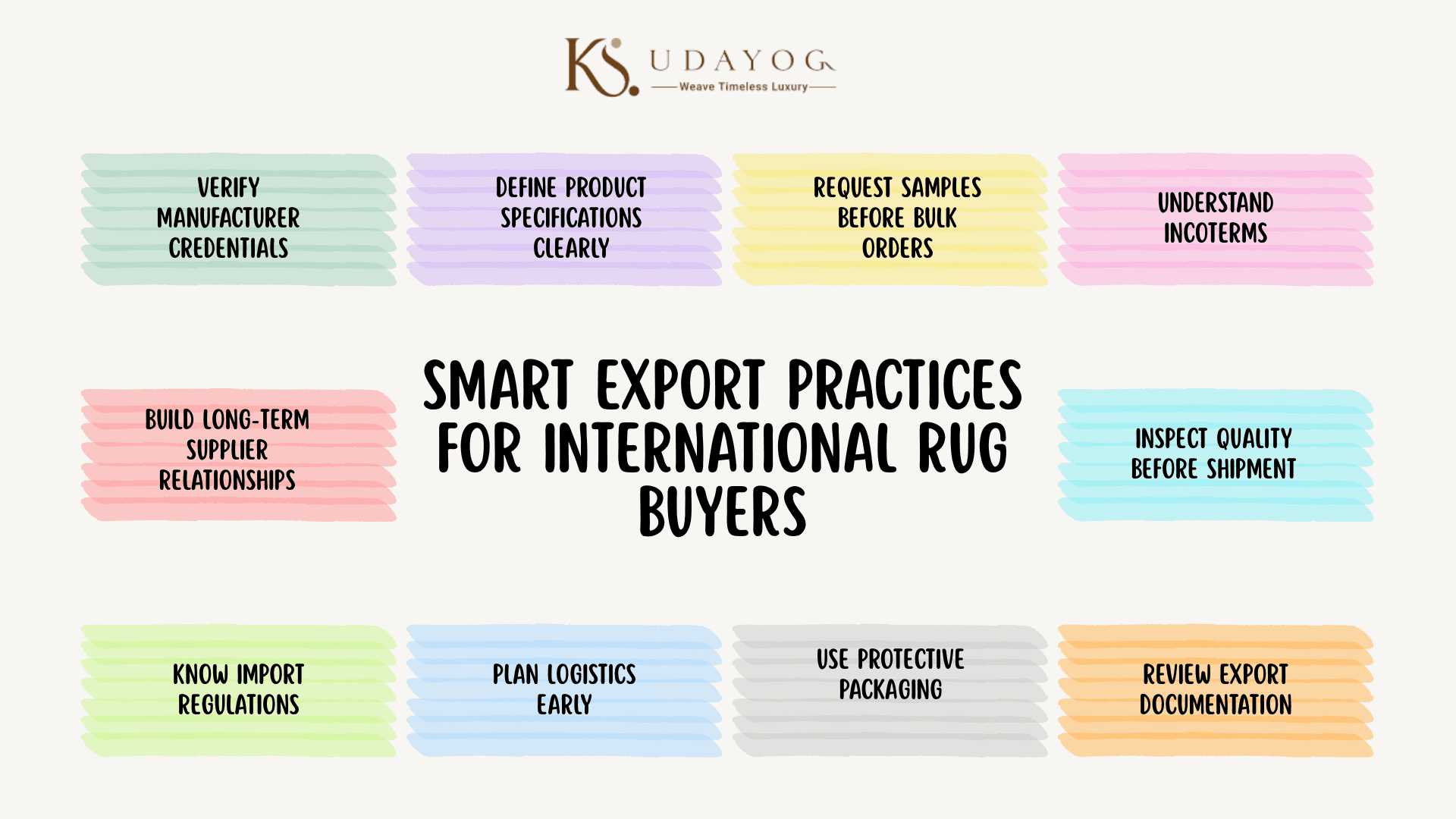
Step 1: Verify Manufacturer Credentials
A manufacturer's credentials reveal far more than years in business. Export experience, quality certifications, client testimonials, and completed international projects provide valuable insight into their reliability. A supplier with a proven track record is generally better prepared to handle production challenges, meet buyer expectations, and support long-term business growth.
Step 2: Define Product Specifications Clearly
Clear product specifications create a strong foundation for every order. Details such as rug material, dimensions, weave type, color standards, backing, finishing, packaging, and labeling should be documented before production starts. A detailed specification sheet minimizes misunderstandings and helps both parties stay aligned throughout the manufacturing process.
Step 3: Request Samples Before Bulk Orders
Product samples give buyers an opportunity to evaluate quality before making a larger investment. Material texture, craftsmanship, color consistency, finishing details, and overall appearance become much easier to assess in person. A sample review also provides confidence that the final production will match business expectations.
Step 4: Understand Incoterms
International shipping involves shared responsibilities between buyers and suppliers. Incoterms such as FOB, CIF, and DDP clearly define who manages transportation, insurance, customs, and associated costs at different stages of the shipment. A proper understanding of these terms helps businesses plan budgets more accurately and avoid unnecessary surprises.
Step 5: Inspect Quality Before Shipment
A final inspection before dispatch adds an extra layer of confidence to the sourcing process. Factory audits or independent third-party inspections can confirm that products meet the agreed specifications for quality, dimensions, workmanship, and packaging before they leave the manufacturing facility.
Step 6: Review Export Documentation
Accurate export documentation keeps international shipments moving smoothly. Commercial invoices, packing lists, certificates of origin, bills of lading, and compliance documents should be reviewed carefully to reduce the risk of customs delays, additional charges, or documentation-related issues.
Step 7: Use Protective Packaging
Packaging plays an important role in preserving rug quality during international transportation. Rugs should be rolled correctly, protected against moisture, wrapped securely, and packed with suitable materials to reduce the risk of damage during shipping, warehousing, and final delivery.
Step 8: Plan Logistics Early
Shipping schedules can become unpredictable during busy seasons. Early logistics planning allows buyers to compare freight options, reserve container space, coordinate customs procedures, and build realistic delivery timelines. Better preparation often reduces unnecessary delays and supports smoother inventory planning.
Step 9: Know Import Regulations
Every country has different import requirements that businesses should understand before placing an order.
Customs duties, labeling regulations, restricted materials, product compliance standards, and documentation requirements can all influence the import process. Early research helps buyers avoid unexpected complications after the shipment arrives.
Step 10: Build Long-Term Supplier Relationships
Successful sourcing rarely depends on a single transaction. Strong relationships built through regular communication, mutual trust, and ongoing collaboration often lead to smoother production planning, greater flexibility, priority scheduling, and more competitive commercial terms.
Over time, both the buyer and manufacturer benefit from a partnership built on shared business goals rather than individual purchase orders.
Why KS Udyog Can Be A Reliable Rug Manufacturer & Sourcing Partner?
KS Udyog understands that international buyers need more than products. They need a manufacturing relationship built around quality, reliability, and clear communication. The company supports businesses with:
- Rug manufacturing expertise
- Customized product solutions
- Diverse home textile options
- Export-oriented production
- Buyer-focused coordination
For retailers, wholesalers, and interior businesses, a dependable manufacturing partner can simplify sourcing decisions and create opportunities for long-term growth.
Final Thoughts
The right rug supplier can make a significant difference in product quality, customer satisfaction, and business success. USA buyers need to consider multiple factors before selecting a manufacturing partner, including materials, craftsmanship, customization options, quality standards, and export capabilities.
A thoughtful sourcing approach creates better products, stronger customer relationships, and sustainable business opportunities. If your business is searching for a trusted sourcing partner, connect with an expert rug manufacturer today for product discussions, catalogs, and export opportunities.
Frequently Asked Questions (FAQs)
What Factors Affect Rug Pricing For Wholesale Buyers?
Rug pricing depends on several factors, including material type, manufacturing technique, size, design complexity, customization requirements, and order quantity. Handmade rugs generally require more craftsmanship compared with machine-produced options. Shipping, packaging, and market requirements also influence the final cost structure for international buyers.
Which Rug Styles Are Popular Among USA Customers?
USA customers often prefer rugs that match modern, traditional, minimalist, and natural interior styles. Popular choices include neutral patterns, textured designs, handmade appearances, and sustainable materials. Retailers usually select collections based on their target audience, seasonal trends, and customer preferences within specific regions or markets.
What Certifications Should International Rug Buyers Check?
International buyers should review certifications and documentation based on their market requirements and product category. Relevant certifications may relate to materials, manufacturing practices, environmental considerations, and safety standards. The required documents depend on customer expectations, retail channels, and applicable regulations in the destination country.
Can Buyers Request Samples Before Placing Large Orders?
Many manufacturers provide samples to help buyers evaluate materials, colors, designs, and finishing quality before bulk production. Sample approval allows businesses to review product details and make necessary adjustments. This step creates better alignment between buyer expectations and final manufactured products.
What Makes Handmade Rugs Valuable For Retailers?
Handmade rugs offer unique craftsmanship, artistic details, and individual character that appeal to customers seeking premium décor products. Their value comes from skilled workmanship, quality materials, and distinctive designs. Many retailers use handmade collections to create differentiated product offerings within competitive home décor markets.
How Long Does International Rug Sourcing Usually Take?
International rug sourcing timelines vary based on product type, customization needs, order quantity, production requirements, and shipping arrangements. Custom designs generally require additional planning compared with standard products. Buyers should discuss expected timelines with manufacturers during early stages to coordinate inventory planning effectively.
Are Custom Rug Designs Available For Private Brands?
Many manufacturers support private label and custom rug projects for brands seeking exclusive collections. Buyers can discuss design requirements, branding details, materials, dimensions, and packaging preferences. Custom manufacturing helps businesses create products that represent their unique identity and customer expectations.
Why Is Supplier Communication Important During Sourcing?
Clear supplier communication helps buyers manage specifications, approvals, production updates, and shipment planning. International orders involve multiple details that require proper coordination. Strong communication between buyers and manufacturers reduces misunderstandings and creates smoother sourcing experiences from initial discussions through final delivery.