A cushion’s softness is easy to notice, but the manufacturing decisions hidden inside it are what determine how it feels and performs over time. The wrong filling can make it too flat, poor stitching can affect its durability, and unsuitable fabric can change how well it handles everyday use.
That is why cushion manufacturing involves much more than cutting fabric and adding filling. Manufacturers need to match materials, construction, dimensions, filling, stitching, shaping, and finishing with the purpose of the cushion and the expectations of the buyer.
Whether you are a furniture brand, retailer, interior business, manufacturer, or bulk buyer, knowing how cushions are produced can help you evaluate quality more confidently. Here’s a closer look at the complete cushion manufacturing process, from material selection to the finished product.
What Materials Are Used To Make Cushions?
Before production begins, manufacturers select materials according to the cushion's purpose, design, comfort level, and expected use. A decorative cushion for a living room may require different materials from a cushion designed for hospitality or high-traffic commercial spaces.
Material selection also depends on factors such as cushion size, shape, stitching method, expected usage, cleaning requirements, and budget. Manufacturers may adjust the material combination to achieve a specific look or performance level, particularly when producing cushions in bulk or for customized projects.
For cushion manufacturers, the challenge is not simply selecting individual materials but ensuring that they work well together. The fabric, filling, closures, inner construction, and finishing details should complement one another so the finished cushion maintains its shape, appearance, and comfort during its intended service life.
The main cushion materials typically include:
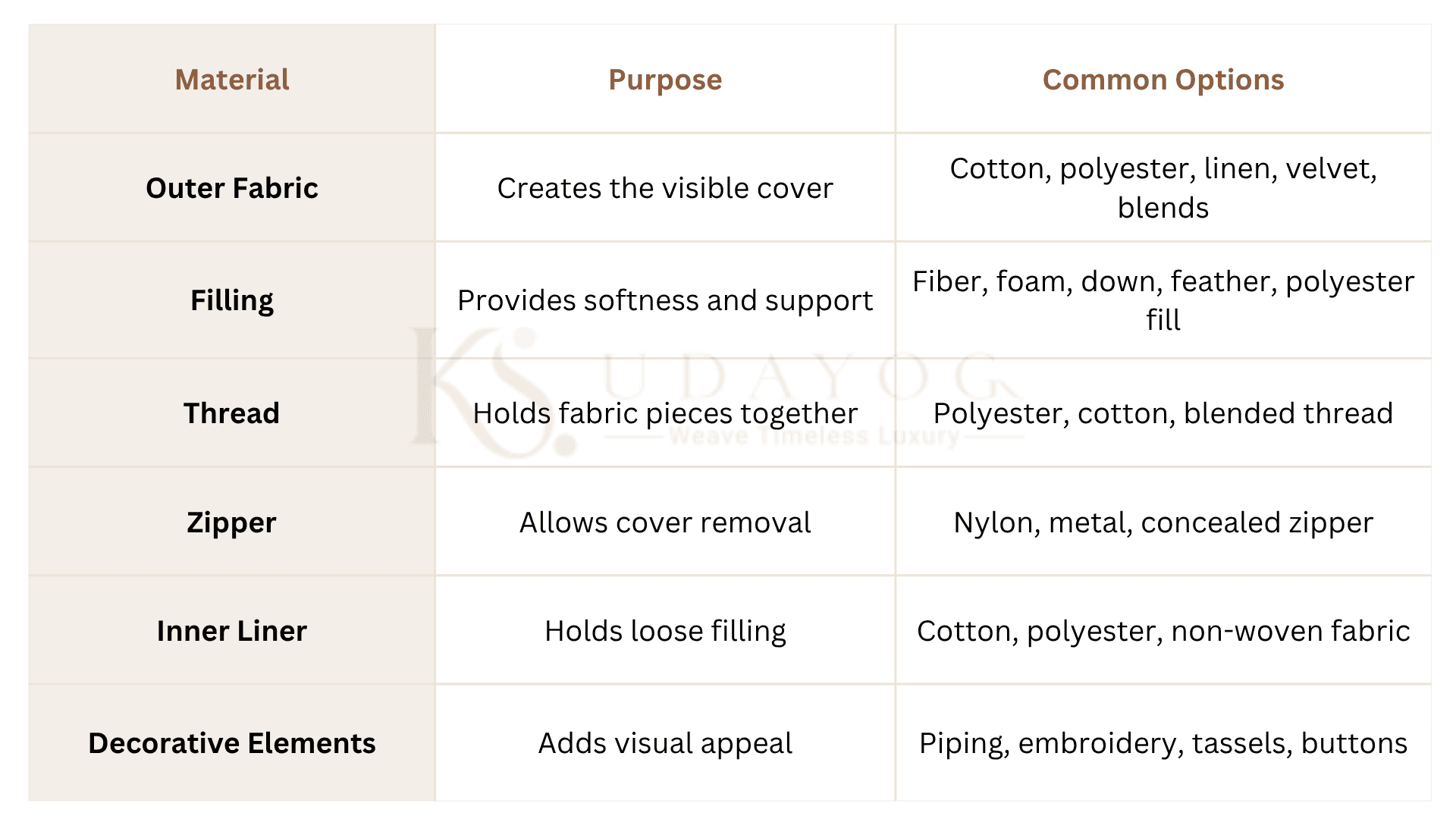
The right combination depends on whether the cushion is intended for decoration, everyday seating, outdoor use, hospitality spaces, or other applications.
How Are Cushions Created? A Step-By-Step Manufacturing Process
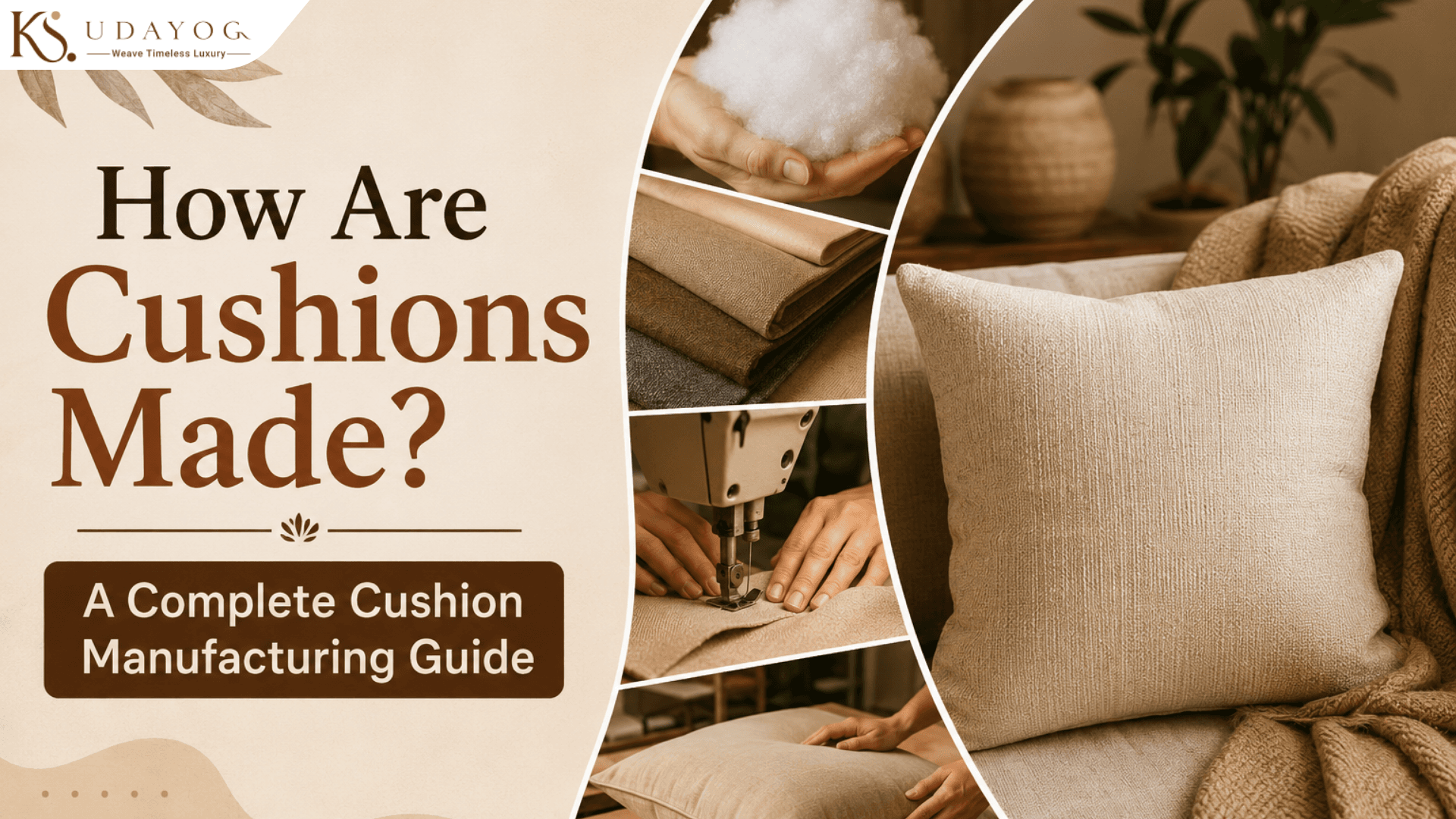
Cushion manufacturing follows a sequence of steps that transforms raw fabric and filling into a finished product.
Although production methods vary between manufacturers, the general process includes design development, material selection, fabric preparation, cutting, sewing, filling, finishing, quality inspection, and packaging. Here is how each stage works.
Step 1: Design And Specification Planning
Every cushion starts with a design and set of specifications. Manufacturers determine the required dimensions, shape, fabric, filling type, closure style, stitching pattern, and finishing details before production begins.
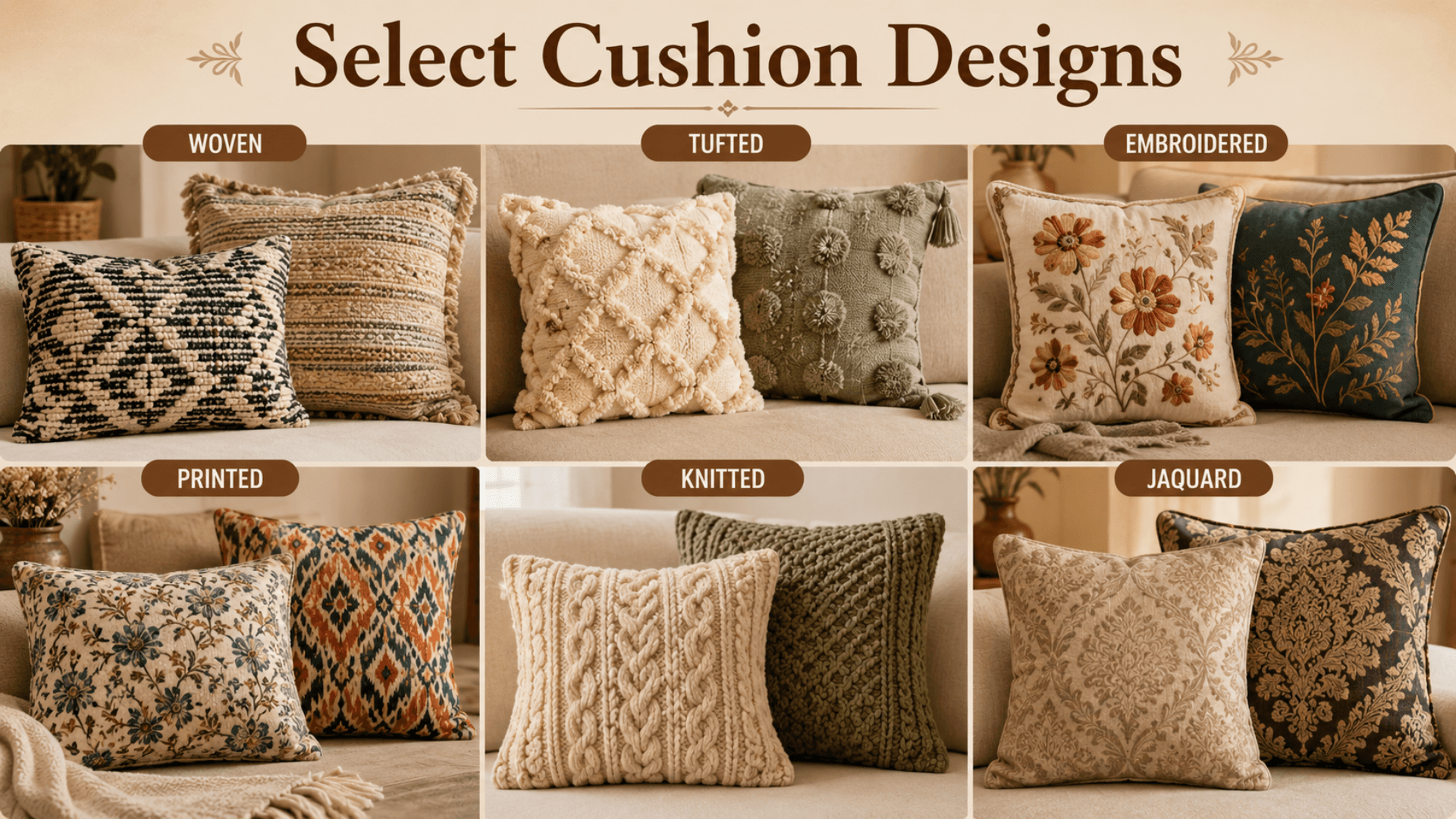
For bulk orders, buyers may also provide their preferred colors, patterns, branding elements, dimensions, or other customization requirements.
This stage helps establish a clear production standard so each cushion follows the approved design.
Step 2: Fabric Selection
The outer fabric plays an important role in the cushion's appearance, texture, durability, and maintenance requirements.
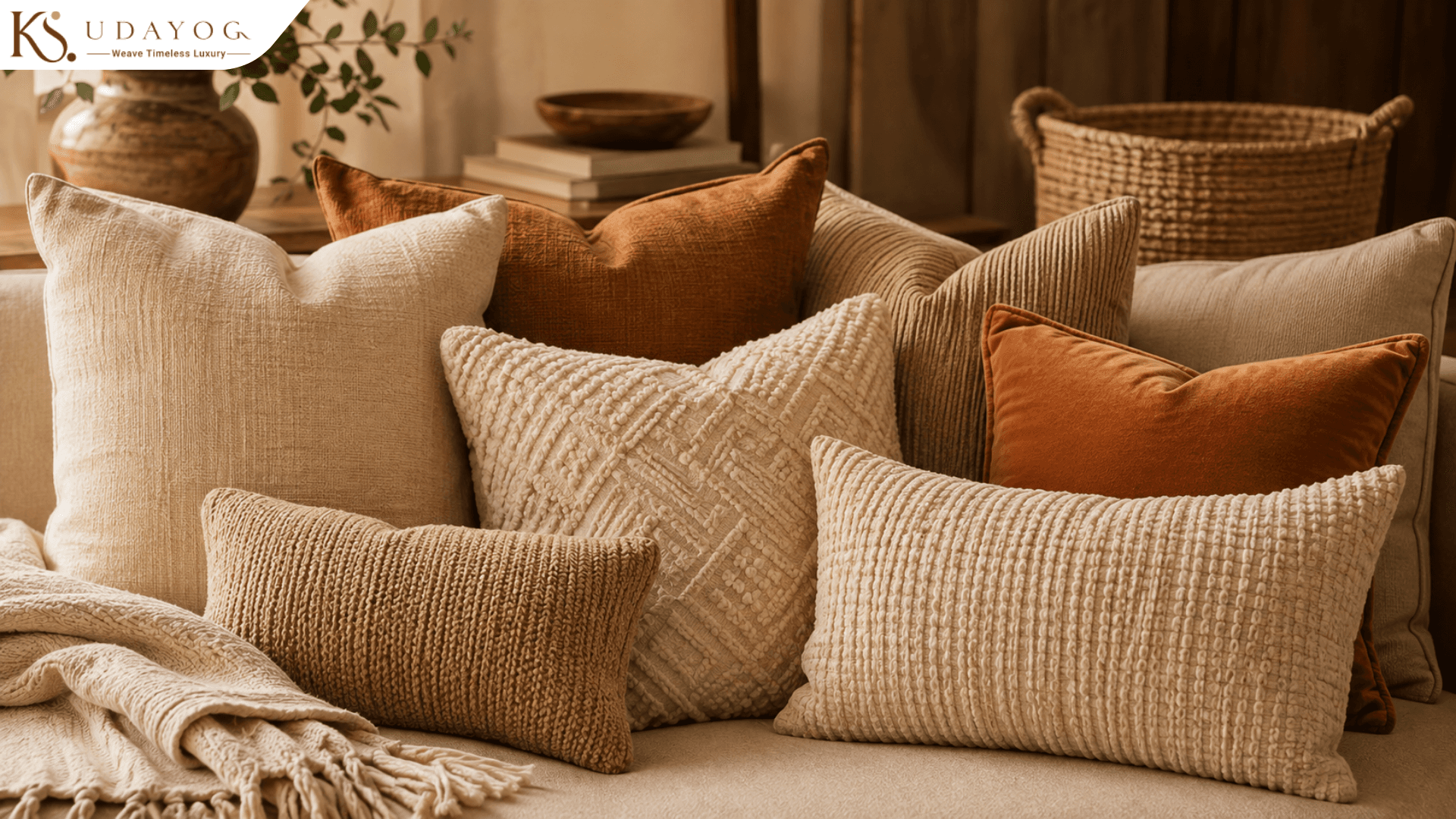
Manufacturers select fabric according to the intended application. Here’s a list of fabric types that are used to manufacture cushions.
- Cotton Fabric: If the cushion is meant for everyday home use, cotton is often considered for its soft, comfortable feel. It can be a practical choice for manufacturers making simple, breathable cushion covers in regular designs.
- Polyester Fabric: For cushions that will see plenty of use, polyester can make production easier from a durability and maintenance point of view. It is especially practical when manufacturers need a fabric that is easier to care for across larger product batches.
- Linen Fabric: When the customer wants a more natural and premium-looking cushion, linen becomes a stronger option. Its slightly textured appearance works particularly well in modern, minimal, and upscale interior collections.
- Velvet Fabric: Velvet is usually picked when the cushion needs to stand out rather than simply serve as a functional seating accessory. Its soft surface and rich appearance make it a natural fit for decorative, luxury, and statement cushion ranges.
- Blended Fabric: Sometimes one fabric does not offer everything the product needs, which is where blends can make sense. Manufacturers can choose a suitable blend when they need to balance factors such as comfort, durability, appearance, and maintenance.
- Textured Fabric: For customized or design-led cushions, textured fabrics give manufacturers more room to create something visually different. They can be used when the buyer wants more character than a plain fabric can provide, particularly in décor and hospitality projects.
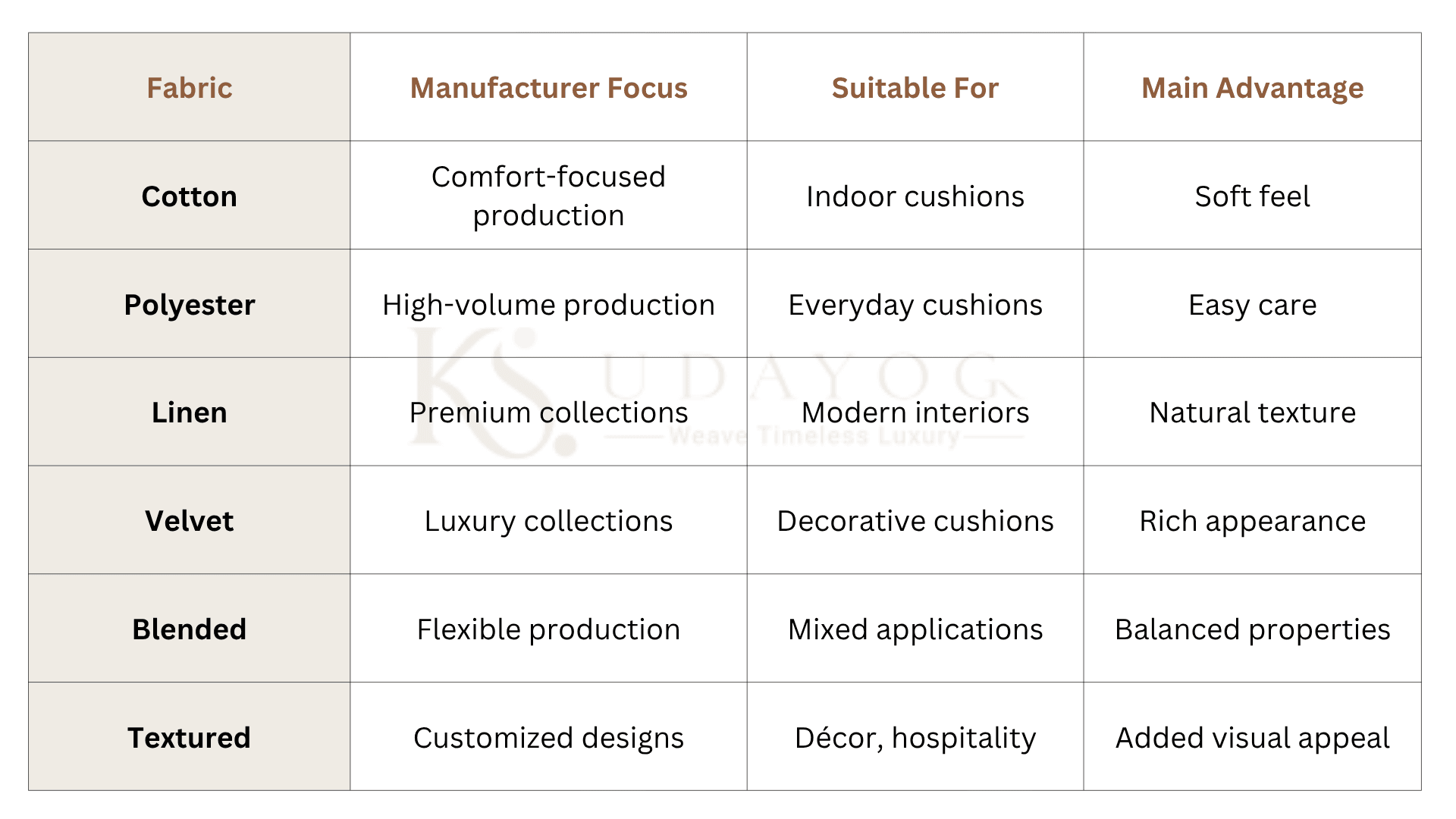
For large orders, manufacturers may also check fabric availability to ensure the selected material can support the required production quantity.
Step 3: Fabric Inspection And Preparation
Once the fabric is selected, it is inspected before cutting. Manufacturers check for visible defects, stains, uneven coloring, weaving problems, or other imperfections.
The fabric may then be cleaned, conditioned, ironed, or spread across the cutting surface, depending on the manufacturing setup.
Proper preparation matters because defects identified after cutting can lead to material waste and inconsistent finished products.
Step 4: Pattern Making And Marking
The manufacturer creates or follows a pattern based on the approved cushion dimensions and design.
The pattern determines the shape and size of each fabric component. Markings may also identify areas for seams, zippers, piping, embroidery, buttons, or other design details.
Accurate pattern preparation is especially important when producing cushions in large quantities because even small dimensional differences can become noticeable across a complete collection.
Step 5: Fabric Cutting
After the pattern is finalized, fabric pieces are cut according to the required dimensions.
Depending on production volume, cutting may be performed manually or with specialized cutting equipment. Multiple layers can sometimes be cut together to improve production speed and maintain uniformity.
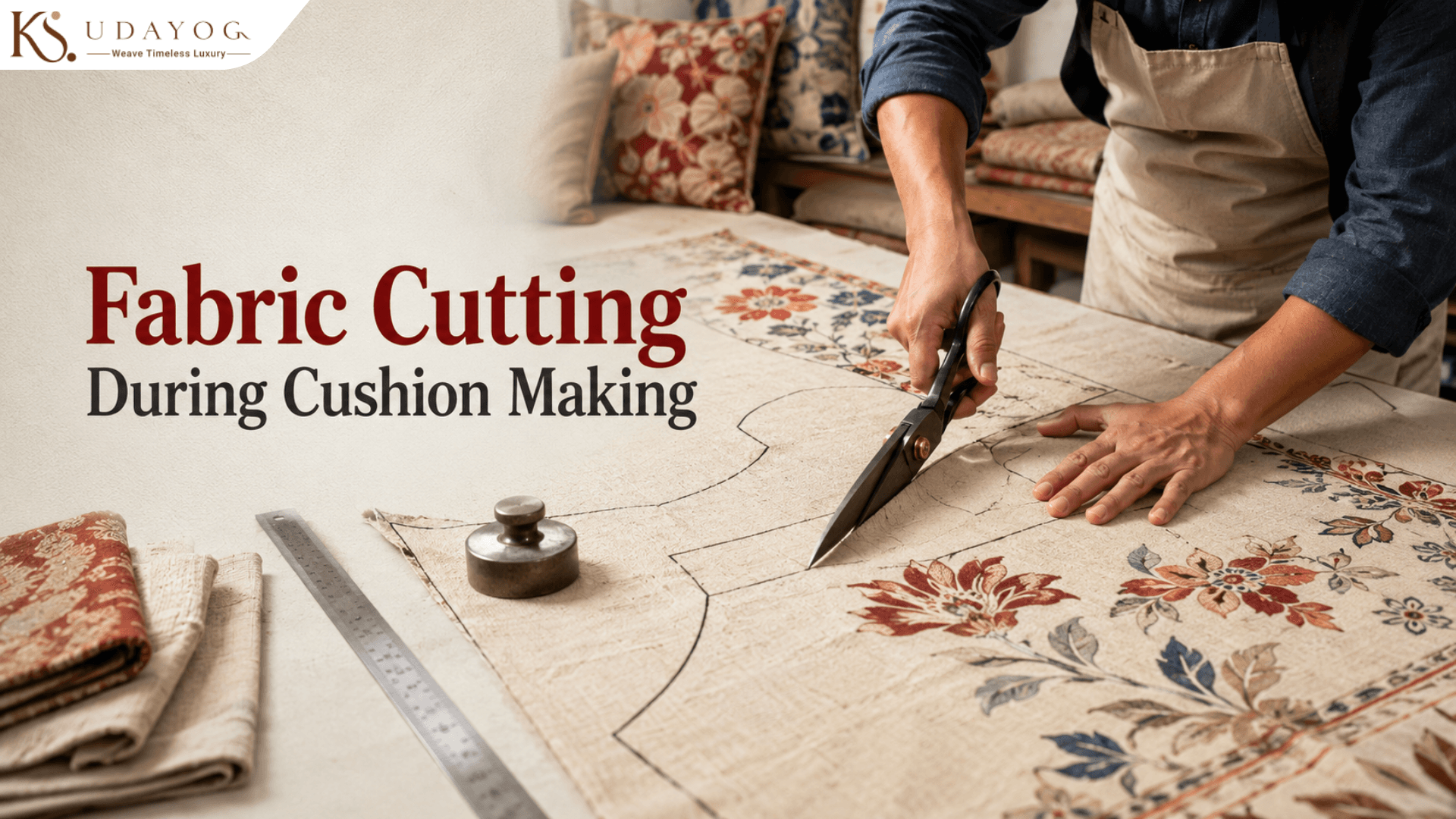
The manufacturer must account for seam allowances during this stage. Incorrect cutting can affect the final cushion dimensions and create problems during sewing.
Step 6: Decorative Detailing
This is where the cushion starts getting its character. Depending on the design, manufacturers may add embroidery, prints, piping, appliqué, buttons, or tassels to make the finished piece more distinctive.
For example, piping is often stitched along the edges for a neat, framed look, while embroidery and prints bring patterns or designs to the fabric. Appliqué and buttons can add a little more texture and dimension.
The detailing is usually done at the right stage of production so it stays firmly in place. Some decorations are added to the fabric before the panels are stitched, while edge details such as piping are worked into the stitching itself.
The exact sequence depends on the design and manufacturing method.
Step 7: Sewing The Cushion Cover
The cut fabric pieces are then joined together using industrial or commercial sewing machines.
Manufacturers carefully align the fabric panels before stitching them. Seam strength, stitch spacing, corner construction, and overall alignment can influence the finished cushion's durability and appearance.
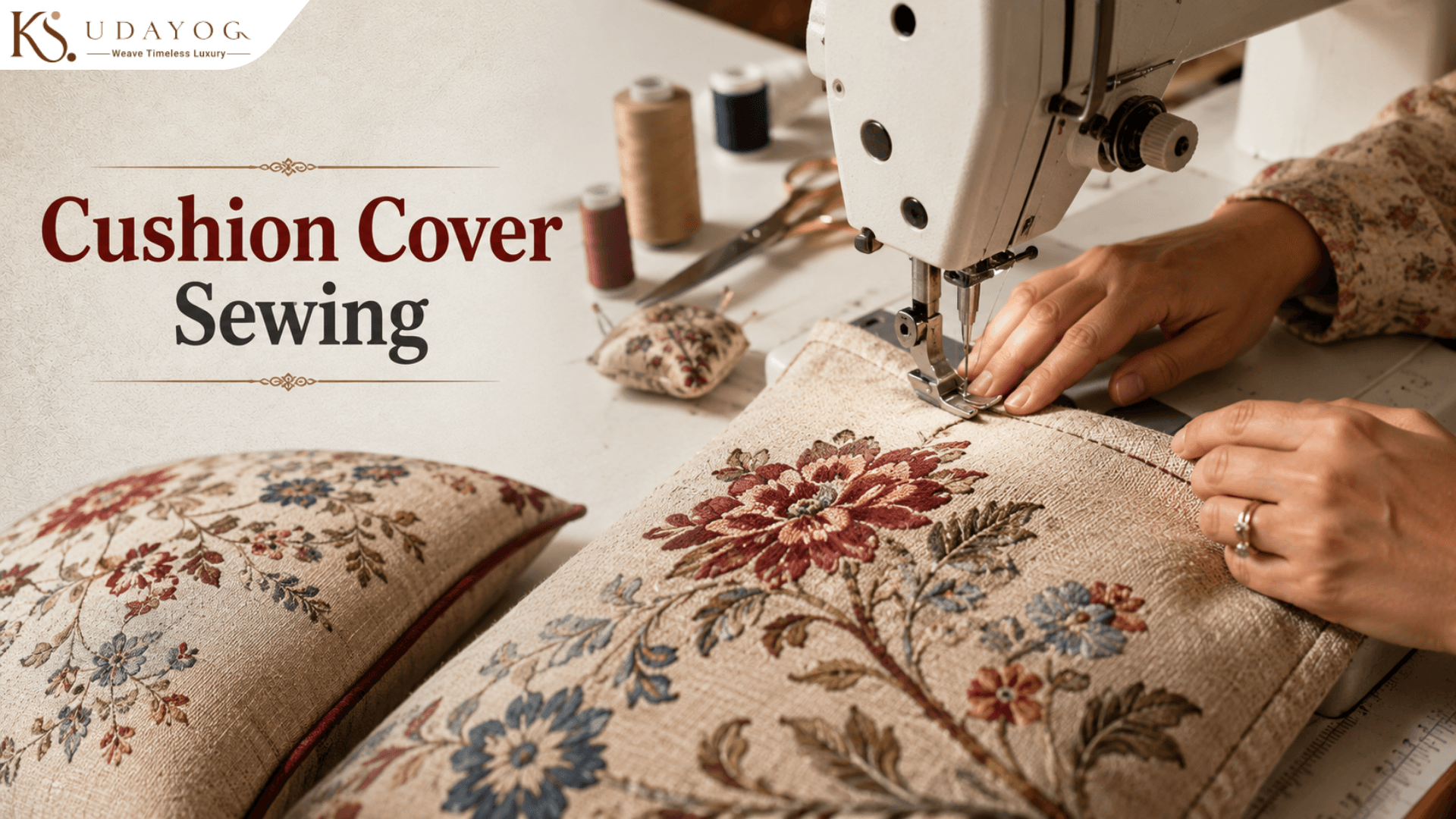
Different cushion designs may use different construction methods. Some have simple seams, while others include boxed sides, piping, concealed zippers, button closures, or multiple fabric panels.
Step 8: Adding The Closure
Many cushions include a zipper or another closure system that allows the cover to be removed.
Zippers are generally positioned along an edge or concealed within the cushion design. The manufacturer must ensure the closure operates smoothly without creating excessive tension on the surrounding fabric.
For removable cushion covers, the closure should also be strong enough to withstand repeated opening and closing.
Step 9: Preparing The Filling
Preparing The Filling
The filling determines how soft, supportive, and plump the finished cushion feels. Before insertion, manufacturers prepare the selected material according to the cushion's size, design, and required firmness.
Common cushion filling materials include:
- Polyester Fiber: A lightweight and commonly used option that creates a soft, fluffy feel and is suitable for decorative and everyday cushions.
- Foam: Provides firmer support and better shape retention, making it suitable for seat cushions and cushions that receive regular pressure.
- Polyester Hollow Fiber: Its hollow structure provides a soft, springy feel while helping the cushion maintain volume.
- Memory Foam: Offers a more supportive, body-contouring feel and is often used where pressure relief and comfort are important.
- Feather And Down: Creates a soft, luxurious feel with a naturally relaxed appearance, although it may require regular fluffing.
- Cotton: Provides a natural filling option with a relatively firm feel and is used in certain traditional or specialty cushions.
- Foam And Fiber Blend: Combines foam's structure with fiber's softness, creating a balance between support and a plush feel.
Once the filling material is selected, manufacturers prepare it according to the cushion's construction. Fiber fillings may be loosened and evenly distributed, while foam is generally cut to the required dimensions before being inserted. The quantity and distribution of filling also matter because insufficient filling can leave the cushion flat, whereas excessive filling can place unnecessary pressure on seams and closures.
Step 10: Filling The Cushion
The prepared filling is inserted into the sewn cushion cover or inner casing.
Manufacturers distribute the filling across corners and edges to create an even shape. For foam cushions, the foam insert is fitted into the cover carefully so that the finished product maintains the intended dimensions.
Proper filling distribution is essential because it affects both appearance and comfort.
Step 11: Shaping And Finishing
After filling, the cushion is shaped manually or through production processes designed to distribute the filling evenly.
The manufacturer checks corners, edges, surface appearance, and overall firmness. Loose threads may be trimmed, seams may be checked again, and decorative details are adjusted where necessary.
This stage gives the cushion its final appearance before inspection.
Step 12: Quality Inspection
Quality control is performed to identify defects before cushions are packed and shipped.
A quality inspection may include:
- Checking overall dimensions
- Examining fabric for defects
- Inspecting stitching and seams
- Checking zipper operation
- Reviewing filling distribution
- Checking cushion shape
- Examining decorative details
- Checking color and pattern accuracy
- Looking for loose threads
- Reviewing overall finishing
For customized or bulk orders, manufacturers may compare finished cushions against an approved sample or specification sheet.
Step 13: Folding And Packaging
Once cushions pass inspection, they are prepared for packaging.
Packaging requirements depend on the product, order quantity, shipping method, and buyer's preferences. Individual protective packaging may be used for retail products, while bulk orders can use larger protective packaging designed for transportation and storage.
Proper packaging helps protect cushions from dust, moisture, stains, compression damage, and handling during transportation.
What Factors Affect Cushion Quality?
Not every cushion with the same size and fabric will offer the same quality. Several manufacturing details influence the finished product.
- Fabric Quality
Fabric determines much of the cushion's visual appeal and influences how it performs over time. Buyers should consider texture, weave, thickness, colorfastness, and suitability for the intended application.
- Filling Quality
The filling affects softness, firmness, resilience, and shape retention. The right filling should match the intended comfort level and use.
- Stitching Quality
Strong, neat stitching helps prevent seams from opening during regular handling and use. Uneven stitches, weak seams, or loose threads may indicate poor finishing.
- Filling Distribution
Even filling creates a balanced appearance and comfortable feel. Uneven distribution can result in lumps, flat spots, or distorted corners.
- Edge Finishing
Edges should be properly finished to reduce fraying and maintain the cushion's appearance. Piping and other edge treatments can also add structure and visual definition.
- Dimensional Accuracy
Cushions ordered for specific furniture should match the required dimensions. Small variations can affect how the cushion fits on a sofa, chair, bench, or bed.
Handmade Vs Machine-Made Cushions
The main difference between handmade and machine-made cushions is how they are constructed and produced. Handmade cushions involve greater manual work, which can be useful for detailed designs, unique patterns, and smaller production runs, while machine-made cushions rely more on equipment for faster and more uniform production.
Neither option is automatically better. Handmade cushions may appeal when craftsmanship and design details are the priority, whereas machine-made cushions can be a practical choice when you need larger quantities, uniform sizing, and repeatable production.
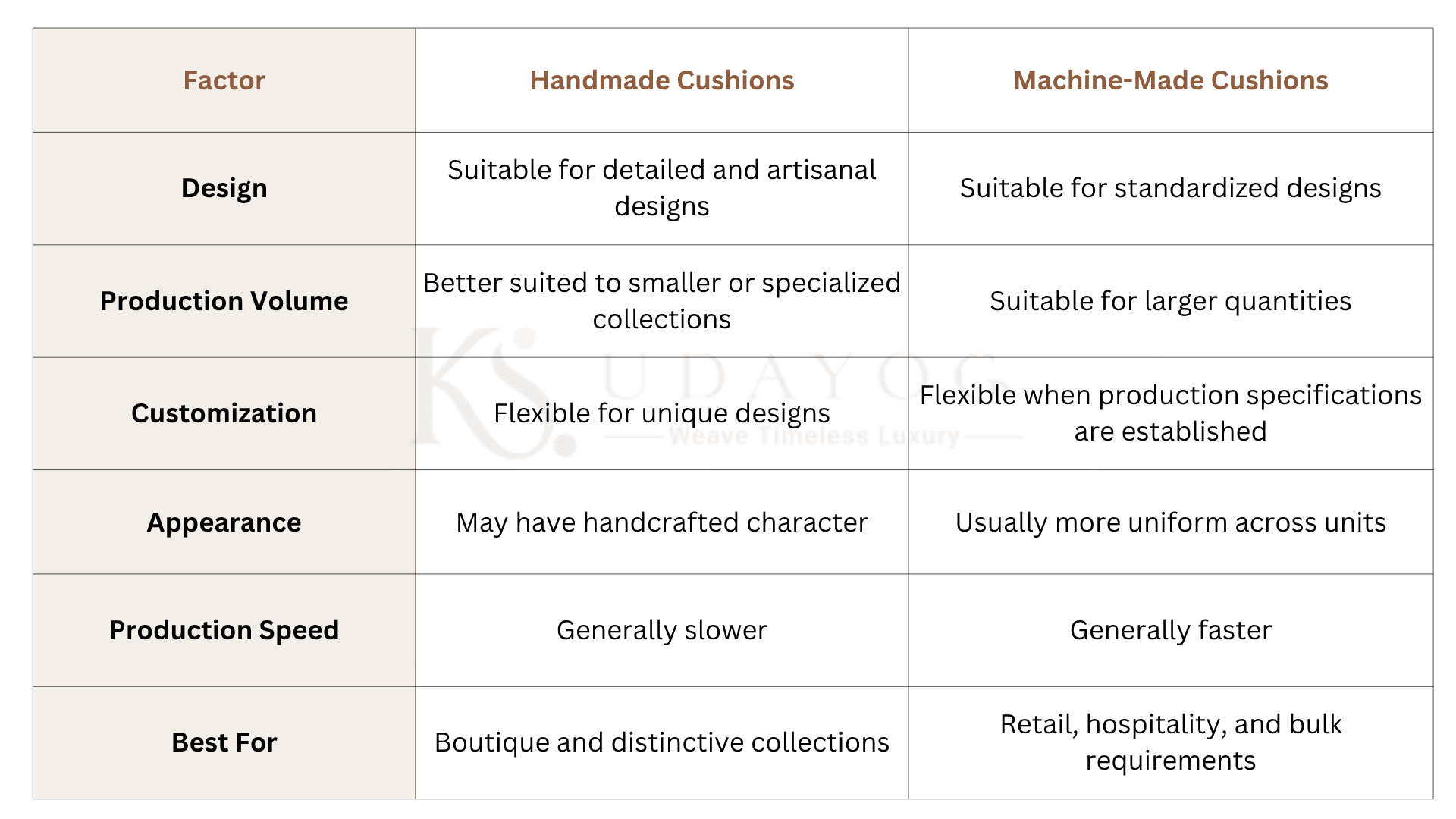
Many manufacturers combine manual craftsmanship with machinery to balance customization, production capacity, and product uniformity.
How Are Cushions Made For Bulk Orders?
Bulk cushion manufacturing requires more than simply increasing production quantity. Manufacturers need to maintain the approved specifications across the complete order.
A typical bulk production workflow includes:
1. Approve The Design
Confirm dimensions, fabric, filling, color, construction, and finishing requirements.
2. Review A Sample
Examine a physical sample before approving mass production.
3. Confirm Production Specifications
Document the approved specifications so the production team has a clear reference.
4. Plan Materials
Secure sufficient fabric, filling, thread, closures, and other components.
5. Begin Production
Manufacture the cushions according to the approved sample and specifications.
6. Conduct Quality Checks
Inspect products during and after production to identify deviations.
7. Complete Final Inspection
Review the finished batch before packaging and dispatch.
For retailers and commercial buyers, this approach can reduce the risk of receiving products that differ from the approved sample.
What Should You Check Before Buying Cushions In Bulk?
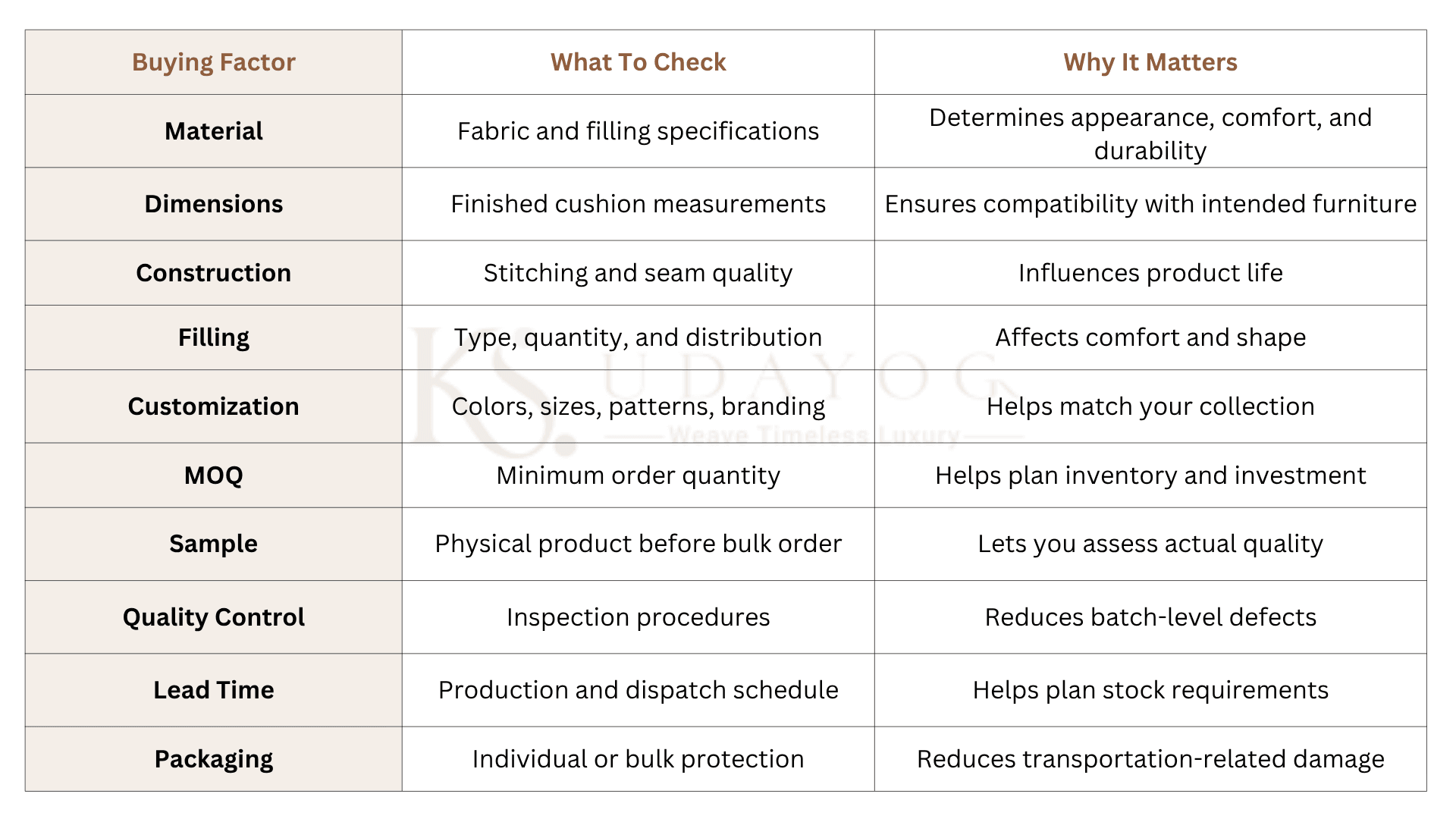
Before placing a large order, evaluate the manufacturer and the product rather than comparing price alone. Start by being clear about where the cushions will be used, how frequently they will be handled, and what level of comfort and durability you expect.
This helps you choose specifications that actually suit your customers or the furniture they will be paired with. Before committing to a large quantity, ask the manufacturer for a sample and discuss the complete order requirements.
Pay attention to how clearly they communicate specifications, handle customization, manage production timelines, and respond to quality concerns.
This initial evaluation can help you avoid receiving a bulk order that looks different from what you expected.
How To Choose A Cushion Manufacturer in India?
Choosing the right cushion manufacturer in India can make a significant difference to product quality, order fulfillment, and future sourcing.
Start by reviewing the manufacturer's product range and material capabilities. Look for experience with the cushion styles, fabrics, filling types, dimensions, and finishing details you require.
Next, ask about customization and production capacity. If you need different sizes, colors, patterns, or branded products, confirm these capabilities before placing an order.
Always request samples when possible. A sample gives you an opportunity to assess fabric quality, filling, stitching, dimensions, finishing, and overall workmanship instead of relying solely on product photographs.
You should also discuss MOQ, pricing, production timelines, quality inspection, packaging, and repeat-order requirements before finalizing the supplier.
Common Cushion Manufacturing Problems Buyers Should Watch For
Understanding common production problems can help buyers identify quality concerns early.
- Uneven Filling
Uneven filling can create lumps, flat areas, or an unbalanced shape. Check whether the cushion feels and looks evenly filled.
- Weak Seams
Poor stitching can cause seams to open with regular use. Examine corners and high-stress areas carefully.
- Incorrect Dimensions
Size variations can create fitting problems, particularly when cushions are designed for specific furniture.
- Fabric Defects
Stains, weaving irregularities, color differences, and visible marks can affect the finished appearance.
- Poor Zipper Installation
A zipper that catches, separates, or places excessive tension on the fabric can reduce the product's usability.
- Loose Threads
Loose threads may indicate incomplete finishing and can affect the appearance of the cushion.
How Much Does Cushion Manufacturing Cost?
Cushion manufacturing costs vary according to the materials, dimensions, filling, construction, customization, order quantity, and finishing requirements.
A simple cushion made with standard fabric and fiber filling will generally have a different production cost from a customized cushion using premium fabric, specialized filling, embroidery, piping, or complex construction.
For bulk orders, buyers should compare quotations based on the complete specification rather than comparing the unit price alone. A lower quotation may not represent better value if it uses a different fabric, filling quantity, construction method, or finishing standard.
Final Thoughts
A well-made cushion is the result of several carefully managed stages rather than simply fabric wrapped around filling. From selecting suitable materials and creating accurate patterns to sewing, filling, shaping, inspection, and packaging, each step contributes to the finished product.
If you are sourcing cushions for retail, hospitality, interiors, or bulk requirements, focus on material quality, construction, filling, customization, production capability, and quality-control practices. A reliable cushion manufacturer that can meet your specifications while maintaining reliable production standards can become a valuable long-term sourcing partner.
Frequently Asked Questions (FAQs)
How Long Does It Take To Manufacture Cushions?
Production time depends on order quantity, design complexity, customization, material availability, and the manufacturer's production capacity.
What Is The Best Filling Material For Cushions?
There is no single best filling for every cushion. Fiber, foam, feather, down, and blended fillings offer different levels of softness, support, resilience, and maintenance requirements.
Can Cushions Be Customized During Manufacturing?
Yes. Manufacturers may offer customization for dimensions, fabrics, colors, patterns, filling, closures, piping, embroidery, and other design elements depending on their capabilities.
How Do Manufacturers Maintain Cushion Quality In Bulk Production?
Manufacturers can use approved samples, production specifications, material inspections, in-process checks, and final inspections to maintain product standards across larger orders.
Can Cushion Covers Be Made Removable?
Yes. Zippers and other closure systems can be incorporated into cushion covers to make them removable for cleaning or replacement.
What Should I Check In A Cushion Sample?
Check fabric quality, dimensions, filling distribution, firmness, stitching, corners, zipper operation, edge finishing, decorative details, and overall appearance.
Are Handmade Cushions Better Than Machine-Made Cushions?
Neither is automatically better. Handmade cushions may suit specialized or artisanal designs, while machine-assisted production can provide greater uniformity and support larger production quantities.
Can Cushion Manufacturers in India Handle Custom Bulk Orders?
Yes, Indian manufacturers can handle customized bulk orders, but their MOQ, material options, production capacity, and customization capabilities should be confirmed before placing an order.