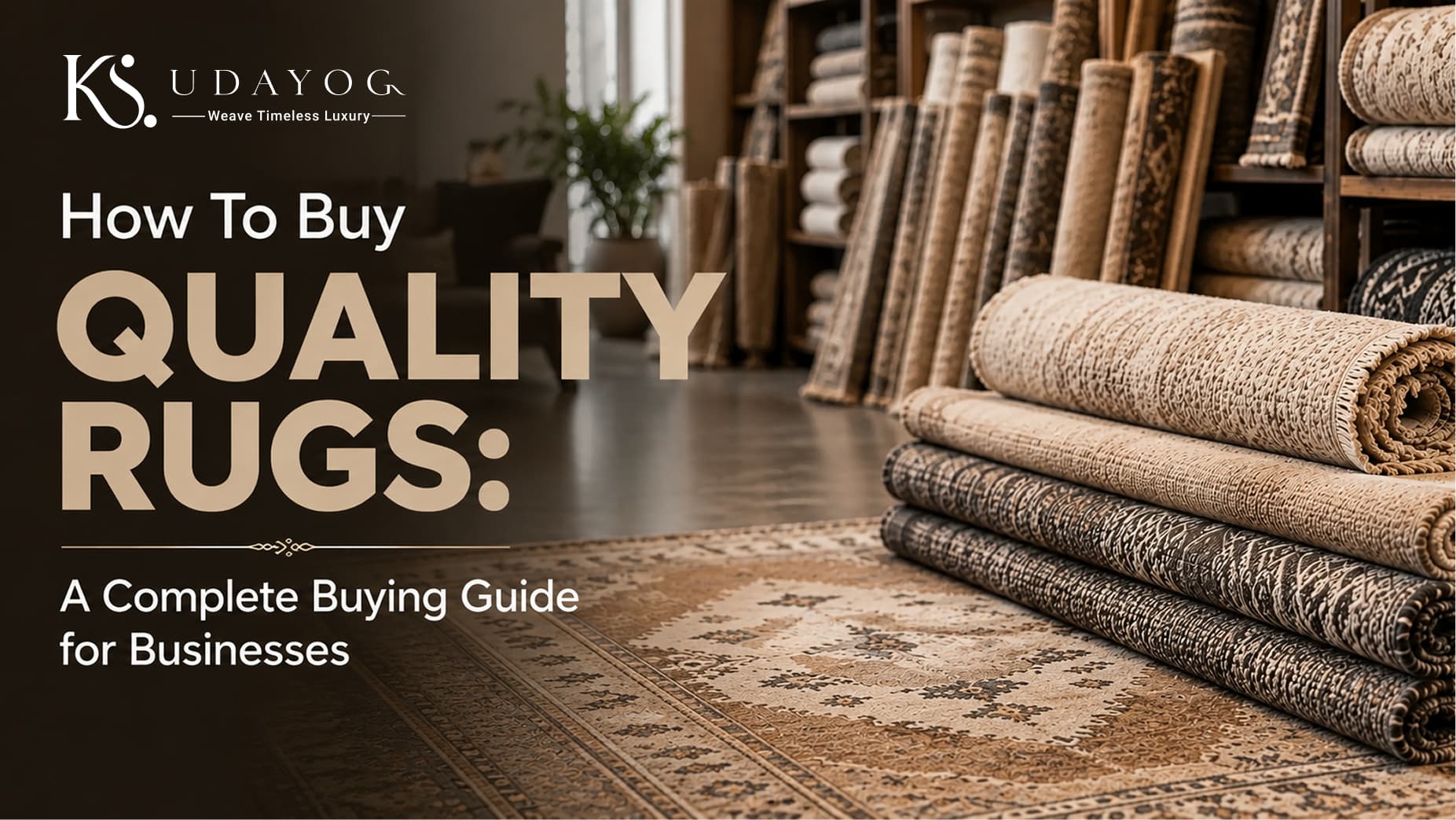
The wrong rug collection can quietly become an expensive mistake for a business. A design may look perfect in a catalogue, but will it handle heavy foot traffic? Will the material match your maintenance needs? Will the quality justify the investment after months of use? These are the questions businesses need to answer before placing a bulk order.
Buying rugs for hotels, offices, retail spaces, or commercial projects is very different from choosing one for a home. Durability, material quality, customization options, supplier reliability, and overall value all play an important role in making the right decision.
So, how do you choose the right rugs that combine beauty and durability without compromising price? Let’s look at some steps that are critical to helping the business buy the right rugs.
How to Buy the Right Rugs for Your Business? Quality, Style And Value
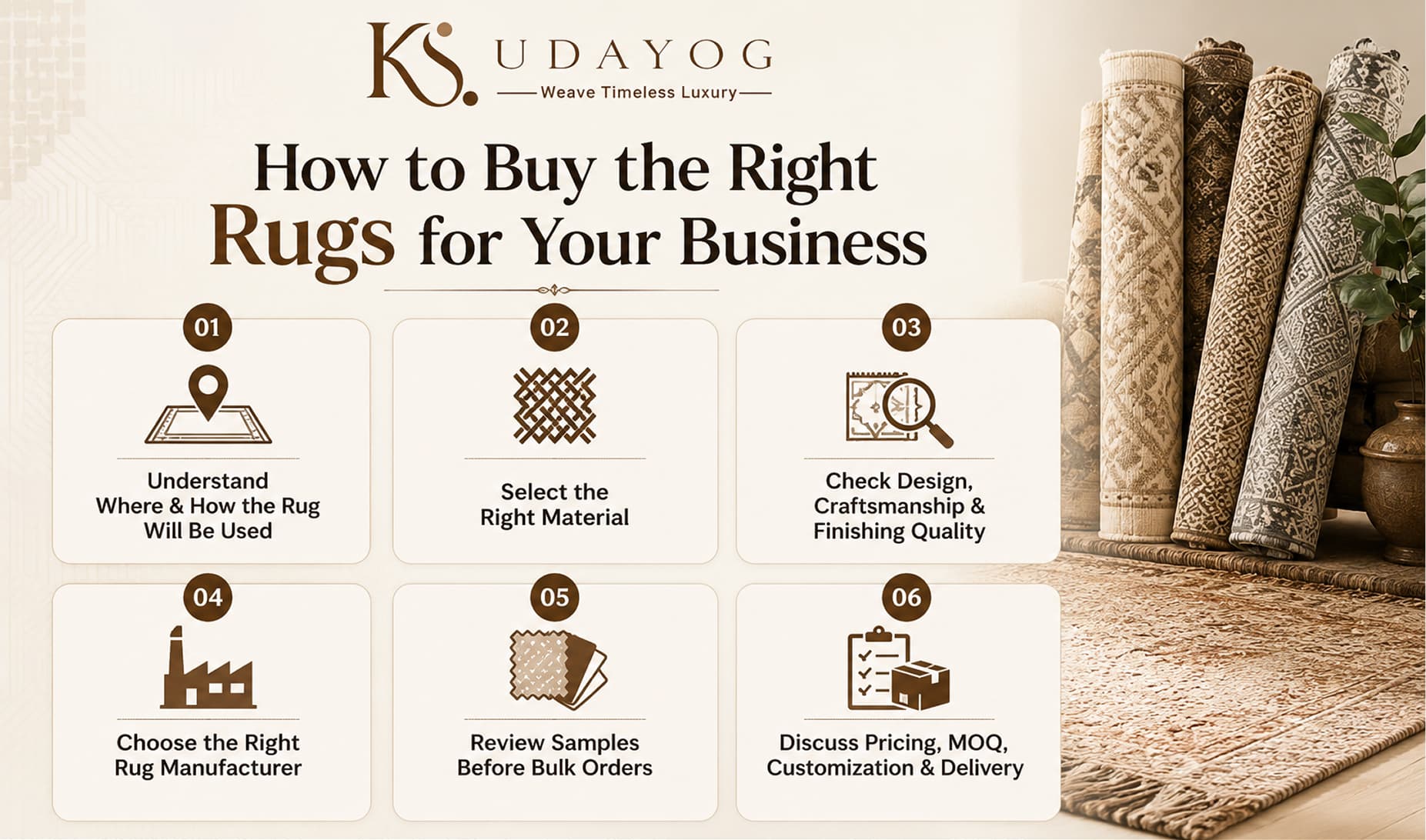
Step 1: Understand Where And How The Rug Will Be Used
Every space has a different purpose, and the rug should match that purpose. A soft, luxurious rug may be perfect for a premium hotel suite or a residential living room, while a high-traffic commercial area may require something more durable and easy to maintain.
Think of the purpose the rugs will serve. Will they be in homes, hotels, offices, restaurants, or retail stores? Will they be walked over by customers? Will you need a rug that has a focus on appearance, comfort, or long-lasting durability? These questions will help you buy the rugs that will serve the purpose and not just look good in the pictures.
Step 2: Select The Right Material For Your Requirements
The material plays a major role in the feel, durability, and overall performance of a rug. Natural materials like wool, cotton, and jute are popular for their texture, comfort, and premium appeal. Wool rugs are often preferred for luxury spaces because of their softness and durability. Cotton rugs offer versatility and easy maintenance, while jute rugs bring a natural and earthy appearance.
Synthetic materials can also be suitable for businesses that need affordable options and products designed for frequent use. The right material depends on your customer expectations, budget, and application. A reliable rug manufacturer can guide you through these choices and help you select materials that match your market.
Step 3: Check Design, Craftsmanship, And Finishing Quality
A beautiful design is important, but craftsmanship decides how the rug looks and performs over time. Small details such as weaving consistency, edge finishing, colour accuracy, and surface texture can make a major difference.
When reviewing rugs, pay attention to how the product feels in your hands. Look at the finishing around the edges. Check whether the colours appear consistent and whether the design matches your expectations. For businesses ordering in bulk, these details become even more important. A single sample may look excellent, but consistent production quality is what creates customer trust.
Step 4: Find A Manufacturer Who Understands Your Business
The manufacturer behind your rugs plays an important role in your buying experience. A reliable manufacturing company not only produce products. It understands different business requirements and helps create solutions according to your market.
For example, a retailer may need multiple designs and sizes to attract different customers. A hotel may require customised rugs that complement its interiors. An exporter may need consistent production standards and proper packaging. An experienced rug manufacturer can support these needs through better production knowledge, design flexibility, and quality management.
Step 5: Review Samples Before Placing Bulk Orders
A sample gives you a better understanding of the actual product. Pictures can show colours and designs, but they cannot always communicate texture, finishing, and material feel. This is why businesses should always review samples before moving towards large orders. A sample allows you to evaluate:
- Material quality
- Design accuracy
- Finishing standards
- Overall appearance
It also gives you the opportunity to discuss improvements with the manufacturer before production begins. This small step can prevent bigger issues in the future.
Step 6: Discuss Pricing, MOQ, Customisation, And Delivery
Once the product quality meets your expectations, it is important to discuss the practical side of purchasing. Every business has different requirements. A small retailer may need flexible quantities, while a distributor or commercial buyer may require large-volume production. Talk clearly about minimum order quantities, pricing structure, custom designs, and delivery timelines before finalising the order. Transparent communication helps both sides understand expectations and creates a smoother buying process. A good manufacturer should provide clarity at every stage, from production planning to final delivery.
Handmade Vs Machine-Made Rugs: Which One Should Businesses Consider?
When buying rugs for a business, the manufacturing process is totally diffrent, and that impact can be found in the final product. Two rugs may look similar at first glance, but their feel, durability, pricing, and overall character can vary depending on how they are made.
When buying rugs for a business, the manufacturing process is totally diffrent, and that impact can be found in the final product. Two rugs may look similar at first glance, but their feel, durability, pricing, and overall character can vary depending on how they are made.
Handmade rugs are created with skilled craftsmanship and careful attention to detail. Each piece shows the touch of the artisan who created it, often giving the rug a unique appearance. These rugs are commonly preferred for luxury hotels, premium homes, boutique spaces, and exclusive collections where design and craftsmanship matter the most.
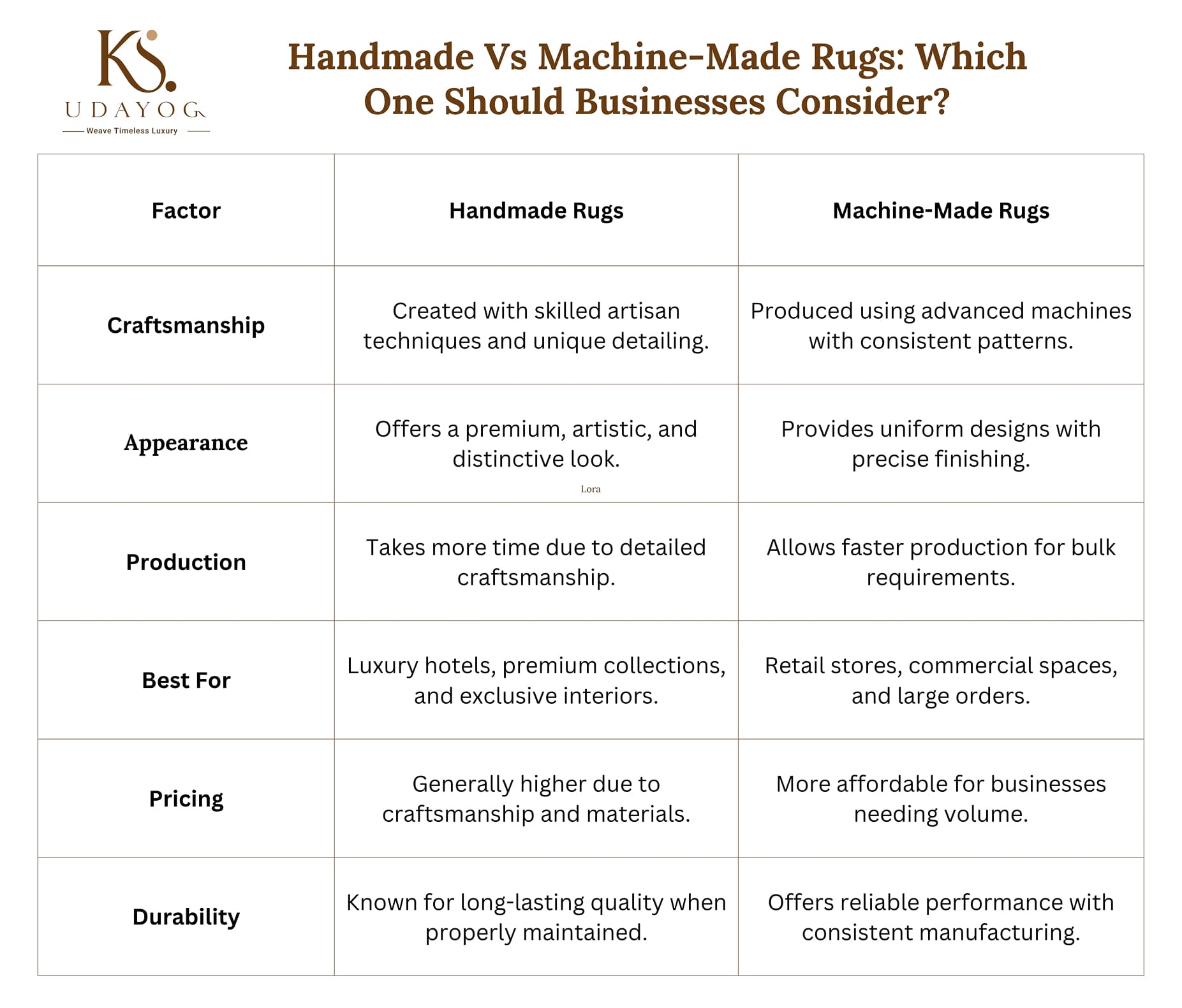
So, which option works better for your business? The answer depends on your requirements.
If you are creating a premium collection where uniqueness, artistic value, and handcrafted appeal are important, handmade rugs can be a great choice. For large-scale retail, hospitality projects, or commercial spaces where consistency and volume are priorities, machine-made rugs may offer practical advantages.
A reliable rug manufacturer can help you understand the difference and recommend options based on your customers, budget, and intended usage. The best choice is not always about handmade or machine-made. It is about finding the rug style and manufacturing process that supports your business goals.
Buying Rugs Directly From A Rug Manufacturer Makes A Difference
Many businesses purchase through multiple channels without knowing where the product is actually made. While this may seem convenient, direct sourcing offers better control and communication. When you work directly with a rug manufacturer, you get a better understanding of:
- Product development
- Material options
- Customisation possibilities
- Production timelines
- Quality standards
This direct connection is especially valuable for businesses that want to build unique collections or maintain consistent product quality.
How KS Udayog Helps Businesses Source Quality Rugs
Every business has its own vision, and rugs should reflect that vision. At KS Udayog, we work with businesses looking for reliable rug manufacturing solutions, including retailers, distributors, hospitality projects, and commercial buyers. Our focus remains on creating rugs and home furnishing products that combine thoughtful designs, skilled craftsmanship, and dependable quality.
From customised requirements to bulk production needs, we help businesses develop collections that match their customers’ expectations. Because the right rug is not only about how it looks. It is about how well it represents your brand.
Final Thoughts
A successful rug purchase begins with understanding what your business and customers truly need. Material, craftsmanship, durability, and manufacturing expertise all contribute to creating products that deliver lasting value. Whether you are expanding a showroom collection, furnishing a commercial space, or sourcing rugs for distribution, careful planning can help you make better decisions. With attention to quality, customisation, and consistency, a trusted rug manufacturer and exporter helps you turn rug ideas into products customers appreciate and remember.
Frequently Asked Questions (FAQs)
How Can I Identify A High-Quality Rug Before Buying?
A high-quality rug can be identified by checking its material, weaving quality, finishing, colour consistency, texture, and durability. Reviewing samples before bulk purchase also helps businesses make better decisions.
Which Rug Material Is Best For Business Use?
The best rug material depends on where it will be used. Wool works well for premium spaces, cotton offers versatility, jute provides a natural look, and synthetic materials can suit areas requiring easy maintenance.
Should Businesses Buy Rugs Directly From Manufacturers?
Buying directly from manufacturers gives businesses better control over quality, customisation, pricing, and production timelines. It also helps create a stronger supply relationship for long-term requirements.
Can Rug Manufacturers Create Customised Designs For Businesses?
Yes, many rug manufacturers offer customised options, such as specific sizes, colours, patterns, and private label collections based on business requirements.
What Factors Should Businesses Consider Before Placing A Bulk Rug Order?
Businesses should consider material quality, manufacturing experience, sample approval, production capacity, minimum order quantity, pricing, and delivery timelines before placing bulk orders.
How Important Is Craftsmanship When Purchasing Rugs?
Craftsmanship directly affects the appearance, durability, and overall value of a rug. Proper weaving, finishing, and attention to detail help ensure consistent quality.