A beautiful rug can instantly make a space feel warmer, more comfortable, and complete. Whether it is placed in a living room, hotel lobby, showroom, or office, a well-maintained rug adds character to the entire area. But over time, dust, stains, spills, and regular foot traffic can slowly affect its appearance.
Different people try various cleaning methods to restore their rugs, but some techniques can damage the fibres, fade the colours, or shorten the product's lifespan.
So, how can you keep your rugs looking fresh without harming their natural beauty? The answer is simple: understand your rug material, follow the correct cleaning process, and provide regular care. With the right approach, your rugs can continue to look beautiful and perform well for years. But how do you clean a rug at home? Let’s learn.
Tips To Clean Rugs At Home: Complete Rug Cleaning Process
Cleaning a rug does not always require expensive treatments. Regular care with the right methods can help remove dirt, maintain texture, and protect the fibres. A little care can protect the fibres, colours, and texture for much longer. Before starting, you can follow these steps to clean your rugs safely at home.
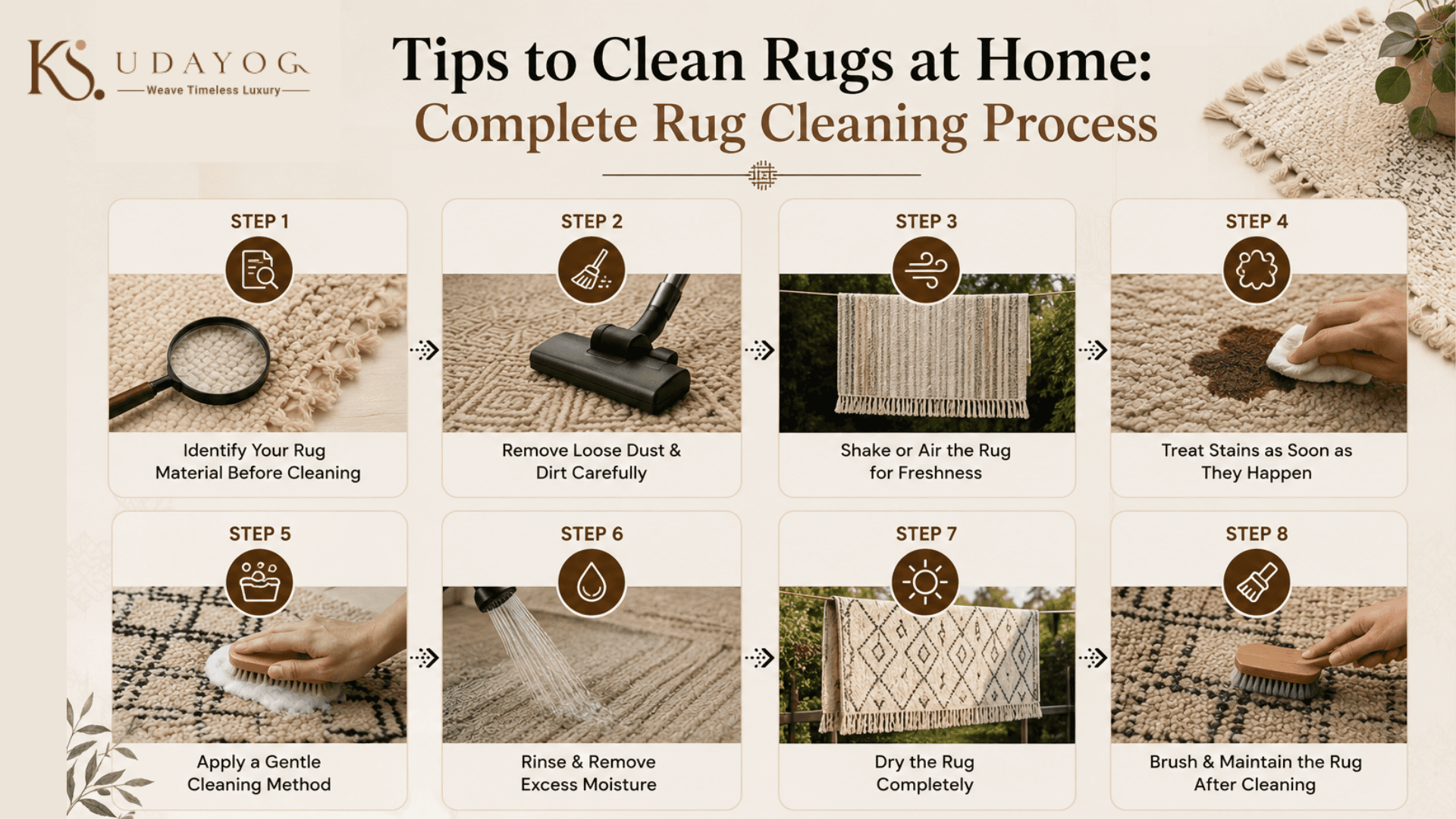
Step 1: Identify Your Rug Material Before Cleaning
Before reaching for any cleaning product, understand what type of rug you have. Every material reacts differently to water, chemicals, and cleaning methods. Wool rugs require gentle handling because their natural fibres can lose softness when exposed to harsh treatments. Jute rugs need extra care because excessive moisture can weaken the fibres. Cotton and synthetic rugs are generally easier to maintain but still require suitable cleaning methods. Check the care instructions provided with the rug or consult your manufacturer if you are unsure. This small step can prevent accidental damage.
Step 2: Remove Loose Dust & Dirt Carefully
Start the cleaning process by removing surface dust and dry particles. Vacuum both sides of the rug to remove dirt trapped between the fibres. Move slowly instead of using aggressive strokes, especially when cleaning handmade rugs or rugs with delicate textures. For rugs placed in high-traffic areas, regular vacuuming prevents dirt from settling deep into the fibres. Waiting too long can make cleaning more difficult and may affect the original appearance of the rug.
Step 3: Shake Or Air The Rug For Freshness
For smaller rugs, gently shake them outdoors to release hidden dust particles. Allowing fresh air to pass through the rug can also help remove trapped odours caused by daily use. However, avoid placing delicate rugs under direct sunlight for extended periods because strong sunlight can fade certain colours over time. A shaded, well-ventilated area is usually a safer option.
Step 4: Treat Stains As Soon As They Happen
Spills are easier to remove when treated immediately. If tea, coffee, food, or any liquid falls on your rug, do not wait for it to dry completely. Take a clean cloth and gently blot the area to absorb the moisture. Avoid rubbing the stain because it pushes the liquid deeper into the fibres and can spread the affected area. For difficult stains, use a cleaning solution recommended for your specific rug material.
Step 5: Apply A Gentle Cleaning Method
Deep cleaning your rug requires patience. Mix a mild cleaning solution with water and test it on a small hidden section first. This helps you check whether the product affects the colour or texture. Once it is safe, gently clean the affected area using a soft cloth or sponge. Avoid soaking the entire rug unless the material specifically allows it, as excessive water can damage fibres and backing.
Step 6: Rinse & Remove Excess Moisture
After cleaning, remove any remaining cleaning solution carefully. Too much moisture left inside the rug can create problems such as bad odour, mould, or fibre weakening. Use a clean damp cloth to remove excess residue and avoid leaving soap deposits behind. The goal is to clean the rug while keeping the fibres protected.
Step 7: Dry The Rug Completely
Proper drying is one of the most important parts of rug cleaning. Place the rug in a clean, well-ventilated space and allow air to circulate from both sides. Do not place furniture on a damp rug or use it before it dries completely. Rushing the drying process can trap moisture inside, which may affect the rug’s quality over time.
Step 8: Brush & Maintain The Rug After Cleaning
Once the rug is completely dry, gently restore its texture by brushing the fibres in their natural direction. Continue with regular maintenance by vacuuming, rotating rugs placed in busy areas, and addressing stains quickly. Consistent care not only keeps your rugs looking attractive but also helps protect the craftsmanship and materials that make them valuable.
Why Understanding Your Rug Material Matters Before Cleaning
Have you ever noticed that the same cleaning method does not work for every rug? A technique that works well for one rug may affect the texture, colour, or durability of another. The reason is simple: every rug material has its own characteristics. Before cleaning, it is important to understand what your rug is made of. The fibres decide how much moisture it can handle, which cleaning products are suitable, and how much care it requires.
Wool Rugs: Wool rugs are known for their softness, warmth, and long-lasting quality. They are often used in premium homes, luxury hotels, and spaces where comfort and elegance matter. Since wool is a natural fibre, it requires gentle cleaning. Avoid harsh chemicals and excessive rubbing, as they can affect the natural texture of the wool. Regular vacuuming and occasional professional cleaning can help maintain their appearance for years.
Cotton Rugs: Cotton rugs are popular because they are lightweight, comfortable, and suitable for everyday spaces. They are often used in bedrooms, living rooms, and casual interiors. These rugs are easier to maintain compared to some natural fibres, but they still need careful handling. Excessive washing or strong cleaning products may affect their colours and softness over time.
Jute Rugs: Jute rugs bring a natural, earthy feel to interiors and are valued for their unique texture. However, jute fibres are more sensitive to moisture. Too much water can weaken the fibres and may lead to changes in shape or texture. Regular dust removal and gentle spot cleaning are usually better options for maintaining jute rugs.
Synthetic Rugs: Synthetic rugs are commonly preferred for areas that experience frequent use because they are generally durable and easier to maintain. They can handle regular cleaning better than some natural fibres, but using unsuitable chemicals or aggressive scrubbing can still affect their appearance. Understanding your rug material helps you select the right cleaning approach and prevents avoidable damage. A little knowledge before cleaning can protect your investment and keep your rugs looking beautiful for much longer.
Professional Cleaning for Rugs: When Should You Consider It?
Regular cleaning at home can help maintain your rug’s appearance, but some situations require professional attention. A rug is made with carefully selected fibres and craftsmanship, and deep cleaning methods should match the material and construction. Using the wrong technique on valuable or delicate rugs may cause more harm than good. Professional cleaning becomes a better option when your rug has:
- Deep stains that do not disappear with regular cleaning
- Heavy dust buildup from frequent use
- Strong odours caused by moisture or long-term usage
- Delicate handmade fibres that require specialised care
- Large sizes that are difficult to clean at home
For businesses such as hotels, showrooms, offices, and commercial spaces, professional maintenance is even more important. These rugs often experience higher foot traffic and require regular care to maintain their appearance. A proper cleaning schedule helps preserve the texture, colours, and overall condition of rugs while reducing the chances of early replacement.
How Businesses Can Maintain Rugs In High-Traffic Areas
Rugs placed in hotels, restaurants, offices, malls, and showrooms experience much more wear compared to residential spaces. Foot traffic, dust, spills, and daily movement can gradually affect their appearance. The good news? Regular preventive care can make a significant difference.
Businesses should create a simple maintenance routine that includes regular vacuuming, quick stain treatment, and periodic inspections. Addressing small issues early prevents them from becoming permanent damage. Rugs placed near entrances may require more frequent cleaning because they collect more dirt from outside. Rotating rugs in certain areas can also help distribute wear evenly and maintain a balanced appearance.
For commercial spaces, choosing rugs based on usage requirements is equally important. A beautiful rug should not only complement the interior but also perform well in the environment where it is placed. With proper maintenance and suitable cleaning practices, rugs can continue enhancing business spaces while maintaining their original appeal for years.
Common Things That Can Damage Rug Fibers
A rug can remain beautiful for years when it receives proper care. However, certain cleaning habits and daily practices can slowly weaken the fibres without you noticing. One of the most common mistakes is using too much water during cleaning. Excess moisture can settle deep inside the rug, affecting the fibres and creating problems like unpleasant odours or mould growth.
- Harsh cleaning chemicals can also cause damage. While they may remove stains quickly, they can fade colours, reduce softness, and affect the natural feel of materials like wool, cotton, or jute.
- Aggressive scrubbing is another thing to avoid. When stains appear, many people rub the area with force, but this can push dirt deeper into the fibres and disturb the rug’s texture.
- Long exposure to direct sunlight can also affect certain rugs. Strong sunlight may gradually fade colours, especially when the rug is placed near large windows or open areas for extended periods.
- Improper storage can create additional issues. Folding rugs incorrectly, storing them in damp places, or keeping them without proper protection can affect their shape and condition.
Small changes in your cleaning habits can make a big difference. Gentle handling, suitable cleaning methods, and regular maintenance help protect the craftsmanship and extend the life of your rugs.
How KS Udayog Helps Businesses Source Washable & Durable Rugs?
A rug’s durability begins long before it reaches your home, showroom, or commercial space. The materials selected, manufacturing process followed, and attention given to finishing all influence how well a rug performs over time. At KS Udayog, we understand that businesses need rugs that combine appearance with lasting performance. Retailers, hotels, interior designers, and commercial buyers often have different requirements, and every space demands a different approach.
Our focus is on creating rugs and home furnishing products that meet diverse needs through skilled craftsmanship, thoughtful designs, and consistent manufacturing standards. From customised designs to bulk requirements, we work with businesses to develop products that match their expectations while maintaining attention to detail. Because a well-made rug is not only meant to decorate a space. It is created to remain a valuable part of that space for years.
Final Remarks
A rug is an investment that adds comfort, style, and personality to any space. But its beauty depends on the care it receives after purchase. The right cleaning methods, regular maintenance, and understanding of rug materials can help protect the fibres and keep the product looking fresh for years. Whether you have rugs at home or manage them in hotels, showrooms, or commercial spaces, small care practices can make a noticeable difference. With a trusted rug manufacturer, you can design rugs with attention to materials, craftsmanship, and lasting performance. With proper maintenance and thoughtful care, every rug can continue to enhance your space while preserving the quality behind its making.
Frequently Asked Questions (FAQs)
How Often Should Rugs Be Cleaned At Home?
Rugs should be vacuumed regularly to remove dust and dirt. Deep cleaning frequency depends on the rug material, usage, and location. High-traffic areas may require more frequent maintenance.
What Is The Safest Way To Clean A Rug Without Damaging Fibres?
The safest method is to identify the rug material first, remove loose dust, use gentle cleaning solutions, avoid harsh scrubbing, and ensure proper drying after cleaning.
Can I Wash All Types Of Rugs With Water?
No, every rug material reacts differently to moisture. Wool and jute rugs require extra care, while some cotton and synthetic rugs may handle moisture better. Always check the recommended cleaning method.
How Can I Remove Stains From Rugs Without Affecting The Colour?
Treat stains quickly by gently blotting the affected area with a clean cloth. Avoid rubbing and test any cleaning solution on a hidden area before applying it.
How Do I Maintain Rugs Placed In Hotels And Commercial Spaces?
Commercial rugs require regular vacuuming, quick stain treatment, scheduled cleaning, and periodic inspection to maintain their appearance and durability.
Why Is Professional Rug Cleaning Sometimes Necessary?
Professional cleaning is recommended for deep stains, delicate handmade rugs, large commercial rugs, or situations where regular home cleaning methods may not be suitable.