You can spend hours choosing the perfect furniture, wall colours, and décor, yet your room may still look unfinished. Sometimes, the missing piece is not another cushion or a decorative lamp but a premium rug that actually fits the space.
The wrong rug size can make a spacious living room feel disconnected, leave your bedroom looking unbalanced, or make your dining area less practical. The tricky part? A rug can look beautiful in a product photo but feel completely different once you bring it home.
A small rug may leave your sofa and chairs floating awkwardly around it, while an oversized one can cover too much flooring and crowd the arrangement. Getting the measurements right before buying can save you money, frustration, and the hassle of replacing the rug later.
So, how do you know whether to choose a 5 × 7-foot rug, a 6 × 9-foot option, or something larger?
The answer depends on your room dimensions, furniture placement, and how you use the space every day. This guide explains how to find the right rug size for every room, with practical measuring tips and placement ideas to help you make a confident choice.
Why Does Rug Size Matter?
Rug size influences how furniture fits together and how spacious a room feels. The right dimensions can define seating areas, add comfort underfoot, and create a more coordinated interior without overwhelming the flooring.
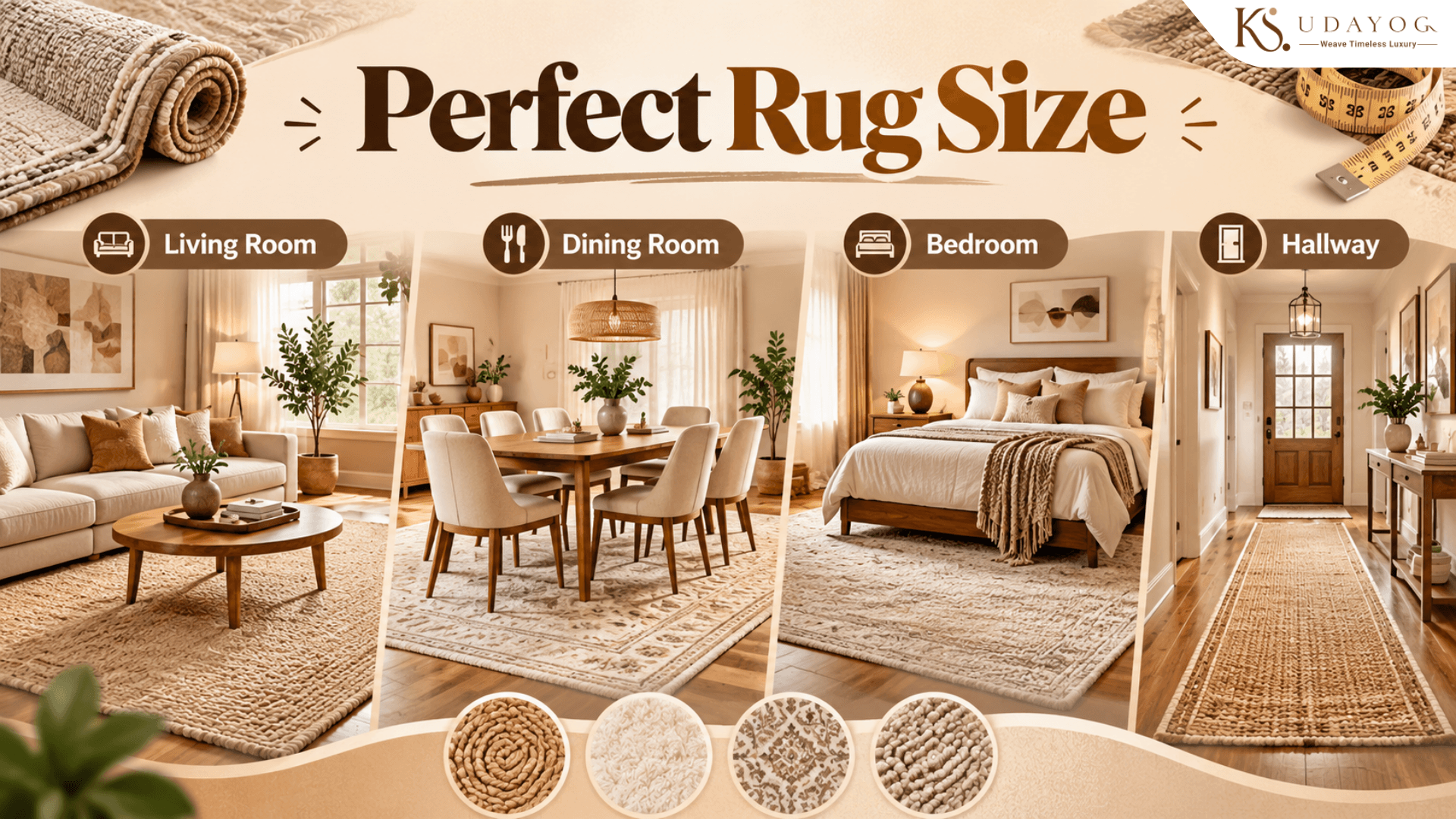
Here is why choosing the correct rug size matters:
- Better Furniture Placement: A well-sized rug connects sofas, chairs, beds, and tables into a unified arrangement.
- Clear Room Zones: Rugs help separate seating, dining, and work areas in open-plan homes.
- Greater Comfort: Suitable dimensions provide a soft surface where people walk, sit, or relax.
- Balanced Proportions: The rug complements the furniture and room dimensions rather than looking too small or too large.
- Practical Floor Coverage: The right placement protects frequently used areas while leaving enough space for everyday movement.
How To Measure A Room Before Choosing A Rug
Measure your room and furniture before buying a rug. This helps you compare area rug sizes and determine how much flooring should remain visible around the edges.
Follow these steps to find the right dimensions:

- Measure The Room: Record its length and width using a measuring tape.
- Measure The Furniture: Note the dimensions of sofas, beds, dining tables, and other large pieces.
- Choose The Placement: Decide whether the rug should sit beneath furniture, accommodate its front legs, or cover an open area.
- Mark The Dimensions: Use masking tape to outline the proposed rug size on the floor.
- Check The Clearance: Make sure doors can open, chairs can move, and walkways remain unobstructed.
For example, if your seating area measures 10 × 12 feet, an 8 × 10 ft rug may work well, depending on the sofa arrangement and the amount of flooring you want to leave visible.
How To Choose The Right Rug Size For Each Room
Each room needs a rug that suits its furniture, available floor space, and everyday use. The following measurements are common starting points; check your room dimensions before making a final decision.
1. Living Room Rug Sizes
Living room rugs should connect the sofa, armchairs, and coffee table without covering too much of the floor. The ideal size depends on the seating arrangement and the distance between furniture pieces.
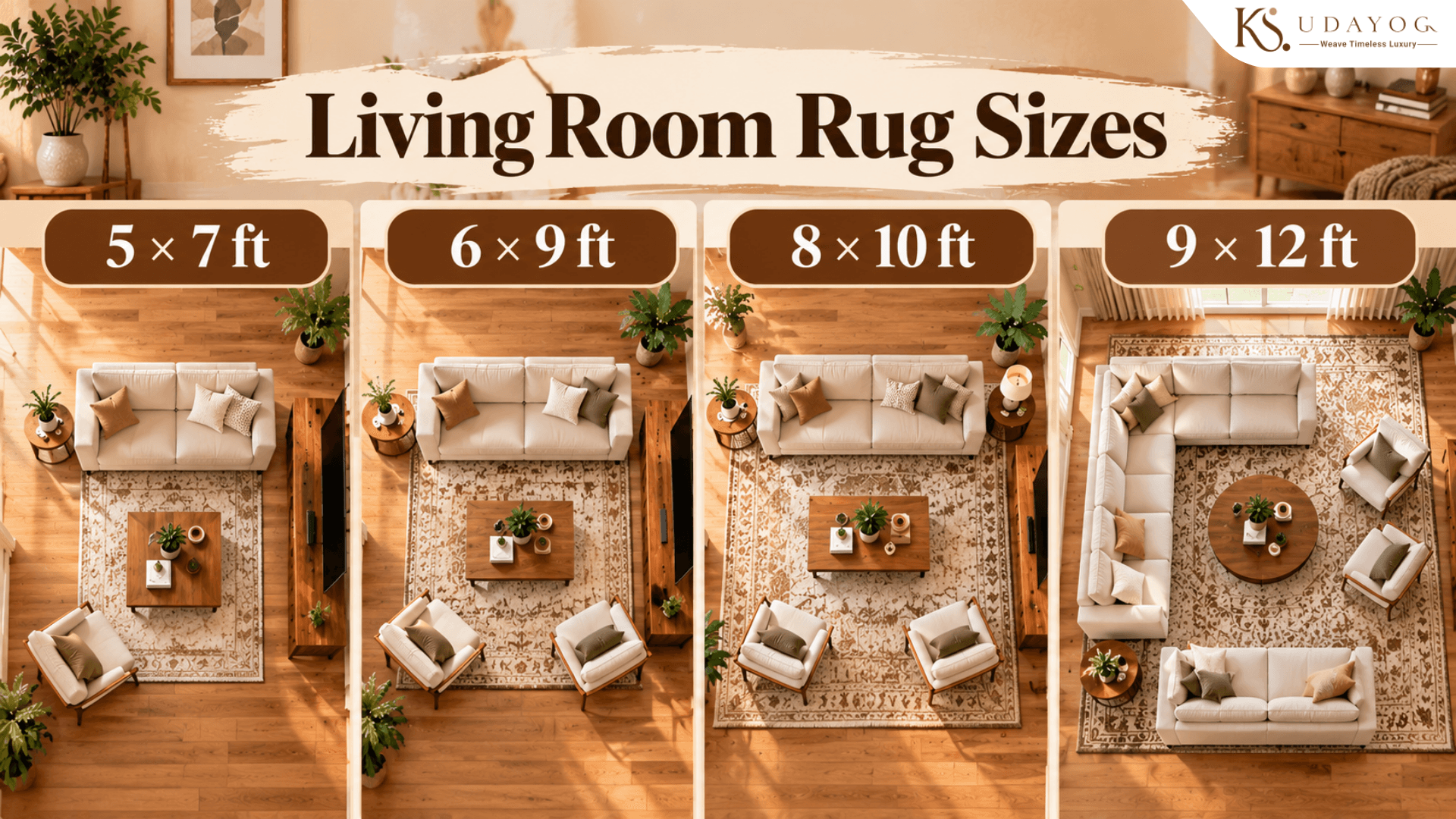
Recommended Living Room Rug Sizes
- 5 × 7 ft: Suitable for a compact seating area, a small sofa, and a coffee table.
- 6 × 9 ft: Works for some medium-sized living rooms where the rug can accommodate the coffee table and the front legs of the sofa.
- 8 × 10 ft: A practical starting point for many medium-sized seating arrangements, including a sofa and one or two chairs.
- 9 × 12 ft: Often suits spacious living rooms where the rug can fit most or all seating furniture.
How to position it: For an 8 × 10 ft rug, place the front legs of the sofa and armchairs on the rug while keeping their rear legs on the floor, if the layout permits. With a 9 × 12 ft rug, you may be able to position all furniture legs on the rug.
Practical tip: Measure the complete seating arrangement before choosing between an 8 × 10 ft and a 9 × 12 ft rug. The larger option is not automatically better if it leaves little visible flooring around the edges.
2. Bedroom Rug Sizes
Bedroom rugs add warmth underfoot and create a defined area around the bed. Choose dimensions based on the bed size, bedside tables, and available walking space.

Recommended Bedroom Rug Sizes:
- 3 × 5 ft: Suitable for a small bedside area or a compact single-bed room.
- 5 × 8 ft: Can work beneath part of a single or double bed in a smaller bedroom.
- 8 × 10 ft: A common starting point for a queen bed, allowing the rug to extend beyond the sides and foot in many layouts.
- 9 × 12 ft: Often suits a king bed in a spacious bedroom, providing more coverage around the bed.
How to position it: An 8 × 10 ft rug can be placed beneath the lower portion of a queen bed, with its edges extending beyond the sides and foot. In a larger bedroom, a 9 × 12 ft rug may accommodate a king bed and create a more generous soft surface around it.
You can also use two 2 × 6 ft runners on either side of the bed if a large area rug does not fit your room.
Practical tip: Check the bed frame's actual dimensions and decide whether the bedside tables should sit on or off the rug. This affects how much coverage you need.
3. Dining Room Rug Sizes
Dining room rugs should accommodate the table and chairs, including when the chairs are pulled back. If the rug is too small, chair legs may catch on the edges during meals.

Recommended rug sizes:
- 5 × 8 ft: May suit a compact dining table for four, depending on its dimensions and chair clearance.
- 6 × 9 ft: Can accommodate some medium-sized rectangular tables and their chairs.
- 8 × 10 ft: Often works for larger dining tables for six, depending on the table shape and seating arrangement.
- 9 × 12 ft: May suit a spacious dining area with a long table and several chairs.
How to position it: Measure the dining table first, then allow approximately 24–30 inches of additional rug space on every side as a starting point. This helps keep the chairs on the rug when people pull them out.
For example, a table measuring 3 × 6 ft may need a rug around 7 × 10 ft or larger to provide comfortable chair clearance. Check the actual layout before choosing the closest available rug size.
Practical tip: A low-pile rug is often easier to use under dining chairs. Choose a material that suits your cleaning needs, particularly if spills are common.
4. Hallway And Entryway Rug Sizes
Hallways and entryways usually work better with narrow rugs or runners than with large rectangular area rugs. The size should suit the walking path without obstructing doors.

Recommended rug sizes:
- 2 × 3 ft: Suitable for a small entrance or the space directly inside a doorway.
- 2 × 6 ft: Works for a short, narrow hallway or a small entry passage.
- 2.5 × 8 ft: A useful option for a longer hallway with enough width.
- 3 × 10 ft: May suit a spacious, extended hallway when the available floor area permits.
How to position it: For a 2.5 × 8 ft runner, place it along the centre of the hallway and leave a visible strip of flooring on both sides. For an entryway, a 2 × 3 ft rug can cover the main standing area without reaching too close to the door.
Practical tip: Measure the hallway width and the door clearance. Choose a flat, stable rug and a suitable non-slip underlay where needed to help reduce movement and tripping risks.
5. Home Office Rug Sizes
A home office rug can define your workspace and make the area more comfortable. Its dimensions should accommodate the desk, chair, and movement required during work.

Recommended rug sizes:
- 3 × 5 ft: Suitable for a compact desk area or a small reading corner.
- 5 × 7 ft: Can work beneath a desk and chair in a smaller office.
- 6 × 9 ft: Offers more coverage for a desk, chair, and nearby furniture.
- 8 × 10 ft: May suit a spacious home office with a larger desk and a separate seating area.
How to position it: Place a 5 × 7 ft rug so the desk and chair fit within the usable area, if possible. Before buying, move your chair backwards and forwards over the proposed rug outline to check that it will not catch on the edges.
Practical tip: Choose a low-pile rug for a workspace with a rolling chair. A thick or uneven surface can make chair movement difficult.
6. Kids' Rooms And Play Areas
Rugs in children's rooms should provide enough space for play while leaving room for beds, storage units, and safe movement. Choose the dimensions according to the main activity area.

Recommended Kids' Rooms And Play Areas Rug Sizes:
- 3 × 5 ft: Suitable for a small reading corner or play area beside a bed.
- 5 × 7 ft: Works for a compact play zone with a few toys or floor activities.
- 6 × 9 ft: Provides a larger play surface in a medium-sized bedroom.
- 8 × 10 ft: May suit a spacious playroom with room for toys, activities, and low furniture.
How to position it: A 5 × 7 ft rug can define a small play zone, while a 6 × 9 ft rug offers more room for floor activities. Use an 8 × 10 ft option only if it leaves enough space for storage, doors, and movement.
Practical tip: Choose a rug that is easy to clean and lies flat. Secure the edges and use a compatible non-slip underlay where appropriate.
Common Area Rug Sizes And Where They Work
Rug dimensions are usually listed in feet, although exact measurements can vary between manufacturers. Use this table to shortlist options before checking the layout of your room.

Note: These are common rug dimensions, not fixed room-size rules. Always compare the rug measurements with your furniture and available floor space.
How Much Floor Should A Rug Cover?
The amount of floor a rug should cover depends on the room's proportions, furniture layout, and intended use. Instead of following one universal coverage percentage, use these practical guidelines.
- Living Rooms: Leave visible flooring around the rug while ensuring it connects the main seating pieces. An 8 × 10 ft rug is a useful starting point for many medium-sized arrangements.
- Bedrooms: Choose an 8 × 10 ft rug for many queen-bed layouts or consider 9 × 12 ft for a larger king-bed arrangement.
- Dining Rooms: Allow approximately 24–30 inches beyond the table edges to accommodate pulled-out chairs.
- Hallways: A 2.5 × 8 ft runner can suit a longer passage, provided it leaves enough clearance on both sides.
- Open-Plan Rooms: Use a 6 × 9 ft or 8 × 10 ft rug to define a seating zone, depending on the furniture arrangement.
For the most reliable result, mark the proposed dimensions on the floor with masking tape. Check the layout from the doorway and from the main seating or walking areas before ordering.
How To Position Furniture On A Rug?
The correct furniture arrangement helps the rug look intentional and keeps the room practical. Choose a placement style that suits the rug dimensions and the furniture's position.

- Front Legs On The Rug
This arrangement works well in many living rooms. With a 6 × 9 ft or 8 × 10 ft rug, place the front legs of the sofa and armchairs on the rug while leaving the rear legs on the floor, provided the furniture fits comfortably.
- All Furniture Legs On The Rug
A larger rug, such as a 9 × 12 ft option, may accommodate the entire seating arrangement in a spacious living room. Measure the sofa, chairs, and coffee table together before choosing this layout.
- Bed Partly On The Rug
An 8 × 10 ft rug can work beneath the lower portion of a queen bed in many bedrooms. For a king bed in a larger room, a 9 × 12 ft rug may offer more coverage beyond the sides and foot.
- Dining Table And Chairs On The Rug
For a compact dining table, a 5 × 8 ft rug may work if it provides sufficient clearance. Larger tables may need a 6 × 9 ft, 8 × 10 ft, or bigger rug. Make sure the chairs remain on the rug when pulled out.
Final Advice
To summarize, the right rug size depends on your room measurements, furniture arrangement, and daily needs. An 8 × 10 ft rug may suit many living rooms and queen bedrooms, while a 9 × 12 ft option can work in larger spaces.
Smaller rugs and runners are often more suitable for entryways, compact bedrooms, and narrow hallways.
Measure your furniture, outline the proposed dimensions on the floor, and check walking space before making a purchase. These steps help you choose a rug that looks balanced and serves its intended purpose.
Explore rug options for every room in your home, and choose dimensions that bring comfort, practicality, and visual balance to your space.
Frequently Asked Questions (FAQs)
What Is The Most Common Area Rug Size?
Common sizes include 5 × 7 ft, 6 × 9 ft, 8 × 10 ft, and 9 × 12 ft. The best choice depends on your room dimensions and furniture arrangement.
What Size Rug Is Best For A Living Room?
An 8 × 10 ft rug is a useful starting point for many medium-sized living rooms. A 6 × 9 ft rug may suit a smaller seating arrangement, while a 9 × 12 ft option can work in a spacious room.
What Size Rug Is Best For A Queen Bed?
An 8 × 10 ft rug is a common starting point for a queen bed. Measure the bed, bedside tables, and available floor space to confirm whether it provides enough coverage.
What Size Rug Should Go Under A Dining Table?
A 5 × 8 ft rug may suit some compact tables, while larger dining arrangements may need a 6 × 9 ft or 8 × 10 ft rug. Aim to leave around 24–30 inches beyond the table edges for chair movement.
What Size Rug Is Best For A Hallway?
A 2 × 6 ft runner can work in a short passage, while a 2.5 × 8 ft or 3 × 10 ft runner may suit a longer hallway. Measure the width and door clearance before buying.
How Much Space Should Be Left Between A Rug And The Wall?
Leave a visible border of flooring around the rug wherever possible. The amount depends on room size, furniture placement, and personal preference rather than one fixed measurement.
Is A 5 × 7 Ft Rug Big Enough For A Living Room?
A 5 × 7 ft rug can work in a compact living room or beneath a coffee table. It may be too small for a large sofa arrangement, where a 6 × 9 ft or 8 × 10 ft rug could be more suitable.
How Can I Check A Rug Size Before Buying?
Mark the proposed dimensions on the floor with masking tape. Place your furniture around the outline and check walking paths, door clearance, and chair movement before ordering.