A bulk doormat order starts long before the finished pieces are packed for shipment. The choice of fiber, production method, backing, artwork, dimensions, and finishing can all affect the product’s appearance, durability, production cost, and suitability for different retail markets.
For wholesale and B2B door mat buyers in India, this manufacturing knowledge is useful when comparing doormat suppliers or developing a new doormat collection. Indian doormat manufacturers commonly work with natural coir, rubber, PVC-backed constructions, tufting, weaving, moulding, printing, and custom designs, giving businesses plenty of scope for different product lines.
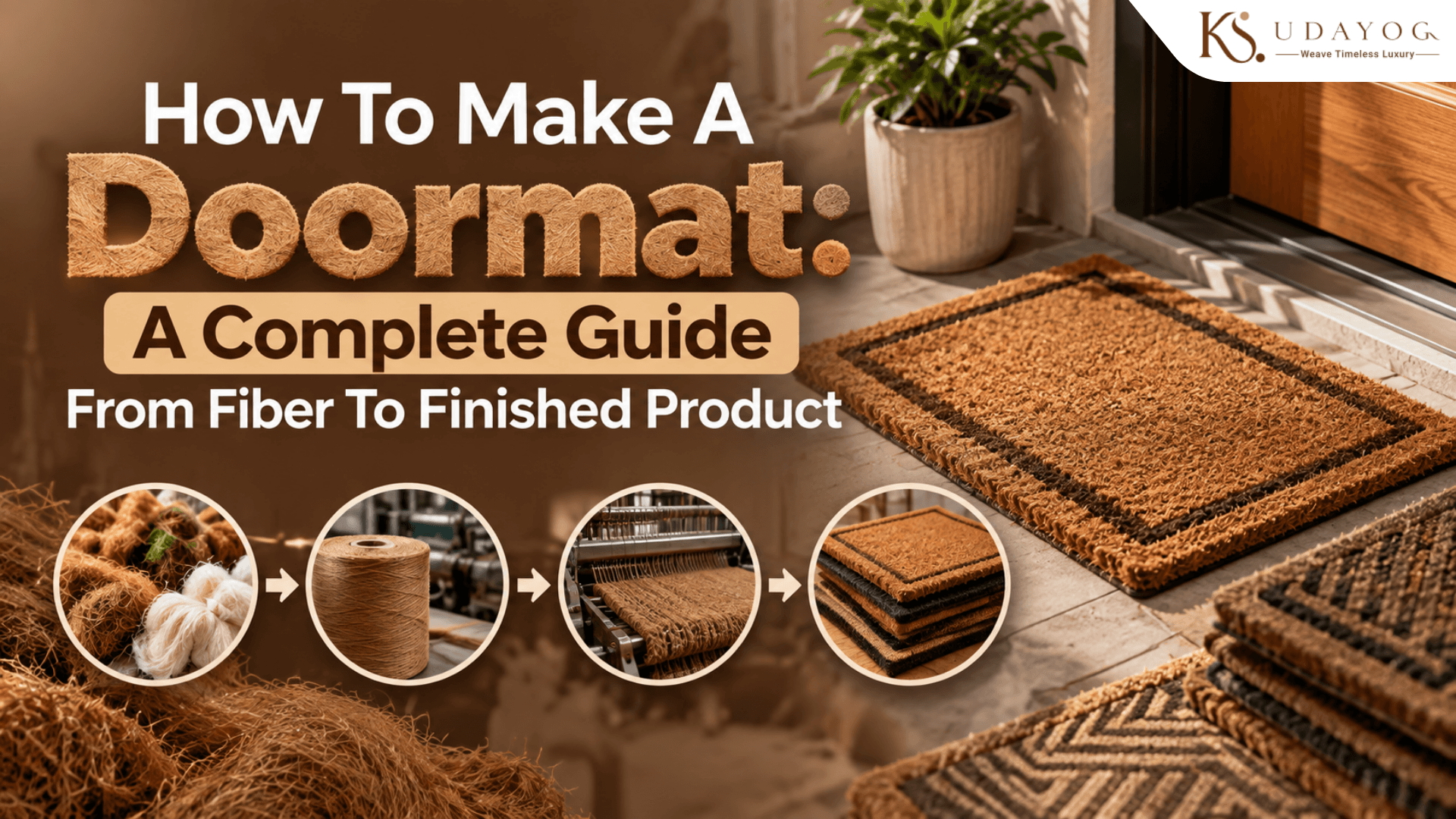
This guide takes you through how a doormat is made, from raw material preparation to the finished product, while explaining the production stages that matter for wholesale sourcing, private-label collections, and bulk doormat manufacturing.
What Materials Are Used To Make A Door Mat?
The first step in making a doormat is selecting a material that matches its intended use. Indoor mats may prioritize softness and absorbency, while outdoor mats generally require stronger scraping ability, weather resistance, and a durable backing.
- Coir Door Mat: Natural coconut fibers create coarse, durable surfaces that effectively scrape dirt from footwear.
- Cotton Door Mat: Soft cotton fibers provide comfortable surfaces with good absorbency for indoor entrances.
- Polyester Door Mat: Polyester fibers offer durable, colorful surfaces suitable for decorative and everyday applications.
- Polypropylene Door Mat: Polypropylene provides durable, stain-resistant surfaces suitable for busy residential and commercial entrances.
- Rubber Door Mat: Rubber construction provides strong durability, traction, and weather resistance for demanding outdoor areas.
- PVC Door Mat: PVC offers moisture resistance, easy cleaning, and versatile designs for various entrance applications.
- Microfiber Door Mat: Microfiber surfaces provide softness and strong moisture absorption for indoor entryways and bathrooms.
- Recycled Fibers Door Mat: Recycled fibers create practical door mats while supporting material reuse and sustainability goals.
Common materials include:
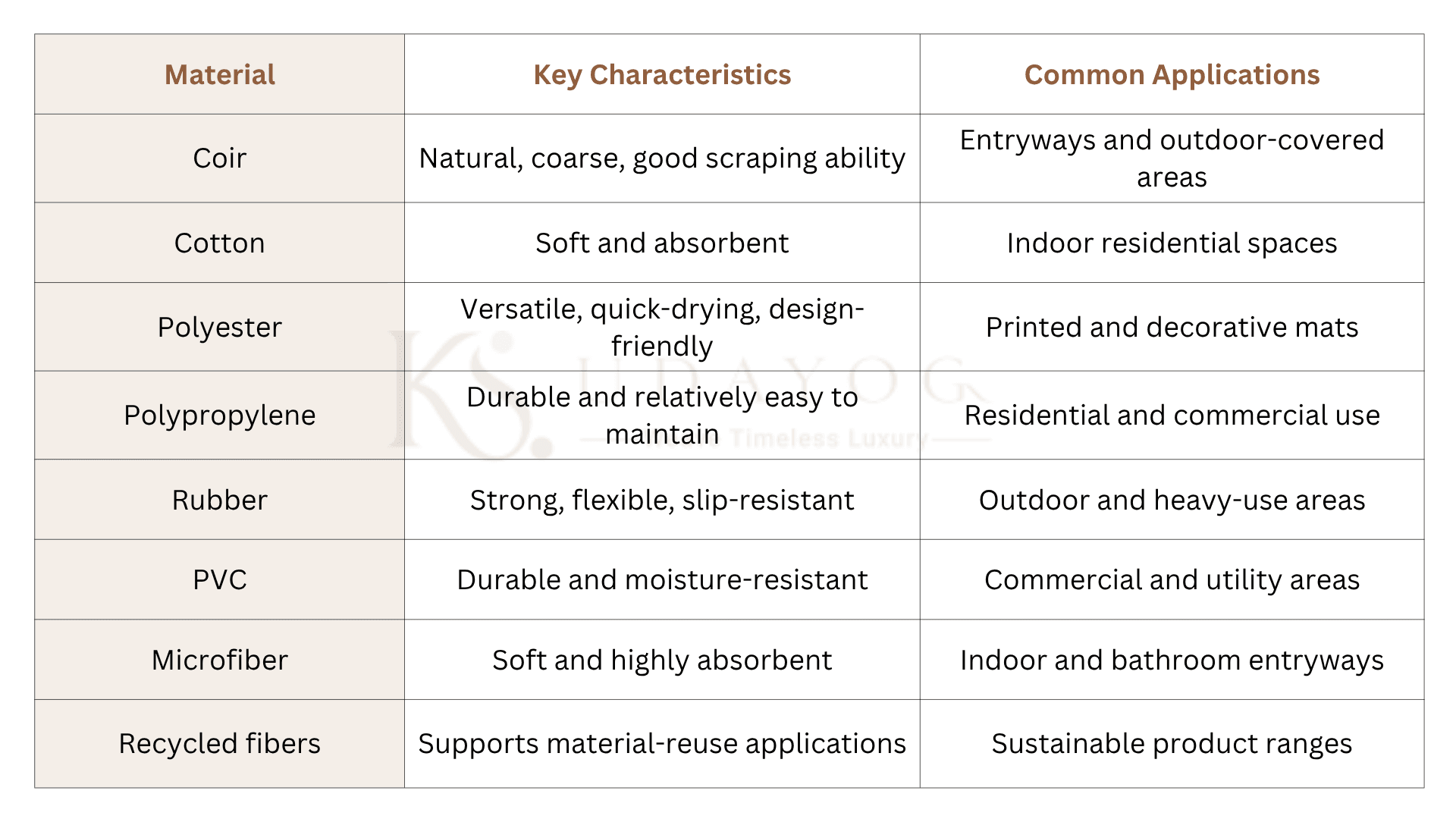
Material selection should consider foot traffic, moisture exposure, cleaning requirements, construction method, price target, and expected service conditions.
How To Create A Doormat: Step-By-Step Door Mat Manufacturing Process
The exact production method varies according to material and construction, but commercial doormat manufacturing generally follows a sequence of material preparation, surface formation, backing, cutting, finishing, inspection, and packaging.
1. Select The Fiber And Raw Materials
Production begins with choosing the appropriate fiber or material according to the product specification.
The manufacturer considers:
- Fiber type
- Fiber length
- Yarn characteristics
- Color requirements
- Surface texture
- Absorbency
- Durability requirements
- Intended application
- Target price
- Required quantity
For example, a coarse natural fiber may be selected when scraping dirt from footwear is the primary purpose, while softer synthetic fibers may be preferred for decorative indoor mats.
2. Clean And Prepare The Fibers
Natural and textile fibers may require cleaning and preparation before they enter the main production process.
Depending on the material, preparation can involve removing unwanted particles, opening compressed fibers, sorting materials, blending different fibers, or preparing them for spinning.
The objective is to create a suitable and workable raw material for the selected manufacturing method.
3. Convert Fibers Into Yarn When Required
Some doormats require yarn rather than loose fibers.
The prepared fibers can undergo spinning or other yarn-forming processes to achieve the required thickness, strength, texture, and appearance.
Yarn specifications can influence:
- Surface density
- Texture
- Pattern definition
- Pile appearance
- Durability
- Overall product weight
Not every doormat requires this stage because certain needle-punched, molded, or fiber-based products can use materials differently.
4. Dye Or Prepare The Required Colors
If the product requires colored yarn or fibers, color preparation takes place before or during the appropriate production stage.
Manufacturers need to maintain the approved color specification across production batches. This becomes particularly important for wholesale buyers ordering multiple sizes or repeat batches.
Custom colors may also be developed according to an approved sample or color reference.
5. Form The Doormat Surface
The prepared material is then converted into the actual mat structure.
The method depends on the product:
- Weaving: yarns are interlaced to form the mat.
- Tufting: yarn is inserted into a backing to create the surface.
- Needle punching: fibers are mechanically interlocked.
- Braiding: strips or yarns are arranged into braided structures.
- Molding: material is formed inside a mold to create the required structure.
This stage has a major influence on the mat's texture, density, appearance, and performance.
6. Create The Required Pattern Or Design
Doormats can be produced in solid colors, stripes, geometric patterns, decorative motifs, printed artwork, logos, or customized designs.
Door mat designs may be created through colored yarns, dyed fibers, printing, woven patterns, tufted patterns, embossed surfaces, and molded textures.
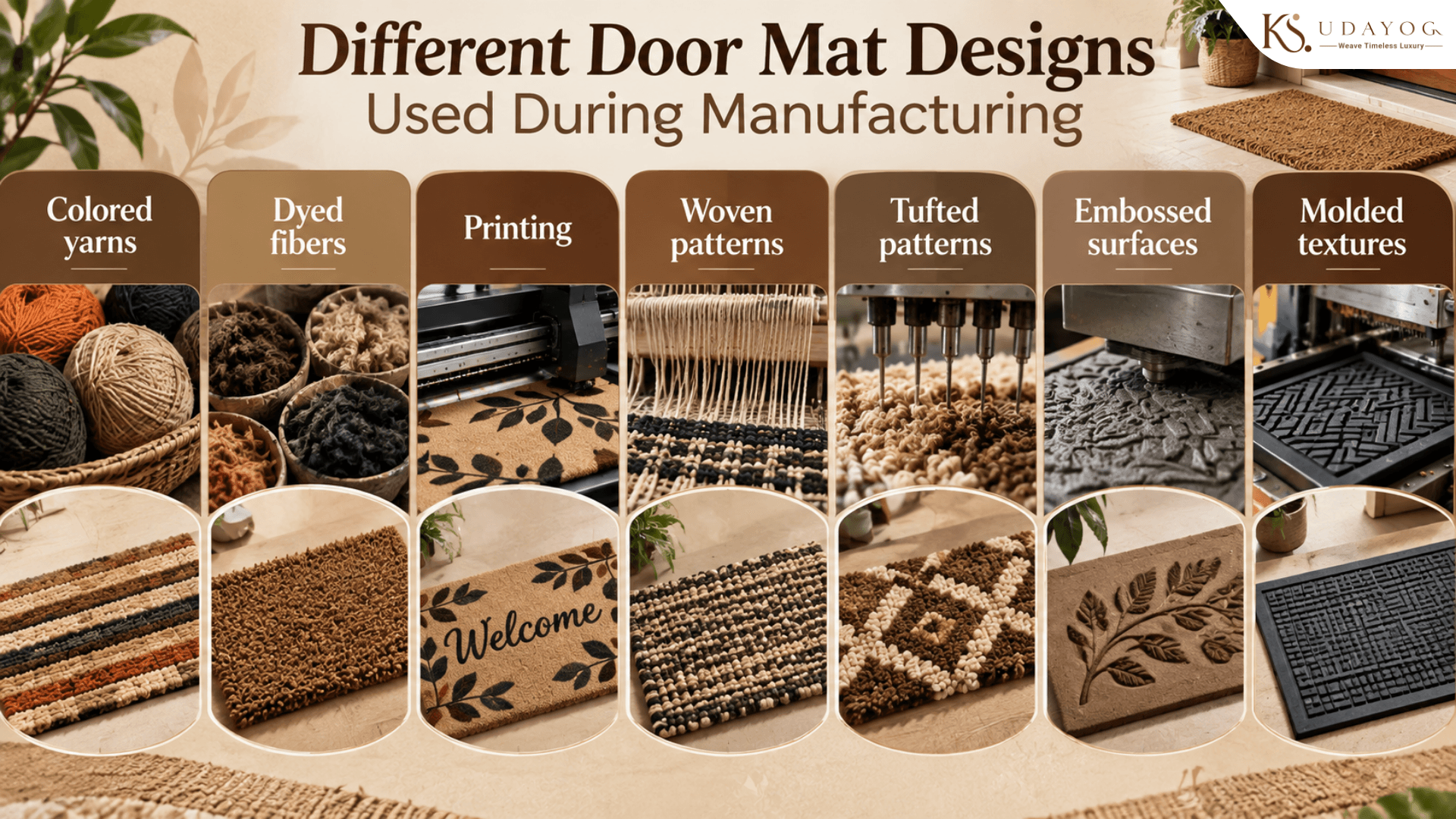
For customized wholesale products, the design should normally be approved before bulk production begins.
7. Add The Backing
Backing is an important part of doormat construction because it can influence grip, stability, moisture handling, and overall durability.
Common backing materials include:
- Rubber
- PVC
- Latex
- Textile Backing
- Other Synthetic Backing Systems
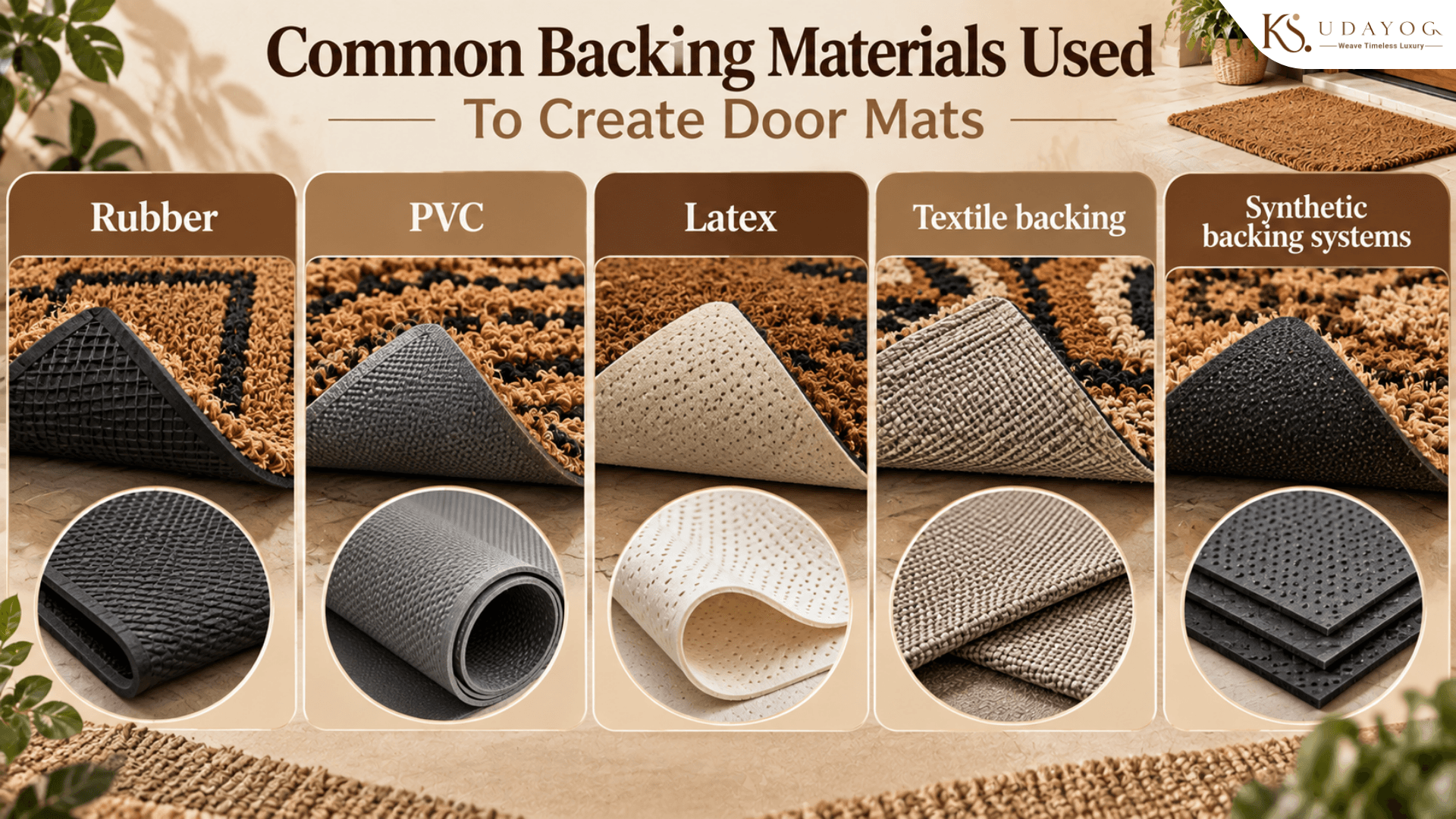
The backing method depends on the construction. It may be bonded, coated, laminated, stitched, or formed as part of the manufacturing process.
A suitable backing should match the intended surface and use conditions.
8. Cut The Mat To The Required Size
Once the main construction is complete, larger material or continuous production rolls can be cut into individual doormats.
Typical specifications may include length, width, thickness, pile height, shape, and edge dimensions.
For wholesale production, dimensional accuracy is particularly important because retailers may need multiple sizes to match predefined product specifications.
9. Finish The Edges
The unfinished edges are then treated to improve appearance and reduce the possibility of fraying or material separation.
Depending on the construction, edge finishing may include overlocking, binding, stitching, taping, trimming, and heat treatment for suitable synthetic materials.
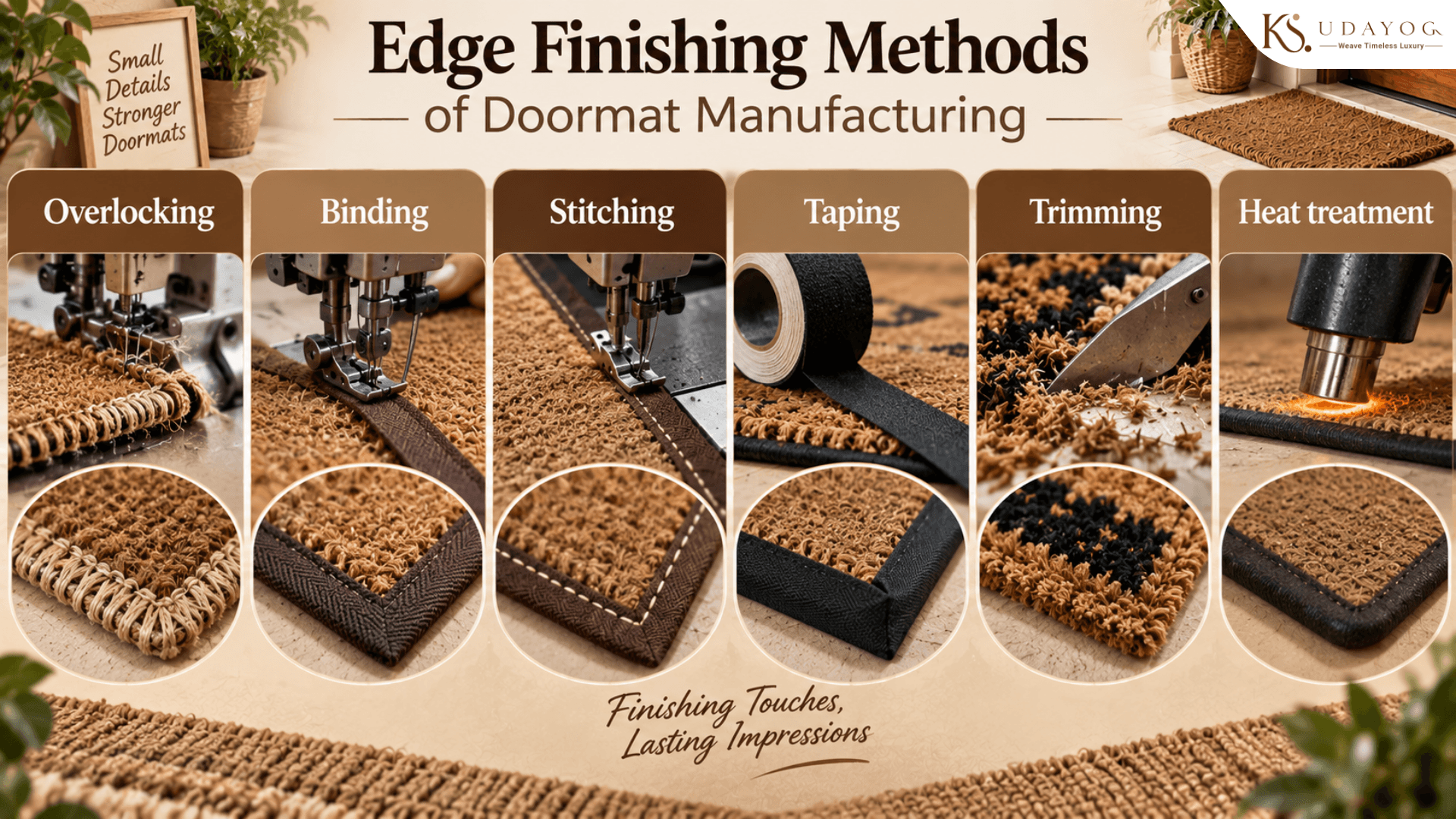
The finishing method should match the mat's construction and material.
10. Complete Surface Finishing
Additional finishing may be performed to achieve the desired surface appearance and feel.
This can include trimming loose fibers, brushing the surface, removing excess material, cleaning the finished product, or applying other suitable finishing treatments.
The exact process depends heavily on the material and manufacturing method.
11. Conduct Quality Inspection
Before packaging, finished doormats should undergo inspection against the approved product specification.
A practical inspection can cover:
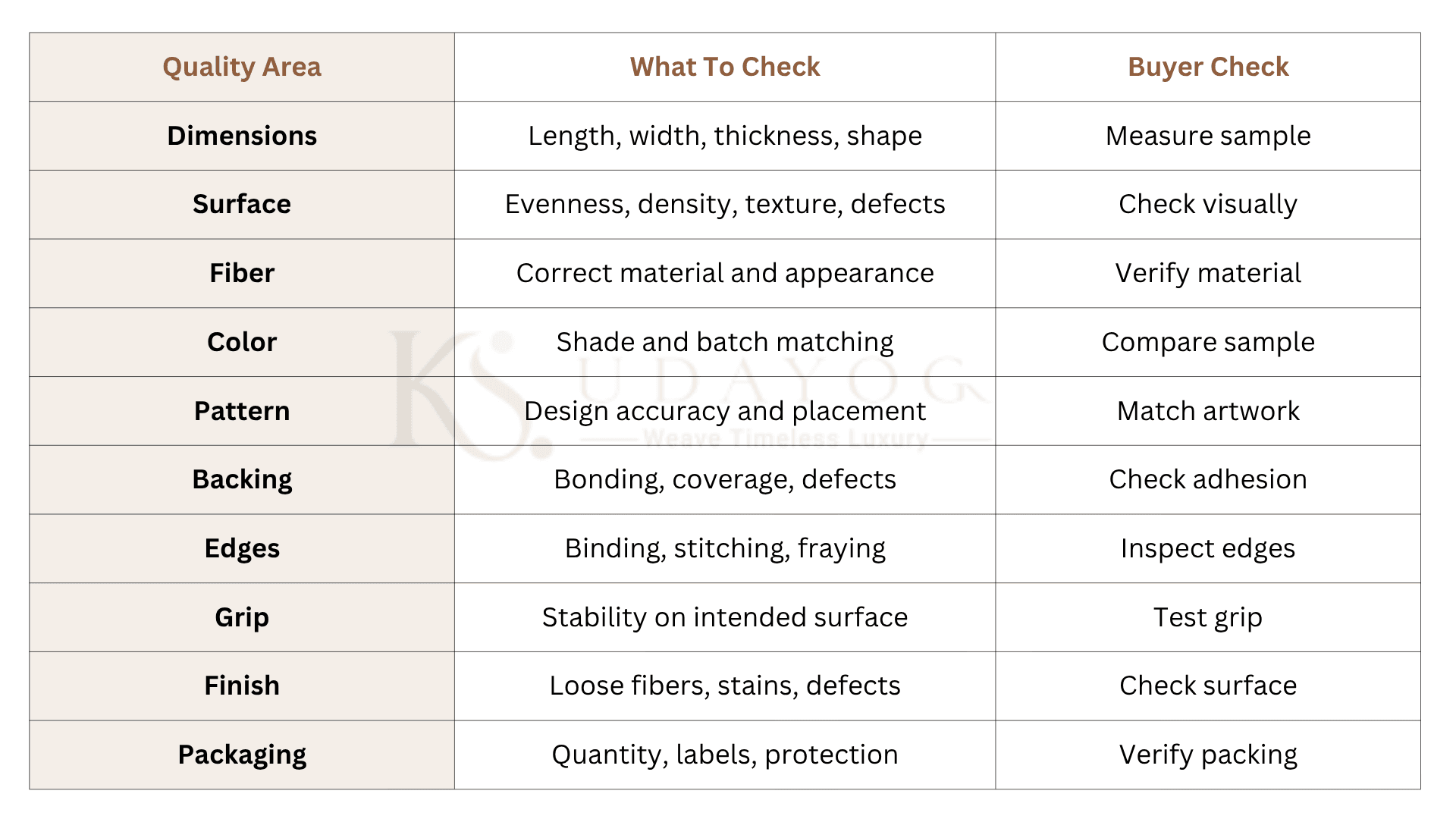
For large orders, buyers can establish an approved sample and written specifications before production begins.
12. Package The Finished Doormats
After inspection, the products are prepared for storage, retail distribution, or shipment.
Packaging may involve:
- Individual polybags
- Paper bands
- Product labels
- Barcode labels
- Bundling
- Carton packing
- Palletization for larger shipments
Packaging should protect the mats from dirt, moisture, compression, and handling damage during transportation.
Different Methods of Doormat Construction Door Mat Manufacturer Use
A doormat's construction determines how its fibers are held together and how the surface behaves during use.
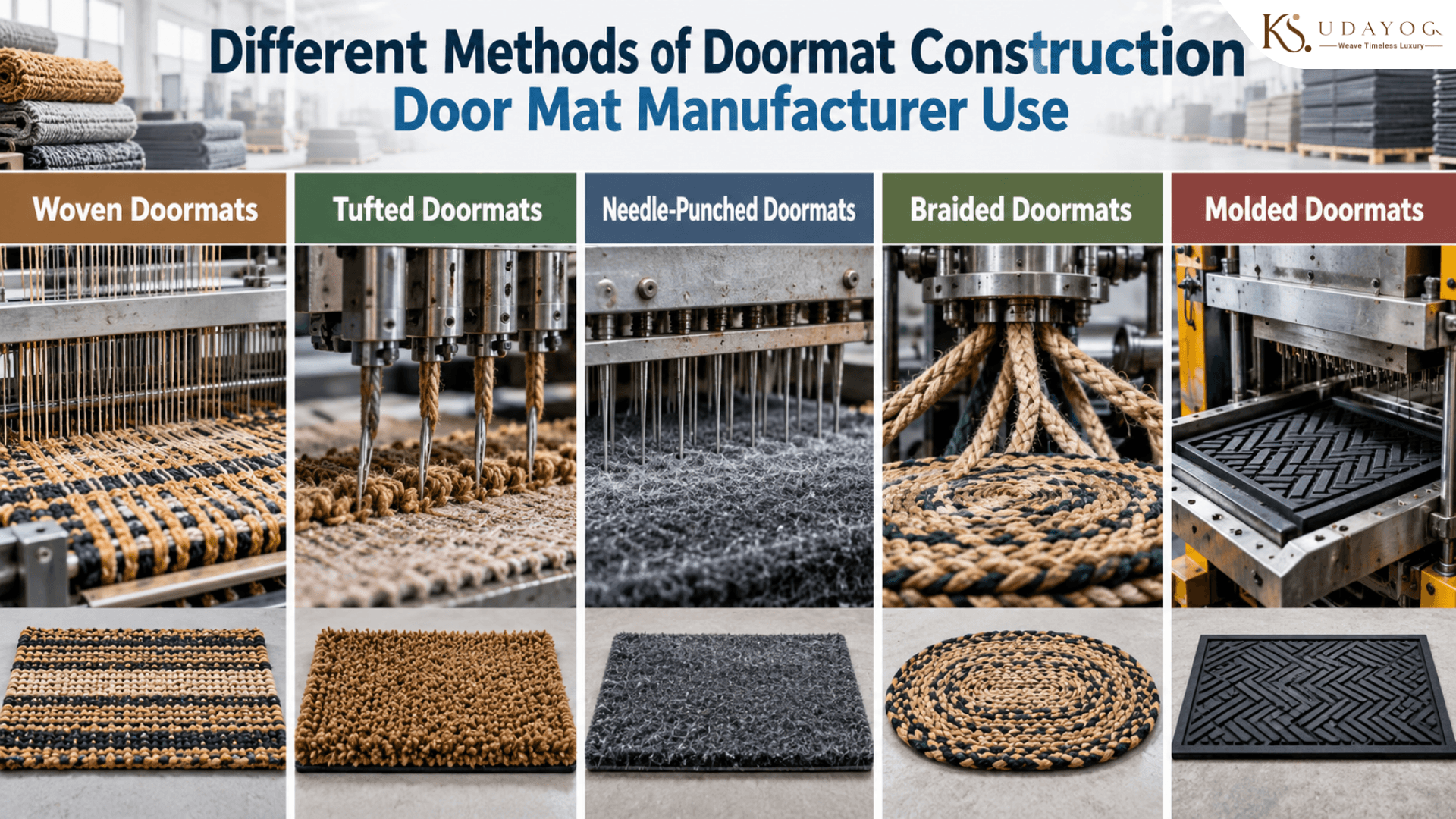
- Woven Doormats
Woven door mats are produced by interlacing yarns or fibers in a structured pattern. The construction can create decorative surfaces while providing a firm feel underfoot.
- Tufted Doormats
Tufting doormat manufacturing involves inserting yarn into a backing material to create loops or cut-pile surfaces. Manufacturers can vary yarn type, pile height, pattern, and density.
- Needle-Punched Doormats
Needle punching mechanically entangles fibers using barbed needles. The resulting dense surface is particularly useful for practical and commercial mat applications.
- Braided Doormats
Braiding doormat production involves arranging strips or yarns into a structured pattern. These mats can offer a distinctive decorative appearance for residential interiors.
- Molded Doormats
Rubber and some synthetic door mats can be manufactured through molding. The mold determines the shape, surface pattern, drainage structure, and other design elements.
Machines Deployed to Manufacture Door Mats in India
The machinery depends on the construction method and material. A door mat manufacturer producing several types of doormats may use different machines across its production line.
- Fiber Opener: Opens compressed fibers, separating and preparing them for further processing.
- Fiber Blending Equipment: Combines different fibers evenly to achieve desired texture, strength, and composition.
- Spinning Machine: Converts prepared fibers into yarn with required thickness, strength, and uniformity.
- Weaving Machine: Interlaces yarns systematically to create structured woven doormat surfaces.
- Tufting Machine: Inserts yarn into backing material to create textured doormat surfaces.
- Needle-Punching Machine: Entangles fibers mechanically, creating dense, durable, and stable mat surfaces.
- Cutting Machine: Cuts finished mat materials into precise sizes and specified shapes.
- Overlock Machine: Secures fabric edges, preventing fraying while providing clean, durable finishing.
- Binding Machine: Applies protective binding around edges for improved durability and appearance.
- Printing Machine: Adds patterns, graphics, logos, or customized designs onto suitable doormat surfaces.
- Molding Equipment: Forms rubber or synthetic materials into specified doormat shapes and patterns.
- Packaging Equipment: Packs finished doormats securely for storage, transportation, retailing, and distribution.
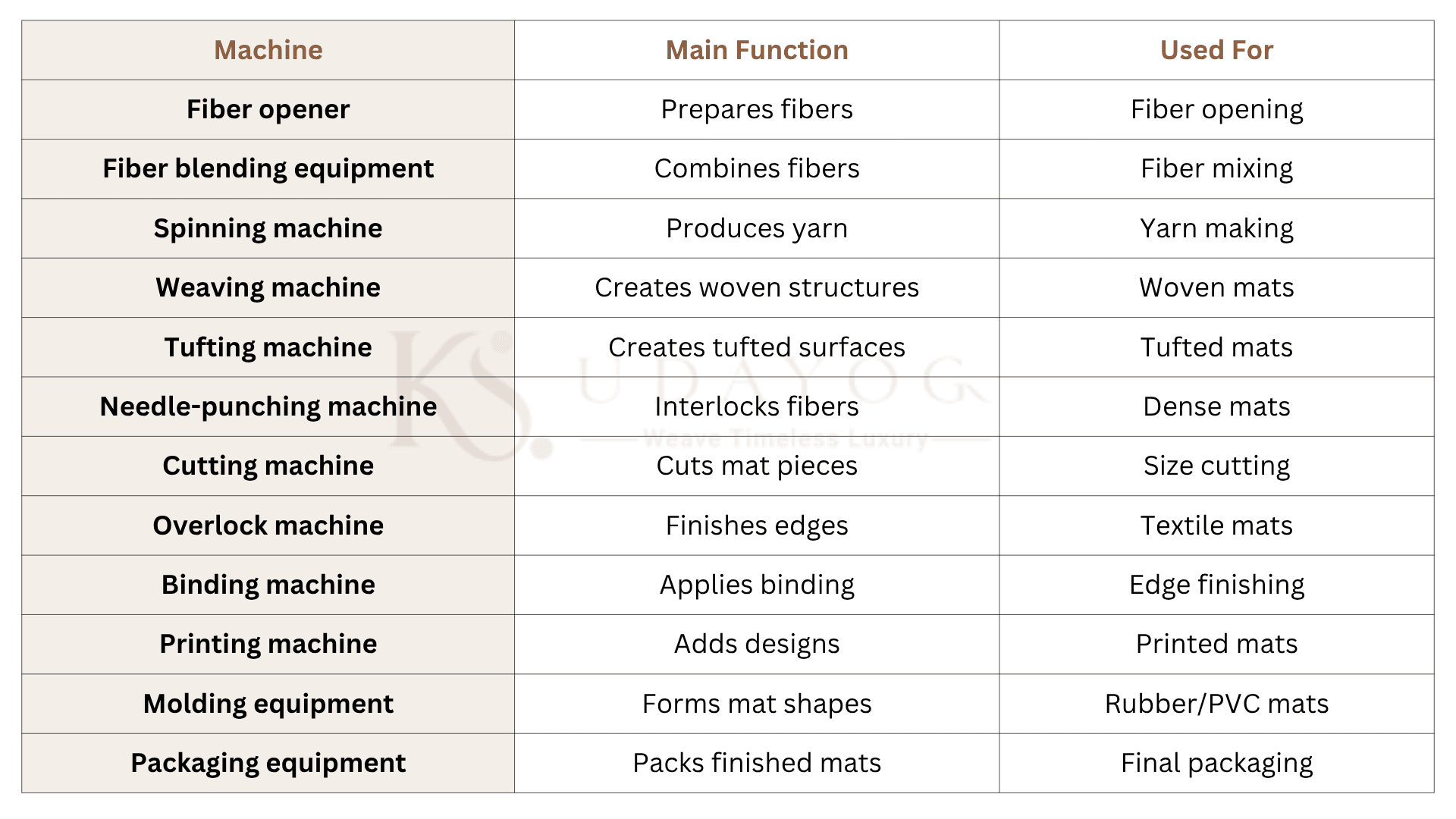
Not every manufacturer needs every machine. The equipment setup should correspond to the materials, construction methods, product sizes, and production volumes being offered.
How Do Different Doormats Get Manufactured?
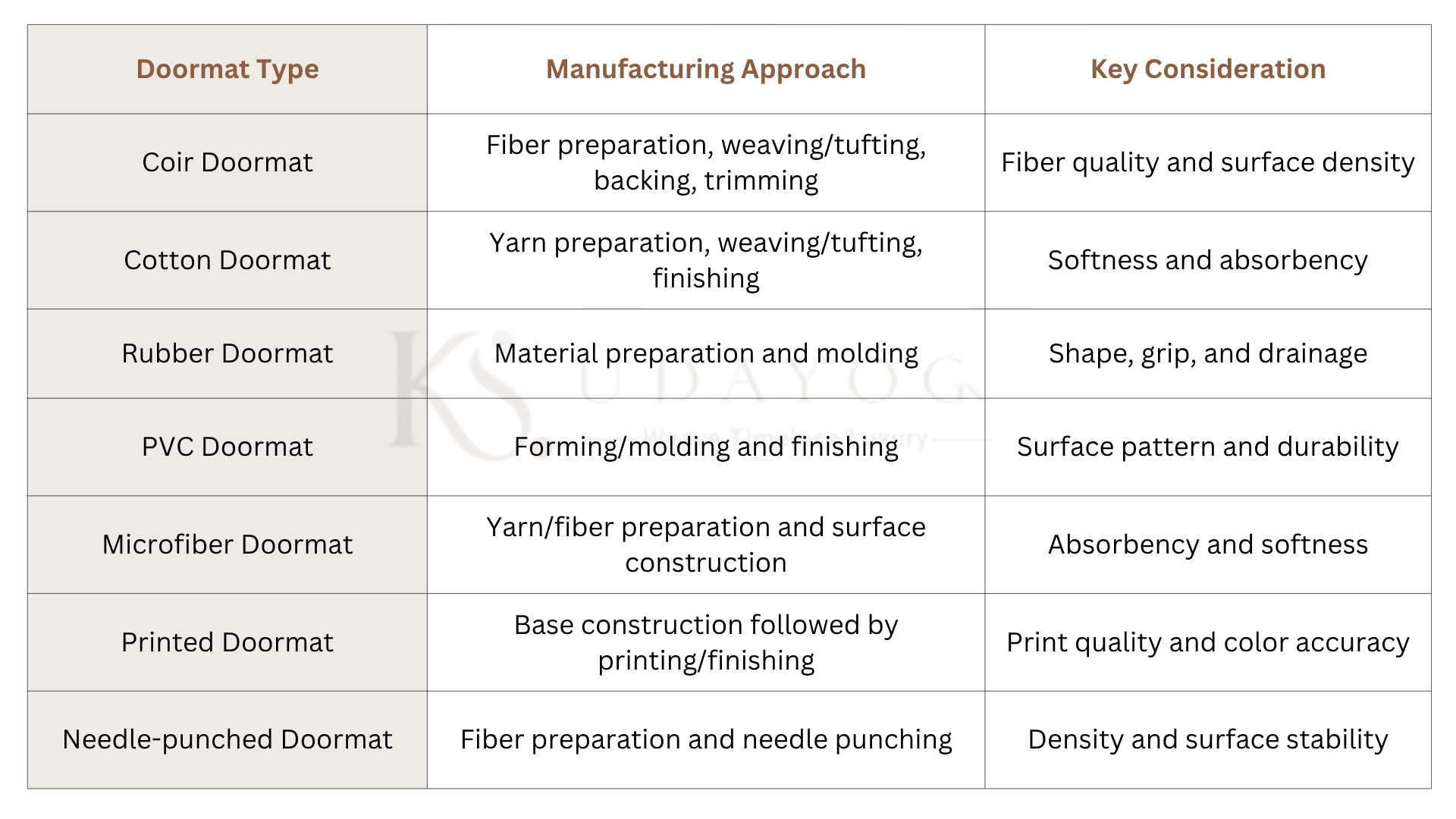
Different materials require different production approaches.
- Coir Doormat Manufacturing: Uses prepared coconut fibers to create durable, textured surfaces designed for effective dirt removal.
- Cotton Doormat Manufacturing: Uses cotton yarn or fibers to produce soft, absorbent mats for indoor entryways.
- Rubber Doormat Manufacturing: Molds rubber compounds into durable surfaces offering grip, drainage, and resistance to outdoor conditions.
- PVC Doormat Manufacturing: Forms PVC materials into versatile mats with durable surfaces suitable for residential and commercial applications.
- Microfiber Doormat Manufacturing: Uses fine synthetic fibers to create soft, absorbent surfaces that capture moisture and fine debris.
- Printed Doormat Manufacturing: Applies customized patterns, graphics, or logos onto suitable mat surfaces for decorative or promotional applications.
- Needle-Punched Doormat Manufacturing: Mechanically interlocks fibers with barbed needles to create dense, practical surfaces for heavy-use areas.
How To Choose The Right Material For A Doormat?
The best material depends on the performance the product needs to deliver.
- For Dirt Removal
Coarse surfaces can be useful where removing dirt and debris from footwear is the main purpose.
- For Moisture Absorption
Absorbent textile materials can be considered for indoor locations where wet footwear is common.
- For Outdoor Use
Materials and backing designed to handle moisture, dirt, and changing conditions are generally more appropriate.
- For Heavy Foot Traffic
Dense constructions and durable materials should be evaluated where large numbers of people regularly use the mat.
- For Decorative Interiors
Design, texture, softness, color, and finishing may receive greater importance than aggressive scraping performance.
How To Manufacture Doormats For Wholesale Orders?
Wholesale production requires more planning than producing individual mats because specifications must remain aligned across a larger quantity.
1. Define The Product
Confirm material, size, thickness, construction, backing, color, design, and packaging.
2. Develop A Sample
Request a physical sample or prototype before approving bulk production.
3. Finalize Specifications
Record all approved product details so the manufacturing team has a clear production reference.
4. Confirm Quantity And MOQ
Discuss order quantity, minimum order requirements, and production capacity.
5. Approve Pricing
Evaluate the complete commercial quotation, including customization and packaging where applicable.
6. Start Bulk Production
Production begins after specifications and samples are approved.
7. Inspect Production
Quality checks should verify dimensions, materials, construction, color, backing, edges, and finishing.
8. Package And Dispatch
Approved products are packed according to the agreed retail or shipping requirements.
What Should Buyers Check Before Ordering Doormats In Bulk?
A buyer should not evaluate a doormat supplier only by catalog size or quoted price.
Use this checklist:
Material → Construction → Size → Thickness → Backing → Design → Edge Finish → MOQ → Sample → Quality Control → Packaging → Lead Time → Customization → Repeat Orders
A supplier that clearly answers each of these points makes product planning and future reordering easier.
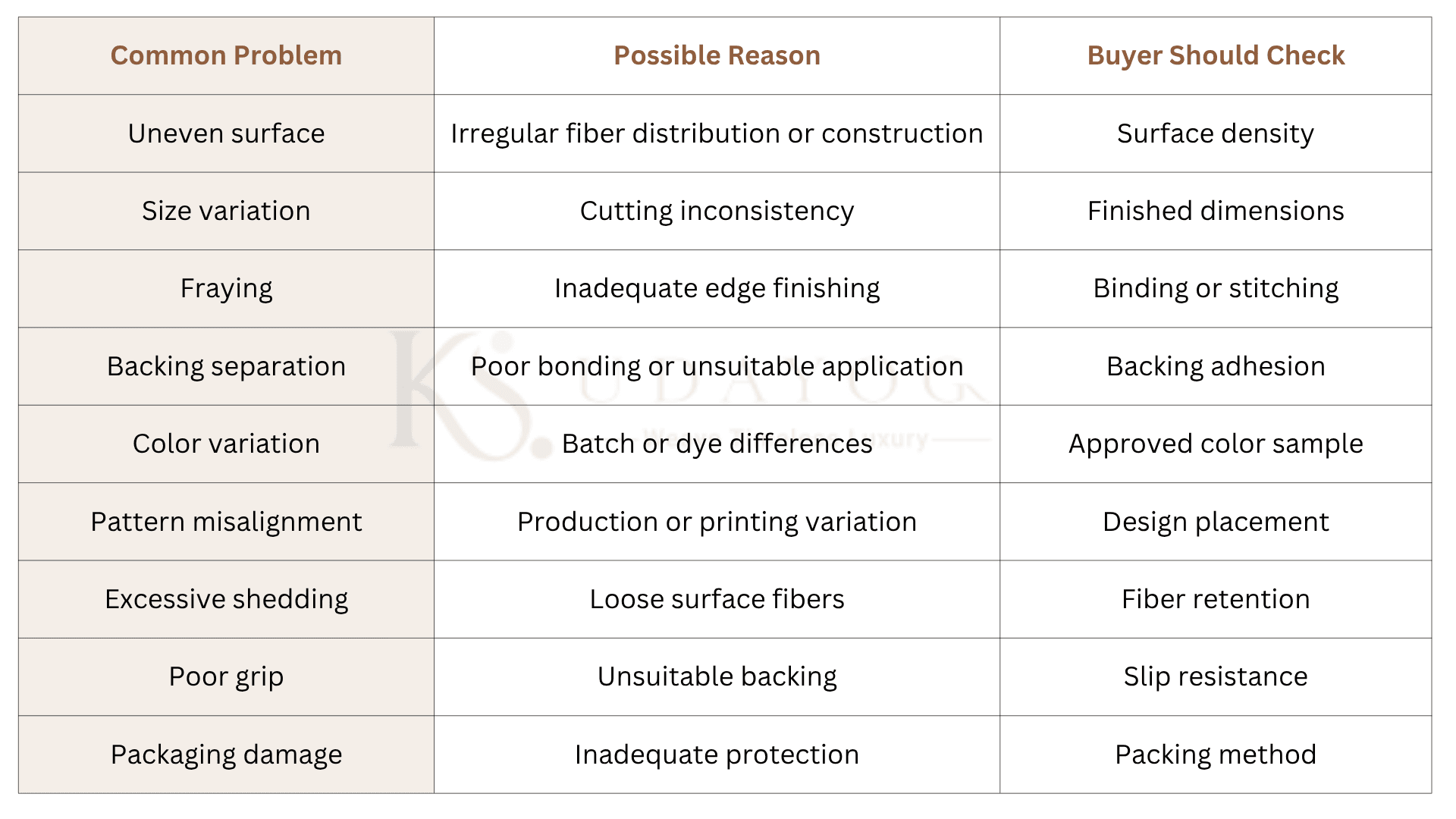
Common Problems In Door Mat Manufacturing
Manufacturing defects can originate from raw materials, production settings, finishing, or handling.
How To Find A Reliable Door Mat Manufacturer in India For Wholesale Production?
The right manufacturer should be able to produce the specific doormat construction, material, dimensions, and finish you require rather than simply offering a large product catalog.
Look for:
- Relevant manufacturing experience
- Suitable production equipment
- Material options
- Customization capabilities
- Sample development
- Clear MOQ
- Documented specifications
- Quality inspection procedures
- Production capacity
- Appropriate packaging
- Clear lead times
- Bulk-order experience
- Repeat-order support
Before placing a large order, request samples and compare them against the exact specifications you intend to use for production.
Final Thoughts
Making a doormat involves much more than forming fibers into a rectangular shape. Material selection, construction, backing, dimensions, edge finishing, design, quality inspection, and packaging all contribute to the final product and determine whether it meets the intended use.
For businesses planning bulk production, the most important step is defining the product specification before manufacturing begins. A clear specification helps manufacturers produce the required material, size, construction, appearance, and finishing while giving buyers measurable criteria for quality inspection.
Planning a bulk doormat order? Connect with a trusted doormat manufacturer to discuss your required materials, designs, sizes, construction, and production quantity.
Frequently Asked Questions (FAQs)
How Is A Coir Doormat Made?
Coir doormats generally begin with coconut fibers that are prepared and converted into the required mat structure through suitable construction methods, followed by backing, trimming, edge finishing, inspection, and packaging.
Can Doormats Be Customized For Wholesale Orders?
Yes. Depending on the manufacturer's capabilities, wholesale doormats can be customized in materials, sizes, colors, patterns, logos, backing, edge finishing, and packaging.
How Do Manufacturers Check Doormat Quality?
Quality checks can cover dimensions, fiber or material, surface construction, color, pattern, backing, edges, grip, finishing, and packaging against approved specifications.
What Affects The Cost of Manufacturing A Doormat?
Material, size, construction method, backing, customization, labor, production quantity, finishing, packaging, and other manufacturing requirements can affect the final cost.
What Should I Ask A Doormat Manufacturer Before Placing A Bulk Order?
Ask about materials, construction methods, MOQ, samples, customization, production capacity, quality control, packaging, lead time, pricing, and repeat-order support.