A rug can look perfect in a catalogue and still become a difficult product to sell once it reaches your store. Colour consistency, material quality, sizing, margins, packaging, and customer expectations can all affect whether a wholesale purchase turns into a profitable retail product.
For retailers, buying quality rugs in bulk is therefore less about finding the lowest quotation and more about understanding what you are actually getting for that price. Fibre, weave, pile, backing, finish, durability, and manufacturing quality can vary significantly between suppliers even when two rugs appear similar at first glance.
There is also the commercial side to consider. Minimum order quantities, lead times, customisation, private labelling, stock availability, shipping, defect handling, and replacement policies can influence your margins and how confidently you can replenish popular designs.
So, what should retailers check before placing a wholesale rug order? This rug buying guide covers the important factors, from selecting bulk rugs to evaluating rug suppliers and understanding what to expect when sourcing from India.
What Should Retailers Decide Before Buying Wholesale Rugs?
Start with your own requirements before contacting a rug manufacturer and supplier. It makes the sourcing process much easier. Think about the type of customers you serve, your selling price range, available storage space, preferred rug sizes, design styles, and expected order quantity.
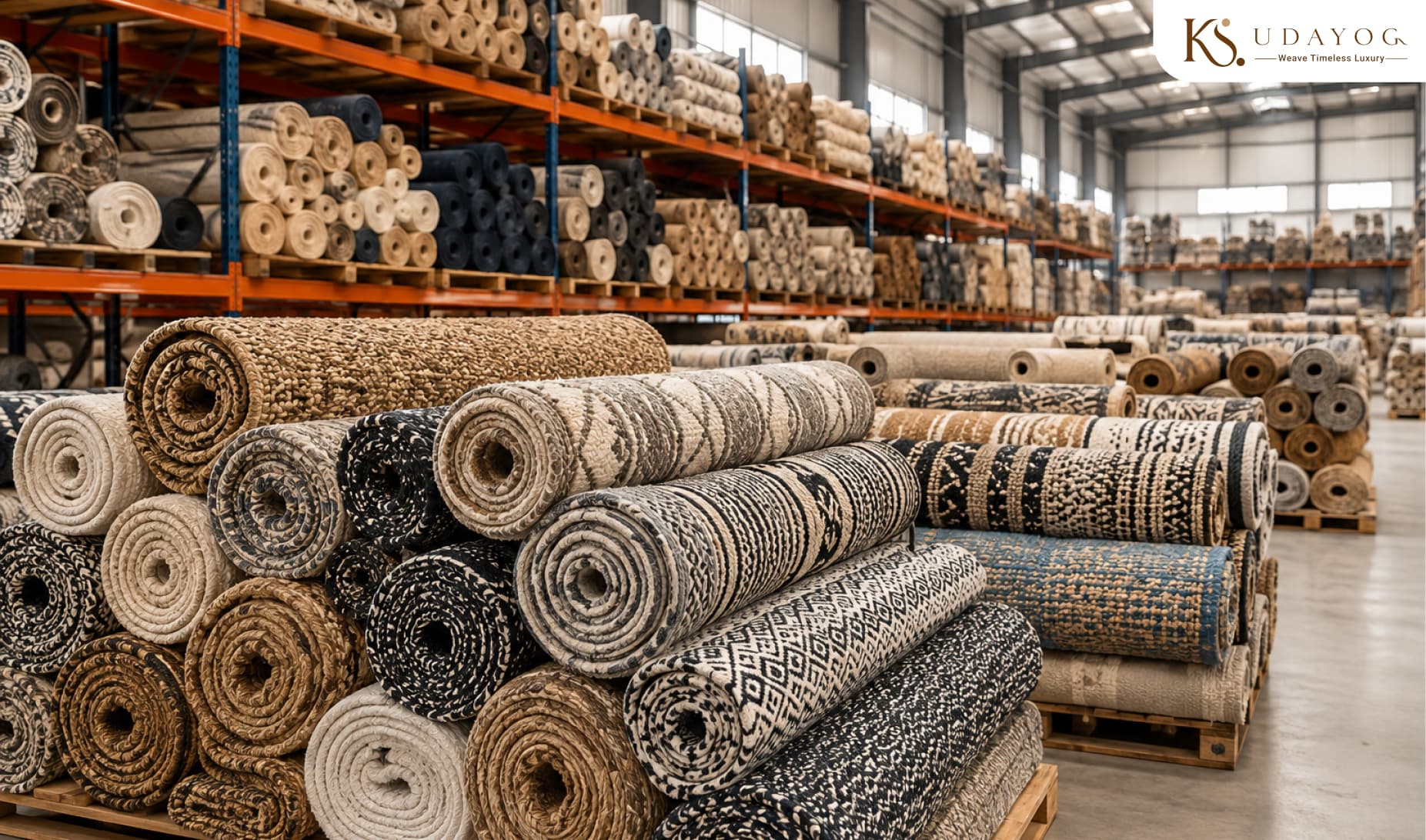
For example, a retailer specializing in modern home décor may need contemporary patterns and neutral colours, while a traditional furnishings store may require more detailed designs and richer tones.
Your target market should influence the collection you buy. Ordering large quantities of products without understanding customer demand can quickly turn into excess inventory.
How To Buy Wholesale Rugs: A Complete Step-By-Step Process
Buying rugs in bulk requires more than comparing a few supplier quotations. Retailers need to identify the right products, assess suppliers, verify samples, understand commercial terms, and inspect the final shipment before putting the rugs into their inventory. Following a clear process can make wholesale sourcing more organised and reduce costly purchasing mistakes.
Step 1: Define Your Retail Requirements
Start by deciding what you want your wholesale rug collection to achieve. Consider your target customers, selling price range, preferred rug sizes, expected order quantity, and the type of spaces your customers typically furnish.
Your market should also guide the rug materials and styles you stock. Wool may suit premium collections, while cotton, jute, polyester, or polypropylene may fit different price points and customer needs.
Similarly, decide whether your collection should focus on modern, traditional, geometric, textured, natural-fibre, handmade, or machine-made rugs.
Step 2: Decide Between Handmade And Machine-Made Rugs
Once you understand your product requirements, compare the rug manufacturing methods of handmade vs machine-made rugs that fit your collection.
Handmade rugs can offer distinctive craftsmanship, detailed designs, and an artisan character that works well for premium collections. Machine-made rugs can provide greater uniformity and support larger-volume requirements.
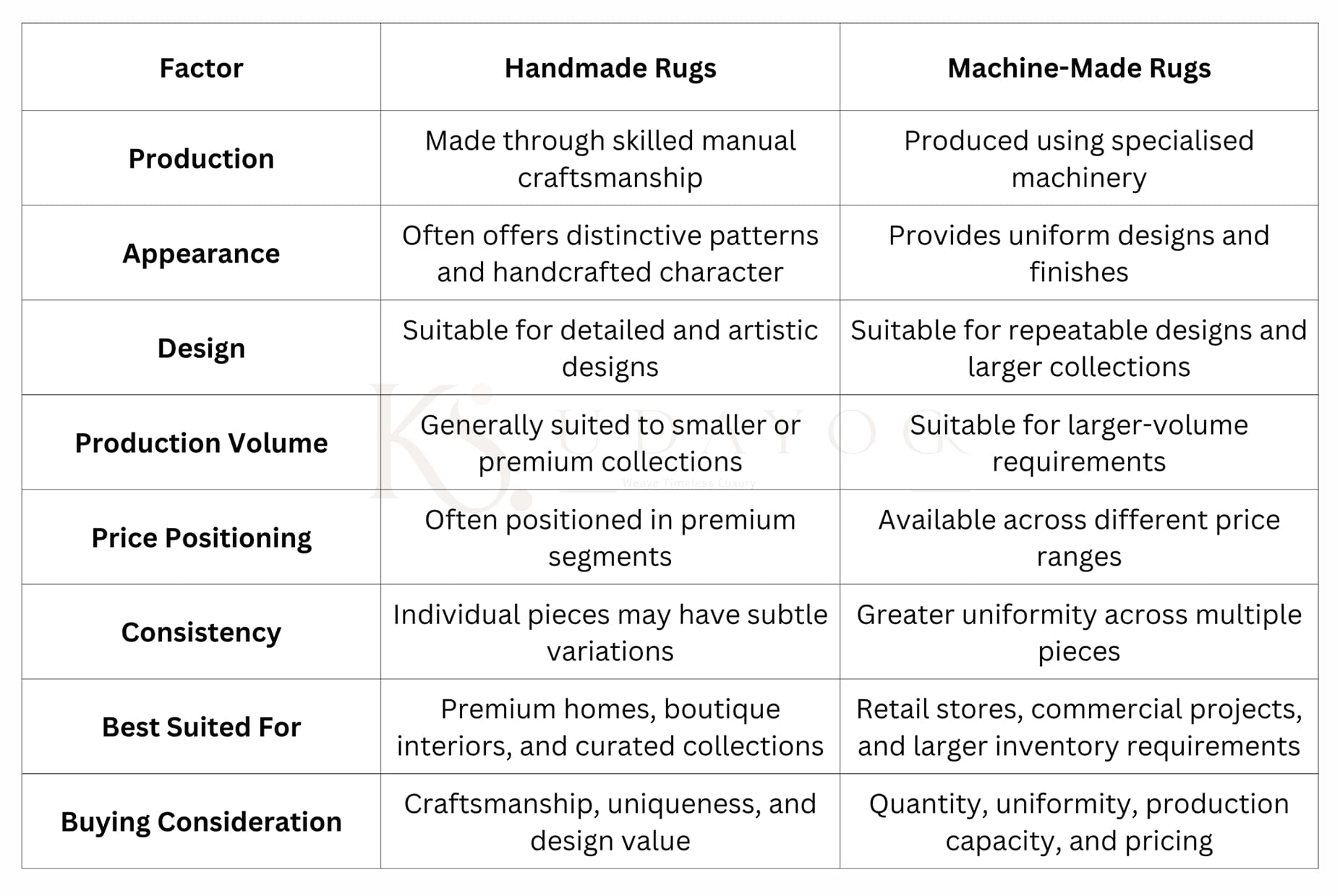
The decision should depend on your target market, budget, design expectations, required quantity, and intended retail positioning.
Step 3: Find And Shortlist Suitable Rug Suppliers
Now look for suppliers or manufacturers capable of fulfilling your requirements.
Review their product range, materials, manufacturing capabilities, available sizes, customisation options, production capacity, MOQ, quality-control practices, packaging, and delivery capabilities.
For retailers planning repeat purchases, also consider whether the supplier can support future orders rather than only fulfil one transaction.
Step 4: Compare MOQ And Wholesale Pricing
Once you have shortlisted suppliers, understand their Minimum Order Quantity (MOQ) and pricing structure.
Ask whether the MOQ applies to the entire order, individual designs, colours, sizes, or customized products. Also check whether different designs can be combined within one order.
When comparing prices, look beyond the quoted unit cost. Material, construction, size, finishing, packaging, customisation, shipping, and other charges can influence the final purchasing cost.
Your expected selling price and margin should also be considered before confirming the order.
Step 5: Request And Evaluate Samples
Do not rely entirely on product photographs when purchasing rugs in bulk.
Request physical samples and examine the colour, texture, pile, dimensions, backing, stitching, edges, and overall finish. Consider how the product looks and feels in the environment where your customers are likely to use it.
For customized rugs, the approved sample should become the reference for the bulk order.
Step 6: Check Quality Control And Product Consistency
Wholesale buyers need products that match the agreed specifications across the order.
Ask the supplier what checks are carried out before dispatch. Depending on the rug, these may include:
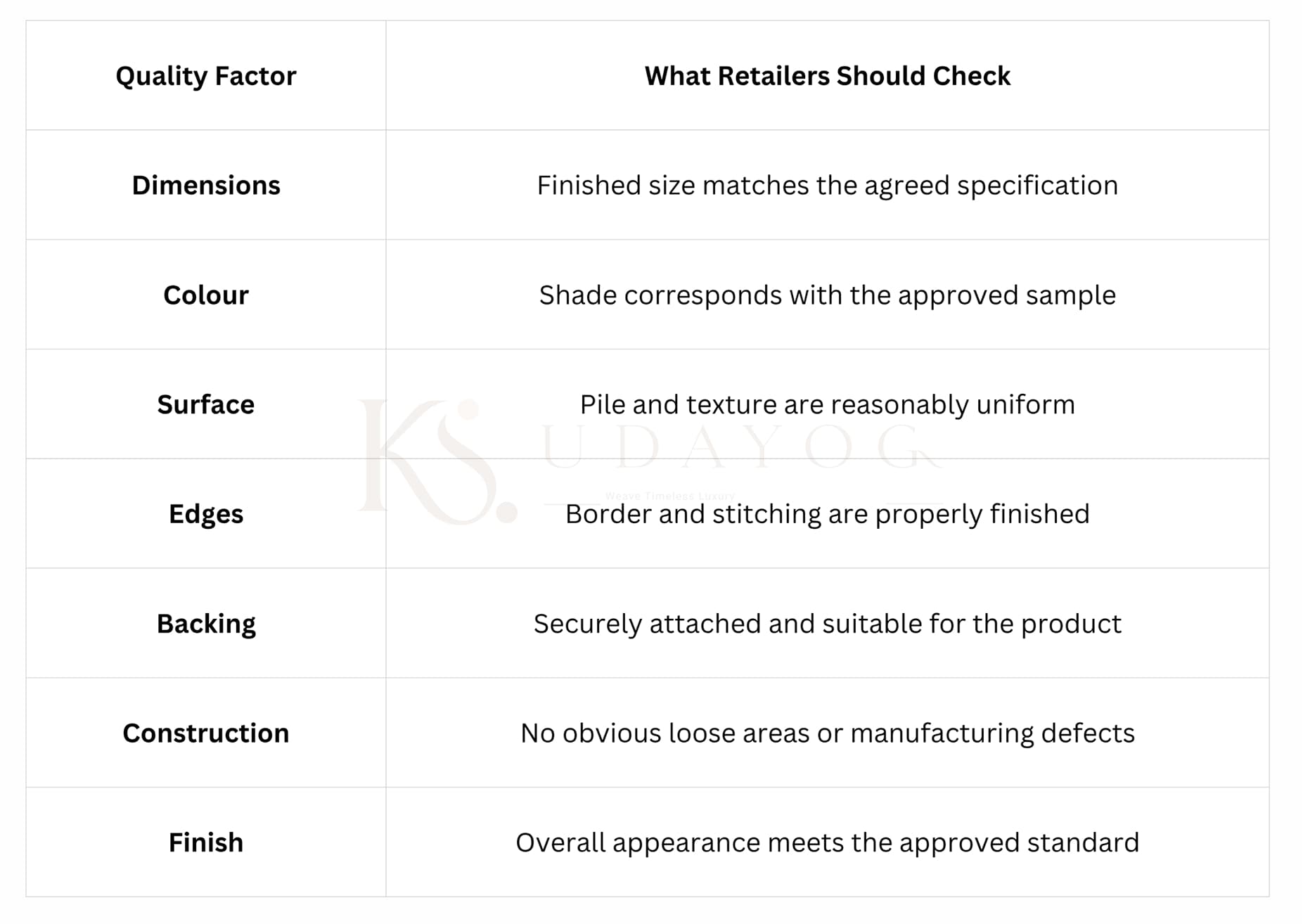
Clear specifications make it easier for both parties to understand what the finished products should look like.
Step 7: Finalize Customization Requirements
If you need products made to specific requirements, finalize the details before production starts.
Customization may include sizes, colours, patterns, materials, shapes, pile specifications, finishing, labels, or packaging, depending on the manufacturer's capabilities.
Confirm how each custom requirement affects the MOQ, price, sampling process, and production timeline so there are no surprises later.
Step 8: Confirm Production Capacity And Lead Time
A supplier may have suitable products but still be unable to fulfil your order within your required timeframe.
Ask about production capacity, current schedules, manufacturing time, sample approval, packaging, dispatch, and availability for repeat orders.
This becomes especially important for seasonal collections, store launches, hospitality projects, and large retail campaigns where delayed stock can affect sales or project schedules.
Step 9: Finalize Payment And Delivery Terms
Before placing the order, clarify all commercial and delivery conditions.
Discuss the payment schedule, packaging, delivery location, shipping arrangements, dispatch timeline, documentation, and additional charges.
For international buyers sourcing from India, export documentation, freight responsibilities, customs requirements, and destination-specific considerations should also be discussed in advance.
Put the agreed terms in writing so there is a clear reference throughout the transaction.
Step 10: Place The Wholesale Order
Once the product, price, quality, and delivery terms are approved, place the final order. The purchase order should clearly mention the product details, including:
- Rug design or product reference
- Material
- Size
- Colour
- Quantity
- Construction
- Customisation requirements
- Approved sample
- Agreed price
- Payment terms
- Delivery terms
A detailed order document helps prevent misunderstandings when several products are included in one shipment.
Step 11: Monitor Production And Dispatch
For large or customized orders, maintain communication with the supplier while production is underway.
Confirm important milestones and ask for updates if the agreed timeline changes. Any alteration to the product specifications should be discussed before the rugs are dispatched.
This stage gives retailers an opportunity to address potential issues before the completed order reaches their warehouse or store.
Step 12: Inspect The Rugs After Delivery
Once the shipment arrives, inspect the rugs before adding them to your inventory.
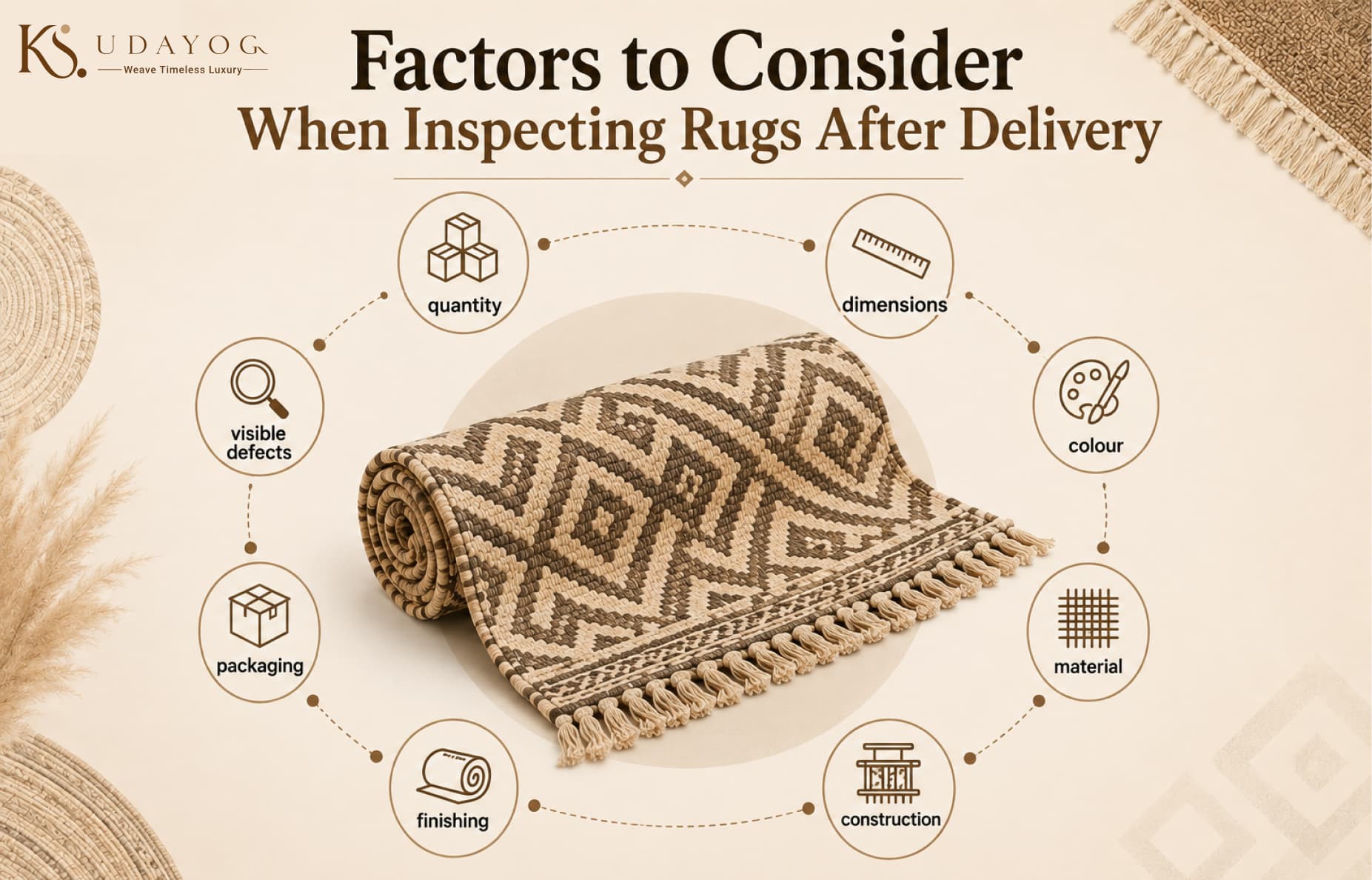
Compare the delivered products with the approved sample and purchase order. Check the quantity, dimensions, colour, material, construction, finishing, packaging, and visible defects.
If discrepancies are found, document them and communicate with the supplier promptly.
Step 13: Evaluate The Supplier For Future Orders
The buying process does not really end when the shipment arrives.
Review the supplier's overall performance, including product quality, order accuracy, communication, production timeline, packaging, delivery, pricing, and handling of any issues.
This assessment can help you decide whether the supplier is suitable for repeat purchases and long-term wholesale sourcing.
What Should Retailers Know About Rug Exporters In India?
India has a long-established carpet and rug manufacturing industry, with production capabilities covering traditional craftsmanship as well as modern manufacturing methods.
For international retailers, sourcing from an Indian rug exporter can provide access to a broad range of materials, designs, manufacturing techniques, and customisation possibilities.
However, geographical location alone should not determine your supplier decision. International buyers should also evaluate export experience, documentation, packaging, shipping arrangements, production capacity, communication, and the supplier's ability to meet destination requirements.
Ask about the complete export process before placing the order. Clear communication at this stage can prevent avoidable problems later.
How To Purchase Wholesale Rugs: Buying Checklist For Retailers
Before confirming your next order, run through this quick checklist:
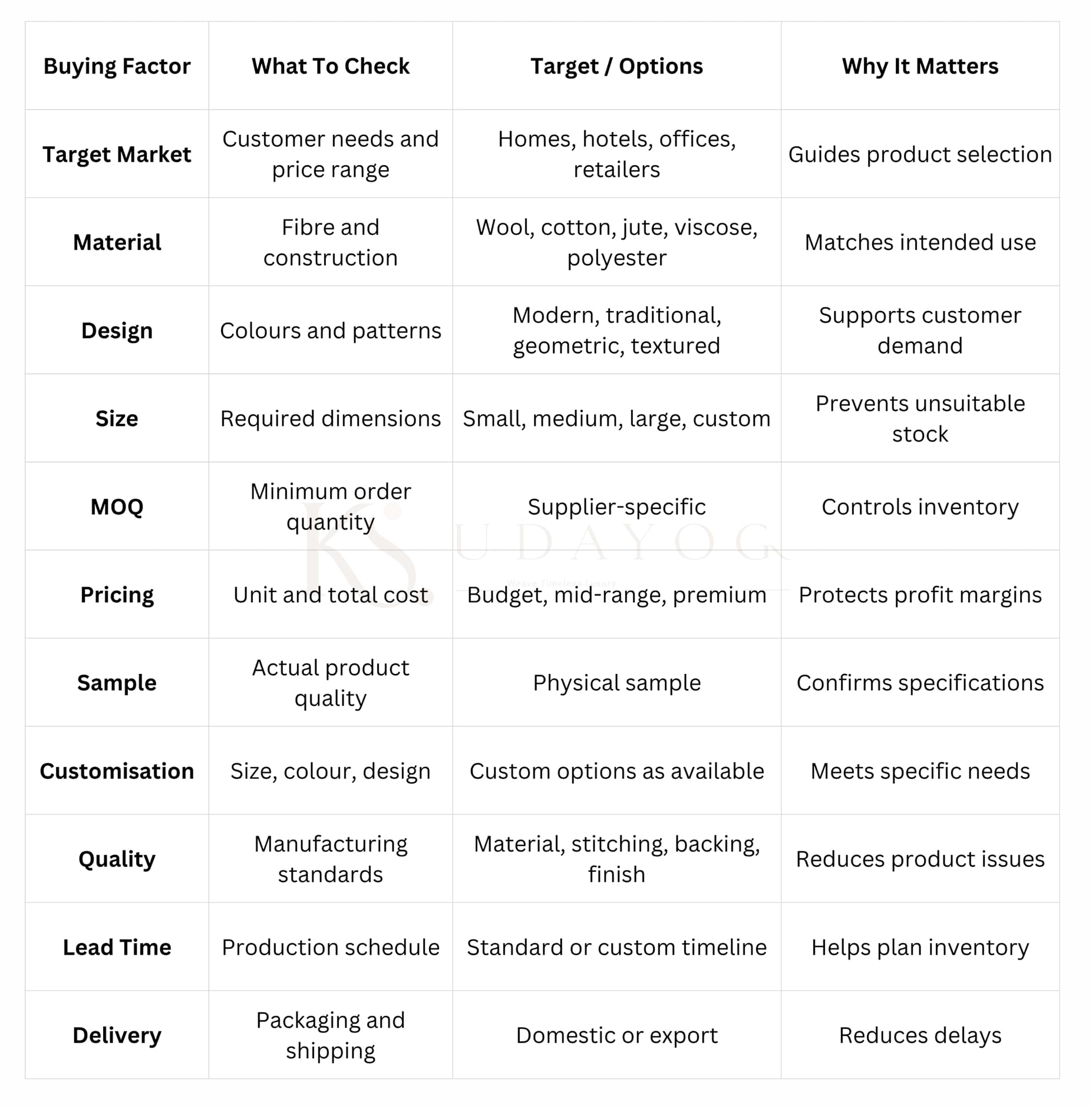
This simple check can help you compare suppliers more objectively and avoid decisions based purely on price.
Why Retailers Choose KS Udayog To Buy & Export Wholesale Rugs
KS Udayog works with retailers, distributors, hospitality businesses, and other commercial buyers looking for rugs across different materials, designs, sizes, and requirements. Our manufacturing capabilities allow businesses to discuss bulk quantities, product specifications, customized requirements, and collection needs before confirming production.
For retailers, this means the conversation can go beyond selecting a product from a catalogue. Material preferences, dimensions, designs, finishing, MOQ, and intended market can all be considered while developing a suitable rug order.
Wrap Up
Wholesale rug buying becomes much easier when you know what needs to be checked before placing an order. Product material, design, construction, MOQ, pricing, samples, quality control, production capacity, and delivery can all influence whether a wholesale purchase works for your business.
Retailers should also remember that the cheapest supplier is not necessarily the most suitable one. A dependable rug supplier who understands your requirements and can maintain agreed specifications can be far more valuable for long-term sourcing.
Whether you are building your first rug collection or expanding an established retail range, take time to compare the complete offering rather than looking at the unit price alone.
Looking for wholesale rugs for your retail business? Get in touch with our experts to discuss your product requirements, bulk quantities, and available rug options.
Frequently Asked Questions (FAQs)
What Is Wholesale Rug Buying?
Wholesale rug buying involves purchasing rugs in larger quantities from a manufacturer, supplier, distributor, or exporter, generally for resale or commercial use.
How Can Retailers Find Reliable Rug Suppliers?
Retailers should evaluate the supplier's manufacturing capabilities, product range, materials, quality checks, MOQ, production capacity, customisation options, and ability to meet delivery requirements.
What Is MOQ In Wholesale Rug Buying?
MOQ stands for Minimum Order Quantity. It is the smallest quantity a supplier or manufacturer requires for an order, which may apply to a product, design, colour, or customized specification.
Should Retailers Request Samples Before Ordering Rugs In Bulk?
Yes. A physical sample allows retailers to examine the actual material, colour, texture, dimensions, construction, backing, and finishing before committing to a larger quantity.
Which Materials Are Commonly Available For Wholesale Rugs?
Wholesale rugs may be available in wool, cotton, jute, viscose, polyester, polypropylene, and blended fibres. Availability depends on the manufacturer and product requirements.
Can Retailers Customize Wholesale Rugs?
Many manufacturers offer customization depending on their production capabilities. Options may include size, colour, design, material, shape, construction, and finishing.