Have you ever thought, “Why can two rugs with similar patterns feel completely different under your feet?” The difference often begins long before the finished rug reaches a showroom, with the yarn, weaving method, knotting technique, and countless hours of hands-on work that go into making it.
When you look closely at a handmade rug, you may notice tiny variations in the pattern, texture, or pile. Those details are not necessarily imperfections. They are often signs of the human work behind the piece. Each rug creates its character through a process that combines traditional techniques, careful material preparation, and patient craftsmanship.
The handmade rug manufacturing process can involve thousands of individual knots or repeated weaving movements, followed by trimming, washing, drying, and finishing to give the rug its final look and feel.
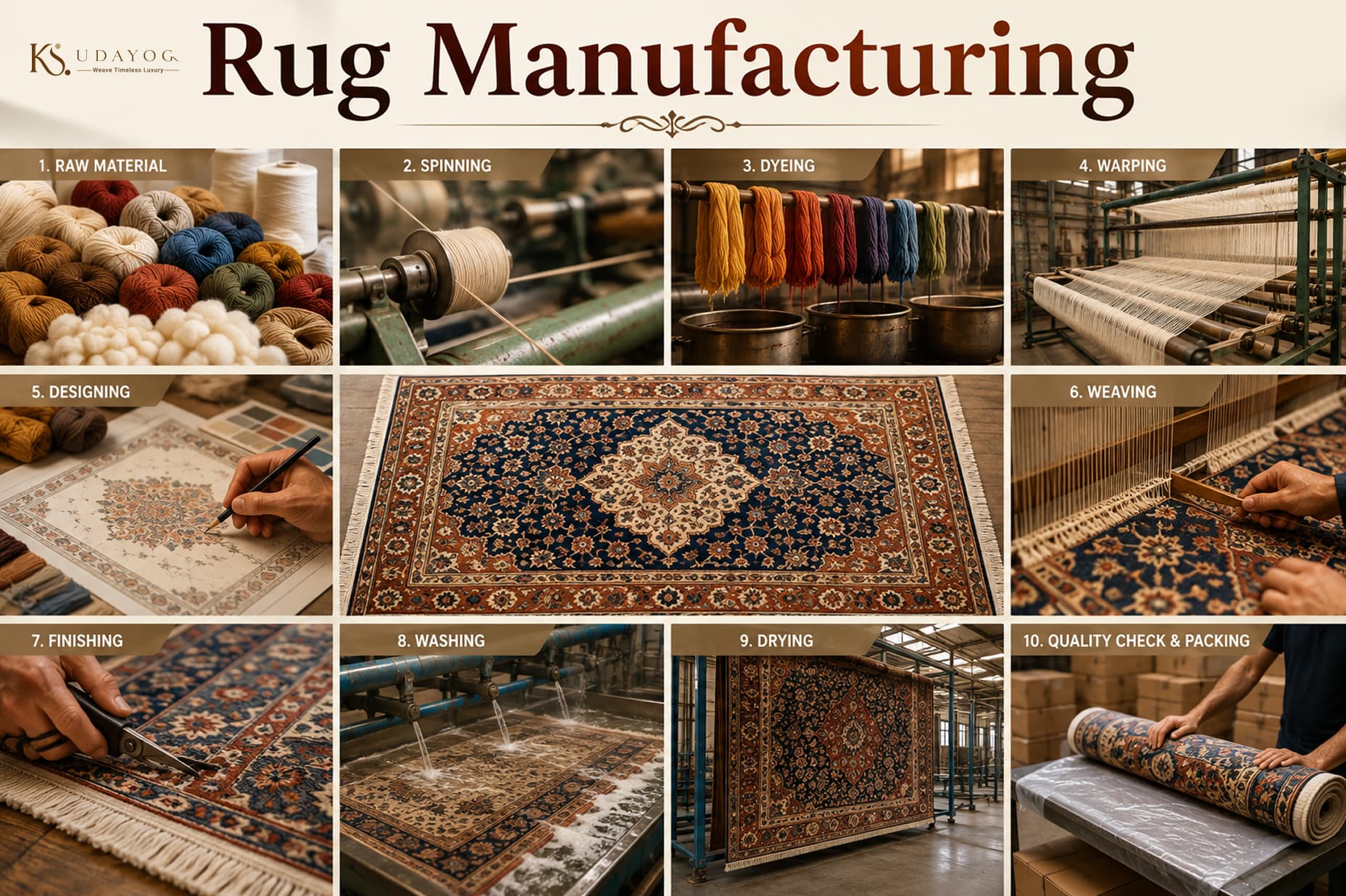
Understanding these details also explains why handmade rugs have their own texture, character, and variations. Here’s a closer look at the complete rug manufacturing process and what happens at each step before a handmade rug is ready for your home.
What Makes A Rug Handmade?
A handmade rug is produced primarily through manual craftsmanship rather than being completely manufactured by automated machinery. Depending on the construction method, artisans may knot, weave, tuft, or otherwise work the yarn by hand to create the rug's surface.
Different handmade techniques create different textures, patterns, production times, and finishes. Hand-knotted, handwoven, and hand-tufted rugs are examples of constructions that can be produced using significant manual workmanship.
The exact process can therefore vary according to the rug's design, material, construction method, and required finish.
Step 1: Select The Yarn And Materials
The manufacturing process starts with selecting materials appropriate for the desired rug. Common materials include:
- Wool: Known for warmth, resilience, and a naturally textured appearance.
- Cotton: Often used for lighter constructions and supporting materials.
- Silk: Can provide a smooth surface and detailed decorative appearance.
- Jute: Offers a natural, textured look suited to particular rug styles.
- Viscose: Can create a soft surface with a noticeable sheen.
- Blended fibers: Combine characteristics of different materials for specific design or performance requirements.
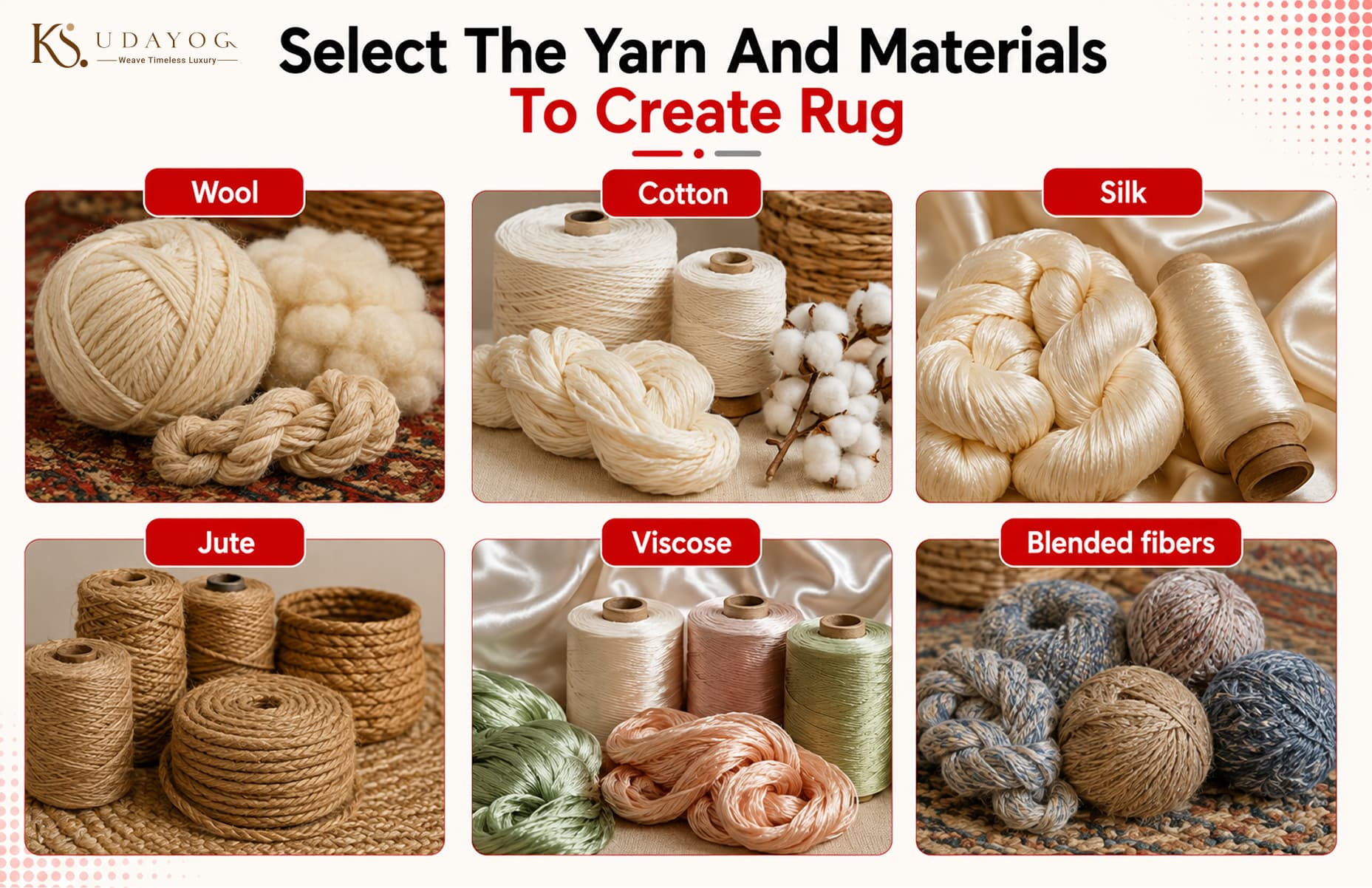
The material affects the rug's texture, appearance, durability, maintenance, and cost. Therefore, rug manufacturers typically select the yarn according to the intended construction and final product specifications.
Step 2: Prepare And Treat The Yarn
Once the materials are selected, the yarn is prepared for production.
Depending on the fiber, preparation can involve cleaning, spinning, twisting, coloring, or other treatments. Yarn may also be dyed to achieve the shades required for the design.
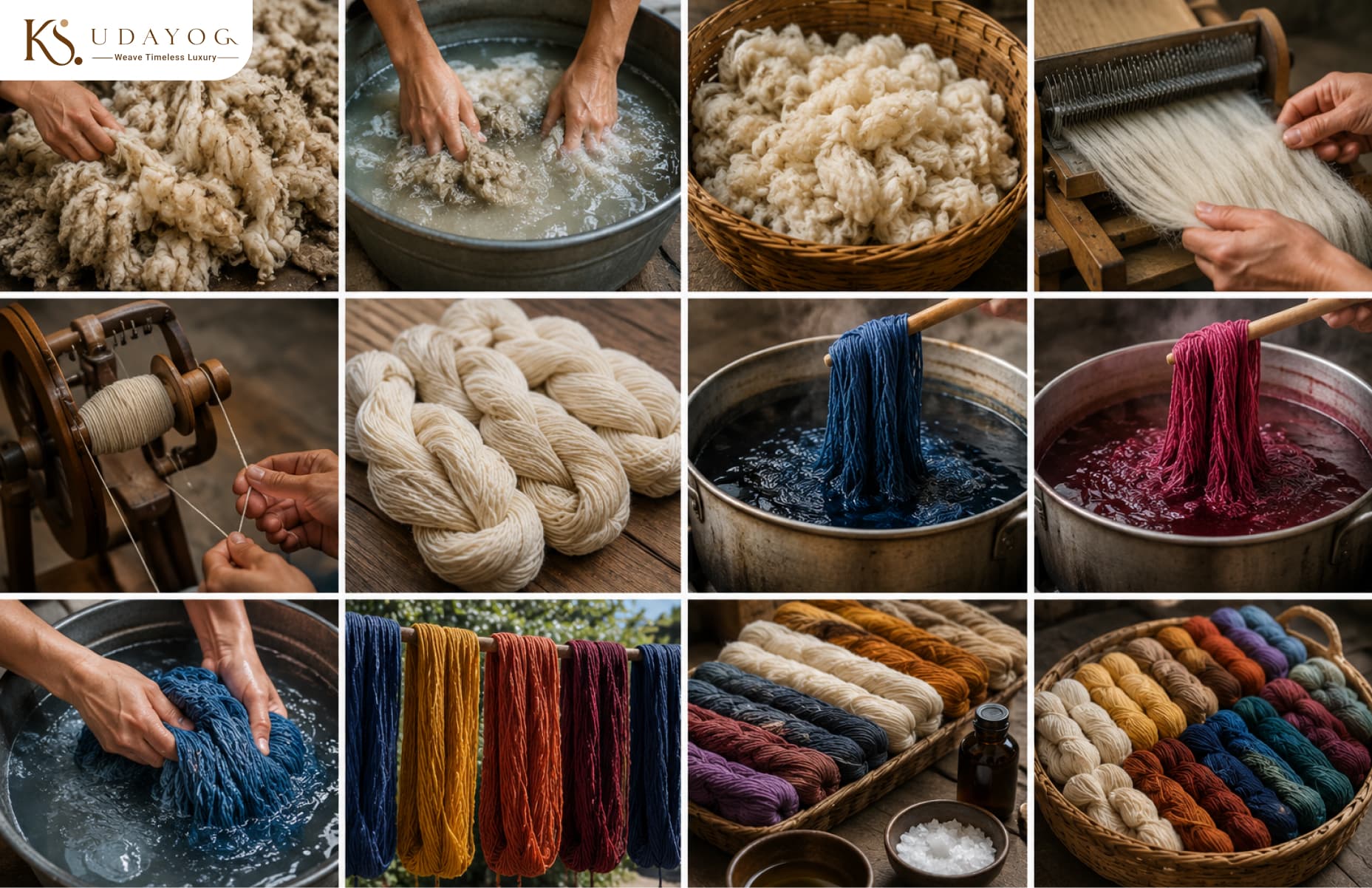
At this stage, factors such as yarn thickness, color consistency, and suitability for the selected construction need to be considered.
For rugs containing multiple colors, properly prepared yarn helps artisans reproduce the intended design more accurately.
Step 3: Create The Rug Design
Before weaving or knotting begins, the design needs to be prepared.
Designers may develop patterns using traditional motifs, geometric elements, floral details, contemporary artwork, or customized concepts. The design is then translated into a format that artisans can follow during production.
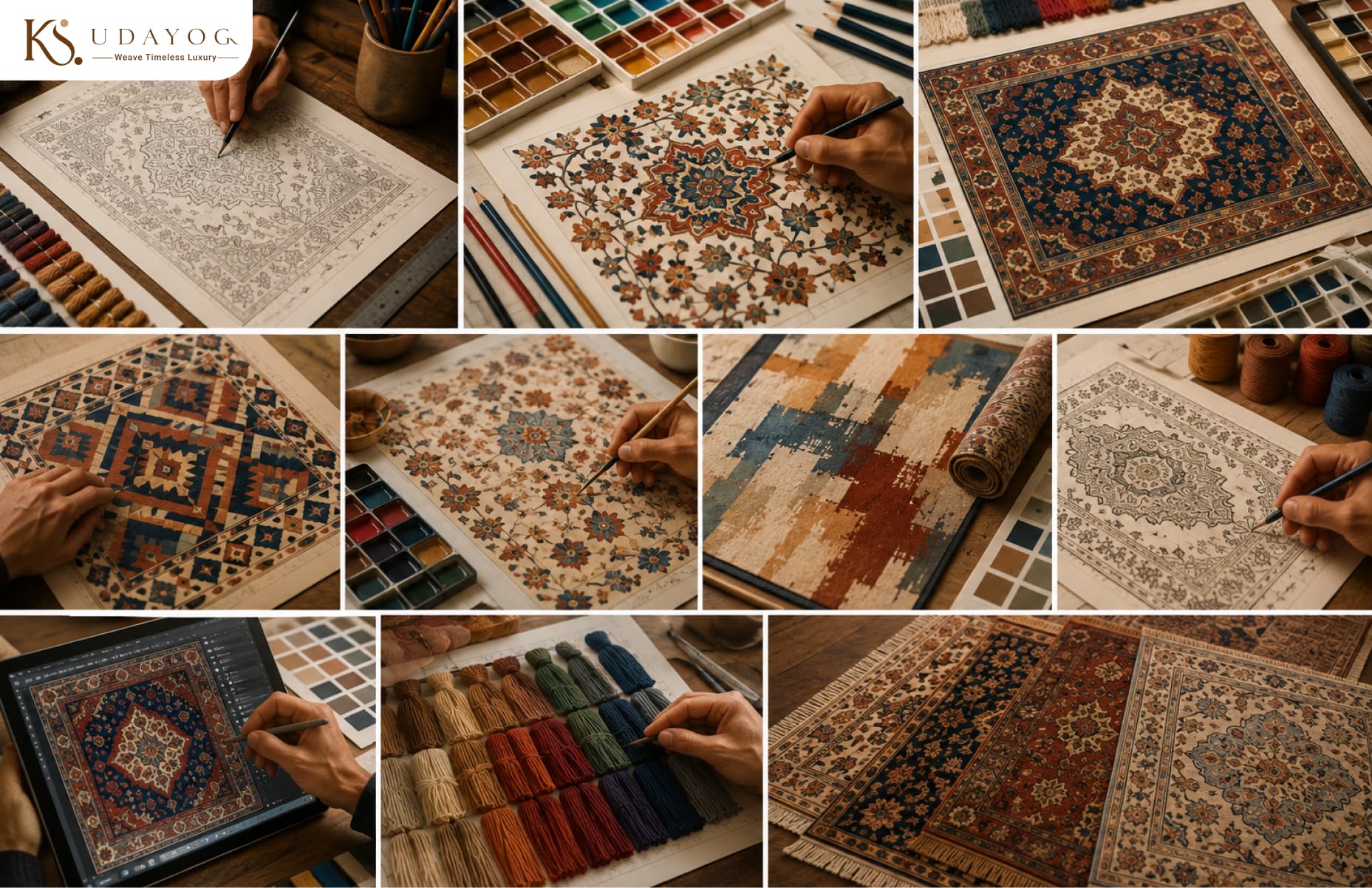
For detailed rugs, the design may specify the placement of individual colors and pattern elements. The size of the rug also needs to be considered because the same design may require adjustments when produced in different dimensions.
Step 4: Prepare The Loom Or Foundation
For handwoven and hand-knotted rugs, the loom provides the structure needed to build the rug.
Warp threads are positioned vertically across the loom, creating the foundation onto which the rug's surface will be constructed. The arrangement needs to be properly prepared because the spacing of the foundation threads influences the final construction.
The loom is set according to the required dimensions and construction specifications before the artisan begins working with the yarn.
Step 5: Begin Hand Knotting Or Weaving
This is where the rug starts taking its recognizable form.
For a hand-knotted rug, artisans individually tie yarn around the foundation threads according to the design. Rows of knots are built gradually across the rug, with additional foundation or weft threads helping secure the construction.
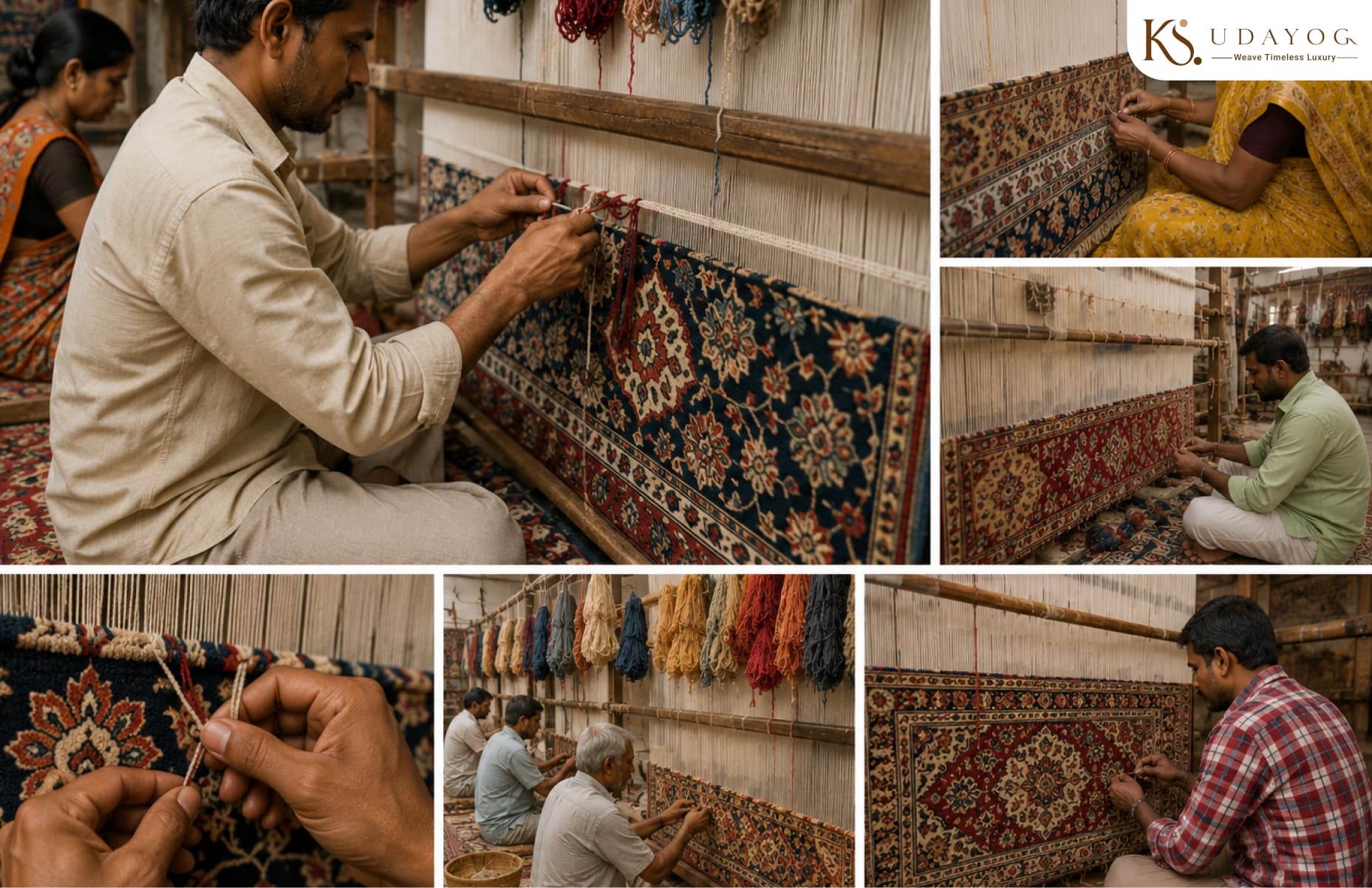
For a handwoven rug, yarn is interlaced manually through the prepared warp threads to develop the surface.
The exact technique varies according to the rug style, but manual handling remains central to the process.
Step 6: Build The Pattern Row By Row
As production continues, artisans follow the prepared design to develop the rug's pattern.
Colors, motifs, borders, and central elements are gradually introduced as the work progresses. The artisan needs to maintain attention to the pattern while keeping the construction aligned.
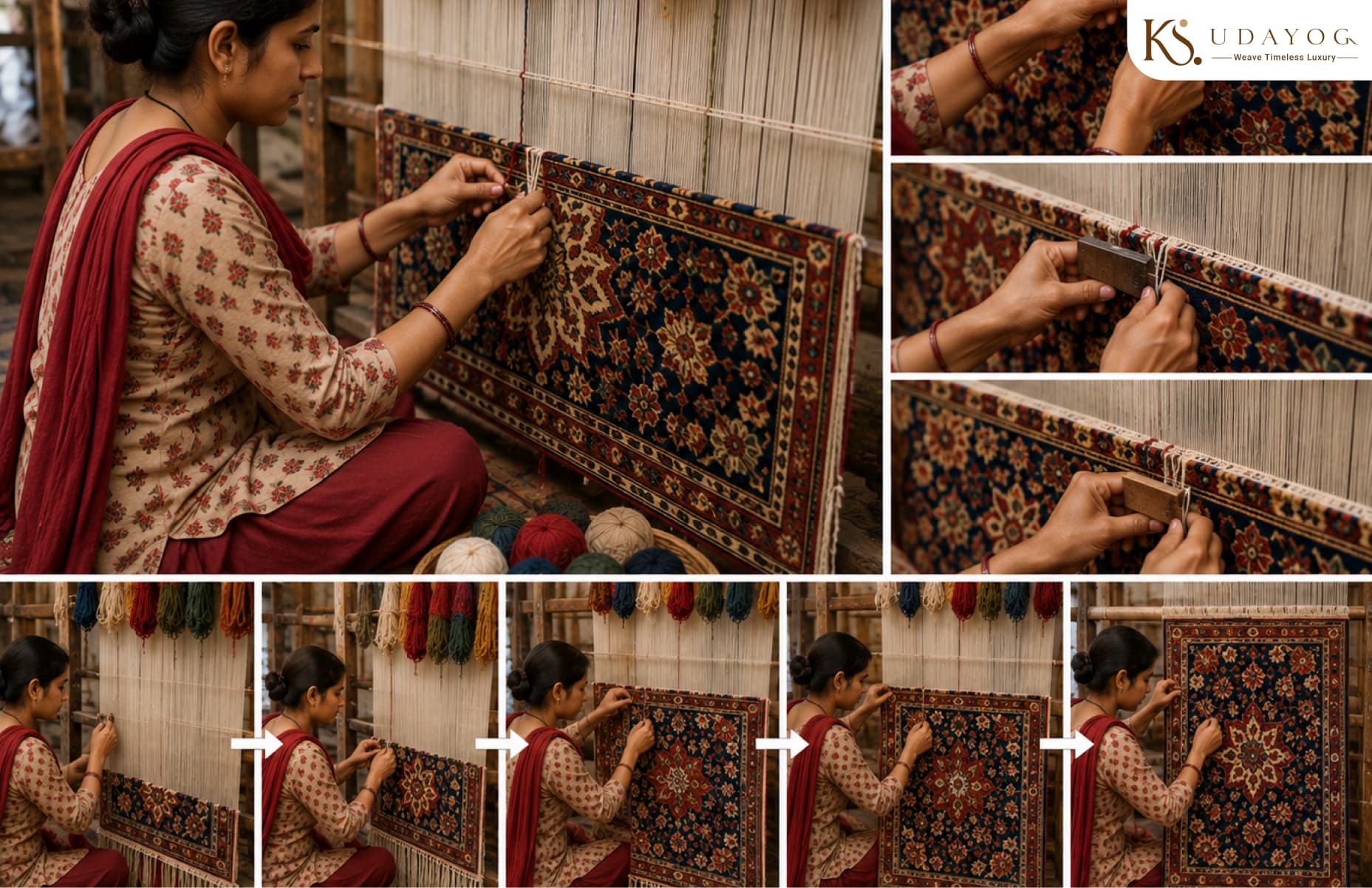
This stage can take considerable time for intricate rugs, especially when the design contains detailed motifs or requires a high level of knotting or weaving.
The production time depends on factors such as rug size, construction method, material, design complexity, and level of detail.
Step 7: Secure And Complete The Construction
Once the main surface has been completed, the rug needs to be secured and prepared for finishing.
The foundation and edges are checked to ensure the construction is properly held together. Depending on the rug, additional work may be carried out around the edges to create the required border or finishing structure.
This stage helps prepare the rug for trimming, washing, and subsequent finishing processes.
Step 8: Trim The Surface
After the main construction is complete, the rug surface may need to be trimmed.
Artisans carefully even out the pile so that the surface reaches the desired height and appearance. For patterned rugs, trimming can also help define the design and improve the clarity of individual elements.
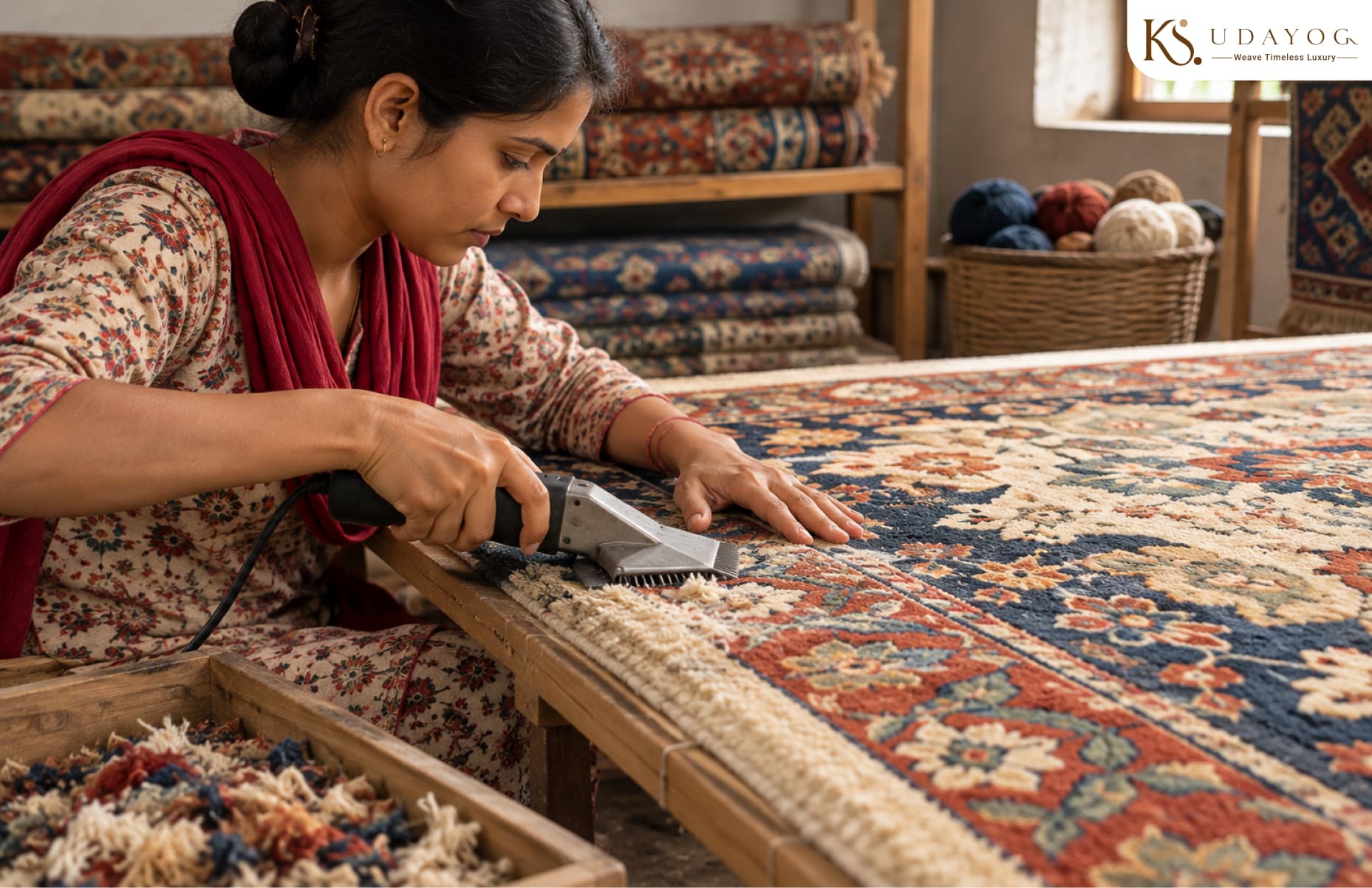
The amount of trimming depends on the construction and intended finish. A carefully finished surface can make the colors and patterns appear more defined.
Step 9: Wash The Rug
Washing is an important finishing stage for many handmade rugs.
The process can help remove dust, loose fibers, and residues from manufacturing while improving the overall appearance and feel of the rug.
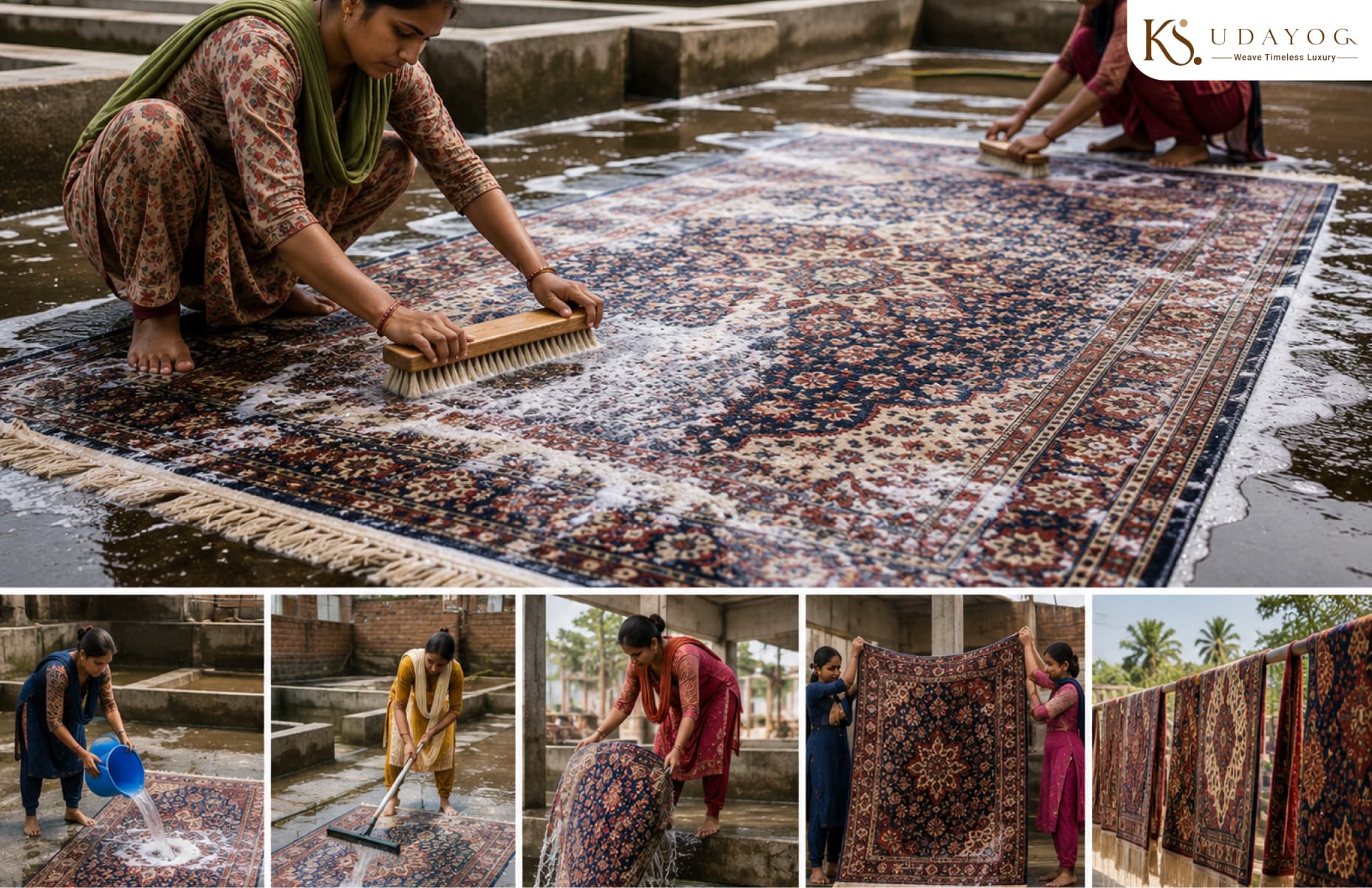
The exact washing method depends on the material, dyes, construction, and product specifications. Care is particularly important when working with delicate fibers or detailed designs.
After washing, the rug is prepared for drying.
Step 10: Dry And Shape The Rug
The rug must be dried properly after washing.
During this stage, manufacturers may carefully position the rug to help maintain its intended dimensions and shape. Proper drying is important because excessive moisture or improper handling can affect the finished product.
Once sufficiently dry, the rug can move to additional finishing and inspection stages.
Step 11: Complete Edge And Fringe Finishing
The edges receive additional attention before the rug is considered complete.
Depending on the design, the rug may have fringes, bound edges, or other finishing details. These elements are checked and adjusted to create a clean overall appearance.
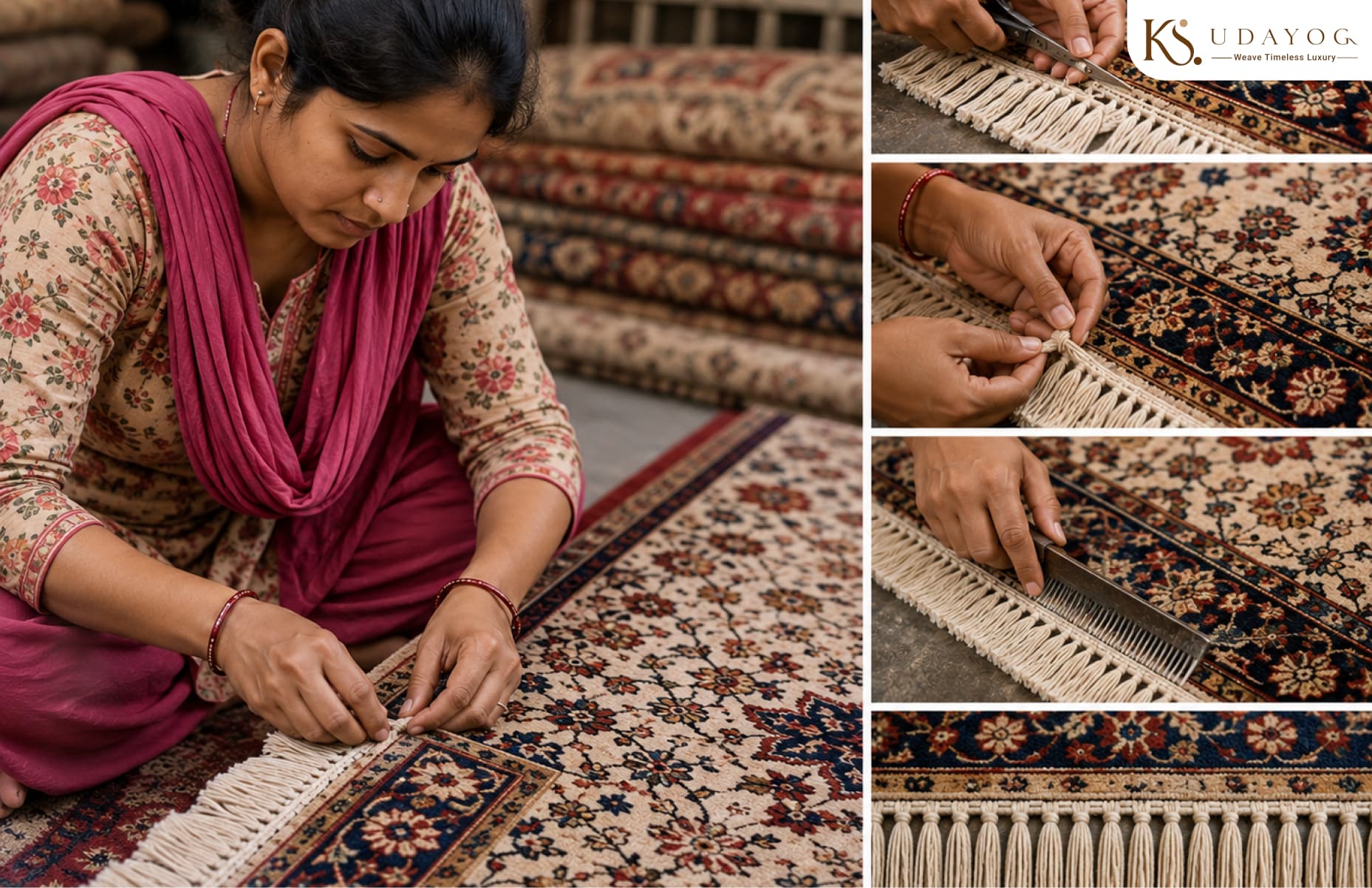
Edge finishing is particularly noticeable because uneven or poorly completed edges can affect how the rug looks when placed on the floor.
Step 12: Inspect The Finished Rug
Quality inspection helps identify problems before the rug reaches the customer.
Rug manufacturers check:
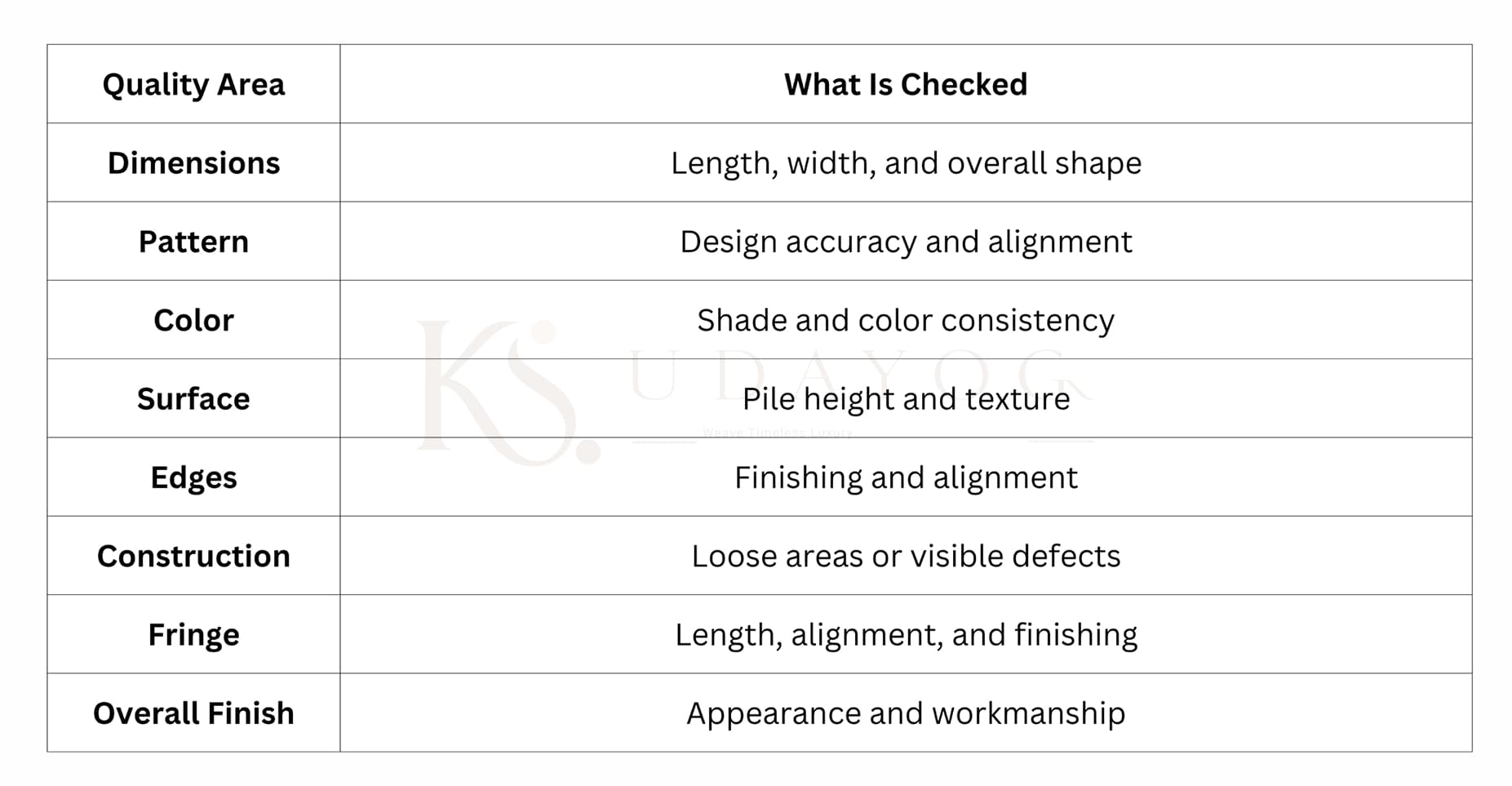
For customized or bulk orders, inspection against the approved specifications is particularly important.
Step 13: Final Cleaning And Preparation
After inspection, the rug may receive final cleaning or finishing treatments according to the product requirements.
Any remaining loose fibers or surface imperfections can be addressed before the rug is prepared for dispatch.
The finished product should match the agreed specifications in terms of size, design, color, construction, and overall appearance.
Step 14: Pack The Finished Rug
The final stage is packaging.
The rug needs to be prepared in a way that protects it during handling, storage, and transportation. Packaging requirements can vary depending on the rug's size, material, destination, and shipping method.
For wholesale and export orders, buyers may also have specific packaging or labeling requirements that should be confirmed before production begins.
How Long Does It Take To Make A Handmade Rug?
There is no fixed production time for every handmade rug.
A small rug with a relatively simple design can take considerably less time than a large, highly detailed rug. Production time is influenced by several factors:
- Rug dimensions
- Knot or weave density
- Design complexity
- Number of colors
- Material used
- Construction method
- Artisan skill
- Finishing requirements
- Order quantity
For bulk or customized orders, buyers should discuss production timelines with the manufacturer before confirming specifications.
What Affects Handmade Rug Quality?
Quality is influenced by more than the material used.
Important factors include yarn quality, construction density, design accuracy, artisan workmanship, edge finishing, washing, drying, and final inspection.
A well-made handmade rug should have an overall finish that reflects careful attention throughout the production process. For buyers, examining a physical sample can provide a much better understanding of the product than relying solely on photographs.
Handmade Vs Machine-Made Rug Manufacturing
The manufacturing process is one of the clearest differences between handmade and machine-made rugs. Handmade rugs bring unique craftsmanship and character, while machine-made rugs are faster to produce, more uniform, and usually more budget-friendly.
The real difference between handmade and machine-made rug manufacturing comes down to how each rug is made, how long it lasts, how it looks, and what you pay for it. Let’s compare both manufacturing methods to see which one suits your space better.
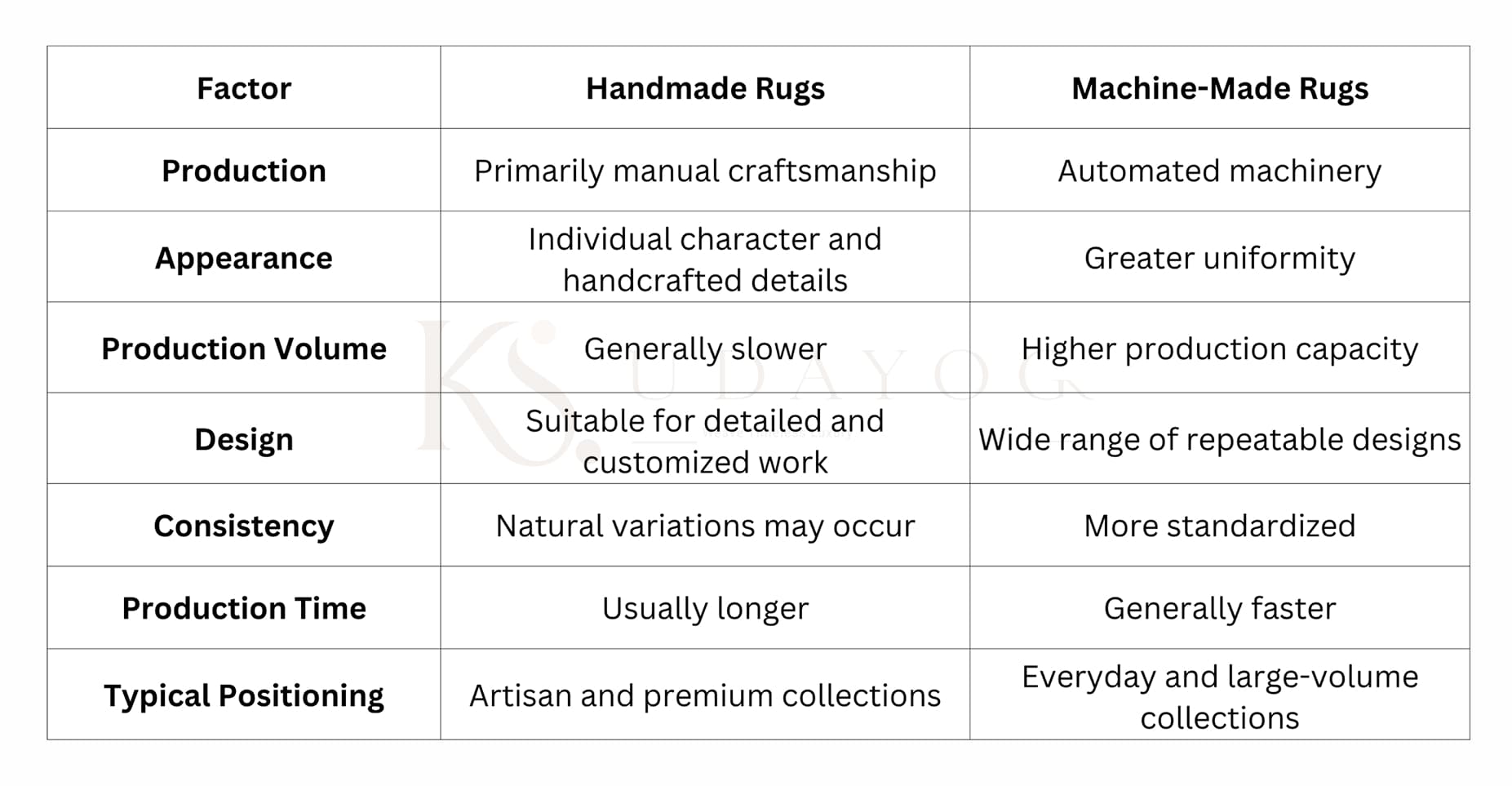
Neither method is automatically the better choice. The right option depends on the buyer's intended market, budget, quantity, design requirements, and expectations.
What Should Buyers Check Before Ordering Handmade Rugs?
If you are sourcing handmade rugs for a retail collection, hospitality project, or interior business, ask the manufacturer about more than the design.
Before buying rugs in bulk, confirm the material, construction method, dimensions, knot or weave specifications, color options, finishing process, MOQ, sample approval, production timeline, quality inspection, packaging, and customization options.
For repeat orders, it is also useful to establish clear product specifications based on an approved sample. This gives both the buyer and manufacturer a reference for future production.
Why Choose A Handmade Rug For Your Collection?
Handmade rugs can add craftsmanship and individuality to a product collection. Their manually created patterns, textures, and finishing details can make them suitable for customers seeking distinctive pieces rather than standardized floor coverings.
They can work particularly well for premium residential interiors, boutique hotels, interior design projects, specialty retail collections, and other settings where craftsmanship contributes to the product's appeal.
For retailers, the choice should still be based on customer demand, target pricing, required quantities, and the type of collection you want to build.
Source Handmade Rugs For Your Collection
If you are planning to introduce handmade rugs to your store or project, compare materials, designs, sizes, construction methods, and finishing options before finalizing your range. Working with a trusted rug manufacturer that can clearly explain its production process can also make bulk sourcing easier.
Final Thoughts
From a strand of yarn to a finished handmade rug, the process involves far more than simply creating a pattern. Yarn is prepared and colored, the design is translated onto the loom, artisans build the surface knot by knot or weave by weave, and the rug then goes through trimming, washing, drying, and detailed finishing.
The final rug reflects the work carried out at each stage. Understanding these steps gives you a clearer view of why handmade rugs can differ in texture, appearance, production time, and character from machine-made alternatives.
Looking to add handcrafted rugs to your collection? Explore rug designs with a rug manufacturer that can match your preferred materials, sizes, and production requirements.
Frequently Asked Questions (FAQs)
What Materials Are Used To Make Handmade Rugs?
Common materials include wool, cotton, silk, jute, viscose, and blended fibers. The appropriate material depends on the desired appearance, texture, durability, construction, and budget.
What Is The Difference Between Hand-Knotted And Handwoven Rugs?
Hand-knotted rugs are created by tying individual knots around foundation threads, while handwoven rugs are made by interlacing yarn through the prepared warp structure.
Are Handmade Rugs Completely Unique?
Handmade rugs can contain natural variations in texture, color, and workmanship because they involve manual production. These variations can contribute to their individual character.
How Can I Check The Quality of A Handmade Rug?
Check the material, construction, dimensions, pattern, surface, edges, fringe, finishing, and overall workmanship. A physical sample is useful when evaluating a rug before placing a bulk order.
Can Handmade Rugs Be Customized?
Depending on the manufacturer's capabilities, customization may be possible for dimensions, colors, patterns, materials, and finishing specifications. Custom orders may have different MOQs and production timelines.
Are Handmade Rugs Suitable For Wholesale Orders?
Yes. Handmade rugs can be sourced for retail collections, hospitality projects, interior projects, and other bulk requirements, provided the manufacturer can meet the required quantity, specifications, quality standards, and timeline.