Your door mat is the first line of defence against the dirt that comes in with every pair of footwear. That makes material an important consideration, especially in Indian homes where dust, rain, and everyday foot traffic can quickly test its durability.
A door mat that works beautifully in a dry indoor entryway may not be the best choice for a monsoon-facing entrance. Understanding the differences between coir, rubber, PVC, cotton, and synthetic materials can make your decision much easier.
Before choosing the door mat based only on colour or design, consider its grip, water resistance, cleaning needs, and expected usage. The right material can keep your entrance cleaner while complementing your home’s style. This guide compares the main options to help you choose the best material for your doormat.
Quick Answer: Which Material Is Best For Door Mat?
The best material for a door mat depends on where you use it and what you expect it to handle. Coir doormats are a strong choice for scraping dirt, while rubber doormats suit wet, high-traffic entrances. Cotton and microfiber doormats work better indoors, especially where moisture absorption matters.
The important point is that the face material and backing should be considered separately. A good surface can scrape or absorb effectively, but the wrong backing can make the mat slide, curl, or retain moisture underneath.
12 Best Door Mat Materials: Which One Should You Choose
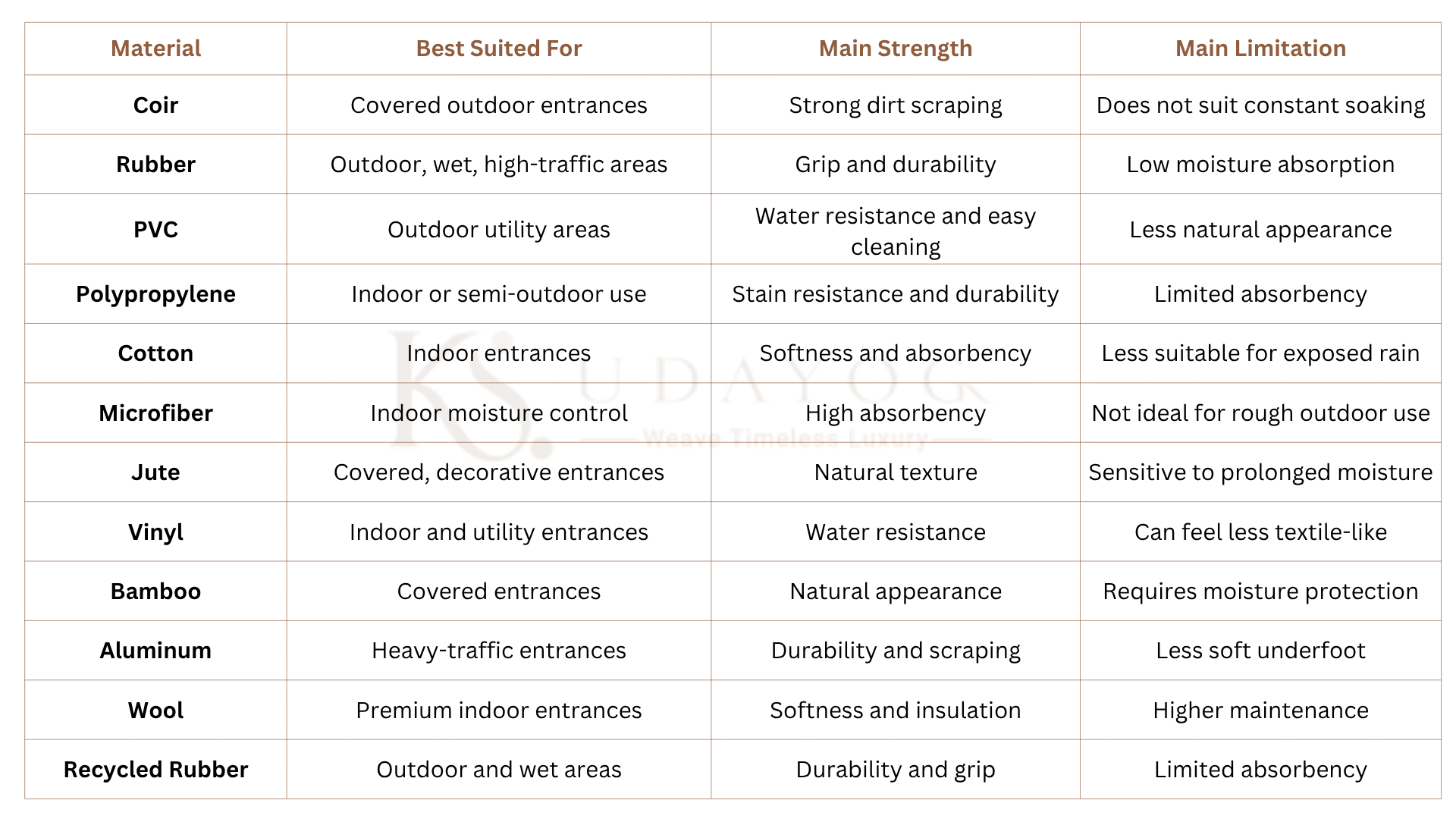
The right door mat material can make a noticeable difference to how well your entrance handles dust, moisture, dirt, and daily foot traffic. Indian homes face different conditions throughout the year, so one material may not suit every entrance or lifestyle. The 12 best door mat materials can help you compare durability, maintenance, appearance, and everyday practicality before choosing one.
1. Coir Door Mat Works Well For Dirt Scraping
Coir comes from coconut husk fibre and has a naturally coarse texture. That makes it particularly useful where the primary job of the mat is removing dirt, grit, and mud from footwear before it reaches the floor.
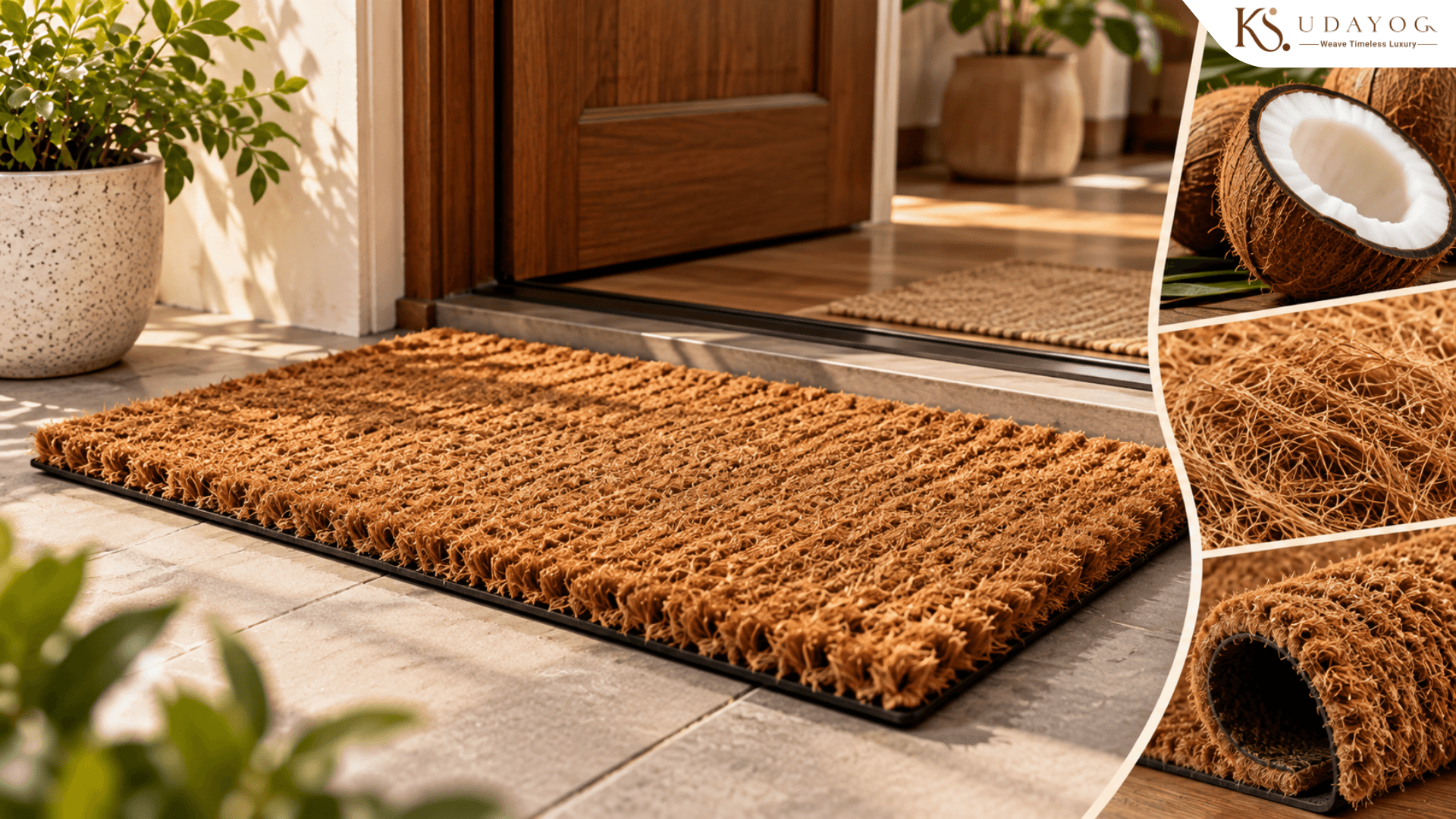
It works especially well at a covered main entrance, porch, or doorway where the mat receives regular foot traffic but is protected from prolonged rain.
Why choose a coir doormat?
- Coarse fibres provide strong scraping action.
- The natural texture suits traditional and contemporary entrances.
- It handles regular foot traffic reasonably well.
- It can be shaken or brushed to remove loose dirt.
- It is widely available in different sizes and designs.
What to consider
Coir is not the ideal choice for an entrance that stays wet for long periods. Continuous soaking can make drying and maintenance more difficult, so covered placement is generally more suitable.
2. Rubber Door Mat Handles Wet Heavy Traffic
Rubber is a practical option when durability, grip, and resistance to water matter more than absorbency.
Its dense construction makes it suitable for outdoor entrances, garages, apartment corridors, commercial entryways, and areas that receive frequent foot traffic.
Rubber mats can also be moulded with grooves, holes, ridges, or textured surfaces. These designs help scrape dirt or allow water and debris to move away from the walking surface.

Rubber Door Mat is useful when:
- The entrance gets frequent foot traffic.
- Rain or splashing water is common.
- The mat needs strong floor grip.
- Easy rinsing is important.
- The entrance needs a heavy-duty option.
One limitation is that rubber does not work like an absorbent textile mat. If the goal is to remove water from wet footwear, a textile layer may be more suitable.
3. PVC Door Mat Suits Easy-Clean Entrances
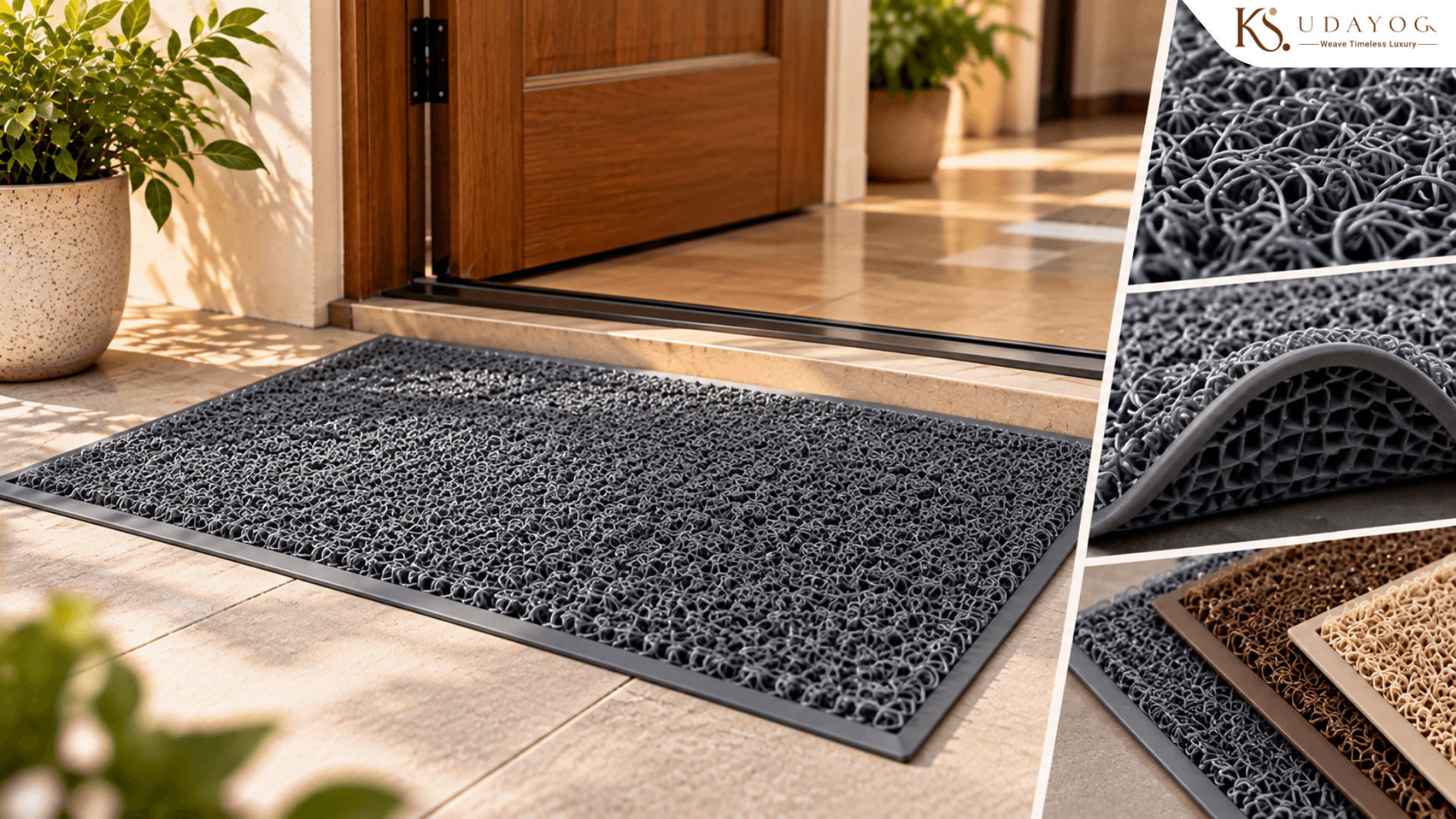
PVC door mats are popular where buyers want a practical, water-resistant surface that is simple to clean.
Depending on construction, PVC mats may have raised patterns, open grids, coils, grooves, or textured surfaces that help collect dirt and allow water to drain.
They are particularly useful for semi-outdoor spaces, utility entrances, balconies, and areas where the mat needs frequent rinsing.
PVC is worth considering when:
- The entrance is exposed to splashes.
- Frequent cleaning is expected.
- Water resistance is important.
- A structured, utility-focused mat is acceptable.
- The mat will experience regular outdoor use.
Quality can vary considerably, so do not judge a PVC mat only by its appearance. Check its thickness, construction, flexibility, surface texture, and backing.
4. Polypropylene Door Mat Balances Durability And Design
Polypropylene is a synthetic fibre used in many textile-style mats because it can provide a practical combination of durability, colour options, and relatively easy maintenance.
It can be manufactured in different textures, pile constructions, patterns, and colours, making it useful when the mat needs to perform while still complementing the entrance décor.
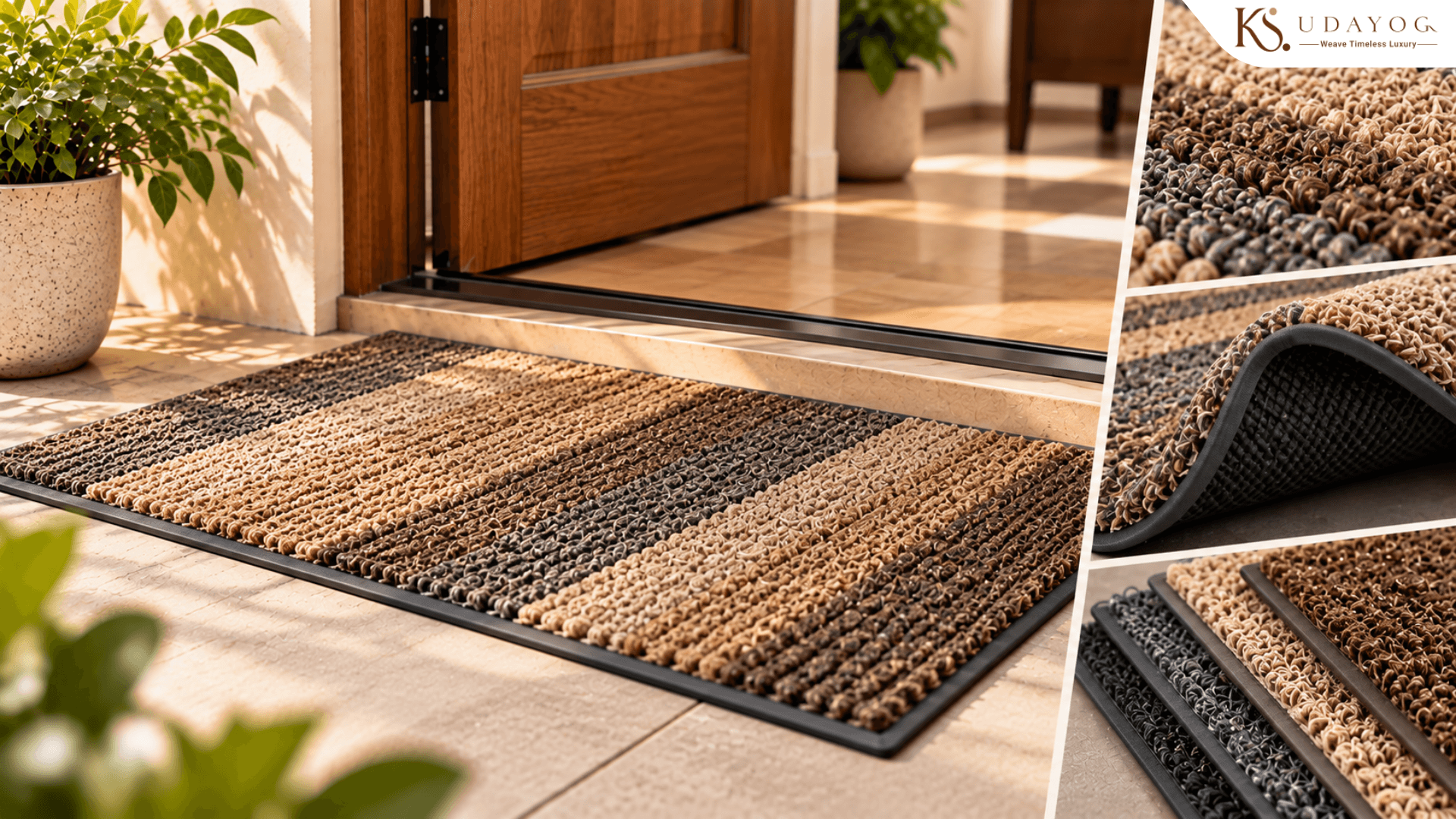
It can suit indoor entrances, covered doorways, apartments, offices, and semi-outdoor areas, depending on the construction.
Its performance should not be judged by fibre name alone. Pile density, construction, backing, thickness, and finishing also affect how the finished mat behaves.
5. Cotton Door Mat Is Better For Indoor Entrances
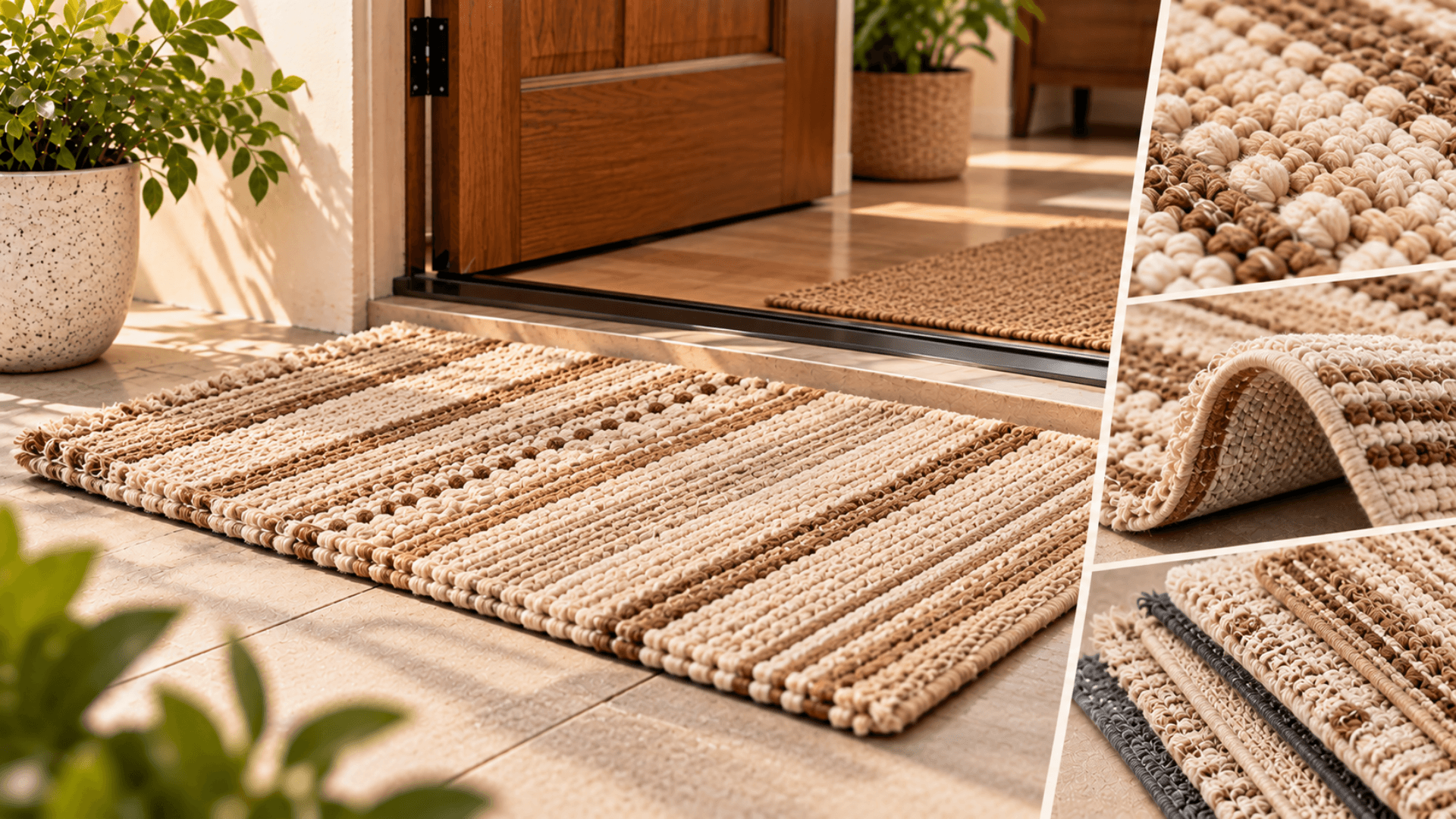
Cotton is soft, absorbent, washable, and comfortable underfoot. These qualities make it more suitable for indoor or protected areas than for an exposed main entrance.
A cotton door mat can work well inside the main door, near a balcony door, beside a kitchen entrance, or in another area where moisture absorption and easy washing matter.
Cotton makes sense when:
- The mat is protected from heavy rain.
- Frequent washing is convenient.
- Softness matters.
- Moisture absorption is required.
- The entrance receives moderate traffic.
Cotton can absorb water effectively, but that also means it needs proper drying. A damp mat left on the floor for extended periods is not a good maintenance practice.
6. Microfiber Door Mat Helps With Moisture
Microfiber mats are designed around absorbency and quick moisture pickup rather than aggressive dirt scraping.
They are useful as an indoor second-line mat, particularly when footwear carries moisture into the house after rain.

A microfiber mat can complement an outdoor scraper mat rather than replace it.
For example:
- Outdoor entrance: Coir or rubber scraper
- Inside the door: Microfiber or cotton wiper
This two-mat approach separates two jobs: removing dirt outside and absorbing remaining moisture inside.
7. Jute Door Mat Adds Natural Entrance Texture
Jute offers a natural, woven appearance that works well with earthy, traditional, rustic, and minimal interiors.
Its main advantage is visual and tactile appeal rather than heavy-duty outdoor performance. Jute is better suited to covered entrances and indoor transition areas where prolonged exposure to water is unlikely.

Avoid treating jute as an all-weather material simply because it is a natural fibre. Moisture exposure, drying conditions, construction, and finishing all affect its suitability.
8. Vinyl Door Mat Offers Water-Resistant Performance
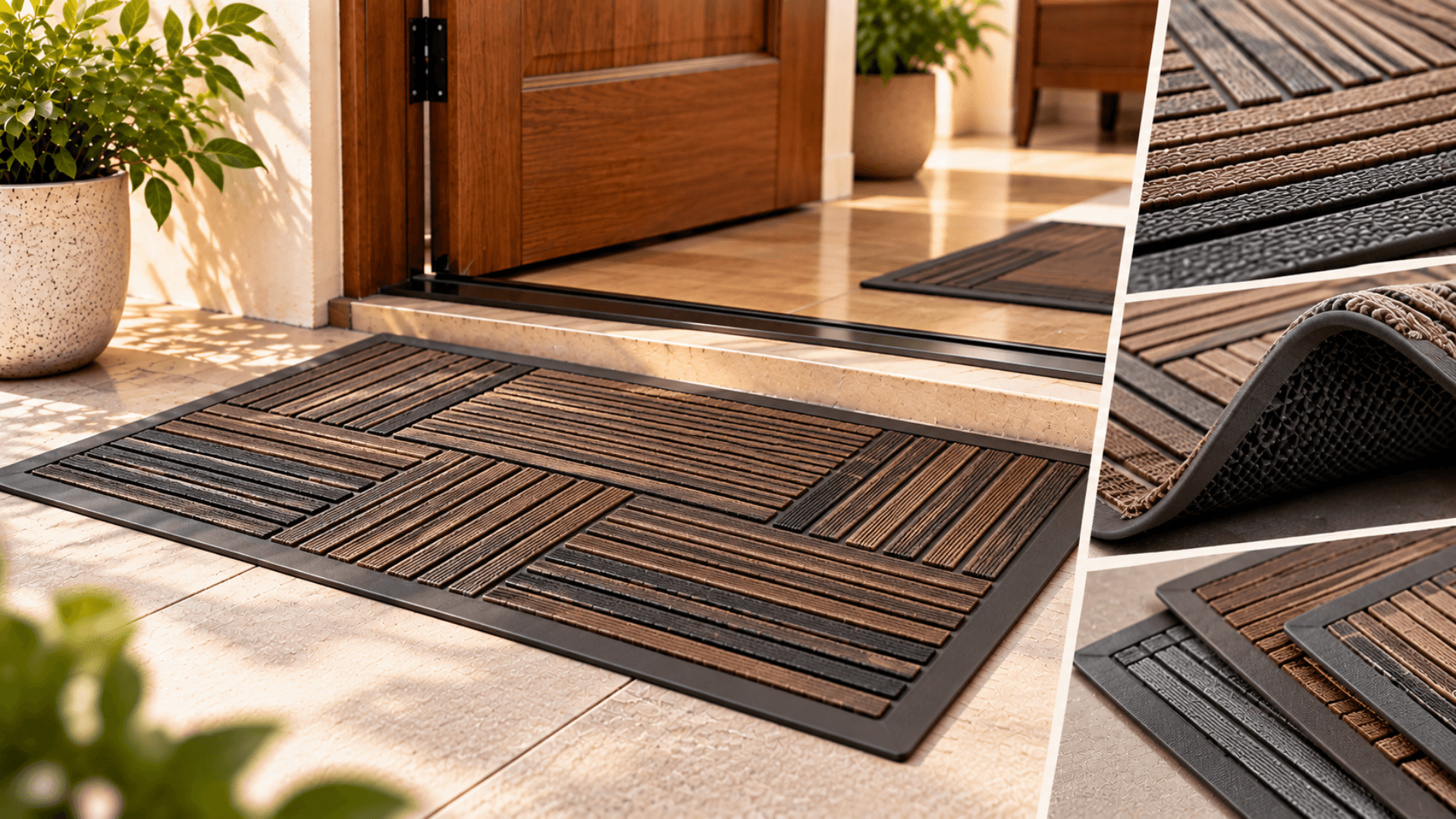
Vinyl is a practical synthetic material for entrances where water resistance and easy maintenance are important.
It can be produced with textured or patterned surfaces that help provide traction and collect dirt. Its relatively simple cleaning requirements make it suitable for utility entrances, kitchens, balconies, and other areas where moisture or spills are common.
Vinyl can be considered when:
- Water resistance is important.
- The mat needs simple cleaning.
- The entrance receives regular use.
- A synthetic surface is acceptable.
- The mat is used in an indoor or protected area.
Its performance depends on thickness, surface texture, backing, and overall construction, so these specifications should be checked before purchase.
9. Bamboo Door Mat Suits Covered Entrances
Bamboo door mats offer a natural appearance and a structured surface that can complement traditional, minimalist, or earthy interiors.
They are generally more suitable for covered entrances, balconies, and indoor transition areas than locations exposed continuously to rain.
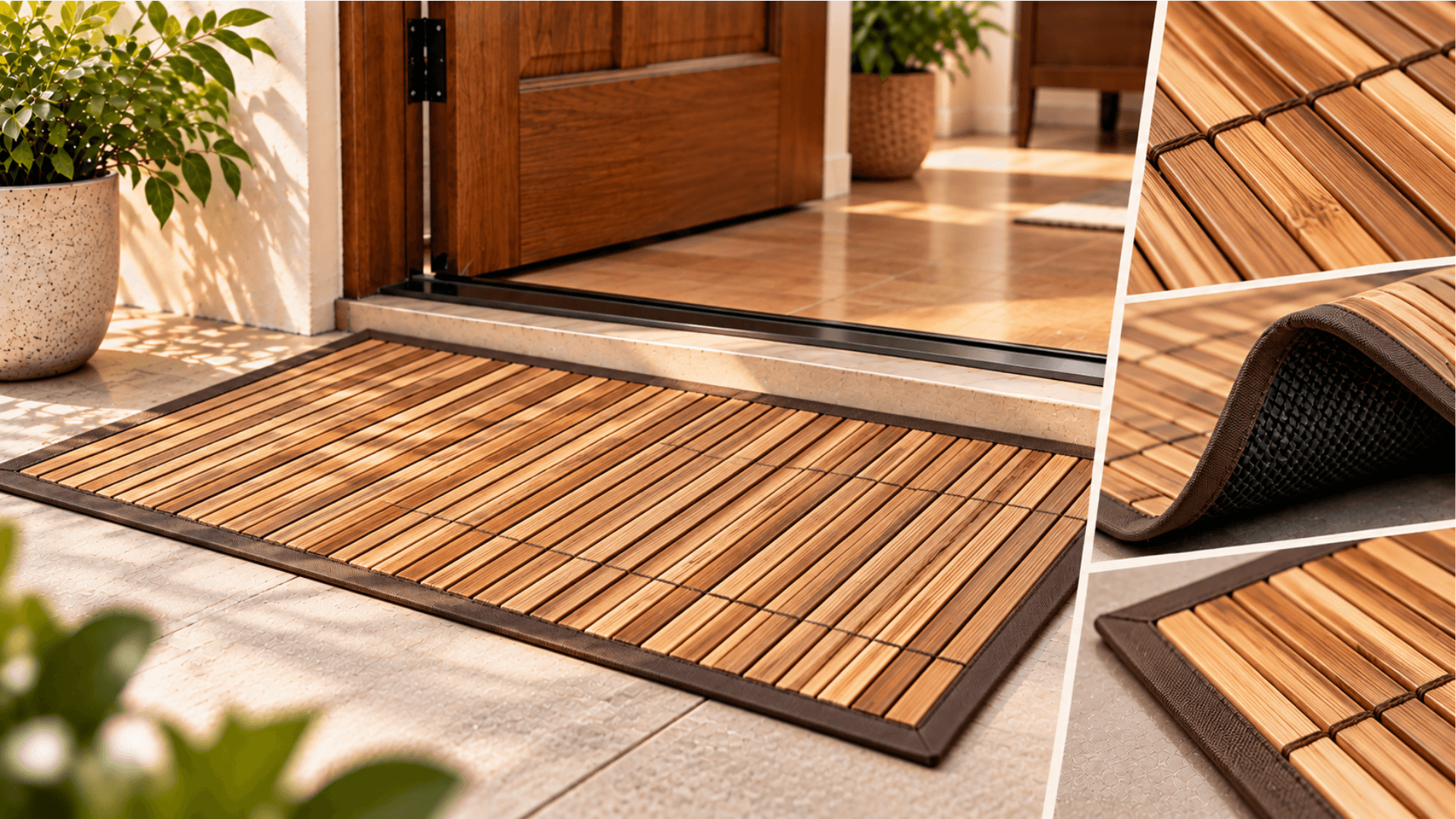
Bamboo works well when:
- Natural-looking materials are preferred.
- The entrance is protected from direct rain.
- A firm, structured surface is desired.
- Easy surface cleaning is useful.
- Decorative appeal matters alongside function.
Prolonged moisture exposure should be considered carefully because drying conditions and construction can affect the material's service life.
10. Aluminum Door Mat Handles Heavy Foot Traffic
Aluminum mats are designed more for durability, scraping, and heavy-use environments than softness or absorbency.
Their structured surface can help remove dirt and debris from footwear, making them useful for commercial buildings, hotels, offices, apartment entrances, and busy outdoor entry points.
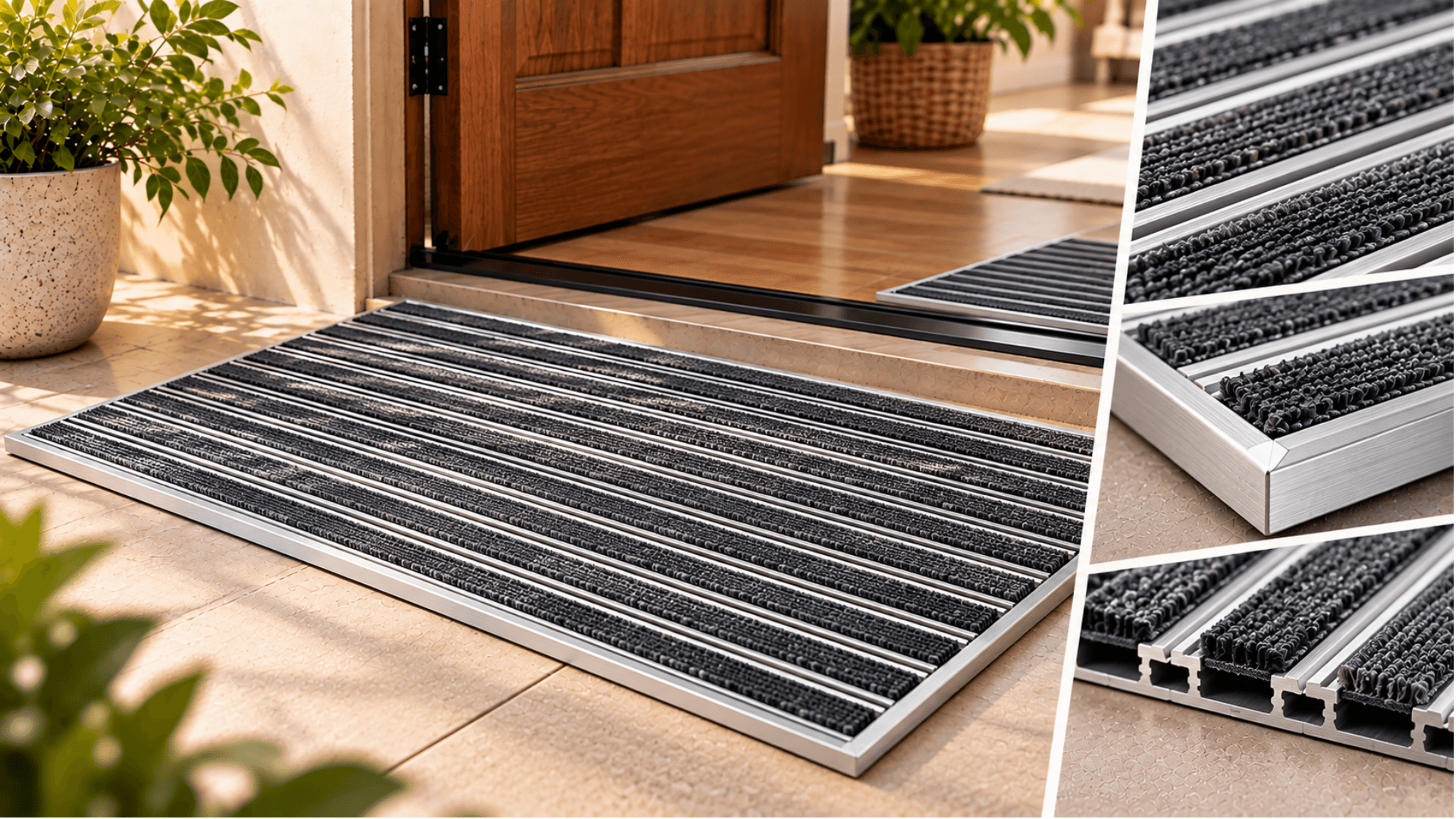
Aluminum is useful when:
- Foot traffic is high.
- Strong scraping is required.
- Long-term durability matters.
- The entrance is commercial or institutional.
- A structured entrance mat is preferred.
Aluminum does not provide the same softness or water absorption as textile materials. It is therefore often selected as part of a broader entrance-mat system rather than as an absorbent indoor mat.
11. Wool Door Mat Provides Premium Indoor Comfort
Wool is a soft natural fibre that can provide a comfortable feel and a premium appearance.
Wool mats are better suited to indoor or well-protected entrances, particularly where appearance, softness, and interior styling matter alongside everyday performance.
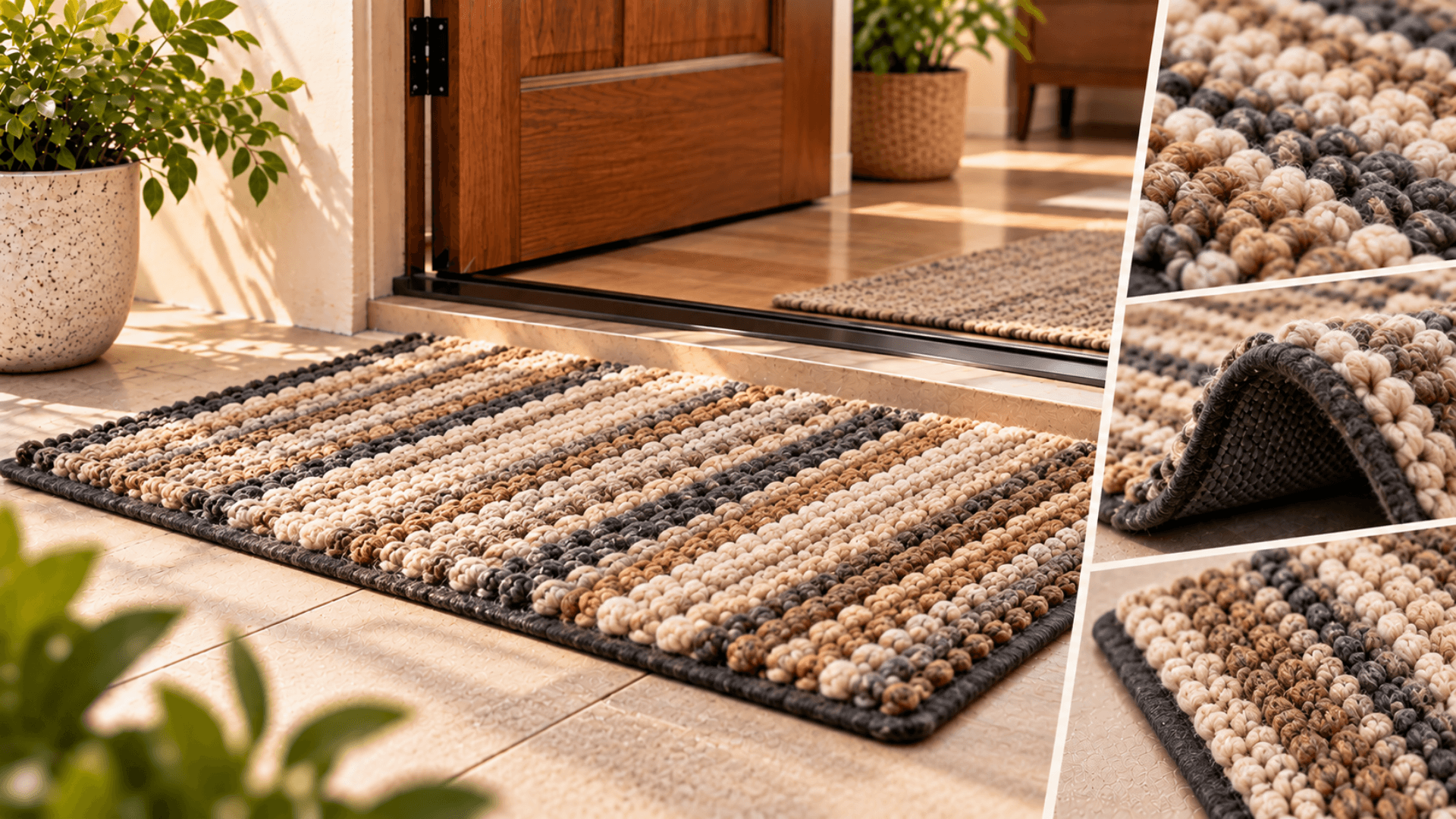
Wool can be considered when:
- A premium natural material is preferred.
- Softness matters.
- The mat is protected from heavy moisture.
- Interior appearance is important.
- Moderate indoor foot traffic is expected.
Wool generally requires more careful maintenance than hard-wearing outdoor materials, so it may not be the practical choice for entrances exposed to mud, standing water, or very heavy traffic.
12. Recycled Rubber Door Mat Supports Heavy-Duty Use
Recycled rubber provides many of the practical qualities associated with rubber mats, including durability, grip, and suitability for wet or high-traffic environments.
It can be useful for outdoor entrances, commercial buildings, garages, workshops, and utility areas where a resilient surface is required.
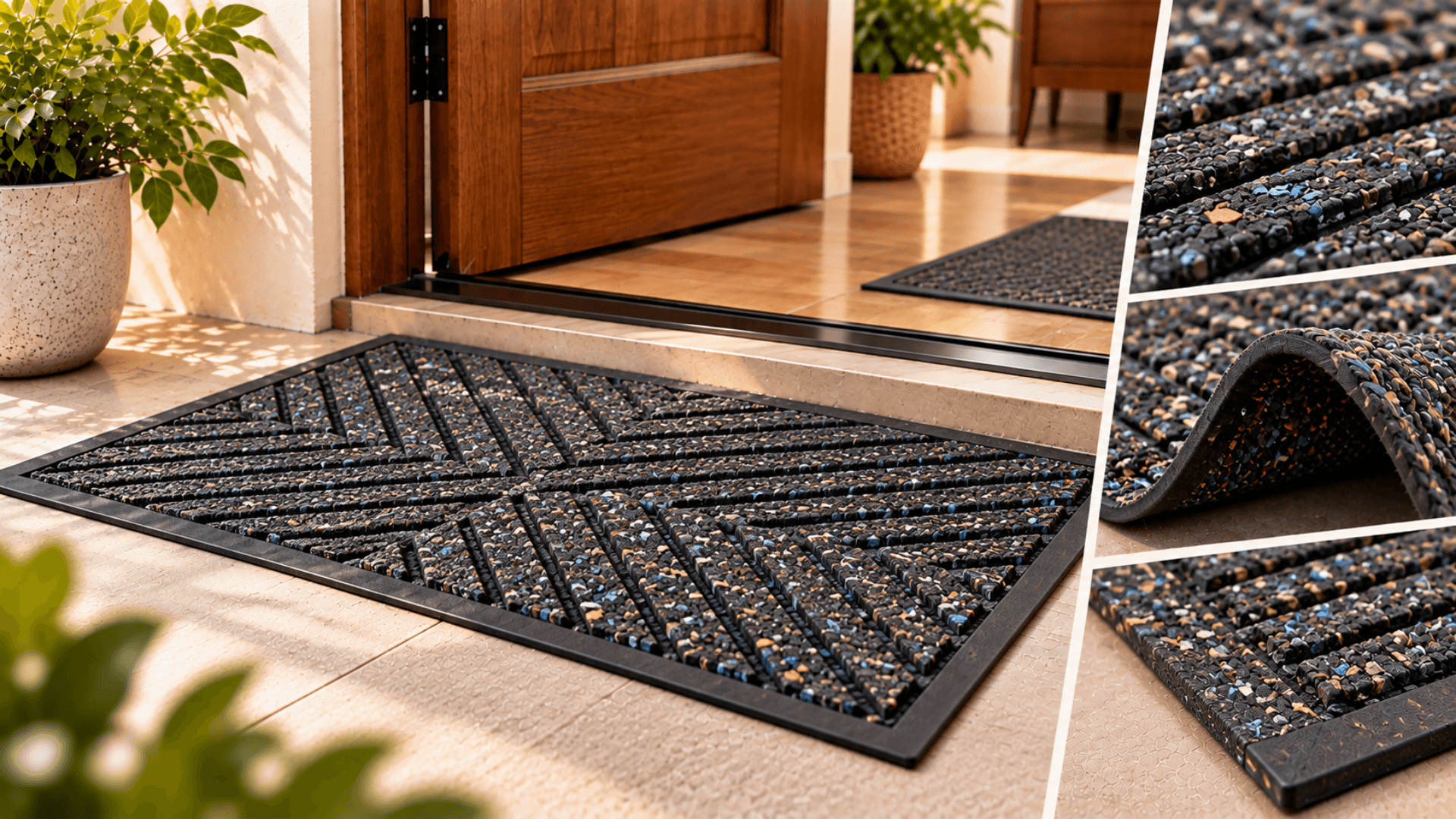
Recycled rubber works well when:
- Heavy foot traffic is expected.
- Water resistance is important.
- Strong floor grip is required.
- Outdoor durability matters.
- Easy cleaning is preferred.
As with conventional rubber, recycled rubber is not primarily an absorbent material. Its main strengths are durability, traction, and resistance to demanding entrance conditions.
Which Door Mat Material Suits Indian Weather?
Indian homes can face very different entrance conditions depending on the region and season. Dusty summers, monsoon rain, humid conditions, and high daily foot traffic can all change what a mat needs to handle.

These are starting points, not fixed rules. Construction and backing can make two mats made from the same fibre perform very differently.
Why Door Mat Backing Matters Too
A common buying mistake is focusing only on the top material. The backing affects grip, stability, floor contact, moisture retention, and overall usability. Common backing options include:
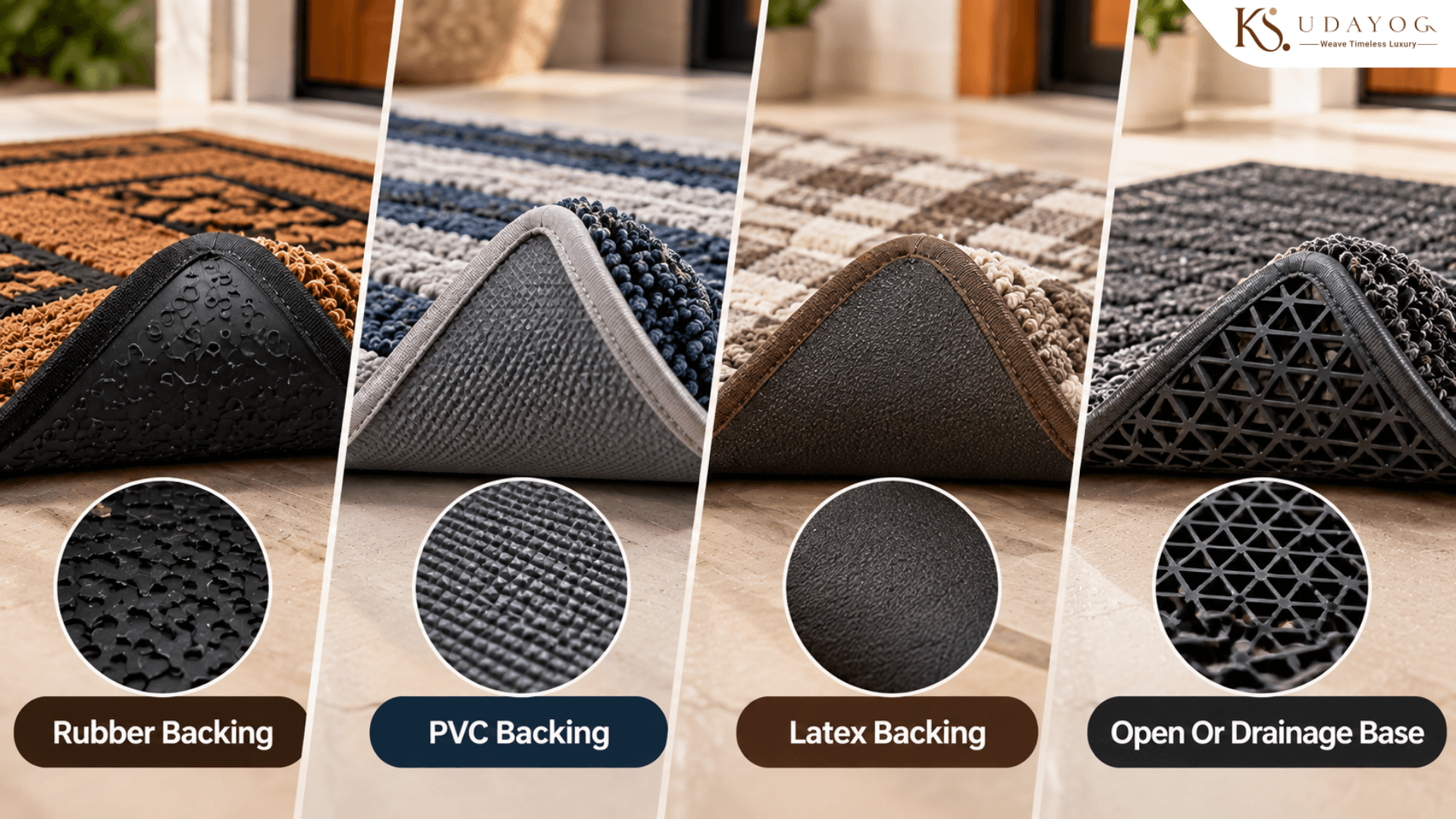
- Rubber Backing
Rubber backing provides strong grip and is widely used where the mat needs to stay firmly positioned on smooth flooring.
- PVC Backing
PVC can provide a practical anti-slip base at a generally accessible price point. Its performance depends on the formulation and construction.
- Latex Backing
Latex is another backing option used with textile and coir mats. It can provide flexibility and grip while keeping the mat relatively lightweight.
- Open Or Drainage Base
Some outdoor mats use open constructions rather than a solid backing. These allow water and debris to pass through, which can be useful in exposed areas.
A good top material cannot compensate for an unsuitable backing. Always consider both parts when buying a door mat.
How To Choose Door Mat Material By Entrance
The easiest way to choose is to start with the location rather than the material.
- Main Door
For a covered main entrance, coir is useful when dirt scraping is the priority. Rubber or PVC can be more practical when rain and heavy traffic are major concerns.
- Apartment Entrance
A textile mat such as polypropylene, cotton, or microfiber may work well when the entrance is protected from direct weather.
- Balcony Door
Choose according to exposure. A covered balcony can accommodate textile options, while an open balcony generally needs better moisture resistance.
- Kitchen Entrance
Cotton, microfiber, or another washable material can be useful because spills and frequent cleaning are common considerations.
- Commercial Entrance
Rubber, PVC, or heavy-duty textile constructions are generally more appropriate where foot traffic is substantially higher than in a typical home.
Should You Select One Material Or Two?
For entrances exposed to both dirt and rain, a two-stage setup can be more practical than asking one mat to perform every task.
- First layer: A scraper mat outside to remove dirt and grit.
- Second layer: An absorbent mat inside to pick up remaining moisture.
For example, a covered outdoor coir mat paired with an indoor microfiber mat can divide the workload between two different materials.
This approach can also make maintenance easier because each mat performs a more specific function.
Right Material For A Doormat: Quick Decision Approach
The right doormat material depends on where you plan to use it, how much foot traffic it receives, and the type of dirt or moisture it needs to handle. Outdoor entrances may need tougher materials, while indoor spaces can benefit from softer, easier-to-clean options. These quick tips can help you match the material with your home’s practical needs.
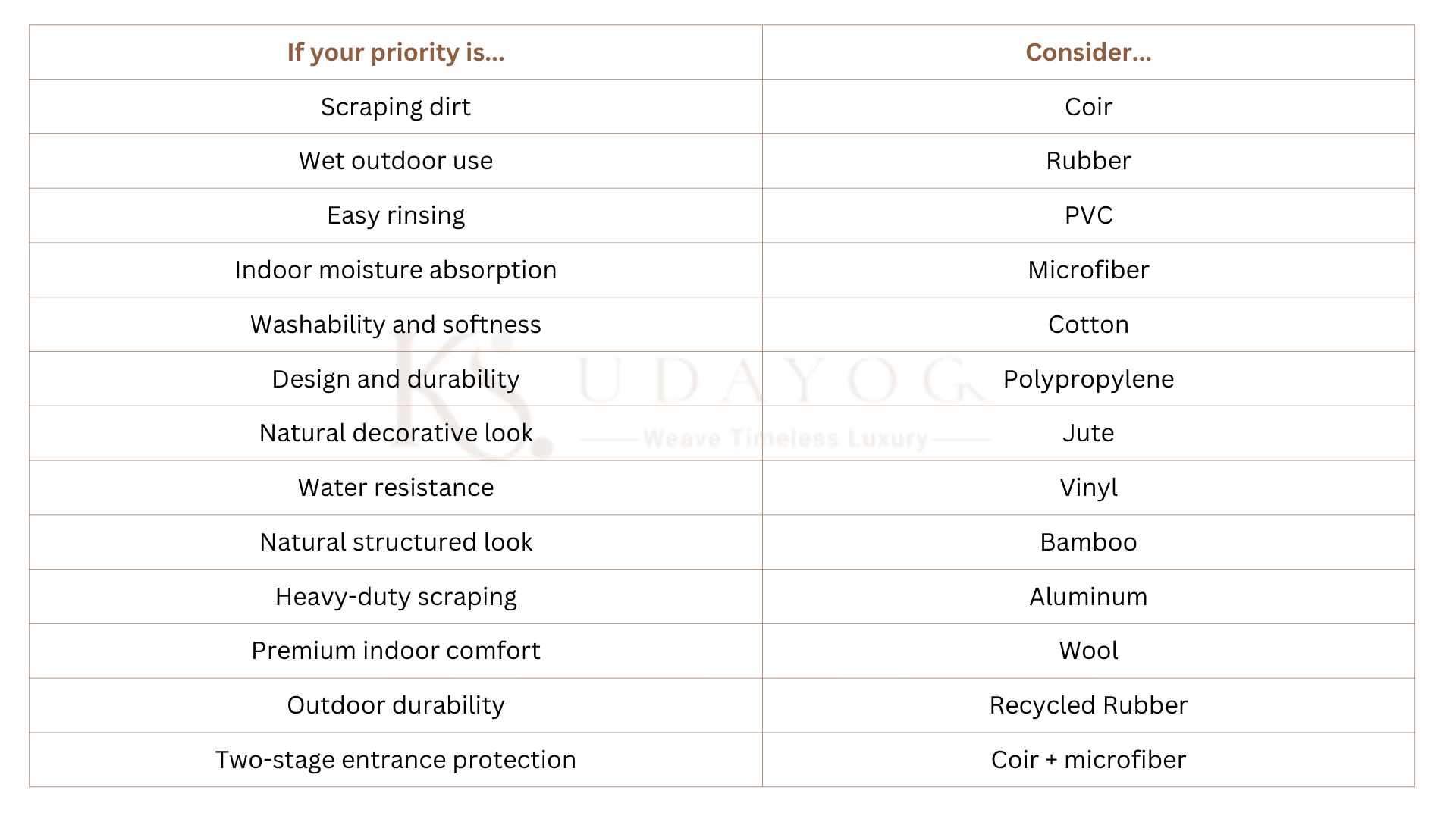
The best material is therefore the one that matches the specific job your entrance demands, rather than the material that sounds most durable or premium.
Conclusion
To sum up, the best material for a door mat depends on what your entrance actually needs. Coir is a strong dirt scraper, rubber handles wet and heavy-use conditions, PVC offers easy maintenance, and cotton or microfiber provide useful indoor moisture absorption.
Vinyl, bamboo, aluminum, wool, and recycled rubber can also suit specific entrance conditions, depending on exposure, traffic, maintenance requirements, and the construction of the finished mat.
Instead of choosing a mat only for its appearance, consider entrance exposure, foot traffic, moisture, cleaning requirements, thickness, construction, and backing together.
For bulk, custom, or private-label door mats, the same principles apply at the sourcing stage: material selection, construction, backing, size, finishing, and intended use should be defined before production.
If you are looking for customised door mats for your retail, hospitality, or wholesale requirements, you can connect with a reliable doormat manufacturer and supplier in India to discuss your specifications and bulk requirements.
Frequently Asked Questions (FAQs)
Is Coir Better Than Rubber For Door Mats?
Coir is better when scraping dirt is the priority, particularly at covered entrances. Rubber is more suitable when water resistance, grip, and heavy-duty use matter more.
Are Cotton Door Mats Good For Outdoor Use?
Cotton is generally better for indoor or covered entrances. Direct rain exposure can increase drying time and make regular maintenance more demanding.
Which Door Mat Material Is Best For The Monsoon?
Rubber and PVC are practical for exposed wet areas, while quick-drying synthetic or absorbent mats can work indoors. Placement and drainage are just as important as the material.
Is Polypropylene Good For Door Mats?
Yes, polypropylene can be a practical choice where durability, easy maintenance, colour options, and textile-style construction are required. Its actual performance depends on density, construction, backing, and finishing.
Is Vinyl A Good Material For Door Mats?
Vinyl can be useful where water resistance and easy cleaning are priorities. Its suitability depends on the mat's surface texture, thickness, backing, and intended location.
Are Bamboo Door Mats Suitable For Outdoor Use?
Bamboo is generally better suited to covered outdoor or indoor entrances. Prolonged exposure to rain and moisture should be considered before using it in an open area.
Are Aluminum Door Mats Good For Heavy Traffic?
Yes, aluminum mats can be suitable for high-traffic entrances because they offer a durable, structured surface designed for scraping dirt and debris from footwear.
What Is The Best Door Mat Material For An Indian Home?
The best option depends on the entrance. Coir suits covered main doors, rubber and PVC work well in wetter areas, while cotton or microfiber can suit indoor spaces.