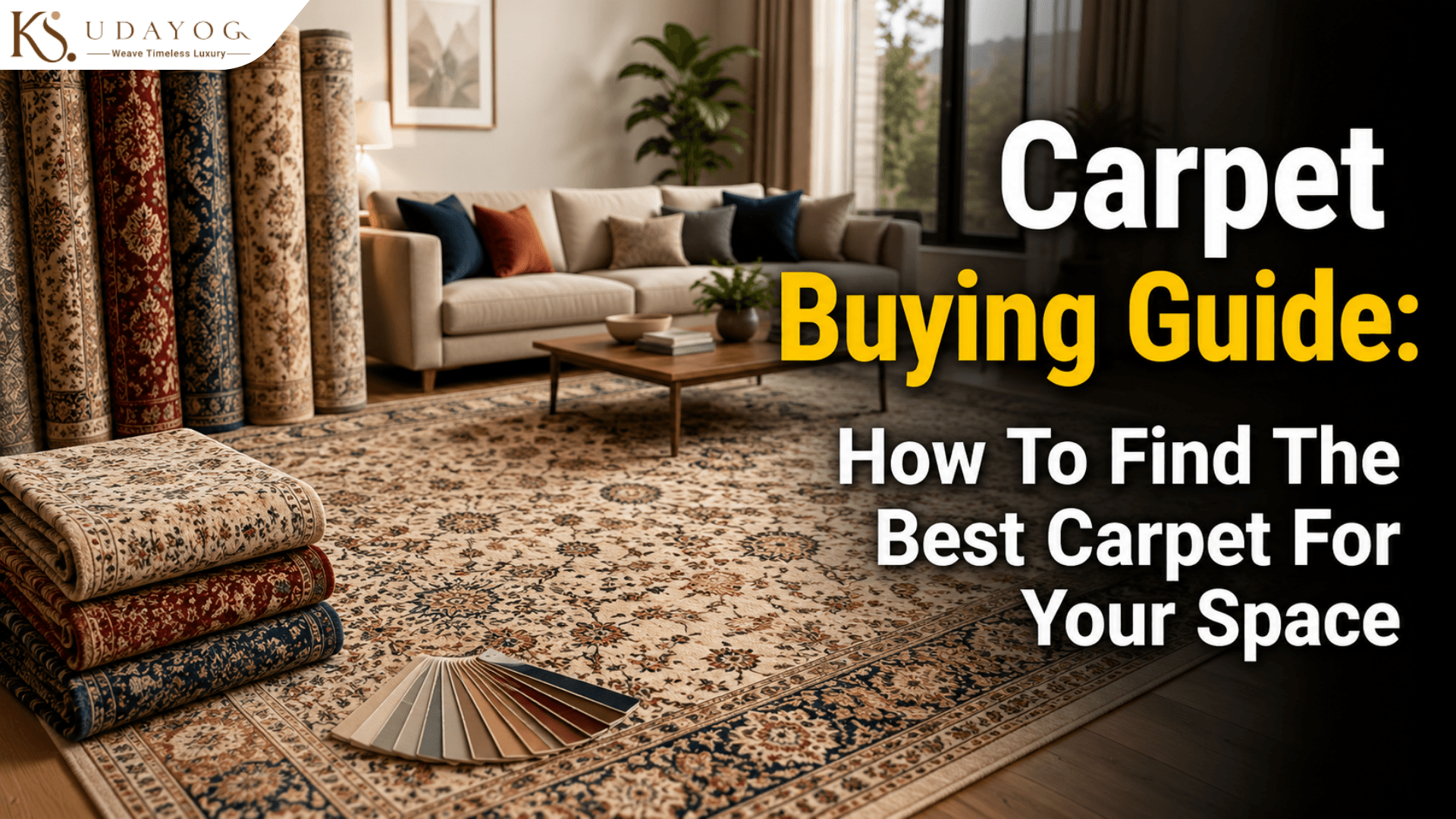
The best carpet for your space depends on more than its colour or pattern. If you are choosing a carpet when you're only thinking about colour, it's easy.
The decision gets more interesting when you consider what happens after installation: kids running across it, pets shedding, furniture sitting on it, spills happening, and regular cleaning taking its toll.
Those everyday realities should influence what you buy just as much as the design. The best carpet is the one that suits the room rather than simply following a trend.
From fiber and construction to pile height, density, size, comfort, durability, and maintenance, this carpet buying guide covers what to look for before buying so you can find an option that feels right for your space and makes sense for the way you live or work.
#1. Start By Understanding Where The Carpet Will Be Used
The room or space should be the starting point for your carpet selection. A bedroom generally prioritises softness and comfort, while a living room may need a balance of appearance, durability, and easy maintenance.
Commercial spaces often require greater resistance to foot traffic and more practical cleaning requirements.
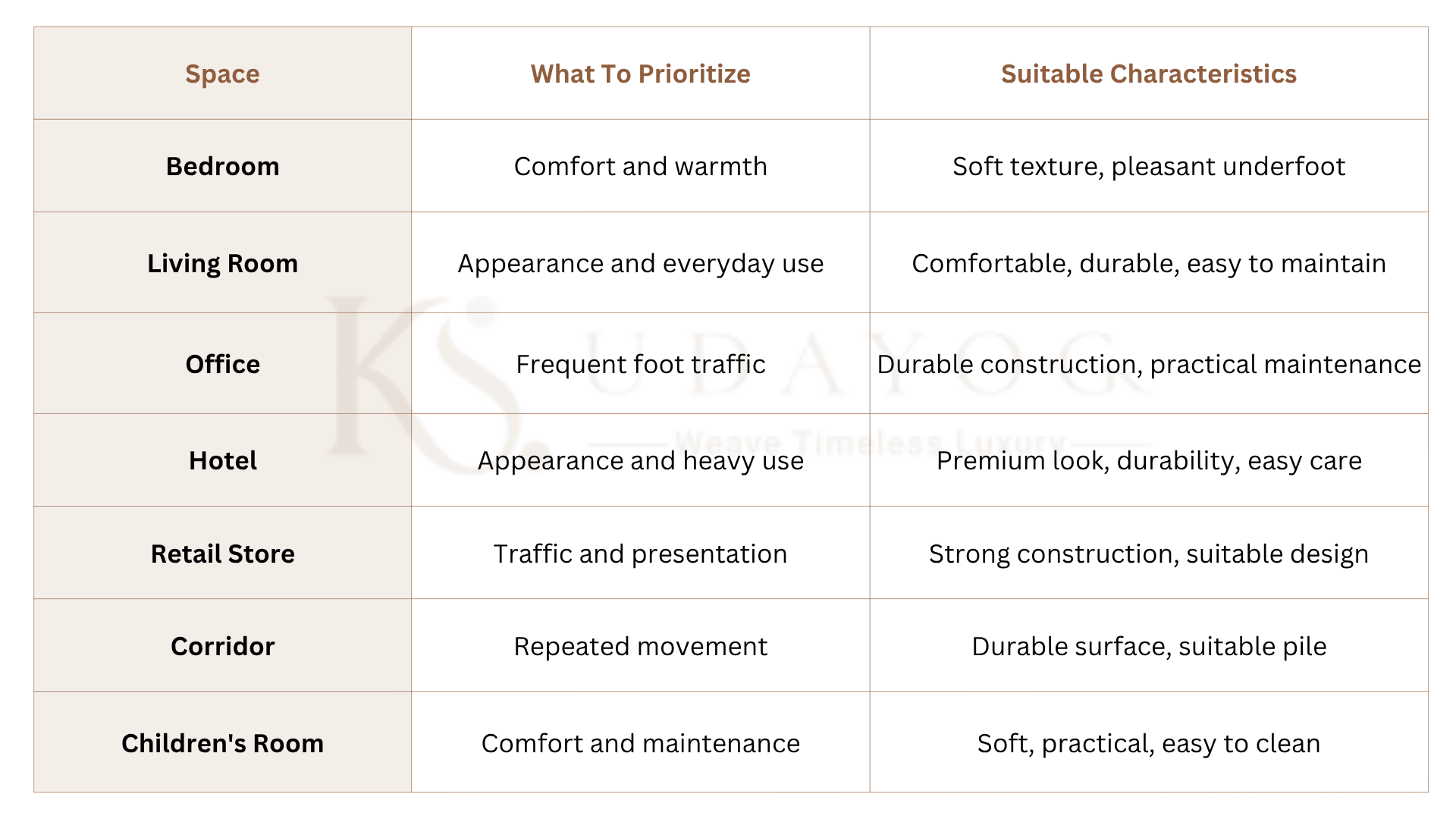
Understanding the application first prevents you from choosing a carpet based only on appearance.
#2. Choose The Right Carpet Material
The fibre has a major effect on how a carpet feels, looks, performs, and needs to be maintained. So, which kind of carpet material is right for you? Let’s find out.
- Wool
Wool is valued for its softness, warmth, resilience, and premium appearance. It can be suitable for bedrooms, living rooms, luxury interiors, hotels, and other spaces where comfort and finish are important.
- Cotton
Cotton provides a soft, natural feel and can work well in casual residential interiors. It is also available in a variety of colours and designs.
- Nylon
Nylon is known for its durability and can be considered for areas with regular foot traffic. It can be a practical option for offices, commercial spaces, and busy households.
- Polyester
Polyester offers a wide range of colour possibilities and can suit buyers looking for practical carpeting at different price levels.
- Polypropylene
Polypropylene can provide a practical option for areas where affordability and ease of maintenance are important. Its suitability depends on the specific construction and intended application.
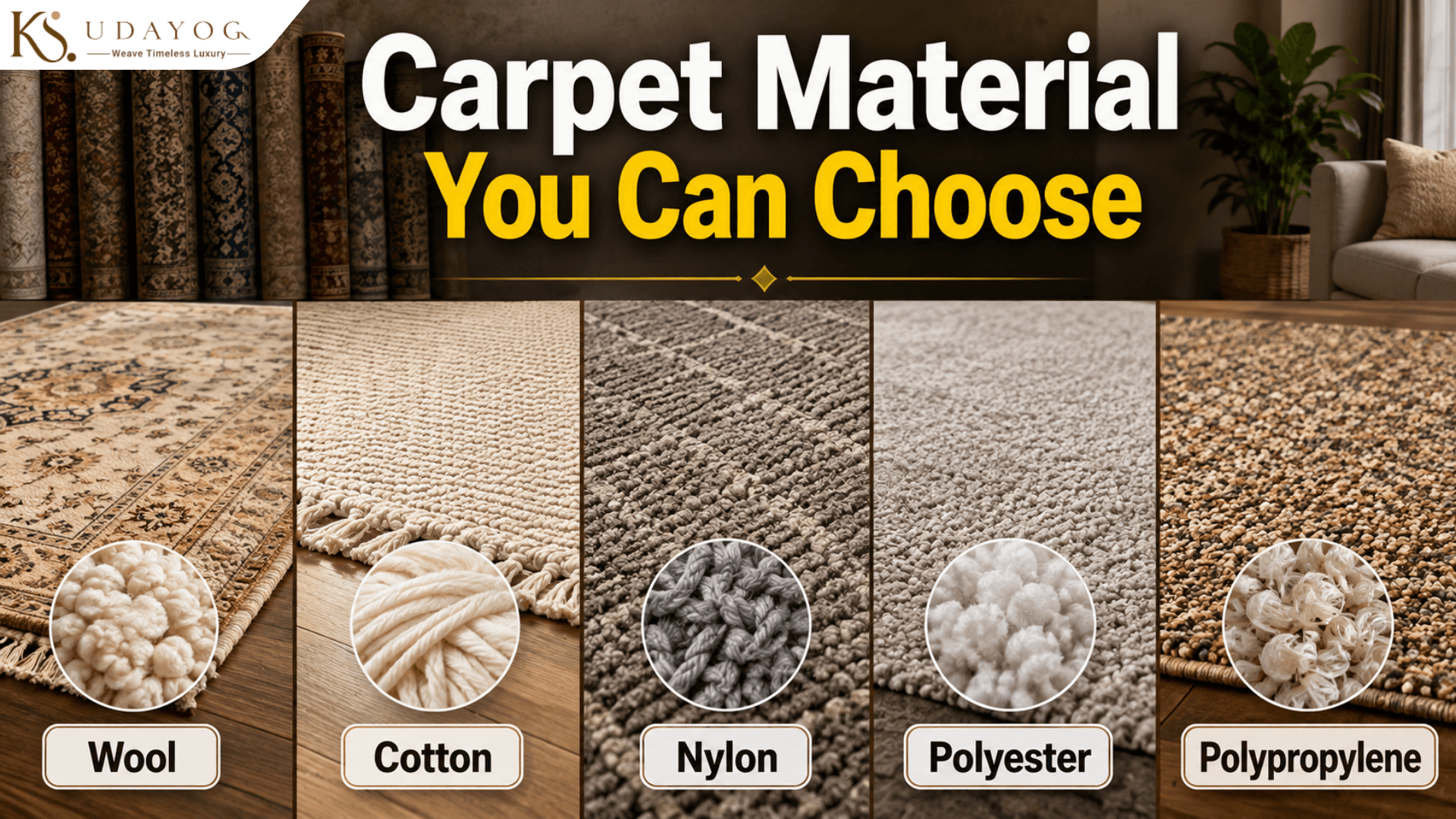
The right material depends on the room, expected usage, appearance requirements, cleaning routine, and budget rather than simply choosing the most expensive fibre.
#3. Understand Carpet Construction
Two carpets made from the same fibre can perform differently because their construction may not be the same.
Carpet construction affects the surface appearance, texture, durability, and overall feel of the carpet.
Common approaches to create carpets include:
- Tufted Carpets: Produced by inserting yarn into a backing material and widely used across residential and commercial applications.
- Woven Carpets: Made by interlacing yarns, often associated with detailed designs and premium carpet production.
- Machine-Made Carpets: Produced using specialized machinery, allowing greater production volume, consistency, and uniformity.
- Hand-Knotted Carpets: Crafted by individually tying yarn onto a foundation, creating durable, detailed, and often premium carpets.
- Hand-Tufted Carpets: Made by manually inserting yarn into a fabric backing, offering flexible designs and quicker production than hand-knotting.
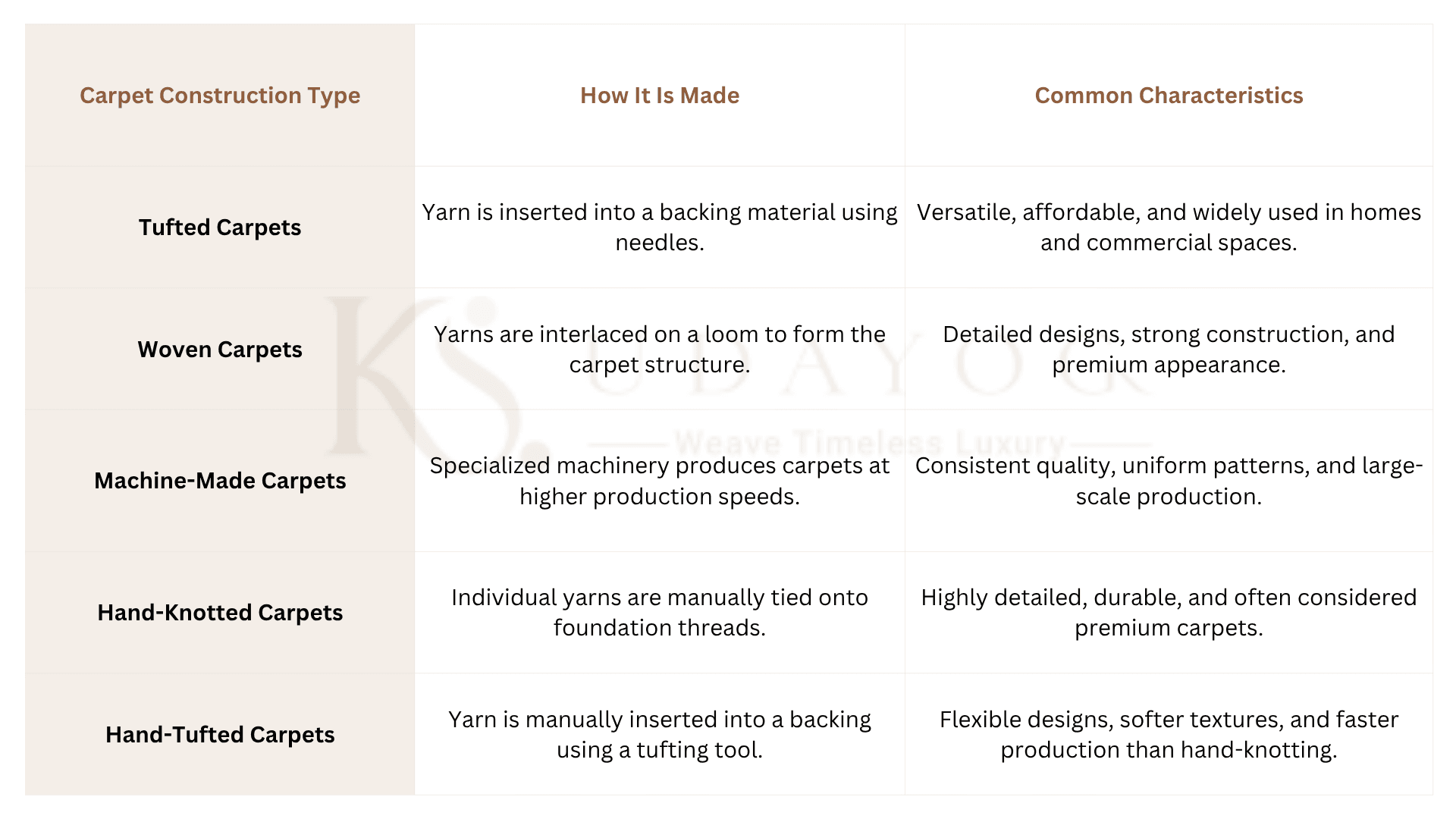
When comparing carpets, look beyond the fibre and understand how the product itself has been constructed.
#4. Select The Appropriate Carpet Pile
Pile refers to the visible yarn surface of a carpet. Its height, density, and construction can influence the carpet's feel and appearance.
Low Pile
Low-pile carpets have a shorter surface and can be practical in areas with frequent movement. They are generally easier to move furniture across and can be simpler to maintain.
Medium Pile
Medium-pile carpets provide a balance between softness and practicality. They can work well in living rooms, bedrooms, and selected commercial areas.
High Pile
High-pile carpets provide a softer, more plush feel and can create a comfortable, luxurious appearance. They may require more attention to cleaning and maintenance.
The best pile depends on how the space is used. A plush surface may be attractive in a bedroom but less practical for a busy corridor.
#5. Consider Foot Traffic Before Buying Carpet
Foot traffic is one of the most important factors when selecting a carpet.
Low-traffic spaces provide greater flexibility, while busy areas require a construction that can withstand frequent movement.
Consider how many people use the room each day and whether furniture, trolleys, office chairs, or other equipment will regularly move across the surface.
For commercial spaces, also consider whether the carpet will need frequent cleaning. A visually attractive carpet that is difficult to maintain may not be suitable for a high-use environment.
#6. Choose A Carpet Colour And Design Carefully
Colour can influence the overall appearance and atmosphere of a room.
Lighter shades can create an open and airy appearance but may show dirt more easily. Darker shades can provide a richer look and may be more forgiving of everyday marks.
Patterns can also influence how the carpet looks within a space. Subtle patterns may work well in professional interiors, while bolder designs can become a feature within residential or hospitality settings.
Before choosing a colour, consider:
- Existing wall colours
- Furniture
- Lighting
- Room size
- Interior style
- Expected maintenance
- Amount of foot traffic
If you are buying carpets for multiple rooms or locations, maintaining a coordinated colour palette can also make the overall interior feel more connected.
#7. Check Carpet Size And Room Measurements
Correct measurement is essential before buying carpet.
Measure the length and width of the installation area and account for doorways, corners, irregular shapes, built-in furniture, and other obstacles.
For larger projects, professional measurement can help reduce material waste and installation issues.
If you are purchasing rugs rather than wall-to-wall carpet, size should be considered differently. The rug needs to fit the furniture arrangement and leave an appropriate amount of visible flooring around it.
Always confirm the final dimensions with your supplier before placing an order.
#8. Think About Comfort And Underfoot Feel
Comfort can be one of the main reasons people choose carpet over hard flooring.
However, softness is not the only consideration. The surface should also feel appropriate for the room and expected usage.
Bedrooms and family rooms may benefit from a softer texture, while offices and corridors may require a firmer, more practical surface.
If possible, physically inspect or sample the carpet before buying. Touch and appearance can be difficult to judge accurately from photographs alone.
#9. Consider Cleaning And Maintenance
Every carpet requires some level of maintenance, but the amount can vary based on its material, pile, construction, colour, and location.
Before purchasing, consider:
- How often the carpet will be vacuumed
- Whether the area experiences spills
- How much dust or dirt enters the space
- Whether professional cleaning will be required
- How easily furniture can be moved
- Whether the carpet is suitable for your existing cleaning routine
Commercial buyers should pay particular attention to maintenance because larger areas can require more time and resources to clean.
#10. Check Carpet Durability
Durability should match the level of use.
A carpet intended for a rarely used guest room does not necessarily require the same construction as one installed in a hotel corridor or busy office.
When assessing durability, look at the material, construction, pile density, backing, and intended application. Ask the supplier what type of environment the carpet is designed to handle.
For commercial projects, also discuss expected service conditions rather than relying on general claims about durability.
#11. Examine The Carpet Backing
The backing supports the carpet and contributes to its structure and installation characteristics.
When comparing products, ask about the backing material and whether it is appropriate for the intended installation method and flooring surface.
A suitable backing can also influence dimensional stability and how the carpet behaves during installation and everyday use.
For bulk buyers, it is useful to confirm that the backing specifications remain the same across the complete order.
#12. Compare Price With Overall Value
Carpet prices can vary considerably depending on material, construction, size, pile, design, finishing, and manufacturing method.
Avoid choosing a carpet solely because it has the lowest price. Instead, consider what you are receiving for that cost.
A more expensive carpet may offer characteristics that justify the additional investment for a premium interior. On the other hand, a practical carpet may be a better choice when the project has a strict budget and high maintenance requirements.
For businesses, calculate the expected cost against the carpet's intended lifespan, maintenance requirements, and selling or project value.
Handmade Vs Machine-Made Carpets: Which Should You Choose?
The carpet manufacturing method can influence the appearance, production time, price, and character of a carpet.
Handmade carpets are created through skilled craftsmanship and can offer distinctive designs and individual variations. They may be particularly suitable for premium homes, boutique hotels, luxury interiors, and customers looking for artisan character.
Machine-made carpets are produced using specialised equipment and can provide greater uniformity and production capacity. They may be useful for larger projects, retail collections, offices, and spaces requiring multiple pieces with similar specifications.
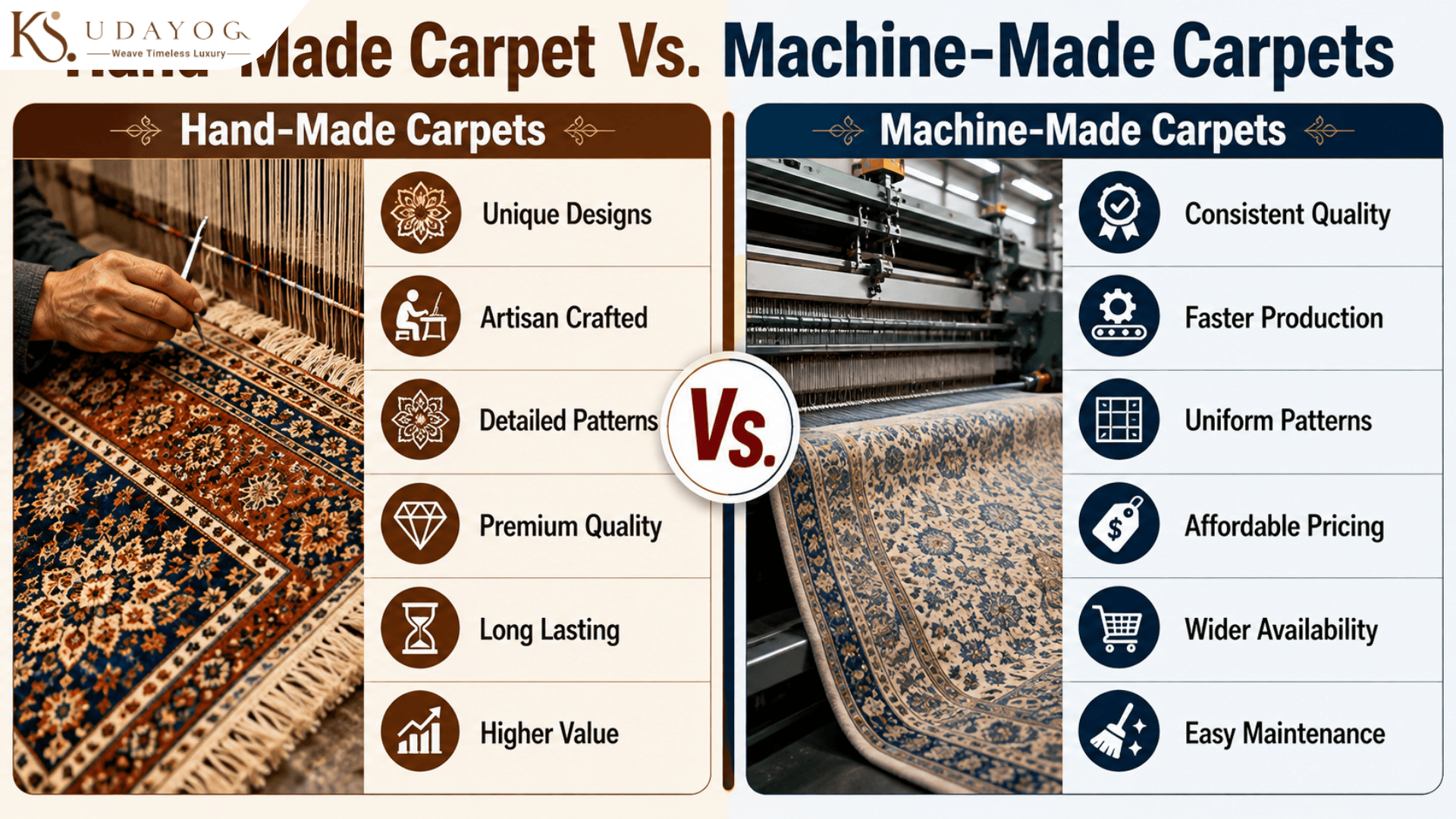
Neither option is automatically better. The choice depends on your budget, desired appearance, quantity, application, and expectations from the product.
Ask About Customisation
Customisation can be valuable when standard carpet options do not match your project requirements.
Depending on the manufacturer's capabilities, you may be able to request:
- Custom sizes
- Specific colours
- Bespoke patterns
- Material combinations
- Special shapes
- Custom pile specifications
- Finishing requirements
- Branding or private-label options
Custom production can involve different MOQs, sampling procedures, pricing, and lead times, so these details should be discussed before confirming the order.
What Should Businesses Check When Buying Carpets In Bulk?
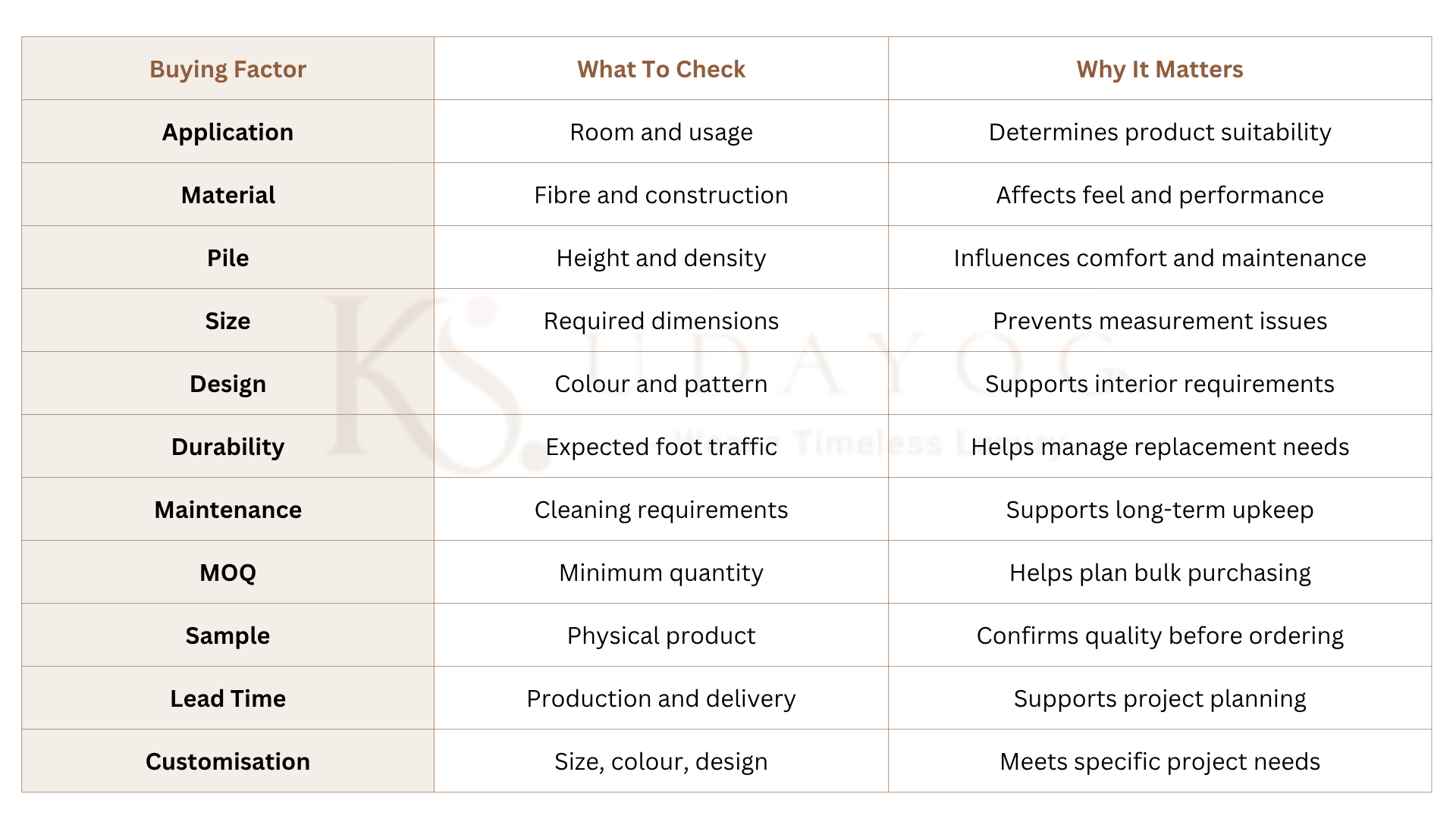
Commercial buyers need to evaluate the carpet from both a product and purchasing perspective. Bulk carpet buying involves more than selecting products from a catalogue. Buyers need to consider where the carpets will be used, how much traffic they will receive, the required quantity, and the quality standards expected across the complete order.
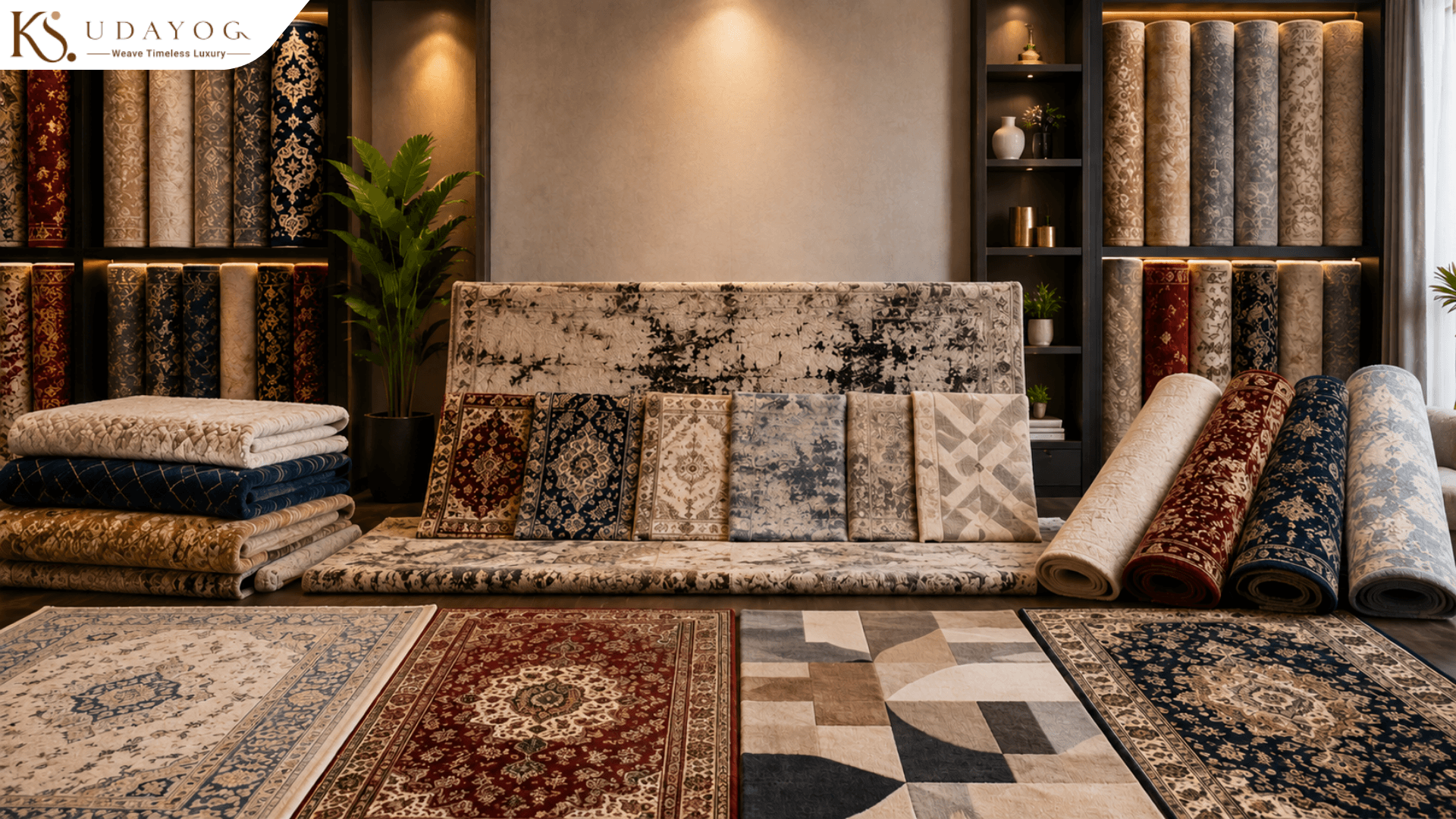
It is also important to evaluate the commercial side of the purchase, including samples, MOQ, pricing, customisation, production capacity, and delivery timelines. Checking these details before placing an order can help avoid unsuitable stock and unexpected costs.
How To Choose A Carpet Manufacturer & Supplier
The supplier matters just as much as the carpet you select, particularly for large or repeat orders.
#1
Start by checking the manufacturer's expertise, available materials, carpet construction methods, sizes, designs, production capacity, and ability to handle your required order volume.
If you need customised carpets, confirm whether they can accommodate specific colours, patterns, dimensions, materials, or finishing requirements.
#2
Before placing an order, request samples and understand the manufacturer's quality-control process.
Also discuss MOQ, pricing, packaging, production lead time, delivery arrangements, and payment terms so you have a clear picture of the complete purchase.
#3
For repeat or bulk requirements, look beyond a single order.
A reliable carpet manufacturer should be capable of maintaining product specifications, handling consistent production, and supporting future requirements without unnecessary variation in quality or service.
Carpet Buying Checklist
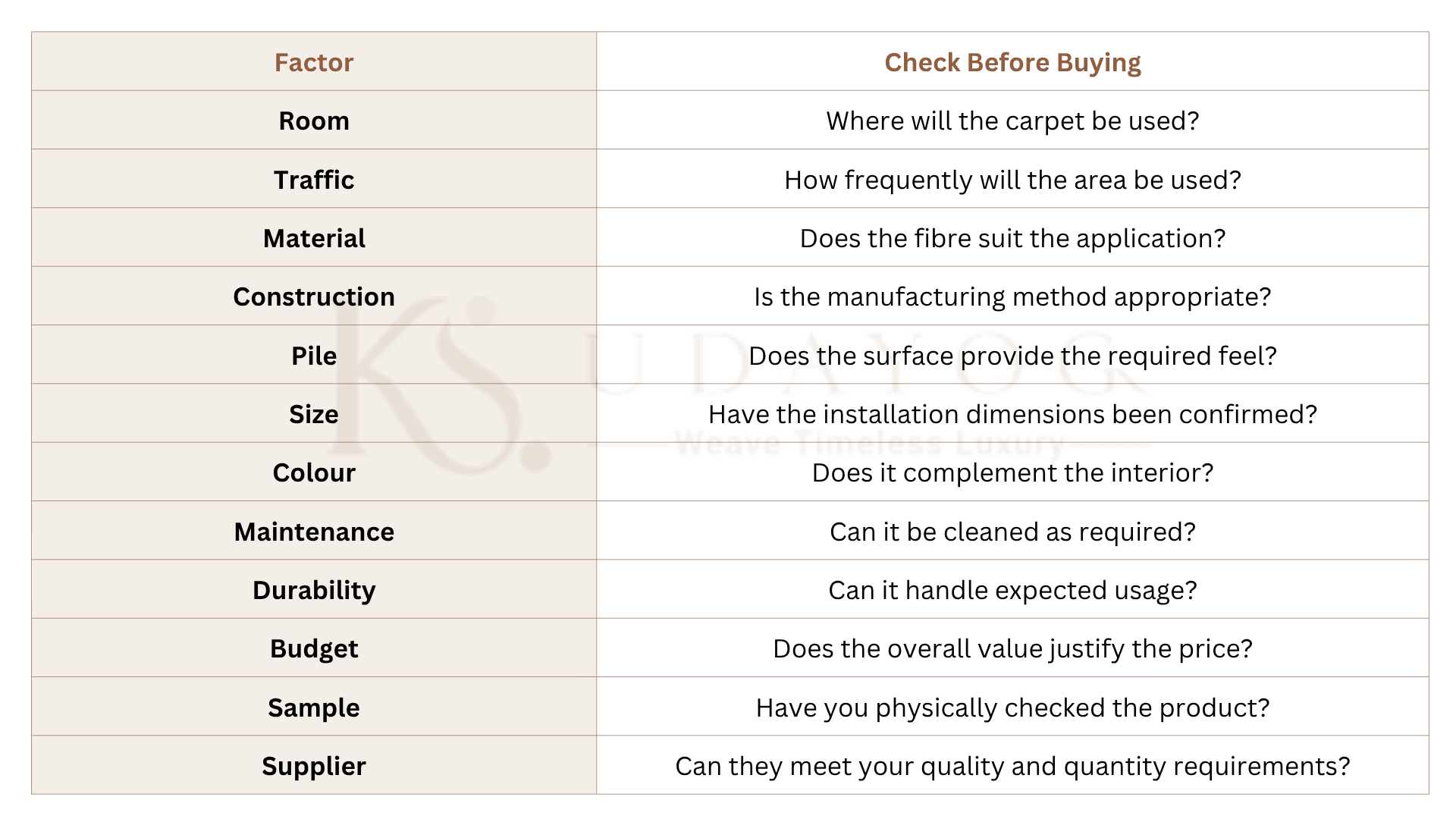
Before making your final decision, review these points:
Why Choose KS Udayog For Carpet Requirements?
KS Udayog works with buyers looking for carpet and rug products across different materials, designs, sizes, and applications. Whether the requirement is for residential interiors, hospitality spaces, retail collections, commercial projects, or bulk sourcing, buyers can discuss product specifications, quantities, customisation, and manufacturing requirements with the team.
Instead of selecting a carpet based only on appearance, share your application and product requirements with KS Udayog to discuss suitable carpet options for your project or business.
Wrap Up
Finding the best carpet starts with understanding the space where it will be used. Material, construction, pile, foot traffic, size, design, maintenance, durability, and budget should all be considered before making a purchase.
A carpet that looks attractive may not always be the most practical option for a busy area, while a highly durable product may not provide the comfort or appearance expected in a premium interior.
Take time to compare samples, specifications, manufacturing methods, and suppliers before making your final decision. A well-matched carpet can provide the right combination of appearance, comfort, practicality, and long-term value for your space.
If you’re looking to add a new carpet collection to your store, connect with a reliable carpet manufacturer and supplier for your requirements and explore suitable designs.
Frequently Asked Questions (FAQs)
How Do I Choose The Right Carpet For My Room?
Start with the room's purpose, foot traffic, desired comfort, maintenance requirements, available space, interior style, and budget. These factors can help narrow down suitable materials and constructions.
Which Carpet Material Is Best?
There is no universal best material. Wool, cotton, nylon, polyester, and polypropylene each have different characteristics, so the appropriate option depends on the intended application and budget.
Is A High-Pile Carpet Better Than A Low-Pile Carpet?
Not necessarily. High-pile carpets can provide a softer feel, while low-pile options can be more practical for high-traffic areas and easier everyday maintenance.
Are Handmade Carpets Better Than Machine-Made Carpets?
Neither is automatically better. Handmade carpets can provide craftsmanship and individuality, while machine-made carpets can offer uniformity and higher production capacity.
How Important Is Carpet Backing?
Backing contributes to the carpet's structure and installation characteristics. It should be suitable for the intended flooring and installation method.
Should I Buy A Carpet Sample Before Placing A Large Order?
Yes. A physical sample allows you to check the actual colour, texture, pile, dimensions, construction, and finishing before committing to a larger purchase.
What Carpet Is Suitable For High-Traffic Areas?
High-traffic areas generally require durable construction and a surface suited to frequent use and cleaning. The appropriate material and pile depend on the specific environment.
Can Carpets Be Customized?
Depending on the manufacturer's capabilities, carpets can be customised in areas such as size, colour, design, material, shape, pile, and finishing.