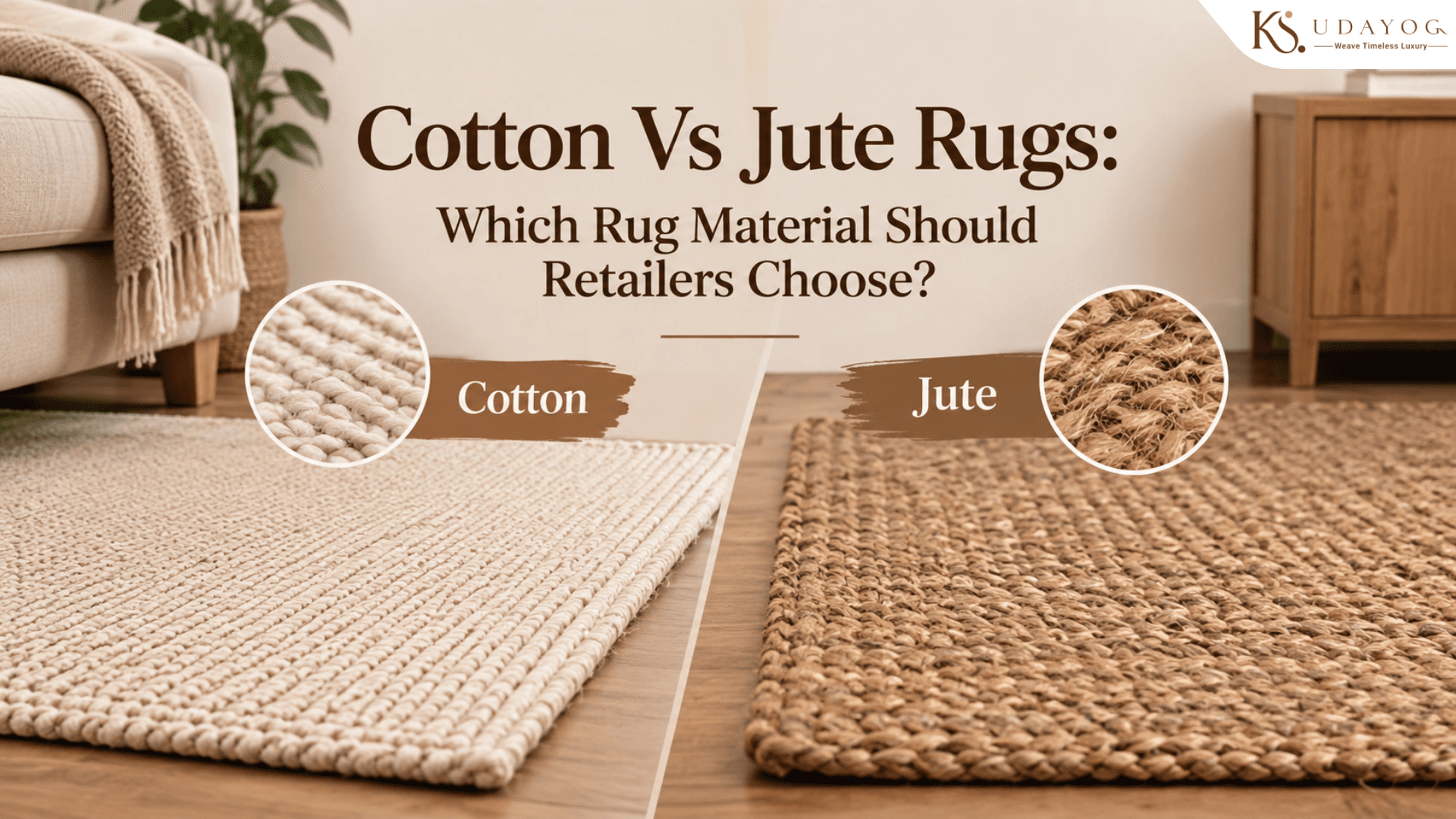
A rug that sells well in one retail collection may not deliver the same results in another, and the material plays a major role in that positioning. For Indian retailers and home décor businesses, cotton and jute rugs can serve different product requirements, customer preferences, and price segments.
Cotton offers a different combination of texture, design flexibility, and everyday appeal, whereas jute gives collections a more organic and earthy character. For buyers sourcing rugs in bulk, these distinctions also matter when planning assortments, evaluating suppliers, and deciding which products deserve space in the next collection.
The choice becomes easier when both materials are viewed through a retailer’s commercial needs rather than personal preference. This comparison breaks down cotton and jute rugs to help B2B buyers make more informed sourcing and assortment decisions.
What Is The Difference Between Cotton Rugs And Jute Rugs?
Cotton rugs are made from cotton fibers and are generally known for their softer hand feel, flexibility, and suitability for casual indoor spaces. On the other hand, jute rugs are made from jute fibers and are recognized for their natural texture, earthy appearance, and structured feel.
The differences become clearer when you compare them across actual buying factors.
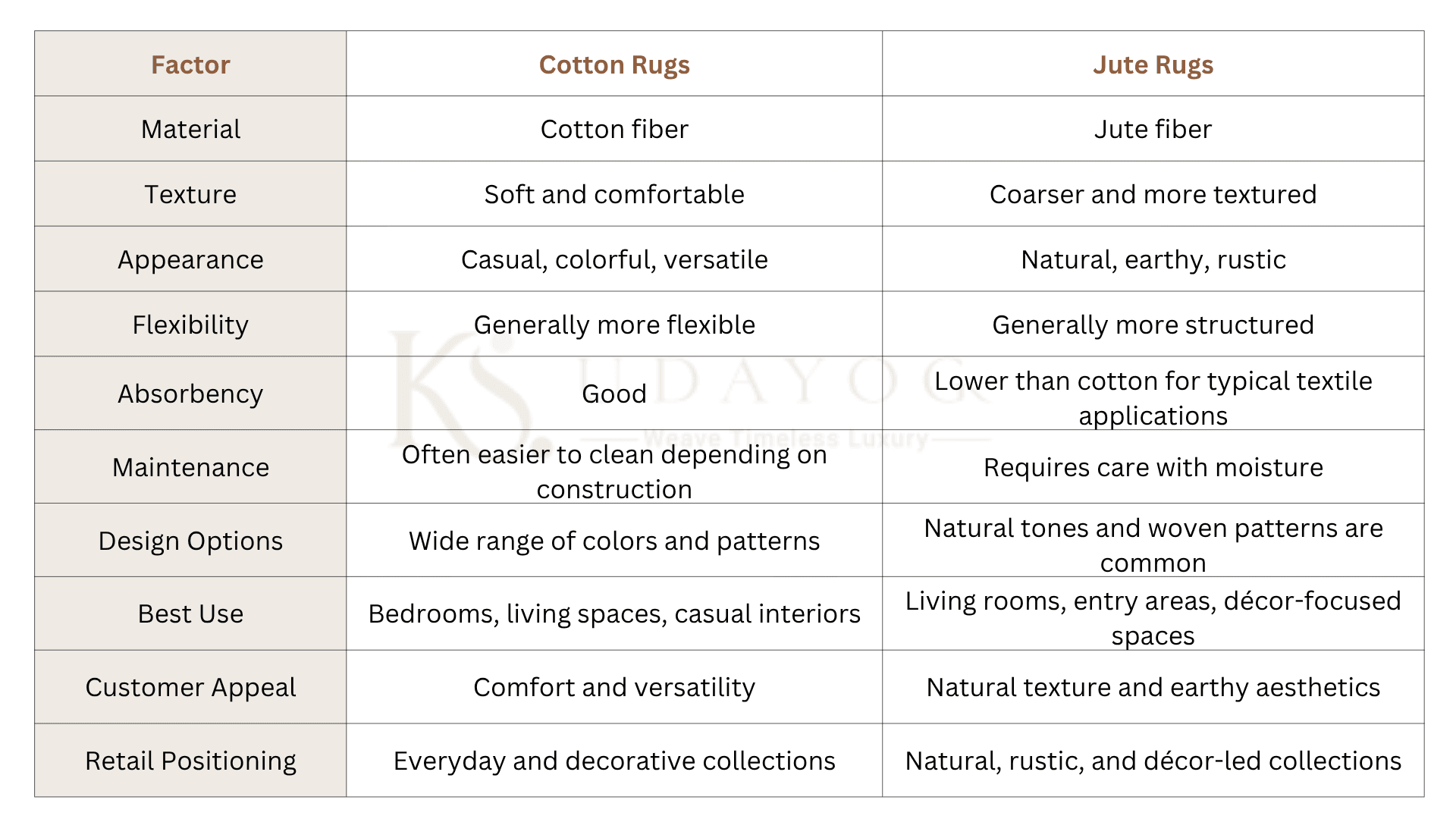
Neither material is universally better. The better option depends on what your customers expect from the rug.
Cotton Rugs: What Makes Them Suitable For Different Markets?
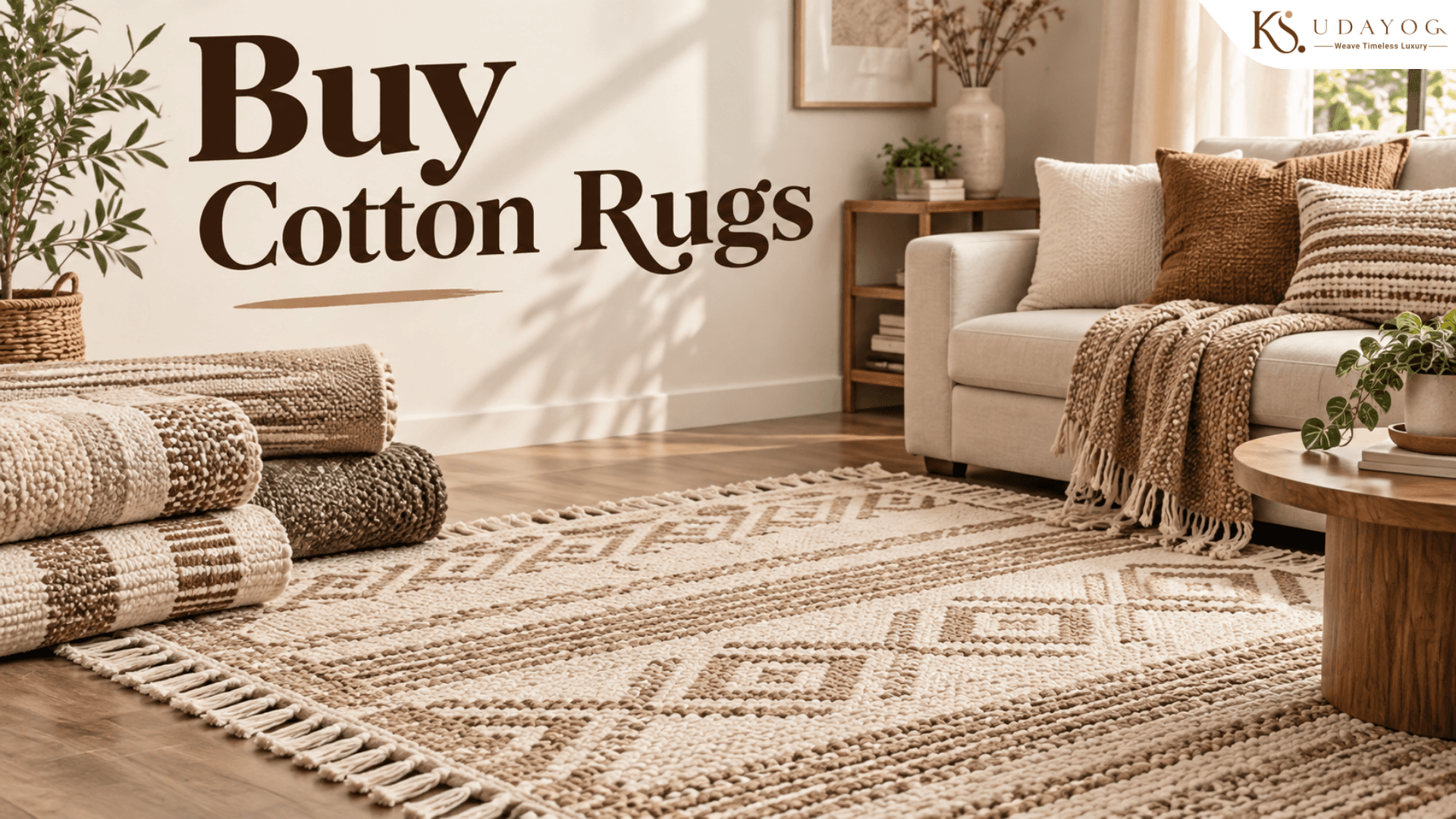
Cotton rugs can work across a broad range of home décor collections because cotton is soft, adaptable, and available in different constructions, colors, and patterns.
- Soft And Comfortable Feel
Cotton generally provides a softer surface than jute, making it attractive for buyers who prioritize comfort underfoot.
- Versatile Designs
Cotton can be used for solid-colored, striped, printed, patterned, tufted, woven, and decorative rug designs.
- Suitable For Casual Interiors
Cotton rugs can complement bedrooms, living rooms, children's spaces, reading corners, and other relaxed indoor settings.
- Easy Design Coordination
The broad range of available colors and patterns can make cotton rugs easier to coordinate with different décor themes.
- Flexible Product Positioning
Retailers can position cotton rugs across everyday, decorative, contemporary, and premium-looking collections depending on construction and finishing.
Jute Rugs: What Makes Them Suitable For Different Markets?
Jute rugs appeal strongly to customers who want visible natural texture and an earthy interior aesthetic.

- Distinctive Natural Texture
Jute has a recognizable coarse texture that can become a key visual feature rather than simply a functional characteristic.
- Earthy Appearance
Natural jute tones work particularly well with neutral, rustic, bohemian, farmhouse-inspired, and nature-oriented interiors.
- Strong Décor Presence
The woven texture of jute can add visual depth to otherwise simple rooms.
- Natural Fiber Appeal
Jute can attract customers specifically searching for natural fiber rugs and products with a more organic appearance.
- Collection Differentiation
For retailers, jute rugs can add a visibly different texture to collections dominated by synthetic or soft textile products.
Cotton Rugs Vs Jute Rugs: Understanding The Key Differences
Cotton and jute are both natural fibers, but they differ in texture, moisture response, maintenance, durability, appearance, design flexibility, and ideal applications. For Indian buyers and retailers, these differences become particularly important when considering humidity, cleaning habits, foot traffic, and customer preferences
1. Material Composition: Different Fibers, Distinct Characteristics
Cotton rugs are made from soft, plant-based cotton fibers that can be spun into yarn and woven or tufted into different rug constructions. On the other hand, jute rugs are made from natural bast fibers obtained from jute plants, giving them a coarser structure and more pronounced natural texture.
2. Texture And Comfort: Softness Versus Natural Roughness
Cotton rugs generally provide a softer and more comfortable surface underfoot, making them suitable for bedrooms, living spaces, and casual interiors. In contrast, jute rugs have a firmer, coarser texture that creates a distinctive tactile experience and adds visual depth to natural or rustic interiors.
3. Durability And Usage: Everyday Comfort Versus Structured Strength
Cotton rugs can provide good everyday durability when the construction, density, and quality are appropriate for the intended space. On the other hand, jute rugs can perform well in suitable dry, moderate-traffic areas, although their durability can be affected by excessive moisture and unsuitable placement.
4. Moisture Resistance: Greater Absorption Versus Moisture Sensitivity
Cotton rugs naturally absorb moisture, which can make them useful for suitable indoor applications, although they need proper drying after wet cleaning. Whereas jute rugs are more sensitive to prolonged moisture exposure, making dry environments and proper ventilation important considerations.
5. Cleaning And Maintenance: Practical Care Versus Gentle Handling
Cotton rugs can offer relatively convenient cleaning depending on their construction and care instructions, with some designs being suitable for more frequent washing. In comparison, jute rugs generally require gentler maintenance because excessive water can affect their natural fibers and overall appearance.
6. Appearance And Style: Flexible Designs Versus Organic Texture
Cotton rugs offer greater flexibility for colors, prints, stripes, geometric patterns, and contemporary designs because cotton yarn can accommodate a broad range of decorative treatments. On the other hand, jute rugs naturally deliver warm, earthy tones and visible fiber texture, making them particularly suitable for rustic, organic, bohemian, and nature-inspired interiors.
7. Design Versatility: Color Variety Versus Natural Character
Cotton rugs can be developed in diverse colors, patterns, shapes, and decorative finishes, giving retailers greater flexibility when creating varied collections. In contrast, jute rugs often emphasize their natural color and texture, although weaving patterns, borders, braiding, and mixed constructions can introduce additional design variety.
8. Weight And Flexibility: Lightweight Handling Versus Structured Feel
Cotton rugs are often lighter and more flexible, which can make them easier to fold, move, store, and reposition around the home. By comparison, jute rugs generally have a more structured and substantial feel, particularly when produced with thick woven or braided constructions.
9. Room Suitability: Soft Interiors Versus Textured Spaces
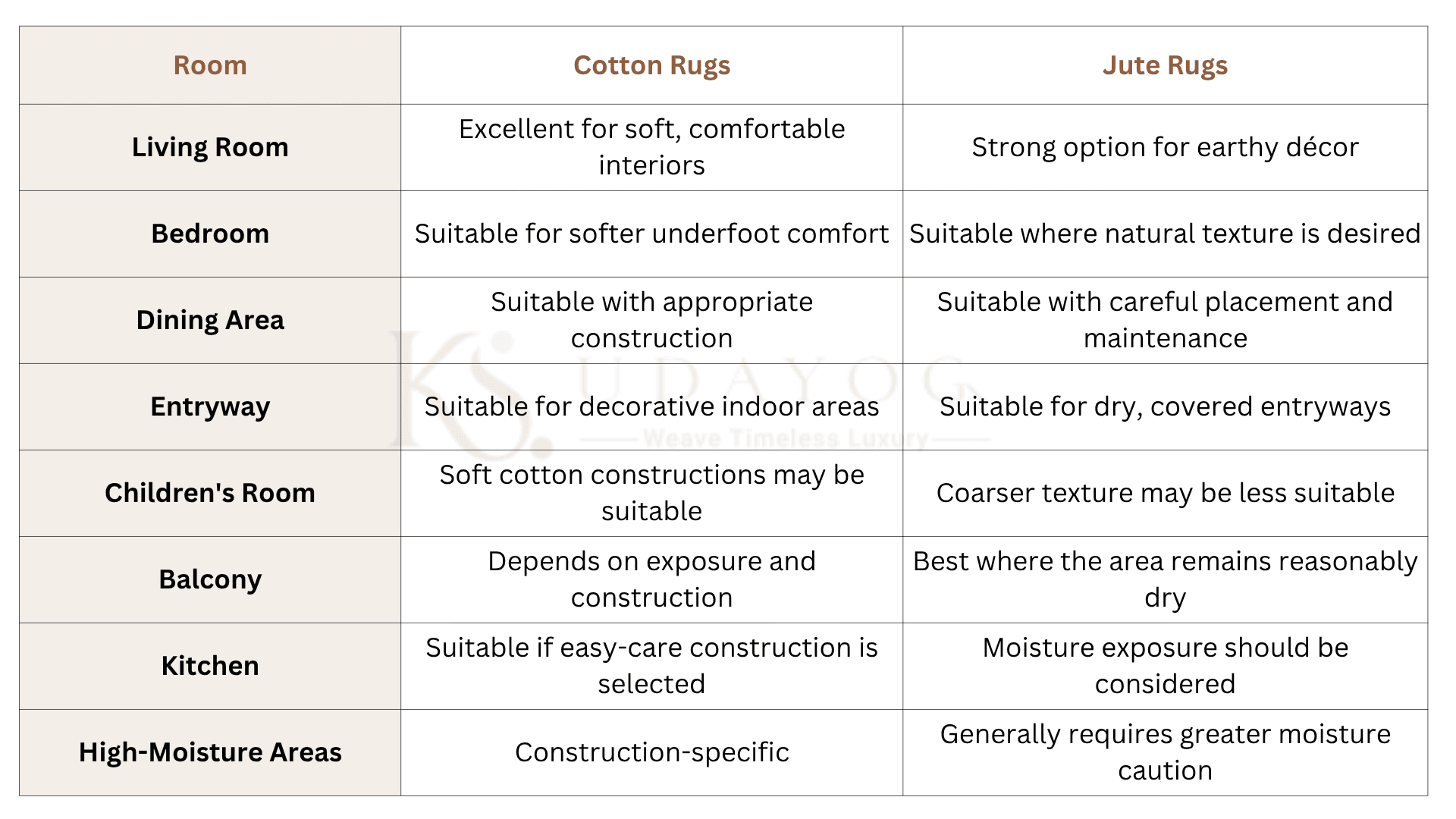
Cotton rugs can suit bedrooms, children's rooms, casual living areas, and other spaces where softness and flexibility are important. Meanwhile, jute rugs can complement living rooms, dining areas, covered balconies, and décor-focused spaces where earthy textures and natural visual appeal are preferred.
10. Price Positioning: Product Specification Matters
Cotton rugs can span different price points depending on fiber quality, construction, design, size, and finishing. Similarly, jute rug pricing varies according to fiber quality, weaving method, dimensions, density, construction, and finishing, so buyers should compare complete specifications rather than judging value by material alone.
Premium Cotton Rugs Or Jute Rugs: Which Is Better For Different Rooms?
Room suitability is one of the most useful ways to make a material decision. The room alone should not determine the choice. Moisture, cleaning frequency, foot traffic, ventilation, and exposure to sunlight should also be considered. So, here we create a quick comparison.
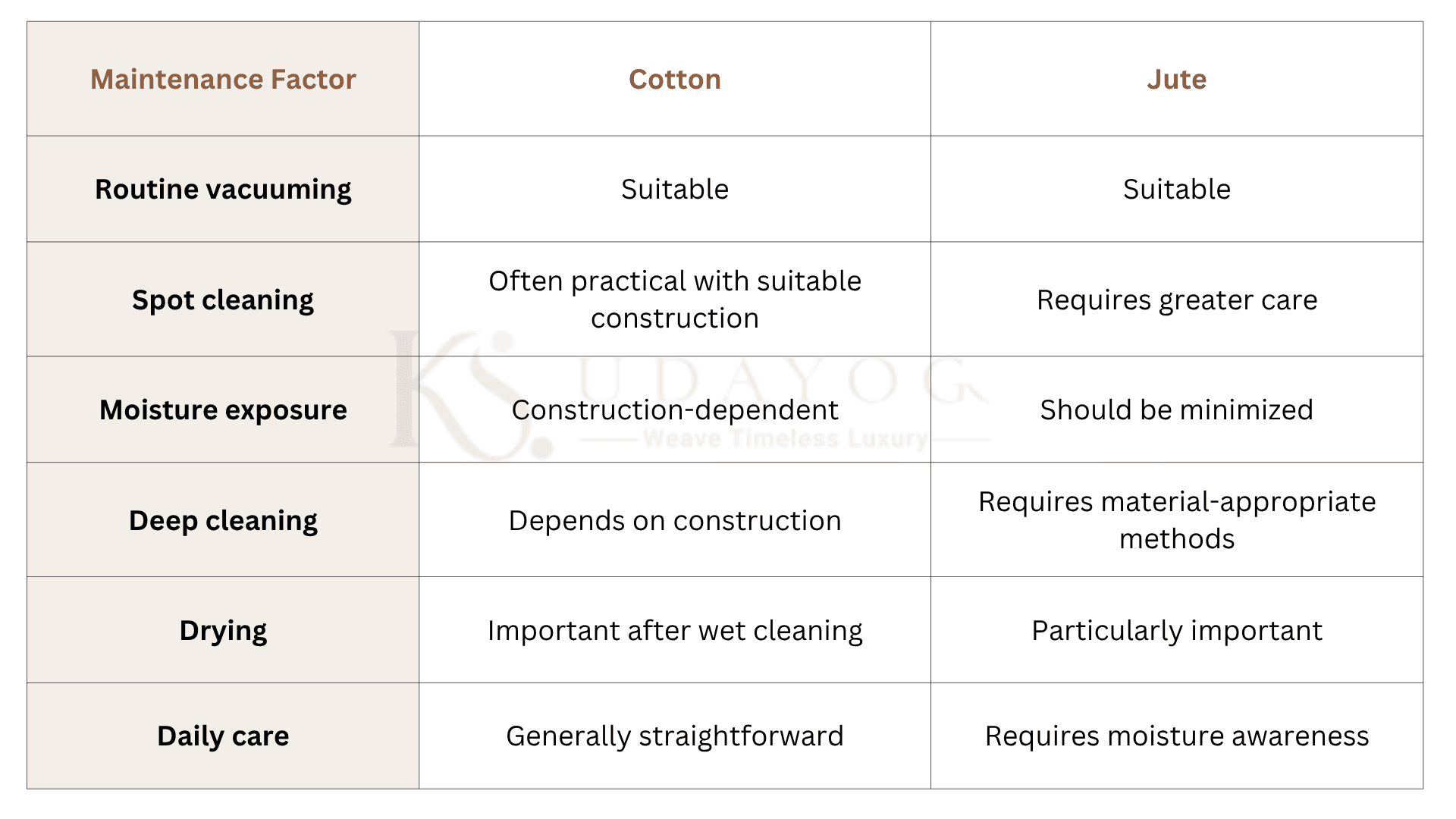
Cotton Rugs Vs Jute Rugs: Which Is Easier To Maintain?
Cotton generally offers greater flexibility when it comes to cleaning and care, but the exact maintenance requirements depend on construction and manufacturer instructions. Conversely, jute requires more attention to moisture because prolonged exposure to water can affect natural fibers and the rug's overall condition.
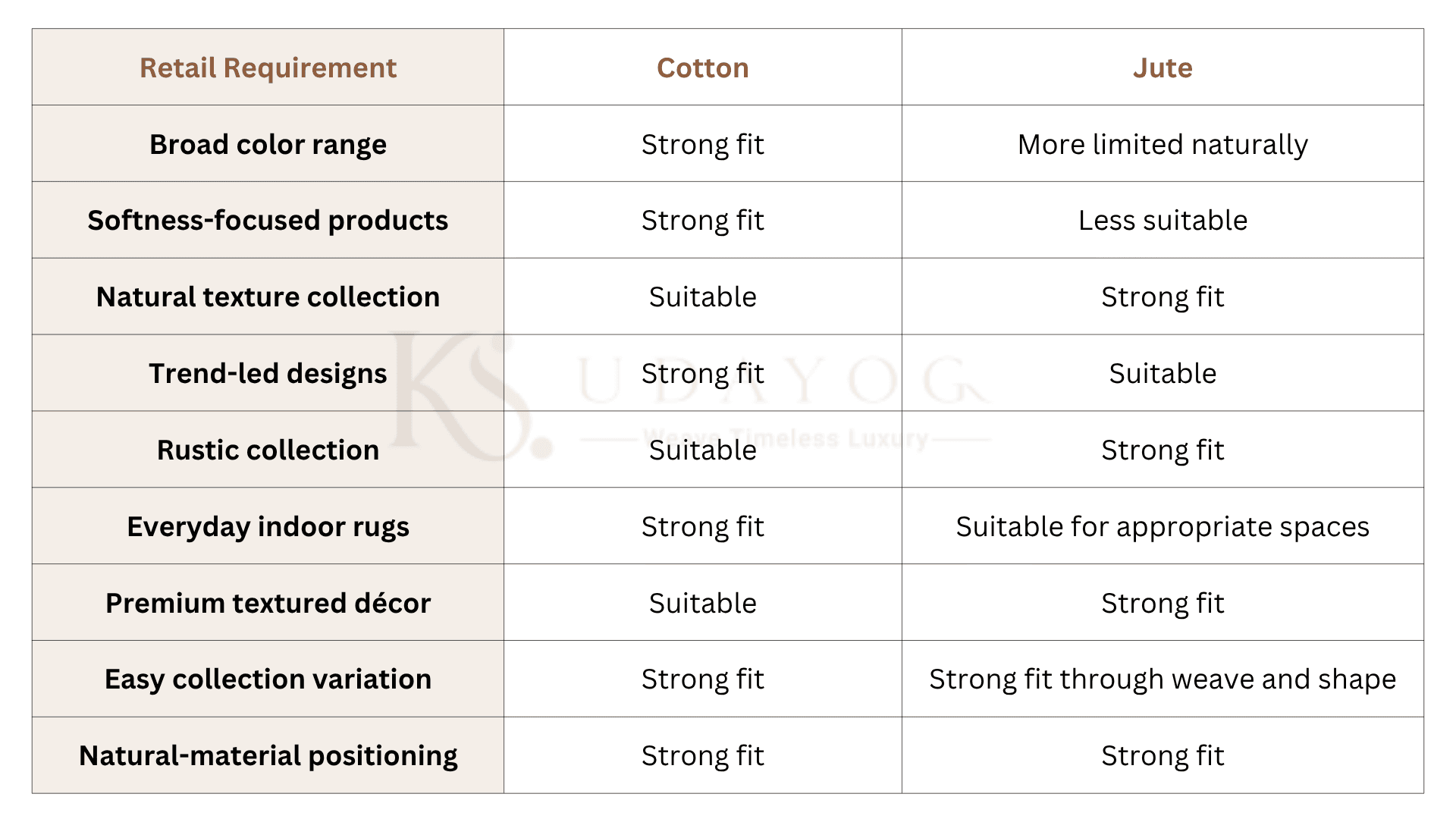
Retailers Should Buy Cotton Rugs Or Jute Rugs: Which Is Better?
Retailers should look at the customer and collection rather than selecting one material for every product. A retailer building a diversified collection may find value in carrying both materials rather than treating them as direct substitutes.
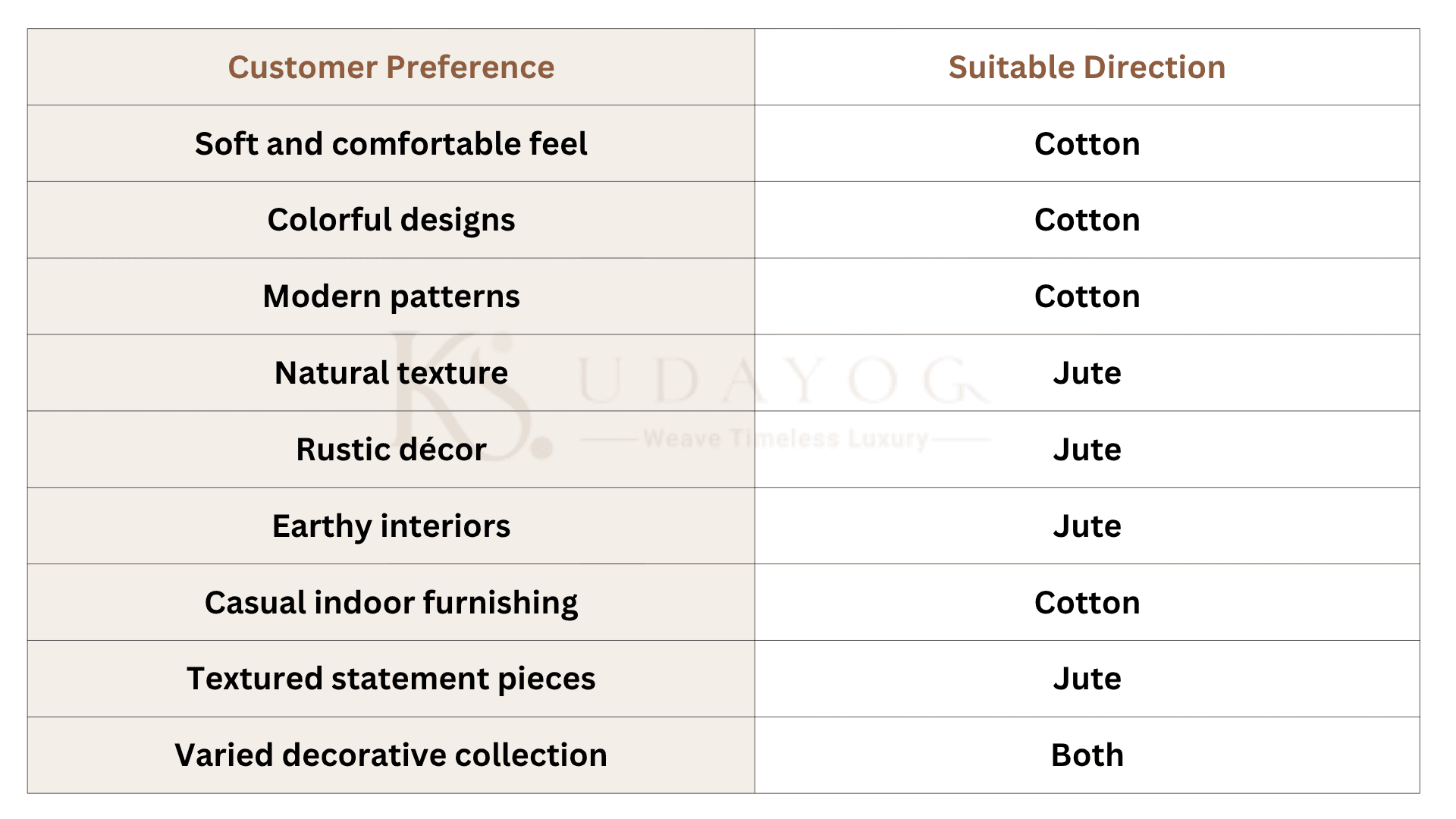
Cotton Rugs Vs Jute Rugs: Which Matches Your Customer Preferences?
Retailers can use both materials: jute and cotton to address different customer expectations rather than treating them as competing products.
How Should Wholesale Buyers Choose Between Cotton And Jute Rugs?
A simple buying framework can make the decision easier.
Step 1: Identify Your Customer
Determine whether your customers prioritize softness, natural texture, modern patterns, rustic styling, affordability, or premium décor.
Step 2: Define The Intended Room
Identify whether the rug will primarily be used in bedrooms, living rooms, entryways, dining areas, balconies, or other spaces.
Step 3: Evaluate The Environment
Consider humidity, moisture exposure, sunlight, dust, foot traffic, and cleaning conditions.
Step 4: Select The Construction
Compare woven, tufted, braided, printed, or other available constructions.
Step 5: Check The Specification
Review size, weight, thickness, backing, edge finishing, material composition, and care requirements.
Step 6: Test Samples
Physical samples can reveal texture, color, construction quality, shedding, finishing, and actual appearance more accurately than photographs.
Step 7: Compare Commercial Terms
Evaluate MOQ, unit price, customization costs, packaging, lead time, and repeat-order capability.
Cotton Rugs Vs Jute Rugs: Quick Buying Decision
Choose cotton rugs when softness, color variety, flexible designs, and casual indoor use are major priorities.
Choose jute rugs when natural texture, earthy aesthetics, rustic styling, and visibly organic décor are important.
Consider both when your retail collection serves multiple customer segments, and you want to offer different textures and design personalities.
The final decision should always be based on the specific rug's construction and specifications, not just the fiber name.
Final Thoughts
To conclude, cotton rugs and jute rugs can both serve different customer needs, making the right choice dependent on texture, design, durability, maintenance, room conditions, and market positioning. Cotton works well for collections focused on softness, color variety, and flexible designs, while jute adds natural texture, earthy appeal, and rustic character.
For retailers and wholesale buyers, offering both materials can help create a more versatile rug collection that appeals to customers with different décor preferences and usage requirements. Evaluating material composition, construction, dimensions, backing, finishing, care requirements, and supplier capabilities before ordering can also help ensure the selected rugs match your market expectations.
To develop the right cotton or jute rug collection, reach out to a reliable rug manufacturer for quality products, customization, and bulk-order requirements.
Frequently Asked Questions (FAQs)
Are Cotton Rugs Better Than Jute Rugs?
Neither material is universally better. Cotton generally suits buyers seeking softness and design versatility, while jute suits customers prioritizing natural texture and earthy aesthetics.
Are Jute Rugs Good For Indian Homes?
Yes, jute rugs can work well in suitable indoor and covered areas. Buyers should consider humidity, moisture exposure, ventilation, cleaning practices, and the rug's specific construction.
Are Cotton Rugs Considered Natural Fiber Rugs?
Yes, cotton is a natural plant-based fiber and can be used to produce natural fiber rugs. The final product's composition may also include backing or other materials.
Are Jute Rugs Eco-Friendly Rugs?
Jute can be used in eco-conscious rug collections because it is a natural fiber. However, the environmental profile of the finished rug also depends on processing, dyes, backing, packaging, manufacturing, and lifespan.
Which Rug Material Is Easier To Clean, Cotton Or Jute?
Cotton can generally offer more flexible cleaning options depending on its construction. Jute requires greater care around moisture, so buyers should follow the manufacturer's specific care instructions.
Do Cotton And Jute Rugs Have Different Textures?
Yes. Cotton generally feels softer and more flexible, while jute typically has a coarser, more pronounced natural texture.
Which Material Is Better For A Wholesale Rug Collection?
The choice depends on the target customers and collection positioning. Cotton can support colorful and comfort-focused ranges, while jute can add earthy, textured, and natural-looking designs.
Can Cotton And Jute Rugs Be Used In The Same Interior?
Yes. Combining them can create visual and textural contrast, especially when their colors, patterns, and sizes are coordinated with the room's overall décor.