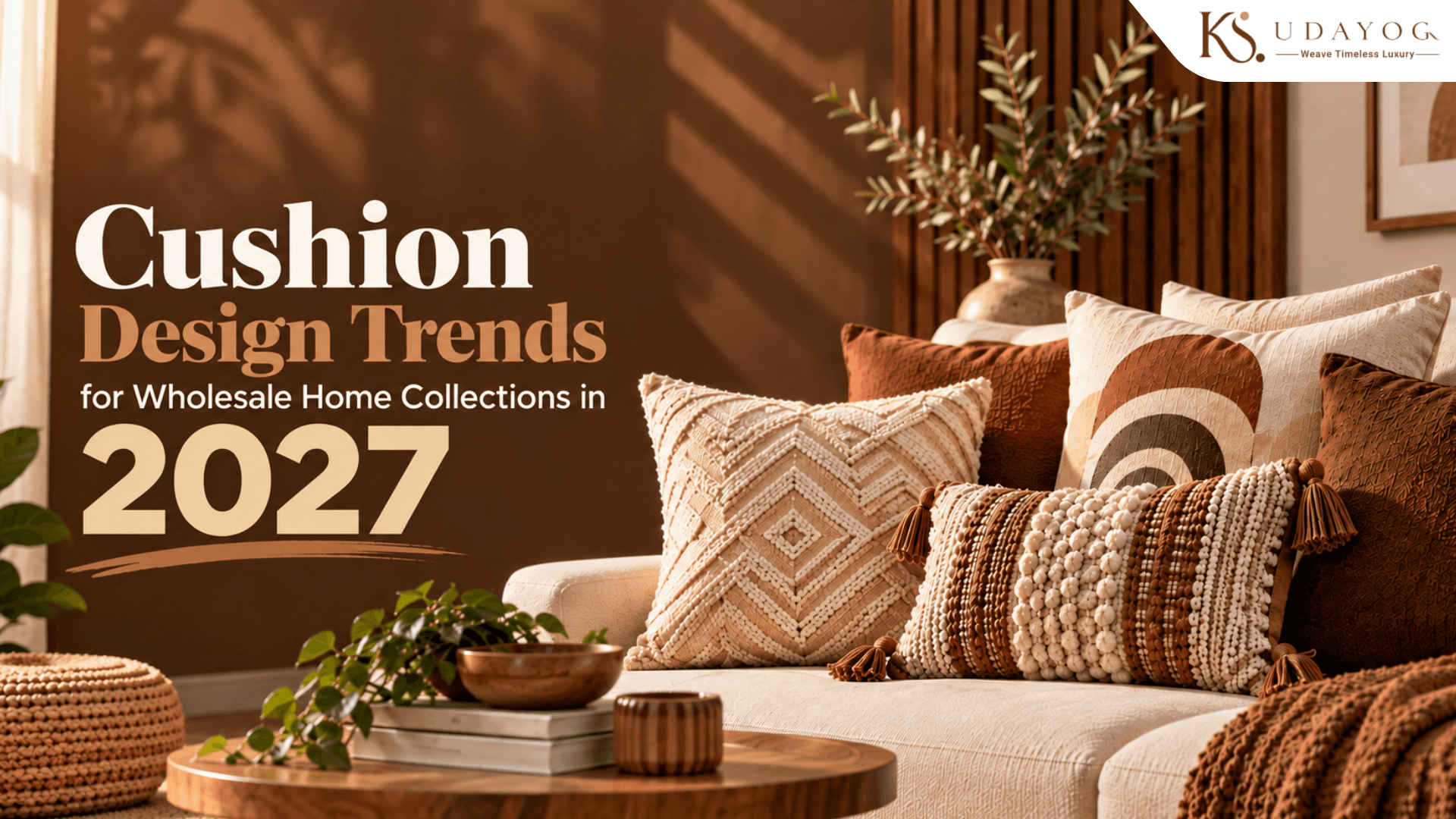
A successful wholesale cushion collection starts with designs that retailers can actually sell, not simply patterns that look attractive in a catalogue. For Indian home décor businesses, every design needs to fit the market, complement existing collections, and give retailers a reason to refresh their shelves.
The challenge becomes greater when planning collections for an upcoming season. Too much focus on short-lived styles can leave buyers with slow-moving stock, while overly safe designs can make a collection feel ordinary and difficult to differentiate.
The cushion design trends for wholesale home collections in 2027 offer a useful direction for businesses planning new ranges.
So, what kind of cushion designs are likely to catch attention in 2027? The trends below take a closer look at the styles, patterns, textures, and design directions worth considering for upcoming wholesale home collections.
Popular Cushion Styles To Add To Wholesale Collections In 2027
The key for retailers is to avoid treating every trend as a separate product. Instead, combine complementary trends into small, cohesive collections. The strongest directions to watch include:
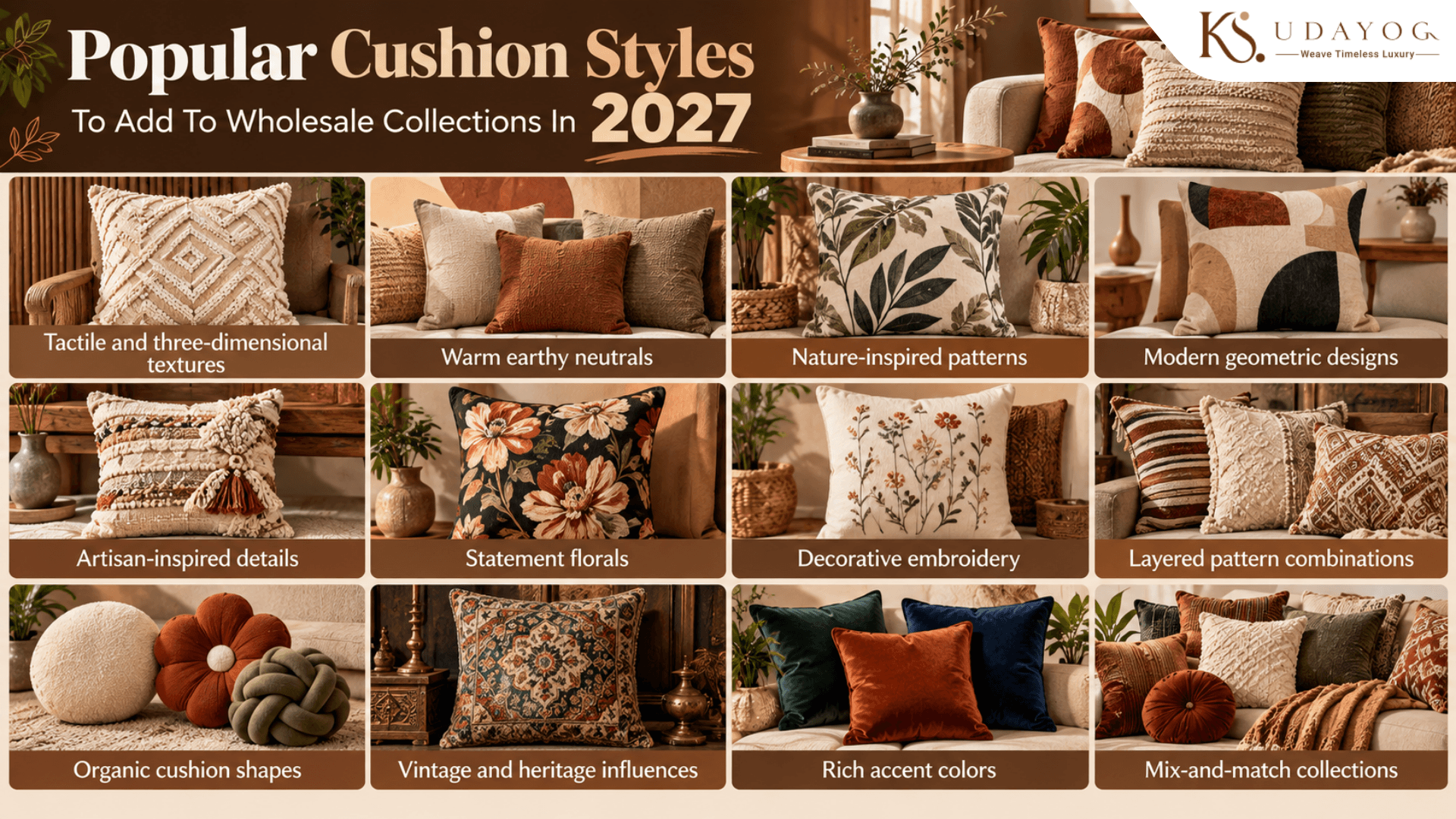
For example, a retailer could create one range around sage, beige, botanical prints, and woven textures, while another could combine deep blue, geometric patterns, velvet, and embroidery.
1. Tactile Textures For A More Premium Look
Texture is becoming an important part of cushion design because it adds visual depth even when the color palette is simple.
Bouclé, tufting, woven surfaces, embroidery, looped yarns, quilted details, and raised patterns can make a plain cushion feel more substantial.
Recent textile trend coverage also highlights tactile materials such as bouclé, velvet, structured weaves, and layered surfaces as important directions for interiors.
Wholesale Design Ideas
- Tufted geometric cushions
- Raised floral patterns
- Bouclé cushions in neutral shades
- Woven cushions with contrasting borders
- Quilted cushions with subtle patterns
- Textured cushions with tonal designs
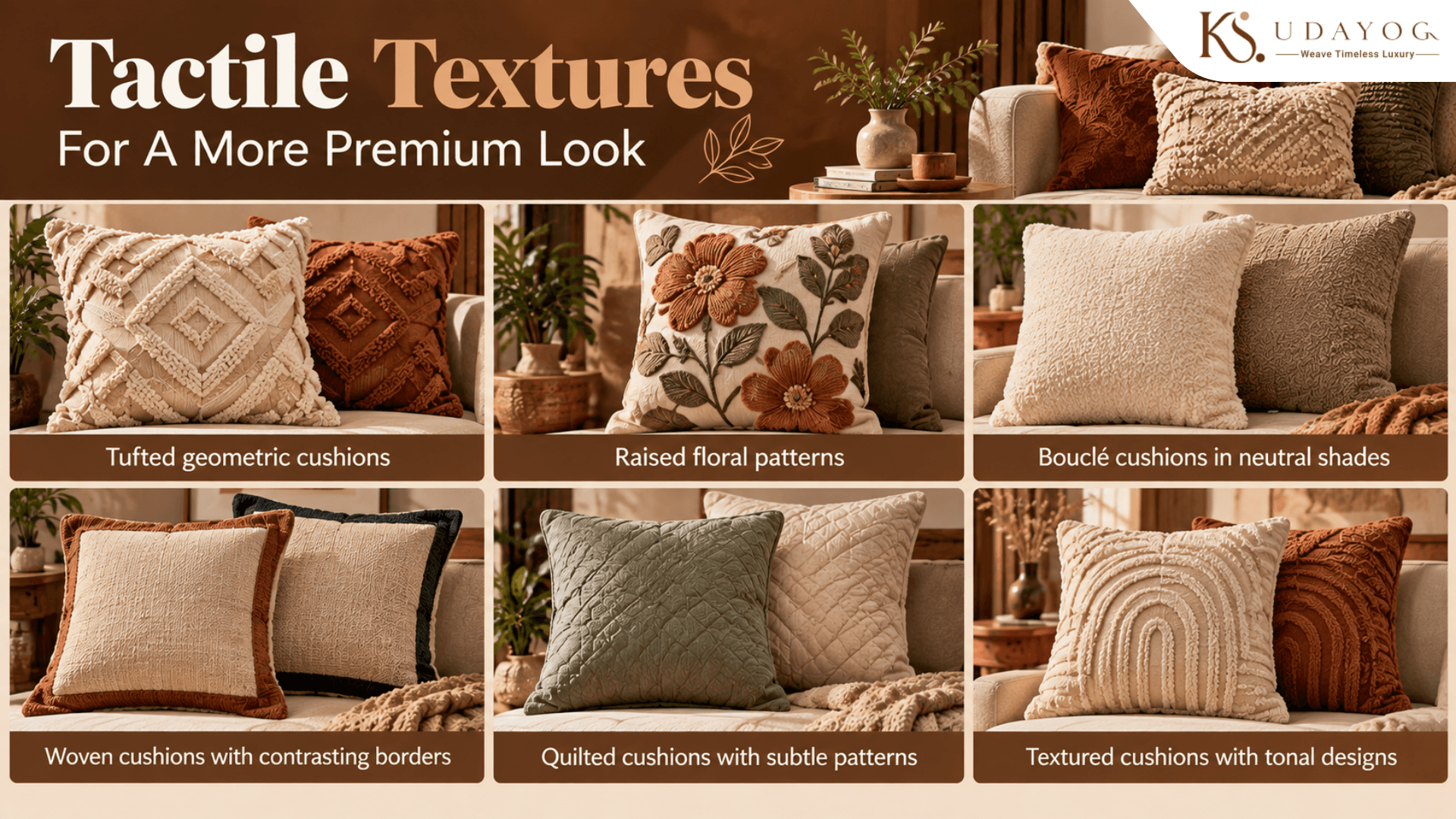
Retail opportunity: Use texture as a premium feature even when the overall design remains simple.
2. Warm Earthy Colors
Cool, overly stark interiors are giving way to warmer and more natural-looking palettes.
For cushions, this can translate into: sand, beige, terracotta, olive, sage, warm brown, rust, muted mustard, cream, and clay.
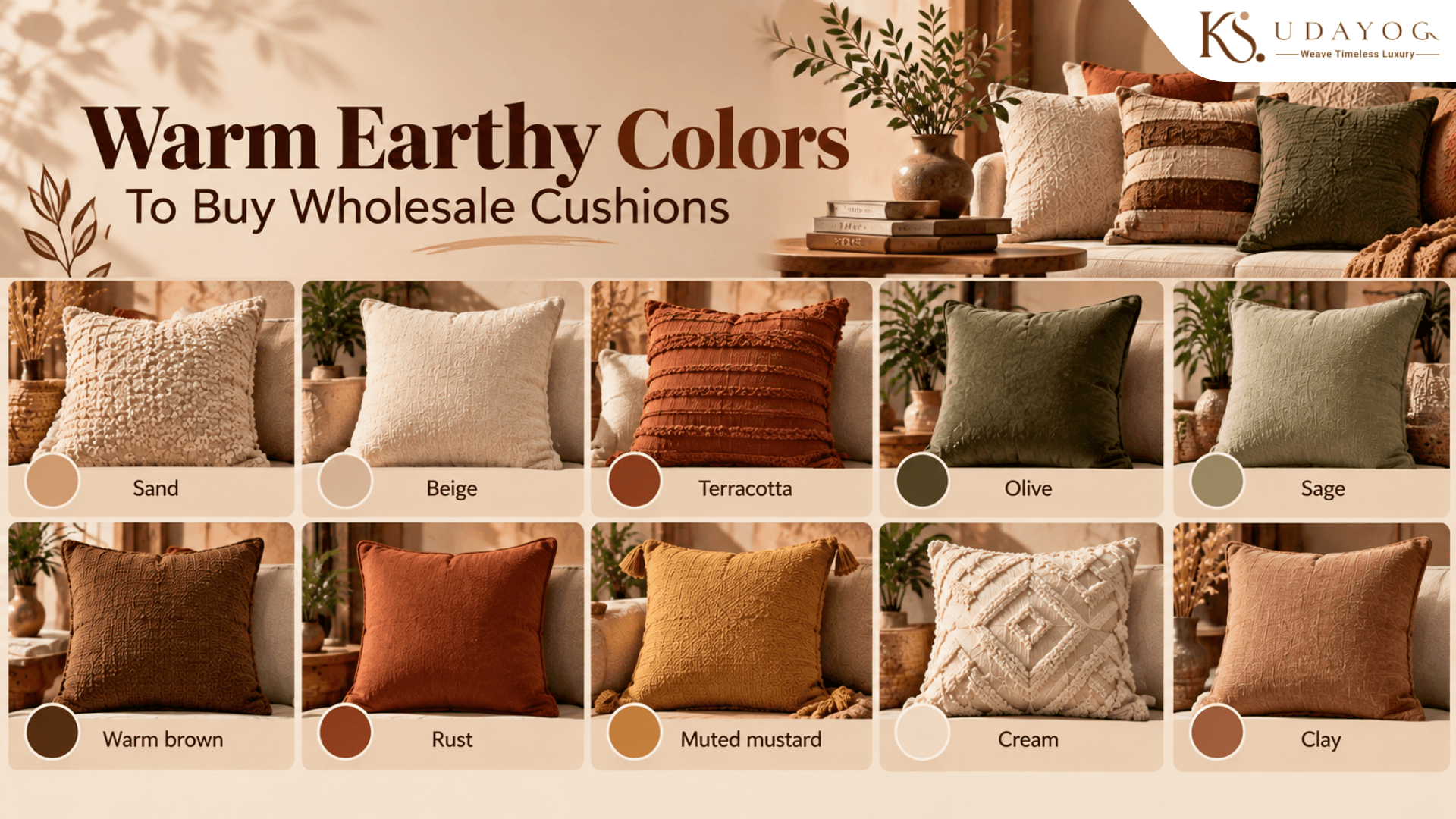
Current Indian home décor trend coverage similarly highlights earthy neutrals and nature-inspired shades as useful directions for cushion collections.
These colors are commercially useful because they can work across modern, traditional, rustic, and contemporary interiors.
Wholesale Collection Idea
Create a Warm Earth Collection featuring:
Base: Cream + beigeAccent: Terracotta + rustSecondary: Sage + olive
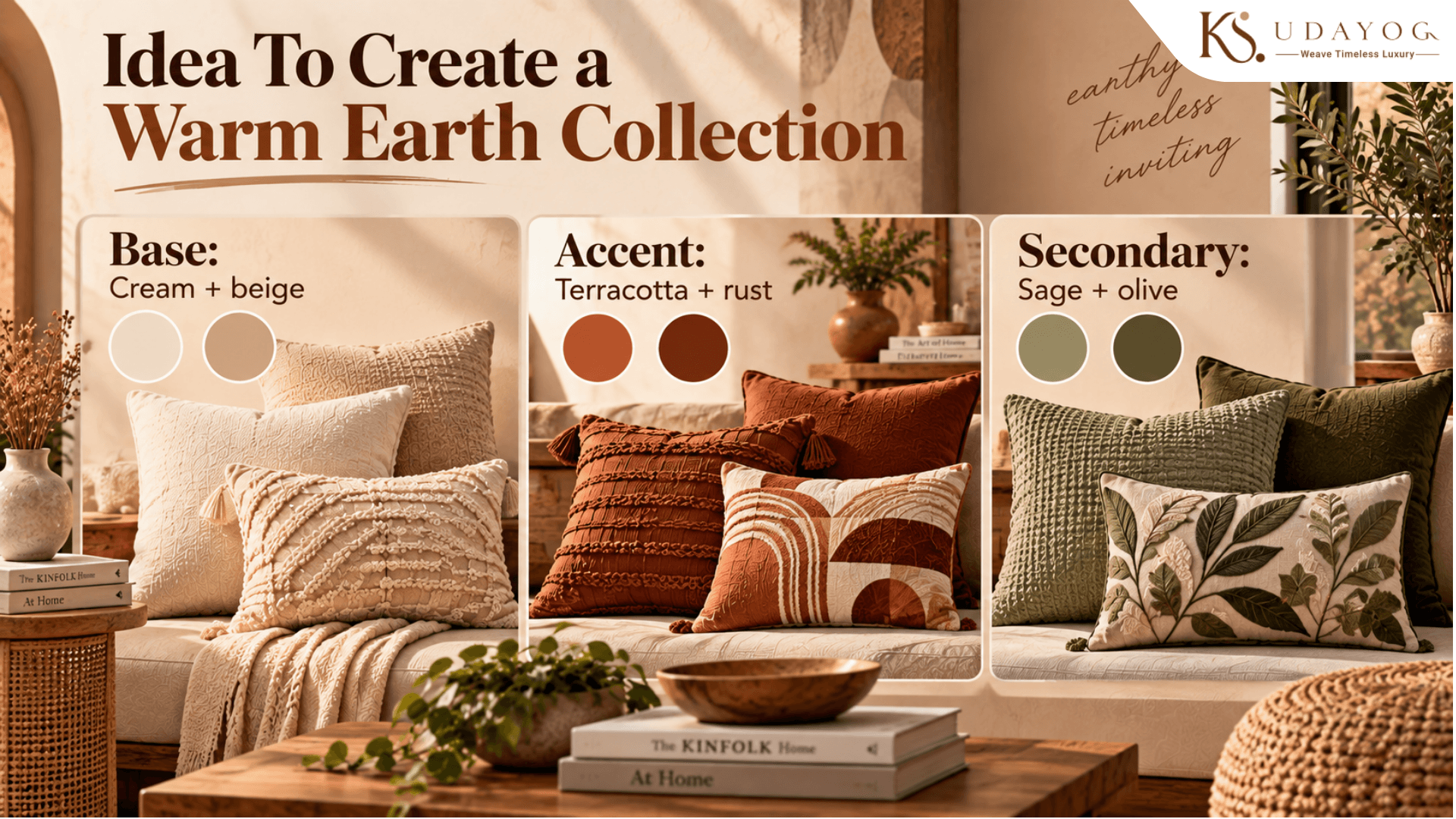
This allows retailers to sell individual cushions while encouraging customers to build coordinated arrangements.
3. Nature-Inspired Cushion Designs
Botanical patterns remain a strong option, but 2027 collections can move beyond small repetitive flowers.
Think about larger, more expressive designs such as:
- Oversized leaves
- Abstract flowers
- Branch motifs
- Botanical line drawings
- Tropical foliage
- Birds and butterflies
- Organic landscape-inspired patterns
Current textile design reporting points toward larger-scale botanical compositions and nature-inspired motifs rather than only small traditional florals.
Better Wholesale Approach
Instead of creating 10 cushions with unrelated floral prints, develop a coordinated botanical story where three or four designs share the same palette.
That makes the collection easier for retailers to merchandise.
4. Modern Geometric Patterns
Geometric cushions can provide structure when paired with softer textures or neutral furniture.
Popular directions can include: arches, checks, grids, stripes, abstract blocks, circles, interlocking shapes, and uneven geometric forms.
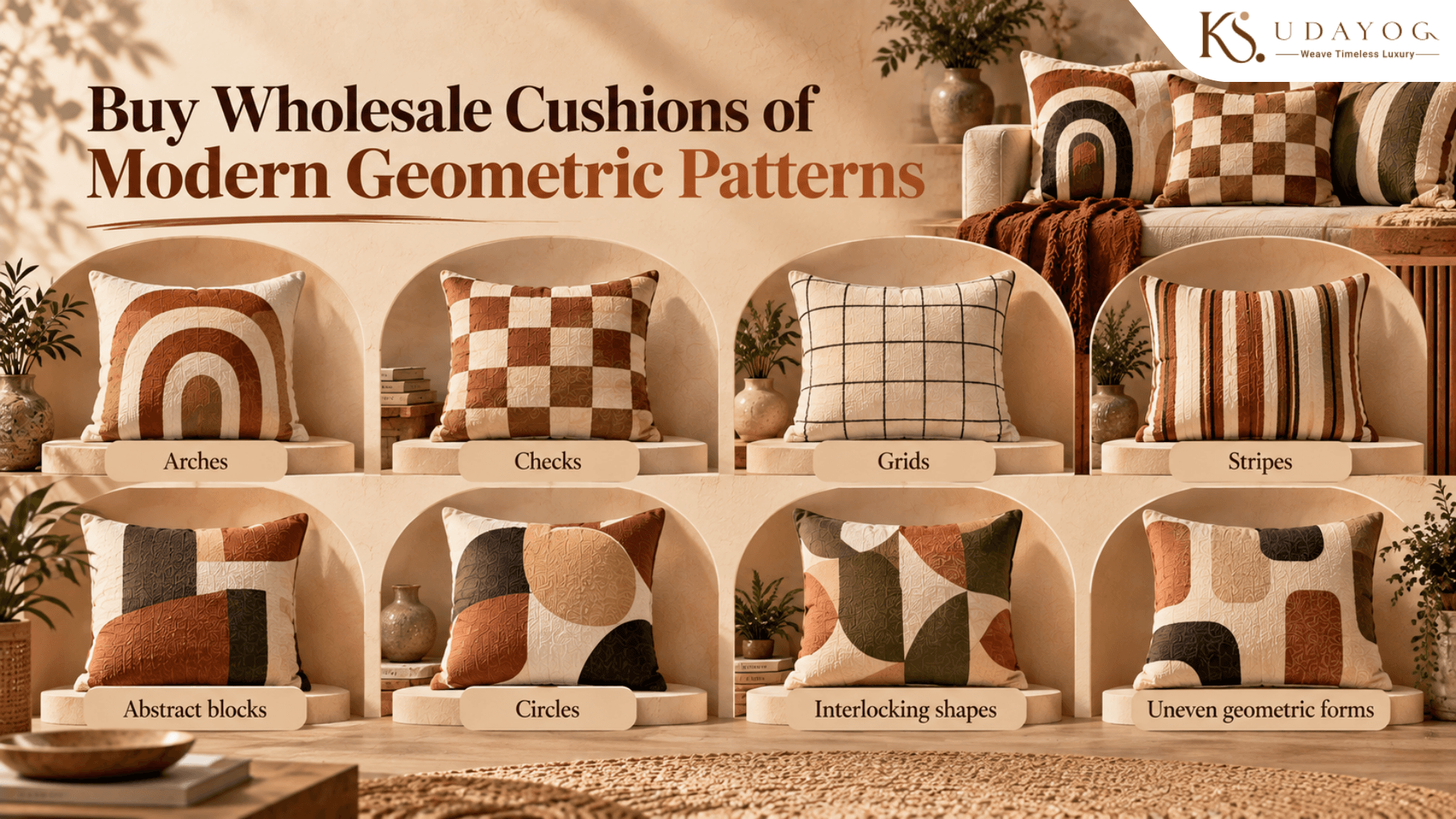
Simple geometric compositions with restrained palettes are already appearing across contemporary home textiles.
Design Idea
Pair a large geometric cushion with:
1 solid cushion + 1 textured cushion + 1 patterned cushion
This creates variety without making the display look overcrowded.
5. Artisan-Inspired Cushion Designs
Retailers can also build collections around craftsmanship-inspired details.
Think:
- Hand-block-inspired patterns
- Ikat-inspired motifs
- Traditional geometric artwork
- Embroidered details
- Handwoven-looking textures
- Folk-inspired designs
- Heritage borders
This direction is particularly relevant for Indian home collections, where traditional textile techniques can be interpreted in contemporary ways. Current Indian soft-home furnishing coverage highlights handcrafted, ethnic, embroidered, and regionally inspired textiles as an important category.
The goal is not to make every product heavily traditional. A modern cushion with one heritage-inspired motif can often feel more versatile.
6. Statement Floral Cushions
Floral cushions can become stronger focal products when the artwork is larger and more expressive.
Instead of tiny floral repeats, consider: oversized flowers, painterly florals, dark-background florals, abstract botanical arrangements, large floral embroidery, and tonal floral patterns.
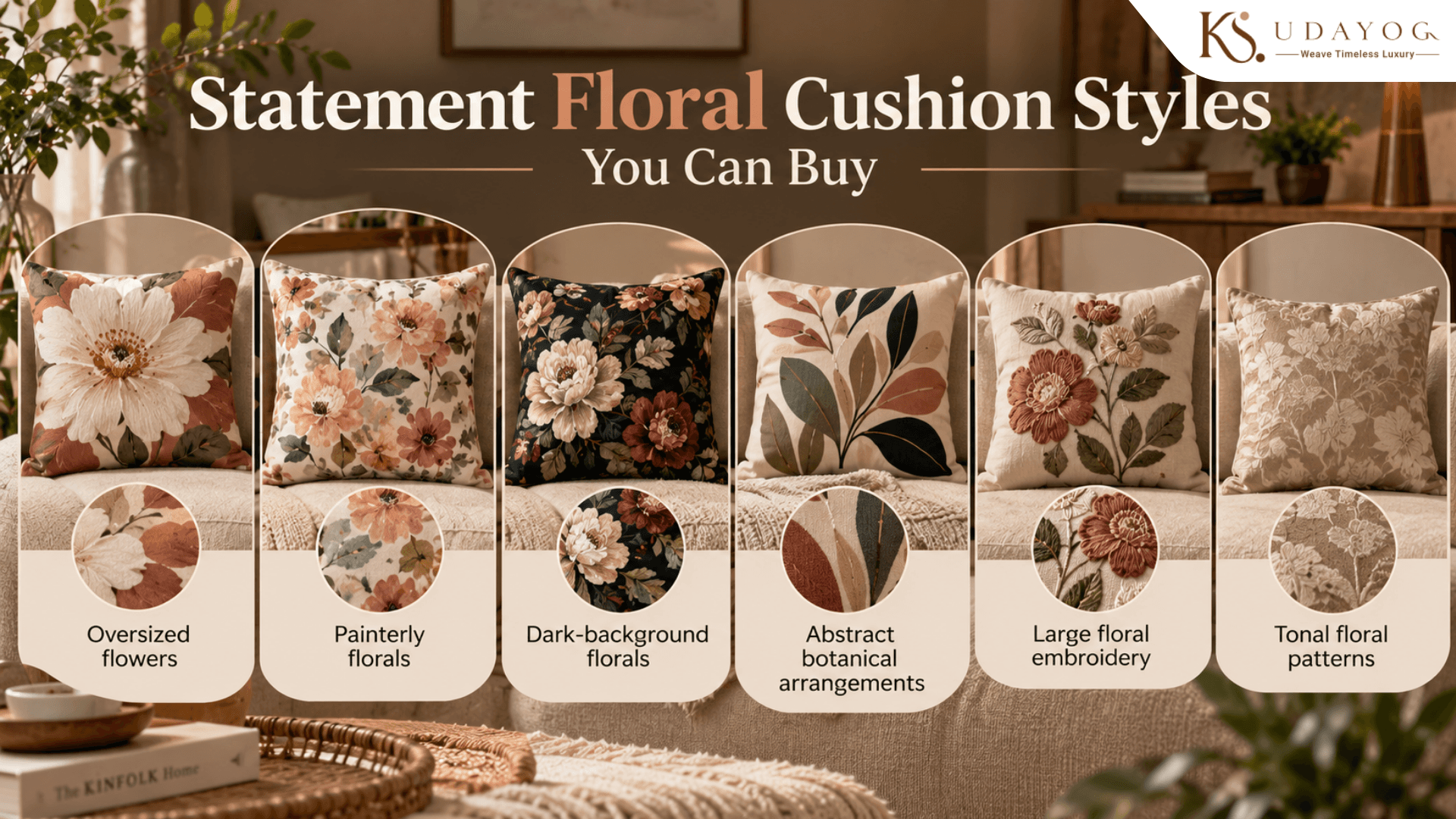
A statement floral cushion can act as the visual centerpiece while simpler cushions support it.
Retail Collection Formula
1 statement floral + 1 textured solid + 1 smaller geometric pattern
This gives retailers a ready-made combination rather than three unrelated products.
7. Decorative Embroidery
Embroidery can add value without requiring an extremely complicated print.
Wholesale cushion collections can explore: floral embroidery, linear embroidery, geometric stitching, border embroidery, thread-on-thread designs, contrast embroidery, and small embroidered motifs.
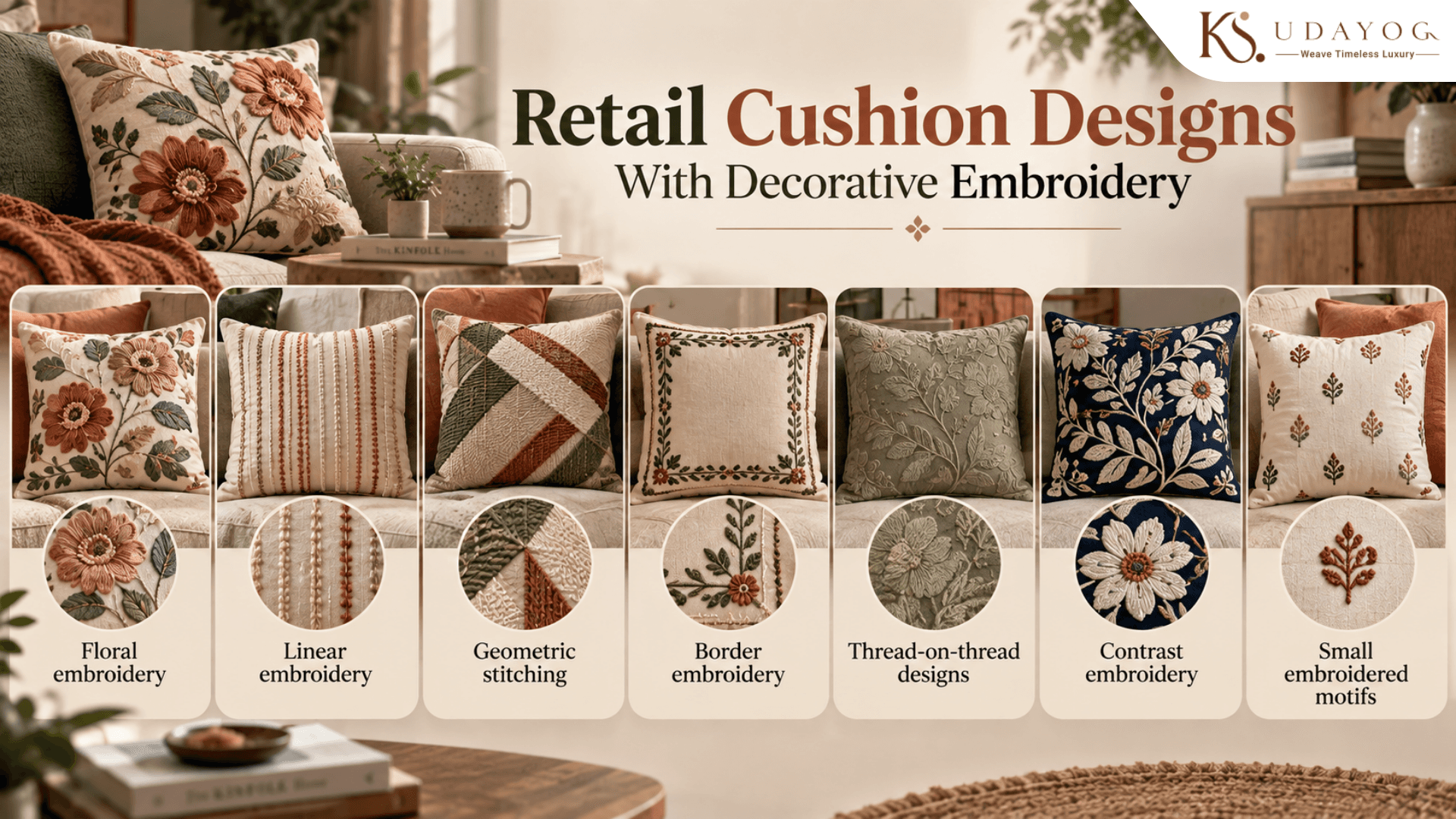
Embroidery also allows cushion manufacturers to create different price levels within the same collection.
For example, a retailer could stock a basic woven cushion, a textured embroidered cushion, and a heavily embroidered statement cushion.
8. Organic And Unusual Shapes
Square cushions remain practical, but retailers can create more visual interest by adding different silhouettes.
Potential 2027 cushion styles include:
- Lumbar cushions
- Round cushions
- Bolster cushions
- Scalloped-edge cushions
- Curved cushions
- Rectangular cushions
- Irregular or organic silhouettes
The purpose is not to replace standard square cushions. Instead, unusual shapes can act as accent pieces within a larger collection.
9. Layered Patterns Instead of Matching Sets
One of the strongest collection-building opportunities is moving away from identical cushion sets.
Current home décor guidance increasingly favors mixing patterns, textures, and scales to create a more collected appearance.
For retailers, this means designing products that coordinate without looking identical.
Example
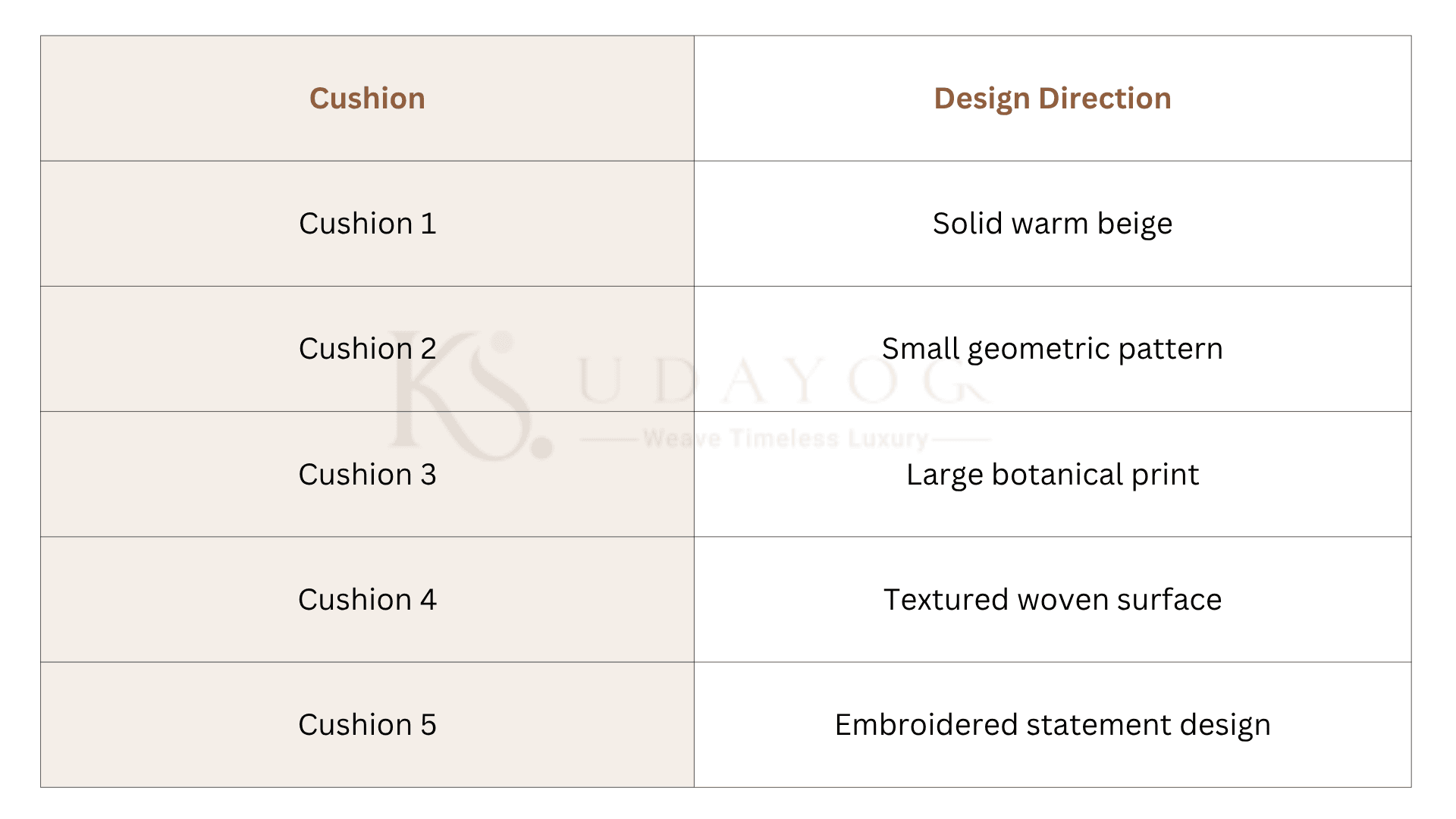
The colors connect the products, while the different surfaces and patterns create variety.
10. Vintage And Heritage-Inspired Cushion Styles
Heritage designs are returning in updated forms rather than simply being reproduced as traditional patterns.
Wholesale cushion design collections can explore:
- Vintage florals
- Faded geometric motifs
- Traditional borders
- Heritage-inspired checks
- Decorative tapestry effects
- Aged-looking color combinations
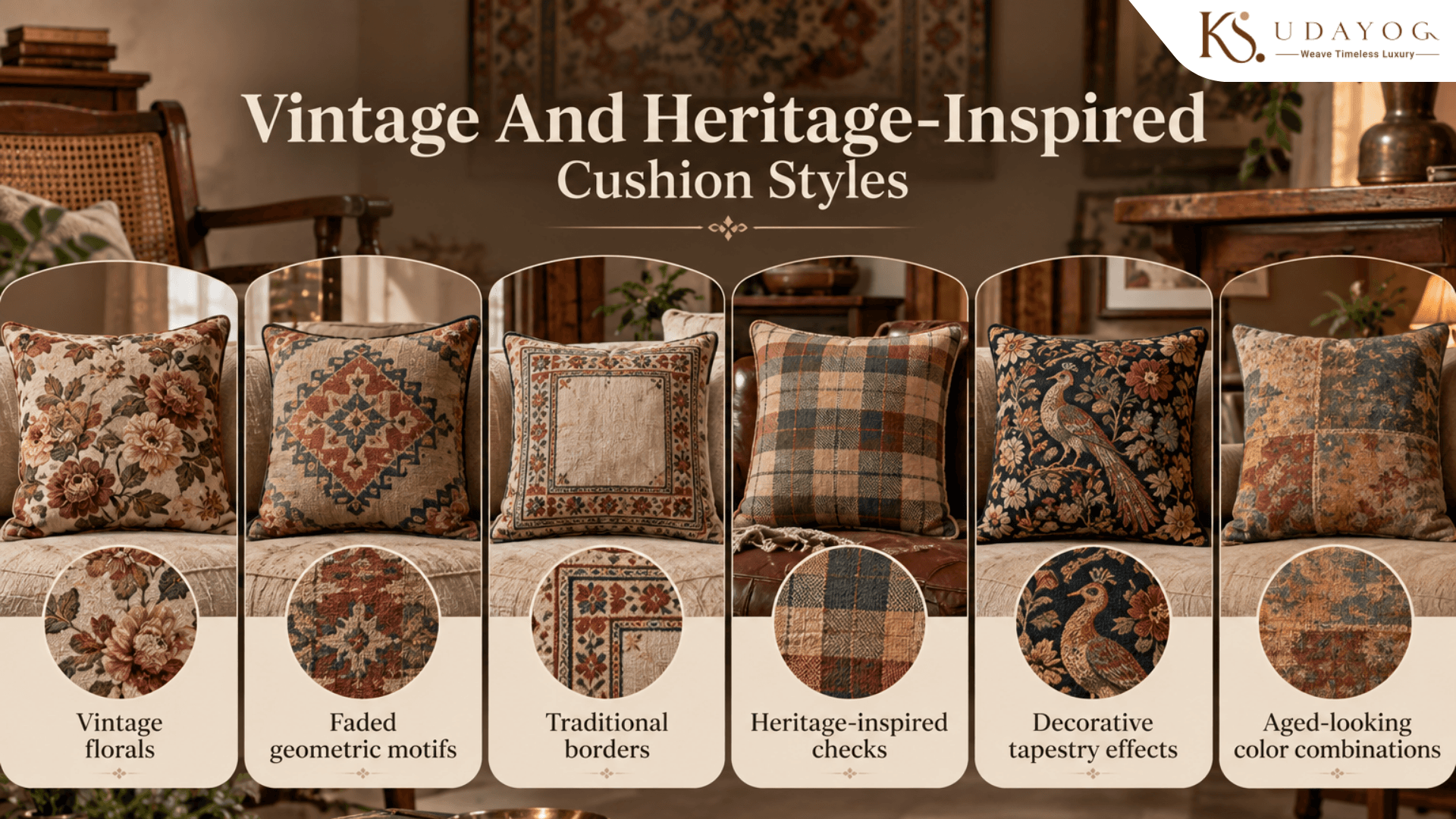
Current textile and home décor coverage shows renewed interest in nostalgic, heritage, and historically inspired patterns.
For modern retail collections, these designs can be simplified through contemporary color combinations and cleaner layouts.
11. Rich Accent Colors
Neutral cushions are useful for volume, but retailers also need statement products that attract attention.
Consider accents such as:
- Deep green
- Aubergine
- Navy
- Rust
- Chocolate brown
- Burnt orange
- Plum
- Deep blue
Recent interior trend reporting highlights richer jewel tones and deeper colors alongside warmer neutrals.
The practical approach is to use strong colors selectively rather than making the entire collection highly saturated.
12. Velvet And Rich-Looking Fabrics
Velvet can give cushions an immediately decorative appearance because of its soft surface and subtle sheen.
It can work particularly well for:
- Premium collections
- Festive ranges
- Bedroom cushions
- Luxury living-room collections
- Statement cushions
However, retailers should balance rich fabrics with more practical everyday materials. A collection containing only premium fabrics may have a narrower customer base.
13. Mix Natural-Looking Textures With Modern Prints
A useful 2027 direction is combining contrasting surfaces.
For example:
Linen-look solid + velvet floral + woven geometric
or
Cotton texture + embroidered cushion + printed botanical
The contrast gives the collection depth without requiring every cushion to have an elaborate design.
This also aligns with the broader movement toward layered materials and tactile interiors.
14. Minimal Cushions With One Strong Detail
Minimal does not have to mean plain.
A simple cushion can become more distinctive through:
- Contrast piping
- One embroidered motif
- A textured border
- Small tassels
- Tonal stitching
- A decorative button
- A contrasting back panel
This is particularly useful for retailers serving customers who prefer understated interiors.
15. Fringe, Tassels And Decorative Edges
Decorative trims can add movement and personality to cushions.
Different Decorative Trims Cushion Design Ideas Include:
- Short fringe
- Long fringe
- Tassel corners
- Braided edges
- Contrast piping
- Decorative cords
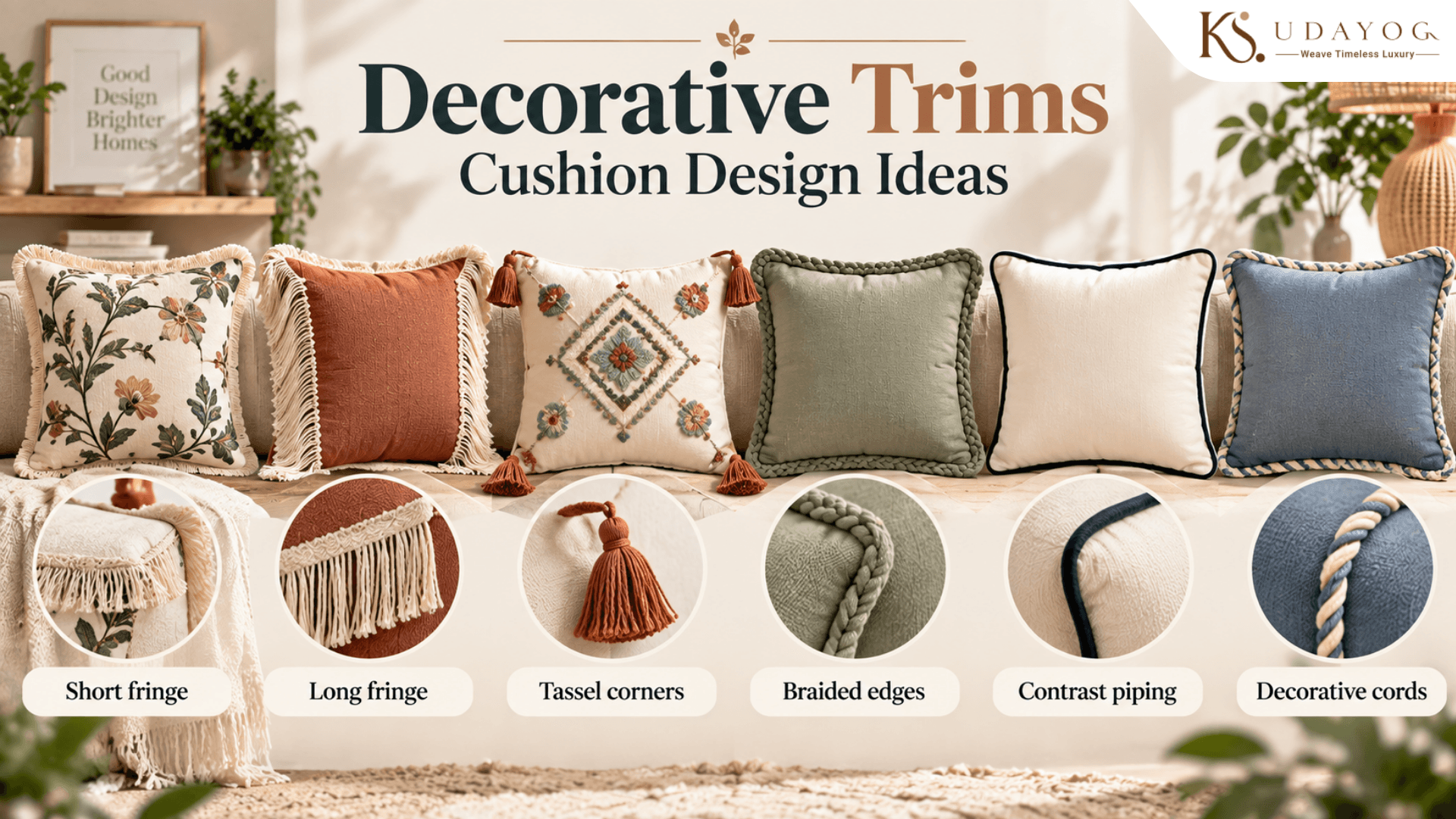
Luxury textile coverage in 2026 has also highlighted a renewed interest in passementerie, tassels, fringe, and ornamental detailing.
For wholesale buyers, these details can be used selectively on statement pieces rather than across an entire collection.
Which Cushion Design Trends Should Retailers Prioritize in 2027?
Not every trend needs to become a large inventory commitment. A better approach is to divide your collection into core, trend, and statement products.
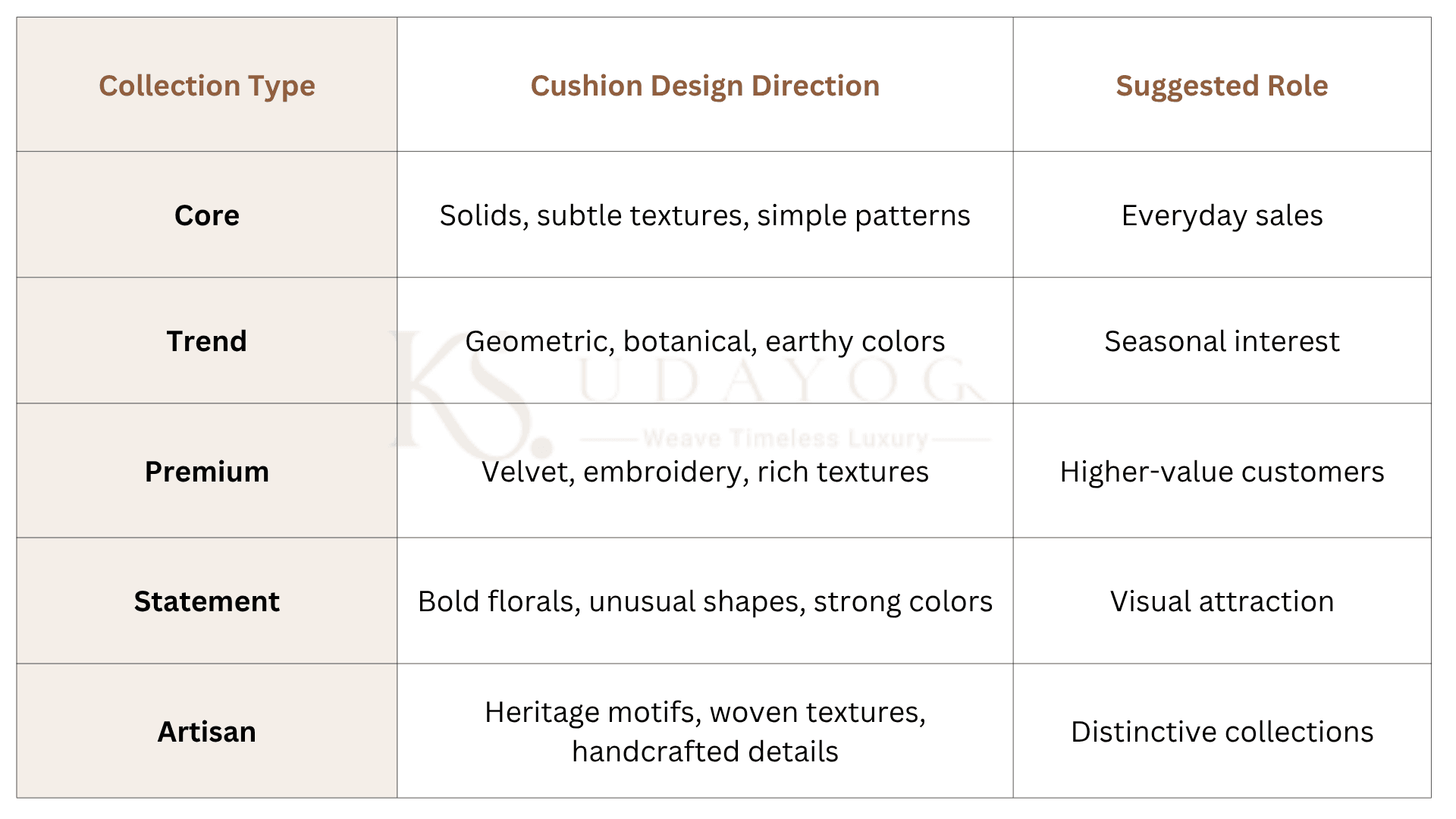
This gives retailers a balanced range instead of relying entirely on short-lived trends.
How To Build A Wholesale Cushion Collection For 2027?
Following trends is only the first step. Wholesale buyers also need to turn those ideas into a commercially practical range.
Step 1: Choose A Clear Collection Theme
Start with one design story instead of mixing unrelated trends.
Examples:
- Modern Earth
- Botanical Living
- Heritage Contemporary
- Soft Minimal
- Modern Geometry
- Luxe Texture
Step 2: Select A Controlled Color Palette
Choose around 3–5 connected colors.
This allows different cushion designs to work together while giving retailers enough variety.
Step 3: Mix Different Design Scales
Do not make every pattern equally bold.
Use:
Small pattern + medium pattern + large statement design + solid
This makes the collection easier to style.
Step 4: Add Different Textures
Combine smooth, woven, tufted, embroidered, or velvet surfaces where appropriate.
Texture can create variety even when the colors remain similar.
Step 5: Include Different Sizes And Shapes
Standard square cushions can form the foundation, while lumbar, rectangular, round, or bolster cushions can add variation.
Step 6: Create Good-Better-Best Options
A retailer can offer:
- Good: Simple printed or woven cushion
- Better: Textured or embroidered cushion
- Best: Premium fabric with detailed embroidery or decorative finishing
This helps serve different customer budgets within one collection.
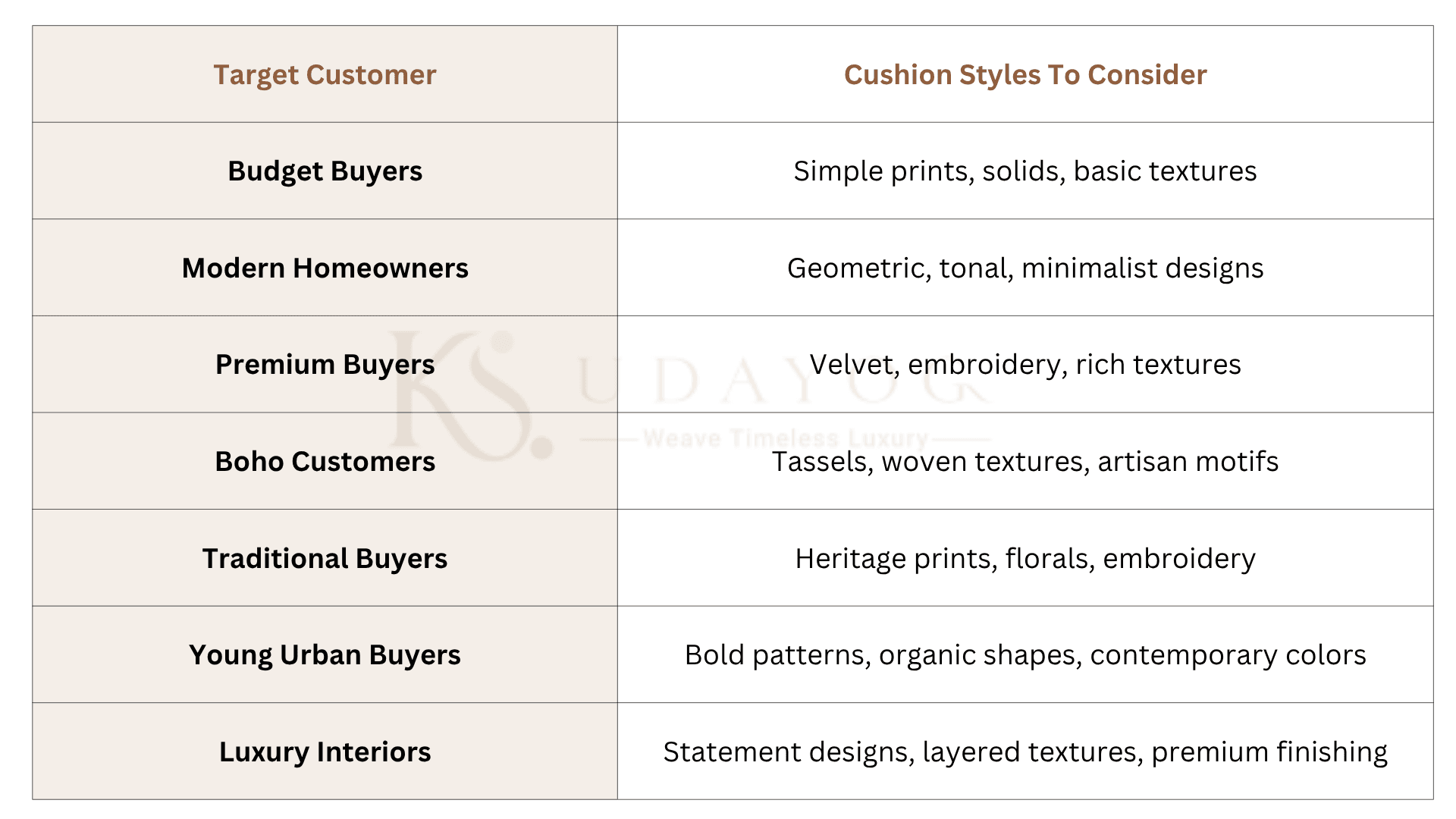
Innovative Cushion Styles For Different Retail Customers
Different customer groups look for different combinations of comfort, appearance, price, and design personality. Retailers can build a stronger cushion range by matching innovative styles with the preferences and budgets of their target customers.
What Should Wholesale Buyers Check Before Ordering Trendy Cushions?
A design trend may look attractive, but wholesale buyers still need to evaluate the product behind the design.
Check:
- Fabric quality
- Filling quality
- Stitching
- Zipper or closure
- Dimensions
- Color accuracy
- Print quality
- Embroidery quality
- Edge finishing
- Wash-care requirements
- Packaging
- MOQ
- Customization options
- Production capacity
- Lead time
A trendy design will not create repeat sales if the finished product does not meet customer expectations.
How To Avoid Short-Lived Cushion Trends
Trend-led buying carries a risk: a design can become outdated before the inventory is sold.
The safer approach is to combine timeless foundations with trend-led details.
For example:
Timeless: Beige cushionTrend: Raised geometric texture
or
Timeless: Cream woven cushionTrend: Sage botanical embroidery
or
Timeless: Neutral lumbar cushionTrend: Contrast piping
This allows the product to remain commercially useful even after the specific trend loses momentum.
Final Thoughts
The strongest cushion design trends for 2027 are not about choosing one fashionable pattern and filling an entire collection with it. Retailers and wholesale buyers can create stronger ranges by combining tactile textures, warm colors, expressive patterns, artisan-inspired details, practical shapes, and coordinated designs.
A successful collection should give customers both individual pieces and combinations that work together. That means balancing core designs with trend-led products, premium pieces, and statement cushions instead of relying on one aesthetic.
If you are planning a new retail range, use these cushion design trends as a starting point, then adapt the colors, materials, sizes, and finishing details to your target customers and price points.
Planning a new wholesale cushion collection for 2027? Connect with a trusted cushion manufacturer to develop cushion designs that match your market, quantity, and product requirements.
Frequently Asked Questions (FAQs)
What Are The Biggest Cushion Design Trends For 2027?
Tactile textures, warm earthy colors, botanical patterns, geometric designs, artisan-inspired details, embroidery, organic shapes, rich accent colors, and layered combinations are strong directions to explore for 2027.
Are Textured Cushions A Good Choice For Wholesale Collections?
Yes. Textured cushions can add visual and physical depth while allowing retailers to create premium-looking products without relying entirely on bold prints.
Which Cushion Colors Should Retailers Consider For 2027?
Warm neutrals, sage, olive, terracotta, rust, cream, brown, deep blue, plum, and other grounded accent colors can provide useful options for 2027 collections.
Should Wholesale Buyers Follow Every Cushion Trend?
No. Buyers should balance trend-led products with timeless designs that can remain relevant across seasons.
How Can Retailers Create A Mix-And-Match Cushion Collection?
Use a shared color palette while varying the patterns, textures, sizes, and visual scale. A solid, small geometric, large botanical, and textured cushion can work well as a coordinated group.
Are Embroidered Cushions Suitable For Retail Collections?
Yes. Embroidery can add decorative value and help create premium or artisan-inspired product tiers within a larger cushion collection.
Which Cushion Styles Are Best For Premium Collections?
Velvet, detailed embroidery, tactile textures, decorative trims, statement patterns, and distinctive shapes can be suitable for premium collections when the construction and finishing support the positioning.
How Many Cushion Designs Should A Wholesale Collection Include?
There is no fixed number. A better approach is to build a balanced range containing core products, trend designs, statement pieces, and premium options rather than simply increasing the number of SKUs.
What Should Retailers Check Before Buying Cushions In Bulk?
Retailers should check fabric, filling, dimensions, stitching, color, print or embroidery quality, finishing, MOQ, customization, packaging, production capacity, and lead time before placing a bulk order.
How Can A Cushion Manufacturer Help With Trend-Based Collections?
A capable manufacturer can help translate trend directions into suitable fabrics, colors, patterns, sizes, construction methods, finishing details, samples, and production specifications for wholesale requirements.