One poor supplier choice can leave a retailer with rugs that sell slowly, arrive late, or fail to meet the agreed specifications. That risk makes home rug supplier evaluation especially important when the first order involves significant inventory and working capital.
For retailers, wholesalers, interior businesses, and home décor brands, the supplier you select can directly affect product quality, margins, delivery schedules, customer satisfaction, and repeat sales.
India has established rug manufacturing clusters with suppliers offering handmade, machine-made, flatweave, tufted, and other constructions across materials such as wool, cotton, jute, and blended fibers. Buyers can therefore find many sourcing options, but the challenge is identifying a supplier whose capabilities actually match their product and commercial requirements.
A proper evaluation should happen before the first bulk purchase. The following guide explains exactly what to check when comparing a home rug supplier in India.
What Should You Check Before Choosing a Home Rug Supplier?
Before requesting a quotation, define what you actually need from the Indian home rug manufacturer and supplier. Your requirements should cover product type, construction, material, dimensions, quantity, target price, customization, packaging, and delivery expectations.
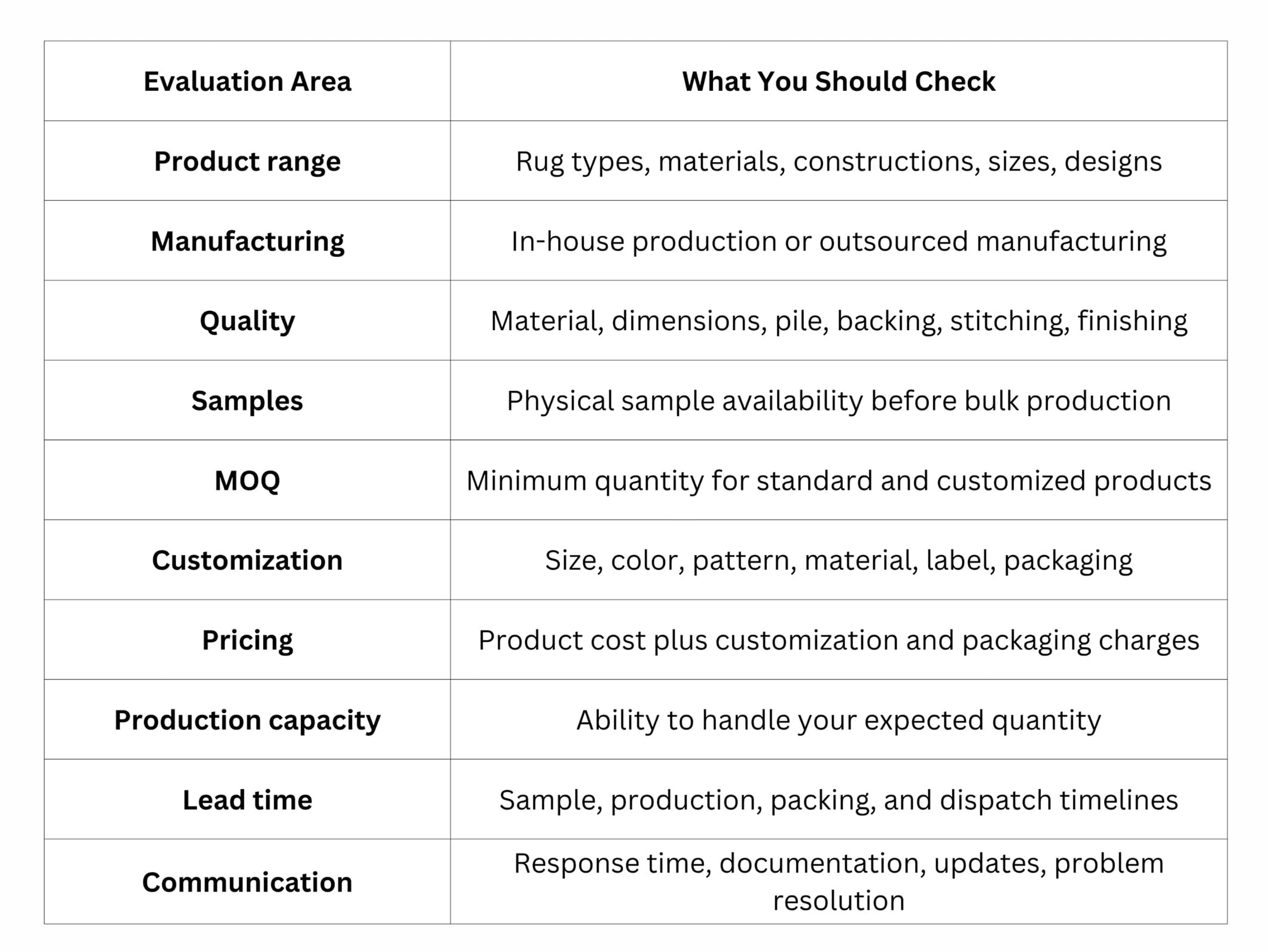
Tips To Evaluate The Best Wholesale Rug Supplier in India
The right wholesale rug supplier should offer more than attractive bulk pricing. Product quality, production capacity, order reliability, and commercial flexibility can shape the success of your inventory purchase. These practical evaluation tips can help you assess suppliers before placing an order.
1. Check Whether the Supplier Actually Manufactures Rugs
One of the first questions to ask a home rug supplier is whether the company manufactures the rugs itself or sources them from other production units.
This distinction matters because direct manufacturing can give buyers greater visibility into materials, construction, production capacity, customization, and quality control. However, a trading supplier is not automatically unsuitable; what matters is whether it can reliably control the specifications and production process you require.
Ask the supplier:
- Where are the rugs manufactured?
- Which production processes are handled in-house?
- Which processes are outsourced?
- Can you see the production facility?
- What rug constructions do you manufacture?
- What is your monthly production capacity?
- Can you provide production photographs or a virtual factory walkthrough?
A genuine manufacturing setup should be able to explain how the rug moves from raw material to finished product rather than discussing only the finished catalog.
2. Evaluate the Rug Materials and Construction
The right material depends on how and where the rug will be used. A supplier should be able to explain the characteristics of the materials and constructions it offers.
Common options include:
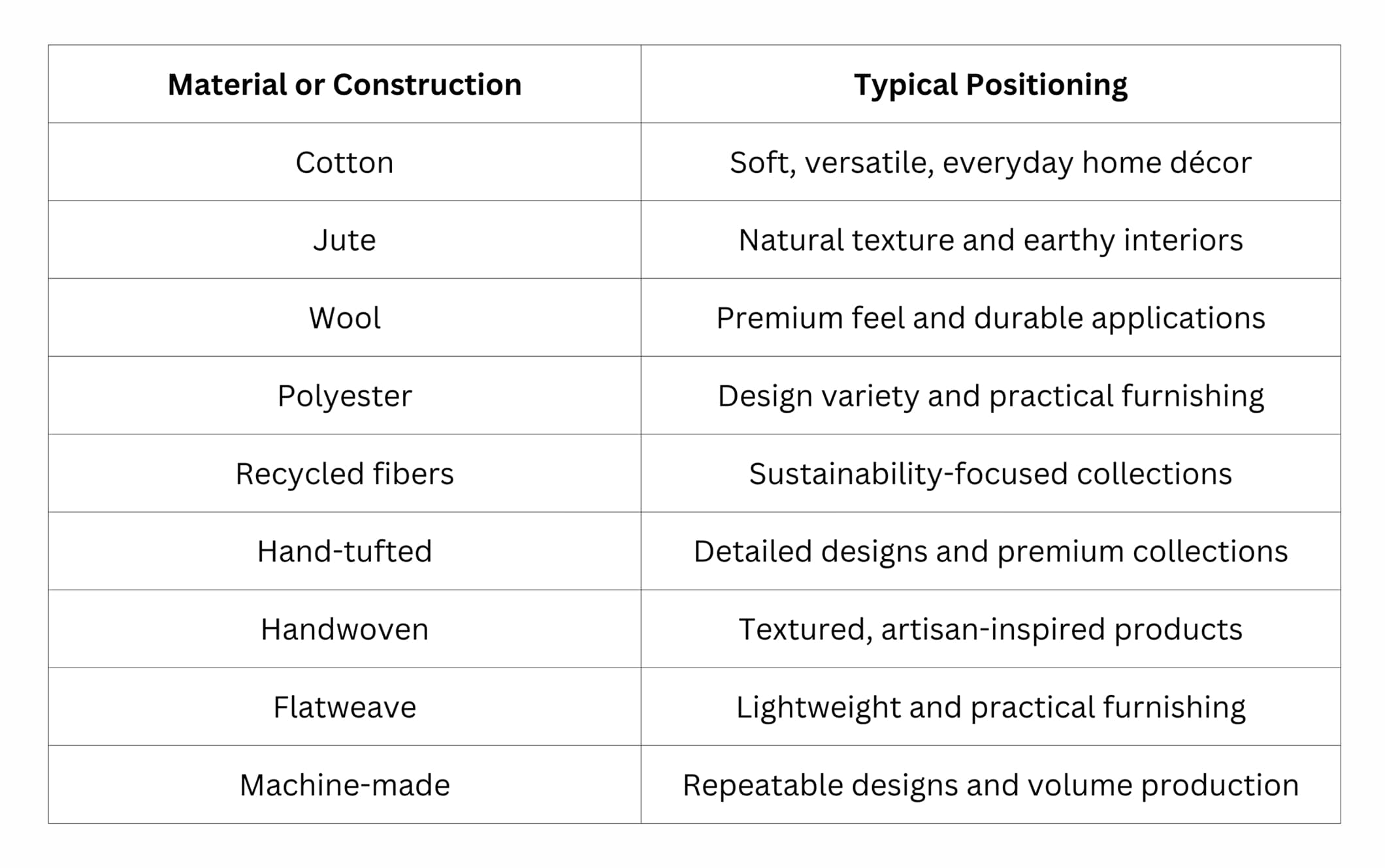
Do not select a supplier only because it has a large catalog. Check whether it can repeatedly produce the specific material and construction your customers expect.
3. Always Request Physical Rug Samples
A catalog or product photograph cannot show everything you need to know about a rug.
Before placing your first large order, request physical samples. Use them to evaluate the actual material, surface feel, thickness, color, construction, backing, edges, and finishing.
A sample review can include:
- Actual dimensions
- Material composition
- Pile height
- Surface texture
- Color accuracy
- Pattern definition
- Backing quality
- Edge finishing
- Stitching or weaving
- Overall appearance
- Packaging condition
For customized products, the approved sample should become the reference for bulk production. Some Indian rug manufacturers specifically use approved samples, color references, and documented specifications before production begins.
4. Compare Rug Quality Using the Same Specifications
Supplier A may appear cheaper than Supplier B because the two quotations are based on different specifications.
For example, compare suppliers using the same rug size, material, GSM or pile specification, construction, backing, design, color, finishing, packaging, and quantity.
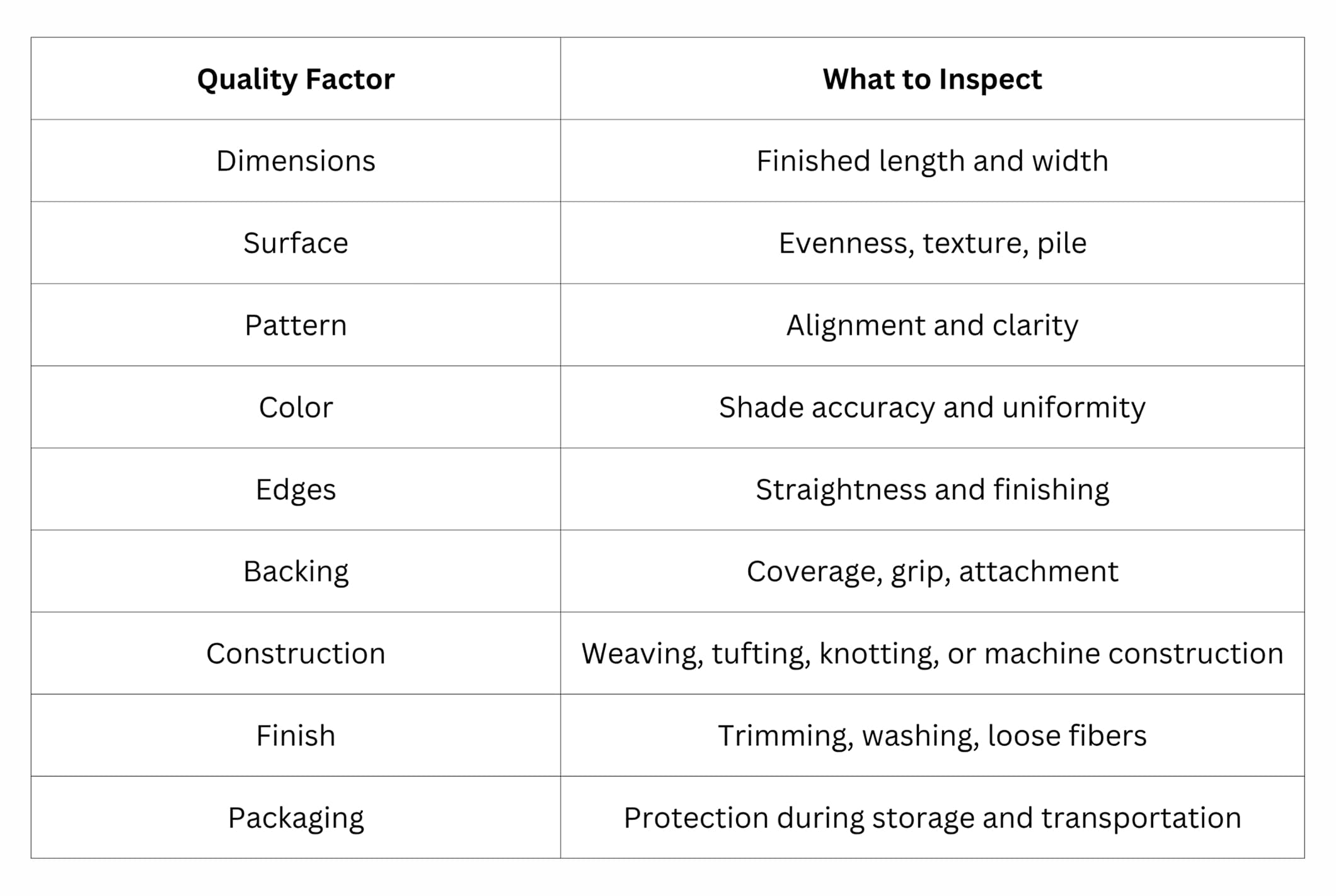
This gives you a meaningful comparison instead of choosing a supplier based on unit price alone.
5. Check the Supplier's MOQ
MOQ means minimum order quantity. It can differ between ready-stock products, standard designs, and customized rugs.
A supplier might accept smaller quantities for existing designs but require higher quantities for custom colors, new patterns, private labeling, or special materials.
Ask for separate MOQs for:
- Ready designs
- Custom designs
- Custom sizes
- Custom colors
- Private-label rugs
- Custom packaging
The right MOQ depends on your sales volume and storage capacity. A very high MOQ can tie up working capital, while an extremely low MOQ may come with higher per-unit costs.
6. Understand Customization Capabilities
Customization can help retailers and home décor brands create collections that are different from commonly available products.
Depending on the supplier, customization may include:
- Size
- Shape
- Color
- Pattern
- Material
- Construction
- Pile height
- Backing
- Logo
- Label
- Packaging
Indian rug manufacturers currently offer different levels of custom development, from size and color changes to OEM and private-label production.
Before assuming customization is available, ask what can actually be modified and whether additional development charges or MOQs apply.
7. Compare the Complete Rug Cost
The lowest quoted rug price does not necessarily represent the lowest purchasing cost.
Your actual cost may include:
Product price + customization + packaging + labeling + transportation + applicable taxes or other charges
For example, imagine two suppliers quote for 500 rugs:
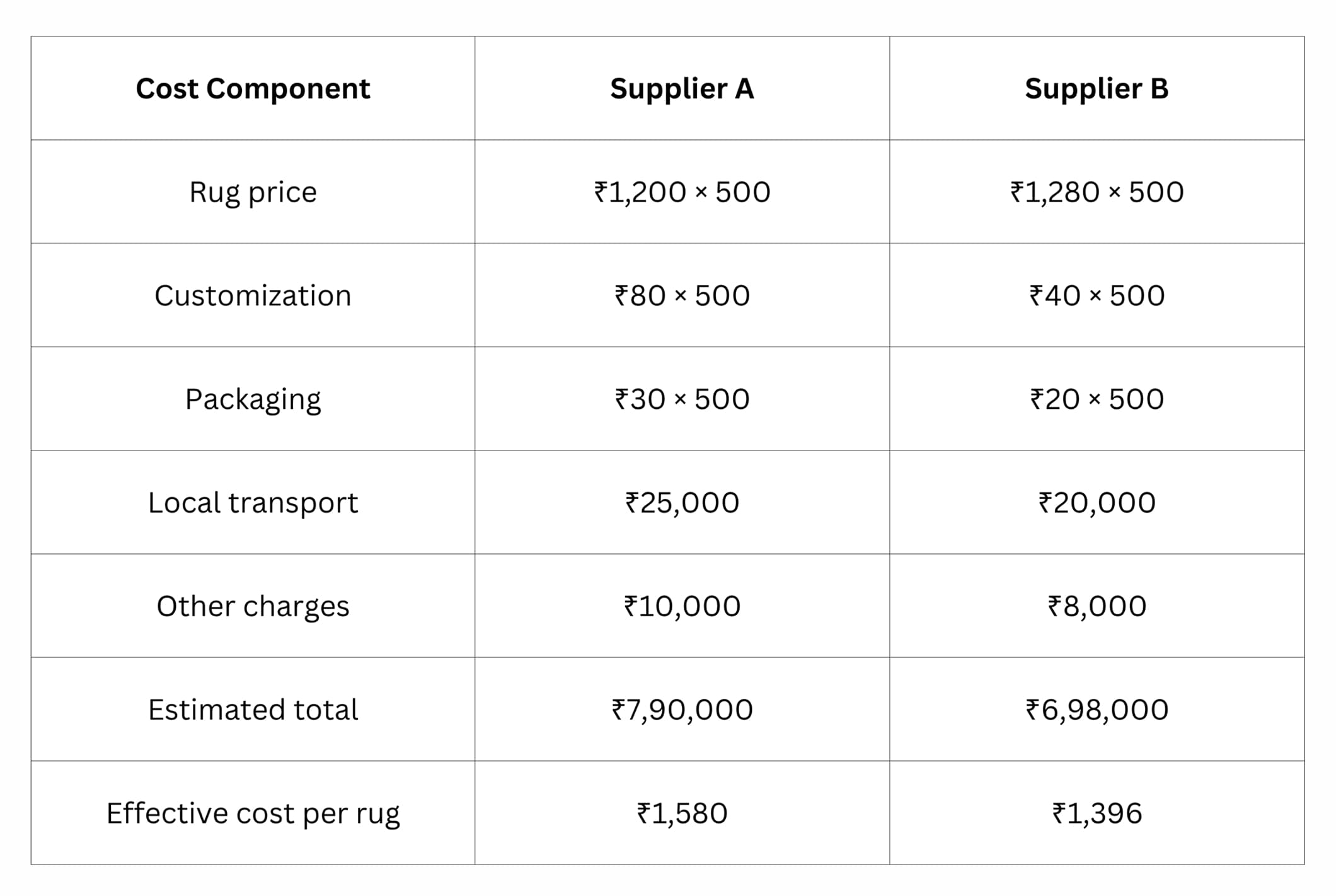
This is an estimated calculation, not a market quotation. The example shows why buyers should compare the complete order cost instead of looking only at the initial rug price.
8. Check Production Capacity Before Placing Bulk Home Rug Orders
A supplier may successfully produce 100 rugs but face difficulty fulfilling 5,000 rugs within your required timeline.
Ask about:
- Current production capacity
- Available machinery or looms
- Artisan capacity for handmade rugs
- Material availability
- Dyeing capability
- Finishing facilities
- Quality-control process
- Peak-season production schedules
- Expected production lead time
Capacity becomes particularly important if you expect repeat orders or seasonal demand.
9. Ask How Quality Control Is Managed
Quality control should not begin when the finished rugs are already packed.
Ask the supplier when inspections happen and what is checked at each stage.
A practical process can include:
Raw Material Check → Production Check → Finishing Check → Final Inspection → Packing
For example, raw materials may be checked before production, construction may be monitored during manufacturing, and finished rugs may be inspected for dimensions, appearance, defects, and packaging before dispatch.
Some Indian B2B rug manufacturers publicly describe multi-stage quality checks covering incoming materials, production, measurements, and final inspection.
10. Verify Lead Times With Specific Dates
Avoid accepting vague statements such as “quick delivery” or “fast production.”
Ask the home rug supplier to provide expected timelines for:
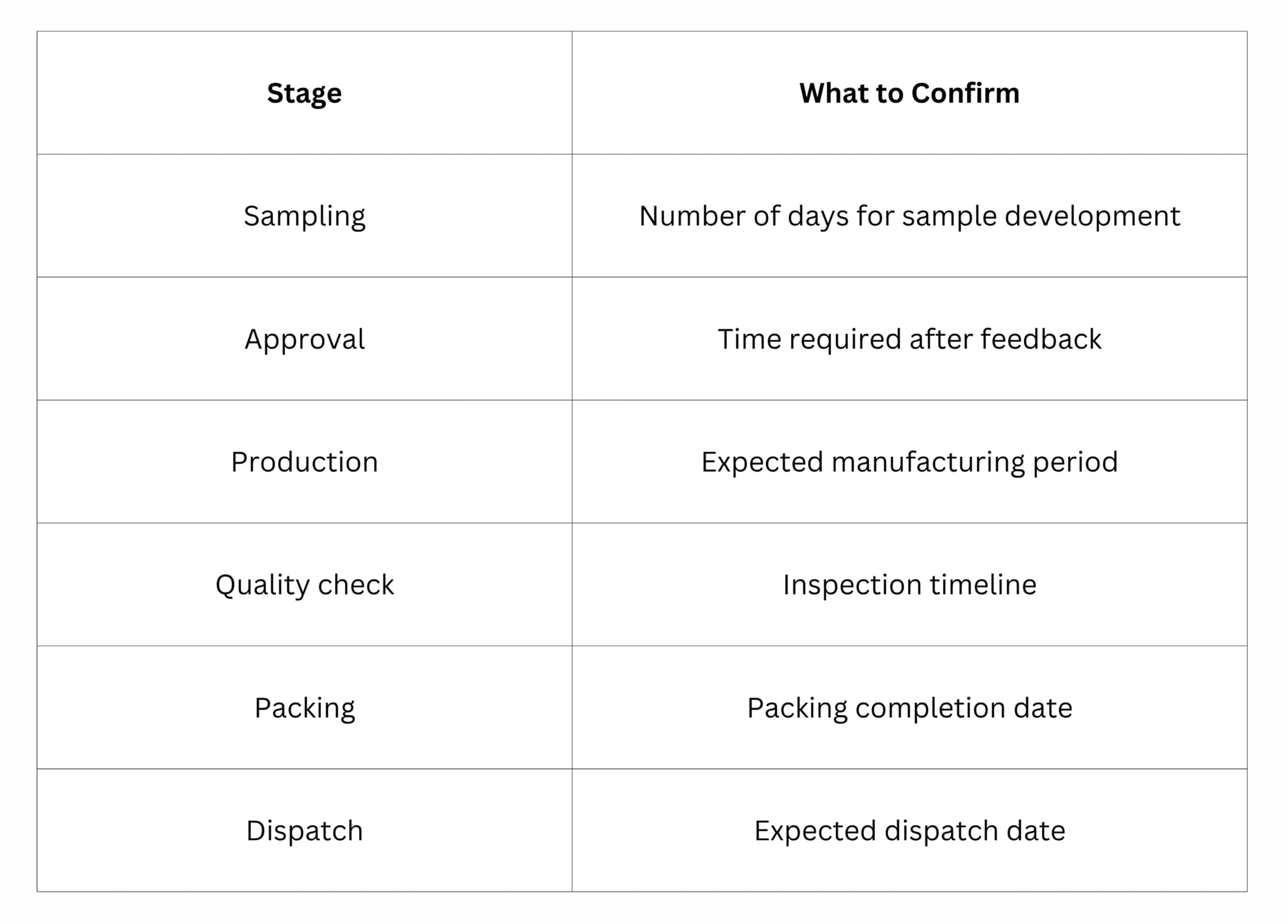
For customized rugs, sampling and approval can add significant time before bulk production begins, so include this period in your purchasing schedule.
11. Evaluate Communication Before You Order
Your first enquiry can reveal a lot about how future orders may be handled.
Notice whether the supplier:
- Answers your questions directly
- Provides complete quotations
- Shares specifications clearly
- Explains MOQ requirements
- Sends samples as promised
- Documents agreed changes
- Gives realistic timelines
- Communicates production updates
Strong communication is particularly important when your rugs involve multiple specifications or custom development.
12. Check Packaging and Labeling Options
Rugs can be damaged by poor handling, moisture exposure, dust, or inadequate packaging during transportation and storage.
Ask your supplier about:
- Individual packaging
- Product labels
- Barcode labels
- Brand labels
- Care labels
- Carton specifications
- Protective wrapping
- Retail-ready packaging
- Custom packaging
If you sell through retail stores or online marketplaces, clarify labeling and packaging requirements before production begins rather than adding them after the rugs are completed.
13. Ask About Repeat Orders and Design Reproduction
Your first order is only one part of supplier evaluation. If the product sells well, you may need the same design again.
Ask:
- Can the same material be sourced again?
- Can the same color be reproduced?
- Will dimensions remain within the agreed tolerance?
- Can the same construction be repeated?
- Are production specifications documented?
- How are previous designs stored?
- Can the supplier reproduce the same packaging?
Repeat-order capability is especially important for retailers building a permanent home décor collection.
14. Check Certifications and Compliance When Relevant
Not every rug requires the same certifications. The requirements depend on the product, destination market, materials, customer expectations, and intended use.
If certifications matter for your business, ask the supplier for current documentation rather than relying on logos displayed on a website.
Depending on the supplier and product, buyers may encounter certifications or standards relating to textile safety, quality management, recycled materials, responsible wool, or ethical production.
Verify the certificate number, issuing organization, validity, and whether the certification actually applies to the product you are purchasing.
15. Use a Supplier Scorecard Before Making the Final Choice
After evaluating several suppliers, put the information into one comparison sheet.
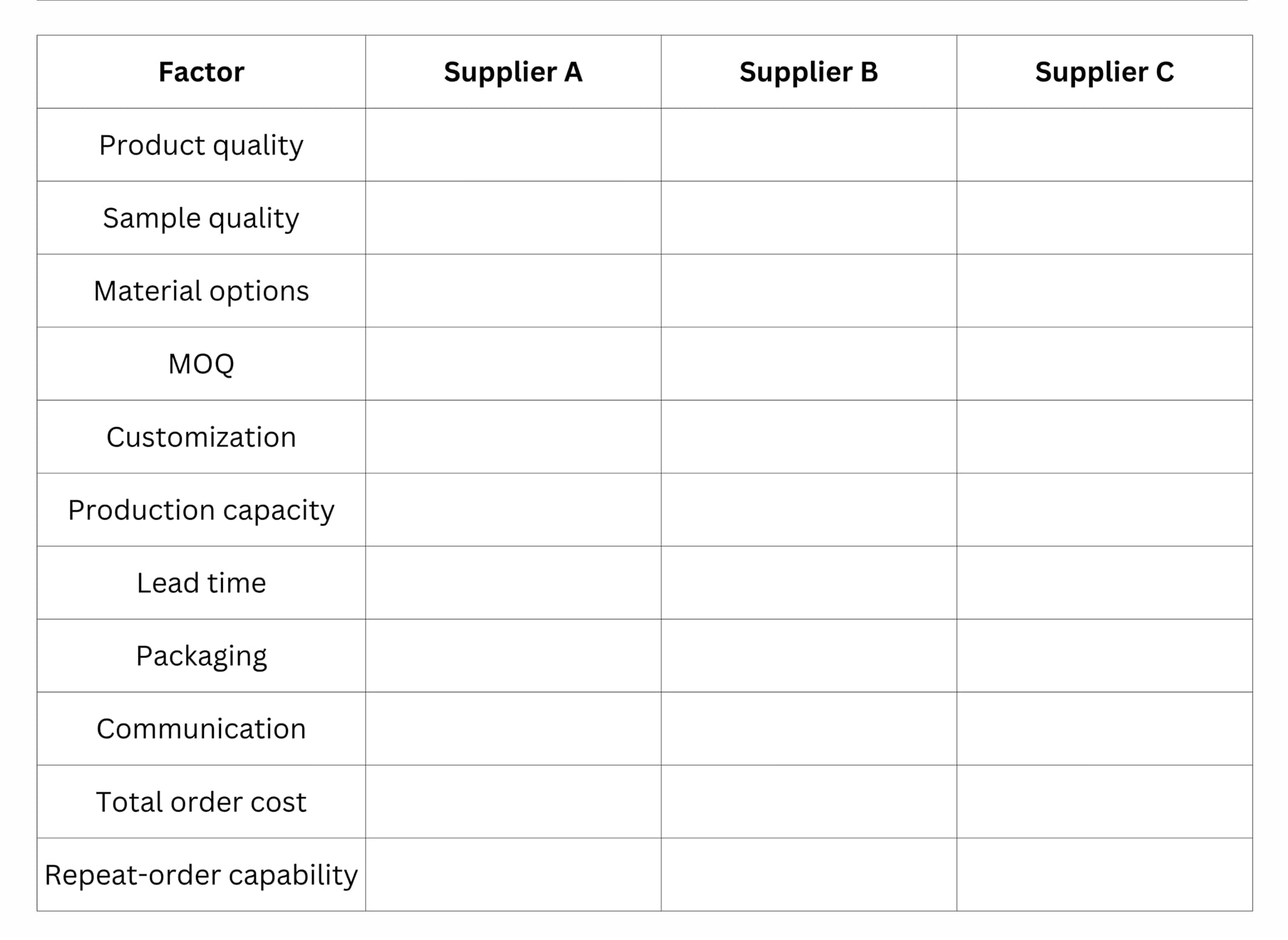
Instead of selecting a supplier from one factor, this approach helps you see where each supplier fits your actual sourcing requirements.
What Questions Should You Ask a Home Rug Exporter?
Before placing your first order, ask the supplier these questions:
- Where are your rugs manufactured?
- Which rug constructions do you produce?
- What materials are available?
- Can I receive physical samples?
- What is your MOQ for standard products?
- What is your MOQ for customized rugs?
- Which specifications can be customized?
- How long does sampling take?
- How long does bulk production take?
- How do you inspect finished rugs?
- What packaging options are available?
- Can you provide private-label or OEM production?
- Can the same design be reproduced for repeat orders?
- What payment terms apply?
- What happens if the delivered rugs do not match the approved specifications?
Clear answers to these questions can reveal whether the supplier is prepared for a genuine B2B relationship.
Common Mistakes When Choosing A Trusted Handmade Rug Supplier
1. Choosing Only by Price
A low unit price can become expensive if quality problems, delays, excessive wastage, or poor packaging affect your final sale.
2. Skipping the Sample
Photographs cannot replace physical inspection. Always evaluate the actual rug before committing to a large quantity.
3. Comparing Different Specifications
Two quotations are not directly comparable when their materials, dimensions, construction, or finishing differ.
4. Ignoring MOQ
A supplier may offer an attractive price but require more inventory than your business can comfortably sell.
5. Not Confirming Lead Time
Seasonal collections and promotional launches can suffer when production timelines are unclear.
6. Failing to Document Specifications
Verbal instructions can create misunderstandings. Keep the approved specifications, sample, quotation, and agreed changes documented.
7. Not Planning Repeat Orders
A rug that sells well can create a new problem if the supplier cannot reproduce the same design, size, color, or quality later.
8. First-Order Checklist for Buying Rugs in India
Before approving your first bulk order, confirm that you have:
- Defined your target customer
- Selected the rug materials
- Finalized sizes
- Chosen construction methods
- Compared multiple suppliers
- Requested physical samples
- Checked sample quality
- Confirmed MOQ
- Compared complete costs
- Discussed customization
- Verified production capacity
- Confirmed lead time
- Defined quality standards
- Approved packaging
- Documented final specifications
- Confirmed payment terms
- Established the process for handling quality issues
Final Thoughts
Selecting a home rug supplier should be treated as a sourcing decision rather than a simple price comparison. Product quality, manufacturing capability, samples, MOQ, customization, production capacity, quality control, packaging, communication, and repeat-order support all deserve attention before your first bulk purchase.
For Indian retailers and home décor businesses, a structured supplier evaluation can reduce purchasing risks while helping you build a rug collection that matches your customers, pricing strategy, and sales channels. The goal is not simply to find a supplier with attractive rugs, but to identify a partner capable of delivering the required specifications reliably as your orders grow.
If you want to add or expand your home rug collection, you can contact a reliable home rug supplier in India to place your bulk order.
Frequently Asked Questions (FAQs)
How Do I Choose a Home Rug Supplier in India?
Compare product quality, materials, construction, samples, MOQ, customization, pricing, production capacity, lead time, packaging, communication, and repeat-order capabilities before selecting a supplier.
Should I Order Samples Before Buying Rugs in Bulk?
Yes. Physical samples allow you to check dimensions, material, texture, color, construction, backing, finishing, and overall quality before committing to a larger order.
What Is a Good MOQ for Wholesale Rugs?
There is no universal MOQ. Requirements vary according to the supplier, rug construction, material, customization, design, and production process.
Can Indian Rug Suppliers Provide Custom Designs?
Many Indian rug manufacturers offer customization, which can include size, color, material, pattern, construction, labeling, and packaging. Availability depends on the supplier.
How Can I Check Whether a Rug Supplier Is a Manufacturer?
Ask where production takes place, which processes are handled in-house, whether a factory visit or virtual walkthrough is possible, and what manufacturing capabilities the supplier operates.
What Should I Check in a Rug Sample?
Check dimensions, material, pile or surface, color, pattern, backing, edges, stitching or weaving, finishing, loose fibers, and overall construction against your approved specifications.
Can I Buy Private Label Rugs From an Indian Supplier?
Yes, some Indian rug manufacturers offer OEM and private-label production with buyer-specific designs, labels, packaging, and specifications. Confirm the exact service and MOQ with the supplier.