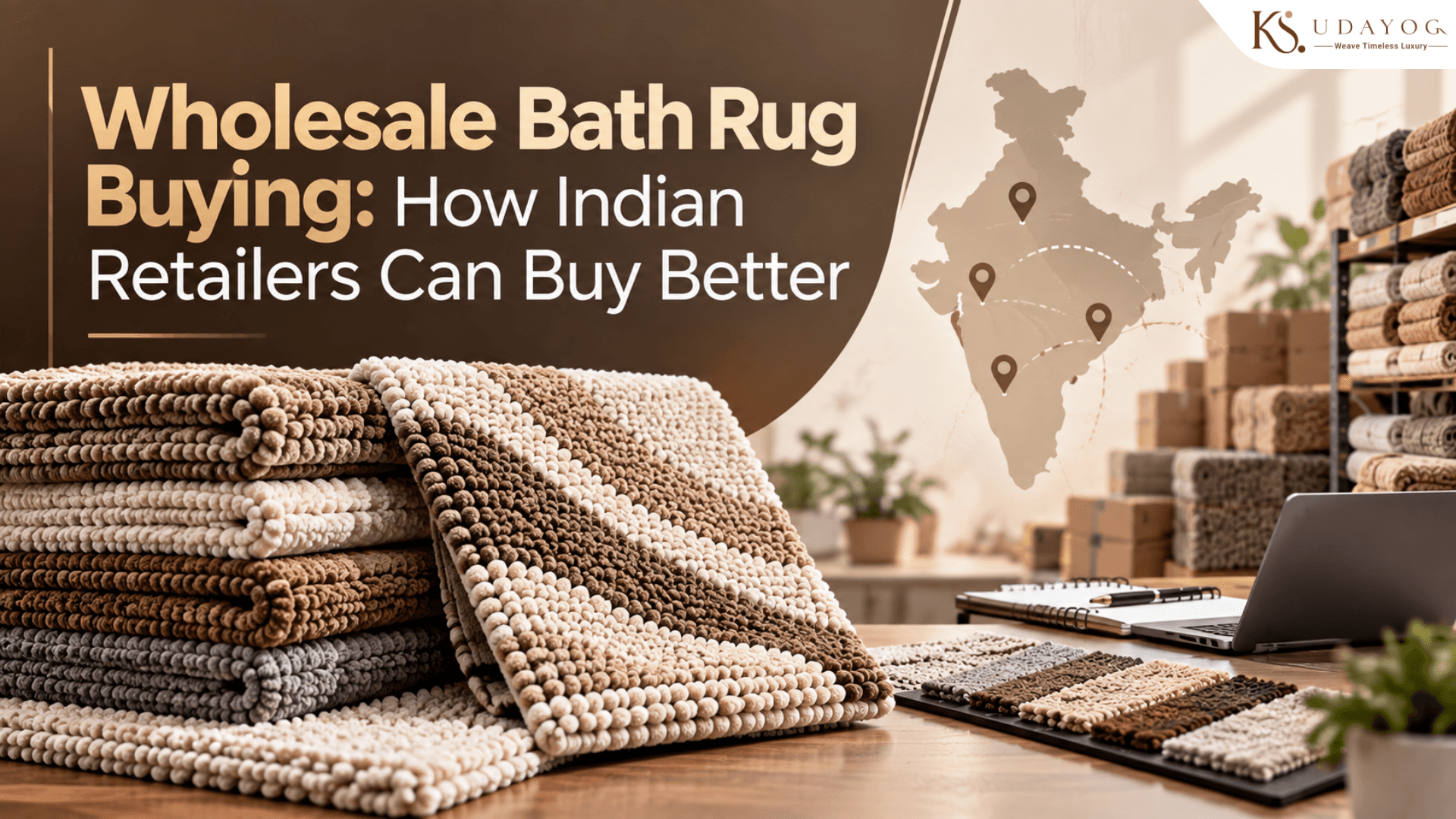
Buying hundreds of bath rugs can turn into valuable retail stock or expensive dead inventory depending on what you buy before placing the order. For Indian retailers, product appeal, quality, purchase quantities, and expected selling prices all need to make commercial sense together.
A ₹100–₹500 difference per piece may seem small, but across 500 or 1,000 rugs, that gap can change your overall investment by thousands to lakhs.
The wholesale textile market offers a broad selection of premium bath rugs across materials, patterns, sizes, textures, and construction styles. That variety gives retailers flexibility, but it also makes it important to compare products carefully instead of choosing a supplier based only on the lowest quotation.
This guide explains the important aspects of wholesale bath rug buying for Indian B2B buyers, from supplier selection and product specifications to MOQ, sampling, quality, pricing, packaging, and bulk-order planning. The details can help you make purchasing decisions that support both customer demand and retail profitability.
What Should Retailers Consider Before Buying Bath Rugs in Bulk?
Start by defining what the store actually needs before approaching suppliers. A basic product brief can include:
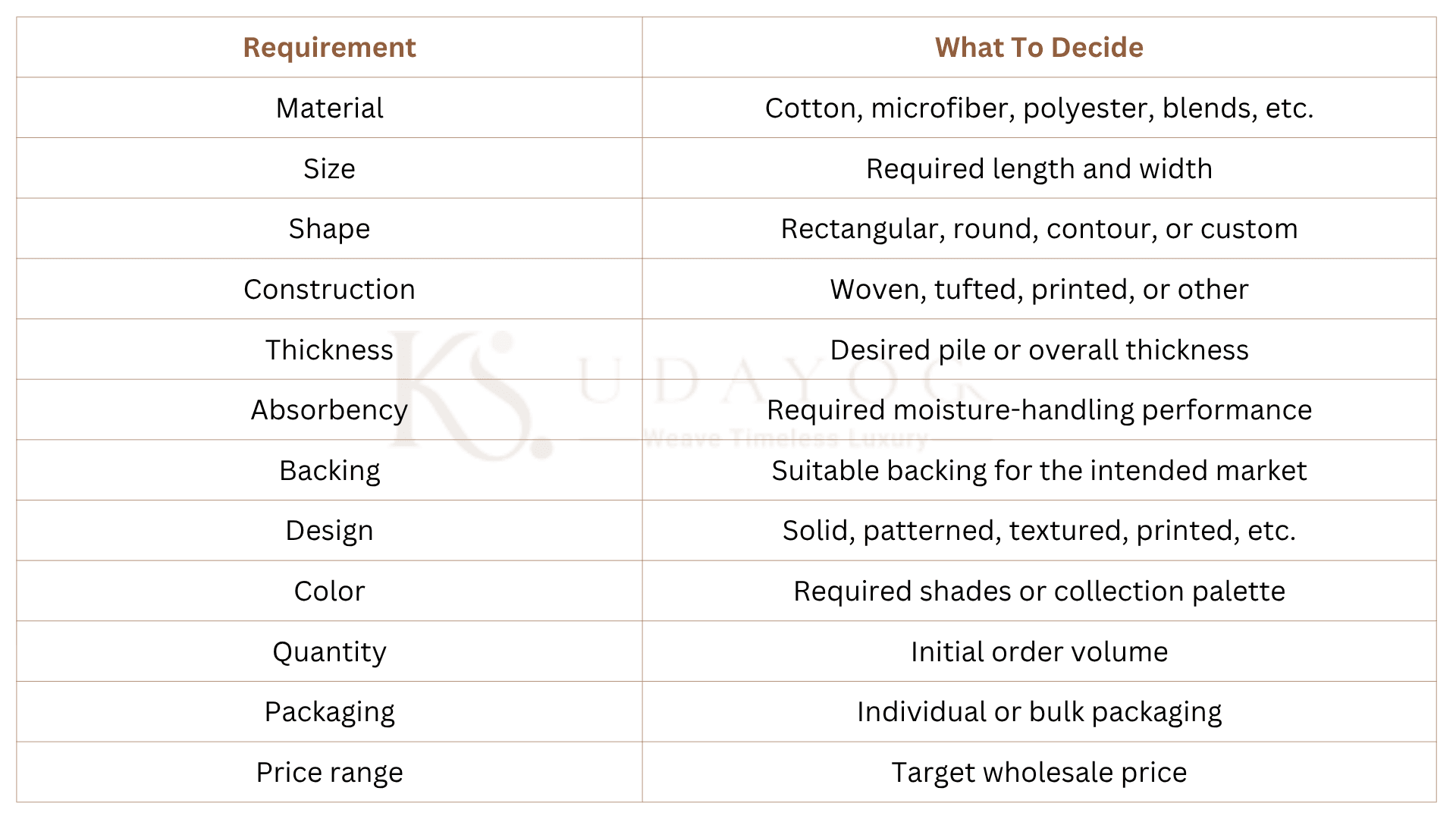
Having these details ready prevents suppliers from quoting products that do not actually match your requirements.
How To Buy Wholesale Bath Rugs: Step-By-Step Process
A successful bulk purchase starts well before the order is placed with a supplier. Indian retailers need a clear approach for buying premium bath rugs to move from identifying their requirements to evaluating products, confirming the order, and preparing stock for resale. The wholesale bath rug buying process is explained step by step below.
1. Identify Your Target Customers
Start with the people who will ultimately purchase the bath rugs.
A budget-focused customer may prefer simple designs and practical materials, while premium customers may look for richer textures, coordinated colors, thicker construction, or decorative finishing.
Consider:
- Customer budget
- Preferred colors
- Bathroom styles
- Expected product quality
- Design preferences
- Typical rug sizes
- Seasonal demand
Why it matters: Your customer profile determines which bath rug materials, designs, price points, and product quantities make sense.
2. Decide Which Bath Rug Materials To Stock
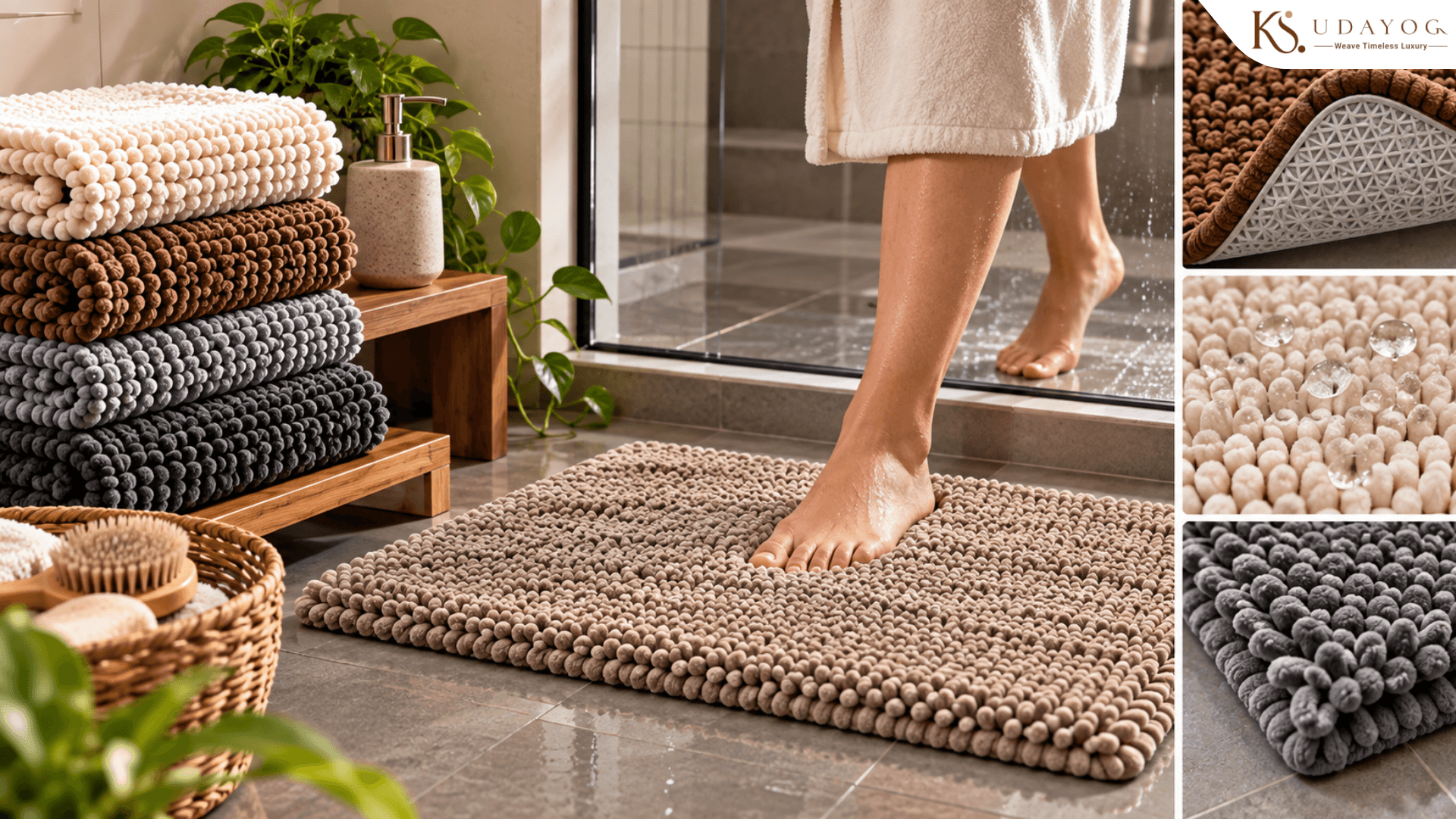
Different materials provide different combinations of softness, absorbency, appearance, drying characteristics, and price.
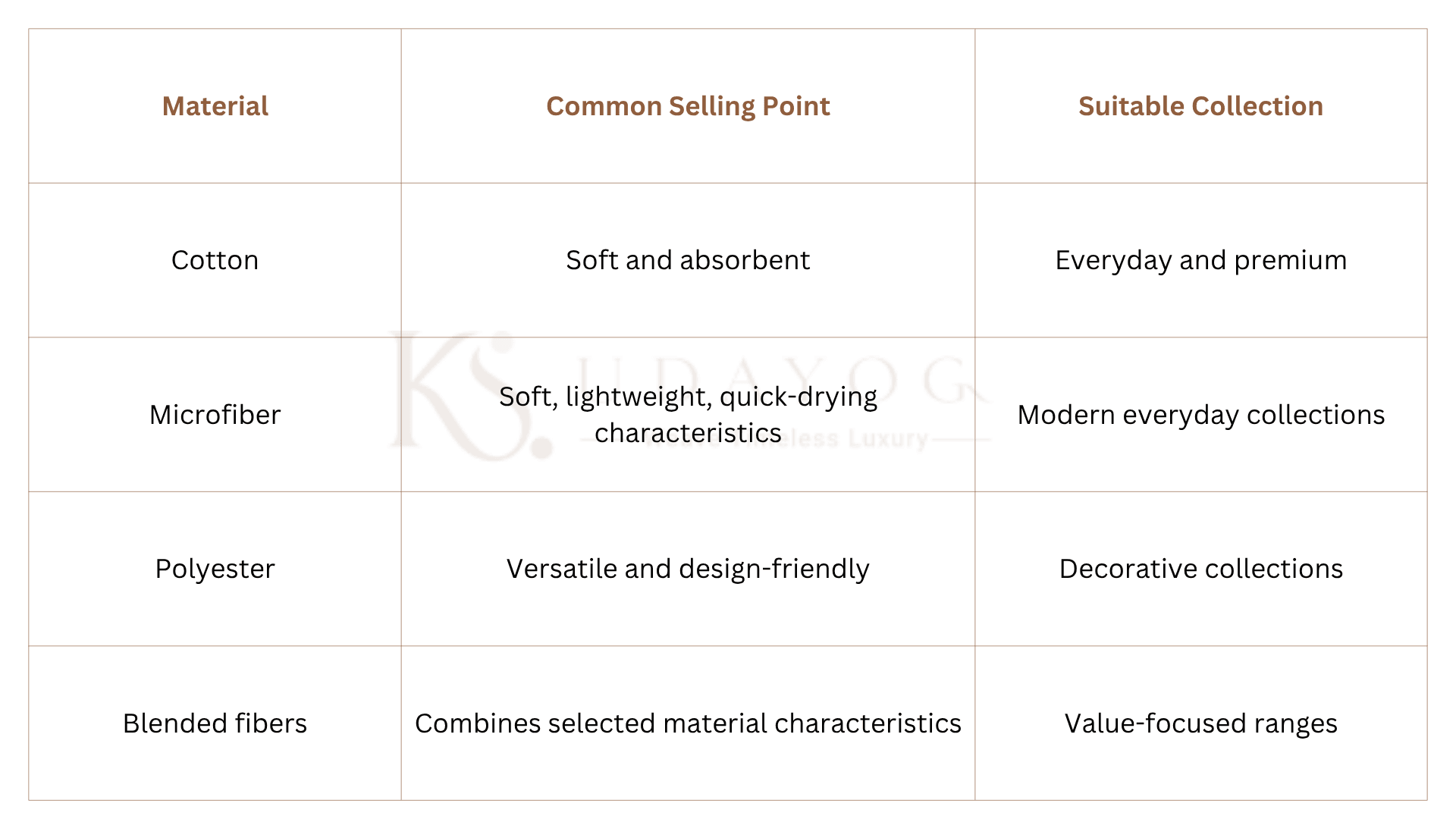
The material should be evaluated together with construction because the fiber alone does not determine the finished rug's performance.
3. Choose The Right Sizes And Shapes
Do not automatically order every available size. Before buying and selecting non-slip bath rugs, study your customer demand and determine which dimensions are most relevant to your store.
Possible formats include standard rectangular bath rugs, small accent rugs, long bathroom runners, contour rugs, round or specialty shapes, and coordinated multi-piece sets.
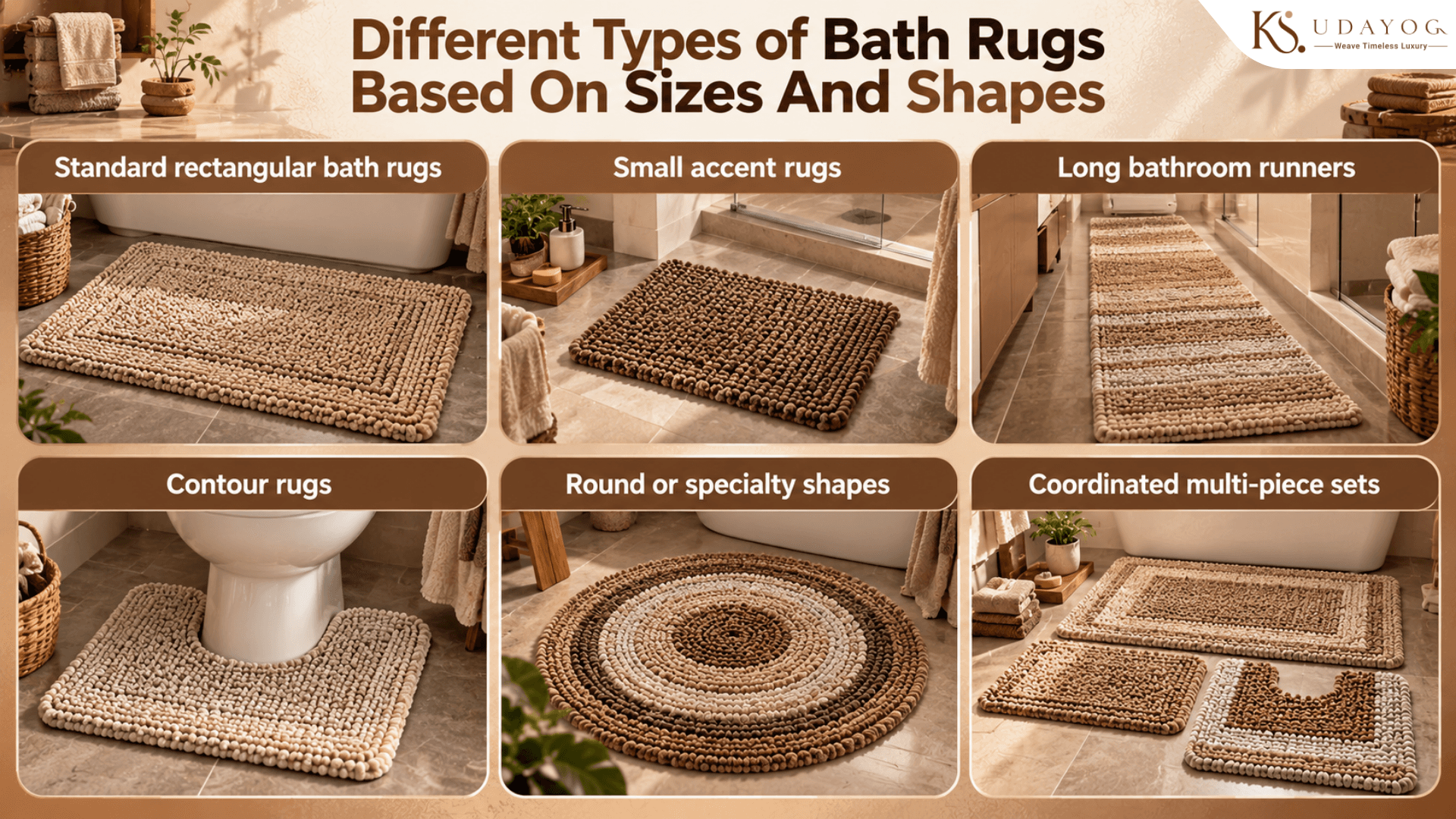
For a new collection, a retailer can test a focused selection before expanding into additional sizes.
4. Select Designs And Colors
Design selection should reflect your target market rather than simply following every current trend.
Consider a balanced range of neutral shades, solid colors, stripes, geometric patterns, floral designs, textured surfaces, minimalist designs, and coordinated bathroom sets.
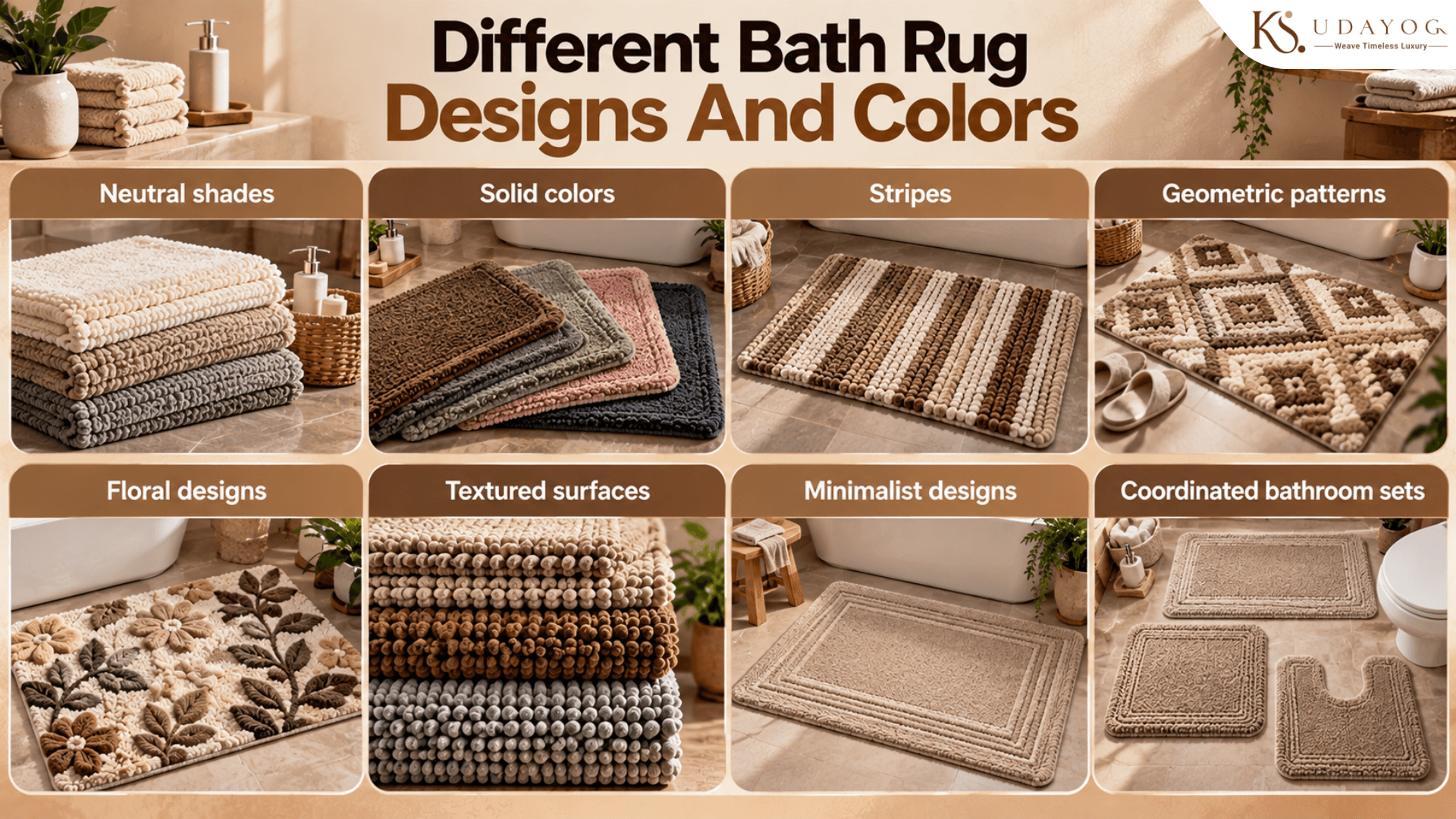
A combination of core colors and a smaller number of trend-led designs can give retailers both dependable and seasonal options.
5. Search For A Suitable Bath Rug Supplier
Once the product requirements are clear, start evaluating potential suppliers.
A suitable bath rug supplier should be able to explain:
- Available materials
- Manufacturing capabilities
- Construction methods
- Product sizes
- MOQ
- Customization options
- Sample availability
- Quality-control process
- Production capacity
- Packaging options
- Lead times
- Bulk pricing
- Repeat-order support
Do not shortlist suppliers solely because they display a large catalog.
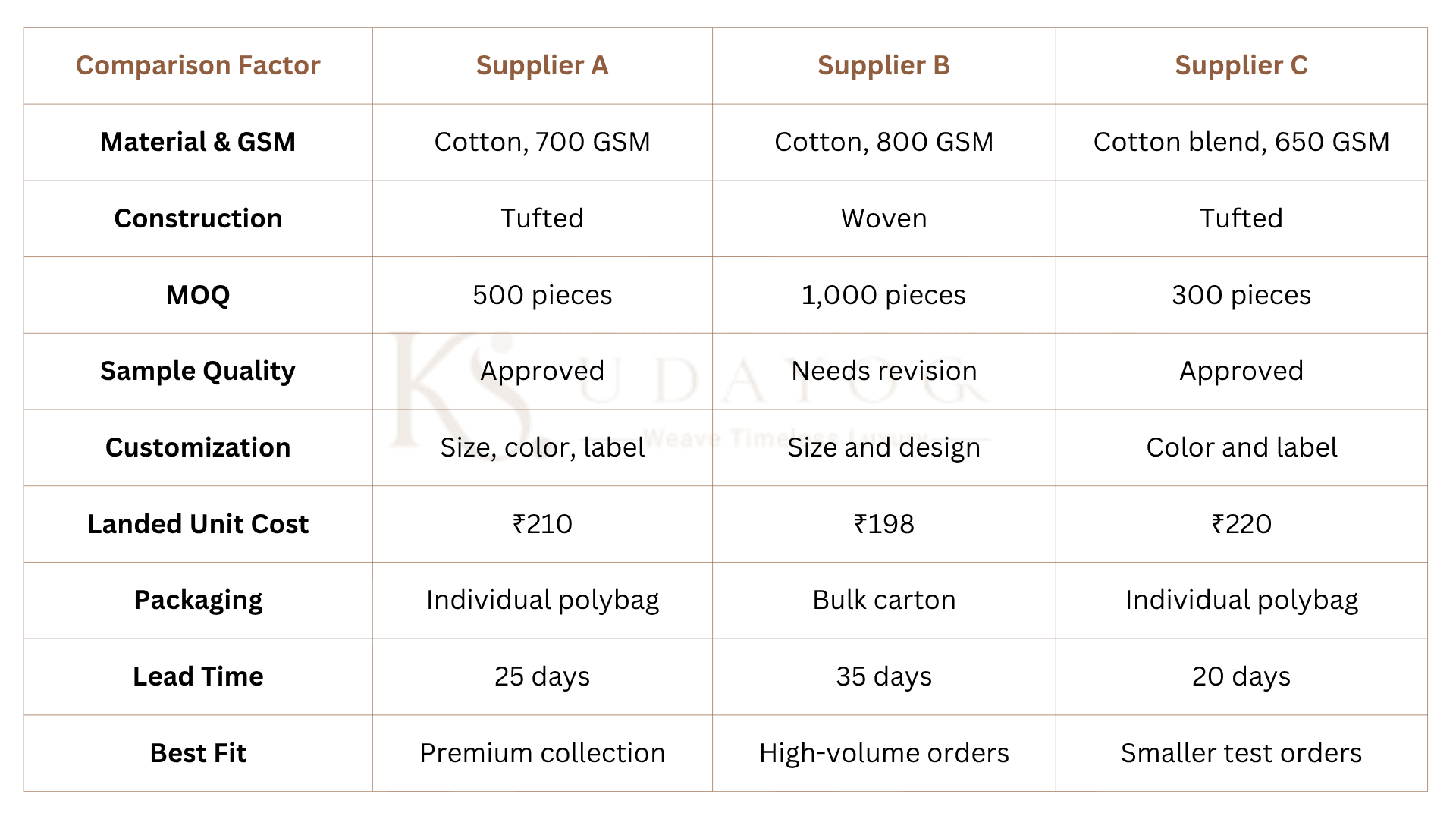
6. Compare Suppliers Using The Same Specifications
Supplier quotations are easier to compare when every supplier receives the same product brief.
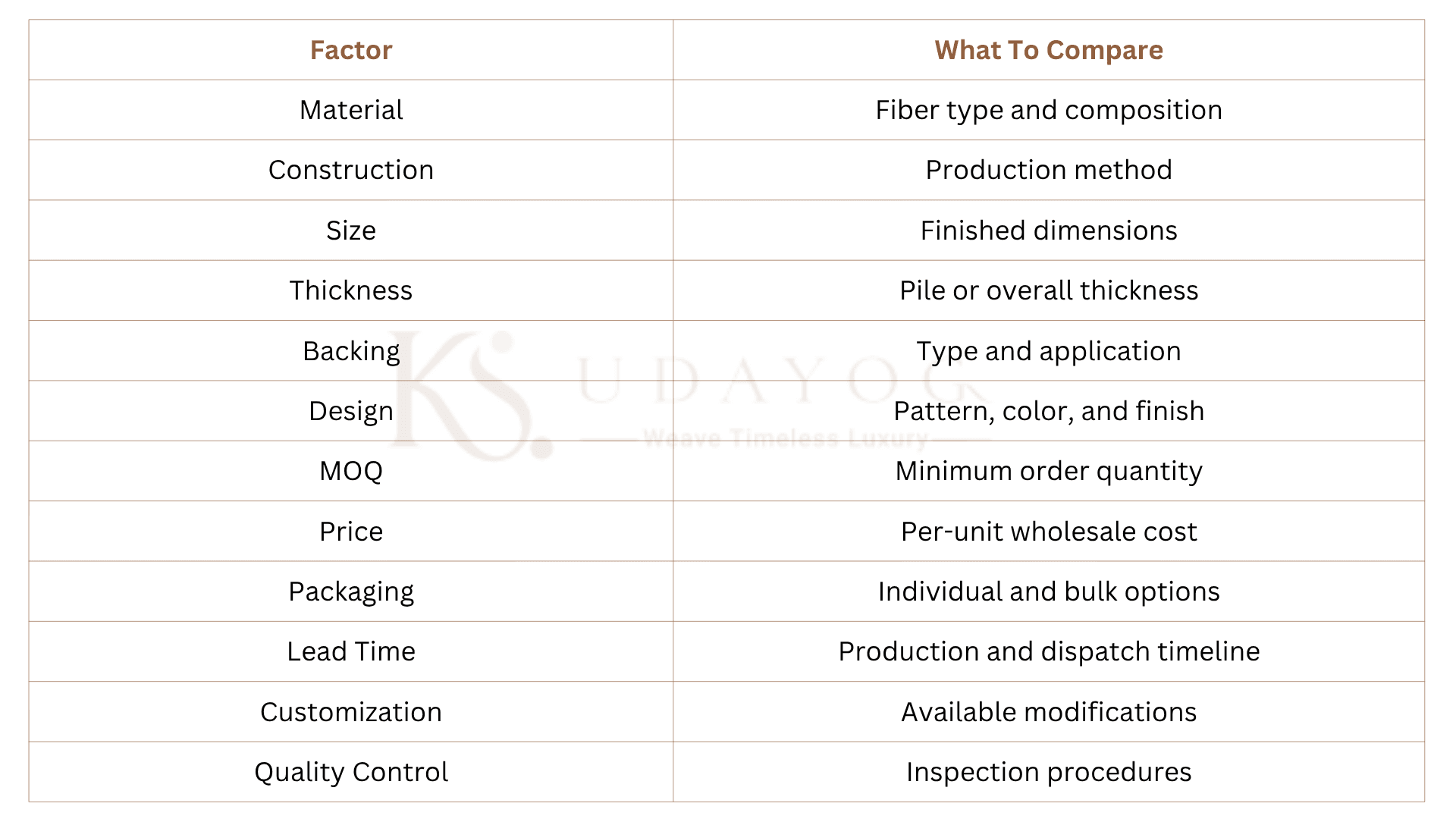
This avoids comparing a basic product from one supplier with a more heavily specified product from another.
7. Request Samples Before Placing A Bulk Order
A sample should be treated as a product verification step, not simply a formality.
Check:
- Actual size
- Thickness
- Surface texture
- Material feel
- Absorbency
- Color
- Pattern accuracy
- Edge finishing
- Backing
- Stitching
- Loose fibers
- Overall appearance
If customization is involved, the sample should reflect the final specification as closely as possible.
8. Test The Bath Rug For Its Intended Use
Visual inspection alone cannot answer every quality question.
For example, if absorbency is important, test how the rug handles moisture. If the rug will be used on smooth bathroom flooring, evaluate its stability with the specified backing.
Retailers can create a simple internal test checklist covering the characteristics most important to their customers.
9. Confirm MOQ And Order Quantity
MOQ can significantly affect the economics of a wholesale purchase.
Before ordering, compare:
Required quantity → Supplier MOQ → Price break → Storage capacity → Expected sales
A lower unit price may not be useful if the minimum quantity leaves the retailer with excessive inventory.
10. Calculate The Complete Wholesale Bath Rug Cost
Do not compare bath rug manufacturers and suppliers only on the quoted bath rug price.
The actual bath rug procurement cost may include:
Product price + customization + packaging + transportation + applicable taxes/charges = total purchasing cost
For example, suppose a retailer receives two quotations for 1,000 rugs:
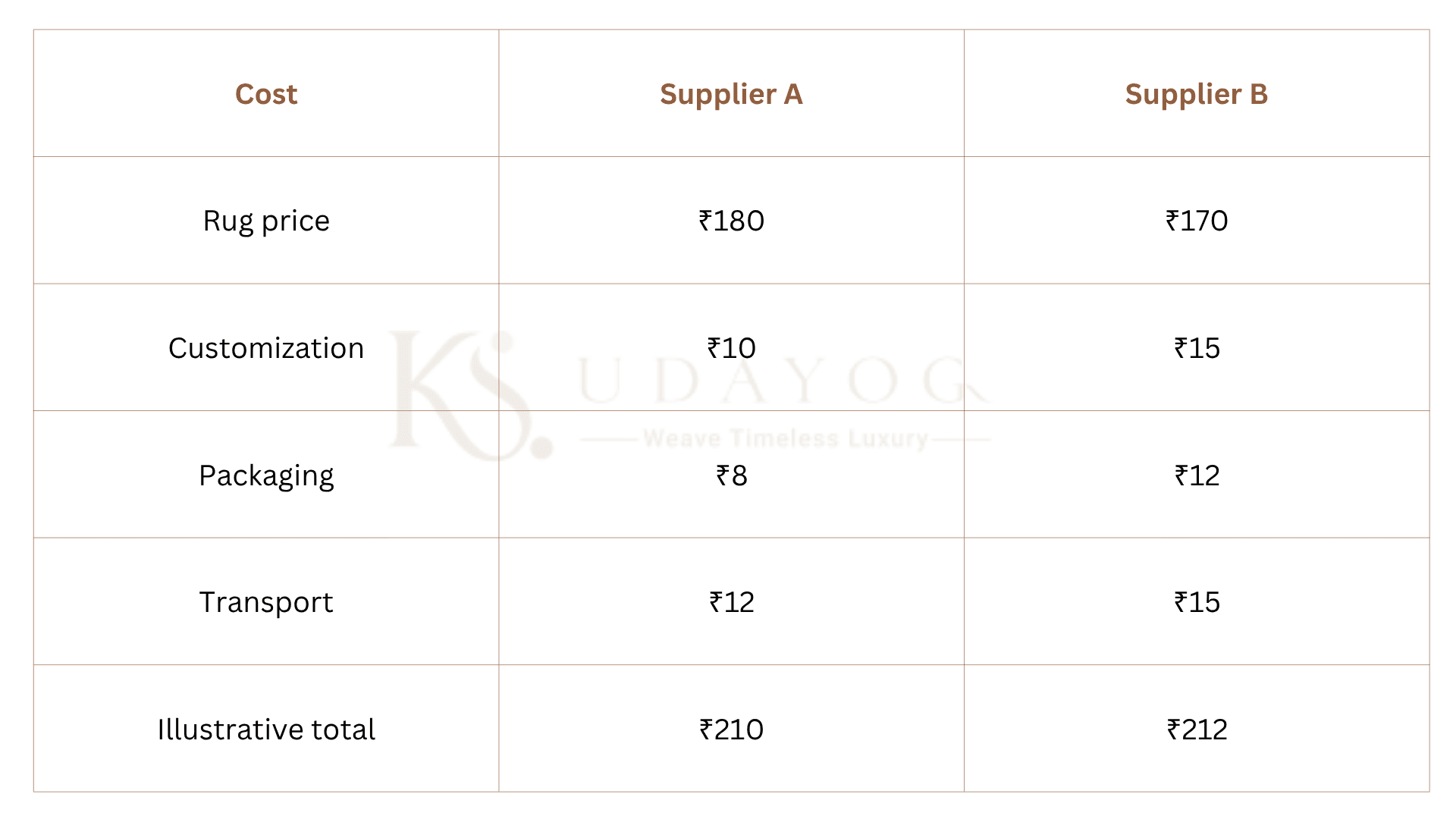
Although Supplier B has the lower quoted product price, its illustrative total purchasing cost is higher.
This is why landed or complete procurement cost is more useful for supplier comparison than unit price alone.
11. Discuss Bath Rug Customization Requirements
Retailers may want bath rugs customized according to their collection or brand requirements.
Potential bath rug customization can include size, color, pattern, logo, label, material, backing, edge finishing, and packaging.
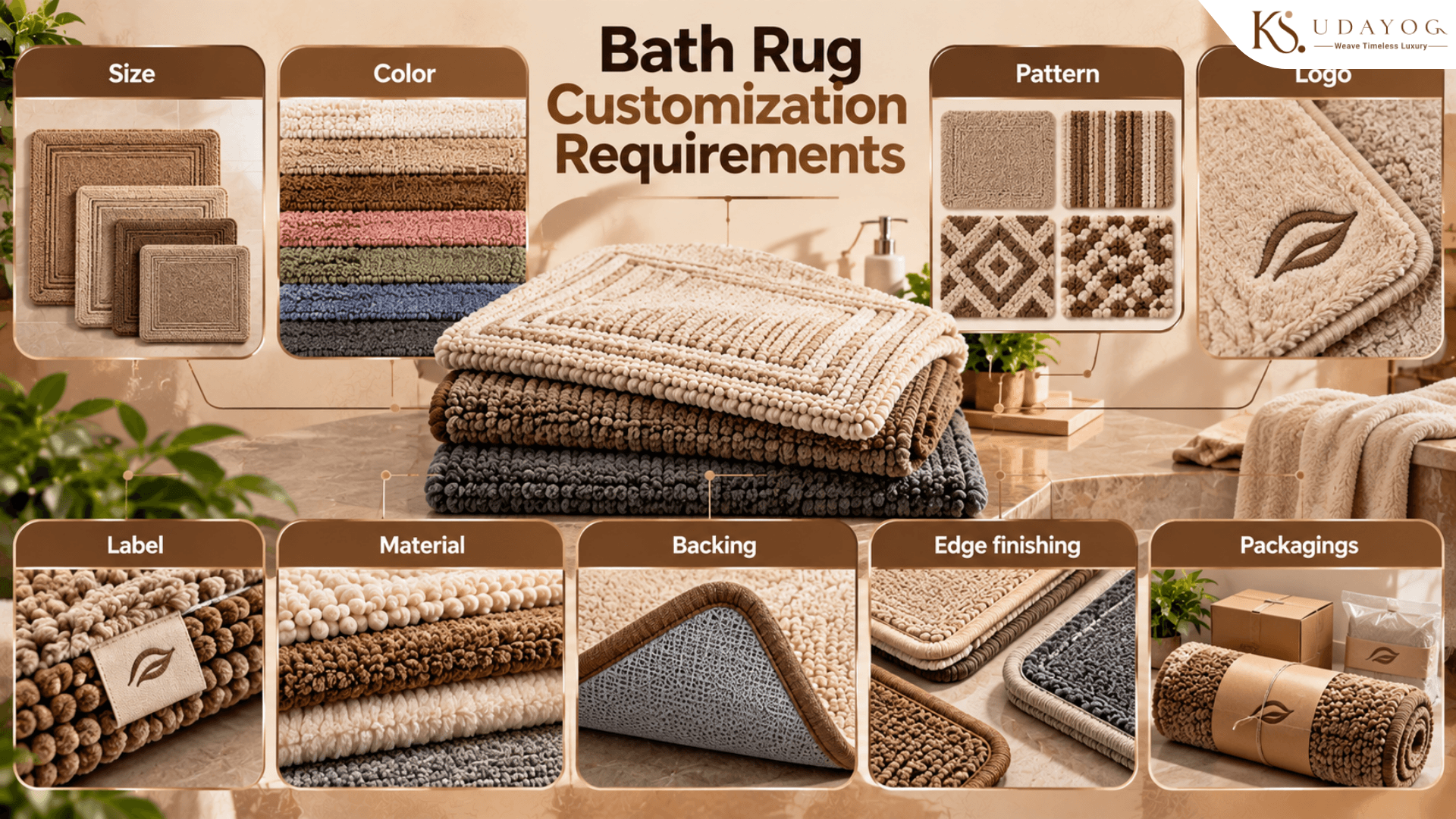
Ask the supplier whether customization changes the MOQ, price, production time, or sample process.
12. Confirm Packaging And Labeling
Packaging affects both transportation and retail presentation.
Before placing the order, clarify:
- Individual packaging
- Product labels
- Size labels
- Material information
- Barcode requirements
- Carton quantity
- Carton dimensions
- Protection against moisture
- Retail-ready presentation
The packaging should match how the retailer plans to store, display, and sell the bath rugs.
13. Approve The Final Specifications
Before production starts, create one approved product specification containing all important details.
For example:
- Material: Cotton
- Size: 20 × 32 inches
- Construction: Tufted
- Color: Approved shade
- Backing: Specified backing
- Edge: Finished edge
- Packaging: Individual retail packaging
- Quantity: 1,000 pieces
This gives the buyer and supplier a common reference for production.
14. Place The Bulk Order
Once the sample, specifications, price, MOQ, packaging, payment terms, and delivery expectations are agreed upon, the bulk order can be placed.
Keep the approved sample and final specifications for comparison during inspection.
15. Inspect The Bulk Bath Rugs
Bulk production should be checked against the approved requirements.
Focus on:
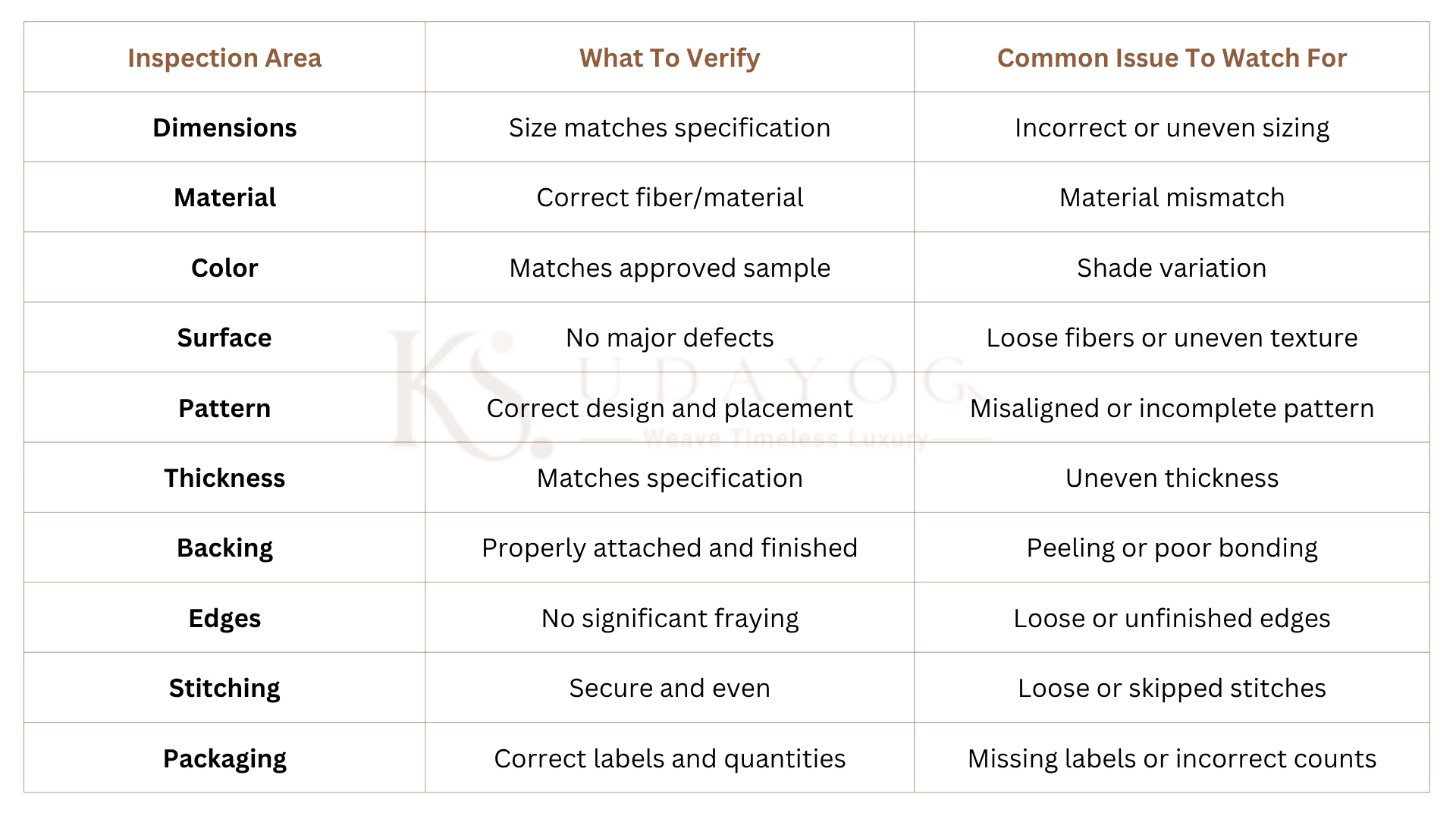
For larger orders, buyers can agree on an inspection procedure with the supplier before production begins.
16. Receive, Store, And Track The Products
After delivery, inspect the shipment and record quantities received.
Track:
- Best-selling sizes
- Fast-moving colors
- Slow-moving designs
- Customer feedback
- Return reasons
- Quality complaints
- Repeat-order demand
These records can guide the next wholesale purchase.
17. Reorder Based On Actual Sales
A repeat order should be based on sales data rather than simply repeating the original quantity.
For example, if neutral cotton bath rugs sell faster than heavily patterned designs, the next order can allocate more inventory to the stronger-performing range.
This turns wholesale purchasing into an ongoing product-management process rather than a one-time transaction.
How To Compare Different Wholesale Bath Rugs Suppliers?
A practical comparison should consider the complete product and commercial offer.
What Quality Should Wholesale Bath Rugs Have?
Quality expectations should be defined before purchasing bath rugs rather than after the shipment arrives. A wholesale bath rug should be checked for:
- Suitable material
- Appropriate construction
- Accurate dimensions
- Acceptable surface density
- Proper color
- Secure edges
- Suitable backing
- Good finishing
- Appropriate absorbency
- Acceptable packaging
The exact quality standard should reflect the product's intended price and customer segment.
What Should Indian Retailers Ask A Bath Rug Supplier Before Buying?
Before finalizing a supplier, ask:
- What materials do you manufacture with?
- Which bath rug constructions are available?
- What is the MOQ?
- Can you provide samples?
- Can sizes and colors be customized?
- Can you add private labels or packaging?
- What quality checks are performed?
- What is the production lead time?
- What are the payment terms?
- How are bulk orders packaged?
- Can the same design be reproduced for repeat orders?
- What happens if delivered products do not match approved specifications?
Clear answers to these questions can reduce misunderstandings during bulk purchasing.
How Much Should Retailers Order In Their First Bulk Bath Rug Purchase?
There is no universal quantity that works for every retailer.
The starting order should reflect:
Expected sales × replenishment period + safety stock − existing inventory
For example, if a retailer expects to sell 100 pieces per month and wants approximately 2 months of stock, the starting requirement could be around 200 pieces before adjusting for existing inventory and desired safety stock.
This is an illustrative inventory-planning example, not a standard industry quantity.
Final Thoughts
Buying wholesale bath rugs successfully requires a structured process that starts with understanding customer demand and ends with checking the finished shipment. Material, construction, size, design, backing, quality, MOQ, pricing, packaging, and supplier capabilities all influence whether a product is suitable for your retail collection.
For Indian retailers, comparing suppliers using identical specifications and testing samples before bulk production can provide greater purchasing clarity. Sales data from the first order can then help refine sizes, colors, designs, and quantities for future purchases.
Looking to source and buy quality wholesale bath rugs for your retail collection in India? Connect with a reliable bath rug supplier to discuss your product requirements and bulk order needs.
Frequently Asked Questions (FAQs)
What Should Retailers Consider Before Buying Wholesale Bath Rugs?
Retailers should evaluate material, size, construction, absorbency, backing, design, MOQ, pricing, customization, packaging, quality standards, and supplier reliability before placing an order.
How Many Bath Rugs Should A Retailer Order In Bulk?
The ideal quantity depends on expected sales, existing inventory, storage capacity, supplier MOQ, and desired replenishment cycle rather than a fixed number.
How Can Retailers Check Bath Rug Quality Before Bulk Orders?
Request physical samples and check dimensions, material, thickness, surface, absorbency, color, pattern, backing, edge finishing, stitching, and overall construction.
Is It Better To Buy Bath Rugs Directly From A Manufacturer?
Direct manufacturer sourcing can provide greater control over specifications, customization, MOQ, pricing, and production requirements, depending on the supplier.
Can Wholesale Bath Rugs Be Customized?
Yes, customization may include sizes, colors, patterns, materials, backing, logos, labels, edge finishing, and packaging, depending on the manufacturer's capabilities.
What Is MOQ In Wholesale Bath Rug Purchasing?
MOQ, or minimum order quantity, is the smallest quantity a supplier requires for an order. It can vary according to material, design, customization, and production requirements.
How Should Retailers Compare Bath Rug Suppliers?
Compare suppliers using identical specifications for material, construction, dimensions, MOQ, samples, customization, pricing, packaging, lead time, quality control, and repeat-order support.
What Packaging Is Suitable For Wholesale Bath Rugs?
Packaging can include individual polybags, paper bands, product labels, bundled units, cartons, and other protective formats depending on retail and transportation requirements.
How Can Retailers Reduce Risk When Buying Bulk Bath Rugs?
Approve a physical sample, document product specifications, clarify commercial terms, define quality requirements, and inspect the bulk shipment against the approved specifications.