
Your throw blanket might look perfectly fine after a wash, but have you noticed it sometimes feels less soft or loses its original shape? Small mistakes, such as using hot water, too much detergent, or excessive heat while drying, can gradually damage delicate fibres.
Whether your throw blanket adds a decorative touch to your living room or keeps you warm during winter mornings, proper care helps maintain both its appearance and comfort. Understanding the fabric before washing is the first step towards avoiding unnecessary wear and tear.
So, should you hand-wash your throw blanket, put it in the washing machine, or air-dry it? Let us explore practical washing, drying, and storage tips that help protect different fabrics without making blanket care complicated.
How To Wash A Throw Blanket Safely At Home
The safest way to wash a throw blanket is to check its care label first, then choose a suitable washing method. Some blankets can go in a washing machine, while delicate fibres may require hand washing or professional cleaning.
Follow these steps before starting your blanket washing routine:

- Check the Care Label: Look for the recommended water temperature, washing cycle, drying instructions, and any restrictions on machine washing.
- Shake Off Loose Dirt: Take the blanket outdoors and shake it gently to remove dust, crumbs, and loose fibres.
- Treat Stains First: Apply a fabric-appropriate stain remover to affected areas and test it on a hidden spot before use.
- Choose the Right Wash: Wash the blanket separately if it is bulky, sheds fibres, or requires a delicate cycle.
- Use Mild Detergent: Choose a gentle detergent and follow the recommended quantity to prevent residue from building up.
- Dry According to the Label: Air-dry or tumble-dry only when permitted, keeping high heat away from sensitive fabrics.
How To Wash Different Throw Blanket Fabrics
Every throw blanket material and fabric responds differently to water, detergent, agitation, and heat. Choosing a method that suits the material helps protect its texture, shape, and appearance.
1. Cotton Throw Blanket Washing
Cotton throws are generally easy to maintain, but hot water and high dryer temperatures can cause some fabrics to shrink.

- Wash using the temperature and cycle stated on the care label.
- Use a mild detergent to protect the fabric and its colour.
- Avoid overloading the washing machine, as the blanket needs room to move.
- Air-dry when possible or use a low-heat setting if the label permits tumble drying.
2. Wool Throw Blanket Washing
Wool fibres can shrink, felt, or lose their shape when exposed to excessive heat and vigorous agitation. Check whether the blanket is machine-washable before cleaning it.

- Use a wool-specific detergent if recommended by the manufacturer.
- Hand-wash gently in cool water when the label permits.
- Avoid rubbing, twisting, or wringing the fabric.
- Press out excess water with a clean towel and dry the blanket flat to help retain its shape.
Care tip: Some wool throws require dry cleaning. If the label specifies professional cleaning, do not experiment with home washing.
3. Fleece Throw Blanket Washing
Fleece is often suitable for machine washing, although excessive heat and harsh products can affect its softness.

- Use a gentle cycle with cool or lukewarm water, as permitted by the label.
- Wash fleece separately from lint-producing items, such as towels.
- Avoid fabric softener if the manufacturer advises against it, as residue may affect the fabric's performance.
- Air-dry or tumble-dry on low heat when permitted.
4. Polyester Throw Blanket Washing
Polyester throws are generally practical for regular use, but high heat can damage fibres or affect their finish.

- Follow the label's temperature and cycle instructions.
- Use a mild detergent and avoid unnecessary bleach.
- Remove the blanket promptly after washing to reduce creasing.
- Keep the dryer temperature low when tumble drying is allowed.
5. Chenille Throw Blanket Washing
Chenille has a textured surface that may flatten, snag, or shed when handled roughly. Its construction and backing determine the safest cleaning method.

- Check whether the throw is machine-washable.
- Use a delicate cycle and a laundry bag if the care label allows machine washing.
- Avoid heavy items that may rub against its textured surface.
- Reshape the blanket gently and dry it as instructed.
6. Acrylic Throw Blanket Washing
Acrylic throws can be easy to maintain, but excessive heat may affect their shape and texture.
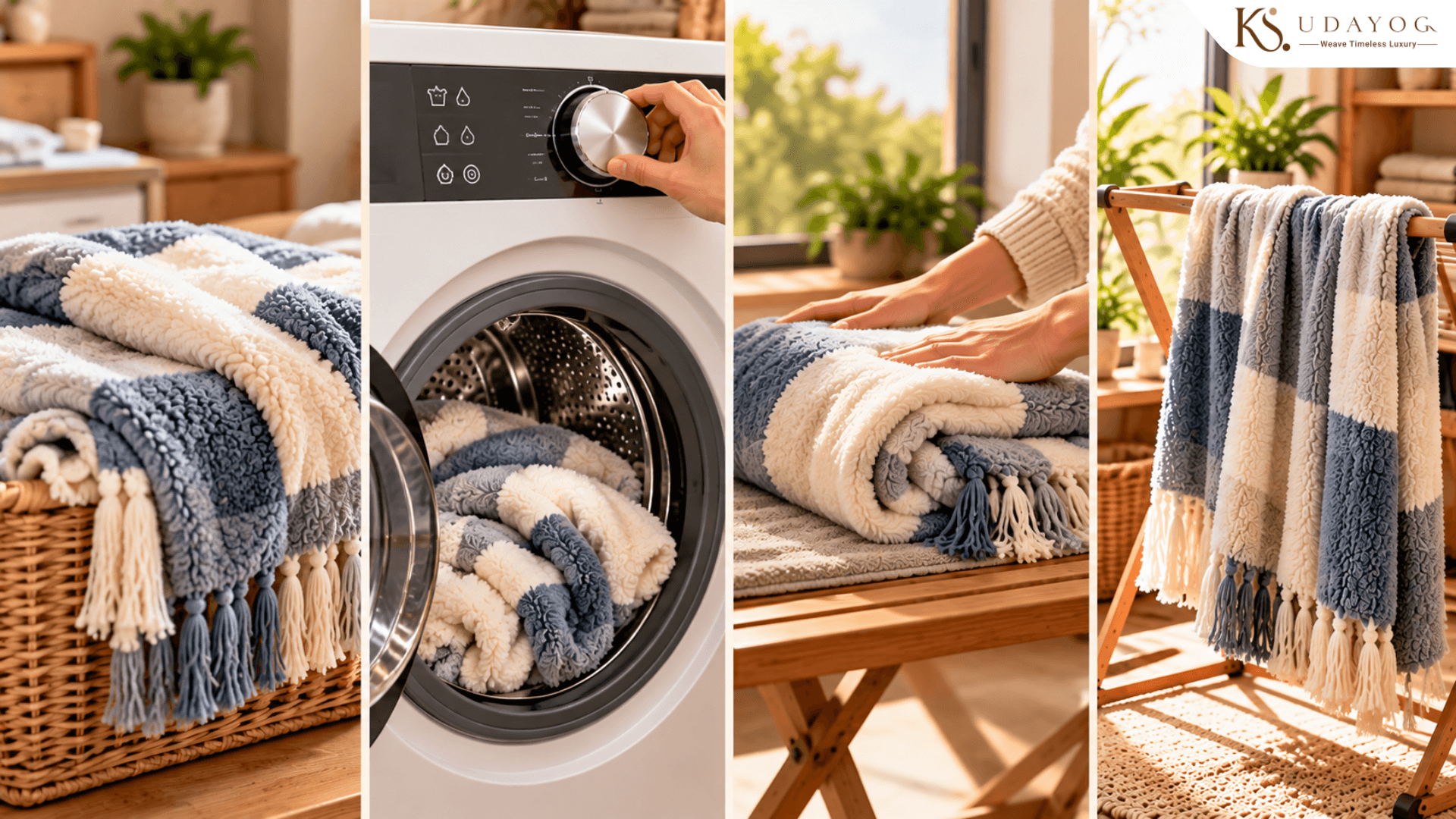
- Use the recommended wash cycle and water temperature.
- Avoid aggressive spin settings if the label recommends a gentle cycle.
- Do not wring the blanket after washing.
- Air-dry or use low heat only when the care instructions allow it.
Can You Machine-Wash A Throw Blanket?
Yes, many throw blankets can be machine-washed, but the correct cycle depends on the fabric, size, and construction. Always follow the care label rather than assuming every throw is suitable for a standard wash.
Before loading the machine, check these details:

- Machine Capacity: The blanket should fit comfortably without tightly filling the drum. An overloaded machine may not clean or rinse it properly.
- Water Temperature: Cool water is often a suitable starting point for coloured or delicate throws, but the care label takes priority.
- Wash Cycle: Use a gentle or delicate cycle for fabrics that require less agitation.
- Detergent Quantity: Measure the detergent according to the product instructions and load size.
- Other Laundry: Avoid mixing the blanket with garments that have zips, hooks, or rough surfaces that could snag it.
If the throw is too large for your washing machine, use a suitable larger-capacity machine or follow the manufacturer's alternative cleaning instructions.
How To Hand-Wash A Throw Blanket
Hand washing can be a good option for delicate throws when their care labels permit water-based cleaning. It offers more control over agitation, although some fabrics still require professional care.

- Fill a Clean Basin: Use cool or lukewarm water at the temperature recommended on the label.
- Add Mild Detergent: Dissolve the detergent before placing the blanket in the water.
- Wash Gently: Move the blanket through the water without scrubbing, twisting, or stretching it.
- Rinse Thoroughly: Replace the water as needed until detergent residue is removed.
- Remove Excess Water: Press the blanket gently against the basin or use a clean towel to absorb moisture.
- Dry Carefully: Lay the throw flat or use another method specified on its care label.
Avoid leaving a blanket soaking for longer than the product instructions recommend, especially if it contains dyes or decorative details.
How To Dry A Throw Blanket Without Damaging It
Drying is just as important as washing. High heat, uneven drying, and stretching a wet blanket can cause problems even when the washing process is gentle.
1. Air-Drying A Throw Blanket
Air-drying is suitable for many throw blankets and can reduce exposure to dryer heat.
- Spread the blanket over a clean, flat drying rack when its weight could stretch the fabric.
- Reshape the edges and corners while the blanket is still damp.
- Turn it periodically so moisture can escape from both sides.
- Keep it in a well-ventilated area away from prolonged, harsh sunlight that may fade colours.

2. Using A Clothes Dryer
Some throws can be tumble-dried, but always check the care label first.

- Choose the permitted low-heat or delicate setting.
- Avoid high temperatures, particularly for wool, acrylic, and other heat-sensitive fibres.
- Remove the blanket when dry rather than leaving it in a hot drum.
- Stop the cycle if the blanket begins to feel unusually hot or shows signs of damage.
Never assume that a blanket is dryer-safe simply because it can be machine-washed.
How To Remove Stains From A Throw Blanket
Treating a stain promptly can make throw cleaning easier, but the right method depends on the stain and fabric. Aggressive rubbing or untested cleaning products may spread the mark or damage the fibres.
- Tea or Coffee Stains: Blot gently with a clean cloth, then use a fabric-safe cleaner permitted by the care label.
- Food Spills: Remove solid residue carefully before treating the affected area.
- Mud Stains: Let the mud dry, brush away loose dirt, and clean the remaining mark according to the care label.
- Grease Stains: Blot excess oil without rubbing, then apply a suitable stain treatment after testing it on a hidden area.
- Makeup Stains: Remove excess product and apply a fabric-compatible cleaner without scrubbing the fibres.

Important: Blot stains instead of rubbing them. Test cleaning products on an inconspicuous area first, and avoid bleach unless the care label explicitly permits it.
Common Throw Blanket Washing Mistakes To Avoid
Small washing mistakes can shorten a throw blanket's useful life. These are the most common problems to watch for during blanket washing and drying.
- Ignoring the Care Label: A familiar fabric name does not guarantee that every blanket has the same cleaning requirements.
- Using Too Much Detergent: Excess product can remain trapped in the fibres and leave the blanket feeling stiff.
- Choosing High Heat: Hot water or dryer heat may cause shrinkage, fading, or fibre damage.
- Overloading the Machine: A crowded drum limits movement and can prevent proper rinsing.
- Wringing Delicate Fabrics: Twisting can stretch the material, distort its shape, or damage its surface.
- Storing It While Damp: Remaining moisture can lead to unpleasant odours and may encourage mould growth.
- Using Fabric Softener Automatically: Some materials and finishes do not respond well to softeners, so check the care instructions first.
How Often Should You Wash A Throw Blanket?
The right washing frequency depends on how often you use the blanket, whether it comes into contact with pets or food, and how quickly it becomes dirty. A throw used every day may need cleaning more frequently than one kept mainly for decoration.
Use these practical guidelines:
- Everyday Throws: Wash when they become visibly dirty, develop an odour, or need freshening according to their use.
- Throws Used On Sofas: Clean them as needed, especially if they come into contact with snacks, pets, or outdoor clothing.
- Decorative Throws: Wash less frequently when they remain clean and are used mainly for display.
- Throws Used By Pets: Remove loose hair regularly and wash when needed, following the fabric's care instructions.
- Seasonal Throws: Clean and dry them fully before storing them for an extended period.
There is no single washing schedule for every blanket. Regularly airing the throw and removing small stains can help reduce unnecessary full washes.
How To Keep A Throw Blanket Soft And Fresh
Good throw blanket care involves more than washing. Daily handling, storage, and simple maintenance can help preserve the blanket's appearance between cleaning sessions.
- Shake It Out Regularly: Remove loose dust and crumbs before they settle into the fabric.
- Brush Only When Suitable: Use a soft brush for materials that permit brushing, and avoid tools that could snag loops or raised fibres.
- Rotate Its Use: Alternating between throws can reduce wear on a single blanket.
- Store It Properly: Keep clean, fully dry blankets in a dry, ventilated storage space.
- Protect It From Direct Sunlight: Prolonged exposure may fade certain dyes and weaken some fibres.
- Address Loose Threads Carefully: Do not pull at them. Follow the manufacturer's advice or seek a textile repair professional if needed.
For blankets with tassels, fringe, embroidery, or other decorative details, take extra care during washing and storage to prevent tangling or snagging.
Final Thoughts
The best way to wash a throw blanket is to match the cleaning method to its fabric, construction, and care label. Gentle washing, suitable detergent, careful stain treatment, and correct drying can help prevent shrinkage, fading, and texture damage. Regular maintenance also keeps your favourite throw ready for everyday comfort. Explore throw blankets made for your home and follow the right care routine to keep them looking and feeling their best.
Frequently Asked Questions (FAQs)
How To Wash A Throw Blanket Without Shrinking It?
Check the care label, use the recommended water temperature, and avoid high dryer heat. For delicate materials, hand washing or flat drying may be necessary.
Can I Wash A Throw Blanket With Other Clothes?
Yes, if the care instructions and colours are compatible. Wash bulky throws separately when needed, and avoid items with zips, hooks, or rough surfaces that may snag the fabric.
Should I Use Fabric Softener On A Throw Blanket?
Not always. Some fabrics and finishes may be affected by fabric softener. Check the manufacturer's instructions and use a suitable detergent instead when softener is not recommended.
How Do I Wash A Throw Blanket That Says Dry Clean Only?
Follow the label and use a professional dry-cleaning service. Do not machine-wash or hand-wash it unless the manufacturer confirms that water-based cleaning is safe.
Can I Put A Wool Throw Blanket In The Washing Machine?
Only if its care label allows machine washing. Use the specified wool-safe cycle and detergent, or choose professional cleaning when required.
How Do I Remove Bad Smells From A Throw Blanket?
Wash it according to the care label and dry it completely in a well-ventilated area. If the smell remains, check for trapped moisture or residue before repeating a suitable cleaning method.
Can I Wash A Throw Blanket In Hot Water?
Use hot water only when the care label specifically permits it. Cooler water is often a safer choice for coloured or delicate throws, but the fabric instructions should guide your decision.
How Should I Store A Throw Blanket After Washing?
Make sure the blanket is completely dry, fold it without stretching decorative details, and store it in a clean, dry, well-ventilated space.