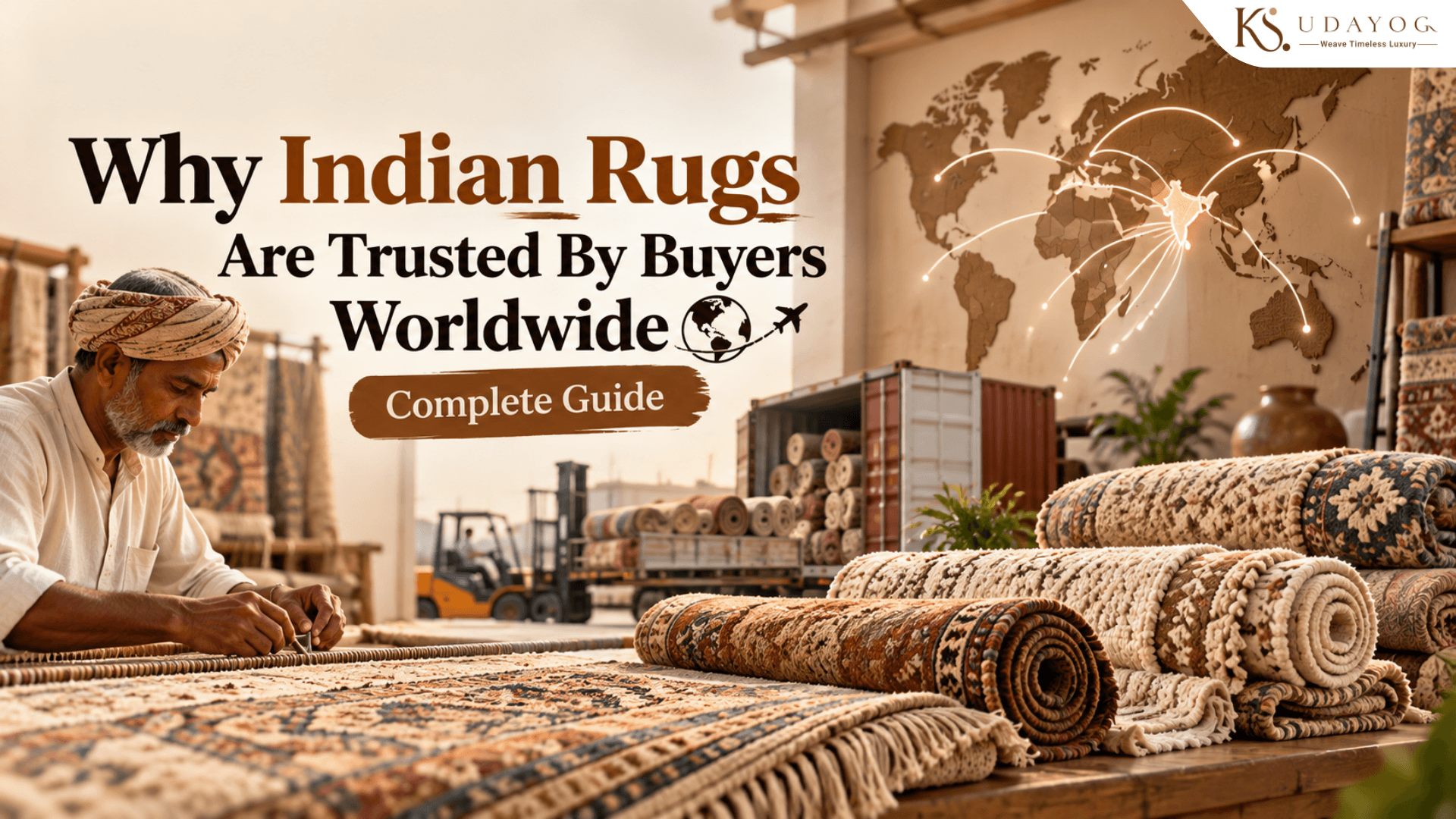
Indian rugs are known for bringing together artistic detail, traditional weaving skills, and designs that suit a wide range of interiors. From homes and hotels to offices and commercial spaces, premium heritage rugs offer buyers plenty of ways to add character to a room without compromising on style.
The growing appeal of Indian rugs among international buyers comes from more than their appearance. It also reflects the skill, creativity, and experience involved in making them.
Every buyer has different priorities, and Indian rugs offer plenty of choice. Some are drawn to detailed hand-knotted carpets, while others prefer practical, contemporary styles for everyday spaces.
With varied weaving techniques, materials, and designs available, buyers can find options that suit different needs and budgets.
So, what makes Indian rugs stand out in a crowded global market? The answer lies in several factors, including their craftsmanship, design diversity, material quality, and value. Let’s look at why these qualities continue to earn Indian rugs the trust of buyers worldwide.
What Makes Indian Rugs Popular Worldwide?
Indian rugs offer more than decorative appeal. Their popularity comes from a combination of established weaving traditions, different production techniques, material choices, and the ability to develop products for specific customer requirements.
For international buyers, these advantages can support several business needs:

- Product Diversity: Options range from traditional hand-knotted rugs to contemporary flatweaves and textured designs.
- Design Flexibility: Patterns, colours, shapes, dimensions, and finishes can be adapted to different collections.
- Material Choices: Wool, cotton, jute, viscose, and synthetic fibres serve different budgets and performance requirements.
- Manufacturing Options: Hand-knotted, hand-tufted, handloom, flatwoven, and machine-made constructions suit different product categories.
- Wholesale Sourcing: Buyers can explore collections, sampling, custom development, and bulk production according to their requirements.
These advantages do not automatically guarantee quality. The finished rug's performance depends on its materials, construction, finishing, inspection, and suitability for its intended use.
Indian Rugs: Why International Buyers Trust Their Quality And Craftsmanship
1. Strong Craftsmanship Heritage
India has a long history of carpet and rug weaving, supported by regional craft communities and specialised production networks. These traditions continue to influence contemporary rug designs, from intricate patterns to simpler textures suited to modern interiors.
Different rug manufacturing centres have developed distinct strengths, giving buyers access to a broad range of products.
Major Indian Rug Manufacturing Hubs

- Bhadohi: Widely recognised for handmade carpet production, including hand-knotted and hand-tufted rugs. The surrounding region has a substantial network of weaving and finishing expertise.
- Mirzapur: Part of the important carpet-producing belt in Uttar Pradesh, with established capabilities in traditional carpet production and related manufacturing activities.
- Jaipur: Known for hand-knotted rugs and designs that bring traditional influences together with contemporary colour palettes and interiors.
- Panipat: An important home-textile and floor-covering centre associated with flatweaves, dhurries, and a broad range of rug constructions.
- Gujarat: Known for traditional weaving and textile crafts, including handmade rugs, dhurries, and floor coverings featuring regional patterns, natural fibres, and distinctive designs.
These regions are not limited to one product or technique. Capabilities vary between individual manufacturers, so buyers should assess the specific construction, materials, production facilities, and quality-control processes offered by each supplier.
For buyers developing a new collection, this can make it easier to find the right rug manufacturer whose experience matches the intended product.
However, regional reputation should be a starting point for supplier research, not a substitute for checking samples and specifications.
2. A Rich Heritage of Rug Making
India's rug-making tradition has developed through generations of skilled artisans and specialised weaving communities. This experience has helped preserve traditional techniques while allowing designs to evolve with changing interior preferences.
For buyers, this means access to rugs influenced by established craft traditions as well as modern design ideas. The result is a broad selection, from detailed traditional carpets to understated rugs suited to contemporary spaces.
3. Handmade Craftsmanship That Adds Character
Handmade rugs bring texture and individuality to interiors through the way their yarns are knotted, tufted, or woven. Unlike products made through a single automated process, their appearance reflects the construction method and the artisan's work.
Three common techniques are:
- Hand-Knotted: Individual knots create intricate patterns and structured pile. Production time depends on the size, knot density, and design.
- Hand-Tufted: Yarn is inserted into a backing to create varied patterns, pile heights, and surface textures.
- Handloom-Woven: Yarns are woven on a loom, often creating a flatter construction suitable for contemporary interiors.

These methods are not interchangeable. Understanding their differences helps buyers select rugs that match their design expectations, intended use, and budget.
4. A Wide Range of Rug Materials
The fibre used in a rug influences its feel, appearance, maintenance, and suitability for different spaces. Indian rug collections use a variety of materials to meet different design and functional requirements.
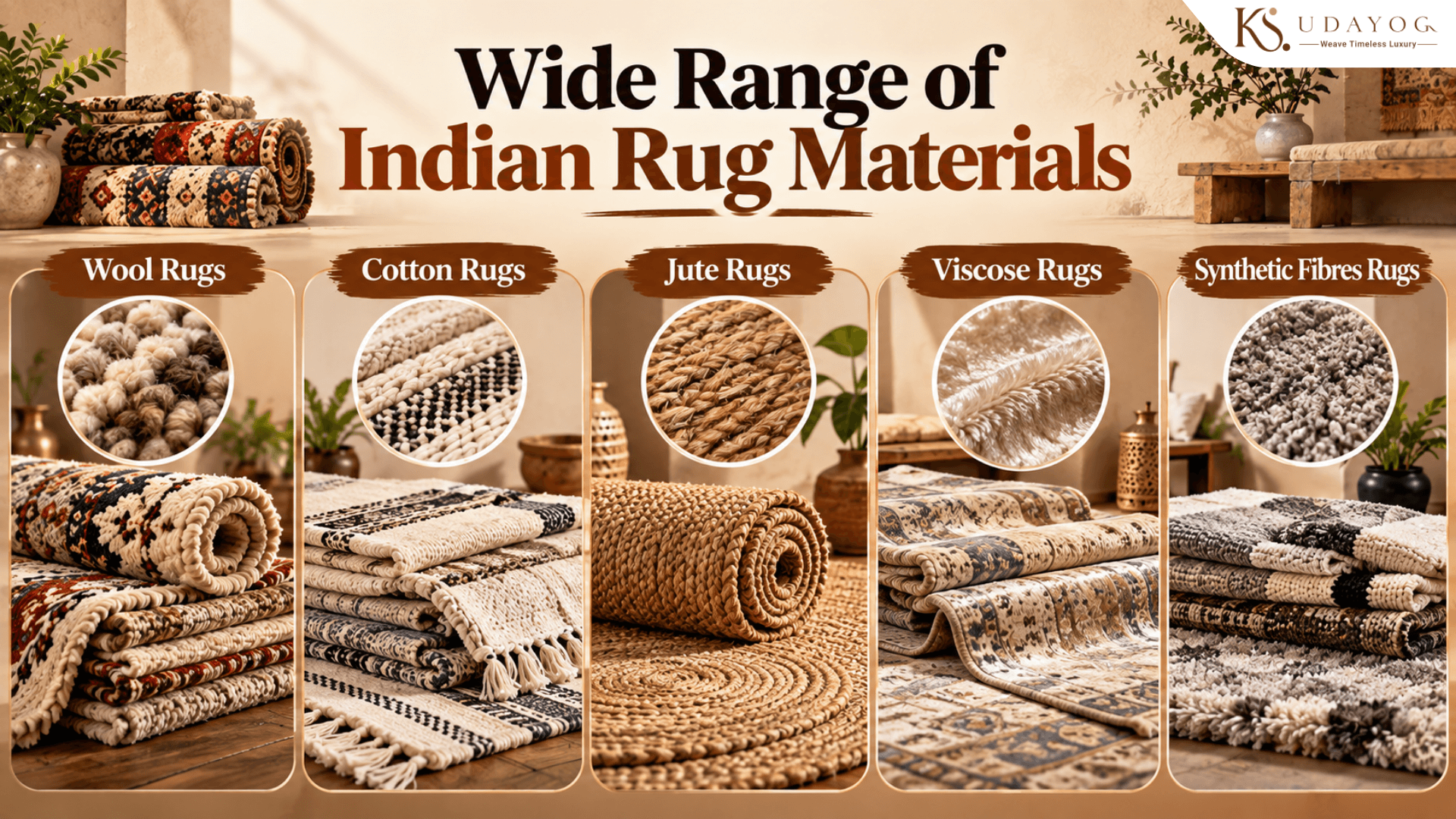
- Wool: Often chosen for its natural texture, warmth, and suitability for premium rug constructions.
- Cotton: Used in lightweight rugs and dhurries that complement casual and contemporary interiors.
- Jute: Offers a distinctive natural texture suited to rustic, earthy, and relaxed interior styles.
- Viscose: Provides a smooth feel and lustrous appearance, but requires careful maintenance, particularly around moisture.
- Synthetic Fibres: Materials such as polypropylene offer colour variety, practical maintenance, and options across different price points.
No material is ideal for every setting. Buyers should consider foot traffic, moisture exposure, cleaning requirements, and the desired appearance before selecting a fibre.
5. Diverse Rug Designs That Suit Different Markets
Interior preferences vary across customers, properties, and regions. Indian rugs are available in design directions that range from traditional ornamentation to modern geometric patterns and subtle textures.
For example, a detailed floral rug may complement a classic interior, while a neutral flatweave may suit a minimalist living space. Abstract patterns can appeal to customers looking for a contemporary focal point.

This variety matters to retailers and designers because they can select products around their audience's preferences rather than relying on one signature style.
6. Customisation Beyond Standard Designs
Global buyers often need rugs that fit a particular room, collection, or brand identity. Depending on the manufacturer's capabilities, Indian rug production can accommodate customised requirements.
Options may include:
- Dimensions: Sizes suited to specific furniture layouts or interior projects.
- Colours and patterns: Designs aligned with a buyer's approved concept.
- Materials and construction: Choices tailored to appearance and intended use.
- Finishing: Selected backing, edging, and pile-height specifications.
Customisation is particularly useful for private-label collections and interior projects where standard retail sizes or patterns may not meet the brief. A physical sample and written specifications help clarify expectations before full production begins.
7. Quality Depends On Construction And Finishing
A beautiful pattern alone does not make a rug well made. Its construction, yarn quality, colour application, and finishing all influence the final product.
Buyers evaluating handmade rugs should pay attention to knotting or tufting quality, surface appearance, edge finishing, backing, and dimensions. Colour matching is also important when several rugs must coordinate within the same collection.

Handmade products may show some natural variation, but agreed specifications help define acceptable differences. Reviewing samples and inspection requirements before ordering gives buyers a clearer basis for evaluating quality.
8. Options Across Different Price Segments
Indian rugs are available at different price points because production costs vary with material, size, construction, design complexity, and labour requirements.
A simple flatweave and an intricately hand-knotted wool rug serve different needs and involve different production processes. Neither should be judged on price alone.
For wholesale buyers, understanding these differences helps when planning a collection. Entry-level designs can serve everyday décor needs, while more detailed constructions may suit premium interiors. The appropriate choice depends on the intended customer and the value the product is expected to offer.
9. Artisan Skills Keep Traditional Rug Making Techniques Alive
Rug making relies on practical skills in weaving, knotting, pattern execution, yarn handling, and finishing. Skilled artisans help maintain these techniques while adapting their work to new designs and product requirements.
This craftsmanship can be an important part of a rug's appeal, particularly for buyers who value handmade products and the people behind them.

However, handmade production does not automatically guarantee ethical sourcing. Buyers concerned about labour practices or environmental claims should check the manufacturer's policies, supply-chain transparency, and relevant supporting evidence.
10. Wholesale And Private-Label Rug Manufacturing Possibilities
Indian rug manufacturers serve a range of commercial buyers, including retailers, wholesalers, interior designers, and home décor brands. Their product capabilities can support collections with different materials, styles, and construction methods.
For businesses sourcing wholesale rugs, the main advantage is the opportunity to explore a varied product range and, where available, develop customised designs. Private-label buyers may also be able to discuss product specifications and selected branding requirements.

Capabilities differ between suppliers. Minimum order quantities, sampling, production capacity, and quality-control procedures should be confirmed before placing an order. Choosing a manufacturer whose strengths match the product brief is more useful than assuming every supplier offers the same services.
Final Thoughts
Indian rugs appeal to global buyers through a combination of established craft traditions, skilled handmade production, diverse materials, and adaptable designs. Regional expertise and different construction methods provide options for a wide range of interior styles and price segments.
For retailers, wholesalers, and designers, the key is to choose rugs based on their intended use, material, construction, and verified quality, not simply their origin.
Explore Indian rug collections to find designs and materials suited to your market and customers.
Frequently Asked Questions
Why Are Indian Rugs Popular Worldwide?
Indian rugs offer varied designs, materials, and construction techniques, supported by established weaving traditions and skilled craftsmanship.
Which Regions In India Are Known For Rug Making?
Bhadohi and Mirzapur are recognised for carpet production, while Jaipur and Panipat are associated with other rug, dhurrie, and flatweave traditions.
What Is The Difference Between Hand-Knotted And Hand-Tufted Rugs?
Hand-knotted rugs are made by tying individual knots around a foundation. Hand-tufted rugs are created by inserting yarn into a backing with a tufting tool.
Which Materials Are Commonly Used In Indian Rugs?
Common materials include wool, cotton, jute, viscose, and synthetic fibres. The right choice depends on the rug's intended use, appearance, and maintenance needs.
Can Buyers Order Custom Handmade Rugs From India?
Many rug manufacturers offer custom sizes, colours, patterns, and materials, depending on their production capabilities and order requirements.
What Should Wholesale Buyers Check Before Ordering Indian Rugs?
Buyers should confirm material specifications, construction, samples, finishing, minimum order quantities, production timelines, and quality-control requirements.