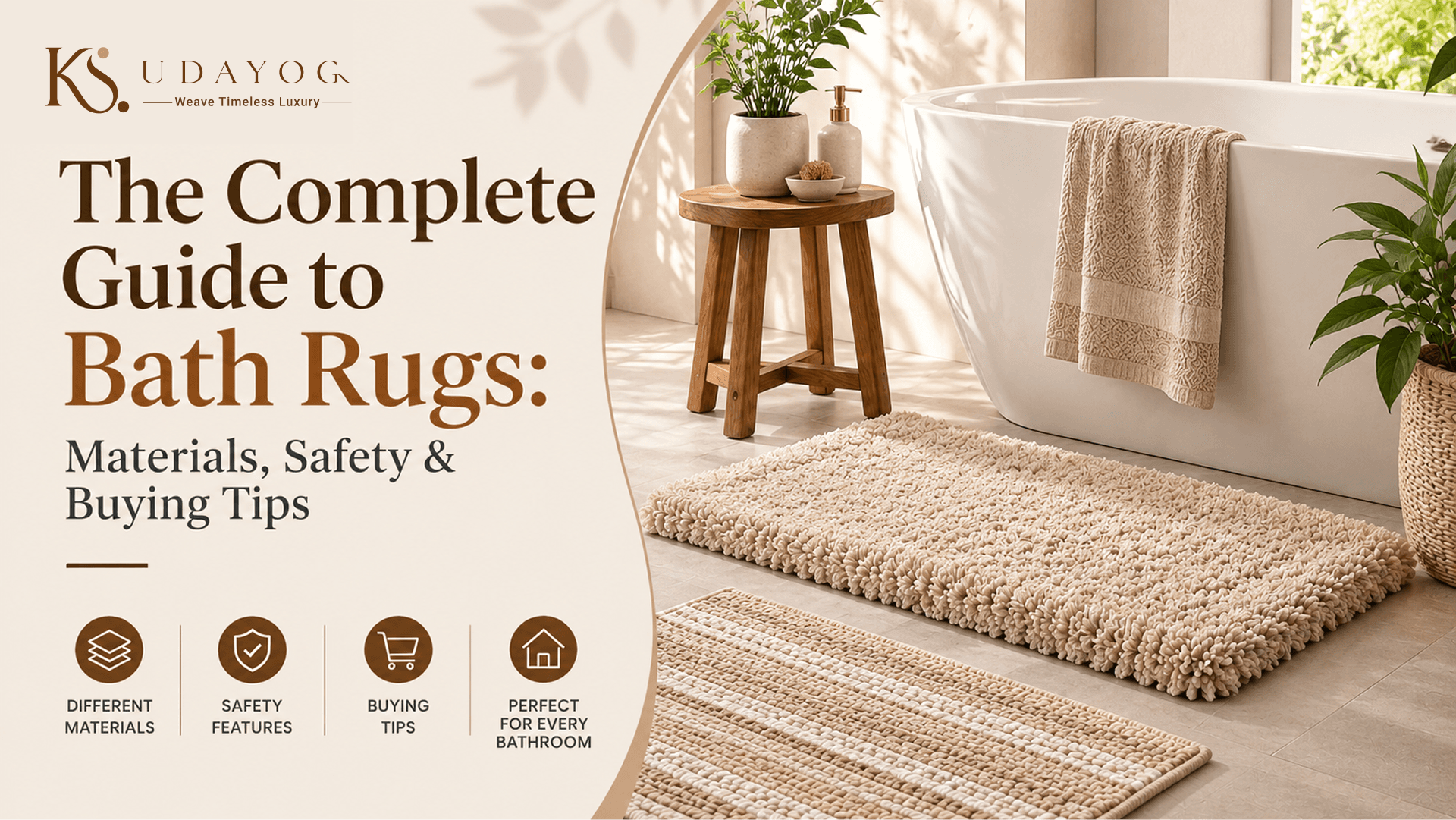
When you step out of the shower onto a soft, dry bath rug instead of a cold, wet floor, the whole experience feels more comfortable. A premium bath rug adds that little touch of comfort to your everyday routine.
But have you ever bought a bath rug that felt lovely at first but took forever to dry? The material matters more than you might think. Cotton, microfiber, memory foam, and bamboo all offer different levels of absorbency, softness, and ease of maintenance.
So, which one should you choose for your bathroom? Let's explore the most popular bath rug materials, their pros and cons, and what makes each one worth considering for your home.
Quick Answer: Best Materials For Bath Rugs To Suit Your Bathroom Needs
Cotton is a practical all-round choice for many households because it is soft, absorbent, and available in washable designs. However, microfiber and chenille bath rugs can suit buyers who prefer textured surfaces.
Memory foam offers cushioning, and diatomite or wooden mats provide a firm alternative to fabric. When you are buying the bath rug, the best material option depends on your priorities rather than one material being universally superior.

The performance of a premium bath rug varies with pile height, construction, backing, ventilation, and product design. A material name alone does not guarantee quick drying or slip resistance.
Different Bath Rug Materials For Every Budget And Need
The right non-slip bath rug can make your bathroom feel softer, safer, and more inviting without stretching your budget. Some materials absorb water quickly, while others offer plush comfort, quick drying, or a stylish finish. Here’s a look at different bath rug materials to help you find the right match for your needs and budget.
1. Cotton Bath Rugs
Cotton is one of the most familiar bath rug materials because it offers a comfortable surface and absorbs water from wet feet. It is available in flat-weave, looped, terry, and plush constructions.

Advantages of Cotton
- Soft and comfortable underfoot
- Good moisture absorption
- Available in different textures and sizes
- Many designs are machine washable
- Suitable for everyday bathroom routines
Limitations to Consider
Thick cotton rugs can retain moisture and take longer to dry in humid bathrooms. They may also move on smooth tiles if they lack suitable backing.
Best for: Family bathrooms, everyday use, and buyers who prefer washable textile mats.
2. Microfiber Bath Rugs
Microfiber bath rugs use very fine synthetic fibres, commonly polyester or polyamide. Their fine structure helps capture moisture and provides a soft surface without requiring a thick cotton pile.

Advantages of Microfiber
- Soft, lightweight construction
- Good moisture pickup
- Available in plush and low-pile designs
- Many options are easy to wash
- Practical for frequently used bathrooms
Limitations to Consider
Performance depends on fibre density and construction. Some microfiber rugs can flatten with repeated use, while unsuitable detergents or fabric softeners may affect their surface performance.
Best for: Busy households looking for a soft bath rug with practical everyday maintenance.
3. Chenille Bath Rugs
Chenille bath rugs feature textured yarns that create a plush, raised surface. The pile gives them a distinctive appearance and a comfortable feel when stepping out of the shower.

Advantages of Chenille
- Plush and textured surface
- Comfortable underfoot
- Good moisture absorption in many constructions
- Available in varied colours and designs
- Can offer a balance of softness and practicality
Limitations to Consider
Deep pile can collect hair, lint, and dirt. Drying time also varies with the fibre, pile thickness, and bathroom ventilation.
Best for: Buyers who want a decorative, soft bath rug for everyday use.
4. Memory Foam Bath Rugs
Memory foam bath rugs contain a cushioning foam layer, often covered with a textile such as polyester or microfiber. They provide a different experience from conventional woven or loop-pile mats.

Advantages of Memory Foam
- Cushioned feel underfoot
- Comfortable for standing at the washbasin
- Soft surface for bedroom-style bathrooms
- Available in different shapes and sizes
Limitations to Consider
The foam core can retain moisture and may take longer to dry than a thin textile mat. Repeated compression and unsuitable washing methods can also affect its shape.
Best for: Bathrooms where cushioning is a priority, and the rug can be dried properly between uses.
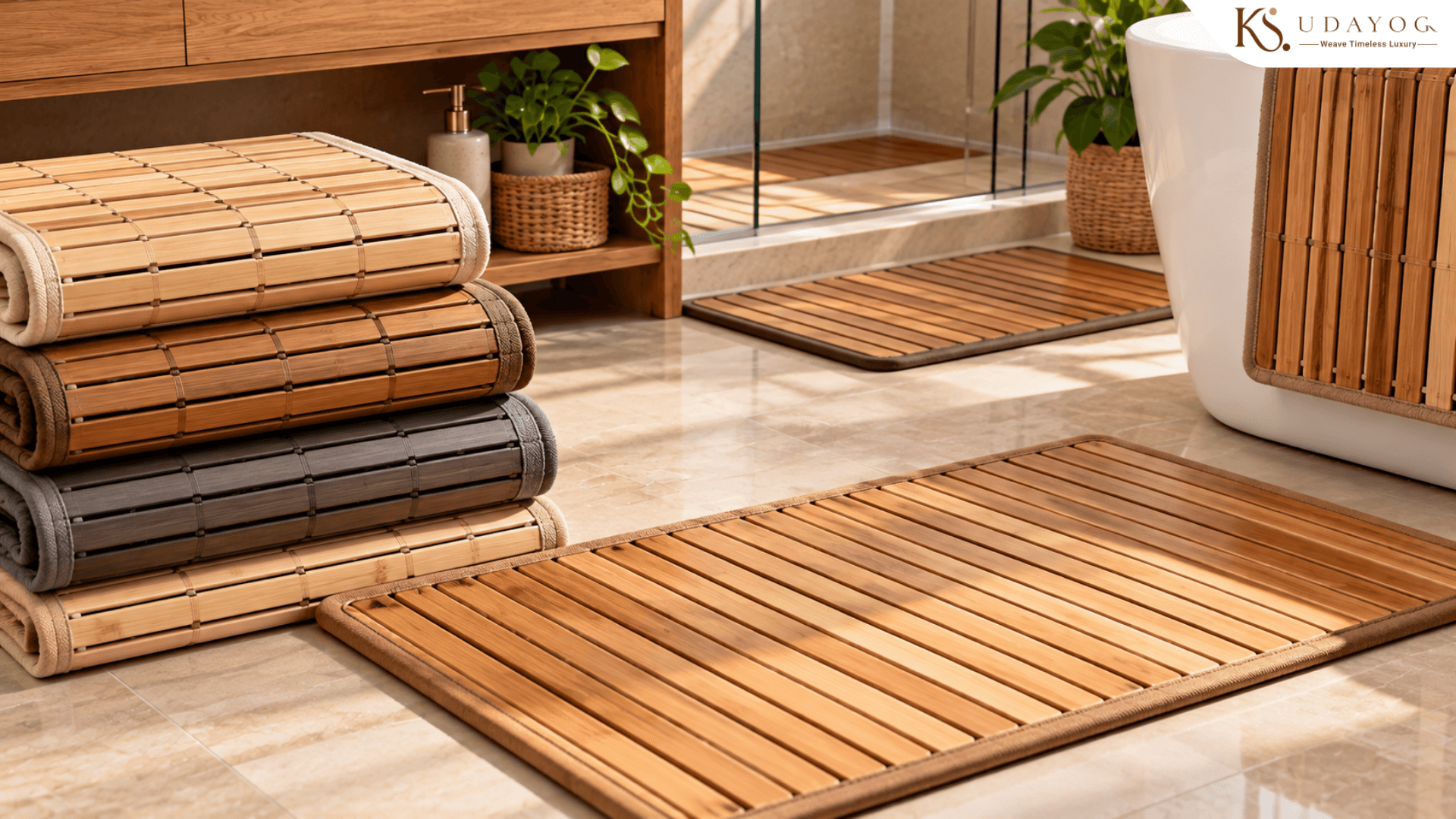
5. Bamboo Bath Rugs
Bamboo bath rugs are generally constructed from slats or strips rather than absorbent textile pile. Their open structure allows water to drain through or evaporate from the surface, depending on the design.
Advantages of Bamboo
- Natural, minimalist appearance
- Firm surface underfoot
- Easy surface cleaning
- Slatted designs allow drainage
- Suitable for contemporary bathroom interiors
Limitations to Consider
Bamboo does not absorb water like cotton. Water may collect underneath, and the mat can slide on wet tiles if it lacks suitable grip features.
Best for: Buyers who prefer a firm, natural-looking mat and can keep the floor underneath clean and dry.
6. Diatomite Stone Bath Rugs
Diatomite bath mats are made from mineral-based material designed to take up moisture at the surface and release it as the water evaporates. They have a rigid, stone-like feel rather than the softness of a fabric rug.

Advantages of Diatomite Stone
- Firm, flat surface
- No textile pile to collect lint
- Surface moisture can evaporate relatively quickly
- Simple, understated appearance
- Useful for buyers who prefer non-fabric alternatives
Limitations to Consider
These mats feel hard and cool underfoot. They can crack if dropped, and some products require specific surface cleaning or maintenance. Flexible mineral-based mats may have different care requirements from rigid boards.
Best for: Bathrooms where quick surface drying and a firm texture are preferred over cushioning.
7. Wool Bath Rugs
Wool is a natural animal fibre valued for its warmth, softness, and textured appearance. Wool bath rugs are less common than cotton or synthetic options and need more careful consideration in wet environments.

Advantages of Wool
- Naturally warm and comfortable
- Soft, textured surface
- Distinctive natural appearance
- Can provide a premium decorative finish
Limitations to Consider
Wool rugs may be harder to dry after becoming wet, and some constructions are sensitive to agitation, heat, and unsuitable cleaning products. They are not the first choice for areas that remain damp.
Best for: Drier bathroom zones where a decorative natural-fibre rug can be maintained carefully.
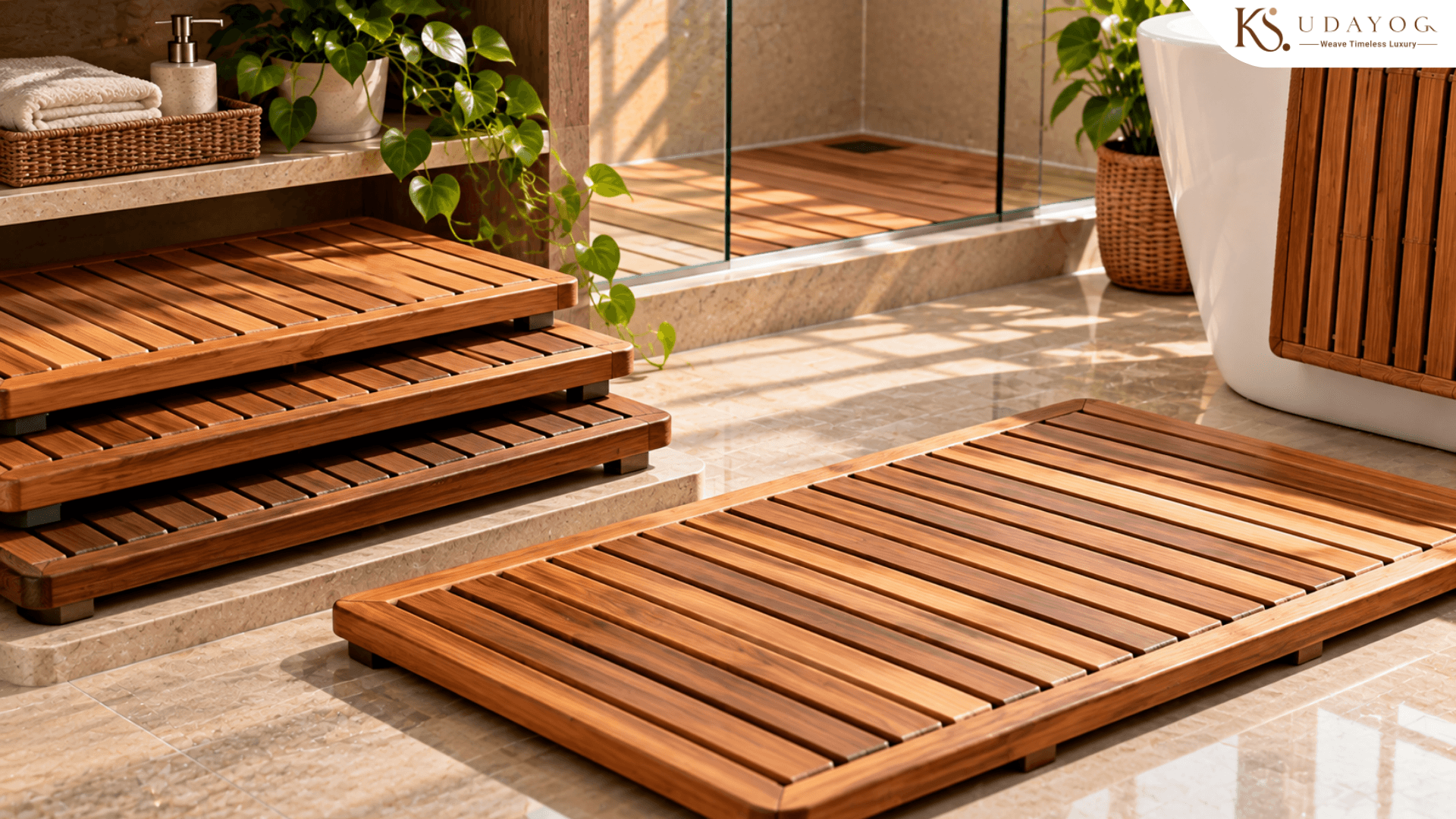
8. Teak Wood Bath Rugs
Teak bath mats use wooden slats or assembled wooden sections to create a firm platform. They are often selected for their warm appearance and spa-inspired design.
Advantages of Teak Wood
- Distinctive natural grain
- Firm, structured surface
- Slatted construction can support drainage
- Does not require textile washing
- Complements minimalist interiors
Limitations to Consider
Wood still needs proper care. Water can collect beneath the mat, and prolonged dampness may affect the finish or encourage deterioration. The mat should be cleaned and dried according to its manufacturer's instructions.
Best for: Buyers seeking a wooden bath mat for a well-maintained, ventilated bathroom.
9. Rubber Bath Rugs
Rubber is flexible, water-resistant, and commonly used in bath mats designed to improve grip. Some products are intended for use inside a bathtub or shower, while others are designed for bathroom floors.

Advantages of Rubber
- Water-resistant construction
- Flexible surface
- Easy surface cleaning
- Can provide grip when properly designed
- Useful in selected wet-area applications
Limitations to Consider
Rubber is not absorbent, so it does not remove water from wet feet like cotton. Soap residue, worn surfaces, or poor contact with the floor can reduce grip.
Best for: Specific wet-area applications where the product is designed for that location.
10. PVC Bath Rugs
PVC is a synthetic material used in water-resistant bath mats, including certain perforated or textured designs. It is valued for its practical surface and straightforward cleaning.

Advantages of PVC
- Water-resistant surface
- Easy to wipe clean
- Available in different textures
- Suitable for selected wet-area designs
- Does not behave like absorbent textile pile
Limitations to Consider
PVC mats do not absorb water, and a water-resistant surface does not automatically make a mat slip-proof. Check the intended use, grip design, and care instructions before purchasing.
Best for: Buyers who want a wipe-clean mat for a suitable bathroom application.
11. Polyester Bath Rugs
Polyester bath rugs are synthetic textile products available in many pile heights, textures, and designs. Polyester may also be used in microfiber and chenille constructions, so these categories can overlap.

Advantages of Polyester
- Broad range of designs
- Often affordable
- Available in different textures
- Many products are easy to maintain
- Suitable for decorative bathroom styling
Limitations to Consider
Water absorption and drying speed depend on the complete construction, not simply the polyester label. Thick pile and dense backing can slow drying, while low-quality construction may flatten or deteriorate with use.
Best for: Buyers looking for a versatile synthetic bath rug with a particular look or price point.
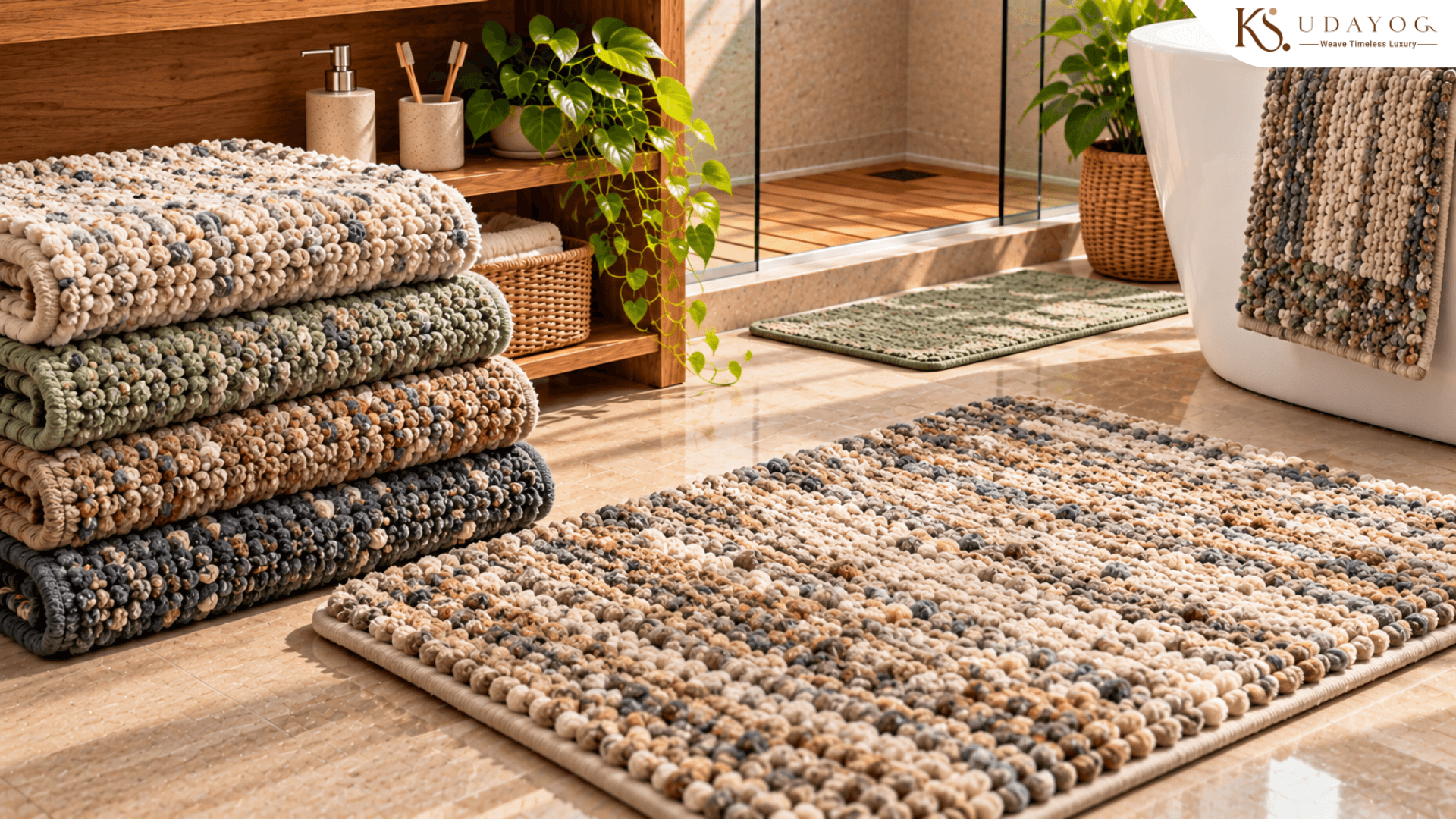
12. Recycled-Fibre Bath Rugs
Recycled-fibre bath rugs use recovered materials, often recycled polyester or textile blends, in their construction. Their performance depends on the recycled fibre, yarn quality, pile structure, and backing.
Advantages of Recycled-Fibre Rugs
- Can incorporate recovered raw materials
- Available in different designs
- May offer familiar synthetic-fibre characteristics
- Provide another material option for home textiles
Limitations to Consider
Recycled content alone does not establish durability, water absorption, or environmental impact. Check the product specifications, care instructions, and any substantiated recycled-content claims.
Best for: Buyers interested in recycled materials who also want clear information about performance and product construction.
Tips for Choosing the Suitable Bath Rug Material
Choosing the right bath rug involves more than comparing softness or appearance. Consider the following factors before buying wholesale bath rugs.
1. Check Water Absorption
If your main priority is collecting water from wet feet, consider cotton or a suitably constructed microfiber or chenille rug. Wooden, rubber, PVC, and stone options behave differently and should not be judged by textile absorbency alone.
2. Consider Drying Time
A thick bath rug can remain damp even when its surface feels dry. In humid bathrooms, consider the pile thickness, backing, ventilation, and whether the rug can be hung or lifted to dry.
3. Look for Suitable Grip
A bath rug should remain stable on the intended floor. Check the backing, edge finish, and compatibility with your tiles. Even a non-slip backing can perform poorly if the floor is wet, so keep the area clean and follow product instructions.
4. Check Washing Requirements
Cotton, microfiber, chenille, and polyester rugs may be machine washable when their labels permit it. Memory foam, wooden, and mineral-based mats require different care methods. Never assume that all bath rugs can be washed in the same way.
5. Match the Material to Bathroom Use
A family bathroom used several times daily may benefit from a washable textile mat with a practical drying routine. A guest bathroom used occasionally may allow more decorative choices, while a persistently humid bathroom requires special attention to moisture and ventilation.
6. Inspect the Backing and Construction
The surface material is only one part of the product. Check whether the backing is securely attached, whether the rug lies flat, and whether its edges curl after washing. These details can affect stability, maintenance, and useful life.
7. Choose the Right Size and Thickness
A rug should fit the space without blocking the door, bunching around fixtures, or creating a tripping hazard. Thick mats may feel more cushioned but can be harder to dry and may interfere with door clearance.
Which Bath Rug Material Is Best for Indian Bathrooms?
The best choice for bath rug manufacturing material depends on local conditions and household habits.
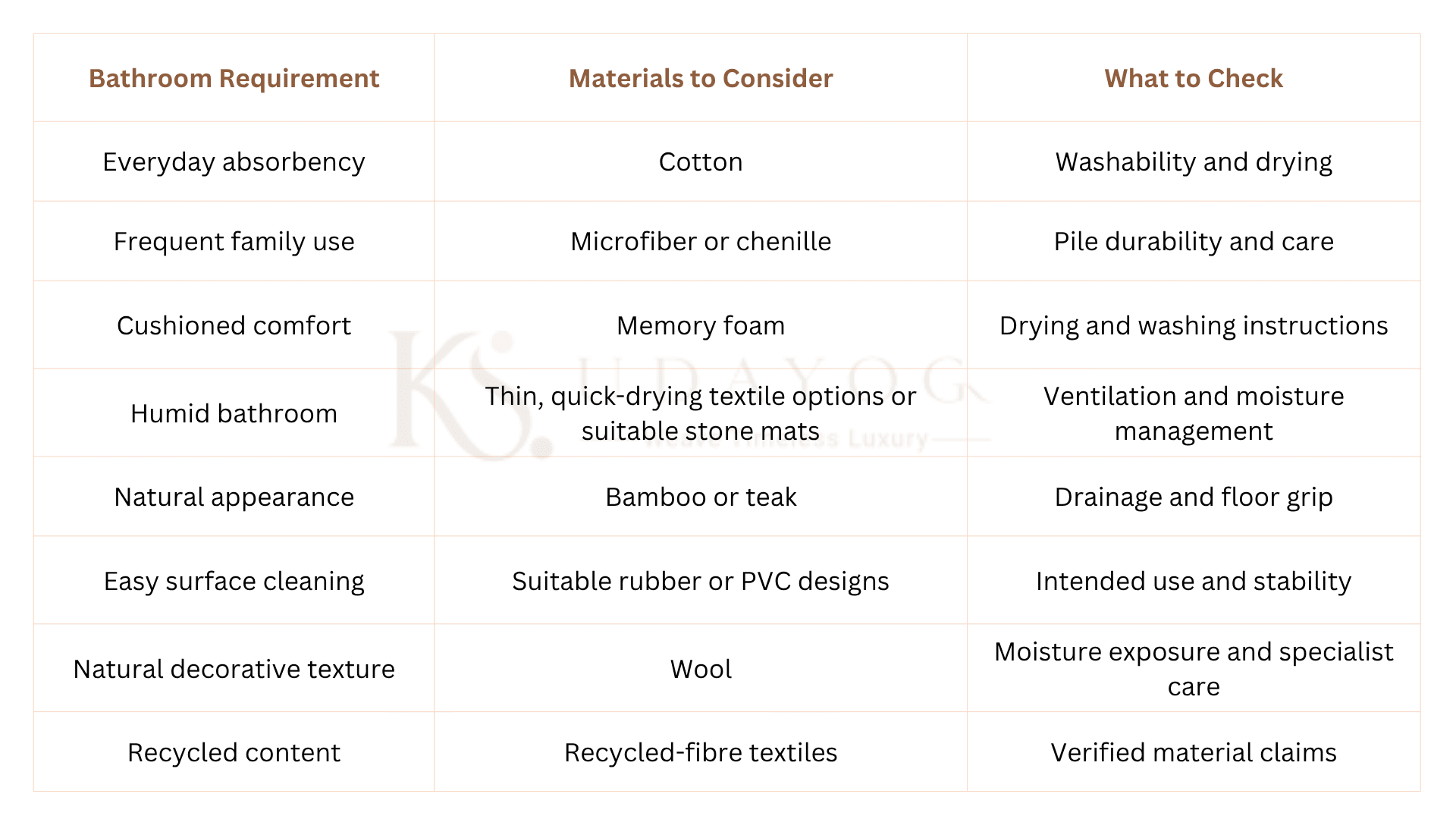
For Indian homes, a washable textile rug can be a practical choice when it dries fully between uses. If the bathroom remains damp during the monsoon, the drying routine and ventilation may matter as much as the material itself.
Final Thoughts
The best bath rug material is the one that fits your bathroom's moisture levels, comfort requirements, cleaning routine, and floor conditions. Cotton offers familiar softness and absorbency, microfiber and chenille provide textured alternatives, memory foam adds cushioning, and wooden or stone mats suit buyers who prefer firm surfaces.
Before purchasing bath rugs, compare the complete construction, backing, care instructions, and intended use. Explore bath rug options that balance comfort, moisture management, and maintenance to find the right fit for your bathroom.
Frequently Asked Questions (FAQs)
What Is The Best Material For Bath Rugs?
Cotton is a practical all-round option for many homes because it is soft and absorbent. Microfiber, chenille, memory foam, and stone mats may suit different drying and comfort requirements.
Are Cotton Bath Rugs Better Than Microfiber Bath Rugs?
Cotton is valued for absorbency and a familiar textile feel, while microfiber offers a fine, soft surface. The better option depends on construction, drying conditions, and maintenance preferences.
Are Chenille Bath Rugs Absorbent?
Many chenille bath rugs absorb moisture well because of their textured pile. Actual performance depends on the fibre content, pile construction, and backing.
Are Memory Foam Bath Rugs Suitable For Humid Bathrooms?
They can be used if they dry properly, but the foam core may retain moisture. Check the care instructions and ensure adequate ventilation between uses.
Are Diatomite Bath Rugs Better Than Cotton?
Diatomite mats provide a firm surface designed to manage surface moisture, while cotton absorbs water and feels softer. The right option depends on whether you prioritise a cushioned textile feel or a rigid, quick-drying surface.
Are Bamboo And Teak Bath Rugs The Same?
No. Bamboo and teak are different materials with distinct construction and maintenance requirements. Both may be used in slatted bath mats, but their durability depends on product quality and care.
Can Wool Be Used For Bath Rugs?
Wool can be used in decorative bath rugs, particularly in areas that do not remain wet. It needs suitable cleaning and drying, so it may not be ideal for heavily soaked areas.
Are Rubber And PVC Bath Rugs Absorbent?
No. Rubber and PVC are water-resistant materials rather than absorbent textile fibres. Their suitability depends on the product's design, intended location, and grip characteristics.
How Often Should A Bath Rug Be Washed?
Follow the manufacturer's care instructions and adjust washing frequency to bathroom use, moisture, and visible soiling. Allow the rug to dry fully between uses.
What Should I Check Before Buying A Bath Rug?
Compare absorbency, drying time, comfort, dimensions, backing, floor compatibility, washability, and material construction. A stable fit and suitable maintenance routine are important alongside appearance.