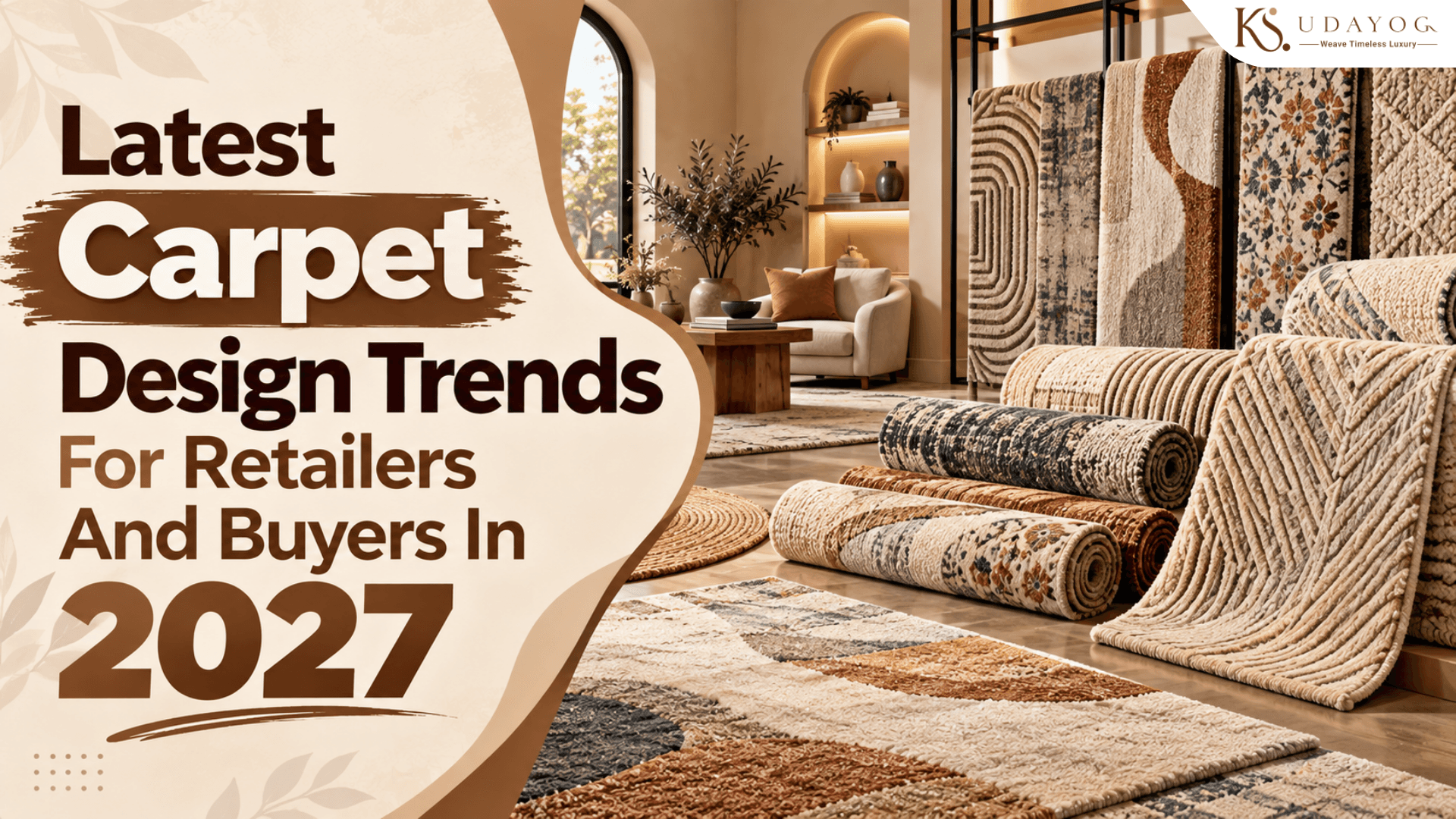
A carpet that catches a customer's eye can turn a casual store visit into a purchase. For Indian retailers, keeping up with changing interior preferences is essential to attracting buyers and building a collection that stands out. For homeowners, the right carpet can refresh an entire room without changing every piece of furniture.
In 2027, buyers may look beyond basic floor coverings and explore designs that combine visual appeal, comfort, and practicality. Warm neutrals, earthy shades, textured surfaces, contemporary patterns, and traditional Indian motifs offer plenty of possibilities for different homes and budgets.
So, which carpet styles deserve attention in the year ahead? Let's explore the latest carpet design trends to buy for 2027 and discover what Indian buyers may love, and retailers can consider for their upcoming collections.
Carpet Design Trends For 2027: Colours, Patterns And Textures To Watch
The biggest carpet design trends for 2027 combine tactile textures, warm colours, artistic patterns, and practical materials. Retailers need collections that match changing customer preferences, while buyers want carpet designs that complement their interiors without compromising comfort or maintenance. Here we define 15 carpet trends, along with practical advice for choosing, sourcing, and buying the right carpets from wholesale manufacturers.
1. Textured Carpets With Tactile Appeal
Texture adds depth to a room without relying entirely on bold colours or elaborate prints. Cut-and-loop construction, carved surfaces, bouclé-inspired finishes, and contrasting pile heights can create subtle variations that become more noticeable under different lighting conditions.

These designs suit living rooms, bedrooms, hotel suites, and premium residential spaces where a softer, layered appearance is desirable.
For retailers: Textured carpets in cream, taupe, beige, and brown can provide versatile options for customers who prefer understated designs. A few distinctive surface patterns can also make a collection more varied.
For buyers: Pile construction and fibre composition deserve attention alongside appearance. Deep textures may require more detailed cleaning than flatter surfaces, particularly in high-traffic areas.
2. Warm Neutrals And Earthy Carpet Colours
Warm neutrals remain a practical direction for interiors that need a welcoming, adaptable foundation. Shades such as oatmeal, mushroom, sand, caramel, terracotta, and chocolate brown can complement wooden furniture, natural stone, and neutral upholstery.

Deeper earthy tones also provide an alternative to interiors dominated by cool grey flooring. For Indian homes, these colours can work well with wooden furniture, textured walls, and both contemporary and traditional décor.
For retailers: A core range of beige, taupe, and brown carpets can serve customers looking for versatile options. Selected rust and terracotta designs can add variety without making the collection difficult to coordinate.
For buyers: Room lighting can change how a carpet colour appears throughout the day. Sample comparisons under the room's actual lighting can help prevent an unsuitable purchase.
3. Nature-Inspired Patterns And Organic Motifs
Nature-inspired carpet designs bring botanical shapes, flowing lines, leaf-like forms, and irregular markings into interior spaces. These patterns offer a softer alternative to rigid geometric prints and can create visual interest without overwhelming the surrounding décor.

Muted organic motifs suit minimalist rooms, while larger botanical designs can become focal points in more spacious interiors.
For retailers: A mix of subtle and expressive organic patterns can appeal to customers with different decorating preferences. Smaller motifs generally provide more flexibility, while larger designs offer a stronger visual statement.
For buyers: Pattern scale matters as much as colour. A restrained motif can suit a compact room, whereas a larger organic design may work better in a spacious living area with relatively simple furnishings.
4. Vintage-Inspired And Heritage Carpet Designs
Vintage-inspired carpets combine traditional motifs with updated colour palettes, distressed finishes, decorative borders, and contemporary pattern scales. Persian-inspired florals and heritage-style designs can introduce character into modern homes without requiring traditional furniture.
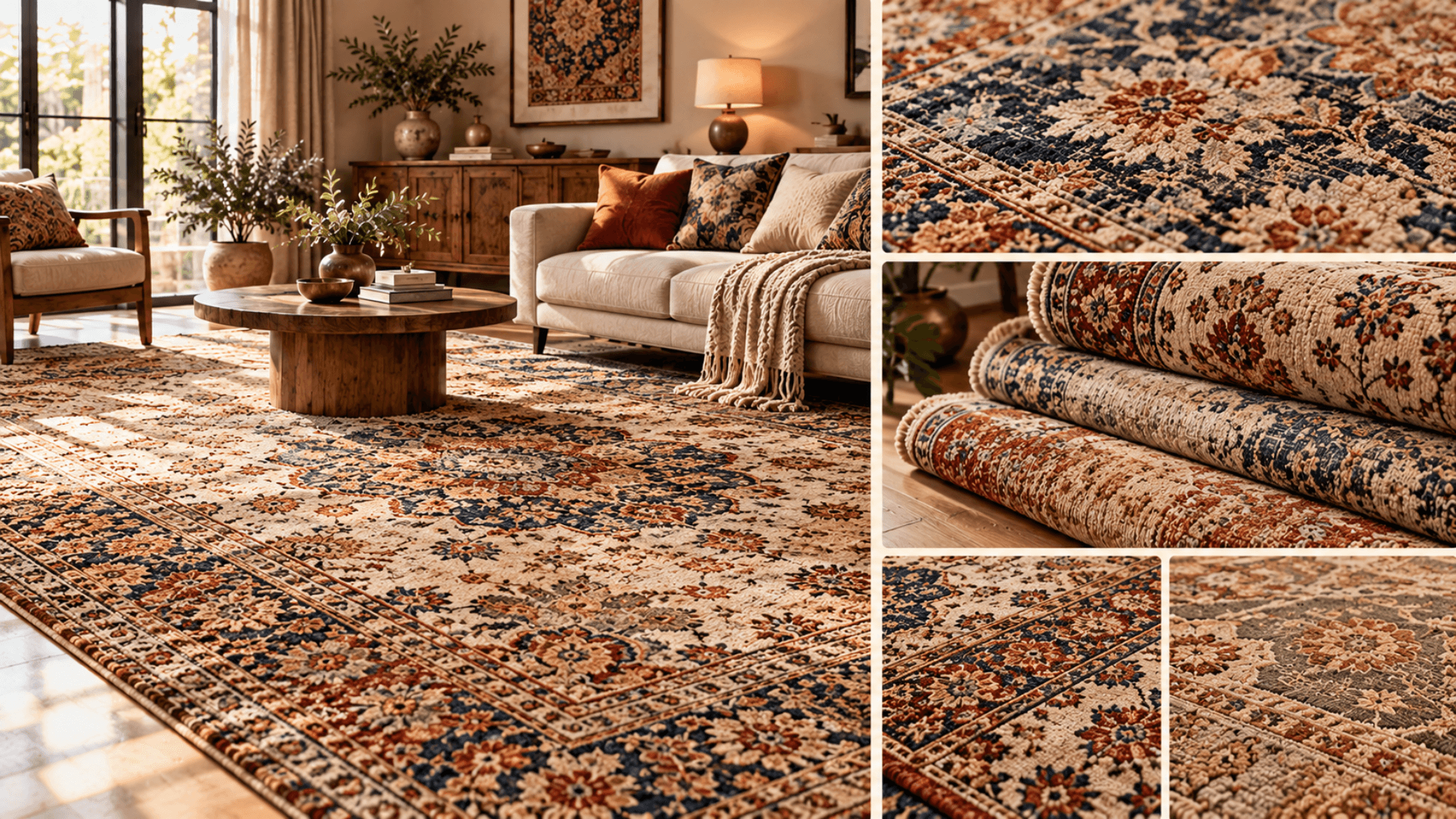
These carpets are also useful for buyers who prefer interiors with a collected, lived-in appearance rather than a completely uniform finish.
For retailers: Traditional patterns in muted colours can appeal to customers seeking versatile designs, while richer reds, blues, and earthy shades can serve more decorative preferences.
For buyers: The surrounding furniture should guide the pattern choice. A detailed vintage carpet can become the focal point of a room when curtains, upholstery, and cushions use simpler designs.
5. Bold Colours And Statement Carpets
Statement carpets offer a way to introduce colour without changing the walls or replacing large furniture pieces. Burgundy, forest green, deep blue, rust, and other saturated shades can add character to living rooms, bedrooms, studies, and hospitality interiors.

The strongest results often come from a clear balance between the carpet and the rest of the room.
For retailers: A focused selection of bold-colour carpets can complement a larger collection of neutral options. Smaller accent rugs may also appeal to customers who want to experiment with colour at a lower commitment.
For buyers: A bold carpet works best when its colour relates to at least one other element in the room, such as cushions, artwork, or upholstery. The rest of the palette can remain relatively simple.
6. Handcrafted Looks And Artisan Details
Visible weaving variations, hand-finished details, traditional motifs, and distinctive textures give carpets a more individual character. This direction connects contemporary interiors with established craft traditions while offering alternatives to uniform, mass-produced appearances.
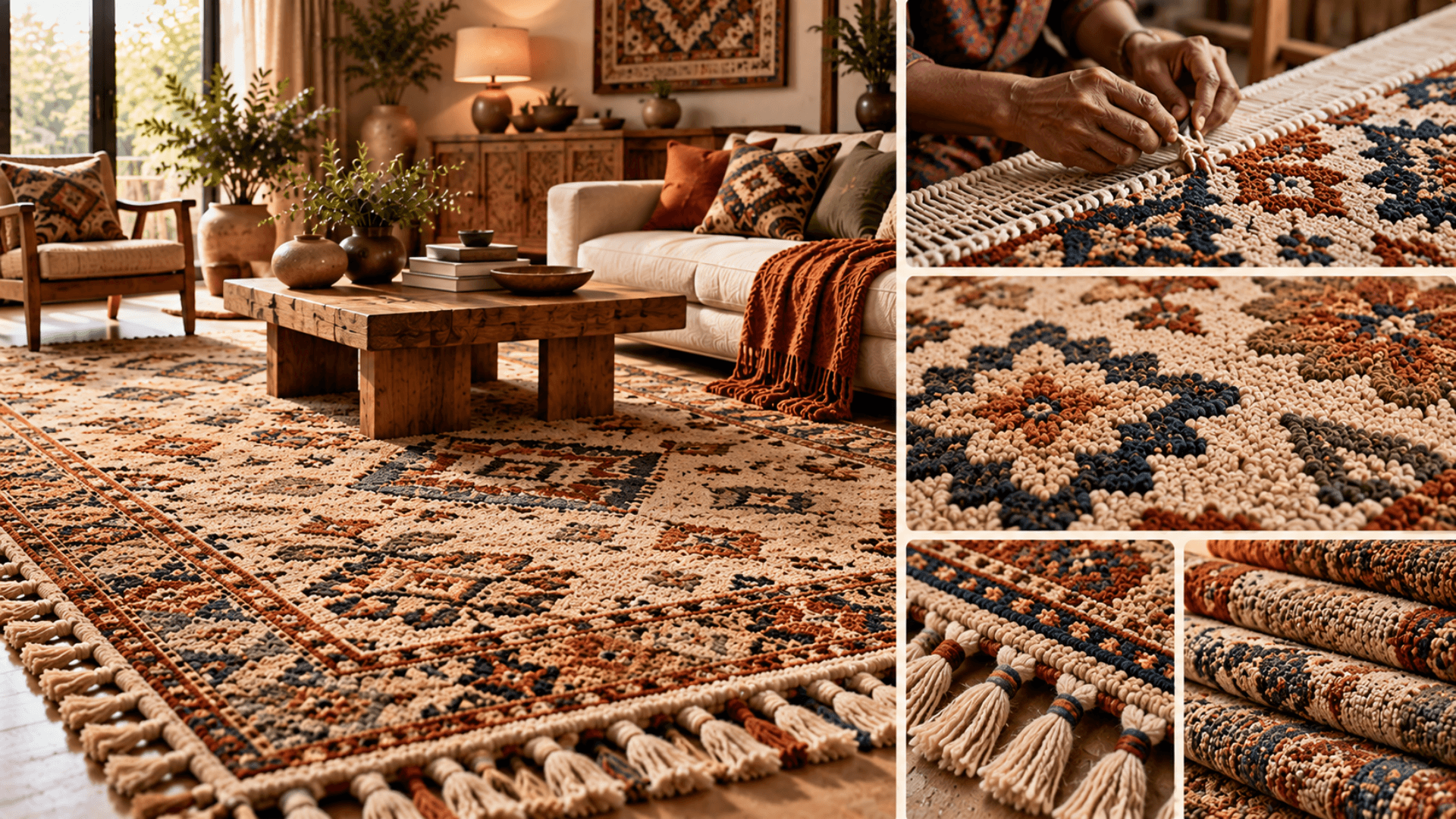
Indian carpet makers and retailers can draw on regional weaving expertise and reinterpret traditional patterns for modern homes and commercial projects.
For retailers: Clear information about manufacturing methods, fibre composition, craftsmanship, and origin helps customers understand product differences. Accurate descriptions are particularly important when handmade and machine-made carpets have similar appearances.
For buyers: Handmade, hand-tufted, and machine-made carpets differ in construction, price, and maintenance. Product labels and supplier information provide a more reliable basis for comparison than appearance alone.
7. Luxury Carpets With Refined Finishes
Luxury carpets combine thoughtful design with material quality, detailed construction, and a carefully finished surface. Subtle tonal patterns, premium wool, intricate hand-knotted designs, and refined textures can create an elevated look without relying on elaborate decoration.
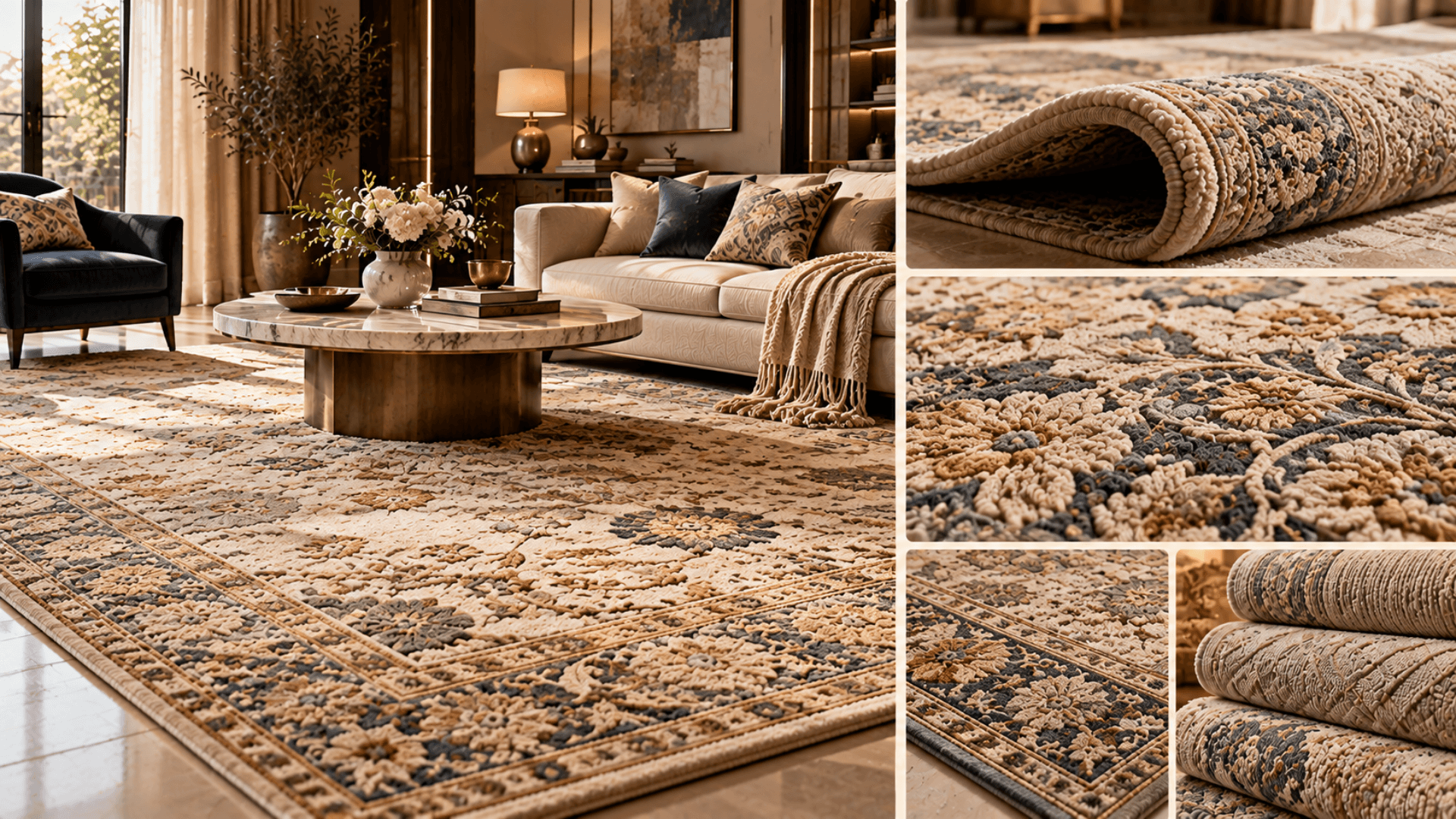
Premium carpets can suit master bedrooms, formal living rooms, boutique hotels, and hospitality projects where both appearance and material quality matter.
For retailers: A premium collection should communicate meaningful differences in fibre, construction, craftsmanship, and finishing. Transparent product information makes price comparisons easier for customers.
For buyers: Fibre quality, pile density, construction method, backing, and care instructions all deserve consideration. A higher price does not automatically guarantee better suitability for a particular room.
8. Sustainable Materials And Responsible Product Choices
Carpet material transparency is an important consideration for buyers comparing home furnishings. Natural fibres, recycled content, and manufacturing processes designed to reduce waste can appeal to customers who want more information about a product's environmental impact.
Wool, jute, sisal, and recycled polyester each offer different characteristics. Their durability, comfort, cleaning requirements, and suitability for particular rooms vary considerably.
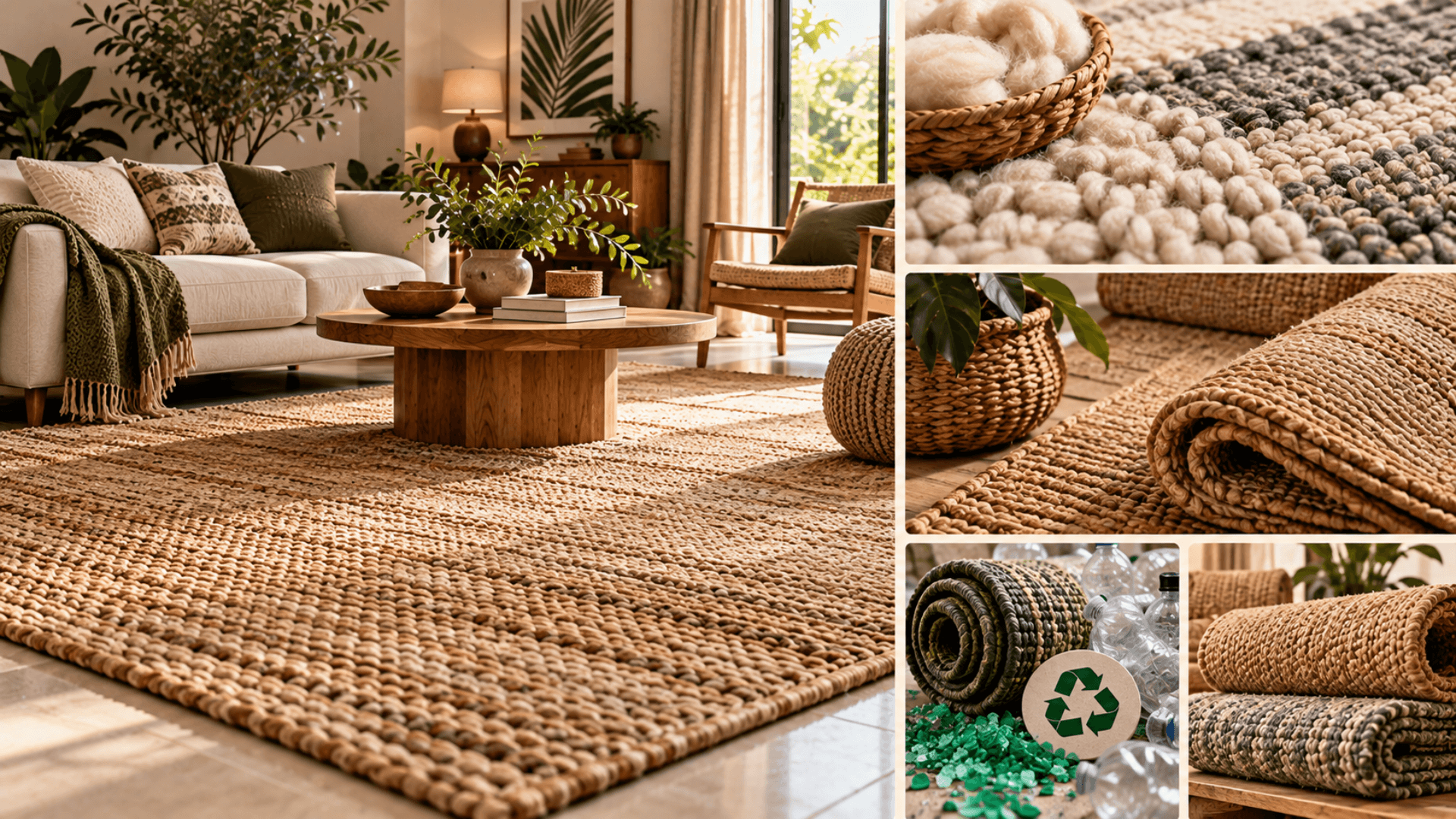
For retailers: Specific information about recycled content, fibre composition, certifications, and manufacturing claims can build customer confidence. General sustainability claims should have evidence behind them.
For buyers: Environmental credentials are only one part of the decision. Expected lifespan, maintenance, material sourcing, and disposal options also help determine whether a carpet is a suitable long-term purchase.
9. Geometric Pattern Carpets With A Modern Update
Geometric carpets remain useful for interiors that need structure and visual rhythm. Updated versions can feature softer colours, asymmetrical arrangements, irregular lines, and less rigid compositions than conventional grids or repeated shapes.

These designs can suit contemporary apartments, offices, hospitality spaces, and rooms with relatively simple furnishings.
For retailers: Different pattern scales can help serve customers who want either subtle surface detail or a stronger decorative feature. Coordinated colour options can also make geometric designs easier to merchandise.
For buyers: A restrained geometric carpet can complement patterned upholstery when the colours work together. Larger, more noticeable motifs generally benefit from simpler surrounding décor.
10. Layered Carpets And Contrasting Textures
Layering two rugs creates a personalised arrangement through differences in texture, pattern, and colour. A large neutral base rug can support a smaller decorative rug, helping define a seating area or introduce a distinctive design without covering the entire floor with a bold pattern.
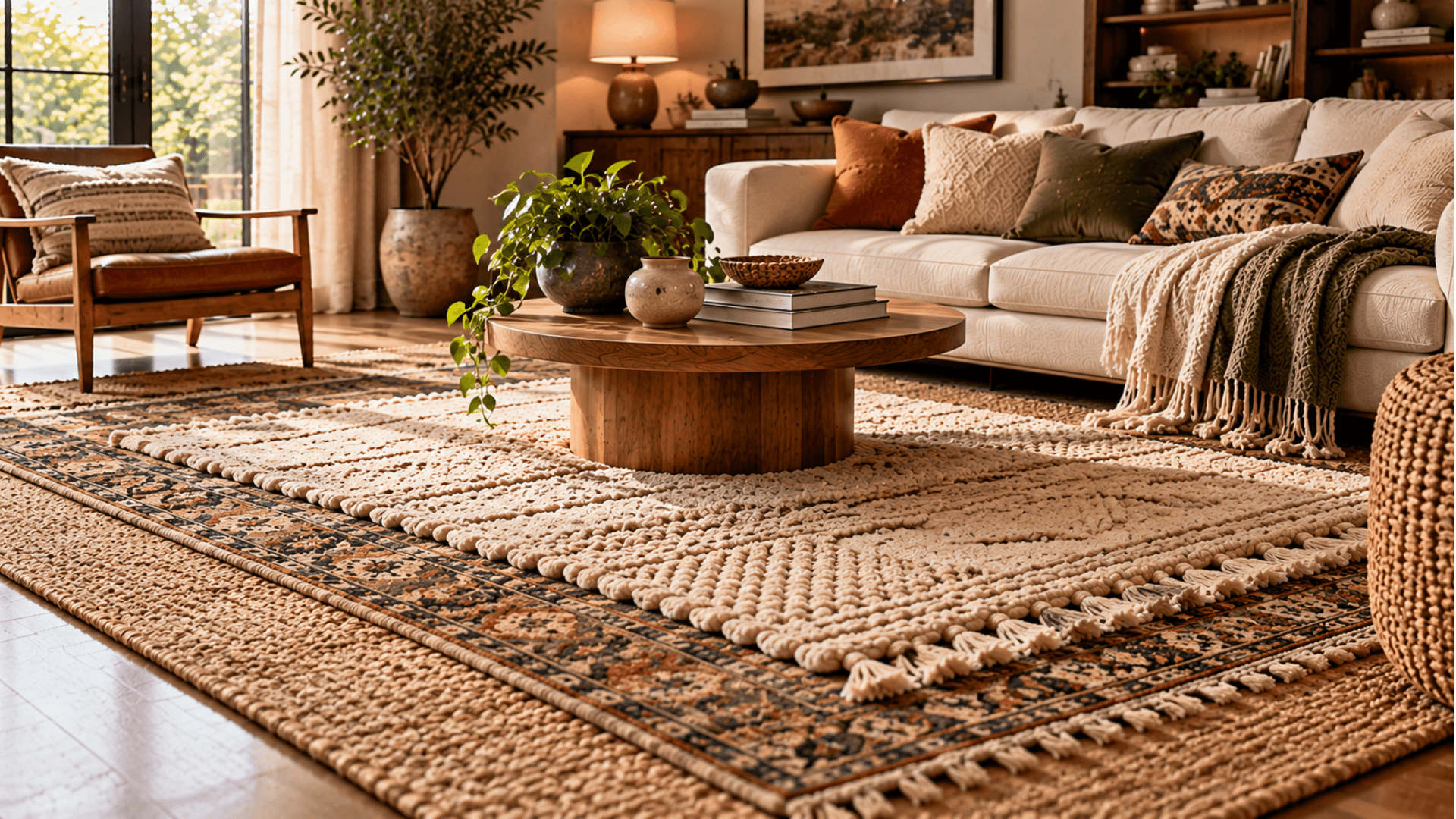
Natural-fibre bases paired with smaller wool rugs offer one possible combination for living rooms and relaxed interiors.
For retailers: Coordinated displays can show how different carpet styles work together. Product combinations also provide useful inspiration for customers who find individual designs difficult to visualise in a room.
For buyers: The base rug should be large enough to anchor the arrangement, and both layers should lie flat. A compatible non-slip underlay can help reduce movement and tripping risks.
11. Washable And Easy-Care Carpet Designs
Easy-care rugs remain practical for households with children, pets, frequent visitors, or busy living spaces. Washable designs and carpets with straightforward cleaning requirements allow buyers to prioritise convenience without abandoning their preferred interior style.
However, the term washable should not be applied to every easy-care carpet. Cleaning suitability depends on fibre composition, backing, size, and construction.
For retailers: Clear distinctions between machine-washable, spot-cleanable, and professionally cleaned products can help customers choose appropriately.
For buyers: Cleaning instructions deserve attention before purchase. Low-pile designs, suitable fibres, and practical colours may be useful for high-traffic areas, depending on the product's construction.
12. Custom Sizes And Designs For Specific Spaces
Custom carpets allow buyers to select dimensions, colours, patterns, and finishing details suited to their interiors. This option can be especially useful for large living rooms, unusual floor plans, boutique hotels, offices, and projects where standard retail sizes do not fit.
Customisation can also help designers coordinate carpets with specific furniture layouts and interior colour schemes.
For retailers: Supplier capabilities, minimum order quantities, production timelines, and customisation charges should be clear before offering made-to-order products.
For buyers: Accurate measurements and written confirmation of dimensions, materials, borders, and delivery schedules can help avoid costly errors.
13. Oversized Rugs For Open-Plan Spaces
Oversized rugs are useful for defining larger living areas without relying on physical partitions. A generous rug can visually connect a sofa, armchairs, and coffee table, making an open-plan room feel more organised.
This approach is particularly relevant to homes where the living, dining, and entertainment areas share one continuous floor.
For retailers: Larger rug options can serve customers furnishing spacious apartments, villas, offices, and hospitality interiors. Display examples should show how the rug relates to furniture and surrounding flooring.
For buyers: Room measurements and furniture dimensions should determine the final size. An oversized rug should leave practical clearance around doors, walkways, and adjoining furniture rather than crowding the space.
14. Statement Borders And Framed Carpet Designs
Decorative borders offer a way to introduce contrast without covering the entire carpet in a busy pattern. Contrasting edges, narrow framed outlines, layered borders, and more expressive corner details can make a simple carpet look distinctive.

This style works particularly well in rooms where the central field needs to remain relatively calm while the edges add visual definition.
For retailers: Border designs can complement both classic and contemporary collections. Neutral carpets with contrasting edges may appeal to customers who want something more distinctive than a plain rug.
For buyers: The border should suit the room's proportions and furniture placement. A strongly contrasting frame can become a focal point, while a tonal border offers a more subtle finish.
15. Decorative Runners Beyond Hallways
Runners are no longer limited to narrow passages. Long, narrow rugs can add softness and colour to bedside areas, kitchen walkways, dressing spaces, and selected open-plan zones.
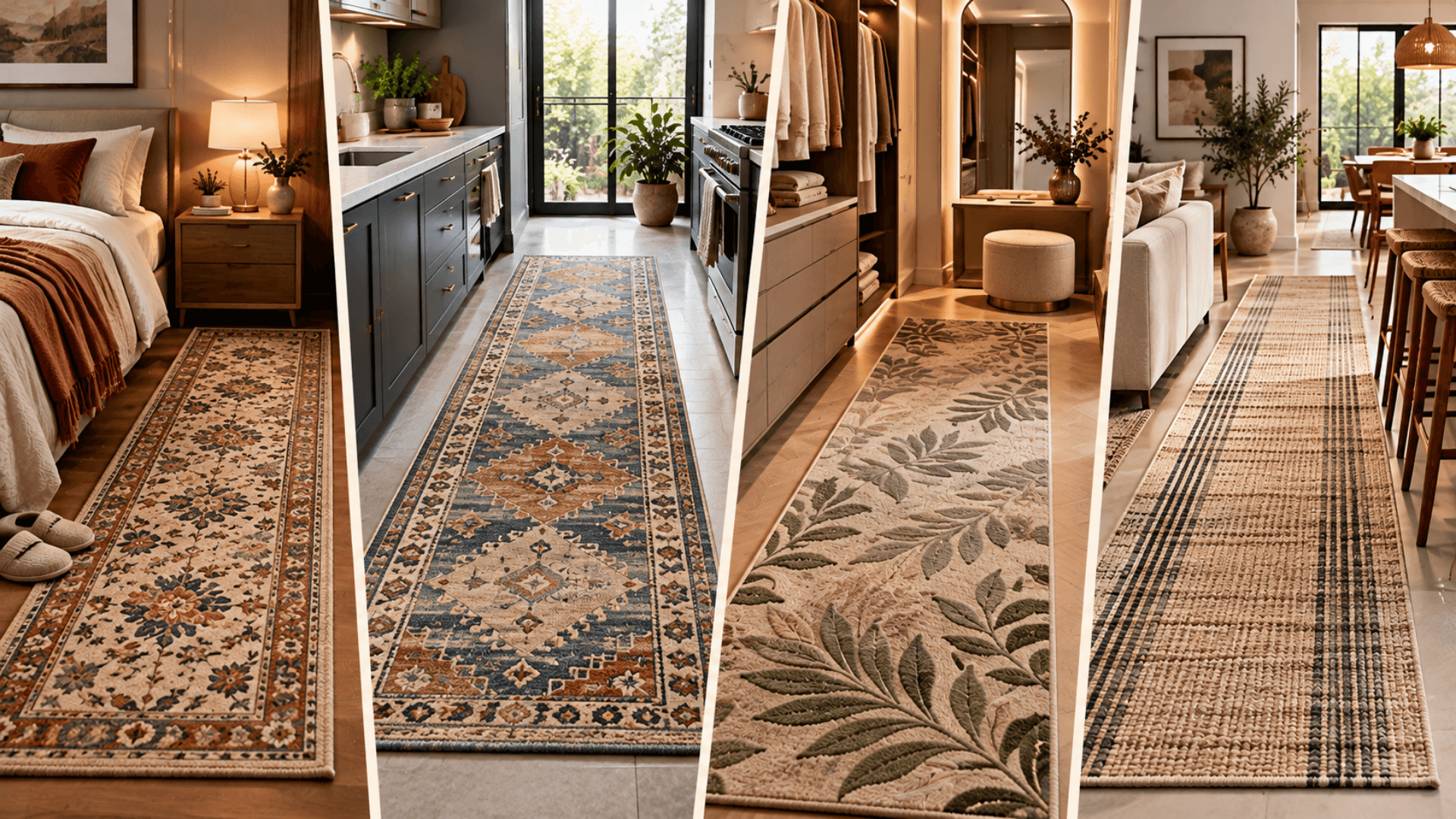
This trend provides a practical way to introduce pattern into spaces where a large rectangular rug may not fit.
For retailers: Runners in coordinated colours and patterns can extend a collection beyond standard living room and bedroom rugs. Different lengths can help serve customers with varied room dimensions.
For buyers: Accurate measurements are important, particularly in kitchens and hallways where movement and door clearance matter. A runner should sit flat, leave enough walking space, and use a suitable non-slip underlay when needed.
Top Carpet Design Trends For Retail Collections In 2027
A strong carpet collection balances versatile designs with distinctive options that help the business stand out. The right assortment depends on customer preferences, price points, available storage, supplier lead times, and the type of retail or project market being served.

Retailers should treat these styles as options to evaluate rather than guaranteed bestsellers. Sales records, customer enquiries, product returns, and small test orders provide more useful evidence of local demand than trend visibility alone.
How Buyers Can Choose A Carpet Style Trend That Lasts
A trend can make a room look current, but the carpet must also suit its intended use. The following checks help buyers compare designs beyond their immediate visual appeal.
- Room Suitability: Room dimensions, furniture arrangement, and foot traffic should guide the carpet's size and construction.
- Material Selection: Fibre composition and pile construction should match the expected use and cleaning routine.
- Colour Coordination: The carpet's colours should complement existing furniture, walls, flooring, and lighting.
- Pattern Scale: A pattern should suit the room's proportions and the amount of decoration already present.
- Maintenance Requirements: Care instructions should match the time and resources available for regular cleaning.
- Product Value: Material quality, construction, finishing, and supplier information provide a better basis for comparison than price alone.
For larger purchases, sample comparisons and accurate measurements can reduce uncertainty. A design that works in a showroom may look different under home lighting or alongside existing furniture.
Final Thoughts
To sum up, carpet design trends of 2027 offer retailers and buyers more ways to combine visual appeal, comfort, and practical performance. Textured finishes, warm neutrals, heritage patterns, luxury materials, oversized rugs, and decorative runners provide different options for contemporary interiors. The right choice depends on the space, budget, construction, and intended use. Explore carpet collections that balance emerging designs with material quality and everyday practicality to find options suited to your home or customers.
Frequently Asked Questions (FAQs)
What Are The Biggest Carpet Design Trends For 2027?
The key trends to watch include tactile textures, warm neutrals, organic motifs, vintage-inspired designs, bold colours, handcrafted details, statement borders, and oversized rugs. Actual demand will vary by market and customer preference.
Which Carpet Colours Are Worth Considering In 2027?
Warm beige, taupe, caramel, terracotta, chocolate brown, and selected deep greens and blues are useful colours to consider. The best shade depends on room lighting, furnishings, and the desired atmosphere.
Are Luxury Carpets Suitable For Modern Homes?
Yes, luxury carpets can complement modern interiors when their material quality, construction, design, and maintenance requirements suit the space. Premium wool and handcrafted options are worth comparing with contemporary alternatives.
Which Carpet Trends Should Retailers Consider Stocking?
Retailers can evaluate warm neutrals, textured finishes, heritage-inspired patterns, easy-care options, statement borders, and selected bold colours. Customer demand, price sensitivity, and supplier capabilities should guide final inventory decisions.
Are Natural-Fibre Carpets Suitable For Every Room?
No, natural fibres have different levels of softness, moisture tolerance, durability, and cleaning requirements. The intended room and product care instructions should guide the choice.
Do Patterned Carpets Suit Minimalist Interiors?
Yes, muted geometric designs, organic motifs, and subtle vintage patterns can add character to minimalist spaces. Simpler surrounding furnishings help maintain visual balance.
Are Washable Carpets A Good Choice For Busy Homes?
Washable designs can suit busy households, but not every carpet is machine-washable. Buyers should check the manufacturer's cleaning instructions and confirm that the backing and construction can withstand the recommended method.
How Can Retailers Identify Carpet Trends That Will Sell?
Sales history, customer enquiries, product returns, price preferences, and supplier availability can help retailers assess demand. Small test orders provide practical evidence before larger inventory commitments.