A well-maintained carpet adds warmth to homes, elegance to hotels, and a professional touch to commercial spaces. However, daily foot traffic, accidental spills, dust, and frequent use can make even a premium carpet look worn out sooner than expected.
Whether you have a cosy carpet in your living room, manage offices and commercial carpets and rugs, or maintain hotel carpets, proper care can make a noticeable difference. Simple cleaning habits and timely maintenance help preserve the carpet’s appearance while reducing the need for frequent replacements.
So, how can you keep your premium carpet looking fresh without making cleaning a daily struggle? This carpet care guide covers practical, easy-to-follow tips to help you protect your carpet, avoid common cleaning mistakes, and make it last longer.
1. Vacuum Your Carpet Regularly
Dust and grit do more than make a carpet look dirty. As people walk over the surface, abrasive particles can work deeper into the pile and contribute to fibre wear.
Vacuuming removes loose dirt before it becomes harder to extract. The frequency depends on foot traffic, pets, room usage, and the carpet's construction.
- Living rooms: Vacuum more frequently because of regular movement.
- Bedrooms: Maintain a routine suited to daily use and dust accumulation.
- Entryways: Clean frequently because outdoor dirt collects quickly.
- Low-traffic areas: Vacuum when visible dust or debris begins accumulating.
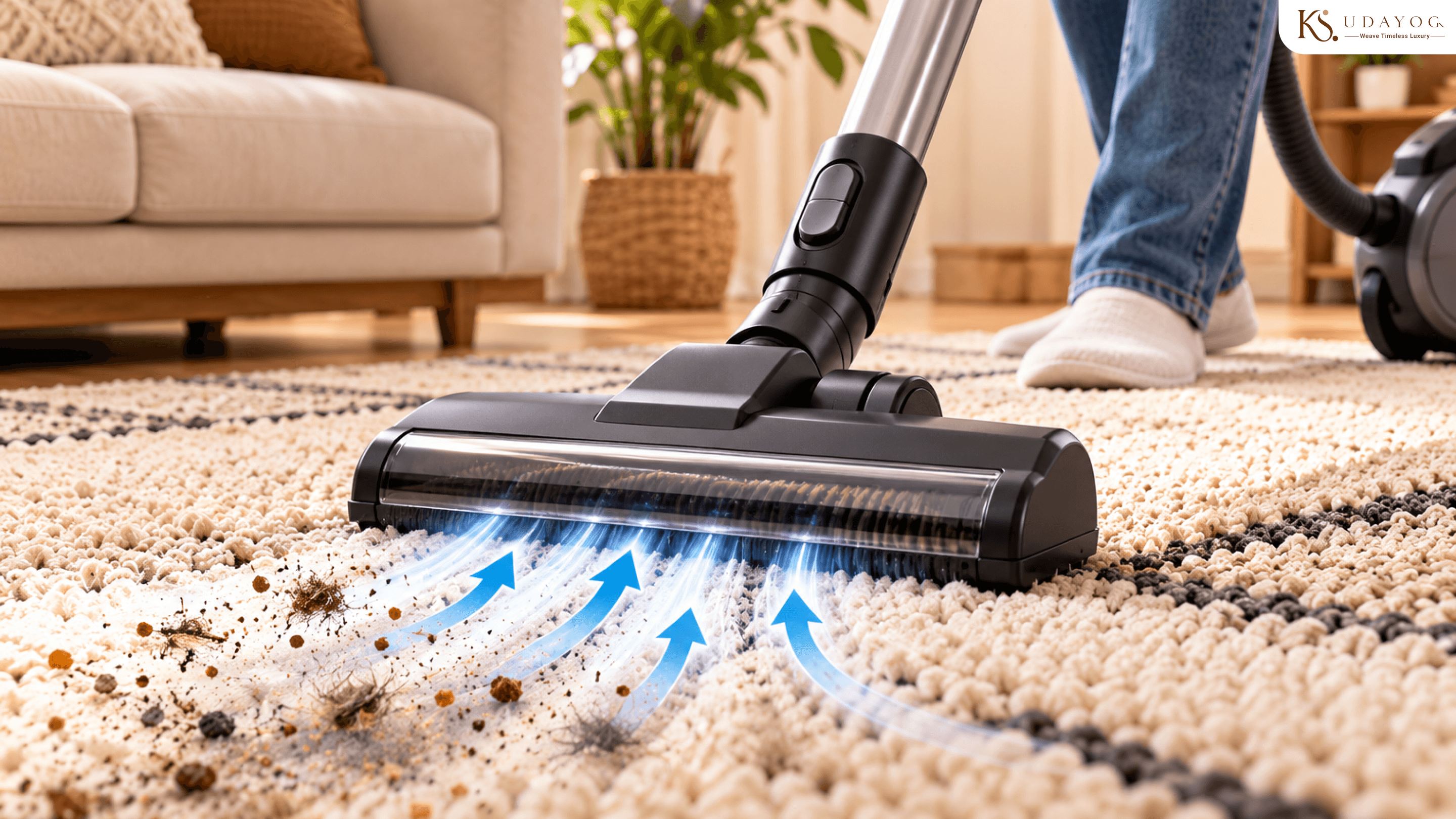
Use a suitable vacuum setting for the carpet. Delicate wool, shaggy, and loop-pile carpets may need gentler suction or a different attachment than durable, low-pile synthetic carpets.
2. Clean Spills Before They Become Stains
A fresh spill is generally easier to manage than a stain that has dried into the carpet. Quick action can also prevent liquids from travelling into the backing or underlay.
Follow these steps when a spill occurs on your carpet:
- Remove solid food or debris carefully with a spoon.
- Blot liquid with a clean, absorbent cloth.
- Work from the outside towards the centre to limit spreading.
- Apply a suitable carpet cleaner only if recommended.
- Blot away the remaining moisture.
- Allow the area to dry completely.

Never rub a spill aggressively. Rubbing can spread the stain and damage the pile. Always test a cleaning product on a hidden area first, and follow the carpet manufacturer's instructions.
3. Use the Right Cleaning Method for Your Carpet
Not every carpet responds well to the same cleaning method. Fibre, pile construction, dyes, backing, and finishing can all affect how a carpet reacts to water and cleaning products.
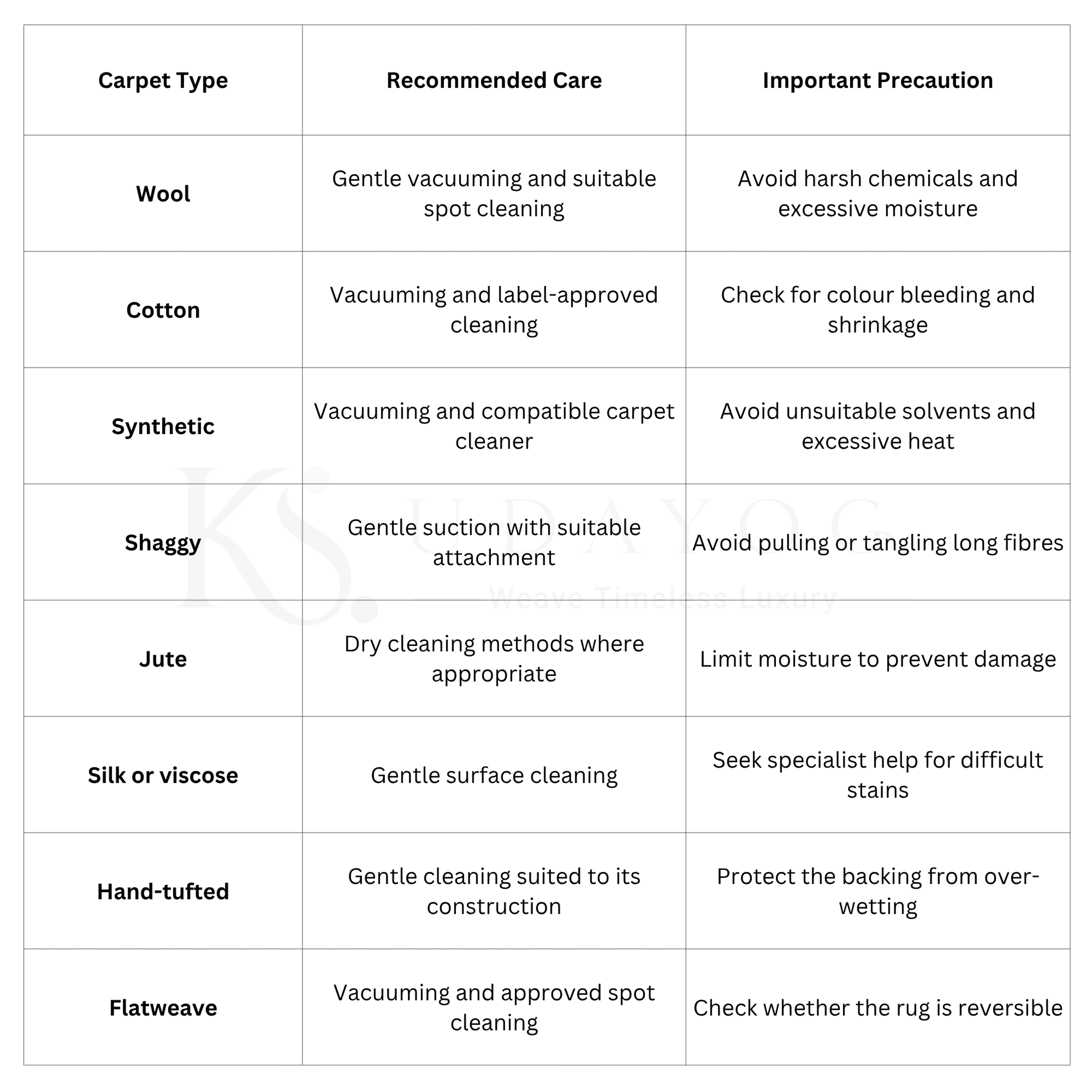
These are general guidelines to clean different carpets based on their materials, not universal cleaning instructions. For delicate, valuable, or handmade carpets, confirm the correct method before applying water or cleaning solutions.
4. Protect Your Carpet From Dust at the Entrance
Much of the dirt found in carpets enters from outside on footwear, bags, and everyday belongings. Preventing it from reaching the carpet reduces the cleaning burden.
Place durable doormats at entrances and clean them regularly. In busy households, a mat outside the door and another inside can help capture more dirt before it reaches the carpet.
You can also:
- Remove outdoor footwear before entering carpeted rooms.
- Keep entrance areas free from loose dust and mud.
- Clean runners in corridors more frequently.
- Vacuum around doorways where dirt collects.
- Avoid placing damp footwear directly on carpets.

This approach is especially useful during dry, dusty weather and the monsoon, when footwear may carry mud and moisture indoors.
5. Rotate Your Carpet to Distribute Wear
A carpet placed in the same position for years may develop uneven wear. Areas near sofas, doorways, windows, and frequently used pathways can show fading, compression, or changes in texture earlier than the rest.

If the carpet's construction and room layout allow it, rotate it periodically to distribute foot traffic and sunlight exposure more evenly.
Before rotating, check:
- Whether the pattern looks correct in the new direction.
- Whether the carpet fits safely beneath furniture.
- Whether the backing and edges remain in good condition.
- Whether the underside is dry and clean.
Do not drag a heavy carpet across the floor, as this can stress the fibres, edges, or backing. Lift it with assistance when necessary.
6. Prevent Furniture Dents and Pressure Marks
Heavy furniture can compress carpet fibres, particularly when the same legs remain in one position for long periods. This is common under sofas, beds, cabinets, and dining tables.
Use suitable furniture protectors or cups to spread the weight over a wider area. When moving furniture, lift it where possible instead of dragging it across the carpet.

For minor pile compression, gently repositioning the fibres with an appropriate method may help. However, the result depends on the fibre and construction, and severe compression may not be reversible.
Avoid aggressive brushing or applying heat without checking the manufacturer's advice.
7. Keep Your Carpet Away From Excessive Sunlight
Direct sunlight can gradually fade carpet colours, especially when the same section receives strong light every day.
If your carpet sits near large windows or glass doors, consider using curtains, blinds, or window coverings during periods of intense sunlight. Rotating a movable carpet can also help distribute exposure.

Remember that fading depends on the dye, fibre, finishing, and intensity of exposure. Some carpets resist colour change better than others, but no carpet should be assumed completely fade-proof.
8. Prevent Moisture and Musty Odours During Monsoon
Indian monsoons create a particular challenge for carpet maintenance. Damp footwear, rainwater, humid rooms, and slower drying can leave moisture trapped beneath a carpet.
The visible surface may feel dry even when the backing or floor underneath remains damp. Prolonged moisture can contribute to unpleasant odours and microbial growth.
To protect your carpet during humid weather:
- Keep the room ventilated whenever practical.
- Blot rainwater and other spills immediately.
- Lift movable carpets occasionally to inspect the underside.
- Ensure the floor is completely dry before replacing a carpet.
- Avoid storing damp carpets in closed cupboards or plastic wrapping.
- Arrange professional assessment if persistent dampness or a musty smell develops.
If a carpet becomes thoroughly soaked, do not rely on sunlight alone to dry it. Prompt extraction and appropriate drying may be needed, especially for thick carpets, delicate fibres, and carpets with glued backing.
9. Remove Loose Threads Without Damaging the Pile
Loose yarns can appear on some hand-tufted, hand-knotted, or woven carpets. Pulling a loose thread may disturb neighbouring yarns or worsen the damage.
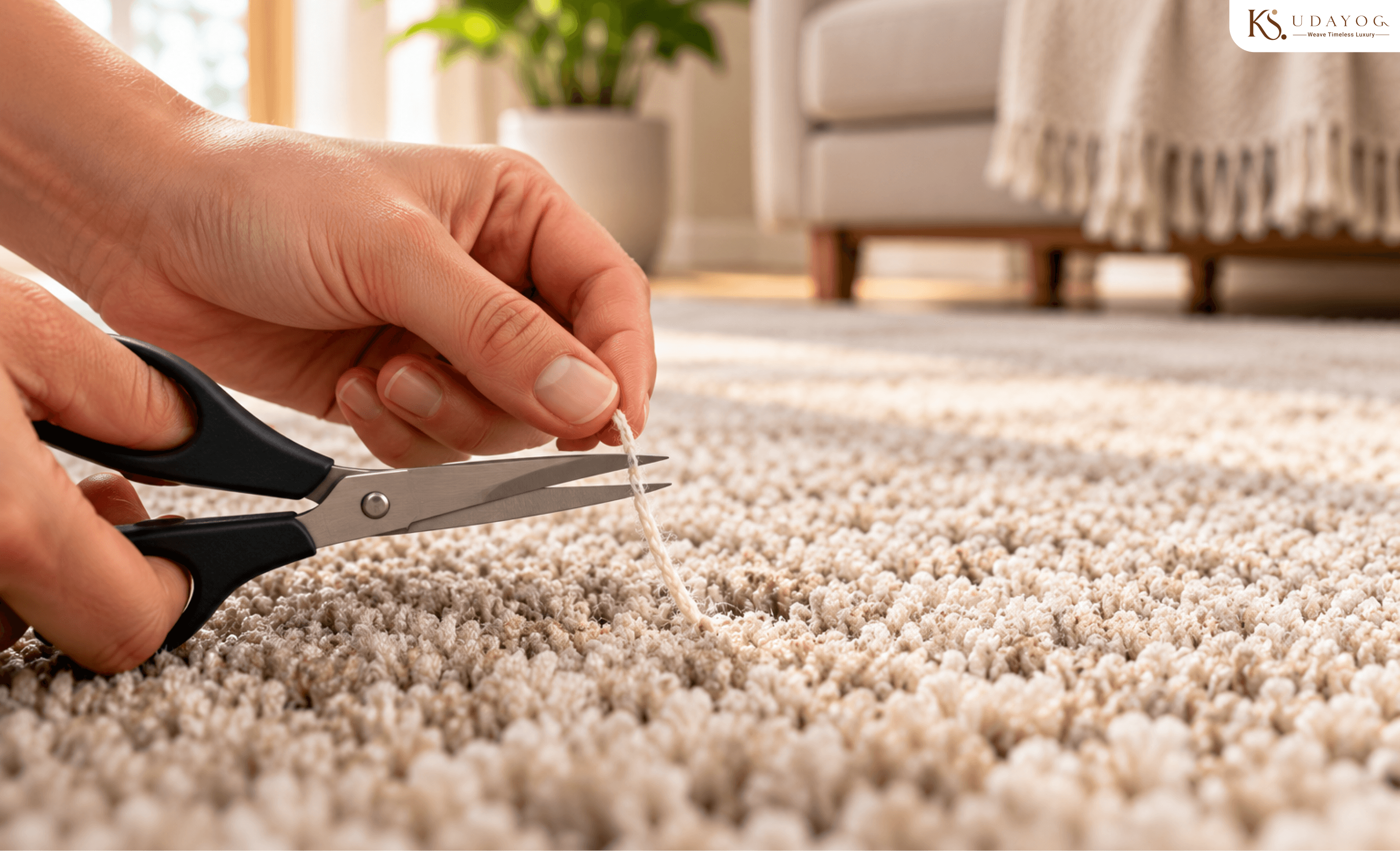
If a small loose end is clearly separate from the surrounding structure, trim it carefully without cutting into the carpet surface. If loops are coming undone, the pile is unraveling, or the backing is exposed, seek repair advice instead.
Regularly inspect carpet edges, fringes, seams, and corners. Early attention can prevent a small defect from becoming a larger repair.
10. Deep Clean Your Carpet When Needed
Vacuuming removes loose dirt, but it cannot always extract the soil, oily residue, and embedded particles that accumulate over time. Deep cleaning can help restore the carpet's appearance when routine maintenance is no longer sufficient.
However, deep cleaning should depend on the carpet's condition, location, and manufacturer's recommendations rather than following one fixed schedule for every carpet.

Consider professional cleaning when:
- Dirt remains after routine vacuuming.
- Stains have become difficult to remove.
- The carpet has persistent odours.
- High-traffic areas look noticeably dull.
- The carpet is valuable or made from delicate fibres.
- Previous home-cleaning attempts have not worked.
Before booking a service, tell the cleaner the carpet's fibre, construction, and backing type. Ask which cleaning method will be used and how long the carpet is likely to take to dry. Excessive moisture, unsuitable chemicals, and aggressive mechanical action can cause damage.
11. Avoid Common Carpet Cleaning Mistakes
Sometimes, carpet damage results not from neglect but from using the wrong cleaning technique.

A product that works on one synthetic carpet may not be suitable for wool, viscose, jute, or a hand-tufted rug. When uncertain, contact the manufacturer or a carpet-cleaning specialist before proceeding.
12. Store Your Carpet Properly When Not in Use
If you plan to store a removable carpet during renovation, relocation, or seasonal changes, prepare it before packing.
Vacuum it thoroughly and ensure it is completely dry. Follow the manufacturer's guidance for folding or rolling, since the correct method can vary by construction and backing.

For most carpets that are suitable for rolling, use a clean protective covering that does not trap residual moisture. Store the carpet in a dry, ventilated location away from direct sunlight, damp walls, and potential pest damage.
Avoid placing heavy items on top of a stored carpet, as prolonged pressure may leave creases or distort the pile.
13. Follow a Simple Carpet Maintenance Schedule
A basic schedule makes carpet care easier to manage without relying on frequent intensive cleaning.
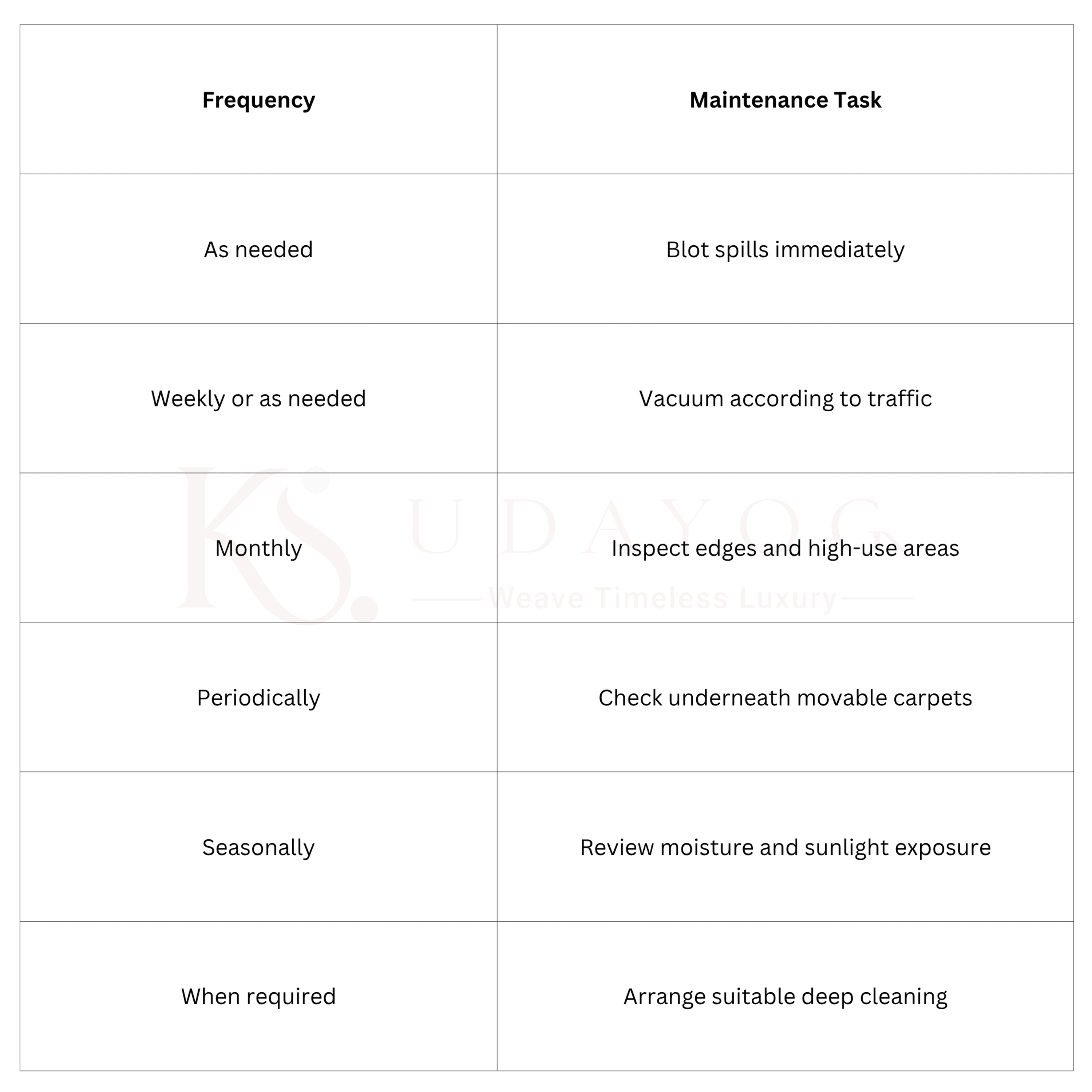
This is a starting routine, not a fixed rule. A busy living room, a low-use bedroom, and a delicate handmade carpet will need different levels of attention.
14. Check the Carpet Backing and Edges
The carpet's underside and edges can show early signs of wear that are not always visible from above. Inspect for fraying, loose seams, backing separation, or curling corners. Addressing these issues early can help prevent further damage and reduce the risk of tripping.
15. Keep Pets' Hair and Dirt Under Control
Pet hair, dander, and outdoor dirt can accumulate between carpet fibres, particularly in frequently used areas. Use a vacuum attachment suitable for your carpet and clean up muddy paw marks promptly. For pet accidents, use a compatible cleaner designed for the stain and odour, following the carpet manufacturer's care instructions.
Final Thoughts
Carpet longevity depends on more than occasional deep cleaning. Regular vacuuming, prompt spill treatment, suitable cleaning products, careful moisture management, and preventive measures can help preserve the carpet's texture, colour, and construction.
For Indian homes, paying attention to dust, footwear, sunlight, and monsoon humidity can make everyday maintenance more manageable. Always match your cleaning method to the carpet's material and backing instead of relying on one solution for every type.
Looking for carpet manufacturing that suit your home's style and maintenance needs? Explore quality carpet options and choose a design, material, and construction that fits your space.
Frequently Asked Questions (FAQs)
How Often Should I Vacuum My Carpet?
Vacuuming frequency depends on foot traffic, dust, pets, and carpet construction. Busy areas generally need more frequent vacuuming than rooms used occasionally.
How Can I Remove A Fresh Stain From My Carpet?
Remove solid debris carefully, then blot liquid with a clean cloth. Use a compatible cleaner only when recommended, and avoid rubbing the affected area.
Can I Wash My Carpet At Home?
Some small, washable carpets can be cleaned at home, but others may shrink, bleed colour, or suffer backing damage. Check the care label before washing.
How Do I Protect My Carpet During The Monsoon?
Prevent moisture from becoming trapped underneath, ventilate rooms, blot spills promptly, and ensure the carpet and floor are completely dry.
Does Baking Soda Help With Carpet Odours?
It may help with some surface odours, but it does not resolve every source of smell. Check the manufacturer's guidance before applying powders, especially on delicate carpets.
Can I Use A Steam Cleaner On Every Carpet?
No. Heat and moisture may damage some fibres, dyes, adhesives, or backings. Confirm compatibility with the manufacturer before steam cleaning.
How Do I Prevent Furniture Marks On My Carpet?
Use suitable furniture protectors, lift items rather than dragging them, and reposition furniture when practical to reduce prolonged pressure in one area.
When Should I Hire A Professional Carpet Cleaner?
Consider professional cleaning for persistent stains, deep-seated dirt, odours, delicate materials, or carpets that require specialised treatment.
Why Does My Carpet Smell Musty After Cleaning?
A musty smell can indicate that moisture remains in the carpet, backing, or floor underneath. Arrange proper drying and seek professional advice if the smell persists.
How Can I Make My Carpet Last Longer?
Vacuum regularly, clean spills promptly, use material-appropriate products, reduce dirt at entrances, protect against prolonged moisture, and arrange deep cleaning when needed.